

2013-2018 Audi & Porsche Oxygen Sensor Guide: A4, Q5, Macan & More
Diagnose and understand common oxygen sensor failures in popular Audi and Porsche models equipped with 2.0T and 3.0T engines.
- A bad oxygen sensor will almost always trigger the Check Engine Light and can cause poor fuel economy, rough idling, and failed emissions tests.
- Upstream (Sensor 1) and Downstream (Sensor 2) sensors serve different functions and are NOT interchangeable.
- V6 engines (3.0T) have four sensors total (two upstream, two downstream), while 4-cylinder engines (2.0T) have two.
- When replacing, using an OEM brand like Bosch is highly recommended for compatibility. A low-mileage used OEM part is often a better choice than a cheap new aftermarket one.
Understanding Oxygen Sensors in Your Audi or Porsche
The oxygen sensors in these vehicles are vital for both engine performance and emissions compliance. The models covered in this guide primarily use two engine types: the 2.0L Turbocharged 4-cylinder (found in the A4, A5, Q5, allroad, and Macan base) and the 3.0L Supercharged V6 (found in the S4, S5, SQ5, Q5, and V6 Macan/Cayenne). While the function is the same, the number and location of sensors can differ. V6 engines have two banks of cylinders, meaning they typically have four O2 sensors in total: an upstream and downstream sensor for each bank.
Upstream vs. Downstream Sensors
It's crucial to understand the difference between the two types of sensors, as they are not interchangeable.
- Upstream Sensor (Sensor 1 / Pre-Catalyst): This is the primary sensor that has a direct impact on engine performance. It constantly measures the oxygen in the raw exhaust and tells the engine computer whether the air-fuel mixture is too rich (too much fuel) or too lean (too much air). The computer uses this data to make immediate adjustments, affecting fuel economy and power. A failure of this sensor will directly impact how the car drives.
- Downstream Sensor (Sensor 2 / Post-Catalyst): This sensor's main job is to be a watchdog for the catalytic converter. It measures oxygen *after* the exhaust has been treated by the converter. By comparing its reading to the upstream sensor's reading, the computer can determine if the catalytic converter is working correctly. A failure here will trigger a Check Engine Light and cause an emissions test failure, but it won't typically cause the immediate drivability issues of a bad upstream sensor.
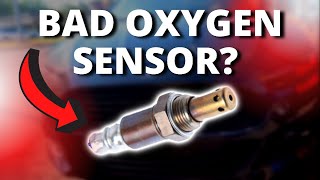
Symptoms of a Failing Oxygen Sensor 🎬 Watch this overview of common bad oxygen sensor symptoms
The most common sign of a bad oxygen sensor is an illuminated Check Engine Light (CEL). If you have a code scanner, you can pull the specific Diagnostic Trouble Codes (DTCs) to narrow down the problem.
| Symptom | Description | Common Codes |
|---|---|---|
| Check Engine Light | This is the most frequent indicator. The ECU logs a fault when sensor readings are out of range, slow to respond, or indicate a heater circuit failure. | P0130-P0167, P0171, P0172, P0174, P0175, P2096, P2098 |
| Poor Fuel Economy | A failing upstream sensor can send incorrect data, causing the engine to run rich (using too much fuel) to compensate for a false lean reading. | P0172, P0175 |
| Rough Idle & Misfires | An incorrect air-fuel ratio disrupts combustion, leading to a shaky idle, engine hesitation, or misfires. | P0300-P0306 (misfire codes) |
| Sluggish Acceleration | If the engine isn't getting the right air-fuel mix, it can't produce optimal power, leading to a noticeable loss of performance. | N/A |
| Failed Emissions Test | A bad O2 sensor, especially the downstream one, will almost guarantee an emissions failure. The CEL being on is an automatic fail in most states. | P0420, P0430 |
| Rotten Egg Smell | A very rich fuel mixture can overwhelm the catalytic converter, producing a sulfur or rotten egg smell from the exhaust. | N/A |
Buying a Used Oxygen Sensor
Oxygen sensors are considered wear-and-tear items with a finite lifespan, typically around 100,000 miles. Because of this, buying a used one requires careful consideration. While a new OEM-quality sensor is often the best choice, a low-mileage used OEM sensor can be a good value and is often superior to a cheap, new aftermarket part of unknown quality.
- Verify Compatibility: Part numbers are critical. Ensure the used sensor's part number exactly matches what is required for your vehicle's specific engine, year, and sensor position (e.g., Bank 1 Sensor 1). Upstream and downstream sensors are not interchangeable, nor are sensors for different engine banks or engine types.
- Physical Inspection: Before purchasing, inspect the sensor closely. Look for physical damage like cracks in the ceramic, dents in the metal shield, or bent housing. Check the wiring and connector for any cuts, melting, or corrosion on the pins.
- Check for Contamination: The tip of the sensor can reveal its history. A light gray or tan coating is normal. Avoid sensors with heavy, black, oily soot (indicating a rich-running engine) or a white, chalky deposit (indicating coolant contamination).
- Mileage is Key: Ask for the mileage of the donor vehicle. A sensor from a 40,000-mile vehicle is a much safer bet than one from a 140,000-mile vehicle. Given their typical lifespan, avoid high-mileage used sensors.
- OEM is Preferred: Stick with used sensors that are original equipment (OEM), often made by Bosch for these vehicles. They are designed specifically for your car's computer and are more likely to perform correctly than generic aftermarket brands.
Pro Tip: If possible, test the heater circuit of the used sensor with a multimeter. A good sensor should have a resistance reading between 4 and 25 ohms between the two heater pins (usually the two same-colored wires). An open circuit (infinite resistance) means the heater is dead and the sensor is useless.
Known Issues, TSBs, and Recalls
While there are no widespread recalls specifically for oxygen sensor failure on all these models, some related service actions and warranty extensions exist.
- TSB 2046611/5: For some 2014-2018 Audi models with the 4.0L engine (relevant to some higher-performance models, but the principle can apply), a TSB was issued for DTCs P209600 and P209800 (Post Catalyst Fuel Trim System Too Lean). It notes that the internal reference duct of the *rear* oxygen sensor can become contaminated and advises replacing the rear O2 sensor, not the front one, even if other codes are present.
- Warranty Extension (U42): Audi issued a limited warranty extension for the *rear* oxygen sensor on certain vehicles to 10 years or 120,000 miles. While this doesn't cover all vehicles listed here, it's worth checking with a dealer by VIN to see if your specific car is covered.
- Emissions Recall 23W1 & 23Z8: Some TDI and 3.0L diesel models (not all covered here, but relevant to the Q5 and Cayenne diesel variants) had recalls that included oxygen sensor inspection and potential replacement as part of a larger emissions service.
Replacement Information
Replacing an oxygen sensor can range from easy to very difficult, depending on its location.
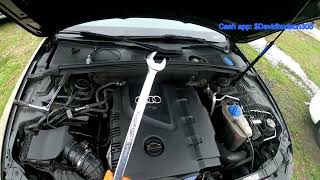
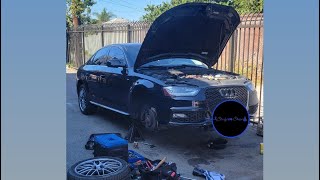
- Difficulty: 2-4 out of 5. Upstream sensors on the 2.0T engine are often accessible from the top of the engine bay after removing the airbox. However, downstream sensors 🎬 See a video guide on replacing 2.0T Audi oxygen sensors and sensors on the 3.0T V6 can be much harder to reach, sometimes requiring access from underneath the car and special tools to navigate tight spaces around the transmission and catalytic converters. 🎬 Watch how to remove rear downstream sensors on a 3.0T
- Tools Needed: A special 22mm oxygen sensor socket (with a slot for the wire) is essential. You will also likely need various ratchet extensions, a wobble joint, and potentially penetrating oil to loosen a sensor that has been heat-cycled for thousands of miles.
- Calibration: Generally, no special programming is required after replacement. However, you must use a scan tool to clear the stored fault codes from the ECU after the new part is installed.
Warning: Always let the exhaust system cool down completely before attempting to replace an O2 sensor. They are threaded into the exhaust and can cause severe burns. Also, be careful with the wiring, ensuring it is routed away from hot exhaust components to prevent melting.
Cost Breakdown
Prices can vary significantly based on the brand, sensor position, and your vehicle's specific engine.
| Item | Estimated Cost |
|---|---|
| New OEM (Dealer) | $250 - $550 per sensor |
| New Aftermarket (OEM-quality like Bosch/Denso) | $80 - $200 per sensor |
| Used OEM | $30 - $90 per sensor |
| Shop Labor | $150 - $300 per sensor, depending on location |
Frequently Asked Questions (FAQ)
How many oxygen sensors does my car have?
If you have a 2.0T 4-cylinder engine (A4, A5, Q5, allroad, Macan), you have two sensors: one upstream and one downstream. If you have a 3.0T V6 engine (S4, S5, SQ5, Q5, Macan, Cayenne), you likely have four sensors: one upstream and one downstream on each of the two engine banks (Bank 1 and Bank 2).
What is the difference between Bank 1 and Bank 2?
On a V-engine like the 3.0T, "Bank 1" always refers to the side of the engine that contains cylinder #1. "Bank 2" is the opposite side. For these Audi/Porsche V6 engines, Bank 1 is typically the passenger side of the vehicle in the US market.
Can I clean my oxygen sensor instead of replacing it?
While some people attempt to clean O2 sensors, it is generally not recommended and is rarely a permanent fix. The sensing element is delicate, and failure is often due to internal degradation or heater circuit failure, which cleaning cannot resolve. Given the relatively low cost of a new aftermarket sensor, replacement is the more reliable option.
Do I need to use anti-seize on the new sensor's threads?
Most new oxygen sensors come with anti-seize compound pre-applied to the threads. If it is not pre-applied, you should apply a small amount of high-temperature, sensor-safe anti-seize to the threads, being extremely careful not to get any on the sensor tip itself. Contaminating the sensor tip can ruin the new sensor.
Helpful Videos
Technical Specifications
OEM Part Numbers: PAC-906-262-A 95B-906-203-F 95B-906-203-C 8K0-906-262-G 03L906262B
Most sensors for these vehicles are heated, 4 or 5-wire Zirconia-type sensors. The thread size is typically M18x1.5. A functioning upstream sensor's voltage fluctuates rapidly between 0.1V and 0.9V, while a downstream sensor should show a more stable voltage.
We Have This Part in Stock


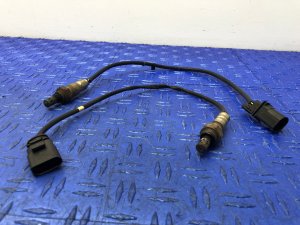
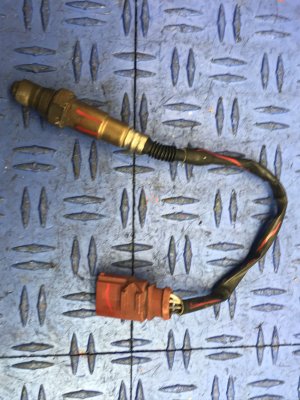
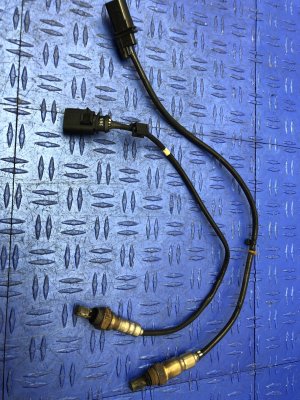

The information in this article is provided for general reference and educational purposes only. Vehicle specifications, procedures, and part compatibility can vary by production date, trim level, and region. Always consult your vehicle's factory service manual and verify part numbers before purchasing or performing repairs. Safety-critical components such as airbags, seat belts, and braking systems should be installed by a qualified professional.
- Audi A4:
- Audi Q5:
- Audi A5:
- Porsche Cayenne:
- Audi S4:
- Audi SQ5:
- Audi allroad:
- Audi S5:
- Audi RS5:
- Porsche Macan:
- 🎬 Helpful Videos
- 🛍️ Shop This Part
- Understanding Oxygen Sensors in Your Audi or Porsche
- Upstream vs. Downstream Sensors
- Symptoms of a Failing Oxygen Sensor
- Buying a Used Oxygen Sensor
- Known Issues, TSBs, and Recalls
- Replacement Information
- Cost Breakdown
- Frequently Asked Questions (FAQ)
- 🎟️ Get 5% Off