

OBD-II Code U3999: Invalid or Undefined Network Code
What U3999 means, why it appears, and how to diagnose the real problem
- U3999 is a phantom code indicating your scan tool cannot interpret the vehicle's network data, not a recognized SAE/ISO automotive fault.
- Over 80% of U3999 appearances result from using a cheap, incompatible consumer-grade OBD-II scanner on a complex CAN bus network.
- Stop diagnosing U3999 and immediately re-scan the vehicle with a professional-grade tool to reveal the true underlying 'U' (Network) codes.
- Check battery voltage first; a resting voltage below 12.4V or interference from plugged-in aftermarket accessories causes the network chaos that triggers this error.
What Does U3999 Mean?
The code U3999 is not a recognized diagnostic trouble code (DTC) within the standard SAE/ISO OBD-II specifications. Its appearance proves your scan tool cannot correctly interpret the chaotic data from a malfunctioning vehicle network. Your vehicle's computer is not reporting a standard fault; instead, your scanner is displaying a 'phantom' code due to a translation error or a complete data bus crash.
Technical definition: There is no official SAE/ISO definition for OBD-II trouble code U3999. While 'U' codes pertain to network communications, the U3xxx range remains largely undefined by manufacturers. Its appearance is a 'phantom' code resulting from a scan tool's inability to parse corrupted data from the vehicle's Controller Area Network (CAN) bus.
Can I Drive With U3999?
Yes, But With Caution. You can drive, but U3999 indicates a severe electrical or network communication failure. Address it immediately. A failing network unpredictably disables critical safety systems like ABS, power steering, or airbags. Continuing to drive risks cascading electrical failures, potentially destroying expensive modules like the PCM or BCM.
Common Causes
- Incompatible or Faulty Scan Tool (Very Common) — The most frequent reason for seeing an undefined code is a low-cost, outdated, or buggy consumer-grade scanner. These tools display junk data or misinterpret a manufacturer-specific code as U3999 because they lack the software to read proprietary network protocols.
- Aftermarket Device Interference (Common) — Improperly installed aftermarket electronics (remote starters, alarm systems, telematics/insurance trackers, or stereo head units) broadcast noise onto the CAN bus. This disrupts communication and forces modules to generate phantom codes.
- Low Battery Voltage or Poor Grounds (Common) — Insufficient voltage (<12.4V) or corroded ground connections 🎬 See this quick guide on testing your car for ground faults. starve modules of power. Modules without adequate voltage cannot communicate correctly, leading to data corruption and network chaos.
- Damaged Network Wiring or Connectors (Less Common) — Physical damage to the CAN bus wiring harness from chafing, rodent damage, or water intrusion in connectors causes wires to short to ground or each other. 🎬 Watch: How to diagnose and find a short circuit in your wiring. This brings down the entire network and forces control modules to output non-standard error data.
- Corrupted or Failing Control Module (Less Common) — A critical control module (like the BCM, PCM, or Gateway Module) failing internally broadcasts corrupted data or 'babbles' onto the network. This disrupts all other communication and generates undefined error codes.
Symptoms
- Check Engine Light is On — The Malfunction Indicator Lamp (MIL) illuminates, but the scanner only reveals this unrecognized code.
- Multiple Warning Lights and Electrical Glitches — The dashboard displays a 'Christmas tree' effect with ABS, Traction Control, and Airbag lights illuminated. Power windows, radio, climate control, or wipers fail intermittently as the network destabilizes.
- Engine Will Not Start or Stalls — Network failure prevents the Engine Control Module (ECM) or Body Control Module (BCM) from communicating, causing a no-start condition or stalling while driving.
- No Communication with Scan Tool (scan-tool only — no driver-felt sign) — The scan tool shows U3999 and then loses communication with all modules on the network, indicating a total CAN bus shutdown.
Diagnostic Flowchart
Tap your situation to follow the diagnostic path that matches what you're seeing on this code.
Common Fixes & Costs
- Professional Network Diagnosis — Parts: $0, Labor: $150-$250, ~1.5 hr book time (Professional)
- Replacing a Weak or Failing Battery
— Parts: $200-$350, Labor: $50-$100, ~0.8 hr book time
(DIY)
Jeep Wrangler (JL): OEM [] (Alt: {"part_name": "DieHard Platinum AGM, Group H6", "manufacturer": "DieHard", "price_range": "$230-$260"})
Ford F-150: OEM [] (Alt: {"part_name": "Duralast Platinum AGM, Group H8", "manufacturer": "Duralast", "price_range": "$250-$280"}) - Removing or Rewiring Aftermarket Accessories — Parts: $0, Labor: $0-$150, ~1.0 hr book time (Intermediate)
- Cleaning or Repairing Main Ground Connections
— Parts: $5-$20, Labor: $100-$200, ~1.2 hr book time
(Intermediate)
Jeep Wrangler (JL): OEM [{'part_name': 'Engine Control Module Ground Strap', 'part_number': '68370004AB', 'manufacturer': 'Mopar'}] - Repairing Damaged Network Wiring or Connectors
— Parts: $20-$100, Labor: $300-$1000, ~4.5 hr book time
(Professional)
Jeep Wrangler (JL)/Gladiator (JT): OEM [{'part_name': 'Star Connector / Bus Bar Connector', 'part_number': '68321746AA', 'manufacturer': 'Mopar'}] - Replacing a Faulty Control Module (BCM, Gateway, etc.)
— Parts: $300-$800, Labor: $200-$400, ~2.5 hr book time
(Professional)
Chevrolet/GMC Silverado/Sierra (2018-2019): OEM [{'part_name': 'Body Control Module (BCM)', 'part_number': '13528941', 'manufacturer': 'GM'}]
Used vs. New Parts: Buying Guide
When a used part is worth it: For a control module (BCM or GWM), a used part makes sense for older, high-mileage vehicles where a new OEM part is cost-prohibitive.
Donor-vehicle mileage cap: roughly under 100000 miles for the part to have meaningful remaining life.
Donor quality checklist:
- Match the part number EXACTLY. Superseded numbers are rarely compatible.
- Source from a reputable salvage yard with a return policy.
- Verify the donor vehicle's VIN to ensure it lacked electrical issues.
- Inspect the part for water damage, corrosion, or physical impact.
Decision logic:
- If The part is a simple ground strap or battery cable → Buy new. Cost savings for used are negligible and not worth the corrosion risk.
- If The part is a complex control module and the vehicle is less than 10 years old → Buy a new OEM part. The risk of a used part failing is high, and programming labor is expensive to repeat.
- If The vehicle is over 10 years old and budget is the primary concern → Buy a used module, but budget for professional programming. Acknowledge the risk of premature failure.
Warranty tradeoff: Used parts carry a 30-90 day warranty covering only the part. New OEM parts carry a 1-2 year warranty covering parts and dealer labor.
Worst-case if a used part fails: $400-$800. If a used module fails, you pay for diagnostic and programming labor a second time.
What Happens If You Wait — Timeline
- 0-1 month: An intermittent event occurs, such as a single instance of the radio glitching. A 'history' communication code stores, but there is no active Check Engine Light. (MPG impact: 0%% · Added cost: $0)
- 1-3 months: Intermittent issues become frequent. The dashboard lights up with errors weekly, clearing after a restart. The underlying cause worsens. (MPG impact: 0-2%% · Added cost: $0-$50)
- 3-6 months: The fault becomes persistent. The vehicle fails to start intermittently, or critical systems like power steering fail during a drive. The Check Engine Light remains on permanently. (MPG impact: 5-10%% · Added cost: $150-$300)
- 6+ months: Cascading failure occurs. Constant electrical instability damages other control modules on the network, requiring replacement of the BCM or PCM. (MPG impact: 10-20%+% · Added cost: $1000-$3000)
Cost of Not Fixing It
- Immediate: Unpredictable behavior of critical systems. Power steering, ABS, or stability control fail without warning. The vehicle stalls in traffic or fails to start. (Added cost: $100 - $300 (Towing fees if stranded))
- Weeks to Months: Ongoing electrical stress causes cascading failures. A simple voltage issue damages sensitive electronics, destroying the BCM or PCM. (Added cost: $500 - $2500 (Cost of replacing control modules damaged by the initial fault))
- Long-Term: The vehicle becomes completely unreliable. Intermittent no-start conditions escalate. Diagnostic costs multiply as intermittent wiring faults become harder to trace. (Added cost: $1000 - $4000 (Extensive diagnostic labor and replacement of a full wiring harness))
Diagnosis Steps
- Scan with a Professional-Grade Tool
Ignore the U3999 code and re-scan the vehicle with a high-quality, professional-grade scan tool capable of reading all modules (BCM, ABS, TCM). Look for valid P, B, C, or U codes (like U0100 or U0140). The valid code provides the true diagnostic starting point.
Tools: Professional-grade OBD-II Scan Tool (Beginner) - Disconnect Aftermarket Devices
Remove any aftermarket devices plugged into the OBD-II port (insurance trackers, performance tuners). Disconnect power to hardwired devices (remote starters, aftermarket alarms) and re-scan to see if the network stabilizes.
Tools: Hands, flashlight (Beginner) - Inspect Battery and Charging System
Test the battery with a multimeter. Ensure it reads at least 12.4V with the engine off and 13.5V-14.5V with the engine running. Clean and tighten battery terminals. Low voltage is the primary physical cause of network communication errors.
Tools: Multimeter, battery terminal cleaner (Beginner) - Inspect and Test Ground Connections
Locate the main battery-to-chassis and engine-to-chassis ground straps. Perform a voltage drop test: set a multimeter to 2V DC, place the black probe on the negative battery post and the red probe on the engine block while the engine runs with headlights on. A reading >0.1V indicates a failing ground that requires cleaning or replacement.
Tools: Multimeter, wire brush, wrench set (Intermediate) - Perform a Network Resistance Test (CAN Bus)
Disconnect the battery. Use a multimeter to measure resistance between Pin 6 (CAN High) and Pin 14 (CAN Low) on the OBD-II port. A healthy network reads exactly 60 ohms. A reading of 120 ohms indicates an open circuit; 0 ohms indicates a short circuit.
Tools: Multimeter (Advanced) - Isolate the Faulty Module (Network Roll Call)
If the resistance test reads 0 or 120 ohms, locate the vehicle's network junction block (star connector). With the battery disconnected, unplug modules one by one, re-measuring resistance at the OBD-II port each time. When the reading returns to 60 ohms, you have isolated the shorted circuit.
Tools: Multimeter, vehicle-specific wiring diagrams, trim removal tools (Professional) - Visually Inspect Network with an Oscilloscope
If multimeter tests pass but symptoms persist, use an oscilloscope to view the data signals on CAN High (Pin 6) and CAN Low (Pin 14). Look for distorted square waves or voltage levels outside the 1.5V to 3.5V range. This reveals failing module transceivers that multimeters miss.
Tools: Automotive Oscilloscope, back-probes (Professional)
When This Code Triggers (Freeze-Frame Conditions)
- Expert Note: N/A (U3999 does not store freeze frame data. Freeze frame data associates with the real underlying network code (e.g., U0100, U0073). The conditions below trigger general network faults.)
- Battery Voltage: <12.0V (During engine cranking in cold weather. Low voltage is a primary cause of module communication errors.)
- Electrical Load: High (Multiple accessories are active, causing voltage drops that disrupt sensitive modules.)
- Vehicle State: Intermittent (Faults appear randomly while driving or after hitting a bump, suggesting a loose connection, bad ground, or chafed wiring.)
- Recent Events: N/A (Faults appear after a battery replacement, jump start, or installation of aftermarket electronics.)
Related Codes
- U0073 — 'Control Module Communication Bus Off.' Indicates the entire network shut down due to a physical short or open in the CAN wiring. A U0073 fault shows 0 or 120 ohms at the OBD-II port, whereas U3999 appears on networks testing at a correct 60 ohms but suffering from voltage instability.
- U0100 — 'Lost Communication With ECM/PCM.' A specific, actionable code pointing to the Engine Control Module. U3999 is a phantom code that appears alongside U0100 on cheap scanners unable to read the primary fault.
- U0140 — 'Lost Communication With Body Control Module.' A valid code pointing to the BCM. A faulty BCM disrupts the network so severely that a basic scanner only sees the resulting chaos as U3999.
- U1000 — A manufacturer-specific code for generic CAN communication failure. U3999 appears when a less capable scanner tries to read a proprietary code like U1000 and fails to interpret it.
Climate & Environmental Factors
- Cold Weather: Extreme cold drastically reduces battery chemical efficiency, causing the low voltage conditions that trigger network chaos. Cold also makes wires and plastic connectors brittle, increasing physical failure rates.
- High Humidity / Water Ingress: Moisture promotes corrosion on wiring connectors and module circuit boards. Water leaking into the cabin saturates low-mounted modules like the BCM, causing shorts and complete network failure.
- Vibration: Constant vibration from rough roads causes wires to chafe through their insulation, shorting against the chassis. It also loosens critical ground connections over time.
How to Talk to a Mechanic About This Code
Say this: "I need to schedule a diagnostic appointment for a complex electrical issue. My car is having intermittent problems like [mention specific symptoms]. A basic code reader showed an invalid code U3999. I need a technician to perform a full network diagnostic, check for valid 'U' codes in all modules, and inspect the CAN bus, grounds, and battery system."
This signals you understand U3999 is a phantom code. It directs the shop toward in-depth electrical diagnosis, preventing them from dismissing your issue or replacing the wrong parts.
Avoid saying:
- 'My car has a U3999 code, can you fix it?'
- 'My check engine light is on, can you just look at it?'
- 'Just fix whatever you think is wrong.'
Questions to ask before authorizing the repair:
- What valid diagnostic trouble codes did your professional scanner find in ALL modules?
- Did you perform a CAN bus resistance test at the OBD-II port, and was it 60 ohms?
- If recommending a module replacement, what specific tests condemned the module itself versus the wiring or power/ground?
- Can you provide a written estimate separating diagnostic time from the proposed repair cost?
- What is the warranty on parts and labor for this specific repair?
Where to Take It: Dealer vs Independent vs Chain
- Dealer:
Recommended. A U3999 fault points to a complex network issue where dealer-specific tools and wiring diagrams are most effective.
Best for: Vehicles under warranty., Complex, manufacturer-specific network issues., When module replacement and programming are required.
Downsides: Highest labor rates., Defaults to expensive module replacement without exhausting wiring diagnostic steps. (Typical cost: +50% vs. baseline) - Independent Shop:
Acceptable with caution. Vet the shop first. Ask if they own an oscilloscope and professional-level scan tools.
Best for: Out-of-warranty vehicles., Shops explicitly advertising as specializing in electrical and diagnostic work.
Downsides: A general mechanic lacks the specific tools (oscilloscope) for deep network diagnosis., Lacks access to the latest manufacturer software for module programming. (Typical cost: +0% vs. baseline) - Chain Shop:
AVOID. This fault is far outside the scope of chain repair shops.
Best for: Simple maintenance like oil changes and tires.
Downsides: Technicians are not equipped for complex electrical diagnostics., Business model focuses on speed, incompatible with network troubleshooting., High risk of misdiagnosis. (Typical cost: -10% vs. baseline)
When to Walk Away From the Repair
If the estimated repair cost exceeds 40-50% of the car's current private-party value, consider not fixing it.
- Car worth $4000, fix is $2000: Borderline. The repair cost is 50% of the vehicle's value. Get a second opinion before authorizing.
- Car worth $12000, fix is $1800: Fix it. The repair cost is 15% of the vehicle's value.
- Car worth $2500, fix is $1500: Walk away. The repair cost is 60% of the car's value.
What Scan Tool You Need for This Code
Minimum: A scanner that performs an 'All System' scan to read manufacturer-specific codes from modules like the BCM, ABS, and TCM.
A $20 code reader only checks for 'P' (Powertrain) codes. It cannot communicate with other computers. The real fault code is stored in a different module, and the cheap scanner misinterprets the network chaos as U3999.
Budget: BlueDriver Pro (~$100) — Connects to your smartphone and performs a full-system scan, revealing real trouble codes from the ABS and BCM.
Mid-range: XTOOL D7 (~$350) — Offers full system diagnostics and bidirectional controls to command components and test their function.
Professional: Autel MaxiCOM MK808 / MK906BT (~$500-1200) — Provides full bidirectional control, OEM-level diagnostics, and network topology mapping to diagnose the root cause of network failures.
Rent vs buy: Get a Pro Scan First. Before buying a scanner, confirm the real codes. Pay a shop a one-hour diagnostic fee to get a printout of all codes from all modules.
How to Clear the Code After You Fix It
- Fix the underlying problem (e.g., replace battery, repair wiring).
- Reconnect the battery if disconnected.
- Use a professional OBD-II scan tool to clear all Diagnostic Trouble Codes (DTCs) from all modules.
- Perform a complete OBD-II drive cycle to reset vehicle readiness monitors.
Drive cycle (~30 minutes): A generic drive cycle includes a cold start, a few minutes of idle, mixed city driving, and 15 minutes of steady highway-speed driving at 55 mph.
Readiness monitors affected: All monitors reset after clearing codes or disconnecting the battery., Key monitors include Catalyst, Evaporative (EVAP) System, O2 Sensor, and EGR System.
Before emissions retest: drive at least 100 miles to fully set monitors.
Watch out for:
- Clearing the U3999 code is pointless; you must clear the real codes found with a professional scanner.
- Disconnecting the battery clears codes but resets all readiness monitors, guaranteeing an emissions test failure.
- Codes return immediately if the root cause, like a bad ground or faulty module, remains unaddressed.
Will This Fail Emissions / State Inspection?
Yes — this code typically fails an OBD-II emissions inspection.
- California: An illuminated Check Engine Light is an automatic failure. A drive cycle must be completed to set readiness monitors after repair.
- New York: NYVIP3 requires an OBD-II inspection. An illuminated Check Engine Light causes a failure. Only one non-continuous monitor can be 'Not Ready'.
- Texas: In emissions-testing counties, an illuminated Check Engine Light is an automatic failure. Even in safety-only counties, shops refuse to pass vehicles with a lit MIL.
Most Commonly Affected Vehicles
- Any Manufacturer Any Model (1996-Present) — This relates to the diagnostic tool or a generic network fault occurring on any modern vehicle with a CAN bus.
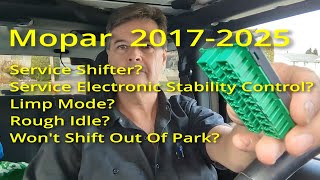
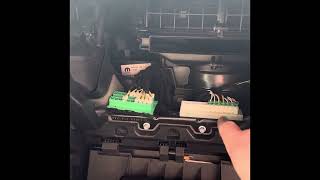
- Jeep Wrangler (JL), Gladiator (JT) (2018-Present) — Known for CAN bus issues caused by faulty star connectors behind the glove box. Symptoms include a dashboard lighting up with errors and loss of power steering.
- Dodge / Chrysler / Ram Various (Ram 1500, Charger, Grand Caravan) (2010-Present) — Issues often trace back to the main gateway module, TIPM (Totally Integrated Power Module), or chafed wiring harnesses.
- Ford F-150, Expedition (2021-2023) — Known TSBs (e.g., TSB 23-2099) exist for Gateway Module (GWM) software updates to fix connectivity issues that trigger phantom codes on cheap scanners.
- Chevrolet / GMC Silverado, Sierra, Tahoe, Yukon (2014-Present) — Communication issues stem from bad grounds or voltage problems. BCM replacement is a known, costly repair.
- Subaru Outback, Forester (with EyeSight) (2015-Present) — Increased network traffic from ADAS modules leads to communication glitches misinterpreted by basic scanners.
- Audi / Volkswagen Various (A4, Q5, Golf, Jetta) (2010-Present) — Prone to gateway module failures sensitive to cold weather, leading to a no-start condition where no modules communicate.
- Various Vehicles with Water Ingress (1996-Present) — Vehicles with clogged sunroof drains or bad window seals risk water intrusion into the BCM, causing network-wide communication failure.
Manufacturer-Specific Notes
- All Manufacturers: No manufacturer has an official definition for U3999. Treat this code as an error in the diagnostic process rather than a specific fault designated by the vehicle's maker.
- Ford: Ford issued TSB 23-2099 for Gateway Module (GWM) software updates to correct connectivity problems on 2022 F-150s. This network instability manifests as phantom codes on incompatible tools.
- Jeep / Stellantis: On Wrangler (JL) and Gladiator (JT) models, 'star connectors' behind the glove box fail internally, causing intermittent CAN bus crashes. Wiggling these connectors while the fault is active confirms the diagnosis.
- Audi / Volkswagen: The central gateway module fails in cold weather, resulting in a complete loss of network communication. Disconnecting the battery to reset the module provides a temporary fix.
Real Owner Stories
2017 Ford F-150 with intermittent network failure
While driving, the instrument cluster shut down, displaying a 'Vehicle Network Communication Error'. The truck entered limp mode. A cheap Bluetooth reader showed U3999 alongside multiple 'Lost Communication' codes.
What they tried:
- Restarted the truck.
- Checked battery health.
- Scanned with a basic code reader.
Outcome: The owner suspected a loose connector at the Body Control Module (BCM). Upon inspection, one main connector was slightly loose. Reseating all BCM connectors permanently resolved the network errors.
Lesson: Intermittent network failures stem from physical wiring issues. Check major connectors and grounds at the BCM before suspecting expensive module failure.
2008 Chevy Silverado with multiple electrical issues
Turn signals, power locks, and wipers stopped working. The radio remained on with the door open. A basic scan showed U3999.
What they tried:
- Checked all related fuses.
- Inspected for obvious wiring damage.
Outcome: The owner sourced a used BCM from a junkyard for $75. Installing the used module restored all electrical functions. A $125 dealer visit programmed the BCM to the truck's VIN to unlock the radio.
Lesson: When multiple unrelated body accessories fail simultaneously, the BCM is the culprit. A used BCM is a cost-effective fix, but requires VIN programming.
2019 Jeep Wrangler (JL) with 'Christmas Tree' dash
The dashboard lit up with ABS, Traction, and Airbag lights, and power steering failed. A scan tool showed U3999 and a flood of communication codes.
What they tried:
- Restarted the vehicle.
- Checked battery voltage and ground connections.
Outcome: The owner purchased the updated Mopar star connector (68321746AA) and replaced the faulty bus bar behind the glovebox. The network stabilized immediately.
Lesson: Phantom network codes link to known component failures. Researching vehicle-specific symptoms leads to known fixes and saves diagnostic fees.
How to Prevent This Code From Triggering
- Perform regular battery and terminal cleaning (Every 6 months) — Corrosion on battery terminals increases resistance, causing voltage drops that destabilize the vehicle network. Cleaning ensures a solid connection.
- Use a quality battery maintainer (If the vehicle sits for more than a week) — Keeping the battery fully charged (12.6V+) prevents low-voltage conditions that cause module communication errors and phantom codes.
- Inspect and clean major ground connections (Every 2 years) — Clean ground connections prevent electrical noise and voltage instability from disrupting network communication.
- Avoid low-quality aftermarket electronics (Always) — Poorly designed OBD-II devices or stereos introduce electrical noise on the CAN bus, causing data collisions and unpredictable faults.
Frequently Asked Questions
Is it safe to clear the U3999 code?
Yes, but it is pointless. Since the code is not a real fault, clearing it does nothing. Focus on finding and clearing the actual valid codes present.
My scanner is the only one that shows this code. What does that mean?
It means your scanner is incompatible with your vehicle's specific network protocol, has outdated software, or contains a bug. Trust the results from a professional-grade scanner over a consumer-grade one in this situation.
What is the most common misdiagnosis when seeing a U3999 code?
The most common mistake is assuming U3999 points to a real component and replacing parts based on it. Never replace a module based on an undefined code. Treat the code as a signal to question the diagnostic tool and overall network health.
Could an aftermarket accessory cause a U3999 code?
Yes, this is a very common cause. Any device wired into the vehicle's power or data bus, such as a remote starter or insurance tracker, causes interference. This interference disrupts normal module communication and generates phantom codes.
Can a loose gas cap cause a U3999 code?
No. A loose gas cap causes an evaporative emissions system code, such as P0455 or P0457. It does not cause a network communication error.
What is a Gateway Module and why would it cause this code?
A Gateway Module (GWM) is the central router for a vehicle's communication networks, translating data between different buses. If the gateway fails, communication across the entire vehicle stops. This creates network chaos that a cheap scanner misinterprets as U3999.
Why do 'U' codes exist?
'U' codes diagnose the communication network connecting all the vehicle's computers. Just like computers on an office network, vehicle modules must talk to each other. A 'U' code indicates a breakdown in that conversation.
Key Takeaways
- U3999 is a phantom code indicating your scan tool cannot interpret the vehicle's network data, not a recognized SAE/ISO automotive fault.
- Over 80% of U3999 appearances result from using a cheap, incompatible consumer-grade OBD-II scanner on a complex CAN bus network.
- Stop diagnosing U3999 and immediately re-scan the vehicle with a professional-grade tool to reveal the true underlying 'U' (Network) codes.
- Check battery voltage first; a resting voltage below 12.4V or interference from plugged-in aftermarket accessories causes the network chaos that triggers this error.
Helpful Videos
![How To Test CAN BUS With A Multimeter [CAN Bus Resistance Check] Mechanic Mindset](https://img.youtube.com/vi/JPE42HSJxAk/mqdefault.jpg)

The information in this article is provided for general reference and educational purposes only. Vehicle specifications, procedures, and part compatibility can vary by production date, trim level, and region. Always consult your vehicle's factory service manual and verify part numbers before purchasing or performing repairs. Safety-critical components such as airbags, seat belts, and braking systems should be installed by a qualified professional.
- 🎬 Helpful Videos
- What Does U3999 Mean?
- Can I Drive With U3999?
- Common Causes
- Symptoms
- Diagnostic Flowchart
- Common Fixes & Costs
- Used vs. New Parts: Buying Guide
- What Happens If You Wait — Timeline
- Cost of Not Fixing It
- Diagnosis Steps
- When This Code Triggers (Freeze-Frame Conditions)
- Related Codes
- Climate & Environmental Factors
- How to Talk to a Mechanic About This Code
- Where to Take It: Dealer vs Independent vs Chain
- When to Walk Away From the Repair
- What Scan Tool You Need for This Code
- How to Clear the Code After You Fix It
- Will This Fail Emissions / State Inspection?
- Most Commonly Affected Vehicles
- Manufacturer-Specific Notes
- Real Owner Stories
- 2017 Ford F-150 with intermittent network failure
- 2008 Chevy Silverado with multiple electrical issues
- 2019 Jeep Wrangler (JL) with 'Christmas Tree' dash
- How to Prevent This Code From Triggering
- Frequently Asked Questions
- Is it safe to clear the U3999 code?
- My scanner is the only one that shows this code. What does that mean?
- What is the most common misdiagnosis when seeing a U3999 code?
- Could an aftermarket accessory cause a U3999 code?
- Can a loose gas cap cause a U3999 code?
- What is a Gateway Module and why would it cause this code?
- Why do 'U' codes exist?
- Key Takeaways
- 🎟️ Get 5% Off