

OBD-II Code U3578: Battery Energy Control Module Communication
What U3578 means, why it triggers, and how to fix it
- Code U3578 typically requires a 1-to-2 hour dealership software update for the Battery Energy Control Module (BECM) rather than a physical part replacement.
- Never replace a dead 12-volt battery without first verifying the DC-to-DC converter outputs 13.5V to 14.7V while the vehicle is running.
- On 2022-2025 Hyundai and Kia EVs, U3578 paired with code P1A9096 guarantees a failed Integrated Charging Control Unit (ICCU) requiring a $2,000+ replacement.
- Check the NHTSA website immediately using your VIN, as over 80% of U3578 triggers on GM, Jaguar, and Hyundai/Kia vehicles are covered by active, free safety recalls.
What Does U3578 Mean?
Code U3578 is a network communication code indicating a breakdown in data transfer between vehicle computers. Specifically, the main computer stopped receiving expected messages from the Battery Energy Control Module (BECM)—the brain managing your high-voltage battery system.
Technical definition: Manufacturer service information defines U3578 as a loss of communication or an internal control module calibration anomaly within the Battery Energy Control Module (BECM).
Can I Drive With U3578?
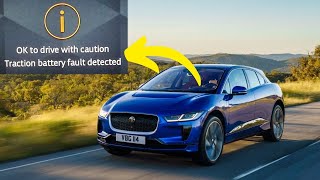
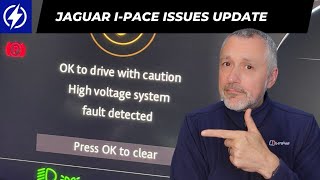
Yes, But With Caution. Driving is possible but dangerous. The vehicle often displays a 'Service High Voltage System' warning and enters a limp mode, limiting speed to 30-40 mph. The primary risk is a sudden loss of drive power if the 12V battery dies mid-trip due to a charging system fault. For certain models (like the Jaguar I-PACE), related battery recalls warn of high-voltage battery overheating, prompting manufacturers to advise parking outdoors away from structures. 🎬 Watch: Jaguar I-PACE fire risk and software recall explained. Service the vehicle immediately.
Common Causes
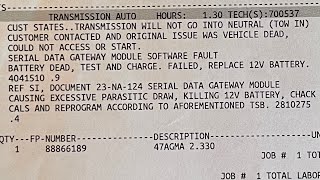
- Battery Energy Control Module (BECM) Software Anomaly (Very Common) — A software glitch or outdated calibration within the BECM is the most frequent cause. General Motors and Jaguar Land Rover issue technical service bulletins (TSBs) requiring a software update to fix this, explicitly warning against replacing hardware.
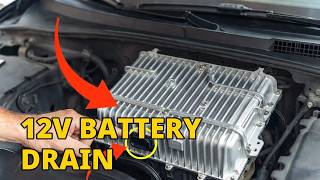
- Faulty DC-to-DC Converter / ICCU (Common) — The DC-to-DC converter charges the 12V battery from the high-voltage pack. If it fails, the 12V battery drains, triggering communication codes. On modern EVs like the Kia EV6 and Hyundai Ioniq 5, this converter is part of the Integrated Charging Control Unit (ICCU), which faces widespread recalls for this exact failure. 🎬 Watch: Understanding ICCU failure signs and recall details.
- Discharged or Faulty 12V Battery (Common) — A weak 12-volt battery disrupts communication between modules. However, a dead 12V battery is frequently a symptom of a failed ICCU rather than the root cause.
- Wiring or Connector Issues (Less Common) — Corrosion, damage, or a loose connection in the CAN bus wiring harness between the BECM and other modules interrupts communication.
- Internal High-Voltage Battery Cell Failure or Isolation Fault (Rare) — An internal fault, such as a leaking cell module shorting to the battery case, causes an isolation fault. The BECM stops communicating as a safety measure.
- Faulty Battery Energy Control Module (BECM) (Rare) — Actual hardware failure of the BECM is uncommon. Service bulletins advise updating the software before replacing the module.
- Network Gateway Module Fault (Rare) — The gateway module acts as a central communication hub. A fault here prevents the BECM from talking to other systems.
Symptoms
- Service High Voltage Battery System Warning Light — A direct message appears on the driver's information center.
- Vehicle Won't Start or Enter 'Ready' Mode — The car refuses to power on or engage drive gears due to the communication breakdown.
- Discharged 12V Battery — The conventional 12V battery dies because the high-voltage system fault prevents the DC-to-DC converter from charging it.
- Inability to Charge High-Voltage Battery — The vehicle fails to initiate charging when plugged in, or charging interrupts unexpectedly.
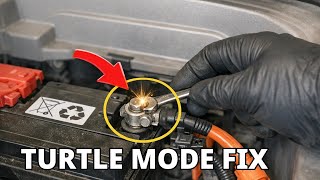
- Reduced Power Mode ('Turtle' Light) — The vehicle enters a limp mode with severely restricted speed to protect the battery system.
- Check Engine Light On — The Malfunction Indicator Lamp (MIL) illuminates on the dashboard.
- Multiple Communication Codes Stored (scan-tool only — no driver-felt sign) — A scan tool reveals a cascade of U-codes as various modules report losing communication with the BECM.
- BECM Module Status 'Not Available' (scan-tool only — no driver-felt sign) — Scan tool live data shows the BECM as offline or unavailable, confirming the communication loss.
Diagnostic Flowchart
Tap your situation to follow the diagnostic path that matches what you're seeing on this code.
Common Fixes & Costs
- Update Battery Energy Control Module (BECM) Software — Parts: $0, Labor: $150-$300, ~1.5 hr book time (Professional)
- Replace Integrated Charging Control Unit (ICCU) — Parts: $1500-$2500, Labor: $400-$800, ~4 hr book time (Professional)
- Replace 12V Battery — Parts: $150-$300, Labor: $50-$100, ~0.5 hr book time (DIY)
- Repair Wiring to BECM — Parts: $10-$50, Labor: $150-$450, ~2.5 hr book time (Intermediate)
- Replace Battery Energy Control Module (BECM) — Parts: $800-$2000, Labor: $200-$500, ~8 hr book time (Professional)
Used vs. New Parts: Buying Guide
When a used part is worth it: Buying used BECMs or ICCUs is highly discouraged. These parts are VIN-locked and require dealer-level programming. A used part likely carries the same internal fault or software incompatibility.
Donor-vehicle mileage cap: roughly under 10000 miles for the part to have meaningful remaining life.
Donor quality checklist:
- Verify the exact part number, as suffixes denote critical revisions.
- Avoid parts from vehicles with flood or fire damage.
- Assume used modules are sold 'as-is' with a high risk of failure.
Decision logic:
- If The fix is a software update → Go to a dealer. This is a service, not a physical part.
- If The part is a BECM or ICCU → Buy new from an authorized dealer. Used parts fail frequently and require repeat labor.
- If The part is a 12V battery → Always buy new. Used batteries have unpredictable remaining lifespans.
Warranty tradeoff: Used modules offer 30-day warranties at best. A new OEM part installed by a dealer carries a 12-month/12,000-mile warranty covering both parts and labor.
Worst-case if a used part fails: $1000-$2000 if a used module fails, requiring repeat labor, a new part, and another tow.
What Happens If You Wait — Timeline
- 0-1 week: Code sets, 'Service High Voltage System' light appears. Vehicle drives normally or has intermittent warnings. The underlying software bug or ICCU failure has occurred. (MPG impact: 0%% · Added cost: $0)
- 1 week - 1 month: If caused by an ICCU failure, the 12V battery stops recharging and slowly discharges. The car becomes slow to 'wake up' and remote functions fail. (MPG impact: 0%% · Added cost: $0-$50 (potential need for a jump start))
- 1-2 months: The 12V battery deeply discharges. The vehicle fails to start or enter 'Ready' mode, leaving you stranded. The 12V battery suffers permanent damage. (MPG impact: N/A (vehicle is disabled)% · Added cost: $150-$300 (Towing) + $200-$400 (New 12V AGM battery))
- 2+ months (if driven intermittently): Driving with active warnings and intermittent power loss causes accidents. If the root cause is an internal battery fault, continued operation risks a thermal event. (MPG impact: N/A% · Added cost: Thousands in accident-related damages or a $4000+ out-of-warranty ICCU replacement.)
Cost of Not Fixing It
- Immediate: Vehicle refuses to start or enter 'Ready' mode, leaving you stranded. High-voltage battery charging is disabled. (Added cost: $150-$300 (Towing service))
- 0-1 month: Progressive damage to the 12V battery due to a lack of charging. A completely discharged battery requires replacement. (Added cost: $200-$400 (New 12V AGM battery))
- 1-6+ months: Driving in 'limp mode' with intermittent power loss drastically increases accident risk. Continued operation stresses other high-voltage components. (Added cost: Thousands in accident-related damages or complex electronic repairs.)
Diagnosis Steps
- Check the 12V Battery State of Charge
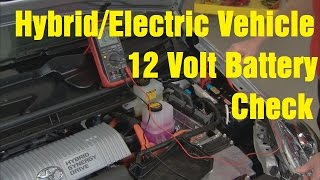
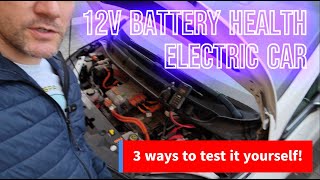
Use a multimeter to check the voltage with the car off. A healthy battery reads between 12.4V and 12.6V. A reading below 12.0V indicates the battery is dead, which is a primary symptom of a charging system failure.
Tools: Multimeter (Beginner) - Verify the 12V Charging System (DC-to-DC Converter)
With a healthy or jump-started 12V battery, turn the vehicle to the 'Ready' state. Measure the voltage across the 12V battery terminals. A functioning DC-to-DC converter produces 13.5V to 14.7V. If the voltage remains at ~12.5V or drops, the 12V battery is not charging, confirming a failed ICCU/converter.
Tools: Multimeter (Beginner) - Scan for All Trouble Codes
Use an OBD-II scanner to read codes from all modules. Pay close attention to other communication (U-codes) or battery-related (P-codes). For example, a P1A9096 code on a Kia/Hyundai guarantees an ICCU failure.
Tools: OBD-II Scanner (Intermediate) - Search for Technical Service Bulletins (TSBs) and Recalls
Look up TSBs and recalls for your vehicle's VIN. Manufacturers frequently release bulletins detailing known software fixes for U3578, saving hours of diagnostic time.
Tools: Internet Access, VIN (Intermediate) - Inspect BECM Wiring and Connectors
Visually inspect the wiring harness and connectors going to the BECM, typically located on or near the high-voltage battery pack. Look for damage, corrosion, or loose pins.
Tools: Flashlight, Inspection Mirror (Intermediate) - Verify CAN Bus Network Integrity
With the ignition ON, check CAN bus voltages at the OBD-II port. CAN High (Pin 6) fluctuates between 2.5V and 3.5V; CAN Low (Pin 14) fluctuates between 2.5V and 1.5V. With the 12V battery disconnected, resistance between Pins 6 and 14 should read 60 Ohms. A 120 Ohm reading indicates an open circuit.
Tools: Multimeter (Advanced) - Analyze Scan Tool Live Data
Access live data PIDs for the BECM and Gateway Module. Monitor module status and communication counters. An increasing error count or a 'Not Available' status for the BECM provides digital confirmation of the communication loss.
Tools: Professional OBD-II Scanner (Advanced) - Verify BECM Software Version
Connect a dealer-level diagnostic tool to check the current software calibration of the BECM against the latest version available from the manufacturer.
Tools: Manufacturer-Specific Scan Tool (Professional) - Perform BECM Software Update
If the software is outdated, perform a software update using the proprietary manufacturer system. This is the most common and direct fix for this code.
Tools: Manufacturer-Specific Scan Tool, Software Subscription, Battery Maintainer (Professional) - Perform High-Voltage Isolation Test
WARNING: This requires specialized training. Use a megohmmeter set to 500V or 1000V to check for continuity between the high-voltage cables and the chassis ground. A reading below the manufacturer's threshold indicates an isolation fault causing the BECM to shut down.
Tools: Megohmmeter, High-Voltage PPE (Professional)
When This Code Triggers (Freeze-Frame Conditions)
- Vehicle State: Key On or Ready (The fault is detected during the initial power-up sequence when modules perform a network check-in.)
- 12V System Voltage: 9V - 11.5V (Triggers when the 12V battery is low, indicating a failure of the DC-DC converter/ICCU.)
- Time Since Power On: 0 - 5 seconds (The code sets immediately after power-on if the BECM fails to send its initial status message.)
- Module Communication Status: BECM: No-Comm (The Gateway Module logs this fault when it misses the expected periodic heartbeat message from the BECM.)
Related Codes
- U3577, U3579-U3584 — These form a family of communication codes related to the same BECM software issue on GM vehicles. They appear together and are resolved simultaneously by updating the BECM software per TSB #PIP6081B.
- P1A9096 — On Kia and Hyundai vehicles, this code points to 'Low Input Voltage at the DC-to-DC Converter'. Seeing this alongside U3578 guarantees the ICCU has failed and is no longer charging the 12V battery.
- P0AA6 — Indicates a 'Hybrid/EV Battery Voltage System Isolation Fault'. High voltage is shorting to the vehicle's chassis, causing the BECM to halt communication as a safety measure.
- U1009 — On a Nissan Leaf, this 'Quick Charger Communication' code is analogous to U3578. It indicates a communication problem between the charger and the battery controller, fixed via software update.
Climate & Environmental Factors
- High Humidity and Temperature Swings: On Hyundai and Kia models, ICCU failures correlate with humid climates and large temperature swings. During high-power AC charging, the ICCU heats up, and upon cooling, it draws in moist air. Condensation on internal circuit boards causes short circuits.
- Extreme Cold: Low temperatures reduce the efficiency and available voltage of the 12V battery. A battery weakened by a failing charging system fails completely during a cold snap, triggering communication codes.
How to Talk to a Mechanic About This Code
Say this: "I have a [Your Vehicle Make/Model] with a 'Service High Voltage System' warning. I believe it's related to code U3578. For my [GM vehicle], please check if TSB PIP6081B for a BECM software update applies. For my [Kia/Hyundai], my 12V battery is dead, and I suspect an ICCU failure; please check the 12V charging voltage and for code P1A9096."
This proves you are an informed owner. It directs the technician to the exact, well-documented cause, preventing expensive, unnecessary diagnostics or a useless 12V battery replacement.
Avoid saying:
- 'My check engine light is on, can you look at it?'
- 'The car won't start, it's probably just the battery.'
- 'Just fix whatever you think is wrong.'
Questions to ask before authorizing the repair:
- Is this repair covered under a recall, special coverage, or the 8-year/100,000-mile federal battery warranty?
- For a software update, can you confirm the current and new software calibration part numbers you will install?
- For a suspected ICCU failure, what exact voltage did you measure at the 12V battery when the car was in 'Ready' mode?
- If the software update fails, what is the next diagnostic step and its cost?
Where to Take It: Dealer vs Independent vs Chain
- Dealer:
Strongly Recommended. The most common fixes require proprietary manufacturer software and tools that only dealers possess. For safety and a correct first-time repair, the dealer is mandatory.
Best for: All repairs for code U3578, especially software updates and high-voltage component replacement (BECM, ICCU)., Any vehicle under its base, powertrain, or federal 8-year/100,000-mile battery warranty., Executing recalls and Technical Service Bulletins (TSBs).
Downsides: Higher labor rates, typically 1.5-2x that of an independent shop., Attempts to upsell unnecessary services., Longer wait times for appointments and parts. (Typical cost: +50% vs. baseline) - Independent Shop:
Use with caution. A regular independent shop is NOT recommended. A qualified EV specialist helps with diagnosis but must send the vehicle to a dealer for the final repair.
Best for: Post-warranty diagnostics if they are a specialized EV repair shop., Confirming a dead 12V battery and checking the 12V charging system., Second opinions on exorbitant dealer quotes.
Downsides: General auto shops cannot perform required software updates and lack high-voltage training., Even EV specialists lack access to the latest TSBs or authorization for warranty/recall work. (Typical cost: +0% vs. baseline) - Chain Shop:
AVOID. They are entirely unequipped to handle the complex, high-voltage issues associated with code U3578.
Best for: Simple part replacements completely unrelated to this code (e.g., tires, wipers).
Downsides: Zero training or tools for EV diagnostics and high-voltage systems., Guaranteed to misdiagnose the fault as a bad 12V battery, leading to repeat failures., High pressure to upsell unnecessary services. (Typical cost: -10% vs. baseline)
When to Walk Away From the Repair
If an out-of-warranty repair cost exceeds 40-50% of the car's current private-party value, evaluate alternatives. However, for U3578, the repair is almost always covered by warranty or recall.
- Car worth $18000, fix is $7000: Walk away if out of warranty. An ICCU replacement at $7,000 on a 2022 Kia EV6 worth $18,000 is 39% of the vehicle's value. Explore trade-in options.
- Car worth $30000, fix is $300: Fix it. A $300 software update on a 2023 Cadillac Lyriq worth $30,000 is a minor cost and essential for function.
- Car worth $25000, fix is $0: Fix it. If covered by the 8-year/100,000-mile federal warranty or a specific recall, the cost is $0. Perform the repair immediately.
What Scan Tool You Need for This Code
Minimum: A scanner reading live data from all vehicle modules, not just the engine. Must display 'Control Module Voltage' to verify 12V charging system health.
A basic $20 reader only shows the U3578 code. It cannot see critical related codes (like P1A9096) or display live voltage data needed to distinguish a bad 12V battery from a failed ICCU.
Budget: BlueDriver Pro or OBDLink MX+ (~$100) — Connects to a smartphone app to read enhanced codes from all modules. Graphs live data, allowing you to watch the 12V system voltage with the car on vs. off to confirm charging system health.
Mid-range: Foxwell NT510 Elite (~$200) — A powerful handheld scanner providing deep access to manufacturer codes and special functions, giving a much clearer diagnostic picture than a generic tool.
Professional: Autel MaxiCOM MK808S (~$500) — Offers full-system diagnostics with extensive live data and bidirectional controls. However, it CANNOT perform the online, VIN-locked software programming required for a BECM or ICCU update.
Rent vs buy: Buy. A $100 Bluetooth scanner empowers you to perform the single most important DIY test: verifying 12V charging system health. This protects you from common misdiagnoses.
How to Clear the Code After You Fix It
- Perform the required repair (e.g., BECM software update, ICCU replacement).
- Use a professional OBD-II scan tool to clear codes from all modules.
- Do NOT disconnect the 12V battery to clear this fault, as it causes further module communication errors.
- Perform a vehicle-specific drive cycle to ensure all systems communicate properly.
Drive cycle (~20 minutes): Start the vehicle and idle in 'Ready' mode for 2 minutes. Drive for 10 minutes, including stop-and-go and steady-state driving at 45-55 mph. Power the vehicle off completely and let it sit for 5 minutes. Power on again and check for codes.
Readiness monitors affected: Comprehensive Component Monitor, Battery/Charging System Monitor (EV-specific)
Before emissions retest: drive at least 50 miles to fully set monitors.
Watch out for:
- Clearing the code without fixing the underlying software or ICCU issue results in the code returning immediately.
- Basic code readers fail to clear the fault from the Gateway Module, causing the code to persist.
- Failing to perform module programming after replacing a BECM or ICCU prevents the system from working.
Will This Fail Emissions / State Inspection?
Yes — this code typically fails an OBD-II emissions inspection.
- California: An illuminated Check Engine Light is an automatic failure. While EVs are exempt from tailpipe tests, they are subject to OBD-II system checks which this code fails.
- New York: Vehicles 1996 and newer face OBD-II inspections. An active Malfunction Indicator Lamp causes an automatic failure.
- Texas: In emissions-testing counties, an illuminated Check Engine Light results in an automatic failure of the OBD-II test.
Most Commonly Affected Vehicles
- GMC Hummer EV (2022-2026) — Affected by known software anomalies in the BECM. TSB #PIP6081B addresses this code family.
- Cadillac Lyriq (2023-2026) — Shares the Ultium platform with the Hummer EV and is susceptible to the same BECM software issues requiring updates.
- Chevrolet Silverado EV (2024-2026) — Built on the GM Ultium platform and affected by BECM software faults. Addressed by service campaign N252516700.
- Chevrolet Bolt EV/EUV (2017-2023) — Known to have various battery-related software issues and major recalls requiring dealer-installed diagnostic software.
- Jaguar I-PACE (2019-2024) — Subject to recalls H441, H471, and H514 for a BECM software update to monitor for overheating and fire risks.
- Kia EV6 (2022-2024) — Prone to Integrated Charging Control Unit (ICCU) failure, which stops the 12V battery from charging. Covered by recalls SC302 and SC327.
- Hyundai / Genesis Ioniq 5, Ioniq 6, GV60, Electrified G80/GV70 (2022-2025) — Shares the E-GMP platform with the Kia EV6 and is affected by the same widespread ICCU failure. Addressed by Campaign 24-01-037H.
- Nissan Leaf (2018-2024) — Affected by charging-related communication issues. TSB NTB19-056 details a software update for the Lithium Battery Controller (LBC).
Manufacturer-Specific Notes
- General Motors (GM): For Ultium platform vehicles, TSB PIP6081B explicitly instructs technicians to perform a BECM software update and strictly forbids replacing hardware for this code family.
- Kia / Hyundai: A dead 12V battery and communication codes are almost always caused by a failed Integrated Charging Control Unit (ICCU), addressed by major safety recalls requiring software updates and hardware replacement.
- Jaguar Land Rover (JLR): JLR issued multiple cascading recalls (H441, H471, H514) for the I-PACE because dealers frequently performed the initial BECM software update incorrectly using non-approved tools.
- Nissan: Nissan refers to its BECM as the Lithium Battery Controller (LBC). Charging-related communication faults require reprogramming the LBC using a proprietary CONSULT scan tool.
Real Owner Stories
2023 Kia EV6 GT-Line with ~23K miles
During a snowstorm, the car lost acceleration, limited speed to 15 mph, and displayed 'electrical system failure' and '12V failure' warnings one month after a recall software update.
Outcome: The dealership diagnosed a catastrophic ICCU failure. The vehicle awaited a replacement part for weeks.
Lesson: Even if your vehicle received the ICCU software recall, the hardware still fails. Sudden power loss and a dead 12V battery guarantee an ICCU failure, not just a bad 12V battery.
2017 Chevy Volt with a replaced BECM
Months after a warranty BECM replacement, code P2097 appeared. The owner suspected a related software issue.
Outcome: The owner rejected the exorbitant quote for 1-2 hours of labor and sought an independent shop with a GM MDI tool.
Lesson: Dealer quotes for software repairs vary wildly. If quoted over $400 for a software flash, get a second opinion. Mentioning the specific TSB proves you are informed.
2019 Jaguar I-PACE with multiple battery issues
The owner experienced a dead 12V battery and received a high-voltage battery recall notice (H572) shortly after having three battery modules replaced.
Outcome: The owner lost effective driving range due to the software patch restricting maximum charge.
Lesson: Recalls for battery fire risks often involve software that limits performance (like max charge) until a permanent hardware fix is developed. One repair frequently leads to another recall.
How to Prevent This Code From Triggering
- Keep 12V Battery on a Tender if Stored (When parking for more than 2 weeks) — Prevents deep discharging. A low 12V battery causes communication modules to malfunction on startup, triggering U-codes even if the charging system is healthy.
- Perform All Recommended Software Updates (During any dealer service visit) — Manufacturers release software patches fixing communication bugs. Specific software updates are the primary fix for this code family on GM, Kia, and Jaguar vehicles.
- Monitor 12V Battery Voltage (Monthly or if symptoms appear) — Catches a degrading ICCU early. A multimeter or Bluetooth monitor showing 'Ready' state voltage consistently below 13.5V indicates a problem before you get stranded.
- Avoid Frequent Deep Discharges of High-Voltage Battery (Daily habit) — Maintaining the high-voltage battery between 20% and 80% reduces stress on the battery management system, BECM, and charging hardware.
Frequently Asked Questions
What is the most common misdiagnosis for U3578?
Replacing the 12V battery without checking the charging system is the most common mistake. A dead 12V battery is usually a symptom of a failed DC-to-DC converter or ICCU. Always verify the high-voltage system is charging the 12V battery when the car is on.
Can an Over-the-Air (OTA) update fix code U3578?
No. Critical control module programming requires a direct, stable wired connection and a high-amperage battery maintainer. Interrupting an OTA update risks permanently damaging the module, so this requires a dealer visit.
Can I fix code U3578 myself?
No, unless the issue is strictly a dead 12V battery. The most common fixes require proprietary dealership diagnostic tools for software updates or high-voltage safety equipment for ICCU replacement. Leave this to professionals.
Is it safe to drive with a U3578 code?
No. The code indicates a high-voltage system fault that causes sudden power loss or disables the vehicle entirely. Driving increases the risk of a crash or leaving you stranded.
How much does it cost to fix U3578?
A dealer software update costs $150 to $300 in labor. Replacing a 12V battery costs $200 to $400. A failed ICCU replacement ranges from $1,900 to $3,300 out-of-pocket, though warranties or recalls often cover it.
Will my warranty cover the repair for U3578?
Yes, in most cases. Federal law mandates 8-year/100,000-mile warranty coverage for key EV components like the BECM and high-voltage battery. Active recalls for GM software or Hyundai/Kia ICCUs also guarantee free repairs.
What is an ICCU and why does it fail?
The Integrated Charging Control Unit (ICCU) manages high-voltage fast charging and 12V accessory battery charging in Hyundai and Kia EVs. It fails due to electrical stress or thermal cycling damaging internal transistors. This stops 12V charging, triggering communication codes like U3578.
Key Takeaways
- Code U3578 typically requires a 1-to-2 hour dealership software update for the Battery Energy Control Module (BECM) rather than a physical part replacement.
- Never replace a dead 12-volt battery without first verifying the DC-to-DC converter outputs 13.5V to 14.7V while the vehicle is running.
- On 2022-2025 Hyundai and Kia EVs, U3578 paired with code P1A9096 guarantees a failed Integrated Charging Control Unit (ICCU) requiring a $2,000+ replacement.
- Check the NHTSA website immediately using your VIN, as over 80% of U3578 triggers on GM, Jaguar, and Hyundai/Kia vehicles are covered by active, free safety recalls.
Helpful Videos


The information in this article is provided for general reference and educational purposes only. Vehicle specifications, procedures, and part compatibility can vary by production date, trim level, and region. Always consult your vehicle's factory service manual and verify part numbers before purchasing or performing repairs. Safety-critical components such as airbags, seat belts, and braking systems should be installed by a qualified professional.
- 🎬 Helpful Videos
- What Does U3578 Mean?
- Can I Drive With U3578?
- Common Causes
- Symptoms
- Diagnostic Flowchart
- Common Fixes & Costs
- Used vs. New Parts: Buying Guide
- What Happens If You Wait — Timeline
- Cost of Not Fixing It
- Diagnosis Steps
- When This Code Triggers (Freeze-Frame Conditions)
- Related Codes
- Climate & Environmental Factors
- How to Talk to a Mechanic About This Code
- Where to Take It: Dealer vs Independent vs Chain
- When to Walk Away From the Repair
- What Scan Tool You Need for This Code
- How to Clear the Code After You Fix It
- Will This Fail Emissions / State Inspection?
- Most Commonly Affected Vehicles
- Manufacturer-Specific Notes
- Real Owner Stories
- 2023 Kia EV6 GT-Line with ~23K miles
- 2017 Chevy Volt with a replaced BECM
- 2019 Jaguar I-PACE with multiple battery issues
- How to Prevent This Code From Triggering
- Frequently Asked Questions
- What is the most common misdiagnosis for U3578?
- Can an Over-the-Air (OTA) update fix code U3578?
- Can I fix code U3578 myself?
- Is it safe to drive with a U3578 code?
- How much does it cost to fix U3578?
- Will my warranty cover the repair for U3578?
- What is an ICCU and why does it fail?
- Key Takeaways
- 🎟️ Get 5% Off