

OBD-II Code U3013: Control Module Input Power 'C' Circuit/Open
The Ultimate Guide to What U3013 Means, Why It Triggers, and How to Fix It for Good
- Code U3013 indicates a control module—typically the Body Control Module (BCM)—lost power on its 'C' circuit.
- Test the battery, fuses, and ground connections first, as these 3 simple failures cause 80% of U3013 codes.
- Expect electrical symptoms like dead power windows, a drained battery, and a cascade of secondary 'U' communication codes on your scanner.
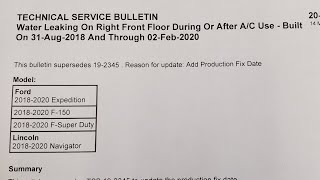
- On Ford vehicles, the U3013:16 variant specifically means voltage dropped below 11.5V, often requiring a $15 A/C drain fix (TSB 20-2170) rather than a $1,000 BCM replacement.
What Does U3013 Mean?

Trouble code U3013 signifies a specific electronic control module lacks correct electrical power. The module (often the BCM) detects its 'C' power supply circuit is open or has insufficient voltage. Think of it like a computer motherboard missing a power cable—the machine turns on, but specific components fail to operate.
Technical definition: The SAE/ISO definition is "Control Module Input Power 'C' Circuit/Open". Ford adds a two-digit suffix: U3013:16 specifies "Circuit Voltage Below Threshold", indicating a sustained voltage drop. U3013:17 indicates "Circuit Voltage Above Threshold", pointing to an overcharging alternator.
Can I Drive With U3013?
Yes, But With Caution. Yes, you can drive with a U3013 code, as it usually affects non-essential systems like interior lights, power windows, or the radio. Core driving functions remain intact. However, a failing Body Control Module (BCM) suddenly disables exterior lighting or anti-theft systems, creating a significant safety hazard. Ignoring the issue drains the battery, adding a $150-$350 battery replacement to your final repair bill.
Common Causes

- Weak or Failing Battery (Very Common) — An old or weak battery is the most frequent cause. Modern vehicles require a stable 12.6 volts; a battery that starts the car still triggers this code if voltage sags during operation or cranking.
- Blown Fuse (Common) — A blown fuse cuts power to the module and immediately sets the U3013 code. This is a built-in protection mechanism against electrical overloads.
- Poor Ground Connection (Common) — A loose or corroded ground connection starves the module of power. High-resistance grounds cause the exact same symptoms as a severed power wire, often occurring where paint or rust blocks the chassis connection.
- Damaged or Corroded Wiring/Connectors (Common) — Corroded pins or damaged wires create an open circuit. This occurs frequently in moisture-prone areas like kick panels, door jambs, or under the hood near the battery.
- Faulty Battery Management System (BMS) Reset (Common) — If a new battery is installed without resetting the Battery Management System (BMS), the vehicle charges it incorrectly, leading to low-voltage codes.
- Failing Alternator (Less Common) — A failing alternator produces insufficient voltage, causing multiple modules to log power-related codes simultaneously.
- Aftermarket Accessory Interference (Less Common) — Improperly installed remote starters, alarms, or dash cams draw excessive power or create shorts, dropping module voltage.
- Faulty Control Module (e.g., BCM, ABS) (Rare) — Internal module failures are rare. A BCM usually only fails if its internal voltage regulation circuits burn out or suffer direct water damage. 🎬 Watch: A guide to diagnosing and fixing a bad BCM.
Symptoms
- Malfunctioning Electrical Accessories — Power windows, door locks, interior lights, or the radio stop working, work intermittently, or behave erratically. 🎬 See common BCM failure symptoms and how to check them.
- Warning Lights on Dash — The ABS, traction control, or specific system fault lights illuminate. The Check Engine Light remains off unless related emissions faults exist.
- Parasitic Battery Drain — A shorted circuit fails to shut down when the car turns off, draining the battery overnight or after a few days of sitting.
- No-Start Condition — If the BCM controls the anti-theft system and loses power, it fails to validate the key, preventing engine crank.
- Flood of Communication ('U') Codes (scan-tool only — no driver-felt sign) — When the module loses power, it drops off the network. Other modules log 'Lost Communication' codes (like U0140) in a cascade effect.
Diagnostic Flowchart

Tap your situation to follow the diagnostic path that matches what you're seeing on this code.
Common Fixes & Costs
- Replace Weak or Dead Battery — Parts: $150-$350, Labor: $0-$50, ~0.5 hr book time (DIY)
- Replace Blown Fuse — Parts: $1-$10, Labor: $0-$130, ~0.2 hr book time (DIY)
- Clean or Repair Ground Connection — Parts: $5-$20, Labor: $100-$250, ~1.0 hr book time (DIY)
- Repair Damaged Wiring or Connector — Parts: $10-$50, Labor: $150-$600, ~2.5 hr book time (Intermediate)
- Replace Faulty Control Module (BCM, ABS) — Parts: $300-$900, Labor: $200-$450, ~2.0 hr book time (Professional)
DIY vs Professional
- Replace Weak or Dead Battery — Beginner:
Tools: Wrench set, terminal cleaner brush, safety glasses. - Replace Blown Fuse — Beginner:
Tools: Fuse puller, owner's manual. - Clean or Repair Ground Connection — Beginner:
Tools: Wrench set, wire brush/sandpaper, dielectric grease. - Repair Damaged Wiring or Connector — Beginner:
Tools: Multimeter, wire strippers, crimpers, heat shrink tubing. - Replace Faulty Control Module — Beginner:
Tools: Trim removal tools, wrench set, advanced bidirectional scan tool.
Used vs. New Parts: Buying Guide
When a used part is worth it: A used BCM is a budget-friendly option for older vehicles if you have access to tools (like FORScan) capable of reprogramming a used module.
Donor-vehicle mileage cap: roughly under 100000 miles for the part to have meaningful remaining life.
Donor quality checklist:
- Match the part number EXACTLY.
- Source from a reputable recycler offering a short-term warranty.
- Avoid modules from flood-damaged vehicles.
- Obtain the donor vehicle's VIN for programming needs.
Decision logic:
- If The vehicle is less than 10 years old and the part is under $500 new → Buy a new or remanufactured BCM. Reliability outweighs modest savings.
- If The BCM requires complex VIN and security programming → Favor a new OEM unit. Some used modules are 'locked' to their original VIN and cannot be reprogrammed.
- If The vehicle is over 150,000 miles and you plan to sell it soon → A functional, programmed used BCM is an acceptable short-term solution.
Warranty tradeoff: Used parts carry a 30-90 day part-only warranty. Remanufactured modules offer 1-year to lifetime warranties. New OEM parts include a 1-2 year parts and labor warranty.
Worst-case if a used part fails: $300-$600 if a used BCM fails, covering repeat labor and non-refundable programming attempts.
What Happens If You Wait — Timeline
- 0-4 Weeks: Code U3013 sets intermittently. Occasional flicker of lights or power accessory failure. (MPG impact: 0%% · Added cost: $0)
- 1-3 Months: Fault becomes frequent. Battery dies after sitting 3-4 days due to parasitic drain. (MPG impact: 0%% · Added cost: $50-$150 (jump start service))
- 3-6 Months: Parasitic drain kills battery overnight. Deep cycling permanently damages the battery. (MPG impact: 0%% · Added cost: $150-$350 (new battery))
- 6+ Months: Catastrophic failure. Stranded vehicle. Overworked alternator fails completely. (MPG impact: 0%% · Added cost: $850-$2000+ (towing, alternator, BCM replacement))
Cost of Not Fixing It
- Immediate: Loss of convenience features like power windows or radio. Potential no-start condition if the BCM controls anti-theft. (Added cost: $0)
- 1-4 Weeks: A persistent parasitic drain kills the battery, requiring jump starts. Deep cycling permanently damages standard lead-acid batteries. (Added cost: $150-$350 (for a new battery))
- 1-6 Months: Stranded vehicle due to a dead battery. Failure of critical safety systems like exterior lighting occurs without warning. (Added cost: $150-$300 (for towing and diagnostics))
- 6+ Months: Chronic low voltage destroys the alternator. Water intrusion corrodes other modules, dramatically increasing repair costs. (Added cost: $500-$1500+ (alternator replacement and wiring repair))
Diagnosis Steps
- Check and Charge the Battery
Use a multimeter to check battery voltage. A healthy battery reads 12.6V engine off, and 13.7-14.7V engine running. Have it professionally load-tested at an auto parts store, as batteries showing 12.6V can still fail under load.
Tools: Multimeter, Battery Load Tester (Beginner) - Inspect the Fuses
Locate the fuse for the affected module (BCM, ABS) using the owner's manual. Pull the fuse and check for a broken metal strip. Use a multimeter set to continuity for a definitive test.
Tools: Owner's Manual, Fuse Puller, Multimeter (Beginner) - Test for Power at the Module
Unplug the connector from the suspect module and turn the ignition on. Using a wiring diagram, identify the 'Input Power C' pin. Touch the red multimeter probe (DC Volts) to the pin and the black probe to chassis ground. A 0V reading means the wiring between the fuse box and module is broken.
Tools: Multimeter, Wiring Diagram (Intermediate) - Test for a Good Ground
Switch the multimeter to Ohms (Ω). Measure resistance between the module's ground pin and a clean chassis metal point. A reading above 1 Ohm indicates a faulty ground connection starving the module of power.
Tools: Multimeter, Wiring Diagram (Intermediate) - Visual Inspection & Wiggle Test
Inspect the wiring harness for green corrosion, moisture, or chafed wires. With the multimeter monitoring voltage at the module connector, gently wiggle the harness. If voltage flickers, you found the intermittent open circuit.
Tools: Flashlight, Multimeter (Intermediate) - Quantify Parasitic Draw
Disconnect the negative battery terminal and connect a multimeter (10A DC setting) in series. Wait 30-60 minutes for modules to sleep. A reading over 100mA (0.100A) confirms a parasitic drain. Pull fuses one by one until the draw drops to isolate the circuit.
Tools: Multimeter with 10A Amps setting (Advanced) - Confirm Module Failure
If the module receives full battery voltage and has a solid ground (under 1 Ohm) but symptoms persist, the module failed internally. Confirm this by attempting communication with an advanced bidirectional scan tool.
Tools: Advanced OBD-II Scan Tool (Advanced)
When This Code Triggers (Freeze-Frame Conditions)
- Module Voltage: 9.0 - 11.5V (The code sets when the module's monitored voltage drops below 11.5V, often recorded as low as 9V during a cranking event.)
- Ignition Status: Key On, Engine Off or Cranking (Triggered during the startup sequence when a weak battery's voltage sags under the starter motor's load.)
- System Voltage: <12.0V (Low overall system voltage points directly to a battery or charging system issue as the root cause.)
- Time Since Start: 0-10 seconds (Logged immediately upon waking up the vehicle's networks or during initial power-up.)
Related Codes
- U0140 — 'Lost Communication With Body Control Module.' U3013 is the CAUSE, U0140 is the EFFECT. The BCM loses power, dropping off the network.
- U0401 — 'Invalid Data Received From ECM/PCM.' Set when unstable power causes a module to send corrupted data before shutting down.
- U3003:16 — 'Battery Voltage - Below Threshold.' Indicates a systemic voltage problem. If present with U3013, the root cause is the battery or alternator.
- U3006 / U3007 / U3014 — 'Control Module Input Power A/B/D Circuit.' Indicates a widespread power supply issue affecting multiple feeds to the same module.
Climate & Environmental Factors
- High Humidity: Accelerates corrosion on electrical connectors and ground points. Moisture penetrates module seals, causing short circuits.
- Cold Weather: Reduces a battery's cranking power. A weak battery provides insufficient voltage during cold startups, triggering U3013.
- Rodent Infestation: Rodents chew through soy-based wire insulation, severing power to control modules.
How to Talk to a Mechanic About This Code
Say this: "I have a U3013 code and electrical issues like [mention symptoms]. Please start by load-testing the battery and checking the power and ground connections for the Body Control Module before quoting a new module."
Directs the shop to follow a logical, cost-effective diagnostic path rather than immediately jumping to an expensive BCM replacement.
Avoid saying:
- 'My car is acting weird, can you fix it?'
- 'I think the computer is fried.'
- 'Just do whatever it takes to fix it.'
Questions to ask before authorizing the repair:
- Did you load-test the battery, and what were the results?
- Did you verify power and ground at the module's main connector? What were the readings?
- Does the new module require programming, and is that cost included?
Where to Take It: Dealer vs Independent vs Chain
- Dealer:
Best for: Vehicles under warranty, Known TSBs (like the Ford A/C drain leak), Complex module replacement requiring proprietary programming software
Downsides: Highest labor rates., Defaults to module replacement instead of wiring repair. (Typical cost: +50% vs. baseline) - Independent Shop:
Best fit. A good independent auto electric specialist excels at methodical testing and is more cost-effective than a dealer.
Best for: Out-of-warranty vehicles, Diagnosing tricky electrical faults like bad grounds, Most U3013 scenarios caused by battery, fuse, or wiring issues
Downsides: May lack manufacturer-specific programming tools. (Typical cost: +0% vs. baseline) - Chain Shop:
AVOID for diagnosis. They misdiagnose electrical issues and use the expensive 'parts cannon' approach.
Best for: Simple battery replacement, Checking fuses
Downsides: Not equipped for complex electrical diagnosis., High pressure to upsell parts. (Typical cost: -10% vs. baseline)
When to Walk Away From the Repair
If the estimated repair cost exceeds 40-50% of the car's private-party value, consider selling or trading in the vehicle.
- Car worth $8000, fix is $1500: Fix it. The repair cost is well below the 50% threshold.
- Car worth $4000, fix is $1800: Borderline. Get a second opinion before authorizing.
- Car worth $2500, fix is $1500: Walk away. The repair cost is over 50% of the vehicle's value.
What Scan Tool You Need for This Code

Minimum: A scanner that reads manufacturer-specific codes from modules beyond the engine (BCM, ABS) and displays live data to monitor module voltage.
A basic $20 code reader only checks generic engine codes and cannot see the 'U' code stored in the BCM.
Budget: BlueDriver Pro Scan Tool (~$100) — Reads/clears codes from all modules and shows live voltage data.
Mid-range: FORScan with OBDLink EX Adapter (for Ford) / Foxwell NT510 Elite (~$140) — FORScan performs near-dealer-level BCM programming and resets for Fords. Foxwell provides deep diagnostics for other brands.
Professional: Autel MaxiCOM MK808S / Launch CRP919XBT (~$360-550) — True bidirectional scanners. They actively test components by sending commands directly from the tool to confirm internal module failure.
Rent vs buy: For a one-time diagnosis, paying a professional is more efficient. If you DIY regularly, a midrange pick pays for itself quickly.
How to Clear the Code After You Fix It
- Fix the underlying electrical fault (replace battery, repair wire, clean ground).
- Reconnect the battery if disconnected.
- Use an OBD-II scan tool to clear U3013 and related communication codes (like U0140).
- Start the vehicle and verify affected accessories operate correctly.
Drive cycle (~15 minutes): Start the vehicle and idle for 3 minutes. Drive for 10-15 minutes, operating the components controlled by the repaired module (windows, locks, lights) to confirm the fault does not return.
Readiness monitors affected: None directly. However, disconnecting the battery or clearing codes resets all emissions readiness monitors to 'Not Ready'.
Before emissions retest: drive at least 50 miles to fully set monitors.
Watch out for:
- Clearing the code without fixing the root cause guarantees it returns immediately.
- Disconnecting the battery resets emissions monitors, causing an automatic failure at an emissions testing station until a drive cycle completes.
- Failing to program a newly installed module prevents the code from clearing.
Will This Fail Emissions / State Inspection?
Yes — this code typically fails an OBD-II emissions inspection.
- California: Fails smog check if any diagnostic trouble codes are present. All readiness monitors (except EVAP) must be 'Ready'.
- New York: The NYVIP3 inspection fails active U3013 codes. For 2001+ vehicles, only one readiness monitor can be 'Not Ready'.
- Texas: In the 17 emissions-testing counties, an active U3013 code causes an OBD test failure.
Most Commonly Affected Vehicles
- Ford F-150 (2015-2020) — Extremely common. Water leaking from a faulty A/C evaporator drain tube saturates the BCM in the kick panel. Ford issued TSB 20-2170 for this exact issue.
- Ford F-250/F-350 Super Duty (2017-2022) — Triggered by damaged wiring harnesses in the driver's side kick panel, especially on snowplow packages. TSB 20-2170 (A/C drain leak) also applies.
- Ford Explorer (2013-2019) — Traced back to a failing battery or wiring issues near the ABS module.
- Subaru Outback, Legacy, Forester (2015-2022) — Caused by a faulty Thermo Control Valve leaking coolant (2019-2021, TSB 02-192-22R) or a broken Electronic Parking Brake connector (2015-2018, TSB 06-87-22R).
- Dodge/Ram 1500/2500/3500 (2019-2024) — A failure in the blind spot monitoring sensor in the tail light assembly shorts the network, triggering U3013 in the BCM.
- Chevrolet/GMC Silverado/Sierra (2014-2019) — Points to a communication network problem. Check fuses F13 and F51 in the underhood fuse block.
- Mazda 3 (2010-2014) — Points to a common failure of the ABS control module. Pothole impacts break weak internal connections.
- Hyundai/Kia Elantra, Forte (2011-2018) — Points to an internal fault in the 'Smart Junction Block' (integrated fuse box/BCM).
Manufacturer-Specific Notes
- Ford: U3013:16 ('Circuit Voltage Below Threshold') points to a battery, fuse, or wiring issue. TSB 20-2170 details an A/C drain leak destroying the BCM on trucks and SUVs.
- General Motors (Chevy/GMC): U3013 is often a secondary code. The primary fault is a loss of communication on the high-speed CAN bus caused by a single bad module.
- Dodge/Ram: A fault in a peripheral component, like a blind spot sensor, causes a power issue reported by the central BCM as U3013.
- Subaru: Multiple TSBs with warranty extensions exist for known electrical faults (Thermo Control Valve, EPB connectors). Always check TSBs before paying for repairs.
Real Owner Stories
2019 Ford F-150 with 45K miles
After a rainstorm, the dash lit up with warnings and the radio died. A scan revealed U3013 and U0140 codes.
What they tried:
- Battery tested good.
- Mechanic quoted $1,400 for a new BCM.
- Owner found Ford TSB 20-2170 online.
Outcome: The owner found damp passenger carpet. He installed the TSB elbow (part #4M2Z-6A614-AA, $15) on the A/C drain. After drying the BCM, all faults cleared permanently.
Lesson: On Ford trucks, always check for a wet passenger footwell before replacing the BCM. This $15 fix saves over $1,000.
2015 Ford F-150 with 100K miles
Gauges and radio went dead intermittently. Code U3013:16 stored.
What they tried:
- Checked battery and fuses (all good).
- Shop suggested a failing BCM.
Outcome: The owner found a severely corroded braided ground strap from the frame to the engine block. Replacing the $20 strap permanently fixed the electrical gremlins.
Lesson: Intermittent electrical faults are often poor ground connections. Inspect major ground straps on high-mileage vehicles.
2020 Subaru Outback with 30K miles
Check Engine light and EyeSight disabled. Dealer found U3013.
What they tried:
- Dealer proposed expensive electrical diagnosis.
- Owner searched symptoms and found Subaru TSB 02-192-22R.
Outcome: A faulty Thermo Control Valve leaked coolant onto wiring. The $1,800 repair was fully covered under a Subaru warranty extension.
Lesson: Always search for TSBs related to your symptoms. Known issues often have free repairs via warranty extensions.
2019 Ram 1500 with 60K miles
Persistent U3013 code, 'Service Blind Spot System' message, and a battery dying every two days.
What they tried:
- Replaced battery, drain continued.
- Shop failed to trace the drain.
Outcome: Dealer identified a water-damaged blind spot sensor in the tail light. It shorted out, staying 'awake' and draining the battery. Replacing the $250 sensor fixed all issues.
Lesson: A U3013 in a central module (BCM) is often caused by a shorted peripheral component. Parasitic draw is a key clue.
How to Prevent This Code From Triggering
- Clean Battery Terminals (Every 6 months) — Corrosion creates resistance, causing voltage drops. Clean terminals provide a solid foundation for the electrical system.
- Use a Battery Tender (When stored for 2+ weeks) — Prevents the constant 25-85mA parasitic draw from draining and damaging the battery.
- Clean Cowl and A/C Drains (Annually) — Prevents water overflow into the cabin, protecting sensitive electronics like the BCM.
- Inspect Wiring Harnesses (Annually) — Identifies chafing wires. Applying dielectric grease to connectors prevents moisture corrosion.
Frequently Asked Questions
My mechanic wants to replace the BCM, but could it just be a bad ground?
Yes. A corroded ground wire creates high resistance, starving a module for power and mimicking a failed unit. Insist the shop tests the module's ground circuit for resistance (under 1 Ohm) before authorizing a replacement.
My battery is new but I still got a U3013 code. Why?
First, you must perform a 'BMS Reset' so the vehicle knows to charge the new battery correctly. Second, the root cause is likely a bad ground, parasitic draw, or wiring fault rather than the battery itself.
Can I just clear the U3013 code?
You can clear the code, but it returns immediately if the fault persists. Clearing the code never fixes the underlying electrical problem causing the power loss.
Why did I get a bunch of other 'U' codes along with U3013?
Modern cars have dozens of networked computers. When one module loses power (U3013), all other modules expecting its data log a 'Lost Communication' code (like U0140). Fixing the single power issue resolves the entire cascade of codes.
Can a U3013 code cause my car not to start?
Yes. In many vehicles, the BCM integrates with the passive anti-theft system (PATS). If the BCM loses power, it cannot read your key's transponder chip, disabling the starter.
What is a TSB and does it mean my repair is free?
A Technical Service Bulletin (TSB) is a manufacturer repair guide for a known defect, not a recall. The repair is only free if your vehicle is under warranty or covered by a specific warranty extension.
How much does it cost to diagnose a U3013 code?
Shops charge a diagnostic fee covering one to two hours of labor. Expect to pay $150 to $300 for a proper electrical diagnosis. This covers load-testing the battery and probing wiring to pinpoint the exact short or open circuit.
Key Takeaways
- Code U3013 indicates a control module—typically the Body Control Module (BCM)—lost power on its 'C' circuit.
- Test the battery, fuses, and ground connections first, as these 3 simple failures cause 80% of U3013 codes.
- Expect electrical symptoms like dead power windows, a drained battery, and a cascade of secondary 'U' communication codes on your scanner.
- On Ford vehicles, the U3013:16 variant specifically means voltage dropped below 11.5V, often requiring a $15 A/C drain fix (TSB 20-2170) rather than a $1,000 BCM replacement.
Helpful Videos


The information in this article is provided for general reference and educational purposes only. Vehicle specifications, procedures, and part compatibility can vary by production date, trim level, and region. Always consult your vehicle's factory service manual and verify part numbers before purchasing or performing repairs. Safety-critical components such as airbags, seat belts, and braking systems should be installed by a qualified professional.
- 🎬 Helpful Videos
- What Does U3013 Mean?
- Can I Drive With U3013?
- Common Causes
- Symptoms
- Diagnostic Flowchart
- Common Fixes & Costs
- DIY vs Professional
- Used vs. New Parts: Buying Guide
- What Happens If You Wait — Timeline
- Cost of Not Fixing It
- Diagnosis Steps
- When This Code Triggers (Freeze-Frame Conditions)
- Related Codes
- Climate & Environmental Factors
- How to Talk to a Mechanic About This Code
- Where to Take It: Dealer vs Independent vs Chain
- When to Walk Away From the Repair
- What Scan Tool You Need for This Code
- How to Clear the Code After You Fix It
- Will This Fail Emissions / State Inspection?
- Most Commonly Affected Vehicles
- Manufacturer-Specific Notes
- Real Owner Stories
- 2019 Ford F-150 with 45K miles
- 2015 Ford F-150 with 100K miles
- 2020 Subaru Outback with 30K miles
- 2019 Ram 1500 with 60K miles
- How to Prevent This Code From Triggering
- Frequently Asked Questions
- My mechanic wants to replace the BCM, but could it just be a bad ground?
- My battery is new but I still got a U3013 code. Why?
- Can I just clear the U3013 code?
- Why did I get a bunch of other 'U' codes along with U3013?
- Can a U3013 code cause my car not to start?
- What is a TSB and does it mean my repair is free?
- How much does it cost to diagnose a U3013 code?
- Key Takeaways
- 🎟️ Get 5% Off