

U3012 on 2013-2016 Ford C-MAX: "Stop Safely Now" Warning, Causes, and Fixes
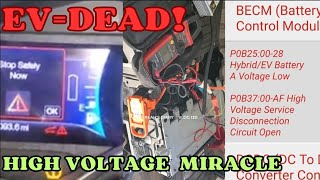
On a 2013-2016 Ford C-MAX, code U3012 is a serious fault within the hybrid system, typically pointing to a problem with the Battery Energy Control Module (BECM) or its wiring. This often causes a "Stop Safely Now" warning and a no-start or stalling condition. The issue is well-documented in Ford TSB 17-0015, which prioritizes checking for a chafed wiring harness before condemning the BECM. This problem is also common on the platform-mate Ford Fusion Hybrid.
- U3012 on a 2013-2016 Ford C-MAX is a critical code, often triggering a "Stop Safely Now" warning and disabling the vehicle.
- The most likely cause is chafed wiring near the high-voltage battery, as detailed in Ford TSB 17-0015.
- If the wiring is intact, the Battery Energy Control Module (BECM) has likely failed and will need to be replaced and programmed.
- This is not a DIY-friendly repair due to the involvement of the high-voltage battery system and the need for specialized diagnostic tools.
- Do not ignore this code or the associated warnings, as they indicate a serious safety issue that can cause the vehicle to shut down while driving.
What's Unique About the 2013-2016 Ford C-MAX

The Ford C-MAX, as a hybrid vehicle, has a complex high-voltage battery system managed by the BECM. This specific module is a widely documented failure point on the C-MAX and its platform-mate, the 2013-2019 Ford Fusion Hybrid, which shares the same 2.0L hybrid powertrain and control systems. The failure often manifests as code U3012, accompanied by the dangerous "Stop Safely Now" message, which can cause the vehicle to stall unexpectedly while driving. Ford has issued technical service bulletins, notably TSB 17-0015, specifically addressing this code and its primary link to chafed wiring, and secondarily to BECM failure.
Diagnostic Flowchart

Tap your situation to follow the diagnostic path that matches what you're seeing on this vehicle.
Symptoms You May Notice

- "Stop Safely Now" warning message on the instrument cluster.
- Intermittent stalling while driving, sometimes with a complete loss of power.
- Vehicle will not start or enter 'ready' mode (no-crank).
- Illuminated Malfunction Indicator Lamp (Check Engine Light).
- Illuminated wrench light or other hybrid system warnings.
- Car may restart and seem normal after sitting for 15-60 minutes.
- Replacing the 12-volt battery. While a weak 12V battery can cause many electrical issues on the C-MAX, and should be tested, owners report that replacing it often does not fix this specific issue. The U3012 code combined with a "Stop Safely Now" message points more directly to the high-voltage system's BECM or its wiring.
- Replacing the Powertrain Control Module (PCM). 'U' codes indicate a communication network problem. The fault is typically with the module that is not communicating (the BECM), not the module reporting the code (the PCM).
Most Likely Causes

- Chafed Wiring to the Battery Energy Control Module (BECM) 🔴 High Probability TSB 17-0015 specifically identifies a potential for the low voltage interlock circuits (CYB03 and CYB04) to chafe against the traction battery cover plate. This is the most common cause and should be inspected first.
How to confirm: Visually inspect the specified wiring harness near connector C4002 for signs of chafing or shorting, as detailed in TSB 17-0015. This requires significant disassembly of the rear cargo area and seats to access the wiring between the traction battery cover plate and the battery itself.
Typical fix: Repair the damaged section of the wire harness and protect it with heat shrink or anti-abrasion tape to prevent future damage. The TSB provides a labor time of 1.8 hours for this inspection and repair.
Est. part cost: $5-$20 - Failed Battery Energy Control Module (BECM) 🟡 Medium Probability The BECM is a known failure point on this platform, often due to internal electronic faults or thermal stress inside the high-voltage battery assembly. This is the likely cause if the wiring inspection per TSB 17-0015 reveals no damage.
How to confirm: If wiring inspection reveals no issues, the fault is likely internal to the BECM. Diagnosis requires a Ford-specific scan tool (like IDS or FORScan) to confirm the module is unresponsive or has internal faults (e.g., code U0111 - Lost Communication with BECM).
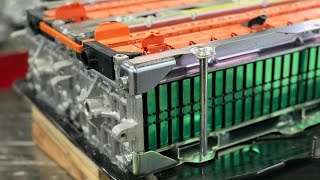
Typical fix: Replace the BECM. This is a complex job that involves removing and opening the high-voltage battery pack. 🎬 Watch: Step-by-step guide to repairing the hybrid battery pack The new module must be programmed to the vehicle. Some owners have sourced used modules.
Est. part cost: $250-$900 - BECM Software/Calibration Issue ⚪ Low Probability On other Ford models, similar issues have been resolved with a software update. While less common for this specific C-MAX issue where a hardware fault (wiring or module) is typical, it's a possibility if no other cause is found.
How to confirm: A Ford dealership or qualified shop can check if the BECM has the latest software calibration using the Ford IDS or FDRS scan tool.
Typical fix: Reprogram the BECM to the latest software version.
Est. part cost: $0
Diagnosis Steps
- Scan all vehicle modules for Diagnostic Trouble Codes (DTCs). Note if U3012 is present in the BECM/SOBDM-C, and if P0B37, P0A0A, or U0111 are also stored.
- Check the health of the 12V battery to rule out simple electrical issues, though this is an unlikely root cause.
- Check for applicable Technical Service Bulletins, specifically TSB 17-0015 and SSM 46108.
- Follow the procedure in TSB 17-0015, which is the highest priority. This involves safely disconnecting the high-voltage battery and disassembling the rear seat and cargo area to access the BECM wiring.
- Carefully inspect the low voltage interlock circuits, CYB03 and CYB04, for any signs of chafing or damage near connector C4002 where the harness passes the traction battery cover plate.
- If chafing is found, repair the wire(s) using solder and heat shrink tubing, then apply protective anti-abrasion tape. Reassemble and test.
- If no wiring damage is found, the issue is highly likely to be an internal failure of the BECM itself.
- Confirm BECM failure using a scan tool (like FORScan or IDS) to check for communication and internal status. A lack of communication with the BECM (often setting code U0111) points to a failed module.
- If the BECM is faulty, it must be replaced. This procedure requires opening the high-voltage battery pack and should only be performed by a trained professional. The new module will require programming to the vehicle.
Parts You'll Likely Need
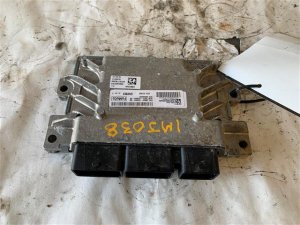
- Battery Energy Control Module (BECM)
(OEM #L1MZ-10B687-C, DG98-10B687-MD)— This module is a known failure point and is the primary cause of U3012 when wiring issues are ruled out.
Trusted brands: Motorcraft
OEM price range: $275-$900
Aftermarket price range: $125 (Used) - Wire Repair Supplies — If the cause is chafed wiring as described in TSB 17-0015, you will need basic supplies like heat shrink tubing and electrical tape to perform the repair.
OEM price range: $5-$20
Aftermarket price range: $5-$20
Related Codes That Often Appear With This One
- P0B37 — This code is for a 'Hybrid/EV Battery Pack Voltage Variation Sensor Circuit' fault and is explicitly mentioned alongside U3012 in Ford's TSB 17-0015 for this issue.
- P0A0A — This code indicates a 'High Voltage System Interlock Circuit' fault. It is also cited in TSB 17-0015 and SSM 46108 as a common companion code, pointing directly to the chafed wiring issue identified by Ford.
- U0111 — This code means 'Lost Communication With Battery Energy Control Module A' and is a strong indicator that the BECM itself has failed and is offline, especially if wiring is confirmed to be intact.
Technical Service Bulletins (TSBs) & Recalls
- TSB 17-0015: Details the symptoms (intermittent stall/no crank, 'Stop Safely Now' message) and diagnostic procedure to inspect for chafed wiring on the BECM low voltage interlock circuits. This is the primary diagnostic document for this issue.
- SSM 46108: An earlier bulletin also linking the 'Stop Safely Now' message and codes U3012, P0B37, and P0A0A to an intermittent short in the low voltage interlock circuits.
Platform-Specific Known Issues
- TSB 17-0015 and SSM 46108 directly address the symptoms of intermittent stall/no-crank with a "Stop Safely Now" message caused by DTC U3012, P0B37, and/or P0A0A. The primary cause identified is chafing of the low voltage interlock circuits for the BECM.
- While not a formal recall for this specific issue on the C-MAX, Ford has issued other Customer Satisfaction Programs and extended warranties for BECM-related problems on other hybrid and electric vehicles, indicating a pattern of issues with this component family.
Mechanic-Grade Diagnostic Values
- High Voltage Interlock Circuit Resistance — expected: Below 3.0 ohms. Failure: A reading higher than 3.0 ohms suggests high resistance in the loop, and an open circuit (OL) indicates a break in the circuit, which could be the chafe point.
Hidden / Shadow Codes Worth Checking
- P0A0A:00-B: This is a sub-code for the 'High Voltage System Interlock Circuit' fault. The ':00-B' suffix provides more specific information for a technician and is typically only visible on dealer-level scan tools like Ford's IDS. (see via Ford Integrated Diagnostic System (IDS) or potentially advanced aftermarket tools like FORScan.)
Scan Tool Commands That Help
- Ford IDS/FDRS, FORScan: BECM Self Test — After an initial DTC scan, running a self-test on the Battery Energy Control Module (BECM) can help confirm if the module is responsive and identify any internal faults.
- Ford IDS/FDRS: Programmable Module Installation (PMI) — This function is required after replacing the BECM. It configures the new module to the vehicle's specific settings and integrates it with the other control units.
- Ford IDS/FDRS, FORScan: BMS Reset (Battery Monitoring System) — This is used after replacing the 12-volt battery, not the high-voltage battery or BECM. It recalibrates the charging strategy for the new 12V battery. It is often performed incorrectly by DIYers trying to fix the U3012 code, which is related to the high-voltage system.
Wiring & Ground Locations
- C4002 — This connector is part of the BECM wiring harness located inside the high-voltage battery assembly, in the rear cargo area.. TSB 17-0015 identifies the area near this connector as the specific location where the CYB03 and CYB04 wires are prone to chafing against the traction battery cover plate.
- S415 — A splice located in the BEC-to-BECM wiring harness, near the breakout to the BECM.. A corroded or failed splice at this location could interrupt communication or power to the BECM, causing a U3012 code. It is a potential point of failure to check if the chafe point from TSB 17-0015 is intact.
- G202 — Located at the right kick panel area.. While not directly linked to the BECM in documentation, a poor body ground can cause a wide range of unpredictable electronic issues, including communication faults. Verifying major ground points like this is a good practice in any complex electrical diagnosis.
OEM Part Supersession History
DG98-10B687-MD, DG98-10B687-MC→Unknown, but may have been replaced by a newer part number.— Part revisions are common to improve reliability.
Heads up: The 'DG98' prefix is associated with the 2013-2015 C-MAX/Fusion platform. The part number L1MZ-10B687-C, mentioned in the original article, is listed for newer Ford Escape and Corsair models and is likely not compatible, despite being a BECM. Using a part from a different platform family can lead to programming failure or malfunction.
Model Year Variations Within This Range
- 2013-2014: Forum discussions suggest that the earliest model years of the C-MAX (2013-2014) are more prone to transmission failures. While this is unrelated to the U3012 BECM fault, it is a notable reliability concern for owners of these specific years.
Helpful Videos

We Have This Part in Stock





The information in this article is provided for general reference and educational purposes only. Vehicle specifications, procedures, and part compatibility can vary by production date, trim level, and region. Always consult your vehicle's factory service manual and verify part numbers before purchasing or performing repairs. Safety-critical components such as airbags, seat belts, and braking systems should be installed by a qualified professional.
- Ford C-MAX:
- 🎬 Helpful Videos
- 🛍️ Shop This Part
- What's Unique About the 2013-2016 Ford C-MAX
- Diagnostic Flowchart
- Symptoms You May Notice
- Most Likely Causes
- Diagnosis Steps
- Parts You'll Likely Need
- Related Codes That Often Appear With This One
- Technical Service Bulletins (TSBs) & Recalls
- Platform-Specific Known Issues
- Mechanic-Grade Diagnostic Values
- Hidden / Shadow Codes Worth Checking
- Scan Tool Commands That Help
- Wiring & Ground Locations
- OEM Part Supersession History
- Model Year Variations Within This Range
- 🎟️ Get 5% Off