

U3006 on 2021 Jeep Wrangler: Control Module Power Failure Causes & Fixes
On a 2021 Wrangler, code U3006 almost always points to a failing battery within the dual-battery system, especially the small auxiliary battery for the Engine Start-Stop (ESS) feature. A failing auxiliary battery can't support the vehicle's electronics and causes widespread electrical issues. Replacing both batteries is the most common and recommended fix, costing between $350 and $500 for DIY parts or $750-$950 at a dealership.
- U3006 on a 2021 Wrangler means a control module has lost power, and the cause is almost certainly a failing battery.
- The vehicle has two batteries; the smaller auxiliary battery is the most common point of failure.
- For a permanent fix, you should replace BOTH the main and auxiliary batteries at the same time.
- A simple voltage check is not enough; both batteries must be professionally load-tested to confirm their health.
- Ignoring this code can lead to a no-start situation or the failure of safety systems like ABS.
What's Unique About the 2021-2021 Jeep WRANGLER

The 2021 Jeep Wrangler (JL generation) uses a dual-battery system to manage its Engine Start-Stop (ESS) feature. A larger main battery handles starting, while a smaller auxiliary battery powers the vehicle's electronics when the engine is off at a stop. This auxiliary battery is a known, frequent failure point and is the primary reason this code appears. When the auxiliary battery fails, it can no longer support the vehicle's electrical needs and can also drain the main battery. The entire system is monitored by an Intelligent Battery Sensor (IBS) on the main battery's negative terminal, which reports battery health to the powertrain control module (PCM). A fault in either battery or the IBS can lead to a cascade of low-voltage and communication error codes, including U3006.
Diagnostic Flowchart
Tap your situation to follow the diagnostic path that matches what you're seeing on this vehicle.
Symptoms You May Notice
- Check Engine Light is on
- "Service Start/Stop System" message on the dash
- Vehicle will not start, or has a dead battery
- ABS, Traction Control, and other warning lights may be illuminated simultaneously (a "Christmas tree" dash)
- Remote start is disabled
- Unpredictable electrical behavior, such as flickering lights or malfunctioning accessories
- Wipers turning on by themselves
- "Service Shifter" message may appear
- Replacing only the main battery. On a JL Wrangler, if the auxiliary battery is the root cause, it will quickly degrade the new main battery, and the problems will return.
- Replacing an alternator when the issue is the dual-battery system's inability to hold a proper charge.
Most Likely Causes

- Failing Auxiliary (ESS) Battery 🔴 High Probability The auxiliary battery in the JL Wrangler has a very high failure rate, often lasting only 2-4 years. When it degrades, it can't maintain system voltage during start-stop events and places a parasitic drain on the main battery, causing widespread low-voltage conditions.
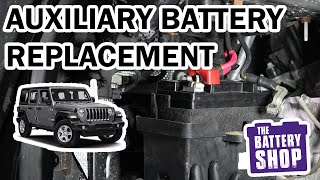
How to confirm: Perform an independent load test on the auxiliary battery. It is located under the main fuse box (Power Distribution Center), which must be unbolted and lifted for access. 🎬 Watch this walkthrough to access and replace the hidden auxiliary battery. Often, if the main battery tests good but the vehicle has these symptoms, the aux battery is the culprit.
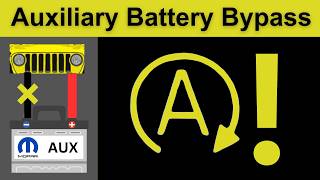
Typical fix: Replace the auxiliary battery. It is strongly recommended to replace the main battery at the same time, as a failing aux battery often damages the main one. Some owners choose to bypass the auxiliary battery entirely. 🎬 See how to perform an auxiliary battery bypass modification.
Est. part cost: $100-$250 for the auxiliary battery, $200-$350 for the main AGM battery. - Failing Main Battery 🟡 Medium Probability A weak main battery, often degraded by a failing auxiliary battery, cannot provide the stable voltage required by the numerous control modules on the vehicle. The constant drain from a bad aux battery can ruin a new main battery quickly.
How to confirm: Perform a load test on the main battery. A simple voltage check is insufficient. Many auto parts stores will do this for free.
Typical fix: Replace the main battery. It is best practice to replace both the main and auxiliary batteries simultaneously on this platform to prevent a recurrence.
Est. part cost: $200-$350 - Corroded or Loose Battery Terminals/Wiring ⚪ Low Probability While less common than battery failure, the Intelligent Battery Sensor (IBS) connector on the negative terminal can become loose or corroded, sending bad data to the PCM. Main power feeds and ground straps should also be checked.
How to confirm: Visually inspect all battery connections, the IBS connector, main power feeds, and ground straps for looseness, corrosion, or damage. Clean and tighten as necessary.
Typical fix: Clean the battery terminals and cable ends with a wire brush and ensure all connections are tight. Ensure the IBS connector is securely plugged in.
Est. part cost: $5-$15 for cleaning tools. - Blown Fuse ⚪ Low Probability
How to confirm: Check the vehicle's fuse boxes (under the hood and inside the cabin) for any blown fuses related to the affected control module (e.g., ABS, BCM). The "Circuit/Open" definition points directly to this possibility.
Typical fix: Replace the blown fuse. If the fuse blows again, there is an underlying short circuit that needs to be diagnosed.
Est. part cost: $1-$5
Rare But Worth Checking
- Faulty Control Module (e.g., ABS Module, BCM): While rare, the control module itself can fail internally. This is usually the last thing to suspect after all power and ground circuits have been verified as good. Water intrusion is a possible cause for module failure.
- Faulty Intelligent Battery Sensor (IBS): The IBS module on the negative battery terminal can fail, providing incorrect voltage, current, and temperature data to the vehicle's computers. This can lead the system to misinterpret the battery's state of health and set various electrical codes. An IBS reset (disconnecting it for 10-15 minutes) or replacement may be necessary.
Diagnosis Steps

- Scan the vehicle for all stored trouble codes to see which other modules are reporting errors. Note any codes related to low voltage or communication.
- Perform a professional load test on both the main and auxiliary batteries separately. This is the most critical step. To access the auxiliary battery, the Power Distribution Center (fuse box) must be unbolted and lifted out of the way.
- If the batteries test good, inspect the battery terminals, main power cables, and ground connections for corrosion or looseness.
- Inspect the Intelligent Battery Sensor (IBS) on the main battery's negative terminal. Ensure its small electrical connector is secure and free of corrosion.
- Check fuses related to the Body Control Module (BCM), ABS module, and Powertrain Control Module (PCM).
- If all batteries, connections, and fuses are good, use a multimeter to check for voltage and continuity at the power input connector of the module that is logging the U3006 code.
- If power is present at the connector, the module itself may be faulty, but this is the least likely cause.
Parts You'll Likely Need

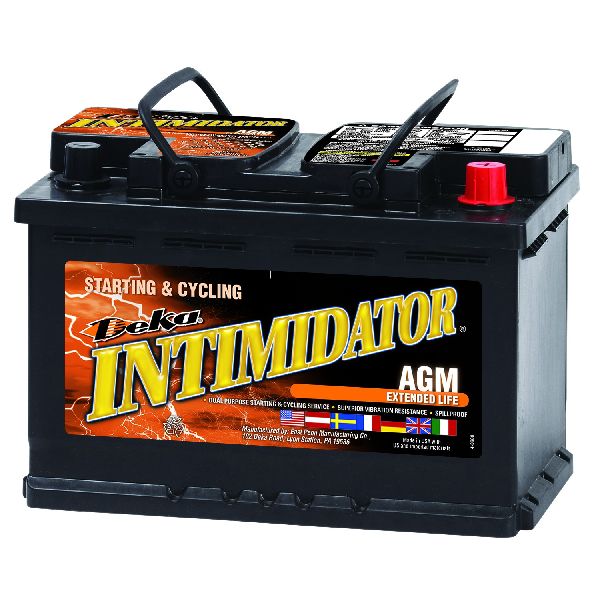
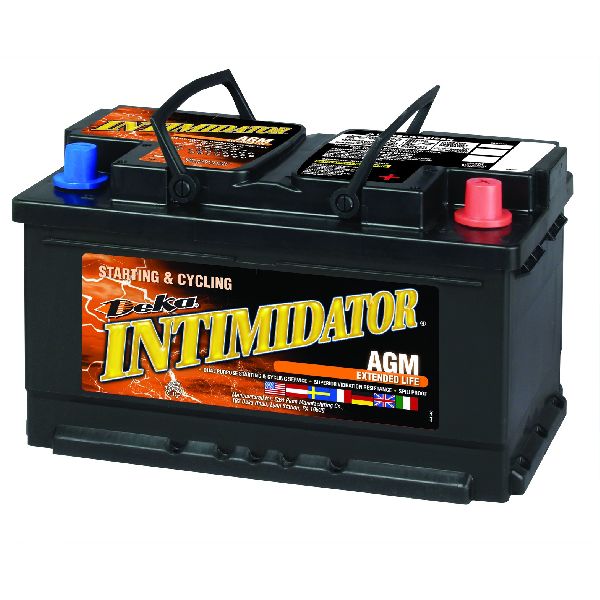
- Auxiliary Battery
(OEM #68400265AA, BE0H7265AA)— This is the most common failure point on the JL Wrangler that leads to code U3006 and other electrical issues.
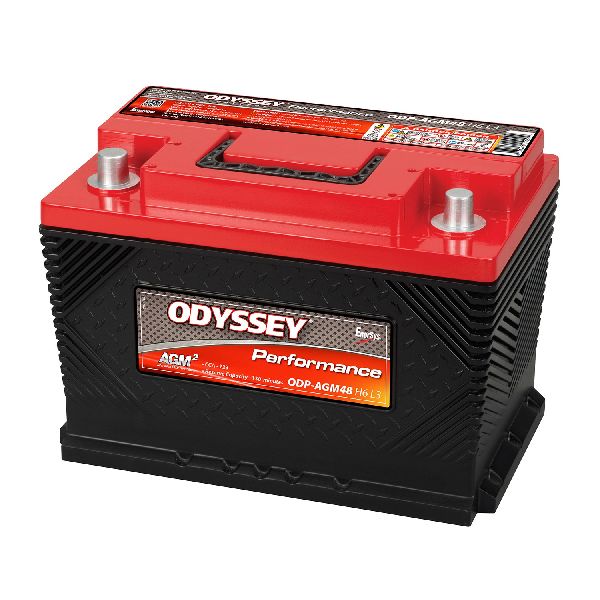
Trusted brands: Mopar, Deka (AUX14), Odyssey (PC680), X2Power (BTX14-BS)
OEM price range: $150-$250
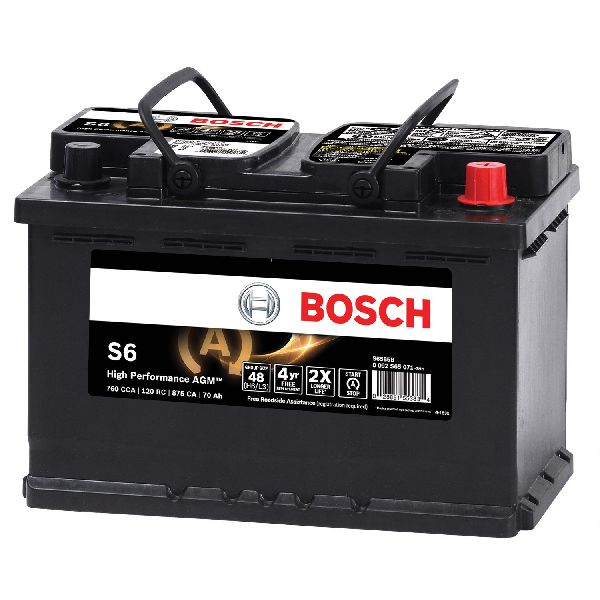
Aftermarket price range: $100-$200 - Main AGM Battery (H7/Group 94R)
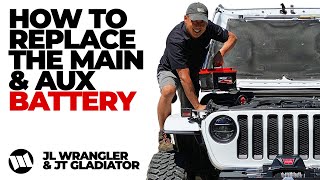
(OEM #BBAH7L400, 68291321AA)— Often fails as a direct result of the auxiliary battery failing. It is best practice to replace both at the same time. 🎬 Watch: Step-by-step guide to replacing both batteries on your Wrangler.
Trusted brands: Mopar, Interstate, DieHard, Odyssey
OEM price range: $250-$350
Aftermarket price range: $200-$300
Related Codes That Often Appear With This One
- U3007 — This code is for 'Control Module Input Power B Circuit'. It often appears with U3006, indicating a widespread power supply issue affecting multiple inputs to a module.
- C2100-00 — This code means 'Battery Voltage Low'. It directly supports the theory that the root cause is a failing battery system. (TSB #08-106-21 REV. A)
- C05A4-00 — This code is 'Wheel Speed Sensors Supply Circuit Low'. This indicates the low voltage condition is affecting the ABS module's ability to power its sensors. (TSB #08-106-21 REV. A)
- B2199-16 — This code means 'Battery Voltage-Circuit Voltage Below Threshold', another strong indicator of a failing battery. (TSB #08-106-21 REV. A)
Technical Service Bulletins (TSBs) & Recalls
- 08-106-21 REV. A: This TSB, dated June 30, 2021, addresses a group of low-voltage DTCs including U3006-00. It applies to vehicles that may have a depleted 12V battery and instructs technicians to test and possibly replace the battery, confirming the direct link between this code and battery health.
Platform-Specific Known Issues
- The dual-battery system for the Engine Start-Stop (ESS) feature is a well-documented weak point on 2018+ Jeep Wrangler (JL) and Jeep Gladiator (JT) models, leading to a wide range of electrical fault codes when one or both batteries begin to fail.
Mechanic-Grade Diagnostic Values
- Normal Charging System Voltage (while running) — expected: 13.5V - 14.8V. Failure: Consistently below 13.5V or above 14.8V. A reading that stays high (e.g., 15.1V) can indicate a problem with the alternator's voltage regulator or that the batteries are failing and cannot accept a charge. A reading that stays low (e.g., 12.8V) while driving suggests the alternator is not charging correctly.
- Healthy AGM Battery Voltage (engine off) — expected: ~12.6V - 12.8V. Failure: A resting voltage of 12.4V or below indicates a discharged or failing battery.
- Intelligent Battery Sensor (IBS) State of Charge (SOC) reading via scan tool — expected: Should approach 100% after a full charge and recalibration period.. Failure: If the SOC reading on a scan tool like JScan never exceeds 80-85% even with new, fully charged batteries, it can indicate a persistent issue with the IBS, wiring, or the batteries themselves.
Scan Tool Commands That Help
- JScan or similar advanced OBD tool: IBS Reset / Recalibration — After replacing one or both batteries, the Intelligent Battery Sensor (IBS) needs to relearn the battery's characteristics. While some sources say no programming is needed, official documentation and user experience suggest a recalibration period is required. This involves 3-5 drive cycles with 8-hour key-off periods for the sensor to accurately adapt. A manual reset can be forced by disconnecting the IBS two-wire connector for about 10 minutes. This forces the system to re-evaluate the battery state of charge (SOC) over the next several hours of vehicle sleep time.
- JScan or Tazer: Disable Engine Start-Stop (ESS) — Many owners who perform the auxiliary battery bypass use a tool like JScan or a Tazer to permanently disable the ESS feature in the vehicle's computer. This prevents the system from looking for the auxiliary battery and avoids any potential error messages related to its absence.
Wiring & Ground Locations
- Body Control Module (BCM) — Located in the passenger footwell, behind the glove box area, crammed between the blower motor and the side of the vehicle. Access is difficult.. The BCM is a central hub for vehicle electronics and often the module that logs the U3006 code when it detects a loss of stable input power. Checking its power and ground connections is a key diagnostic step if batteries and fuses are good.
- G905A / G906A — These are primary dash harness grounds, located in the driver and passenger footwell areas.. A loose or corroded ground at these points can cause intermittent power loss to various modules controlled by the BCM, potentially triggering a U3006 code.
- G901A / G902A — Main battery grounds located in the engine bay on the body panels near the battery and Power Distribution Center.. These are the primary grounding points for the entire electrical system. Corrosion or looseness here can cause widespread voltage issues that mimic battery failure.
- Auxiliary Battery Bypass Wiring — Engine bay, at the main battery and Power Distribution Center (PDC).. A common owner modification involves bypassing the auxiliary battery. This is done by removing fuse F42 in the PDC and disconnecting the small negative cable from the main battery's negative terminal (this cable runs to the aux battery). The positive lead from the aux battery is then sometimes connected directly to the main battery's positive post. Understanding this modification is crucial, as it changes the vehicle's electrical topology.
Real Owner Repair Stories
- jlwranglerforums.com user (2018 Jeep Wrangler JL) — Check engine light, auto start/stop failure warning on the dash, engine would kick on and then shut off immediately during startup.
❌ Tried (didn't work) The user initially suspected a simple fix but was faced with either a complex replacement procedure (removing the fuse box or fender liner) or a costly dealer visit.
✅ What actually fixed it The user performed an auxiliary battery bypass. They removed fuse F42 from the under-hood fuse box and disconnected the small negative wire for the auxiliary battery from the main battery's negative terminal. This successfully eliminated the error messages and the need to replace the faulty auxiliary battery. The user noted a message about "Auto Stop not working to protect battery" appeared in the gauge cluster menus, but no warning lights remained on the dash. - Reddit user r/JeepWrangler (Jeep Wrangler JL) — After AAA replaced the main battery, the start/stop system stopped working. A few days later, the vehicle's electronics spazzed out and it would not start.
❌ Tried (didn't work) A general mechanic could not diagnose the issue after the main battery was replaced.
✅ What actually fixed it The dealership diagnosed a failed auxiliary battery. The final fix was replacing the auxiliary battery. The user was quoted $750 by the dealer for the replacement and "programming," though other users in the thread noted that no special programming is required, just a simple swap.
Model Year Variations Within This Range
- 2021+: When performing an auxiliary battery bypass, the negative cables on the main battery terminal are reversed compared to 2018-2020 models. On 2021 and newer models, the smaller negative cable (leading to the auxiliary battery) is on a different post. It's critical to identify the correct cable to disconnect.
Helpful Videos

Used OEM Parts in Stock


New Aftermarket Parts Available


The information in this article is provided for general reference and educational purposes only. Vehicle specifications, procedures, and part compatibility can vary by production date, trim level, and region. Always consult your vehicle's factory service manual and verify part numbers before purchasing or performing repairs. Safety-critical components such as airbags, seat belts, and braking systems should be installed by a qualified professional.
- Jeep WRANGLER:
- 🎬 Helpful Videos
- 🛍️ Shop This Part
- What's Unique About the 2021-2021 Jeep WRANGLER
- Diagnostic Flowchart
- Symptoms You May Notice
- Most Likely Causes
- Rare But Worth Checking
- Diagnosis Steps
- Parts You'll Likely Need
- Related Codes That Often Appear With This One
- Technical Service Bulletins (TSBs) & Recalls
- Platform-Specific Known Issues
- Mechanic-Grade Diagnostic Values
- Scan Tool Commands That Help
- Wiring & Ground Locations
- Real Owner Repair Stories
- Model Year Variations Within This Range
- 🎟️ Get 5% Off