

U3003 on 2021-2022 Lincoln Corsair & Ford Escape PHEV: Battery Voltage Fault Explained
This code on your Corsair or Escape PHEV almost always points to a problem with the 12-volt charging system, not just the battery itself. A known issue, documented in TSB SSM 52201 for the Corsair, Escape, and Maverick, is a blown 300-amp fuse that prevents the DC/DC converter from charging the 12V battery, leading to a no-start condition.
- U3003 on a 2021-2022 Corsair or Escape PHEV means the 12V battery isn't charging.
- The most likely cause is a blown 300-amp fuse, as detailed in Ford's TSB SSM 52201, which also affects the Ford Maverick.
- Do not simply replace the 12V battery; the underlying charging fault (fuse or software) must be diagnosed and fixed first.
- If the battery is replaced, a Battery Management System (BMS) reset is mandatory to prevent premature failure of the new battery.
- This is not a DIY-friendly repair due to the involvement of high-voltage hybrid components. Professional service is strongly recommended.
What's Unique About the 2021-2022 Lincoln CORSAIR PHEV
On the Corsair and Ford Escape Plug-In Hybrid platform, U3003 is not just a generic 'bad battery' code. It's a strong indicator of a specific, documented failure in the 12-volt charging system. Ford/Lincoln issued a Technical Service Bulletin (TSB SSM 52201) that directly links this code on the Corsair, Escape, and Maverick to a blown 300-amp fuse in the high-current battery junction box, which cuts off the charging power from the DC/DC converter. This makes diagnosis more direct than on vehicles where U3003 has a broader meaning.
Diagnostic Flowchart
Tap your situation to follow the diagnostic path that matches what you're seeing on this vehicle.
Symptoms You May Notice
- 12V battery is low or completely discharged
- Vehicle will not start
- Warning lights on the dashboard, such as the battery light
- "Check Brake System" message in the instrument cluster
- Receiving 'Deep Sleep' or '12V battery is in power saving mode' messages in the FordPass/Lincoln Way app.
- Replacing the 12V battery without checking the 300-amp fuse. If the fuse is blown, the new battery will not charge and will quickly fail, leading to a repeat of the no-start condition.
- Replacing the 12V battery without performing a Battery Management System (BMS) reset. This can cause the new battery to be charged improperly and fail prematurely.
Most Likely Causes
- Blown 300-Amp High-Current Fuse 🔴 High Probability This is a known issue documented by the manufacturer in TSB SSM 52201 for the Corsair, Escape, and Maverick. The fuse is located in the high-current battery junction box (BJB) and acts as the main link between the DC/DC converter and the 12V battery. Technicians note this fuse can develop hairline cracks from vibration, leading to an intermittent open circuit that can be difficult to diagnose.
How to confirm: A technician must access the high-current BJB and perform Pinpoint Test H as described in the workshop manual (WSM Section 414-05) to verify if the fuse is open (blown).
Typical fix: Replace the 300-amp fuse (Part No. MU5Z14526K). The 12V battery must also be fully recharged and tested, as a deep discharge can damage it.
Est. part cost: $20-$60 - Weak or Failed 12V Battery 🟡 Medium Probability While the charging system is a known weak point, the 12V battery itself can fail, especially after being deeply discharged due to the charging fault. An internally shorted or degraded battery can't hold a charge even if the charging system is working. Forum users report needing multiple batteries before the root cause is found. A recall (25V-019) was also issued for certain 12V batteries due to manufacturing defects causing internal failures.
How to confirm: Perform a professional battery test using a digital battery analyzer that can measure state of health (SOH) and state of charge (SOC). A simple voltage check is not sufficient. A healthy battery should have 12.4-12.8V at rest and not drop below 9.6V during cranking.
Typical fix: Replace the 12V AGM battery. It is critical to ensure the charging system issue (like the fuse) is fixed first, or the new battery will also fail. After installation, a Battery Management System (BMS) reset MUST be performed. Failure to reset the BMS will cause the vehicle to charge the new battery as if it were the old, degraded one, leading to premature failure.
Est. part cost: $250-$400
Rare But Worth Checking
- Software Anomaly Causing Parasitic Drain: Other TSBs exist for conditions where the 12V battery drains for reasons other than the 300A fuse. TSB 22-2169 addresses a software issue in the Battery Charger Control Module (BCCM) that causes the 12V battery to discharge while the main hybrid battery is plugged in and charging. TSB 24-2288 is also cited by owners for fixing intermittent parasitic drains while the vehicle is off. The fix typically involves reprogramming one or more control modules.
- Failed DC/DC Converter Control Module: While the fuse is the more common failure point, the DC/DC converter module itself can fail internally. This is a more expensive repair and should only be considered after the fuse, battery, and software issues have been ruled out.
- Corroded or Loose Battery Terminals/Cables: A simple but sometimes overlooked cause. Poor connections at the battery or ground points can prevent proper charging and cause voltage to drop, triggering the code.
Diagnosis Steps
- Scan all modules for Diagnostic Trouble Codes (DTCs), paying close attention to the failure type byte (e.g., :62, :16) stored with U3003.
- Check for and review Technical Service Bulletin SSM 52201, which directly addresses this issue.
- Perform a comprehensive test of the 12V battery's state of health and charge. Recharge or replace as necessary.
- If the battery is replaced, perform a Battery Management System (BMS) reset using a capable scan tool or the vehicle-specific manual procedure. This step is critical.
- Following the guidance in TSB SSM 52201, inspect the 300-amp high-current fuse (F4) in the battery junction box (BJB) for an open circuit. Check for hairline cracks.
- If the fuse is blown, replace it and re-test the charging system.
- If the fuse and battery are good, check for other related TSBs, such as TSB 22-2169 or TSB 24-2288, which address software-related parasitic drains and may require module reprogramming.
- If all other components and software are confirmed to be good, inspect the wiring and connectors between the DC/DC converter, the BJB, and the 12V battery for damage or corrosion.
- If all else fails, further diagnostics on the DC/DC converter module itself may be necessary.
Parts You'll Likely Need
- High-Current Fuse
(OEM #MU5Z14526K)— This 300-amp fuse is the most common point of failure according to manufacturer TSB SSM 52201, causing the charging system to stop working.
Trusted brands: Motorcraft
OEM price range: $20-$60
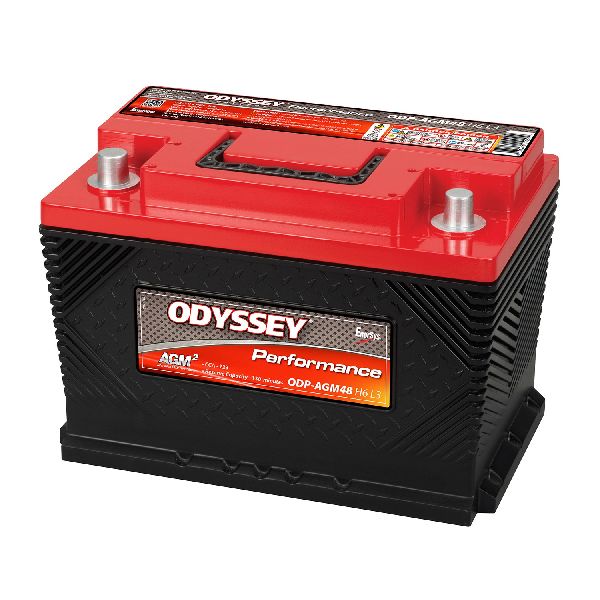
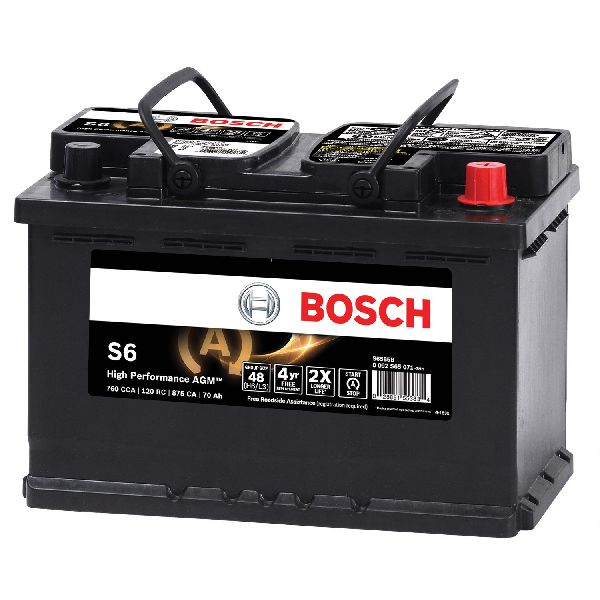
Aftermarket price range: $15-$40 - 12V AGM Battery
(OEM #BAGM-48H6-760)— The original battery is often damaged from being deeply discharged and may need to be replaced along with the fuse. A BMS reset is required after replacement.
Trusted brands: Motorcraft, Interstate, DieHard
OEM price range: $350-$400
Aftermarket price range: $250-$350 - DC/DC Converter Assembly
(OEM #LX6Z-14B227-G)— In the rare case that the converter module itself has failed, it will need to be replaced. This is an uncommon cause for this specific code.
Trusted brands: Motorcraft
OEM price range: $1100-$1400
Related Codes That Often Appear With This One
- U3003:62 — This specific sub-code for 'Signal Compare Failure' is explicitly mentioned in TSB SSM 52201 as the primary code stored in the DC/DC module for this issue.
- U3003:16 — This sub-code for 'Circuit Voltage Below Threshold' is also mentioned in the TSB and indicates the module is detecting low voltage, which is a direct symptom of the charging failure.
- U3000:04 — This code for 'Control Module: System Internal Failures' can be stored in the DC/DC module alongside U3003, as noted in TSB SSM 52201.
Technical Service Bulletins (TSBs) & Recalls
- SSM 52201: FHEV/PHEV - 12V Battery Voltage Low Or Discharged With DTC U3003:62 Stored In The DC/DC. This TSB identifies a blown 300-amp fuse as the likely cause for Corsair, Escape, and Maverick models.
- TSB 22-2169: 2.5L PHEV - 12-Volt Battery Becomes Discharged While HV Battery Is Charging. This TSB points to a software issue requiring module reprogramming to fix a parasitic drain specific to PHEV models during charging.
- TSB 24-2288: Intermittent 12V Battery Drain When Ignition Is Off. Cited by owners in forums as a fix for parasitic drains caused by modules not shutting down correctly.
Platform-Specific Known Issues
- TSB SSM 52201 documents a known issue where the 300-amp fuse in the high-current battery junction box can blow, causing a loss of 12V charging from the DC/DC converter and triggering DTC U3003:62. This TSB applies to the Corsair, Ford Escape, and Ford Maverick.
- TSB 22-2169 addresses a separate issue on PHEV models where a software fault can cause the 12V battery to discharge while the high-voltage battery is plugged in and charging, requiring module reprogramming.
- Owners on forums report dealers often replace the 12V battery multiple times before correctly diagnosing the blown 300A fuse or a software-related parasitic drain, highlighting a common misdiagnosis pattern.
Mechanic-Grade Diagnostic Values
- 12V Battery Open-Circuit Voltage (vehicle off) — expected: 12.4V - 12.8V. Failure: Below 12.4V indicates a discharged or failing battery.
- 12V Battery Voltage (during engine crank) — expected: Should not fall below 9.6V. Failure: A drop below 9.6V indicates a weak battery that cannot handle the load.
- DC/DC Converter Charging Voltage (vehicle in 'Ready' mode) — expected: 13.8V - 14.5V. Failure: Voltage near battery level (e.g., ~12V) or excessively high (over 15V) indicates a charging system fault.
Scan Tool Commands That Help
- Ford Integrated Diagnostic System (IDS): Datalogger for DC/DC Converter Module — To monitor the module's reported voltage PIDs (Parameter IDs) in real-time to see if it matches the actual battery voltage, which can help isolate a faulty module versus a wiring issue.
- Ford Integrated Diagnostic System (IDS): Self-Test (for DC/DC, BCM, PCM modules) — To command individual modules to run an internal diagnostic check and report any specific faults they detect, which is a primary step in Ford's diagnostic procedures.
- Ford Integrated Diagnostic System (IDS) or capable aftermarket scanner (e.g., FORScan): BMS (Battery Management System) Reset — This is a mandatory step after replacing the 12V battery. It resets the battery's age and charging parameters in the Body Control Module (BCM) to ensure the new battery is charged correctly.
Wiring & Ground Locations
- DC/DC Converter — Located under the hood on the driver's side, mounted next to the Inverter System Controller (ISC).. This module is responsible for charging the 12V battery and is where DTC U3003 is typically stored. Its location is needed for visual inspection of wiring and connectors.
- 12V Battery — Located in the rear cargo compartment, mounted within the spare tire well.. This is the battery that is failing to receive a charge. Its location is critical for testing, terminal inspection, and replacement.
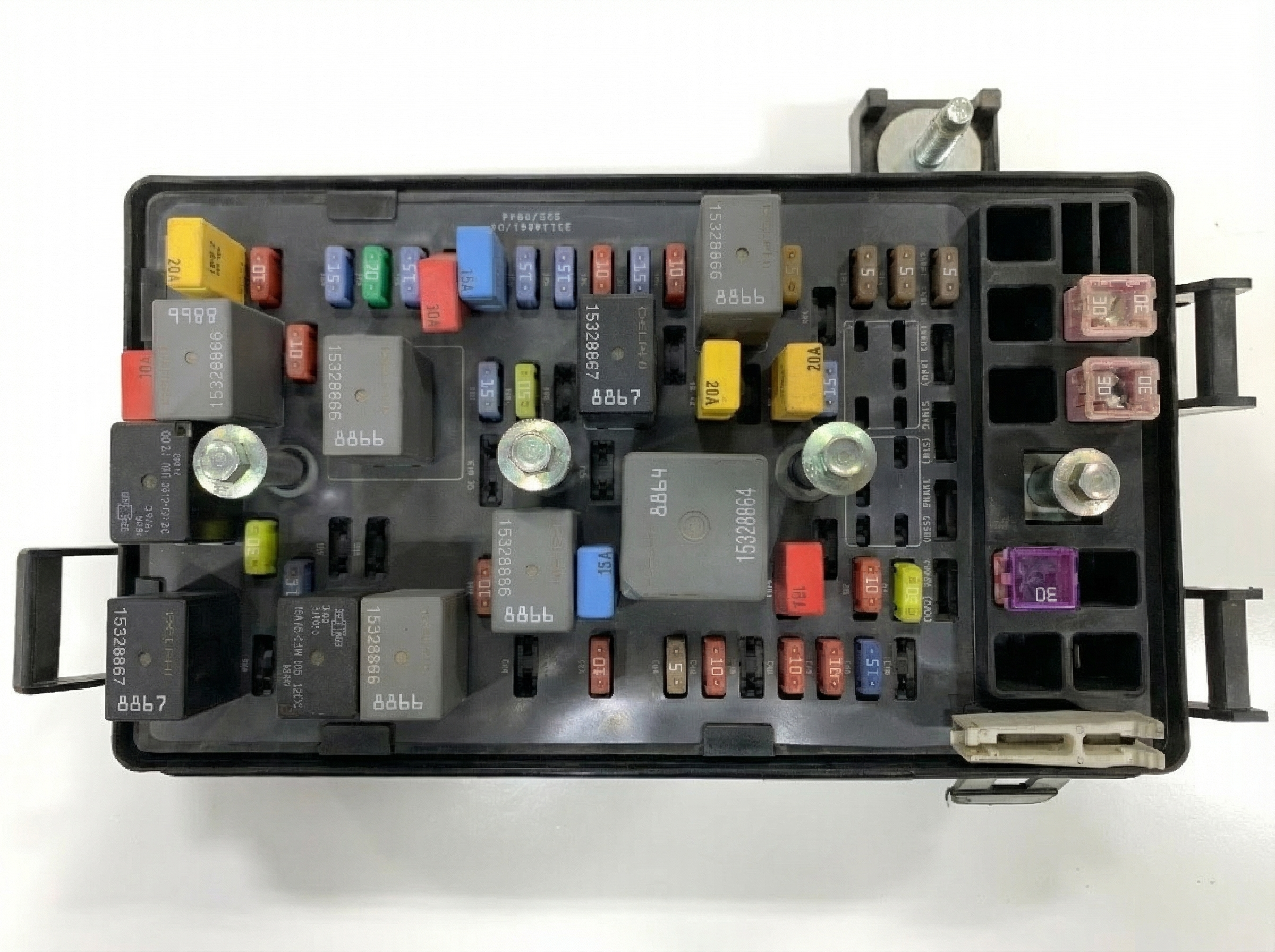
- High-Current Battery Junction Box (BJB) — Located in the engine compartment.. This box contains the 300-amp 'mega fuse' (identified as fuse F4 in TSBs) which is the most common failure point causing DTC U3003:62.
- Jump Start Positive Terminal — Under a red rubber boot in the engine compartment.. Provides a safe and accessible point for connecting a charger or jump starter to the 12V system without accessing the battery directly in the cargo area.
- Jump Start Ground Point — An exposed metal part of the engine, away from the battery and fuel system, as specified by the manufacturer for jump-starting.. Using the designated chassis ground point is the correct procedure for jump-starting and prevents potential damage to sensitive electronics.
Real Owner Repair Stories
- Reddit user on r/fordfusion (similar BMS system) (2017 Ford Fusion (platform with similar Battery Management System)) — Persistent U3003:16 code and low battery voltage (12.2V) despite having just replaced the 12V battery.
❌ Tried (didn't work) Replacing the 12V battery
✅ What actually fixed it The root cause was a failure to perform the Battery Management System (BMS) reset after the new battery was installed. The system was still using the charging profile for the old, degraded battery, causing the new one to be consistently undercharged. Performing the BMS reset procedure resolved the code and charging issue. - MaverickTruckClub forum user (2023 Maverick Hybrid (platform mate sharing the same powertrain and TSB)) — Completely dead 12V battery, frequent 'Deep Sleep' mode notifications, auto-locks not working.
❌ Tried (didn't work) Replacing the 12V battery, Replacing the battery monitoring sensor
✅ What actually fixed it The user's issue persisted after common fixes. The forum discussion pointed directly to the newly released TSB SSM 52201, identifying the blown 300-amp mega fuse as the likely, yet-to-be-diagnosed, root cause for the U3003:62 code and persistent dead battery symptoms.
OEM Part Supersession History
LX6Z-14B227-C→LX6Z-14B227-J— Part revision or update by the manufacturer for the DC/DC Converter Assembly.MU5Z14526ARA→MU5Z-14526-ARB— Part revision or update by the manufacturer for a high-current fuse. Note: This may not be the exact 300A fuse, but shows a pattern of revisions for similar parts.
Helpful Videos
Used OEM Parts in Stock


New Aftermarket Parts Available


The information in this article is provided for general reference and educational purposes only. Vehicle specifications, procedures, and part compatibility can vary by production date, trim level, and region. Always consult your vehicle's factory service manual and verify part numbers before purchasing or performing repairs. Safety-critical components such as airbags, seat belts, and braking systems should be installed by a qualified professional.
- Lincoln CORSAIR PHEV:
- 🎬 Helpful Videos
- 🛍️ Shop This Part
- What's Unique About the 2021-2022 Lincoln CORSAIR PHEV
- Diagnostic Flowchart
- Symptoms You May Notice
- Most Likely Causes
- Rare But Worth Checking
- Diagnosis Steps
- Parts You'll Likely Need
- Related Codes That Often Appear With This One
- Technical Service Bulletins (TSBs) & Recalls
- Platform-Specific Known Issues
- Mechanic-Grade Diagnostic Values
- Scan Tool Commands That Help
- Wiring & Ground Locations
- Real Owner Repair Stories
- OEM Part Supersession History
- 🎟️ Get 5% Off