

U3003 on 2012-2016 Land Rover Range Rover Evoque: Battery Voltage Fault Explained
This code almost always points to a problem with the vehicle's battery or charging system. The most common fix is replacing a weak or failing main 12V battery. Expect to pay $200-$400 for a new AGM battery. A BMS reset is required after replacement.
- Code U3003 on a Range Rover Evoque is almost always related to a low system voltage.
- The first and most important diagnostic step is to professionally test the main 12V battery and charging system.
- Do not replace other components or modules until the battery, alternator, and main ground connections have been proven to be in good condition.
- If you replace the battery, ensure the Battery Management System (BMS) is reset to prevent future charging problems.
What's Unique About the 2012-2016 Land Rover RANGE ROVER EVOQUE

The Range Rover Evoque (L538), like many modern Land Rover products, has a highly sensitive electrical system with a sophisticated Battery Management System (BMS). These vehicles are prone to displaying numerous, seemingly unrelated electronic faults when the battery is not in perfect health. A simple low battery condition can trigger a cascade of communication codes, including U3003, making it crucial to start any diagnosis at the battery itself 🎬 Watch: Why you should check this before buying a battery. before suspecting more complex module failures. Failure to lock the vehicle can also cause the computers to remain active and drain the battery, leading to these warnings.
Diagnostic Flowchart

Tap your situation to follow the diagnostic path that matches what you're seeing on this vehicle.
Symptoms You May Notice

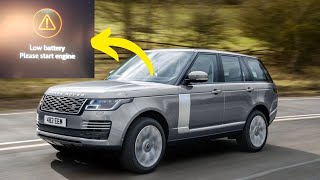
- "Low Battery, Please Start Engine" warning on the dashboard.
- Multiple, seemingly unrelated warning lights, such as for ABS, HDC, gearbox, or transmission faults.
- Heavy or difficult power steering operation, sometimes accompanied by a steering-specific warning.
- Dimming or flickering interior and exterior lights.
- Slow or difficult engine starting.
- Malfunctions with accessories like the infotainment system, power windows, door locks, or cameras.
- Auto Start/Stop system not engaging.
- Erratic transmission shifting behavior.
- Replacing individual control modules (e.g., for power steering, ABS, or transmission) before verifying the health of the battery and charging system.
- Chasing individual fault codes without recognizing that a low voltage condition is the root cause of all of them.
- Replacing the main battery but failing to perform the required BMS reset, leading to a rapid return of the "Low Battery" warning and fault codes because the system is still charging based on the old battery's parameters.
Most Likely Causes

- Weak or Failing 12V Main Battery 🔴 High Probability The Evoque's electrical system is very sensitive to battery health; even a slightly degraded battery that still starts the car can trigger voltage-related fault codes. The onboard computers will shut down non-essential systems if voltage is low.
How to confirm: Perform a load test on the battery using a professional digital battery tester (e.g., Midtronics EXP-1080 as specified by JLR). A simple voltage check with a multimeter is often insufficient; a healthy battery should read above 12.4V after resting, but the load test is definitive.
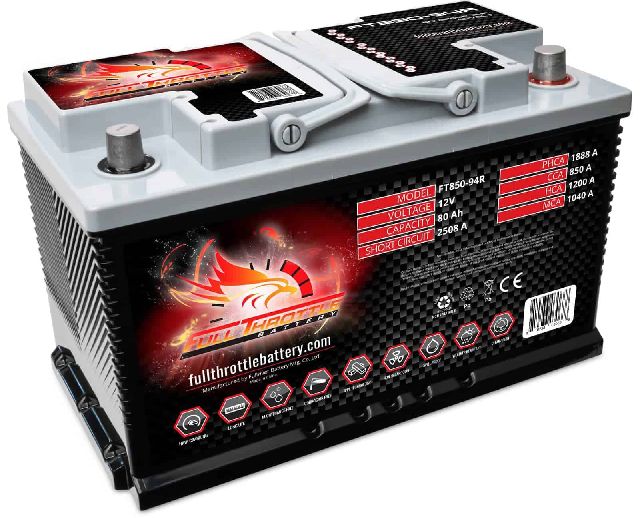
Typical fix: Replace the main 12V AGM battery (commonly a Group Size H7 or H8). After replacement, the Battery Management System (BMS) must be reset using a compatible diagnostic tool (like an iCarsoft LR V4.0, Autel, or JLR SDD) to ensure proper charging and system function.
Est. part cost: $200-$400 - Failing Alternator 🟡 Medium Probability A failing alternator can cause intermittent charging, leading to a "Generator Performance" or "Charging System Fault" warning followed by a dead battery. A user on a Reddit forum experienced this, where the voltage dropped to 12.4V while running, indicating a lack of charging.
How to confirm: With the engine running, measure the voltage across the battery terminals. A healthy alternator should produce a voltage between approximately 13.2V and 14.8V. If the voltage is at battery level (around 12.4V or less) or not present, the alternator is likely faulty.
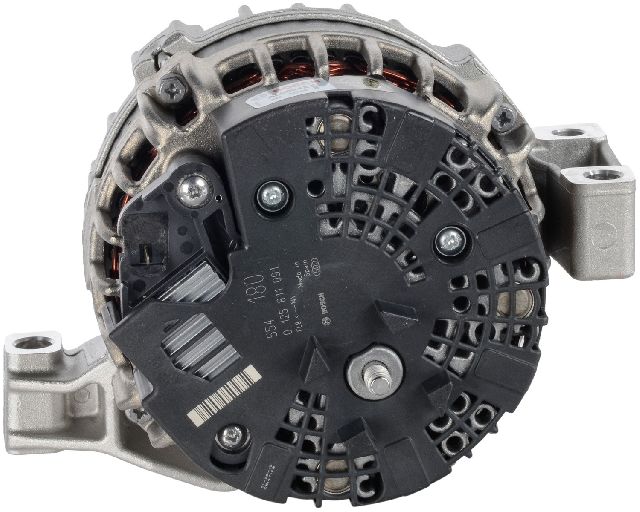
Typical fix: Replace the alternator. This is a labor-intensive job on the Evoque, often requiring removal of the intake manifold and other components. 🎬 Watch: A professional guide to replacing the Evoque alternator.
Est. part cost: $300-$700 - Loose or Corroded Battery Terminals or Ground Straps 🟡 Medium Probability TSB SSM71278 specifically calls out high resistance at various ground terminals as a potential cause for voltage-related issues. For the Evoque (L538), the bulletin points to grounds G1D122A, G1D122B, G1D122AZ, and G1D108. These are located near the battery and on the front chassis structure.
How to confirm: Visually inspect the battery terminals for corrosion. Follow the main negative cable to its chassis connection point and inspect for tightness and corrosion. Check the specific ground points mentioned in TSB SSM71278 for corrosion on the washers or loose fixings.
Typical fix: Disconnect the battery. Clean the battery terminals, cable ends, and ground points with a wire brush. Replace any corroded washers or fasteners and re-tighten securely.
Est. part cost: $5-$50 - Faulty Auxiliary Battery (if equipped) ⚪ Low Probability Some earlier Evoque models with automatic transmissions and stop-start functionality use a small auxiliary battery. A failure of this battery can cause various electrical warnings, including "Transmission Fault".
How to confirm: Locate the auxiliary battery, which is typically found in the passenger footwell behind trim panels, 🎬 See this step-by-step auxiliary battery replacement walkthrough. next to a fuse box. Test its voltage and health. Note that not all 2012-2016 models have this.
Typical fix: Replace the small auxiliary battery. A common replacement is a PS1212 12V 1.2Ah battery. Some sources suggest a BMS reset is also needed for this battery.
Est. part cost: $20-$100
Rare But Worth Checking
- Wiring Harness Issue: TSB SSM71278 mentions that a short circuit, open circuit, or high resistance in the wiring harness can cause this code. A forum user on AULRO.com reported a case on a Land Rover Discovery where multiple U-codes were caused by a short in the main power cable between the megafuse and the alternator/starter motor. Another user on Reddit found the LIN connector to the alternator had a broken tab, causing an intermittent connection and charging failure.
- Faulty Control Module: In rare cases, the fault may lie within a specific control module's internal voltage regulator rather than the power supply itself. This would require advanced diagnostics with JLR-specific software to isolate the specific module after all power supply and ground issues have been ruled out.
Diagnosis Steps
- Read all fault codes from all modules using a high-level scanner capable of communicating with Land Rover systems (e.g., JLR SDD, Autel, iCarsoft LR). Note the cascade of communication faults that often accompany U3003.
- Connect a professional battery tester (e.g., Midtronics EXP-1080) directly to the battery posts and perform a full health and load test. Replace the battery if it fails or is marginal.
- If the battery is good, start the engine and measure the charging voltage at the battery terminals. It should be roughly 13.2V-14.8V. If it's low, diagnose the alternator and its wiring, including the LIN bus connector.
- Inspect the main battery terminals, chassis ground points, and engine ground straps for looseness or corrosion. TSB SSM71278 points to specific ground points (G1D122A, G1D122B, G1D122AZ, G1D108) to check on the Evoque (L538).
- If equipped, locate and test the auxiliary battery for the stop-start system, found in the passenger footwell.
- If a new battery is installed, perform a BMS reset using a compatible scan tool. This step is critical.
- If all power sources and grounds are good, the issue may be a wiring harness fault or a specific control module. This requires consulting electrical diagrams and performing advanced circuit testing, such as checking for shorts or high resistance in the PSCM power feed circuit.
Parts You'll Likely Need
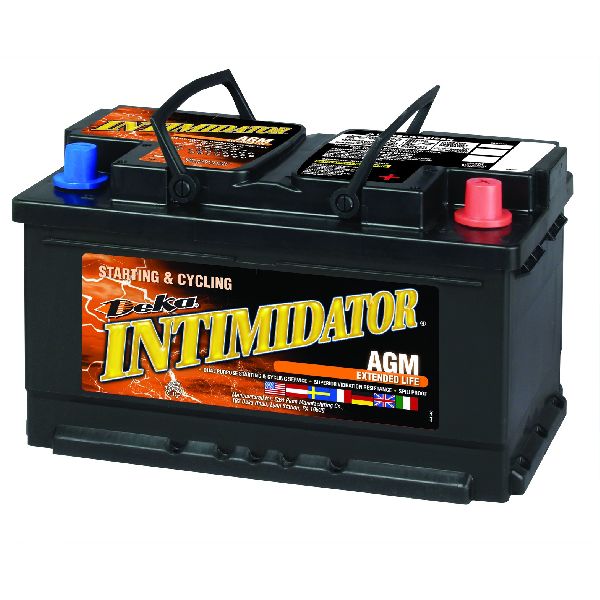
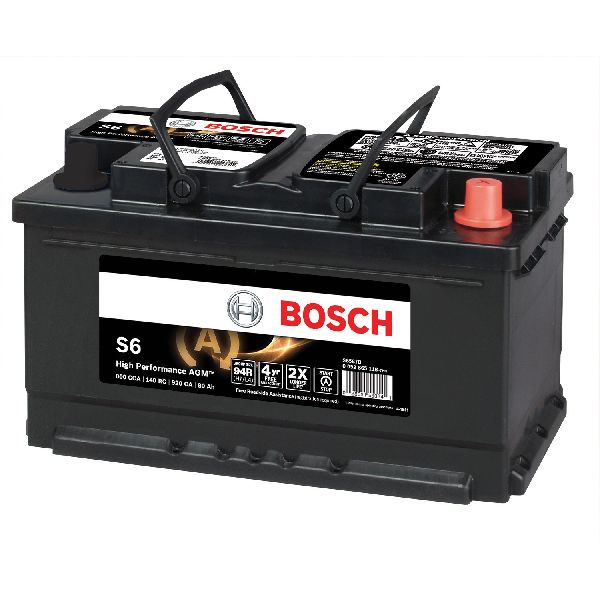
- AGM Main Battery — This is the most frequent cause of code U3003 and a host of other electrical issues on the Evoque. A Group Size H7 or H8 AGM battery is commonly used.
Trusted brands: Bosch, Interstate, Varta, Deka
OEM price range: $300-$500
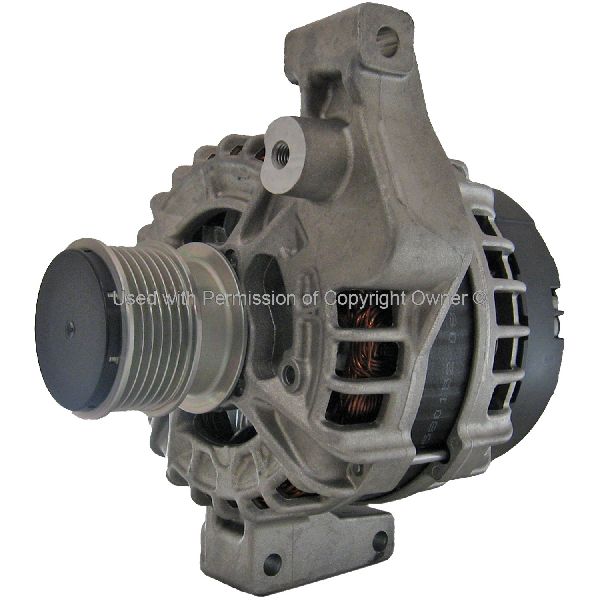
Aftermarket price range: $200-$400 - Alternator
(OEM #LR076696)— A failed alternator will not charge the battery, leading to a low voltage condition that triggers this code. The OEM part number LR076696 is listed for some Land Rover models, but may vary by engine type.
Trusted brands: Denso, Bosch, Casco
OEM price range: $600-$900
Aftermarket price range: $300-$700 - Auxiliary Battery
(OEM #LR024953)— On models equipped with one for the stop-start system, its failure can cause electrical faults. A common aftermarket replacement is a standard PS1212 battery. The OEM module may also be listed under part number BJ3210C693AC.
Trusted brands: Exide, Britpart, Genuine Land Rover
OEM price range: $80-$150
Aftermarket price range: $20-$50
Related Codes That Often Appear With This One
- U0131-00 — Indicates the Chassis Control Module (CHCM) has lost communication with the Power Steering Control Module (PSCM), often due to voltage instability.
- U0420-68 — Means the CHCM received invalid data from the PSCM, another symptom of network disruption from a voltage fault.
- B1304-16 — This code for 'Electronic Power Assisted Steering (EPAS) system circuit voltage below threshold' directly points to a low voltage condition affecting the power steering.
- P0562 — A generic code for 'System Voltage Low', which often accompanies the manufacturer-specific U3003 code.
Technical Service Bulletins (TSBs) & Recalls
- SSM71278: Addresses heavy steering feel accompanied by various DTCs, including U3003-62. It points to low battery voltage, wiring faults, or high resistance at specific ground points (G1D122A, G1D122B, G1D122AZ, G1D108 for the L538 Evoque) as primary causes.
Platform-Specific Known Issues
- Technical Service Bulletin SSM71278 directly links U3003-62 to low battery voltage, wiring issues, or high resistance at specific ground points (G1D122A, G1D122B, etc.), which can also cause heavy steering.
- Failure to reset the Battery Management System (BMS) after a battery replacement is a critical error. The BMS will continue to charge the new battery as if it were the old, degraded one, leading to undercharging or overcharging and a premature return of low voltage warnings and fault codes.
Mechanic-Grade Diagnostic Values
- Quiescent (Parasitic) Current Draw — expected: < 80mA after all modules enter sleep mode (can take up to 40 minutes).. Failure: A sustained current draw above 80mA indicates a module is not sleeping correctly or there is a short, leading to battery drain.
- Charging Voltage at Battery Terminals (Engine Running) — expected: 13.2V to 14.8V. Failure: Voltage at or below battery resting voltage (~12.4V) indicates a faulty alternator or charging circuit. Voltage above 15V indicates a faulty voltage regulator.
- Battery Voltage (Engine Off, Rested) — expected: 12.4V to 12.8V. Failure: Voltage below 12.4V indicates a discharged or failing battery.
- Ground Point Resistance — expected: < 5 Ohms between the ground point stud and a clean chassis location.. Failure: High resistance indicates corrosion or a loose connection, impeding current flow and causing voltage drop issues.
Scan Tool Commands That Help
- JLR SDD (Symptom Driven Diagnostics): Service Functions > Battery/Battery Replacement — This must be run after replacing the main 12V battery. It resets the Battery Monitoring System (BMS), clearing learned values of the old battery's state of health and state of charge, and calibrates the charging system for the new battery. Failure to do this can lead to under/overcharging and a quick return of battery warnings.
- Autel, iCarsoft LR V3.0, etc.: BMS Reset / Battery Management System Reset — This is the equivalent of the JLR SDD function on high-level aftermarket scan tools. It is used after battery replacement to inform the vehicle's modules that a new battery has been installed.
- JLR SDD (Symptom Driven Diagnostics): Configure existing module – Gateway Module (GWM) / Central Junction Box (CJB) — In cases where a parasitic drain is suspected and all hardware is good, a software update to these modules may be required. This can resolve software glitches that prevent modules from entering sleep mode correctly, causing battery drain and the U3003 code.
Wiring & Ground Locations

- G1D122A / G1D122B / G1D122AZ — Located in the engine compartment on the left-hand (driver's side in LHD) chassis longitudinal member, near the battery area.. This is a primary ground point for several modules in the engine bay, including potentially the EPAS (Electronic Power Assisted Steering) module. High resistance here, as noted in TSB SSM71278, can cause voltage drop and communication errors.
- G1D108 — Located in the engine compartment, often described as being near the battery or on the front engine compartment structure. Wiring diagrams show it as a primary battery ground connection to the chassis.. This is a main battery-to-chassis ground. A poor connection here will affect the entire vehicle's electrical system, directly causing low voltage conditions and code U3003.
- Battery Monitoring System (BMS) Sensor Connector — A small 2-pin connector directly on the sensor that is part of the negative battery terminal assembly.. The BMS sensor communicates the battery's state of charge and health to the gateway module. A loose or corroded connection here can cause incorrect charging and trigger U3003, even with a perfectly good battery.
Real Owner Repair Stories
- EvoqueOwnersClub.co.uk forum user (2013 Range Rover Evoque) — Persistent "Low Battery, Please Start Engine" warning, even after battery replacement and BMS reset.
❌ Tried (didn't work) Replacing the main 12V battery., Performing a standard BMS reset.
✅ What actually fixed it A software update to the Gateway Module (GWM) and Central Junction Box (CJB) performed by a Land Rover dealer. The issue was a parasitic drain caused by a software glitch preventing the car from entering sleep mode, which the update corrected. - RangeRovers.net forum user (2014 Range Rover Evoque) — Recurring low battery warnings, auto start/stop not working, and a host of intermittent electrical faults. U3003 was present.
❌ Tried (didn't work) Charging the battery overnight., Replacing the main 12V battery (the problem returned within a week).
✅ What actually fixed it Replacing the Battery Monitoring System (BMS) sensor itself. The sensor is integrated into the negative battery cable assembly. The old sensor was sending incorrect data, causing the charging system to undercharge the new battery. After replacing the negative cable/sensor assembly and performing a BMS reset, the problem was resolved permanently. - Reddit user in r/LandRover (2013 Range Rover Evoque) — Car stalled while driving, power steering became stiff, "Charging System Fault" message appeared, followed by "HDC Not Available" and "Gearbox Fault".
❌ Tried (didn't work) The garage replaced the alternator but put the original battery back in. The error messages remained.
✅ What actually fixed it The issue was a combination of a failed alternator and a weak original battery that was damaged by the charging failure. The final fix required clearing all the cascading fault codes after both the alternator and the battery were confirmed to be in good working order (or replaced).
OEM Part Supersession History
LR024953→LR047630, LR176847— Part update/supplier change for the auxiliary battery.
Heads up: While the part numbers have been updated, the form factor is often a standard 12V 1.2Ah to 1.4Ah sealed lead-acid battery (e.g., PS-1212), which can be sourced from non-OEM suppliers as a cost-effective alternative.
Model Year Variations Within This Range
- 2011-2013: The auxiliary battery for the stop-start system is less common or not present on the earliest models, especially those with the 6-speed automatic transmission. Diagnosis on these vehicles can focus solely on the main battery and charging system.
- 2014-2016: With the introduction of the 9-speed ZF automatic transmission and more advanced stop-start systems in the 2013-2014 refresh, the small auxiliary battery became more common. For these models, the auxiliary battery must be considered a potential cause for electrical faults.
Helpful Videos
Used OEM Parts in Stock

New Aftermarket Parts Available


The information in this article is provided for general reference and educational purposes only. Vehicle specifications, procedures, and part compatibility can vary by production date, trim level, and region. Always consult your vehicle's factory service manual and verify part numbers before purchasing or performing repairs. Safety-critical components such as airbags, seat belts, and braking systems should be installed by a qualified professional.
- Land Rover RANGE ROVER EVOQUE:
- 🎬 Helpful Videos
- 🛍️ Shop This Part
- What's Unique About the 2012-2016 Land Rover RANGE ROVER EVOQUE
- Diagnostic Flowchart
- Symptoms You May Notice
- Most Likely Causes
- Rare But Worth Checking
- Diagnosis Steps
- Parts You'll Likely Need
- Related Codes That Often Appear With This One
- Technical Service Bulletins (TSBs) & Recalls
- Platform-Specific Known Issues
- Mechanic-Grade Diagnostic Values
- Scan Tool Commands That Help
- Wiring & Ground Locations
- Real Owner Repair Stories
- OEM Part Supersession History
- Model Year Variations Within This Range
- 🎟️ Get 5% Off