

U3003 on 2013-2016 Land Rover Range Rover: Battery Voltage Fault Guide
This code, specifically U3003-62, indicates a battery voltage problem that is causing communication failures between critical modules. The most common cause is an aging or weak main vehicle battery. Replacing the main AGM battery and registering it with the vehicle's computer usually resolves the issue. In some cases, the smaller auxiliary battery for the start-stop system can also be at fault.
- U3003-62 on a 2013-2016 Range Rover almost always points to a problem with the main battery's voltage.
- Do not be distracted by other communication codes (U-codes) until the battery and charging system have been thoroughly tested.
- The most likely fix is replacing the main AGM battery.
- A new battery MUST be registered with the vehicle's computer (BMS reset) to function correctly and avoid premature failure.
What's Unique About the 2013-2016 Land Rover RANGE ROVER
 🎬 Watch: Step-by-step guide to accessing and replacing the main battery.." loading="eager" fetchpriority="high" style="max-width:100%;height:auto;border-radius:6px;display:block;box-shadow:0 2px 8px rgba(0,0,0,0.1);" />
The L405 generation Range Rover uses a sophisticated Battery Management System (BMS) to optimize charging and prolong battery life. This system is highly sensitive to battery health. When the main AGM (Absorbed Glass Mat) battery begins to degrade, it can cause widespread, seemingly unrelated electronic faults long before it fails to start the engine. The U3003 code is often one of the first indicators that this complex electrical system is being compromised by an unstable power supply. Furthermore, these vehicles are equipped with a dual-battery system: a large primary AGM battery in the spare wheel well and a smaller auxiliary battery in the right-side boot panel that powers the Eco Start-Stop system. A failure in either battery can cause voltage-related fault codes. However, some 2016 supercharged models may have a Voltage Quality Module (VQM) instead of a secondary battery.
Diagnostic Flowchart

Tap your situation to follow the diagnostic path that matches what you're seeing on this vehicle.
Symptoms You May Notice

- Heavy or difficult steering, sometimes intermittent.
- "Power steering assistance reduced" warning message.
- Warning lights for suspension, ABS, or stability control on the dashboard (a 'Christmas tree' effect).
- "Suspension fault" or "Do not exceed 30 MPH" messages in the instrument cluster.
- Slow or sluggish engine cranking.
- "Low Battery, Please Start Engine" message on the instrument cluster, even after charging.
- Dimming interior or exterior lights.
- Gearbox fault messages.
- Multiple other communication (U-prefix) codes stored.
- Replacing the Power Steering Control Module (PSCM) or Chassis Control Module (CHCM) without first verifying battery and charging system health.
- Chasing individual communication codes (like U0131 or U0420) without recognizing that they are symptoms of the primary U3003 voltage fault.
- Replacing only the main battery when the auxiliary battery has also failed, leading to persistent voltage warnings.
Most Likely Causes

- Aging or Failing Main Battery 🔴 High Probability These vehicles have a high electrical demand, and the original AGM batteries typically have a service life of 5-7 years before their performance degrades, causing voltage instability under load.
How to confirm: Perform a load test on the battery using a digital battery tester. A healthy battery should maintain above 12.4V at rest and not drop below ~10V during cranking. A simple voltage check is often insufficient, as a failing battery can show a good surface charge but collapse under load.
Typical fix: Replace the main AGM battery (typically H8 or H9 group size) and register the new battery with the Battery Management System (BMS).
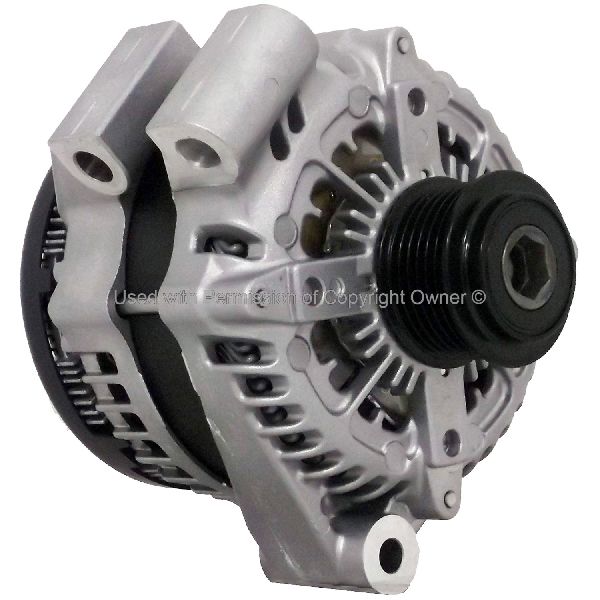
Est. part cost: $250-$800 - Failing Alternator 🟡 Medium Probability If the alternator is not recharging the battery sufficiently, system voltage will drop while the engine is running, triggering this fault, especially during high-load events like engine cranking after an ECO start-stop cycle.
How to confirm: With the engine running, measure the voltage at the battery terminals. A healthy charging system should show a voltage between 13.2V and 14.8V. The reading should be stable and not fluctuate wildly.
Typical fix: Replace the alternator.
Est. part cost: $637-$1257 - Corroded or Loose Battery Terminals/Grounds ⚪ Low Probability Vibration and time can lead to loose connections. TSB SSM71278 specifically calls out checking EPAS earth terminals G1D132 and G4D178 for high resistance or corrosion. A loose negative terminal clamp that feels tight but isn't making good contact is a known issue. TSB SSM67737 also notes that the main battery earth (G4D178) can be loose from the factory.
How to confirm: Visually inspect the battery terminals for corrosion and ensure they are tight. Follow the negative battery cable to the chassis and check the main ground straps for corrosion and security. Specifically locate and inspect ground points G1D132 and G4D178.
Typical fix: Disconnect, clean the battery posts and terminals thoroughly with a wire brush. Tighten all connections. Replace corroded ground straps or terminal washers if necessary. One owner on YouTube fixed a host of electrical issues by discovering and cleaning corroded ground leads.
Est. part cost: $5-$50
Rare But Worth Checking
- Failing Auxiliary (Eco Start-Stop) Battery: The smaller, secondary battery located in the right-side panel of the boot can also fail. While its primary role is for the start-stop system, its failure can contribute to overall system voltage instability and trigger battery-related warnings.
- Wiring Harness Issue: TSB SSM71278 mentions that a short circuit, open circuit, or high resistance in the wiring to the Power Steering or Chassis Control Module can cause this code. It also suggests checking for poor pin connection at connector C11-G1. This should be investigated if a new battery doesn't solve the problem.
- Faulty Control Module: In rare cases, the Chassis Control Module (CHCM) or another module like the Power Distribution Box may have an internal fault causing it to misread the battery voltage. This is typically diagnosed only after all other possibilities have been eliminated.
Diagnosis Steps
- Connect a professional-grade scanner (like a GAP IIDTool) to read all codes from all modules. Note the presence of U3003-62 and any accompanying codes like U0131, U0420, or B1304-16.
- With the engine off, use a multimeter or digital battery tester to check the battery's state of charge. A reading below 12.4V indicates a discharged or weak battery.
- Perform a battery load test using a professional tester. This is the most definitive way to identify a failing battery that may otherwise show a normal surface voltage.
- Inspect the battery terminals (both main and auxiliary) and main chassis ground connections for tightness and corrosion. Clean and tighten as necessary.
- Specifically locate and inspect the EPAS ground terminals G1D132 and G4D178 for corrosion or looseness, as recommended by TSB SSM71278.
- Start the engine and measure the voltage at the battery terminals to test the alternator's output. The voltage should be stable and typically between 13.2V and 14.8V.
- If the battery and alternator test good, investigate for a parasitic draw. IMPORTANT: The vehicle must be locked and left undisturbed for up to 20 minutes for all modules to go to sleep before an accurate reading can be taken. A draw over 50-85mA is considered excessive. On an L405, a healthy sleep current should be well below 30mA.
- If no other cause is found, the wiring between the battery, CHCM, and PSCM should be inspected for damage or high resistance, paying attention to connector C11-G1 as per TSB SSM71278.
- If a new battery is installed, use a compatible scan tool to perform the 'Battery Replacement' or 'BMS Reset' function to register it with the vehicle.
Parts You'll Likely Need
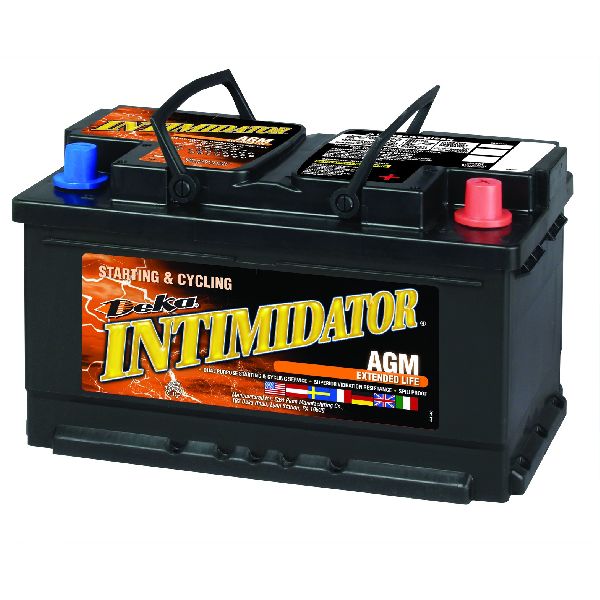
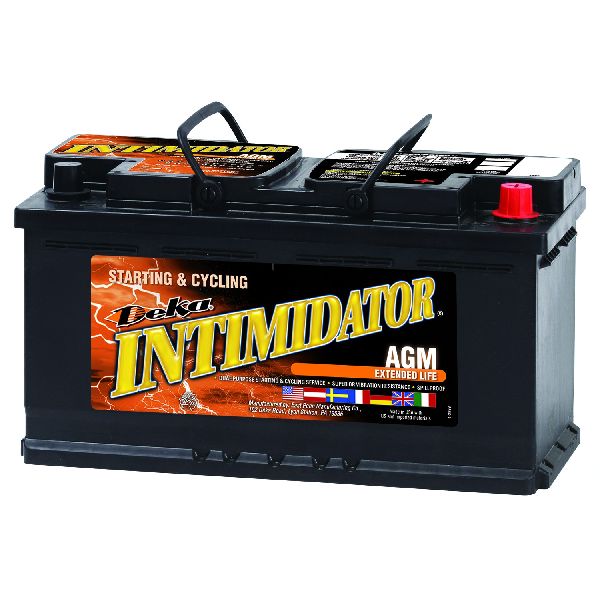
- AGM Main Battery
(OEM #LR181092 (replaces LR030213))— This is the most frequent cause of code U3003-62. The vehicle's electronics are highly sensitive to the stable voltage provided by a healthy AGM battery.
Trusted brands: Genuine Land Rover, Bosch S6588B, DieHard Platinum H8-AGM
OEM price range: $400-$824
Aftermarket price range: $250-$450 - Alternator — If the charging system is faulty, it will fail to maintain battery voltage, leading to this code.
Trusted brands: Denso, Bosch
OEM price range: $637
Aftermarket price range: $400
Related Codes That Often Appear With This One
- U0131-00 — This code indicates the Chassis Control Module (CHCM) has lost communication with the Power Steering Control Module (PSCM), often due to the unstable voltage indicated by U3003-62. This is explicitly mentioned in TSB SSM71278.
- U0420-68 — This means the CHCM has received invalid data from the PSCM. Like U0131, this is a direct consequence of the communication disruption caused by the voltage issue, as cited in TSB SSM71278.
- B1304-16 — Indicates that the Electronic Power Assisted Steering (EPAS) system circuit voltage is below the required threshold, directly pointing to a power supply problem. This is another code listed in TSB SSM62457.
Technical Service Bulletins (TSBs) & Recalls
- SSM71278: Addresses heavy steering feel accompanied by DTCs U3003-62, U0131-00, and U0420-68, citing low battery voltage, specific grounding points (G1D132, G4D178), or wiring issues as the cause.
- SSM62457: An earlier bulletin noting that U3003-62 can be an 'over sensitive' DTC stored due to transient low voltage events, which could be disregarded if no other symptoms were present.
Platform-Specific Known Issues
- Technical Service Bulletin SSM71278 directly links U3003-62 to low battery voltage, which can cause heavy steering and communication loss with the Power Steering Control Module.
- The TSB specifically advises checking EPAS ground points G1D132 and G4D178 for high resistance, and inspecting connector C11-G1 for poor pin connection.
- The dual-battery system means either the main or the smaller auxiliary battery (for start-stop) can be the source of voltage issues. A user on PistonHeads.com reported both batteries showing low health (67% and 63%) when they experienced a 'Low Battery' warning.
Mechanic-Grade Diagnostic Values
- Quiescent (Parasitic) Current Draw — expected: < 30mA. Failure: A sustained reading above 50-85mA after all modules have entered sleep mode (approx. 20 minutes) indicates an excessive parasitic draw. One case study on an L405 showed a healthy vehicle stabilizing at approximately 10mA.
- Alternator Output Voltage — expected: 13.2V - 14.8V. Failure: Voltage below 13.2V or fluctuating wildly while the engine is running indicates a potential alternator or charging system fault.
Scan Tool Commands That Help
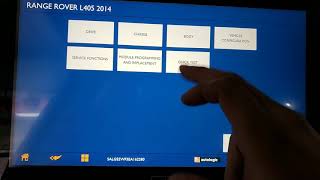
- GAP IIDTool: Service/Test -> BCM-Body Control -> Battery Replacement — This function must be used after installing a new main battery to reset the Battery Management System (BMS). This ensures the system adapts its charging strategy to the new battery's characteristics.
- JLR SDD / Pathfinder: Service Functions -> Replace battery / Configure existing module - Chassis control module — The official dealer tools use service functions to perform a BMS reset after a battery replacement. They can also be used to re-configure modules like the CHCM if software corruption is suspected.
Wiring & Ground Locations
- G4D178 — Main battery ground connection to the body, located near the battery in the spare wheel well area.. This is the primary ground for the entire vehicle's electrical system. TSB SSM67737 specifically identifies this ground as potentially being loose from the factory, causing a wide range of electrical faults. A wiring diagram confirms it's the main 50mm cable from the battery negative terminal.
- G1D132 — Ground point for the Power Steering Control Module (PSCM).. A poor ground at this location can directly cause power steering faults and trigger codes U0131 and B1304-16, which are commonly seen with U3003. A wiring diagram shows this as a 16mm black wire from the PSCM.
- C11-G1 — A large multi-pin connector, likely located in the engine bay or passenger compartment, that routes signals for the Chassis CAN bus.. TSB SSM71278 suggests checking for poor pin connections at this connector. A wiring diagram shows CAN bus signals for the Power Steering Control Module passing through pins C11-G1-1 and C11-G1-2.
- Engine/Gearbox Earth Straps — Braided or solid cables connecting the engine block and transmission case to the vehicle chassis.. Corroded or broken earth straps can cause a host of issues, including flickering lights, gearbox faults, and restricted performance messages, mimicking a battery failure.
Real Owner Repair Stories
- YouTube user 'Range Rover Man' (Range Rover L405 5.0 Supercharged (year not specified)) — Dashboard lights flickering on and off ('Christmas tree' effect), restricted performance messages, headlight flickering.
❌ Tried (didn't work) The owner was advised it could be the battery.
✅ What actually fixed it The owner found multiple corroded and broken ground/earth leads. One was under the air filter box on the driver's side, and another was a corroded gearbox earth strap. Cleaning the connection points and replacing the broken straps resolved all the electrical faults. - YouTube user 'Life as Usual' (2014 Range Rover L405 TDV6) — A 'charging fault' error message appeared on the dash while driving.
❌ Tried (didn't work) Replaced the main battery., Replaced the auxiliary battery., Cleaned all battery cables., Removed and reconditioned the alternator.
✅ What actually fixed it The root cause was a previously melted main fuse box. Even after repairing the visible damage, a poor connection remained deep within the fuse box, causing the persistent charging fault. Replacing the entire fuse box assembly finally fixed the issue.
OEM Part Supersession History
LR047630→LR176847— Standard part update/revision.
Heads up: These part numbers are for the auxiliary start-stop battery and are generally interchangeable.
Model Year Variations Within This Range
- 2016 (specifically V8 Supercharged): Some 2016 L405 V8 Supercharged models may not have a secondary auxiliary battery. Instead, they are equipped with a 'Voltage Quality Module' (VQM) located in the same area (right rear luggage compartment). The part number for this module is RR121720. A failure of this module could potentially cause similar voltage-related issues.
Helpful Videos



Used OEM Parts in Stock


New Aftermarket Parts Available



The information in this article is provided for general reference and educational purposes only. Vehicle specifications, procedures, and part compatibility can vary by production date, trim level, and region. Always consult your vehicle's factory service manual and verify part numbers before purchasing or performing repairs. Safety-critical components such as airbags, seat belts, and braking systems should be installed by a qualified professional.
- Land Rover RANGE ROVER:
- 🎬 Helpful Videos
- 🛍️ Shop This Part
- What's Unique About the 2013-2016 Land Rover RANGE ROVER
- Diagnostic Flowchart
- Symptoms You May Notice
- Most Likely Causes
- Rare But Worth Checking
- Diagnosis Steps
- Parts You'll Likely Need
- Related Codes That Often Appear With This One
- Technical Service Bulletins (TSBs) & Recalls
- Platform-Specific Known Issues
- Mechanic-Grade Diagnostic Values
- Scan Tool Commands That Help
- Wiring & Ground Locations
- Real Owner Repair Stories
- OEM Part Supersession History
- Model Year Variations Within This Range
- 🎟️ Get 5% Off