

U3003 on 2014-2016 Ford Fiesta: Battery Voltage and TCM Fault Guide
On a 2014-2016 Ford Fiesta, code U3003 almost always points to either a weak battery, poor ground connections, or a failing Transmission Control Module (TCM) associated with the DPS6 automatic transmission. Start by testing the battery and cleaning the main chassis grounds under the airbox. If those are healthy, the TCM is the likely culprit, a common and serious issue for this vehicle that was subject to an extended warranty program (14M02).
- U3003 on a 2014-2016 Fiesta is a serious code indicating a voltage problem that could be caused by the battery or a failing Transmission Control Module (TCM).
- Always test the 12V battery with a load tester first. This is the simplest and a very common fix.
- If the battery is good, the TCM is the next likely culprit, especially if you also have codes U0100, U0101, or P0606.
- Do not drive the vehicle if it is exhibiting symptoms like loss of power or failure to shift, as this is a major safety risk.
- Replacing the TCM is a complex job that requires programming and should be left to a professional.
What's Unique About the 2014-2016 Ford FIESTA

The 2014-2016 Fiesta uses the notoriously problematic DPS6 'PowerShift' dual-clutch automatic transmission. The Transmission Control Module (TCM) for this gearbox is prone to internal failure from heat, vibration, and poor solder joints on its circuit board. As a result, code U3003 on this specific car is very often a precursor to, or a direct symptom of, a complete TCM failure, which can cause a no-start condition or a sudden loss of power. Ford issued Technical Service Bulletin (TSB) 16-0044 that groups U3003 with other codes indicating a mandatory TCM replacement. Ford also created Customer Satisfaction Program 14M02, extending the TCM warranty to 10 years or 150,000 miles due to the high failure rate.
Diagnostic Flowchart
Tap your situation to follow the diagnostic path that matches what you're seeing on this vehicle.
Symptoms You May Notice
- Intermittent no-start condition.
- Loss of transmission engagement while driving.
- Sudden loss of power.
- Check Engine Light or other warning lights (ABS, Battery) are on.
- Transmission gear indicator (PRNDL) flashing.
- Harsh, jerky, or delayed gear shifts.
- Message center warnings like 'Hill Start Assist Not Available'.
- Grinding or clicking noises from the transmission.
- Replacing the ABS module. The ABS module often logs a U3003 code because it is sensitive to low system voltage, but it is rarely the root cause of the problem. The issue is almost always system-wide low voltage from the battery or grounds.
- Replacing other control modules. Like the ABS module, other modules may store this code simply because the system-wide voltage was low. The diagnosis should always start with the battery and charging system, followed by the main ground connections, before condemning any module.
Most Likely Causes

- Failing Transmission Control Module (TCM) 🔴 High Probability The DPS6 transmission's externally mounted TCM is known for high failure rates. The original design used compliant pin connections that loosen over time due to heat and vibration, causing internal electrical faults. Ford acknowledged this widespread issue with Customer Satisfaction Program 14M02, extending the warranty to 10 years/150,000 miles.
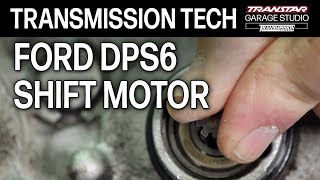
How to confirm: Scan for other codes like U0100, U0101, or P0606. Ford's TSB 16-0044 states that if these codes are present with U3003, the TCM should be replaced. A code P0606 is often considered a definitive sign of TCM failure on this platform. 🎬 Watch: Understanding how a failing TCM causes shifting issues.
Typical fix: Replace the TCM with a new or remanufactured unit. Upgraded modules use soldered connections for better durability. The replacement requires programming to the vehicle and performing a clutch adaptive learn procedure, which usually requires a dealer or specialized shop with tools like FORScan.
Est. part cost: $250-$1000 - Poor Battery Connections or Ground Straps 🟡 Medium Probability Ford often painted the chassis *before* attaching ground straps, leading to poor electrical conductivity over time. The primary ground points for the TCM are located on the chassis frame rail under the air filter box and are a known failure point. A poor ground causes voltage drops that can trigger U3003 across multiple modules.
How to confirm: Visually inspect the battery terminals for corrosion. Remove the airbox and inspect the ground points on the frame rail. A common DIY fix involves unbolting the ground connections, sanding the paint off the chassis and cable lugs to expose bare metal, applying dielectric grease, and re-securing them tightly.
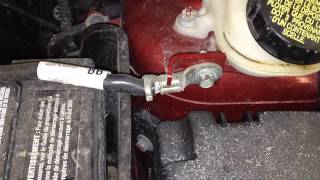
Typical fix: Clean the battery terminals and cable ends. For the chassis grounds, unbolt the connections, sand the paint off the chassis and cable lugs 🎬 See how to properly clean these critical ground connections. to expose bare metal, apply dielectric grease, and re-secure them tightly.
Est. part cost: $10-$50 - Weak or Failing 12V Battery 🟡 Medium Probability Modern control modules are highly sensitive to voltage. An aging battery can drop below the required voltage threshold (~9-10V) during startup, triggering the U3003 code across various modules before the TCM is even considered faulty.
How to confirm: Perform a load test on the battery, not just a simple voltage check. The voltage should remain stable and above ~9.6V while cranking the engine. A low battery can cause the TCM to malfunction and throw various codes.
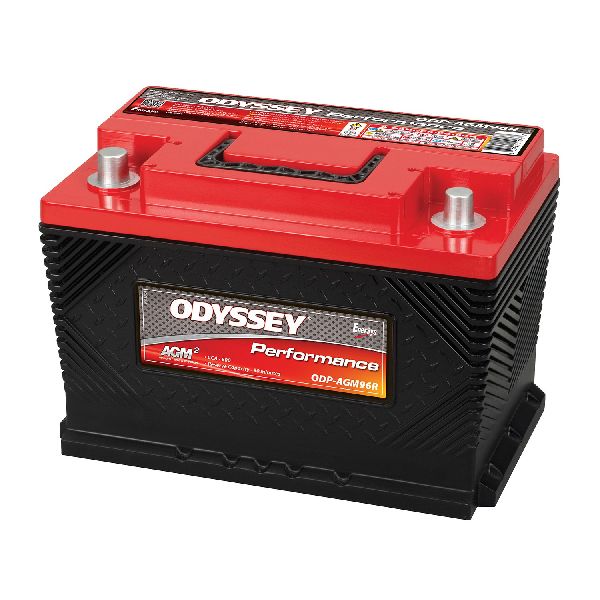
Typical fix: Replace the 12V battery and use a scan tool to perform a Battery Monitoring System (BMS) reset. Failure to reset the BMS can cause the new battery to be undercharged.
Est. part cost: $150-$250
Rare But Worth Checking
- Failing Alternator: While less common than a bad battery, a failing alternator can cause system voltage to be too low or unstable while the engine is running, triggering a U3003 code. A U3003-17 (Circuit Voltage Above Threshold) can be set if the alternator overcharges the system (above ~16V). Check charging system voltage at the battery with the engine running; it should be stable between 13.8-14.5V.
- Wiring Harness Damage: Damage to the wiring harness providing power to the TCM or another module can cause a voltage drop. The harness from the TCM to the ECM is known to rub through in some cases. This would typically require a detailed visual inspection of the harness and connectors leading to the affected module.
Diagnosis Steps
- Check the 12V battery first. Perform a proper load test to ensure it can hold a charge under load. Voltage should be above 12.4V at rest and not drop below 9.6V during cranking.
- Inspect and clean battery terminals. Then, locate and clean the main chassis ground points. On the Fiesta, the most critical ones are located under the air filter box on the frame rail. Sand away any paint to ensure a bare-metal connection.
- With the engine running, check the alternator output. Voltage at the battery terminals should be stable, between 13.8V and 14.5V.
- Using a Ford-capable scanner (like FORScan), check for DTCs in all modules, not just the PCM. Note if U3003 is present in multiple modules (like ABS, TCM, etc.) and look for suffixes like '-16' (low voltage) or '-17' (high voltage).
- If codes U0100, U0101, U1013, or P0606 are present alongside U3003, this strongly indicates TCM failure as per TSB 16-0044.
- Check if the vehicle's VIN is eligible for Ford's Customer Satisfaction Program 14M02 for a free TCM replacement, even if out of standard warranty.
- If the battery, grounds, and charging system are confirmed good, and especially if related transmission codes are present, the TCM is the primary suspect. Inspect the wiring and connectors at the TCM for any visible damage, corrosion, or loose pins before ordering the part.
Parts You'll Likely Need
- Transmission Control Module (TCM)
(OEM #AE8Z-7Z369-F)— This is the most common point of failure on Ford Fiestas with the DPS6 transmission that exhibit code U3003 along with other communication faults. TSB 16-0044 directly calls for its replacement. This part number supersedes previous versions AE8Z-7Z369-B, AE8Z-7Z369-D, and AE8Z-7Z369-E.
Trusted brands: Motorcraft
OEM price range: $700-$1000
Aftermarket price range: $250-$500 (Remanufactured) - 12V Automotive Battery — A weak or failing battery is a frequent cause of low voltage codes like U3003 across all modules. It is the first and most important component to test.
Trusted brands: Motorcraft, Interstate, DieHard
OEM price range: $200-$280
Aftermarket price range: $150-$220
Related Codes That Often Appear With This One
- U0100 — Lost Communication With ECM/PCM. This appears when the TCM fails and can no longer communicate on the CAN bus network. It is explicitly listed in TSB 16-0044 as a companion code pointing to TCM failure.
- U0101 — Lost Communication with TCM. This is a direct confirmation that other modules cannot communicate with the Transmission Control Module. It is also listed in TSB 16-0044.
- P0606 — ECM/PCM Processor Fault. This code is often set when the main engine computer detects a fatal internal error in the TCM. It is considered a 'death code' for the TCM on this platform.
- U1013 — Invalid Internal Control Module Monitoring Data Received. This is another communication code that points to a failing TCM on this platform, as cited in TSB 16-0044.
Technical Service Bulletins (TSBs) & Recalls

- 16-0044: DPS6 - NO START AND/OR TRANSMISSION ENGAGEMENT OR LOSS OF POWER WITH DTCS U0100, U0101, U1013, U3003 AND/OR P0606. This TSB is the primary document linking U3003 to TCM failure on this vehicle.
- 16-0129: A superseding TSB to 16-0044 which updated the service procedure and parts list, but kept the core diagnostic logic of replacing the TCM when specific DTCs are present.
Platform-Specific Known Issues
- The DPS6 automatic transmission is subject to multiple recalls and customer satisfaction programs. The Transmission Control Module (TCM) is a known weak point, with failures causing a wide range of electrical and communication DTCs, including U3003.
- Ford's own Technical Service Bulletin (TSB 16-0044) outlines a diagnostic path where the presence of U3003, along with other communication codes, leads directly to replacing the TCM.
- Ford extended the warranty on the TCM to 10 years or 150,000 miles under Customer Satisfaction Program 14M02 due to the extremely high failure rate. Owners should always check if their vehicle is covered before paying for a repair.
Mechanic-Grade Diagnostic Values
- Module Voltage Supply (U3003-16 Trigger) — expected: > 9.0 - 9.5 Volts. Failure: Voltage drops below 9V-9.5V for more than 10 seconds (RFA module) or 500ms (Cruise Control Module).
- Module Voltage Supply (U3003-17 Trigger) — expected: < 15.9 - 17 Volts. Failure: Voltage exceeds 15.9V (BCM) or 17V (ABS module).
- Battery Voltage (Engine Off) — expected: 12.4V - 12.8V. Failure: Voltage below 12.4V indicates a discharged or failing battery.
- Battery Voltage (Cranking) — expected: > 9.6V. Failure: Voltage dropping below 9.6V during engine crank indicates a weak battery.
- Charging System Voltage (Engine Running) — expected: 13.8V - 14.5V. Failure: Voltage below 13.8V or above 14.5V (up to 14.8V on some systems) indicates a fault in the alternator or Battery Management System (BMS).
Scan Tool Commands That Help
- FORScan: TCM Firmware Update — Used to load the correct calibration file onto a new or used TCM. This is a critical step when swapping modules, especially between different model year ranges.
- FORScan: TCM Adaptive Learning (Clutch System Adaptive Learn) — This function must be performed after replacing the TCM or clutches. It allows the module to learn the clutch touch points and shift drum positions. Failure to perform this can result in poor shifting and damage.
- FORScan: Reset All Adaptations (TCM) — This service procedure returns all learned transmission values back to their factory defaults. It can be used to try and resolve poor shift quality before resorting to parts replacement.
- Ford IDS / FDRS: Module Programming — The official Ford dealer tool is used to program a new TCM with the latest factory calibration and link it to the vehicle's VIN. It is the most reliable method for ensuring correct software.
Wiring & Ground Locations

- TCM Ground Points — Two 8mm bolts on the painted chassis frame rail, located directly under the air filter box in the engine compartment.. These are the primary grounds for the TCM. Ford painted the chassis before attaching the grounds, creating a high-resistance connection that worsens over time. This poor ground is a very common cause of voltage drops, leading to U3003 and erratic transmission behavior.
- G102 / G104 — These are the official Ford designators for the ground points located in the engine compartment, under the airbox area.. These specific grounds are tied into the harness for the transmission controls. A fault here directly impacts the TCM's power stability.
- Main Battery Ground — The main negative battery cable connection to the strut tower or chassis.. While less specific to the TCM, a corroded or loose main battery ground will cause system-wide voltage issues and can trigger U3003 in multiple modules.
- TCM Location — Bolted to the front of the transmission housing, underneath the battery tray and airbox assembly.. Knowing the physical location is necessary for inspection of its connectors and for replacement. It is in an area prone to heat and vibration.
Real Owner Repair Stories
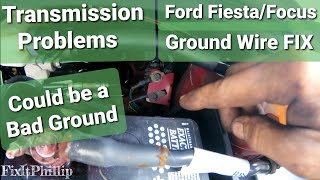
- YouTube user 'FixItPhillip' (2011 Ford Fiesta) — Erratic transmission problems, slipping, hiccup/dead spot between gears, tachometer fluctuating wildly. No trouble codes were present.
❌ Tried (didn't work) Initial driving test confirmed symptoms but no codes were stored.
✅ What actually fixed it The owner located the two ground connections on the chassis under the airbox. He noted they were bolted directly onto a painted surface. He removed the 8mm bolts, scraped the paint off the chassis and the ground wire eyelets to expose bare metal, and reinstalled them. While the shifting still felt slightly weird, the major slipping and tachometer fluctuation symptoms were resolved, indicating a significant improvement from fixing the bad ground connection. - Reddit user on r/FordFocus (Ford Focus with DPS6 (details applicable to Fiesta)) — Extremely rough shifting, dropping out of gear, reverse gear not working sometimes.
❌ Tried (didn't work) Dealer had already performed TSBs and TCM reprogramming under warranty., Installing a bigger battery was considered but advised against as a likely fix.
✅ What actually fixed it The user performed the 'ground fix' by cleaning the chassis ground points under the airbox. They reported that the results were 'promising' and the car shifted better initially, although some issues returned after 10 minutes of driving, suggesting the ground fix helps mitigate but may not solve an already-damaged TCM or clutches.
OEM Part Supersession History
AE8Z-7Z369-B, AE8Z-7Z369-D, AE8Z-7Z369-E→AE8Z-7Z369-F— The original TCMs used compliant pin connections internally which were prone to failure from heat and vibration. The updated 'F' version and remanufactured units often feature soldered connections for improved durability.
Heads up: While TCMs from 2012-2018 Focus/Fiesta models are physically interchangeable, there was a calibration change around 2015. Using a 2015+ TCM on a 2012-2014 car (or vice-versa) without reprogramming it with the correct calibration file can result in harsh shifts or poor performance. For a plug-and-play swap without programming, it is best to match the year range (e.g., '12-'14 used part for a '14 car).
Model Year Variations Within This Range
- 2012-2014 vs 2015-2018: The factory TCM calibration strategy was changed around the 2015 model year. While the modules are physically identical, swapping a module from a later car into an earlier one (like a 2016 TCM into a 2014 Fiesta) without reprogramming it with the correct 2014 calibration file can cause shifting problems, such as firm shifts into fourth gear.
Helpful Videos
We Have This Part in Stock


The information in this article is provided for general reference and educational purposes only. Vehicle specifications, procedures, and part compatibility can vary by production date, trim level, and region. Always consult your vehicle's factory service manual and verify part numbers before purchasing or performing repairs. Safety-critical components such as airbags, seat belts, and braking systems should be installed by a qualified professional.
- Ford FIESTA:
- 🎬 Helpful Videos
- 🛍️ Shop This Part
- What's Unique About the 2014-2016 Ford FIESTA
- Diagnostic Flowchart
- Symptoms You May Notice
- Most Likely Causes
- Rare But Worth Checking
- Diagnosis Steps
- Parts You'll Likely Need
- Related Codes That Often Appear With This One
- Technical Service Bulletins (TSBs) & Recalls
- Platform-Specific Known Issues
- Mechanic-Grade Diagnostic Values
- Scan Tool Commands That Help
- Wiring & Ground Locations
- Real Owner Repair Stories
- OEM Part Supersession History
- Model Year Variations Within This Range
- 🎟️ Get 5% Off