

U3003 on 2015-2022 Ford F-150: Battery Voltage Low Causes and Fixes
Code U3003 on a 2015-2022 F-150 almost always means a module detected low battery voltage. The most common fix is diagnosing the battery and charging system, often requiring a new battery ($150-$350) and a Battery Management System (BMS) reset. It is a symptom of a power supply issue, not a faulty module.
- U3003 means 'low voltage detected', not 'replace this module'.
- Always start diagnosis by load testing the battery. A simple voltage check is not enough.
- If you replace the battery, you must perform a Battery Management System (BMS) reset.
- Check the charging system (alternator) if the battery tests good.
- Do not replace expensive electronic modules until all 12-volt power supply issues have been definitively ruled out.
What's Unique About the 2015-2022 Ford F-150

The 2015-2022 Ford F-150 is packed with electronic modules that are highly sensitive to voltage fluctuations. Features like Auto Start-Stop, Power Deployable Running Boards, and Electric Power-Assisted Steering (EPAS) place significant demands on the electrical system. To protect the vehicle's core functions, the F-150's programming will intentionally disable non-essential features when it detects a low state of charge, which in turn logs the U3003 code in the disabled module. This can also trigger the vehicle to enter a 'Deep Sleep Mode' to conserve power, disabling remote functions via the FordPass app. This is a designed-in failsafe, not necessarily a component failure.
Diagnostic Flowchart

Tap your situation to follow the diagnostic path that matches what you're seeing on this vehicle.
Generation note: This range covers the 13th Generation (2015-2020) and the 14th Generation (2021-2022) Ford F-150. The underlying cause (low battery voltage) and the presence of sensitive electronic modules are common to both generations, making this code and its diagnosis consistent across the entire year range. The electrical architecture, including the Battery Management System (BMS), is fundamentally similar.
Symptoms You May Notice

- Temporary heavy, stiff, or slow steering assist, especially after an auto start-stop event.
- Power running boards are disabled and the feature menu setting changes to 'Off'.
- Warning lights for the charging system, ABS, or other systems.
- Slow engine cranking or a no-start condition.
- Multiple, seemingly unrelated error messages on the instrument cluster, such as 'Pre-Collision Assist Not Available' or 'Blind Spot Fault'.
- Dimming or flickering lights.
- Vehicle enters 'Deep Sleep Mode' frequently, disabling FordPass app remote features.
- Replacing the module that stored the code (e.g., Power Steering Control Module, Running Board Control Module). TSB SSM 50151 explicitly warns to diagnose the 12V system first before replacing any modules.
- Replacing the battery without performing a BMS reset. This can lead to the new battery being improperly charged and a recurrence of the U3003 code. Forum users confirm the '8-hour sleep' method does not reset the battery age parameter, making a scan tool reset essential.
- Assuming the code indicates a current problem. It is often a historical code from a past low-voltage event and can be cleared without immediate concern if no symptoms are present.
Most Likely Causes

- Weak or Failing Battery 🔴 High Probability The factory AGM batteries have a finite lifespan, often cited by owners as 2-4 years. The high electrical demands of modern F-150s, especially with short trips, infrequent use, or Auto Start-Stop functionality, can expose a weak battery quickly.
How to confirm: Perform a battery load test. A simple voltage check is insufficient, as a weak battery can show 12.6V at rest but collapse under load. Voltage should not drop below 9.6V during cranking. Many auto parts stores offer this service for free.
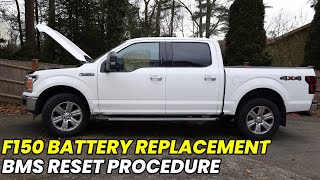
Typical fix: Replace the battery and perform a Battery Management System (BMS) reset. 🎬 Watch: How to replace your battery and reset the BMS Failure to reset the BMS is a critical error.
Est. part cost: $150-$350 - Incorrect Battery Management System (BMS) State of Charge 🟡 Medium Probability This is common if a new battery was installed without resetting the BMS. The system may still be using the charging strategy for the old, degraded battery, leading to undercharging of the new one. The BMS tracks 'days in service', and this timer must be reset to 0 for the system to properly charge the new battery.
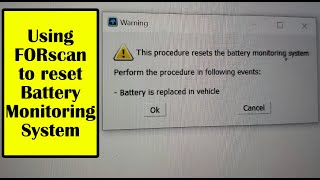
How to confirm: This is often diagnosed after a new battery fails to resolve the issue. A scan tool like FORScan is needed to view the 'Battery Age' PID and perform the official reset. 🎬 See how to use FORScan to reset your battery age Some owners report success with a manual procedure (ignition on, flash high beams 5 times, press brake 3 times), but FORScan is the most reliable method.
Typical fix: Perform a BMS reset procedure using a compatible scan tool like FORScan or the dealer's IDS.
Est. part cost: $0-$50 (for FORScan adapter) - Charging System Fault (Alternator) 🟡 Medium Probability
How to confirm: With the engine running, check the voltage at the battery terminals. It should be stable, between approximately 13.5V and 14.7V. If it's near battery voltage (12.6V or less), the alternator is not charging correctly.
Typical fix: Replace the alternator.
Est. part cost: $300-$700 - Loose or Corroded Battery Terminals/Grounds ⚪ Low Probability Corrosion on the positive terminal can indicate overcharging, while corrosion on the negative can indicate undercharging. Some model years are noted to have body-to-frame grounds that are susceptible to corrosion.
How to confirm: Visually inspect and physically check the battery terminals, main power cables, and chassis ground points for tightness and corrosion. Pay attention to the main body ground near the battery tray and the body-to-frame ground on the passenger side.
Typical fix: Clean all corrosion with a wire brush and baking soda solution, then apply dielectric grease or a terminal protectant spray. Ensure all connections are tight.
Est. part cost: $0-$20
Rare But Worth Checking
- Parasitic Battery Drain: If a fully charged battery repeatedly goes dead after sitting, a module or component may not be shutting down properly. This requires a more complex diagnosis using a multimeter to measure amperage draw after the truck has entered its 'sleep mode' (approx. 45 minutes). A normal draw should be under 50mA. Common culprits found by owners include faulty radio/SYNC modules or water intrusion in connectors.
- Binding Intermediate Steering Shaft: While U3003 is a voltage code, some owners report stiff steering caused by a binding U-joint in the intermediate steering shaft, which could potentially increase electrical load on the EPAS motor. This is a mechanical issue, not electrical, but can be a confounding factor if stiff steering is the primary symptom.
- Water Intrusion in Battery Junction Box (BJB): On Super Duty platform mates, a poorly sealed BJB cover can allow water to drip from the cowl area onto the fuse box, causing corrosion and widespread electrical issues, including U3003. While less commonly reported for F-150s, it's a known Ford issue. TSBs 23-2133 and 20-2298 address this for Super Duty trucks.
Diagnosis Steps
- Read all DTCs from all modules using a tool like FORScan. Note which module(s) have stored the U3003 code and if it is 'Previously Set' (historical) or active.
- Visually inspect battery terminals and primary ground connections for looseness or corrosion. Clean and tighten as needed.
- Perform a battery load test. This is the most critical step. A simple voltage check is not enough. Voltage must stay above 9.6V during cranking.
- If the battery is good, start the engine and test the charging system. Voltage at the battery should be ~13.5V - 14.7V. If not, the alternator is suspect.
- If the battery was recently replaced, confirm that the Battery Management System (BMS) was reset. Use FORScan to check the 'BATTERY_AGE' PID; it should be 0 days. If not, perform the 'BMS Reset' service procedure.
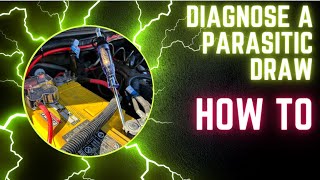
- If the battery and alternator are good but the problem persists, investigate a possible parasitic draw. Connect a multimeter in series with the negative battery cable. Wait at least 45 minutes for all modules to sleep. The draw should be less than 50 milliamps (0.05A). If higher, pull fuses one by one to isolate the draining circuit. 🎬 Watch: Step-by-step guide to performing a parasitic draw test
- Only after confirming the entire 12V power supply system is healthy should you consider the possibility of a faulty module that set the code.
Parts You'll Likely Need
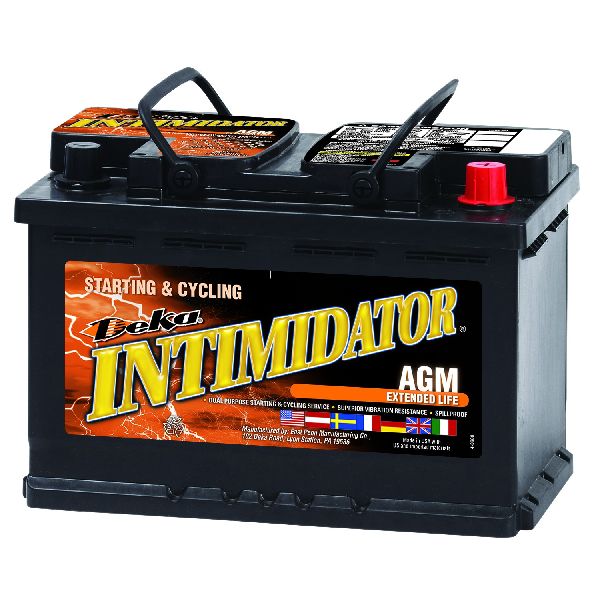
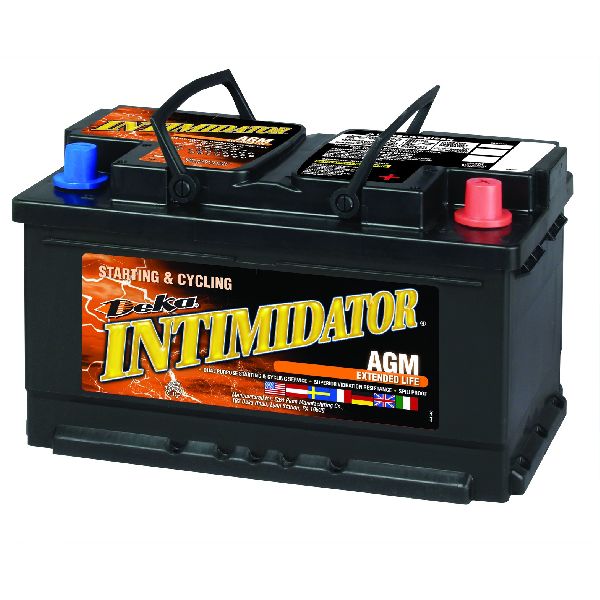
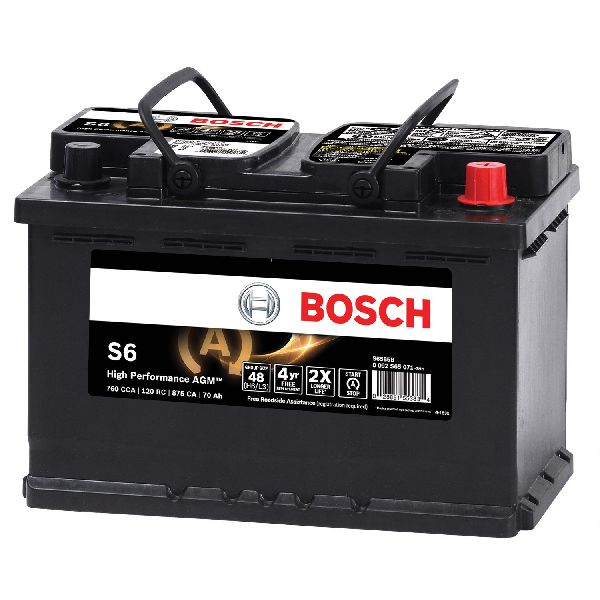
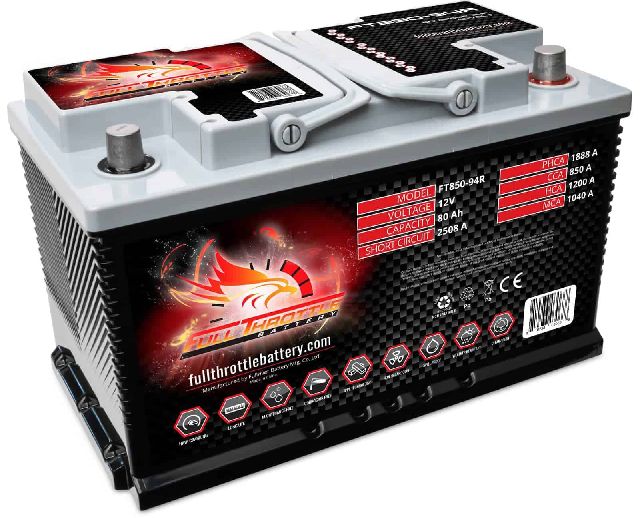
- AGM Battery
(OEM #BAGM-48H6-760 or BAGM-94RH7-800 (Varies by engine/options))— This is the most common failure point that leads to the low voltage conditions that trigger a U3003 code. Owners often upgrade to a higher capacity battery (e.g., H7 or H8 size) if the tray allows.
Trusted brands: Motorcraft, Interstate, DieHard, Northstar
OEM price range: $200-$350
Aftermarket price range: $150-$300 - Alternator — If the charging system is faulty, it cannot maintain battery voltage, which will cause low voltage DTCs.
Trusted brands: Motorcraft, Bosch
OEM price range: $400-$700
Aftermarket price range: $250-$500
Related Codes That Often Appear With This One
- P0562 — This is the generic SAE code for 'System Voltage Low'. It directly confirms the low voltage condition reported by the manufacturer-specific U3003 code. TSB SSM 50151 mentions them occurring together.
- U3003:16 — This is the most common variant, meaning 'Circuit Voltage Below Threshold'. It's frequently logged in the RBM (Running Board Module) and PSCM (Power Steering Control Module).
- U3003:68 — This variant means 'Event Information' and is often logged in the PSCM after an Auto Start-Stop event strains a weak battery, as noted in TSB SSM 49662. It indicates the module detected an event caused by another system.
Technical Service Bulletins (TSBs) & Recalls
- SSM 50151: Instructs technicians to diagnose low voltage DTCs (P0562, U3003) and the 12V system before replacing modules like the SOBDMC/B.
- SSM 49662: Links U3003:68 and temporary heavy steering after an auto start-stop event directly to a low state-of-charge battery on 2018 F-150s.
- SSM 50154: Connects U3003:16 in the Running Board Module (RBM) and disabled power running boards to a low battery condition on F-150, Super Duty, Expedition, and Navigator.
Platform-Specific Known Issues
- The Auto Start-Stop feature can put extra strain on a marginal battery, often triggering a U3003:68 in the PSCM and causing temporary stiff steering, as noted in TSB SSM 49662.
- Power Running Boards are often the first component to be disabled by the BCM to save power, resulting in a U3003:16 code in the RBM, as documented in TSB SSM 50154.
- Failure to reset the Battery Management System (BMS) after battery replacement is a very common reason for this code to return on a new battery. Forum users have proven with FORScan that simply letting the truck sit for 8 hours does NOT reset the battery's 'age' in the BMS, leading to chronic undercharging.
Mechanic-Grade Diagnostic Values
- BCM Voltage PID (V_BATT) vs. Actual Battery Voltage — expected: Within 0.2 volts of each other. Failure: A difference greater than 0.2V suggests high resistance in the BCM power supply circuit.
- BCM Voltage Supply Threshold — expected: Above 9.0 volts. Failure: If the BCM detects voltage has dropped below 9 volts on its supply circuit, it will set DTC U3003:16.
- Quiescent (Parasitic) Draw — expected: Under 50 mA (0.050 A). Failure: A sustained draw above 50mA after all modules have entered sleep mode (approx. 45 mins) indicates a parasitic drain that will deplete the battery.
Hidden / Shadow Codes Worth Checking
- U3003:1C: Circuit Voltage Out of Range. This subtype is used when a module measures a voltage outside the expected range but cannot determine if it's specifically too high or too low. (see via Advanced scan tools like FORScan or the dealer's IDS system.)
Scan Tool Commands That Help

- FORScan / Ford IDS / Snap-on: BMS Reset / Battery Replacement — This service function must be performed any time the vehicle's 12V battery is replaced. It resets the 'BATTERY_AGE' parameter to zero and recalibrates the charging strategy for the new battery. Failing to do this is a primary cause of recurring U3003 codes after a battery replacement.
Wiring & Ground Locations
- G103 / G104 — G103 is on the lower RH (passenger) front of the engine. G104 is on the rear of the LH (driver) fender apron.. These are primary engine and chassis grounds. High resistance or corrosion at these points can cause widespread voltage issues and trigger U3003 in various modules.
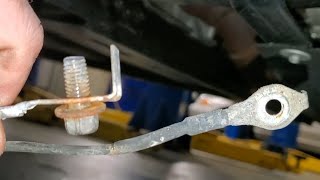
- Passenger Side Body-to-Frame Ground — Underneath the passenger side door area, connecting the cab body to the main frame rail.. This ground is exposed to the elements and is a known point of corrosion on F-150s. A poor connection here can cause numerous, hard-to-diagnose communication and module errors, including U3003.
- Rear Cab Wall Ground Stud — Located on the rear firewall of the cab, behind the rear seats.. This is a common factory grounding point for interior modules and aftermarket accessories. While generally reliable, ensuring it's clean and tight is good practice when diagnosing any electrical issue.
- BMS Sensor Connector — On the negative battery terminal.. This small connector provides data from the Hall-effect sensor on the negative battery cable to the BCM. Corrosion or damage to this connector can disrupt the BMS's ability to monitor the battery, leading to incorrect charging and low voltage codes.
Real Owner Repair Stories
- Ford Truck Enthusiasts Forum (2018 Ford F-150, 10k miles) — Silent U3003 code found in the PSCM with FORScan, no check engine light. Truck was not used much and mostly for short trips.
❌ Tried (didn't work) Clearing the code (it returned).
✅ What actually fixed it The issue was identified as an impending battery failure due to the truck's usage pattern. The ultimate fix is to replace the battery and perform a BMS reset using FORScan. The forum user noted that the OEM AGM batteries are known to fail prematurely. - Ford F150 Forum (2020 Ford F-150) — Multiple communication codes, potential starting issues.
❌ Tried (didn't work) Checking transmission harness per an SSM.
✅ What actually fixed it The technician found a severely corroded body-to-chassis ground on the passenger side. After cleaning the ground connection point and applying electrical grease and silicone to seal it from moisture, the communication issues were resolved. The technician now recommends checking this ground on all 2017+ F-150s as a preventative measure.
Model Year Variations Within This Range
- 2021-2022: The 14th Generation F-150 introduced significant technological changes, including the SYNC 4 infotainment system and available Pro Power Onboard. These systems increase the complexity of the electrical architecture and rely heavily on a stable voltage supply. The TSB SSM 50151, which mentions U3003, specifically calls out the SOBDMC (Secondary On-Board Diagnostic Module C), a module more integral to these newer, feature-rich trucks.
- 2015-2020 vs 2021-2022: While the core function of the BMS is the same, the 2021 redesign involved a complete overhaul of the truck's interior and exterior electronics, including all-new body panels, lighting (with more standard LEDs), and a new SYNC 4 system with over-the-air update capability. This means modules and wiring harnesses may differ significantly, though the root cause of U3003 (low voltage) remains consistent.
Helpful Videos
Used OEM Parts in Stock
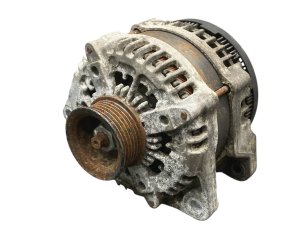


New Aftermarket Parts Available


The information in this article is provided for general reference and educational purposes only. Vehicle specifications, procedures, and part compatibility can vary by production date, trim level, and region. Always consult your vehicle's factory service manual and verify part numbers before purchasing or performing repairs. Safety-critical components such as airbags, seat belts, and braking systems should be installed by a qualified professional.
- Ford F-150:
- 🎬 Helpful Videos
- 🛍️ Shop This Part
- What's Unique About the 2015-2022 Ford F-150
- Diagnostic Flowchart
- Symptoms You May Notice
- Most Likely Causes
- Rare But Worth Checking
- Diagnosis Steps
- Parts You'll Likely Need
- Related Codes That Often Appear With This One
- Technical Service Bulletins (TSBs) & Recalls
- Platform-Specific Known Issues
- Mechanic-Grade Diagnostic Values
- Hidden / Shadow Codes Worth Checking
- Scan Tool Commands That Help
- Wiring & Ground Locations
- Real Owner Repair Stories
- Model Year Variations Within This Range
- 🎟️ Get 5% Off