

U3003 on 2018-2020 Ford Expedition: Battery Voltage and Running Board Faults Explained
Code U3003 on a 2018-2020 Expedition, especially with a ':16' suffix, almost always points to a low battery voltage issue affecting the Power Running Board Control Module (RBM). Before replacing any parts, fully charge and test the vehicle's 12V battery, as this is the most common and simplest fix. This is a known issue documented by Ford in Special Service Message (SSM) 50154.
- U3003:16 on a 2018-2020 Expedition is almost always a symptom of a weak or dying 12V battery.
- Do not replace expensive running board components before you have professionally tested the battery and charging system.
- After addressing the voltage issue (e.g., replacing the battery), you must manually re-enable the power running boards from 'Off' to 'Auto' in the instrument cluster settings.
- If you replace the battery yourself, performing a Battery Management System (BMS) reset with a scan tool is highly recommended for optimal battery life and performance.
What's Unique About the 2018-2020 Ford EXPEDITION
The fourth-generation Expedition (2018-present) is packed with electronic modules that are highly sensitive to battery voltage. The Power Running Boards (PRBs) are a key feature with a dedicated control module. Ford issued a Special Service Message (SSM 50154) acknowledging that a low battery voltage event 🎬 Watch: How to quickly fix DTC U3003:16 and restore power. is a common reason for the PRBs to become disabled and store code U3003:16. This is a built-in protective strategy managed by the Battery Management System (BMS); the truck disables non-essential, high-current features when it senses the battery is weak to ensure enough power remains for starting the engine. Many owners report premature failure of the original equipment battery, sometimes in as little as 2-3 years, making this a common issue.
Diagnostic Flowchart
Tap your situation to follow the diagnostic path that matches what you're seeing on this vehicle.
Symptoms You May Notice
- Power running boards do not deploy or retract.
- The running board setting in the instrument panel cluster menu changes from 'Auto' to 'Off' on its own.
- An illuminated charging system warning lamp may be present on the dashboard.
- Slow engine cranking, especially on the first start of the day.
- In some cases, other electrical accessories may act erratically or display messages like 'Screen off to save battery'.
- The FordPass app may show a message that the vehicle is in 'battery saver mode' or 'deep sleep mode'.
- Replacing the power running board motors or the entire running board assembly. The motors are often fine; they are simply not receiving the command to operate due to the low voltage code in the control module. Sometimes, the hinges just need to be cleaned and lubricated. 🎬 See how to fix sticking running boards without buying new parts.
- Replacing the Running Board Control Module (RBM) without first confirming the battery and charging system are in perfect working order.
Most Likely Causes
- Weak or Failing 12V Battery 🔴 High Probability Modern Expeditions have a high electrical demand from numerous modules, and the original equipment (OE) AGM batteries can fail in as little as 2-3 years, especially with short-trip driving patterns. A low voltage event is the specific cause cited in Ford's service message (SSM 50154) for this code. The Battery Management System (BMS) is designed to only charge the battery to about 80% to prolong its life, but this can reduce its reserve capacity, making it more susceptible to low voltage events.
How to confirm: Test the battery voltage with a multimeter with the engine off; a healthy, fully charged AGM battery should read at least 12.4V-12.6V. A reading of 12.2V or lower indicates a significant discharge. A definitive confirmation requires a professional load test to check its ability to hold a charge under load. Many auto parts stores offer this service for free.
Typical fix: Recharge or replace the 12V AGM battery. After replacement, a Battery Management System (BMS) reset is critical. 🎬 Watch this walkthrough for battery replacement and the required BMS reset. This can be done with a scan tool like FORScan or via a specific sequence of in-vehicle commands (e.g., flashing high beams 5 times, then pressing the brake pedal 3 times). Failure to reset the BMS will cause the system to continue charging the new battery as if it were the old, degraded one, leading to a repeat failure.
Est. part cost: $200-$450 - Charging System Fault 🟡 Medium Probability If the alternator is not adequately recharging the battery, the system voltage will drop, triggering the U3003 code in sensitive modules.
How to confirm: With the engine running, measure the voltage at the battery terminals. It should be approximately 13.5V to 14.5V. If the voltage is low or fluctuates wildly, the alternator may be failing.
Typical fix: Replace the alternator.
Est. part cost: $300-$800 - Loose or Corroded Battery Terminals/Grounds ⚪ Low Probability Poor connections can create high resistance, leading to a voltage drop that affects various modules even if the battery and alternator are healthy.
How to confirm: Visually inspect the battery terminals for white or blue-green corrosion and ensure they are tight. Check the main body and engine ground straps for tightness and corrosion. Pay special attention to the BMS sensor on the negative terminal.
Typical fix: Clean the battery terminals and cable ends with a wire brush. Secure all connections.
Est. part cost: $5-$20
Rare But Worth Checking
- Faulty Running Board Control Module (RBM): While possible, the module itself is rarely the cause of a voltage-related code. This should only be considered after thoroughly ruling out all power supply issues (battery, alternator, wiring). The code U3003:16 specifically points to a voltage supply issue, not an internal module fault.
- Damaged Wiring to the RBM: Physical damage to the wiring harness providing power to the running board module could cause a voltage drop. This is uncommon but possible, especially on vehicles driven in harsh conditions.
- Parasitic Battery Drain: A different module or component may be staying active when the vehicle is off, slowly draining the battery and causing the low voltage condition that triggers the U3003 code in the RBM. Diagnosing this requires a parasitic draw test with a multimeter.
Diagnosis Steps
- Confirm the full Diagnostic Trouble Code (DTC) with a scanner capable of reading Ford-specific codes. Note if it is U3003:16 in the Running Board Control Module (RBM).
- Check the battery's state of charge. With the engine off, use a multimeter to measure voltage at the battery terminals. A reading below 12.4V indicates a discharged or weak battery.
- Perform a battery load test. This is the most definitive way to confirm if the battery is failing under load.
- Inspect and clean the battery terminals and main chassis ground connections. Ensure the BMS sensor connection on the negative terminal is secure.
- Start the engine and test the charging system. Voltage at the battery should rise to between 13.5V and 14.5V.
- If the battery is replaced, perform a BMS reset. This can be done with a scan tool or by turning the ignition on (engine off), flashing the high beams 5 times, and then pressing the brake pedal 3 times. The battery light on the cluster should flash to confirm the reset.
- After addressing the voltage issue and clearing the DTCs, navigate to the vehicle settings menu in the instrument panel cluster. Go to 'Advanced Settings' > 'Vehicle' > 'Power Running Boards' and change the setting from 'Off' back to 'Auto'.
- If the code returns immediately or the running boards still do not work, inspect the wiring and connector at the RBM for power, ground, and any signs of damage.
- If all wiring and power sources are confirmed good, the RBM itself may be faulty, but this is highly unlikely.
Parts You'll Likely Need
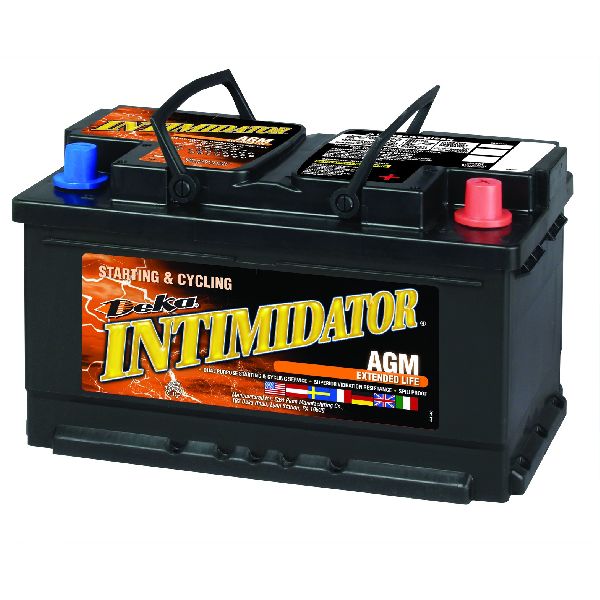
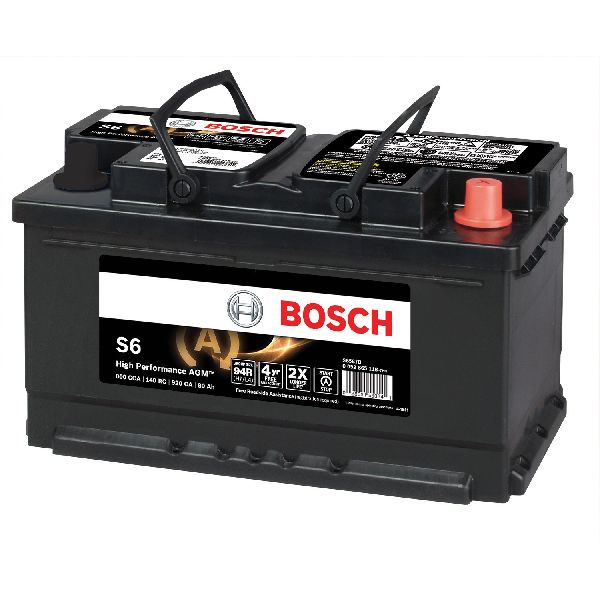
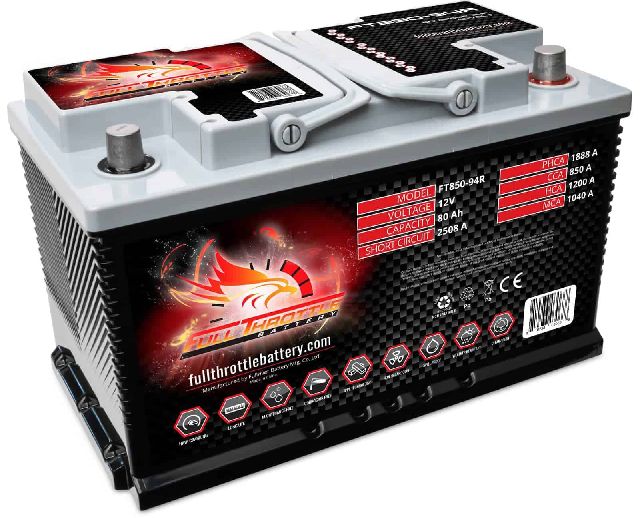
- AGM Battery
(OEM #BAGM-94RH7-800 (Motorcraft, H7/94R Group Size, 800 CCA))— This is the most frequent cause of code U3003:16, as confirmed by Ford's own service message. The vehicle's electronics are sensitive to the slight voltage drop of a failing battery.
Trusted brands: Motorcraft, Interstate, DieHard, Duralast Platinum
OEM price range: $250-$400
Aftermarket price range: $200-$350 - Running Board Control Module
(OEM #JL7Z-14C177-B)— This is a rare but possible failure. If the battery, charging system, and wiring are all confirmed to be in good condition, the module itself may have an internal fault. This part number supersedes JL7Z-14C177-A.
Trusted brands: Motorcraft
OEM price range: $350-$700
Technical Service Bulletins (TSBs) & Recalls
- SSM 50154: Addresses disabled power running boards and DTC U3003:16, identifying a low battery voltage event as the likely cause.
Platform-Specific Known Issues
- TSB SSM 50154: Ford issued this Special Service Message for 2018-2020 Expeditions (among other models) which states that power running boards being disabled, with DTC U3003:16 stored in the RBM, may be due to a low battery voltage event or a fully discharged battery. The prescribed fix is to inspect the charging system, correct the low voltage condition, and then re-enable the running boards in the instrument cluster settings.
Mechanic-Grade Diagnostic Values
- RBM Module Voltage Supply (Key On) — expected: Within 0.2 volts of battery voltage. Failure: A voltage drop greater than 0.2V indicates high resistance in the power supply circuit.
- RBM Module Ground Circuit Resistance — expected: Less than 5.0 ohms. Failure: Resistance higher than 5.0 ohms indicates a poor ground connection, which can cause a variety of issues.
- Module Low Voltage Shutdown Threshold — expected: Above 9.0 - 9.5 Volts. Failure: The RBM will set code U3003:16 and may disable the running boards if its supply voltage drops below this threshold for a specified time (e.g., 500ms).
Scan Tool Commands That Help
- FORScan / Ford IDS: RBM (Running Board Module) Self-Test — After verifying battery and charging system health, this command instructs the module to check its own internal logic and the operation of the running board motors. It can confirm if the module is operational and can detect other faults (like B-codes for motor issues) that may be present.
- FORScan / Ford IDS: RBM (Running Board Module) Reset — If the running boards are unresponsive after correcting a voltage issue and clearing codes, a module reset can force it to re-initialize. This is a useful step before considering module replacement.
- FORScan / Ford IDS: Clear All CMDTCs (Continuous Memory Diagnostic Trouble Codes) — This is a critical first step in diagnosis. Clearing the code and seeing if it returns immediately helps differentiate between a past, intermittent low-voltage event and a current, hard fault.
Wiring & Ground Locations
- Running Board Control Module (RBM) — On 2018-2020 Expeditions, the RBM is typically mounted to the lower left side of the instrument panel structure, behind the trim and above the driver's side kick panel. On some models with Ford Connect, it may be relocated to the back of the center console.. This is the physical location of the module that sets the U3003:16 code. Access is required to test power and ground circuits directly at its connectors (C3313A/C3313B) or to replace the module.
- RBM Power Supply Pin — At the RBM connector, the primary power input is typically a BU/RD (Blue with Red stripe) wire. This corresponds to a specific pin on the connector that should be tested for voltage.. This is the specific pin to probe with a multimeter to verify that battery voltage is reaching the module. A low reading here when battery voltage is normal points to a wiring issue between the battery/fuse box and the module.
- RBM Ground Pin — At the RBM connector, the primary ground is typically a BK/VT (Black with Violet stripe) wire. This pin should be tested for resistance to a known good chassis ground.. A high resistance reading on this ground circuit can cause the module to malfunction and set voltage-related codes, even if the power supply is good. Verifying this pin has less than 5 ohms of resistance to ground is a key diagnostic step.
Real Owner Repair Stories
- Ford F150 Forum (platform mate) (2018 F-150) — Power running boards would not retract properly after a battery replacement.
❌ Tried (didn't work) Running FORScan self-test (passed with no codes)., Performing multimeter tests on the running boards themselves (passed).
✅ What actually fixed it The owner performed all pinpoint tests from the workshop manual, which all passed. The final step in the diagnostic tree was to replace the Power Running Board (PRB) module. After replacing the module, the boards functioned correctly.
OEM Part Supersession History
JL7Z-14C177-A→JL7Z-14C177-B— Standard part revision by the manufacturer, likely for improved reliability or internal component changes.
Heads up: JL7Z-14C177-B is the direct replacement for JL7Z-14C177-A and should be fully compatible.
Model Year Variations Within This Range
- 2019-2020: On models equipped with the Ford Connect modem (starting around 2019), the Running Board Control Module (RBM) was moved from its typical location behind the driver's side dash to the back of the center console to make room for the new modem.
Helpful Videos

Used OEM Parts in Stock


New Aftermarket Parts Available


The information in this article is provided for general reference and educational purposes only. Vehicle specifications, procedures, and part compatibility can vary by production date, trim level, and region. Always consult your vehicle's factory service manual and verify part numbers before purchasing or performing repairs. Safety-critical components such as airbags, seat belts, and braking systems should be installed by a qualified professional.
- Ford EXPEDITION:
- 🎬 Helpful Videos
- 🛍️ Shop This Part
- What's Unique About the 2018-2020 Ford EXPEDITION
- Diagnostic Flowchart
- Symptoms You May Notice
- Most Likely Causes
- Rare But Worth Checking
- Diagnosis Steps
- Parts You'll Likely Need
- Technical Service Bulletins (TSBs) & Recalls
- Platform-Specific Known Issues
- Mechanic-Grade Diagnostic Values
- Scan Tool Commands That Help
- Wiring & Ground Locations
- Real Owner Repair Stories
- OEM Part Supersession History
- Model Year Variations Within This Range
- 🎟️ Get 5% Off