

U3003 on 2020-2023 Ford Escape Hybrid: Battery Voltage Problems and Fixes
Code U3003 on a 2020-2023 Ford Escape Hybrid typically indicates a problem with the 12V battery charging system. A known issue, outlined in Ford TSB SSM 52201, points to a potentially open 300-amp mega fuse, preventing the DC/DC converter from charging the 12V battery. Do not just replace the battery; the charging system must be diagnosed.
- U3003 on your Escape Hybrid means there's a 12V battery voltage problem, often because it's not being charged.
- Before replacing the battery, have a technician check the 300-amp mega fuse as specified in Ford TSB SSM 52201.
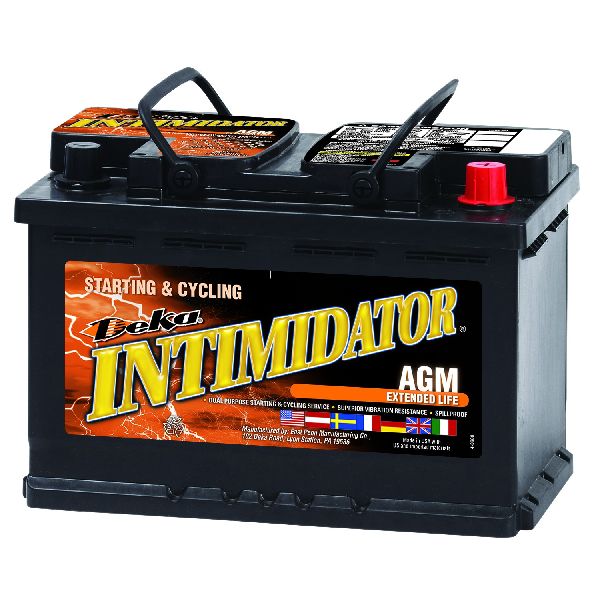
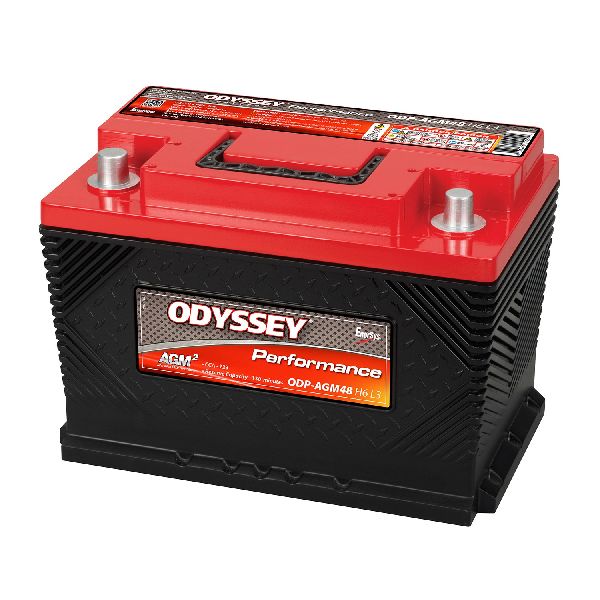
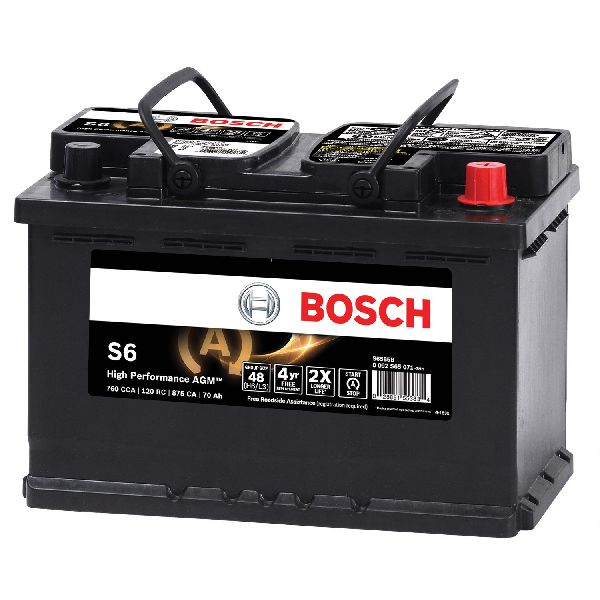
- If you need a new battery, consider upgrading to a larger H6-size AGM battery (like Motorcraft part BAGM-48H6-760) for better longevity, as recommended by other owners.
- Diagnosis of the charging system involves the high-voltage battery system and should be performed by a qualified technician.
- Ask your dealer to check for any available software updates, especially if you have a Plug-in Hybrid (PHEV) model.
What's Unique About the 2020-2023 Ford ESCAPE HYBRID

Unlike a conventional car with an alternator, your Escape Hybrid uses a DC/DC converter to step down high voltage from the main hybrid battery to charge the 12V accessory battery. This makes the DC/DC converter and its related components critical for the health of the 12V system. A failure here, such as the open 300-amp mega fuse (F4) 🎬 Watch: How to find and inspect the high-current mega fuse. in the high-current battery junction box (BJB), means the 12V battery has no way to recharge, leading to a no-start condition even if the high-voltage hybrid battery is fully charged.
Diagnostic Flowchart

Tap your situation to follow the diagnostic path that matches what you're seeing on this vehicle.
Symptoms You May Notice

- Vehicle will not start
- Low 12V battery warning on the dashboard
- "Remote features disabled to preserve battery" message from FordPass app.
- "Deep Sleep Mode" or "Battery Saver Mode" activation.
- Dim or flickering interior or exterior lights.
- Electrical accessories (radio, windows) are slow or do not work.
- Multiple false warning lights on the dash as various modules lose stable power.
- Replacing the 12V battery without testing the charging system. If the 300-amp fuse is blown or the DC/DC converter has failed, the new battery will also discharge and fail. A Maverick owner on a forum reported their dealer did this, and the problem returned in 48 hours until they pushed for the TSB to be investigated.
Most Likely Causes

- Open 300 Amp Mega Fuse 🔴 High Probability Ford Technical Service Bulletin SSM 52201 directly identifies this as a primary cause for the U3003:62 code and low 12V battery condition on this specific vehicle range and its platform mates. A technician on MaverickTruckClub.com noted the fuse can develop a hairline crack from vibration, testing fine with a multimeter but failing under load.
How to confirm: A technician must follow the diagnostic procedure in WSM, Section 414-05, Pinpoint Test H to verify if the fuse (labeled F4) located in the high-current battery junction box (BJB) is open. A visual inspection may not be sufficient, as the fuse can have a hairline crack that only fails under load.
Typical fix: Replace the 300-amp mega fuse and fully recharge and test the 12V battery. A Maverick owner confirmed their dealer found the open fuse after being shown the TSB.
Est. part cost: $20-$50 - Failing 12V AGM Battery 🟡 Medium Probability The factory-installed 12V battery can be undersized for the vehicle's demands and may fail prematurely, especially after being deep-discharged by a charging system fault. Many owners on forums report repeated battery failures until upgrading to a larger, more robust AGM battery.
How to confirm: Perform a professional load test on the 12V battery. A simple voltage check is insufficient, as a failing battery can show a good surface charge but collapse under load. The battery must also be tested after a full recharge.
Typical fix: Replace the 12V battery. Many owners recommend upgrading to a larger capacity H6-size AGM battery, such as the Motorcraft BAGM-48H6-760. After replacement, a Battery Monitoring System (BMS) reset is required.
Est. part cost: $200-$350 - Software Issue in Control Modules ⚪ Low Probability Various TSBs exist for parasitic drains caused by software glitches. TSB 22-2169 points to a software issue in the Battery Charger Control Module (BCCM) on PHEV models that can drain the 12V battery while charging. Other issues involve the Audio Control Module (ACM) or vehicle modem not entering sleep mode, sometimes triggered by third-party apps (per SSM 50804). A user on Blue Oval Forums cited TSB 24-2288 to fix a module-related drain on a 2023 Escape Hybrid.
How to confirm: A Ford dealership can check for and apply the latest software updates to all relevant modules (PCM, BCCM, ACM, GWM). The dealer can check if TSBs like 22-2169 (for PHEV) or 24-2288 (and its successor 25-2081) apply to the vehicle's VIN.
Typical fix: Reprogramming the affected control module(s) with the latest software version.
Est. part cost: $0 if under warranty, otherwise labor cost for programming.
Rare But Worth Checking
- Failed DC/DC Converter: While the mega fuse is a more common failure point, the DC/DC converter itself can fail. This is a much more expensive repair involving the high-voltage system and should be considered only after the fuse, battery, and software have been ruled out.
Diagnosis Steps
- Scan all vehicle modules for DTCs, paying close attention to any suffixes on the U3003 code (e.g., :62, :16).
- Perform a comprehensive health and load test on the 12V battery. Recharge fully before testing. Replace if it fails and perform a BMS reset.
- If the battery is good, put the vehicle in 'Ready' mode and measure the charging voltage at the battery terminals. It should be between 13.5V and 14.5V. If it's around 12V or less, the battery is not being charged. A roadside assistance provider noted a reading of 13.1V as being below the optimal 13.8V-14.2V range.
- If charging voltage is low, check for applicable TSBs, specifically SSM 52201 for the 2020-2023 Escape Hybrid.
- Following TSB SSM 52201, perform Pinpoint Test H from the Workshop Manual (Section 414-05) to inspect the 300-amp mega fuse (F4) in the high-current battery junction box for continuity. This is the most likely cause.
- If the fuse is intact and charging voltage is still low, the issue may be with the DC/DC converter itself or related wiring. This step requires professional diagnosis due to the high-voltage system.
- Check with a dealer for any available software updates for the PCM, BCCM, GWM, or other modules that could be causing a parasitic drain, referencing TSBs like 22-2169 (for PHEV) or 24-2288 and its successor 25-2081.
- Investigate potential parasitic drains from third-party apps connected to the FordPass modem, as described in Ford SSM 50804.
Parts You'll Likely Need
- 12V AGM Battery
(OEM #BAGM-48H6-760)— The original battery can fail prematurely. Many owners upgrade to this larger, more robust H6-size AGM battery as a permanent solution.
Trusted brands: Motorcraft
OEM price range: $250-$350
Aftermarket price range: $200-$300 - 300 Amp Mega Fuse
(OEM #N00000008338)— This fuse is a known failure point identified in Ford TSB SSM 52201 that prevents the DC/DC converter from charging the 12V battery.
Trusted brands: Motorcraft, Bussmann, Littlefuse
OEM price range: $20-$50
Aftermarket price range: $15-$40
Related Codes That Often Appear With This One
- U3003:16 — This code for 'Circuit Voltage Below Threshold' is often stored alongside U3003:62, as both relate to the low voltage condition of the 12V battery. TSB SSM 52201 explicitly mentions it as an accompanying code.
- U3000:04 — This code for 'Control Module: System Internal Failures' can be logged in the DC/DC module along with U3003 codes, as mentioned in TSB SSM 52201, indicating the module is failing its internal self-tests due to the power supply issue.
Technical Service Bulletins (TSBs) & Recalls
- SSM 52201: Addresses a low or discharged 12V battery with DTC U3003:62, pointing to a possible open 300-amp mega fuse in the high-current battery junction box. Applies to Escape, Maverick, and Corsair.
- TSB 22-2169: For PHEV models, addresses a 12V battery that discharges while the high-voltage battery is charging, recommending a software update.
- TSB 24-2288: A troubleshooting service bulletin mentioned by an owner on Blue Oval Forums to resolve a persistent 12V battery drain on a 2023 Escape Hybrid caused by modules not entering sleep mode. This TSB was later superseded.
- SSM 50804: An internal Ford memo that warns dealers about parasitic 12V battery drains caused by third-party apps keeping the vehicle's modem awake.
Platform-Specific Known Issues
- A widespread issue documented in TSB SSM 52201 describes a no-charge condition caused by an open 300-amp mega fuse in the high-current BJB, leading to a dead 12V battery and DTC U3003:62. This TSB also applies to the Ford Maverick and Lincoln Corsair.
- On Plug-in Hybrid (PHEV) models, TSB 22-2169 notes that a software issue can cause the 12V battery to discharge while the main high-voltage battery is charging.
- Many owners on forums like fordescape.org and Reddit report frequent 12V battery failures and find success by replacing the smaller stock battery with a larger H6-size AGM battery.
- Parasitic drains from modules failing to enter sleep mode are a known issue, with some cases traced to third-party apps polling the vehicle's modem (SSM 50804) or requiring a software update per TSB 24-2288.
Mechanic-Grade Diagnostic Values
- Normal 12V Battery Charging Voltage (vehicle in 'Ready' mode) — expected: 13.5V - 14.5V. Failure: A reading near battery voltage (approx. 12.0V-12.6V) or lower indicates the battery is not being charged. A reading of 13.1V was noted as potentially low by a technician.
- Over-Voltage Condition — expected: Below 15.0V. Failure: A sustained reading above 15.0V can trigger a U3003:17 'Circuit Voltage Above Threshold' code. A 2016 Mustang with similar codes showed 15.2V.
- 300-Amp Mega Fuse Resistance — expected: < 1.0 Ohm (near zero). Failure: Any reading significantly above 0 ohms indicates a bad fuse. However, the fuse can have a hairline crack that shows good continuity on a multimeter but opens under load.
Hidden / Shadow Codes Worth Checking
- U3003:17: Battery Voltage - Circuit Voltage Above Threshold. This indicates the module is seeing voltage higher than the specified maximum, which can also damage the 12V battery and other electronics. (see via A professional scan tool like Ford IDS or a capable aftermarket tool like FORScan.)
Scan Tool Commands That Help
- Ford IDS / FORScan: Pinpoint Test H — This is the specific, guided diagnostic procedure referenced in TSB SSM 52201 to test the 300-amp mega fuse circuit when U3003:62 is present.
- Ford IDS / FORScan: BMS Reset — This is required after replacing the 12V battery to inform the Battery Monitoring System of the new battery's state of health and prevent improper charging.
- Ford IDS / FORScan: High Voltage Battery Balance — This service procedure is used to equalize the voltage across the cells of the main high-voltage battery pack. While not a direct fix for U3003, it is a critical health maintenance procedure for the hybrid system that can be performed with these tools.
Wiring & Ground Locations
- DC/DC Converter — Located under the hood on the driver's side, mounted next to the Inverter System Controller (ISC).. This component is the source of the 12V charging system. All power and control wiring to and from this unit are critical for diagnosis.
- High-Current Battery Junction Box (BJB) — Contains the 300-amp mega fuse (F4) that is the primary cause of code U3003:62. Its location is distinct from the main under-hood fuse box.. This is the location of the most common failure part (300A fuse) identified in TSB SSM 52201.
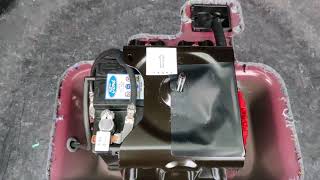
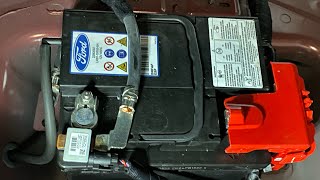
- 12V AGM Battery — Under the rear cargo floor, where a spare tire would typically be.. This is the battery that is not being charged. Access is required for testing, charging, or replacement.
- Under-hood Jump Start Terminals — The positive (+) terminal is under a small red plastic cover on the driver's side, and the negative (-) ground post is a small metal nipple on the driver's side inner fender structure.. Provides a safe and accessible point to connect a charger or jump starter to the 12V system without accessing the battery in the rear, which may be inaccessible with a dead battery.
Real Owner Repair Stories
- Reddit user comment on r/fordescape (2023 Ford Escape ST-Line Elite Hybrid) — Persistent FordPass notifications about the vehicle entering a battery-saving deep sleep mode, followed by total failure of the audio system (ACM).
❌ Tried (didn't work) Owner was scheduling a dealer visit when the audio failed completely.
✅ What actually fixed it Another user pointed to TSB 24-2288, which addresses a parasitic drain from multiple modules (ACCM, GWM, APIM, TCU) not entering sleep mode. The dealer confirmed a related issue and reprogrammed the ACM to resolve the problem. - Reddit user post on r/FordEscapePHEV (2021 Ford Escape PHEV) — 12V battery died four separate times, requiring a tow. Jump starting did not work.
❌ Tried (didn't work) Jump starting, Replacing the battery without addressing the root cause.
✅ What actually fixed it The dealer identified a TSB related to the PCM module causing a 12V battery drain specifically while the high-voltage PHEV battery was charging. This is consistent with TSB 22-2169.
OEM Part Supersession History
TSB 24-2288→TSB 25-2081— Update to the service procedure and labor operations for fixing a parasitic 12V battery drain caused by various control modules.
Model Year Variations Within This Range
- 2020-2022 (PHEV only): These models may experience a 12V battery drain specifically while the high-voltage battery is plugged in and charging. This is caused by a software issue in the Battery Charger Control Module (BCCM) and is addressed by TSB 22-2169.
- 2023-2024: These models may have a parasitic drain issue caused by the Air Conditioning Compressor Module (ACCM), Gateway Module (GWM), and other modules being kept awake to perform emissions checks. This is addressed by software updates outlined in TSB 24-2288 and its successor, TSB 25-2081.
Helpful Videos
![Avoid Expensive Shop Repairs: DIY Reset the Ford Vehicle Battery Monitoring System [BMS]](https://img.youtube.com/vi/QTtb7rKaZTE/mqdefault.jpg)
Used OEM Parts in Stock


New Aftermarket Parts Available


The information in this article is provided for general reference and educational purposes only. Vehicle specifications, procedures, and part compatibility can vary by production date, trim level, and region. Always consult your vehicle's factory service manual and verify part numbers before purchasing or performing repairs. Safety-critical components such as airbags, seat belts, and braking systems should be installed by a qualified professional.
- Ford ESCAPE HYBRID:
- 🎬 Helpful Videos
- 🛍️ Shop This Part
- What's Unique About the 2020-2023 Ford ESCAPE HYBRID
- Diagnostic Flowchart
- Symptoms You May Notice
- Most Likely Causes
- Rare But Worth Checking
- Diagnosis Steps
- Parts You'll Likely Need
- Related Codes That Often Appear With This One
- Technical Service Bulletins (TSBs) & Recalls
- Platform-Specific Known Issues
- Mechanic-Grade Diagnostic Values
- Hidden / Shadow Codes Worth Checking
- Scan Tool Commands That Help
- Wiring & Ground Locations
- Real Owner Repair Stories
- OEM Part Supersession History
- Model Year Variations Within This Range
- 🎟️ Get 5% Off