

U3000 on 2017-2018 Lincoln MKZ: Control Module Fault Causes and Fixes
On a 2017-2018 Lincoln MKZ, the U3000 code indicates an internal failure in a specific electronic control module. It is not one single problem. The most common causes are software glitches in the airbag, cruise control, or SYNC modules, which are resolved by a dealer software update as outlined in multiple Technical Service Bulletins. Low battery voltage is also a frequent trigger.
- U3000 is not a single fault; it means a control module has an internal error. Diagnosis must identify WHICH module is at fault.
- For the 2017-2018 Lincoln MKZ, the most common cause is a software glitch in the airbag, cruise control, or SYNC module.
- Before replacing any parts, check for and perform any applicable software updates as specified in manufacturer TSBs.
- Diagnosis requires a professional scan tool; basic OBD-II readers are not sufficient.
- Driving is possible, but be aware a safety system may be compromised. Seek professional diagnosis promptly.
What's Unique About the 2017-2018 Lincoln MKZ
For the 2017-2018 Lincoln MKZ and its platform-mate, the Ford Fusion, the U3000 code is exceptionally well-documented in Ford/Lincoln's Technical Service Bulletins (TSBs). Unlike many vehicles where this code might point to a hard part failure, on the MKZ it is very frequently a software issue within a specific module. The manufacturer has issued multiple software updates to correct these erroneous fault codes in the airbag (RCM), adaptive cruise (CCM), and SYNC (APIM) systems, making a trip to the dealer for reprogramming a common and effective fix.
Diagnostic Flowchart
Tap your situation to follow the diagnostic path that matches what you're seeing on this vehicle.
Symptoms You May Notice
- Airbag warning light illuminated
- "Collision Warning Not Available" message
- "Adaptive Cruise Fault" message
- "SYNC 911 assist not operational" message
- ABS or Traction Control warning lights on
- No noticeable symptoms in some cases (especially with APIM codes)
- "Stop Safely Now" message (less common, seen in a hybrid model with a PCM-related U3000)
- Replacing a control module without first attempting a software update. Given the number of TSBs, reprogramming should always be the first step for this specific vehicle.
- Ignoring a low or failing battery. Unstable voltage is a known cause of spurious module codes on modern Ford/Lincoln vehicles and should be checked early in the diagnostic process.
Most Likely Causes
- Control Module Software Glitch 🔴 High Probability Multiple TSBs (SSM 48049, SSM 46901, SSM 46109, SSM 46048) were issued by the manufacturer to address software issues in the Cruise Control Module (CCM), Restraints Control Module (RCM), and Accessory Protocol Interface Module (APIM) that cause this code.
How to confirm: A Ford/Lincoln dealer or a shop with the Ford Integrated Diagnostic System (IDS) or Ford Diagnostic & Repair System (FDRS) can check the software calibration level of the affected module and compare it against the latest version specified in the TSBs.
Typical fix: Reprogramming the affected module (CCM, RCM, or APIM) to the latest software level. This is a dealer-level service.
Est. part cost: $0 - Low Battery Voltage or Poor Connection 🟡 Medium Probability Modern vehicles have sensitive electronics that can set erroneous codes when battery voltage is low or unstable, such as during a difficult engine start or if the battery is failing. Multiple Ford TSBs for other models confirm that low voltage during startup or while a charger is connected can trigger a U3000 code in various modules.
How to confirm: Test the battery and charging system. A battery resting below 12.4V is suspect. Check battery terminals for corrosion and ensure they are tight. A load test is the most definitive way to confirm battery health.
Typical fix: Charge or replace the battery and clean the terminals. After replacement, the Battery Management System (BMS) should be reset with a scan tool. Clear the codes and see if they return.
Est. part cost: $0-$250 - Failing Control Module ⚪ Low Probability While software is the most common issue, the code's base definition is an internal electronic failure. Modules can fail due to age, heat, or vibration. The ATE MK100 ABS module used in many Fords of this era is known to have internal failures that can cause a U3000 code.
How to confirm: If reprogramming the module does not resolve the code, or if the module is unresponsive to the scan tool, it points to a hardware failure. This is a diagnosis of exclusion after software and voltage issues have been ruled out. A technician may also check for proper power and ground at the module connector.
Typical fix: Replacing the failed control module. This often requires programming the new module to the vehicle using dealer tools like IDS/FDRS.
Est. part cost: $250-$1300
Rare But Worth Checking
- Wiring Harness Issue: Although less common than software or module failure, a damaged wire or corroded connector pin leading to the affected module can cause a U3000 code. This requires a detailed inspection of the wiring harness, particularly around areas of potential chafing or water intrusion.
- Instrument Panel Cluster (IPC) Failure: Some specialized repair shops have noted that an internal failure in the instrument panel cluster itself can generate a U3000:04 code on the 2013-2020 MKZ. Symptoms may include the speedometer displaying units incorrectly (e.g., KMH and MPH labels appearing simultaneously).
Diagnosis Steps
- Connect a professional-grade scan tool capable of reading manufacturer-specific codes from all modules (e.g., Ford IDS/FDRS, or FORScan with a quality adapter). A basic OBD-II reader will not suffice.
- Perform a full network scan to identify which specific module (e.g., RCM, CCM, APIM, ABS, IPC) is storing the U3000 code.
- Record the specific failure type code (e.g., :49, :04) if available, as this is critical for diagnosis.
- Check and record the vehicle's battery voltage. Test the battery under load to rule out a weak battery causing spurious codes.
- Based on the module and failure code, check for relevant TSBs (SSM 48049, 46901, 46109, 46048).
- If a TSB applies and symptoms match, the primary fix is to have a dealer or qualified shop reprogram the module to the latest software calibration.
- If no TSB applies or reprogramming fails, inspect the wiring and connectors for the affected module for damage, moisture, or corrosion.
- Using a multimeter and wiring diagram, verify the module is receiving proper power and ground at its connector.
- If wiring, power, and ground are good, and reprogramming did not work or was not applicable, the module itself has likely failed and requires replacement and subsequent programming.
Parts You'll Likely Need
- Software Reprogramming Service — This is the most common fix according to multiple manufacturer TSBs for the 2017-2018 Lincoln MKZ and its platform-mate, the Ford Fusion.
Trusted brands: Ford/Lincoln Dealer Service
OEM price range: $150-$300 - Restraints Control Module (RCM)
(OEM #HP5Z-14B321-E (supercedes multiple previous versions))— If the airbag light is on with U3000 in the RCM and reprogramming fails, the module may need replacement. (TSB SSM 46901, SSM 46109)
Trusted brands: Motorcraft
OEM price range: $480-$770
Aftermarket price range: $200-$400 - Cruise Control Module (CCM)
(OEM #DG9Z-9E731-A)— If adaptive cruise control faults are present with U3000:49 and reprogramming fails, the CCM may need replacement. (TSB SSM 48049)
Trusted brands: Motorcraft
OEM price range: $500-$800
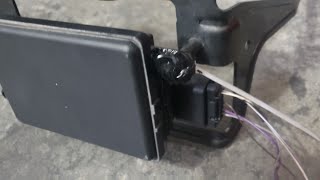
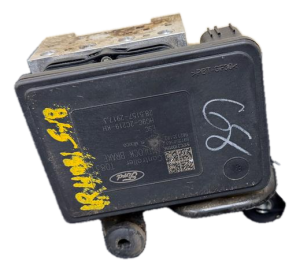
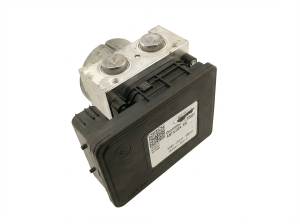
Aftermarket price range: $350-$600 - ABS Control Module — If ABS/Traction lights are on and U3000 is in the ABS module, it may have failed, a known issue with the ATE MK100 unit 🎬 See how a technician diagnoses an internal ABS module failure. used in many Fords.
Trusted brands: Motorcraft, Bosch, ATE
OEM price range: $1048-$1184
Aftermarket price range: $400-$700
Related Codes That Often Appear With This One
- U2100, U2101, U2300 — These are other communication or module configuration codes often listed alongside U3000 in TSBs for the RCM (airbag module). Their presence strongly suggests the RCM is the source and that the TSB for reprogramming applies.
- U3000:49 — This is a specific failure type code for 'Internal Electronic Failure' seen in TSB SSM 48049 for the Cruise Control Module and Image Processing Module. It is the primary code associated with the 'Collision Warning Not Available' message.
- U3000:04 — This is a specific failure type code for 'System Internal Failures' seen in TSBs for the APIM (SYNC module) and can sometimes be stored in the Instrument Panel Cluster (IPC). TSB SSM 46048 notes that in the APIM, it can sometimes be ignored if no symptoms are present.
Technical Service Bulletins (TSBs) & Recalls
- SSM 48049: U3000:49 in CCM for Forward Collision Avoidance issues, requires reprogramming. Affects vehicles built on or before 19-Oct-2017.
- SSM 46901: U3000 in RCM for Air Bag/SYNC 911 Assist issues, requires reprogramming. Affects vehicles built on or before 27-Oct-2017.
- SSM 46109: U3000 in RCM for Air Bag lamp on vehicles built before 18-Aug-2016, requires reprogramming.
- SSM 46048: U3000:04 in APIM, advises to clear the code if no symptoms are present.
Platform-Specific Known Issues
- TSB SSM 48049: Addresses U3000:49 in the Cruise Control Module (CCM) on vehicles built on or before 19-Oct-2017, causing 'Collision Warning Not Available' messages. The fix is a software update.
- TSB SSM 46901 & 46109: Address U3000 in the Restraints Control Module (RCM) causing an airbag light or SYNC 911 assist warnings. TSB 46901 applies to vehicles built on or before 27-Oct-2017, while TSB 46109 applies to vehicles built on or before 18-Aug-2016. The fix is a software update.
Mechanic-Grade Diagnostic Values
- CAN Bus Network Resistance — expected: ~60 Ohms. Failure: A reading of ~120 Ohms indicates an open circuit or a missing terminating resistor. A reading near 0 Ohms indicates a short between the CAN High and CAN Low wires.
- CAN Bus Voltage (Key On, Engine Off) — expected: CAN High (Pin 6 to Ground): ~2.5V to 3.0V. CAN Low (Pin 14 to Ground): ~2.0V to 2.5V.. Failure: Significant deviation from these voltages, or voltages that don't mirror each other during communication, can indicate a faulty module transceiver or a short to power/ground.
- Restraints Control Module (RCM) Power Supply — expected: 12V+ at fuse input. Failure: No voltage indicates a blown fuse or wiring issue upstream of the BCM/fuse panel.
Scan Tool Commands That Help
- Ford IDS/FDRS or FORScan: Programmable Module Installation (PMI) — This is a required procedure after replacing most major control modules (RCM, CCM, ABS, etc.). It copies the as-built configuration data from the old module to the new one, preventing the need for manual programming.
- FORScan: Module Self-Test (e.g., RCM Self-Test) — After clearing codes or performing a repair, running a module-specific self-test can quickly verify if the internal fault has been resolved before reassembling the vehicle.
- FORScan: IPMA Lane Departure Warning System Camera Calibration — If the U3000:49 code is stored in the Image Processing Module A (IPMA), this calibration may be required after reprogramming or replacing the module to restore function.
- On-Board Diagnostic (IPC): Engineering Test Mode — To access deeper diagnostic information directly from the instrument panel cluster, including some sensor data and DTCs. It is accessed by holding the 'OK' button on the steering wheel while starting the vehicle.
Wiring & Ground Locations
- Passenger Compartment Fuse Panel — Under the instrument panel, to the left of the steering column.. This panel contains the fuses for the Restraints Control Module (RCM), specifically F14 (10A) and F35 (5A) for a 2017 model, which are critical power inputs.
- G200 / G201 — Likely located at the left center of the dash area, near the A-pillar base or behind the kick panel.. These are primary interior ground points. A poor connection at these grounds can cause intermittent and difficult-to-diagnose faults in multiple modules, including those that set a U3000 code.
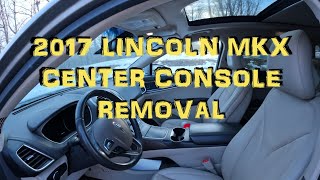
- RCM (Restraints Control Module) — Under the center console, forward of the shifter assembly, bolted to the floor tunnel.. This is a common source of the U3000 code per TSBs 46901 and 46109. Knowing its location is necessary for checking connections or replacing the module.
- CCM (Cruise Control Module) — Mounted in the front of the vehicle, typically behind the grille or lower bumper area, offset to one side.. This module is the source of the U3000:49 code per TSB 48049. Its exposed location makes it susceptible to damage from minor frontal impacts or water intrusion, which could cause a hardware failure if reprogramming doesn't work.
Real Owner Repair Stories
- YouTube user documenting a fix on a 2022 Ford F-150 (2022 Ford F-150) — Front camera issues, DTC U3000:49-28 in the Image Processing Module (IPMA). A glass company refused to replace the windshield due to the active camera code.
❌ Tried (didn't work) Clearing the DTC with a scan tool; the code returned immediately.
✅ What actually fixed it The owner purchased a used IPMA from eBay with a matching part number. After installing the replacement module, he used the FORScan software to run the 'IPMA lane departure warning system camera calibration' service procedure, which successfully cleared the fault. - MHH Auto forum thread (Ford Focus/C-Max (platform shares some electronics)) — Loss of power steering with DTC U3000:49 in the Power Steering Control Module (PSCM).
❌ Tried (didn't work) Standard diagnostics and code clearing.
✅ What actually fixed it Advanced users fixed the issue by physically removing the PSCM, reading the corrupt data from the EEPROM chip, and flashing a known-good EEPROM file from another vehicle. This is a very advanced repair that requires soldering and EEPROM programming tools, but it resolved the internal module failure without replacing the entire steering rack.
OEM Part Supersession History
hp5z14b321a, hp5z14b321b, hp5z14b321c, hp5z14b321d→HP5Z-14B321-E— Part revisions to improve reliability or address manufacturing issues.
Heads up: When replacing the Restraints Control Module (RCM), using the latest part number (HP5Z-14B321-E) is recommended. Using an older version may not have the latest hardware/firmware improvements.
Model Year Variations Within This Range
- 2017 models built on or before 18-Aug-2016: These early-build 2017 models may have an airbag light with U3000 in the RCM fixed by a software update under TSB SSM 46109.
- 2017-2018 models built on or before 19-Oct-2017: Vehicles with 'Collision Warning Not Available' and U3000:49 in the CCM are addressed by a software update under TSB SSM 48049.
- 2017-2018 models built on or before 27-Oct-2017: Vehicles with an airbag light or 'SYNC 911 assist not operational' message with U3000 in the RCM are addressed by a software update under TSB SSM 46901.
Helpful Videos

Used OEM Parts in Stock


New Aftermarket Parts Available


The information in this article is provided for general reference and educational purposes only. Vehicle specifications, procedures, and part compatibility can vary by production date, trim level, and region. Always consult your vehicle's factory service manual and verify part numbers before purchasing or performing repairs. Safety-critical components such as airbags, seat belts, and braking systems should be installed by a qualified professional.
- Lincoln MKZ:
- 🎬 Helpful Videos
- 🛍️ Shop This Part
- What's Unique About the 2017-2018 Lincoln MKZ
- Diagnostic Flowchart
- Symptoms You May Notice
- Most Likely Causes
- Rare But Worth Checking
- Diagnosis Steps
- Parts You'll Likely Need
- Related Codes That Often Appear With This One
- Technical Service Bulletins (TSBs) & Recalls
- Platform-Specific Known Issues
- Mechanic-Grade Diagnostic Values
- Scan Tool Commands That Help
- Wiring & Ground Locations
- Real Owner Repair Stories
- OEM Part Supersession History
- Model Year Variations Within This Range
- 🎟️ Get 5% Off