

U3000 on 2013-2018 Lincoln MKT: Control Module Fault Causes and Fixes
U3000 is a generic 'Control Module Failure' code. On the 2013-2018 Lincoln MKT, it most commonly points to a software glitch in either the Adaptive Cruise Control Module (CCM) or the SYNC 3 infotainment module (APIM). The fix is often a simple software update from a dealer, not a costly part replacement. This issue is also common on its platform mates, the Ford Flex and Taurus.
- U3000 is a generic code; you must find out which module it's in and what the two-digit suffix is.
- For the Lincoln MKT, this code most often points to a known software bug in the Cruise Control Module (U3000:49) or the SYNC 3 APIM (U3000:04).
- Check for applicable TSBs (SSM 48049 for CCM, SSM 46048 for APIM) before replacing any parts, as a simple dealer reprogram often fixes the issue.
- Always test the 12V battery, as low voltage is a common trigger for spurious electronic fault codes like U3000.
What's Unique About the 2013-2018 Lincoln MKT
For the 2013-2018 Lincoln MKT and its platform mates like the Ford Flex and Taurus, the U3000 code is frequently documented in manufacturer Technical Service Bulletins (TSBs). These bulletins specifically address software-related issues in the Cruise Control Module (CCM) and the SYNC 3 Accessory Protocol Interface Module (APIM). This means that unlike many other vehicles where a U3000 code might suggest a failed part, on the MKT it very often points to a known software problem that can be resolved with a simple reprogramming procedure at a dealership.
Diagnostic Flowchart
Tap your situation to follow the diagnostic path that matches what you're seeing on this vehicle.
Symptoms You May Notice
- "Adaptive Cruise Fault" message on the instrument cluster
- "Collision Warning Not Available" message
- "Pre-Collision Assist Not Available" message
- Adaptive cruise control is inoperative
- SYNC 3 system is blank, slow, or unresponsive
- No symptoms other than the stored code (common with APIM issues)
- Illuminated ABS or Traction Control warning lights
- Replacing the Cruise Control Module when only a software update is needed per TSB SSM 48049.
- Replacing the SYNC 3 APIM when the code U3000:04 is asymptomatic and just needs to be cleared per TSB SSM 46048.
- Replacing a module without first checking for a weak battery or poor battery connections, a common cause of spurious electronic faults.
Most Likely Causes
- Cruise Control Module (CCM) Software Anomaly 🔴 High Probability A specific TSB (SSM 48049) was issued for this exact problem on 2013-2018 MKT models built on or before October 19, 2017, indicating a known software bug.
How to confirm: Use a Ford/Lincoln specific scan tool (like FORScan or IDS) to check for code U3000:49 stored in the CCM. The TSB also notes specific PIDs to monitor, such as 'Saturated Tuning Frequency Fault' (SatTunFreqFltB6B) and 'Loop Bandwidth Out-of-Range' (LpBdwdOutRagB6B7), which would confirm the issue if they return a 'Fault' status.
Typical fix: Reprogram the Cruise Control Module (CCM) with the latest software level using a Ford diagnostic scan tool. This is a dealer or specialist repair. After reprogramming, a CCM alignment may be required.
Est. part cost: $0 - SYNC 3 APIM Software Glitch 🔴 High Probability TSBs (SSM 46048 and SSM-45809) were issued for this issue on 2016-2017 models, noting that DTC U3000:04 can be set in the APIM without any noticeable symptoms. An older TSB (13-6-17) also addresses this code on earlier SYNC systems.
How to confirm: Check for DTC U3000:04 in the Accessory Protocol Interface Module (APIM) with an advanced scanner. If no symptoms like a blank screen or connectivity issues are present, the TSBs suggest it's a ghost code.
Typical fix: If no other symptoms are present, the official fix is to clear the DTCs and retest. If the code returns or symptoms exist, the APIM may need reprogramming or replacement.
Est. part cost: $0 - Low or Weak Battery Voltage 🟡 Medium Probability Modern vehicles with many electronic modules are sensitive to voltage fluctuations. A weak battery can cause modules to temporarily glitch and set internal fault codes during startup.
How to confirm: Test the battery's voltage and load capacity. A healthy battery should read approximately 12.6 volts at rest and maintain voltage above 10V during cranking. Intermittent warning lights that clear after a restart are a strong indicator.
Typical fix: Recharge or replace the 12V battery. On a Ford Edge forum, a user with U3000:49 and other codes reported that replacing the battery and clearing the codes resolved all issues.
Est. part cost: $150-$350
Rare But Worth Checking
- Failed Control Module: While software and battery issues are more common, the module itself (CCM or APIM) can fail internally. This should only be considered after ruling out software updates and voltage problems. A hardware failure is the diagnosis of exclusion.
- Failed ABS Module: On many Ford products, the ATE MK100 ABS unit is a common source of a U3000 code. If you have ABS and traction control lights along with the U3000 code, and the code is located in the ABS module, a failed module is a possibility after ruling out wiring issues.
Diagnosis Steps
- Connect a high-quality OBD-II scanner capable of reading Ford-specific codes (like FORScan or a professional Snap-on/Autel tool) and access individual modules.
- Perform a full vehicle network scan to identify which module has stored the U3000 code and what the two-digit suffix is (e.g., :49, :04).
- If U3000:49 is found in the Cruise Control Module (CCM) on a vehicle built on or before 10/19/2017, reference TSB SSM 48049. The required fix is a software update. 🎬 Learn more about how U3000 codes affect control modules.
- If U3000:04 is found in the Accessory Protocol Interface Module (APIM), reference TSB SSM 46048. If there are no customer complaints (blank screen, etc.), clear the code and retest.
- If the module or suffix is different, proceed with further diagnosis. First, thoroughly test the 12V battery and charging system. A weak battery is a known cause of random module faults.
- Inspect the wiring and connectors for the affected module for any visible damage, corrosion, or loose connections. For the CCM, this is located in the front grille area and is susceptible to front-end damage and water intrusion.
- If codes return after clearing and the battery is healthy, the issue likely lies with the module's software or hardware.
- Consult a dealership or qualified technician to perform a module reprogram, as this is the most common fix before considering module replacement for the CCM and APIM issues.
Parts You'll Likely Need
- Cruise Control Module (CCM)
(OEM #BE9T-9G768-AC (example for related Taurus, part numbers vary))— Only needed if the module has failed hardware-wise and reprogramming does not resolve the issue. This is a rare outcome for the U3000:49 code.
Trusted brands: Motorcraft
OEM price range: $500-$800
Aftermarket price range: $300-$600 - Accessory Protocol Interface Module (APIM)
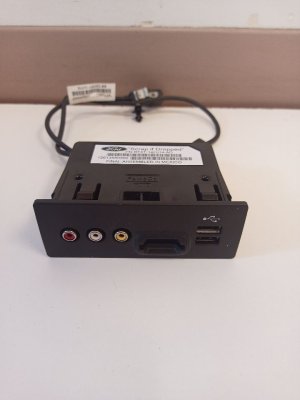
(OEM #HS7T-14G370-GFD (example, many variations exist))— Replaced if the SYNC 3 system is non-functional (black screen, etc.) and cannot be fixed with a software update or reset. Often sold as a pre-programmed unit requiring your vehicle's VIN.
Trusted brands: Motorcraft
OEM price range: $400-$700
Aftermarket price range: $250-$500
Related Codes That Often Appear With This One
- B108E:12 — This code is often stored in the APIM alongside U3000:04, as noted in TSB SSM 46048.
- U1A00:87 — Also seen with U3000:04 in the APIM per TSB SSM 46048, indicating a communication or message error.
- U0418:68 — Invalid Data Received from Brake System Control Module 'A'. This can be stored in the C-CM when the ABS module, which provides it with data, sets a fault like U3000:49.
Technical Service Bulletins (TSBs) & Recalls
- SSM 48049: Addresses U3000:49 in the Cruise Control Module (CCM) causing adaptive cruise/collision warning faults. It applies to MKTs built on or before 10/19/2017 and confirms the fix is reprogramming the CCM.
- SSM 46048: Addresses asymptomatic U3000:04 in the SYNC 3 APIM for 2016-2017 models, recommends clearing the code if no symptoms are present.
- SSM-45809: An earlier bulletin that also mentions U3000 in the SYNC 3 APIM, reinforcing the issue described in SSM 46048.
Platform-Specific Known Issues
- Per TSB SSM 48049, MKT models built on or before October 19, 2017, are prone to a software issue in the CCM causing U3000:49 and disabling the adaptive cruise and collision warning systems. The fix is a dealer-installed software update.
- Per TSB SSM 46048, 2016-2017 models with SYNC 3 can store a 'ghost' code U3000:04 in the APIM that does not cause any symptoms and should simply be cleared.
Mechanic-Grade Diagnostic Values
- CCM Horizontal Alignment Offset — expected: +/- 3.0 degrees. Failure: A value outside of this range after running the scan tool calibration procedure indicates a physical mounting or bracket issue.
- CAN Bus Line Voltage (at any module connector) — expected: Approximately 2.5 volts on both CAN High and CAN Low lines with the key on, engine off.. Failure: Significant deviation from 2.5V, or voltages that are not mirror images of each other during communication, can indicate a wiring short, open, or a faulty module on the network.
Hidden / Shadow Codes Worth Checking
- U3000:49-8B (example): In addition to the primary two-digit failure type suffix (:49), Ford's diagnostic system uses an additional 2-character status byte (-8B) that provides more granular detail about the fault. This is typically only visible on dealer-level scan tools like IDS or very advanced aftermarket tools. For example, it might differentiate between a fault present now versus one that occurred in the past. (see via Ford IDS/FDRS, potentially some advanced functions of FORScan or high-end Autel/Snap-on scanners.)
Scan Tool Commands That Help
- Ford IDS/FDRS: CCM - Cruise Control Module Alignment — This function must be run after replacing the CCM or if the mounting bracket has been disturbed (e.g., after a front-end collision). It performs a software calibration to ensure the radar is aimed correctly.
- Ford IDS/FDRS: IPMA - Reset the Image Processing Module A (IPMA) Learned Values — This is a reset procedure used when troubleshooting certain U3000 codes in the Image Processing Module (which assists the CCM). It can sometimes resolve software glitches without a full reprogram.
- FORScan: CCM (or other module) Reboot — This is a soft reset command that can be attempted to clear temporary internal module glitches before attempting more invasive repairs. It forces the module to power cycle.
Wiring & Ground Locations
- BCM (Body Control Module) — Located under the instrument panel to the left of the steering column.. The BCM acts as a central gateway for many vehicle networks. While not a primary cause for the TSB-related U3000 codes, a fault here or in its wiring/grounding can cause widespread communication issues.
- CCM (Cruise Control Module) Mounting — In the front lower grille area of the vehicle.. Its low, forward-facing position makes it highly vulnerable to damage from minor front-end impacts, parking curbs, and water/road salt intrusion. Damage to the module or its bracket can cause a U3000 code and prevent successful alignment.
- Chassis Ground Points — Various locations on the vehicle's frame and body. A common location for dashboard electronics is a bolt or stud behind removable kick panels in the driver or passenger footwells.. A poor ground connection to any control module can cause insufficient voltage, leading to unpredictable behavior and internal fault codes like U3000. Always check that ground points are clean, bare metal and tight.
Real Owner Repair Stories
- YouTube user video (2022 Ford F-150 (similar electronic architecture)) — Persistent U3000:49-28 code in the Image Processing Module (IPMA) that would not clear. This prevented a glass company from replacing the windshield.
❌ Tried (didn't work) Clearing DTCs with FORScan., Running the 'IPMA module reboot' service procedure in FORScan.
✅ What actually fixed it The owner replaced the IPMA module with a used unit purchased from eBay. After installation, the U3000 code was gone but was replaced by a 'Missing Calibration' code. The owner then successfully performed the 'Lane departure warning system camera calibration' using FORScan to complete the repair.
OEM Part Supersession History
DG9T-9G768-AD→Unknown— Example CCM part number for 2013-2016 Fusion/MKZ, which share a similar platform.
Heads up: Ford CCM part numbers are highly specific to the vehicle model, year, and option set (e.g., with or without collision mitigation). A part from another model like an F-150 (e.g., ML3T-9G768-AL) or Mustang (H1BT-9G768-AH) will not work. Always order based on the vehicle's VIN.
Model Year Variations Within This Range
- 2013-2015: These models were equipped with the MyLincoln Touch (SYNC 2) infotainment system. It features a four-quadrant resistive touchscreen and uses an SD card for navigation data. Bluetooth connectivity failures are a known issue on these aging units.
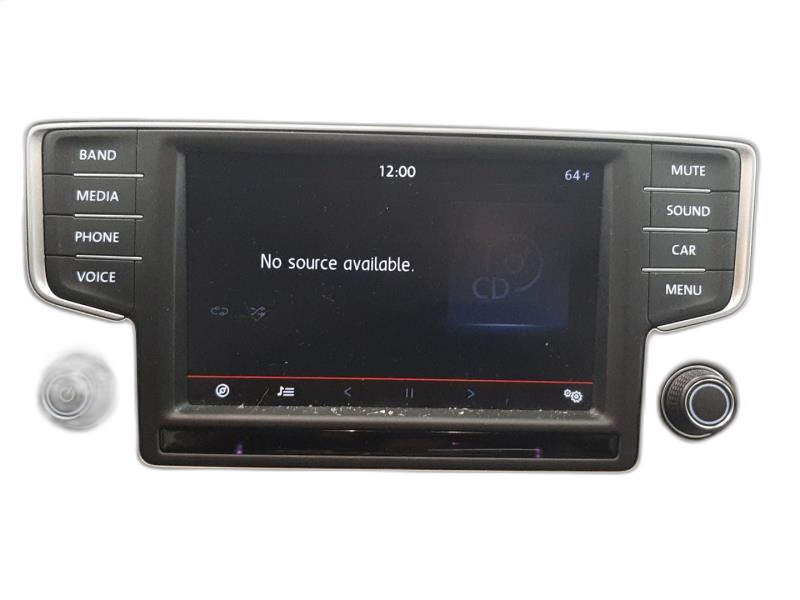
- 2016-2018: These models were equipped with the more modern SYNC 3 system. It uses a faster processor, a capacitive touchscreen (like a smartphone), and supports Apple CarPlay and Android Auto. Navigation maps are stored internally on the APIM, not an SD card. The asymptomatic U3000:04 code described in TSB SSM 46048 is specific to these SYNC 3 units.
Helpful Videos


We Have This Part in Stock



The information in this article is provided for general reference and educational purposes only. Vehicle specifications, procedures, and part compatibility can vary by production date, trim level, and region. Always consult your vehicle's factory service manual and verify part numbers before purchasing or performing repairs. Safety-critical components such as airbags, seat belts, and braking systems should be installed by a qualified professional.
- Lincoln MKT:
- 🎬 Helpful Videos
- 🛍️ Shop This Part
- What's Unique About the 2013-2018 Lincoln MKT
- Diagnostic Flowchart
- Symptoms You May Notice
- Most Likely Causes
- Rare But Worth Checking
- Diagnosis Steps
- Parts You'll Likely Need
- Related Codes That Often Appear With This One
- Technical Service Bulletins (TSBs) & Recalls
- Platform-Specific Known Issues
- Mechanic-Grade Diagnostic Values
- Hidden / Shadow Codes Worth Checking
- Scan Tool Commands That Help
- Wiring & Ground Locations
- Real Owner Repair Stories
- OEM Part Supersession History
- Model Year Variations Within This Range
- 🎟️ Get 5% Off