

U3000 on 2014-2020 Land Rover Range Rover: Control Module Failure Explained
U3000 on a Land Rover Range Rover indicates an internal failure in a specific control module. The fix depends entirely on which module logged the code and often requires a software update or module replacement by a professional. Low battery voltage is a frequent underlying cause for these codes appearing.
- U3000 is a generic code; the specific module and two-digit suffix are essential for diagnosis.
- Many U3000 faults on this Range Rover are caused by software glitches that Land Rover has addressed with TSBs and software updates.
- Do not replace any control module without first checking for applicable TSBs and ensuring the module's software is up to date.
- Diagnosis and repair require professional-level scan tools and are not recommended for DIY.
- In some specific cases, like U3000-96 in the camera module with no symptoms, the code can be safely ignored as per Land Rover's own documentation.
What's Unique About the 2014-2020 Land Rover RANGE ROVER

On the sophisticated L405 generation Range Rover, the U3000 code is used frequently across various systems to report internal software or hardware faults. Unlike a simple sensor code, this points to the 'brain' of a system. Land Rover has issued multiple Technical Service Bulletins (TSBs) acknowledging that many of these U3000 instances are due to software glitches that can be resolved with a module re-flash, rather than an expensive hardware replacement. Furthermore, these vehicles are known to be extremely sensitive to battery voltage, and a weak battery can trigger a cascade of U-codes, including U3000, during startup.
Diagnostic Flowchart

Tap your situation to follow the diagnostic path that matches what you're seeing on this vehicle.
Symptoms You May Notice

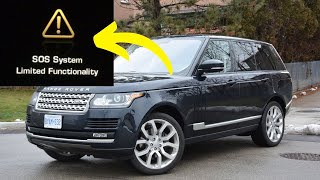
- "SOS Limited Functionality" warning on the instrument cluster.
- "Adaptive Damping (AD) warning" or "Suspension fault" message.
- "Air suspension not in customer mode" message.
- "Blind Spot Monitor Not Available" message.
- Warning lights for ABS, traction control, or other systems.
- No noticeable symptoms in some cases, particularly with code U3000-96 in the camera module.
- Vehicle may enter a restricted performance mode with a "Max speed 30mph" warning if the fault is severe.
- Random cycling of door locks and HVAC system, followed by the infotainment screen shutting down, as reported by an owner with a failing Body Control Module.
- Replacing a control module when only a software update was needed. Many TSBs explicitly state to update software first and not to replace parts unless the issue persists.
- Chasing individual module faults when the root cause is a weak main vehicle battery. Experienced owners on forums consistently advise starting any electrical diagnosis on a modern Land Rover by confirming the battery is in perfect health.
Most Likely Causes

- Software Glitch in a Control Module 🔴 High Probability Land Rover has issued numerous TSBs for various modules where a software issue incorrectly triggers a U3000 code. This is the most common cause and should be the first suspect, as confirmed by TSBs for the CHCM, TCU, and IPMB.
How to confirm: A technician with a JLR-approved diagnostic tool (like Pathfinder) can check the module's software version against the latest available and see if a TSB applies to the specific U3000 suffix code found (e.g., U3000-04, U3000-49). TSB SSM73101 specifically warns technicians against flashing software as a blind fix without proper diagnosis first.
Typical fix: Re-flashing or re-configuring the affected control module with updated software. This is typically a dealer or specialist job costing 1-2 labor hours.
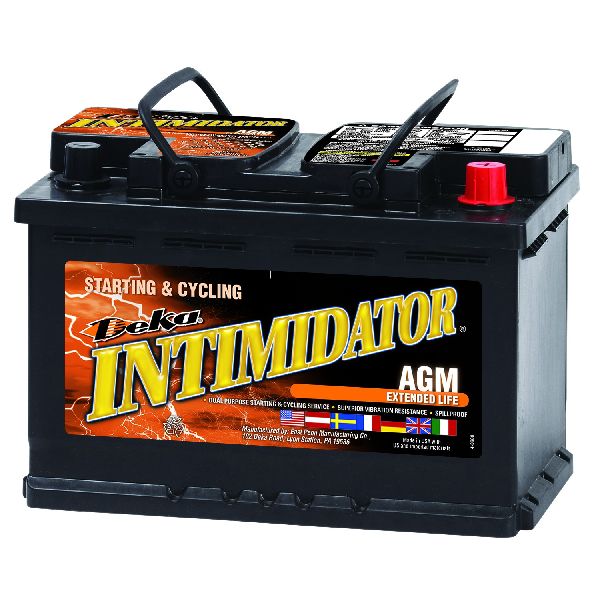
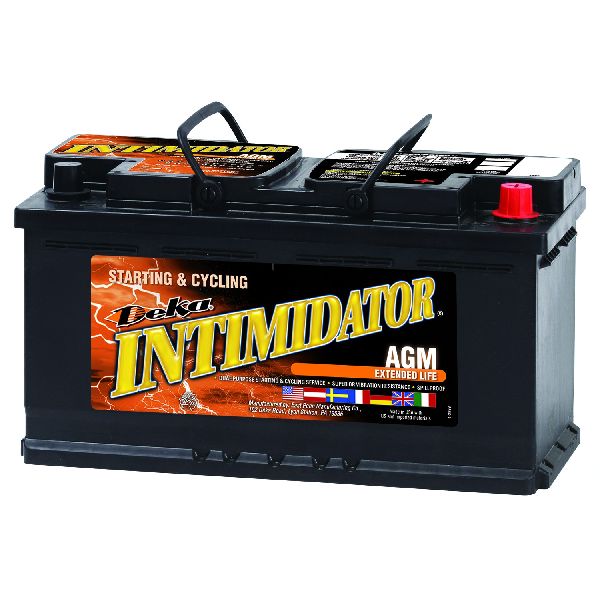
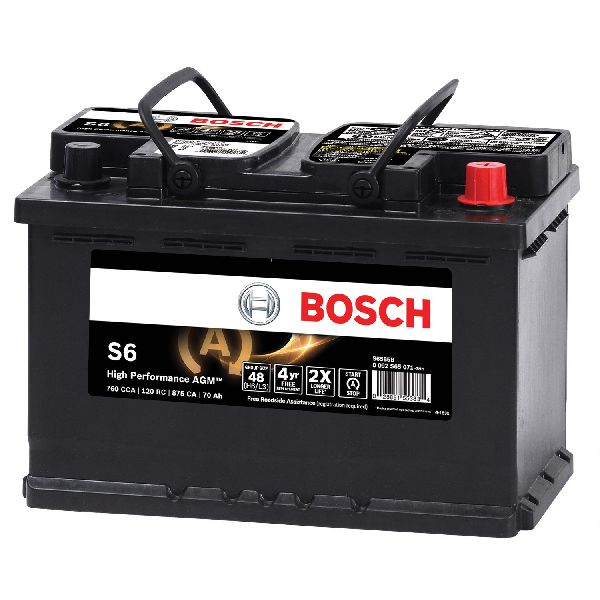
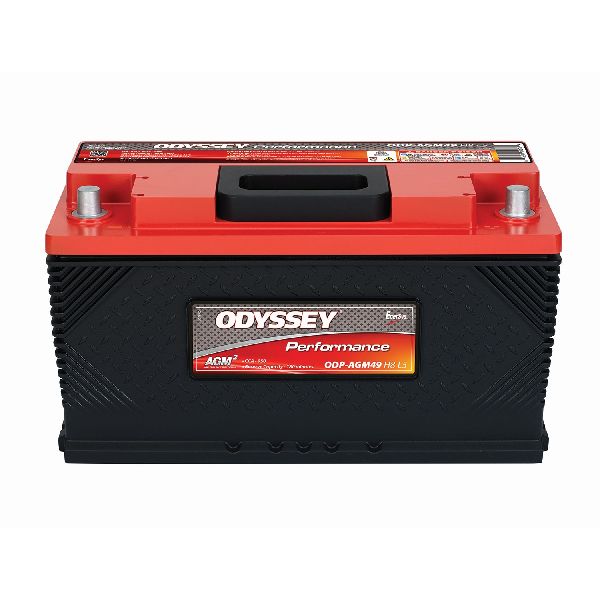
Est. part cost: $0 - Low Battery Voltage or Poor Connection 🔴 High Probability These vehicles are notoriously sensitive to main battery voltage. During engine cranking, a slightly weak battery can cause voltage to drop below the threshold required by various modules, causing them to log internal fault codes like U3000. Forum users on Land Rover forums frequently report that a host of mysterious electrical faults were resolved simply by replacing an aging battery, even one that tested as 'good' at an auto parts store.
How to confirm: Test the battery with a proper load tester, not just a simple voltage check. A healthy AGM battery should read above 12.6V at rest. Check the charging system to ensure it provides 13.5-14.5V when running. Inspect main power and ground connections for corrosion or looseness. A parasitic drain test can also identify a module that isn't 'sleeping' correctly and draining the battery.
Typical fix: Replace the main vehicle battery with a high-quality AGM battery and register it to the vehicle's Battery Management System (BMS). Clean all main battery and chassis ground terminals.
Est. part cost: $250-$500 - Faulty Control Module 🟡 Medium Probability Complex electronics can fail internally due to heat, vibration, or component aging. A Reddit thread describes a failed TCU that was internally shorted, drawing over 8 amps on a 5-amp circuit.
How to confirm: After ruling out software issues, battery/voltage problems, and wiring faults, the module itself is condemned by exclusion. This is the last step.
Typical fix: Replace the failed control module (e.g., CHCM, TCU, IPMB) and program the new unit to the vehicle using JLR diagnostic software. Used modules are often VIN-locked and may not be programmable.
Est. part cost: $300-$1500
Rare But Worth Checking
- Failing TCU Backup Battery:
Diagnosis Steps
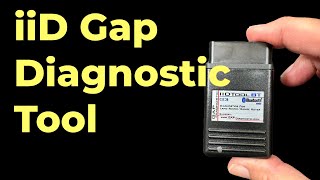
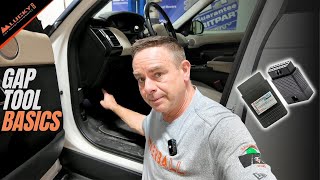
- Connect a professional-grade scanner capable of reading all Land Rover-specific modules (e.g., JLR Pathfinder, Gap IID Tool, Autel MaxiSys).
- Perform a full vehicle health scan and check the main battery voltage first. If voltage is low or the battery is over 4-5 years old, consider replacing it before proceeding. Many forum users report this solves numerous 'ghost' codes.
- Identify which specific module has logged the U3000 code (e.g., CHCM, TCU, IPMB, SODL/R).
- Record the two-digit suffix code (e.g., -04, -05, -49, -96). This is critical for diagnosis.
- Search for Land Rover Technical Service Bulletins (TSBs) that match the module and suffix code.
- If a TSB exists for U3000-49 in the TCU ('SOS Limited Functionality'), the fix is often a software update or replacement of the TCU's internal battery.
- If TSB SSM74543 applies to U3000-96 in the IPMB and there are no symptoms, no action is required.
- If a TSB directs a software update for a suspension or damping fault (U3000-04 in the CHCM), perform the update.
- If no TSB applies, inspect the wiring and connectors for the affected module for damage, corrosion, or looseness. For 'Adaptive Dynamics Faults', broken wires at the top of the suspension struts are a known issue. 🎬 See how to diagnose and fix Adaptive Dynamics Fault warnings.
- Verify the module is receiving proper voltage and has a solid ground connection.
- If wiring, power, and grounds are good and a software update is not applicable or does not fix the issue, the control module itself is the likely point of failure and should be replaced and programmed.
Parts You'll Likely Need
- Chassis Control Module (CHCM)
(OEM #LR083860 (supersedes LR057232, LR043140, LR034525, LR019427))— This module can log U3000-04 or U3000-05, causing adaptive damping and air suspension faults. TSBs confirm software updates can fix these issues, but module failure is also possible.
Trusted brands: Land Rover (OEM)
OEM price range: $500-$1200 - Telematics Control Unit (TCU)
(OEM #LR140068 (supersedes LR129717), LR091256)— Logs U3000-49 when the 'SOS Limited Functionality' message appears, often due to a software issue or a failed internal backup battery.
Trusted brands: Land Rover (OEM)
OEM price range: $600-$1500 - Image Processing Module B (IPMB) — Can store U3000-96, often with no symptoms. A software update may be needed if camera issues are present.
Trusted brands: Land Rover (OEM)
OEM price range: $400-$800 - TCU Backup Battery
(OEM #LR046049 (to 2017), LR089861 (2018+))— A common failure item after 5+ years, directly causing the 'SOS Limited Functionality' warning and U3000-49 in the TCU.
Trusted brands: Land Rover (OEM), Britpart
OEM price range: $50-$130
Aftermarket price range: $35
Technical Service Bulletins (TSBs) & Recalls

- SSM74543: U3000-96 in Image Processing Module B (IPMB) can be stored with no functional effect.
- SSM74052: U3000-49 in Telematics Control Unit (TCU) causes 'SOS Limited Functionality' warning, fixed by software update.
- N135NAS2 / SGI17-59: U3000-04 in Chassis Control Module (CHCM) can cause Adaptive Damping warning.
- SSM74086: U3000-05 in Chassis Control Module (CHCM) relates to air suspension being in 'tight tolerance mode'.
- SSM73553: U3000-49 can be falsely flagged in Side Object Detection Modules (SODL/SODR).
- SSM73441: U3000-04 in CHCM for 2017MY vehicles causing suspension faults is due to software calibration.
- SSM73101: Warns technicians not to blindly update CHCM software to clear faults without investigating the root cause first.
Platform-Specific Known Issues
- TSB SSM74052: A U3000-49 code in the Telematics Control Unit (TCU) causes an 'SOS Limited Functionality' warning. The fix is a software update. However, owners on forums report that if the software fix fails, replacing the small internal TCU battery often resolves the issue permanently.
- TSB N135NAS2 / SGI17-59 / SSM73441: A U3000-04 code in the Chassis Control Module (CHCM) can cause an 'Adaptive Damping' or 'Suspension fault' warning. This is often due to a software calibration issue or a low voltage event during startup. The TSB calls for a software re-configuration.
- TSB SSM74543: A U3000-96 code in the Image Processing Module B (IPMB) can be stored without any functional effect on the camera system. If no symptoms are present, no repair is needed. If symptoms are present, a software update is the prescribed fix.
- TSB SSM74086: A U3000-05 code in the Chassis Control Module (CHCM) can cause an 'Air suspension not in customer mode' message. This indicates the suspension is in a tight tolerance mode and requires a procedural reset via diagnostic tool, not a part replacement.
- TSB SSM73553: A U3000-49 code can be falsely flagged in the Side Object Detection (Blind Spot) modules. If there are no symptoms, the code should be cleared. If a warning message is present, a software re-flash is required.
Mechanic-Grade Diagnostic Values
- CAN Bus Network Resistance — expected: ~60 Ohms. Failure: A reading of ~120 Ohms indicates an open circuit or missing termination resistor. A reading near 0 Ohms indicates a short circuit between CAN High and CAN Low.
- CAN Bus Voltage (Ignition On) — expected: CAN High (CAN-H) should be ~2.65V. CAN Low (CAN-L) should be ~2.35V.. Failure: Significant deviation from these voltages suggests a short to power, short to ground, or other network fault.
Hidden / Shadow Codes Worth Checking
- U3000-04: Control Module System Internal Failure, often related to the Chassis Control Module (CHCM) causing 'Adaptive Dynamics Fault'. (see via JLR-specific scan tool like Pathfinder or GAP IID Tool.)
- U3000-05: Validation Not Performed, logged in the Chassis Control Module (CHCM) causing 'Air suspension not in customer mode' message. (see via JLR-specific scan tool like Pathfinder or GAP IID Tool.)
- U3000-1D: Control Module - General electrical failure - circuit current out of range. (see via JLR-specific scan tool like Pathfinder or GAP IID Tool.)
- U3000-49: Internal Electronic Failure, commonly logged in the Telematics Control Unit (TCU) causing 'SOS Limited Functionality' warning. (see via JLR-specific scan tool like Pathfinder or GAP IID Tool.)
- U3000-50: Control Module - System Programming Failure. (see via JLR-specific scan tool like Pathfinder or GAP IID Tool.)
- U3000-96: Component Internal Failure, often logged in the Image Processing Module B (IPMB) with no symptoms. (see via JLR-specific scan tool like Pathfinder or GAP IID Tool.)
Scan Tool Commands That Help
- JLR Pathfinder: Update ECU — Used when a Technical Service Bulletin (TSB) indicates a software update is available to fix a known bug causing a U3000 code, such as for U3000-96 in the IPMB.
- JLR Pathfinder / SDD: Configure existing module - Chassis control module — Used to re-flash the CHCM with updated software, as directed by some TSBs to resolve suspension-related faults that may be associated with a U3000 code.
- JLR Pathfinder: Guided Diagnostics — Pathfinder uses a guided workflow that asks questions and runs tests to narrow down causes, which is the standard procedure for diagnosing complex faults like U3000 on newer JLR vehicles.
- JLR Pathfinder / SDD: CCF (Car Configuration File) Editing — Required when replacing a major control module to ensure the new part is correctly configured for the vehicle's specific options and VIN.
Wiring & Ground Locations
- Telematics Control Unit (TCU) — Located in the rear cargo area, on the left-hand side (US driver's side), behind the trim panel/C-pillar trim.. This is the module that logs U3000-49 and houses the backup battery that commonly fails, causing the 'SOS Limited Functionality' warning.
- Main Earth/Ground Points — Key grounds to check include the point behind the battery in the engine bay, a point on the passenger side in the same location, and the main gearbox strap.. Poor or corroded grounds can cause floating voltages and random communication errors across multiple modules, potentially triggering U3000 codes.
Real Owner Repair Stories
- Land Rover Forums user (2017 Land Rover Discovery (shares TCU architecture with L405)) — 'SOS System Limited Functionality' error message on the instrument cluster.
❌ Tried (didn't work) Clearing codes (code returned immediately)., Waiting for the error to self-clear.
✅ What actually fixed it Replaced the TCU's internal backup battery. The user noted the warning light remained on after replacement but cleared itself after the vehicle was driven for about an hour, as suggested by a TSB.
Model Year Variations Within This Range
- 2017-2020: Starting with the 2017 model year, the Range Rover (and Sport) began using the DoIP (Diagnostics Over Internet Protocol) architecture. This requires the newer JLR Pathfinder diagnostic software. Pre-2017 models use the older SDD software. This is a critical distinction for diagnosis and programming.
- 2018-2020: The 2018 model year facelift introduced the Touch Pro Duo infotainment system and other electrical changes. Some TSBs, like the one for U3000-96 in the camera module (IPMB), are specific to 2018-2020 models.
Helpful Videos


Used OEM Parts in Stock


New Aftermarket Parts Available


The information in this article is provided for general reference and educational purposes only. Vehicle specifications, procedures, and part compatibility can vary by production date, trim level, and region. Always consult your vehicle's factory service manual and verify part numbers before purchasing or performing repairs. Safety-critical components such as airbags, seat belts, and braking systems should be installed by a qualified professional.
- Land Rover RANGE ROVER:
- 🎬 Helpful Videos
- 🛍️ Shop This Part
- What's Unique About the 2014-2020 Land Rover RANGE ROVER
- Diagnostic Flowchart
- Symptoms You May Notice
- Most Likely Causes
- Rare But Worth Checking
- Diagnosis Steps
- Parts You'll Likely Need
- Technical Service Bulletins (TSBs) & Recalls
- Platform-Specific Known Issues
- Mechanic-Grade Diagnostic Values
- Hidden / Shadow Codes Worth Checking
- Scan Tool Commands That Help
- Wiring & Ground Locations
- Real Owner Repair Stories
- Model Year Variations Within This Range
- 🎟️ Get 5% Off