

U3000-49 on 2020-2021 Honda HR-V: SRS Unit or Seat Weight Sensor Failure Causes and Fixes
Code U3000-49 on a 2020-2021 Honda HR-V indicates an internal electronic failure, most commonly in the front passenger seat weight sensor, which is subject to a safety recall. It can also mean the main SRS (airbag) control unit has failed. This is a critical safety issue that disables the airbag system. Diagnosis involves checking the seat weight sensors first per Honda's recall bulletin. The fix is replacing the faulty seat weight sensor assembly or the SRS control unit.
- U3000-49 on a 2020-2021 HR-V most likely means the front passenger seat weight sensor has failed, a problem covered by a safety recall.
- This is a critical safety failure; the airbags will not work correctly. Do not drive the vehicle and contact a Honda dealer for the free recall service.
- The second most likely cause is an internal failure of the main airbag (SRS) computer, an expensive repair costing around $900-$1000.
- This is a known issue acknowledged by Honda in both a safety recall (24-036) and a Technical Service Bulletin (A21100B).
- DIY repair is not recommended due to the safety-critical nature of the SRS system and the need for specialized tools for initialization.
What's Unique About the 2020-2021 Honda HR-V

While U3000-49 is a generic Honda internal failure code that can appear for other modules like the forward-facing camera or radar unit, its appearance in the SRS system of a 2020-2021 HR-V points to two highly specific, known issues. First and foremost is a widespread manufacturing defect in the front passenger seat weight sensors, which prompted Honda to issue Safety Recall bulletin 24-036 for all 2020-22 HR-V models. This recall states that a faulty sensor can trigger U3000-49. The second known issue, detailed in TSB #A21100B, is an internal failure of the main SRS unit itself, which affects the entire 2020-2021 Honda lineup. The official diagnostic procedure is to rule out the seat weight sensor before condemning the more expensive SRS unit.
Diagnostic Flowchart
Tap your situation to follow the diagnostic path that matches what you're seeing on this vehicle.
Symptoms You May Notice
- The primary symptom is the SRS warning light staying illuminated on the dashboard.
- The passenger airbag 'OFF' indicator may remain lit, even with an adult in the seat.
- The airbag system is disabled and will not deploy in an accident.
- Replacing the SRS unit without first performing the diagnostic test to rule out a faulty seat weight sensor, as mandated by Honda's recall bulletin 24-036.
- Assuming the U3000-49 code is for the SRS unit when it could be stored in another module, such as the Multipurpose Camera Unit, which requires a full system scan to differentiate.
Most Likely Causes

- Faulty Seat Weight Sensor 🔴 High Probability A manufacturing defect prompted Honda Safety Recall 24-036 (NHTSA 24V-064). A supplier used an unverified material for the sensor's printed circuit board, which can lead to cracking and a short circuit, triggering DTC U3000-49.
How to confirm: Per recall bulletin 24-036, a technician disconnects the front passenger seat weight sensors and clears the DTC. If U3000-49 does not return, the seat weight sensor assembly is the faulty component.
Typical fix: Replace the front passenger's seat cushion frame, which contains the seat weight sensors, with the updated part as per the recall procedure. The new sensors must be initialized.
Est. part cost: $127 (sensor only) - $600 (seat frame assembly). Repair should be covered free of charge under the recall. - Internal Failure of the SRS Control Unit 🟡 Medium Probability Honda issued TSB #A21100B for this code and module across its entire 2020-2021 lineup, indicating a recognized failure pattern. This is the next most likely cause after the seat weight sensor is ruled out.
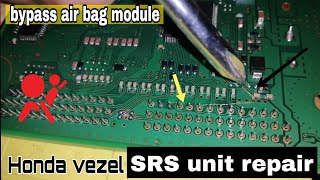
How to confirm: A technician uses a Honda-specific scan tool (HDS) to confirm U3000-49 is stored in the SRS module. If the code immediately returns after being cleared, and the seat weight sensor test (above) has been performed, the SRS unit is condemned. 🎬 Watch: A technician demonstrates how to address code U3000-49.
Typical fix: Replace the SRS control unit and have it initialized by a dealer or qualified repair shop using the HDS.
Est. part cost: $500-$700 - Low Battery Voltage or Poor Connection ⚪ Low Probability All modern control modules are sensitive to voltage. A weak or failing battery can cause modules to perform self-checks improperly during startup, leading to various internal error codes.
How to confirm: Test the battery's state of health and voltage. Check the battery terminals and main chassis grounds for corrosion or looseness. Charge the battery and clear the codes to see if the fault returns.
Typical fix: Replace the vehicle's 12V battery if it fails a load test.
Est. part cost: $150-$300
Diagnosis Steps
- Connect a Honda-compatible diagnostic scan tool (HDS) to the vehicle.
- Scan all systems for codes. Confirm that DTC U3000-49 is stored in the Supplemental Restraint System (SRS) module.
- Check and record the vehicle's battery voltage to ensure it is within specification (typically above 12.4V).
- Follow the procedure from Honda Safety Recall 24-036: Disconnect the negative battery terminal and wait at least 3 minutes.
- Tilt the front passenger seat back and disconnect the seat weight sensor connectors.
- Reconnect the battery terminal. Clear the DTCs. Turn the ignition on and perform an All-DTC check again.
- If DTC U3000-49 does NOT return (though other codes for the disconnected sensors may appear), the seat weight sensor assembly is faulty and must be replaced per the recall.
- If DTC U3000-49 returns immediately even with the sensors disconnected, the SRS control unit is the confirmed cause.
- After installation, the new SRS unit or seat weight sensors must be initialized and programmed to the vehicle using the HDS.
Parts You'll Likely Need

- Seat Weight Sensor
(OEM #Varies, replaced as part of seat cushion/rail assembly)— This is the most common cause due to a manufacturing defect covered by Honda Safety Recall 24-036. The sensor shorts internally, triggering the U3000-49 code.
Trusted brands: Honda (Genuine OEM)
OEM price range: Free under recall; otherwise $450-$600 for assembly.
Aftermarket price range: Not Recommended - SRS Control Unit
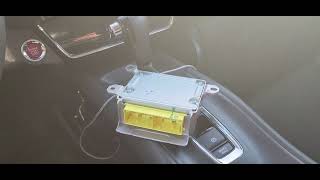
(OEM #77960-T7A-A23)— This is the component that stores the U3000-49 code. If the seat weight sensor is not the cause, this unit has failed internally. This part number fits 2019-2022 HR-V models and supersedes part number 77960-T7A-A22. 🎬 See this video to find the SRS airbag module location.
Trusted brands: Honda (Genuine OEM)
OEM price range: $520-$700
Aftermarket price range: Not Recommended
Technical Service Bulletins (TSBs) & Recalls
- 24-036: 'Safety Recall: 2020-22 HR-V Seat Weight Sensor (DTC U3000-49)', which identifies the primary cause and diagnostic procedure.
- A21100B: 'SRS DTC U3000-49 Internal Failure of the SRS Unit', which confirms the code's meaning and provides diagnostic advice for the broader Honda lineup.
Platform-Specific Known Issues
- Safety Recall on Seat Weight Sensor: Honda issued recall 24-036 (NHTSA ID 24V-064) for all 2020-2022 HR-V models because the front passenger seat weight sensor can fail and cause DTC U3000-49. This repair should be performed by a dealer free of charge.
- Broad Model Year TSB: Honda TSB #A21100B was issued for the entire 2020-2021 Honda model lineup for this specific SRS unit failure code, advising that the SRS unit should be the last component replaced after ruling out other causes.
Mechanic-Grade Diagnostic Values
- SWS+/PWR SWS line to power short circuit check — expected: 0.2 V or less. Failure: Voltage higher than 0.2 V indicates a short to power in the harness.
- SWS+/PWR SWS line to ground short circuit check — expected: At least 1 MΩ (or open circuit). Failure: Continuity or low resistance indicates a short to ground in the harness.
- SWS Initialization Zero-Point Weight (T0) — expected: Within ±0.5 kg (±1.1 lbs) of zero. Failure: A reading outside this range after initialization indicates a faulty sensor or installation issue.
- SWS Calibration Check with Known Weight — expected: The HDS weight reading (T) should be within ±3.3 kg (±7.3 lbs) of the actual measured weight (M) of a 10-20 kg test weight.. Failure: A variance greater than this indicates a failed calibration and faulty sensor.
Scan Tool Commands That Help
- Honda HDS (i-HDS): SWS Initialization — This function must be performed after replacing the seat weight sensors or the entire seat cushion assembly. It establishes the zero-weight baseline for the system. The path is typically SRS > Adjustment > SWS Initialization.
- Honda HDS (i-HDS): Data List > FRONT PASSENGER'S WEIGHT — Used during the SWS initialization and verification process to read the raw weight value (T0 and T) from the sensor to check against specified tolerances.
- Honda HDS (i-HDS): Clear DTCs — Used multiple times during diagnosis, specifically after disconnecting the SWS connector to see if U3000-49 returns, which isolates the fault to the SRS unit.
Wiring & Ground Locations
- SRS Control Unit — Under the center console, bolted to the vehicle floor. Access requires removing center console trim panels.. This is the module that stores the U3000-49 code. If the seat weight sensor is ruled out, this unit is the point of failure and must be accessed for replacement.
- Seat Weight Sensor Connectors — Under the front passenger seat. The seat must be unbolted and tilted back to access them.. These connectors must be disconnected as the primary diagnostic step outlined in Honda's recall bulletin to isolate the fault between the sensors and the SRS control unit.
OEM Part Supersession History
77960-T7A-A22→77960-T7A-A23— Standard part revision by the manufacturer. The newer part is the correct service replacement.
Helpful Videos
We Have This Part in Stock

The information in this article is provided for general reference and educational purposes only. Vehicle specifications, procedures, and part compatibility can vary by production date, trim level, and region. Always consult your vehicle's factory service manual and verify part numbers before purchasing or performing repairs. Safety-critical components such as airbags, seat belts, and braking systems should be installed by a qualified professional.
- Honda HR-V:
- 🎬 Helpful Videos
- 🛍️ Shop This Part
- What's Unique About the 2020-2021 Honda HR-V
- Diagnostic Flowchart
- Symptoms You May Notice
- Most Likely Causes
- Diagnosis Steps
- Parts You'll Likely Need
- Technical Service Bulletins (TSBs) & Recalls
- Platform-Specific Known Issues
- Mechanic-Grade Diagnostic Values
- Scan Tool Commands That Help
- Wiring & Ground Locations
- OEM Part Supersession History
- 🎟️ Get 5% Off