

U3000 on 2020-2021 Honda CR-V: SRS Internal Failure Causes and Fixes
Code U3000, specifically U3000-49, on a 2020-2021 Honda CR-V indicates an internal electronic failure in a control unit, most commonly the Supplemental Restraint System (SRS). This is a critical safety issue that disables the airbag system. Diagnosis often points to a faulty SRS module, but Honda explicitly advises via TSB A21100B to investigate wiring or seat weight sensor issues first before condemning the main unit.
- U3000-49 on a 2020-2021 CR-V means the airbag (SRS) system has an internal failure and is disabled.
- This is a critical safety fault; your airbags will not deploy in a crash.
- DO NOT immediately replace the SRS unit. Honda TSB A21100B and a major recall (24V-064) strongly point to a faulty seat weight sensor as a common cause.
- Check if your vehicle is covered by NHTSA recall 24V-064 for a free dealer repair of the seat weight sensor.
- Diagnosis and repair require professional tools and carry a risk of airbag deployment; this is not a recommended DIY job.
What's Unique About the 2020-2021 Honda CR-V
Honda has acknowledged this issue by releasing Technical Service Bulletin (TSB) #A21100B for the 2020 CR-V and many other models. The TSB clarifies that while the code points to an SRS unit failure, other components like seat weight sensors must be investigated first. It explicitly states, "In most situations, the SRS Unit should be last on the list of components to replace." This is compounded by a major safety recall (NHTSA 24V-064) for the front passenger seat weight sensor on these vehicles, which can crack, short-circuit, and fail to suppress the airbag as intended. This specific guidance and overlapping recall make it critical to not immediately replace the expensive SRS unit.
Diagnostic Flowchart
Tap your situation to follow the diagnostic path that matches what you're seeing on this vehicle.
Symptoms You May Notice
- SRS warning light illuminated on the dashboard
- Passenger airbag 'OFF' indicator may stay on regardless of who is in the seat.
- Multiple other warning lights (LKAS, ACC, BRAKE) may appear if the U3000-49 code is for the multipurpose camera unit instead of the SRS unit, a different but related issue.
- Immediately replacing the SRS unit without testing the seat weight sensors. The TSB explicitly advises against this, stating the SRS unit should be the last component to replace.
- Replacing the wrong control unit. The U3000-49 code is generic for internal failure, so the technician must confirm whether the SRS unit or another unit (like the multipurpose camera) is the source of the fault.
Most Likely Causes
- Internal Failure of the SRS Control Unit 🔴 High Probability This is the direct definition of the code as specified by Honda's TSB A21100B. The control module itself can fail electronically due to internal hardware or software faults. However, it should be the last item replaced per Honda's official guidance.
How to confirm: After ruling out all other possibilities (wiring, sensors) per the TSB, a professional technician using a Honda-specific scan tool (HDS) will condemn the SRS unit. The unit will fail to respond correctly to diagnostic commands or the code will persist after all other steps are taken.
Typical fix: Replace the SRS control unit and have it programmed by a dealer or qualified shop. This is a mandatory step.
Est. part cost: $385-$540 - Faulty Seat Weight Sensor or Seat Frame/Rail 🟡 Medium Probability Honda's TSB A21100B and recall service bulletin 24-021 specifically call out troubleshooting the seat weight sensors before replacing the SRS unit. A massive recall (NHTSA 24V-064) was issued because the printed circuit board in the sensor can crack and short-circuit due to a temporary change in manufacturing materials. This defect directly causes SRS light illumination.
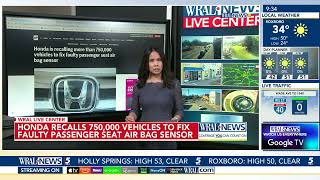
How to confirm: A technician can follow the TSB's diagnostic tip: disconnect the seat weight sensors and clear the codes. If the U3000-49 code does not return, the issue is with the sensor or the seat frame it's integrated into. A VIN check on the NHTSA website will also confirm 🎬 Watch: News report on the Honda seat weight sensor recall if the vehicle is part of recall 24V-064.
Typical fix: If covered under recall 24V-064, the dealer will replace the seat weight sensor free of charge. If not under recall, the fix is to replace the faulty seat weight sensor. In many cases, the sensor is integrated with the seat rail assembly and must be replaced as a unit. The new sensor/unit must be calibrated (initialized).
Est. part cost: $400-$850 - Wiring or Connector Issue ⚪ Low Probability Vibrations, previous repairs, or moisture can cause damage or corrosion to the wiring harness or connectors leading to the SRS unit or its related sensors. The yellow connectors under the front seats are a common point of failure for SRS systems in general.
How to confirm: Visually inspect the wiring harness and connectors for the SRS module and seat weight sensors. Check for loose connections, corrosion, or physical damage. A multimeter can be used to check for continuity, shorts to power, and shorts to ground as outlined in Honda's diagnostic procedure.
Typical fix: Repair the damaged section of the wiring harness or clean/replace the faulty connector. Honda specifies that damaged SRS wiring should be replaced, not repaired.
Est. part cost: $10-$150
Rare But Worth Checking
- Faulty Multipurpose Camera Unit:
Diagnosis Steps
- Connect a professional, Honda-compatible OBD-II scanner (like the Honda HDS) to confirm the presence of U3000-49 and verify it is being set by the SRS control unit.
- Check for any open recalls, especially NHTSA recall 24V-064 (Honda recalls XHP, VHQ) related to the seat weight sensor. If eligible, the dealer repair should be the first step.
- Consult TSB #A21100B for manufacturer-specific diagnostic procedures.
- Follow the TSB's advice to test the seat weight sensors. Disconnect the sensors, clear the DTC, and see if U3000-49 returns. If it does not, the fault lies with the seat weight sensor or its integrated frame.
- If the code returns, perform a thorough visual inspection of all wiring and connectors associated with the SRS system, including the main SRS unit and seat sensors. Pay close attention to the yellow connectors under the seats.
- Using a multimeter, follow the official Honda diagnostic flowchart to check for shorts to power, shorts to ground, and open circuits in the SWS harness.
- If all wiring and sensors test correctly and the code still returns after being cleared, the fault is confirmed to be internal to the SRS unit.
- Replace the faulty component (SRS unit or seat weight sensor/rail).
- After replacement, the new module must be programmed and calibrated to the vehicle using a specialized scan tool. For the seat weight sensor, this is called 'SWS initialization'. This is a mandatory step for the system to function correctly.
Parts You'll Likely Need
- SRS Control Unit
(OEM #77960-TLA-C32)— This is the component identified by the code's definition, though it should be the last part replaced. It is a common failure point after other causes are eliminated. The part number 77960-TLA-C32 supersedes 77960-TLA-C31. 🎬 Watch: Step-by-step guide to accessing and replacing the SRS module
Trusted brands: Honda (Genuine OEM)
OEM price range: $385-$440
Aftermarket price range: Not Recommended - Seat Weight Sensor
(OEM #04945-TBA-A00 (Kit))— Honda's TSB and a major recall (24V-064) point to this sensor as a primary cause that can incorrectly trigger the U3000-49 code. The sensor often comes as part of the seat rail assembly.
Trusted brands: Honda (Genuine OEM)
OEM price range: $400-$850
Aftermarket price range: Not Recommended
Technical Service Bulletins (TSBs) & Recalls
- A21100B - ServiceNews Article - There are several possible causes for the SRS DTC U3000-49 (Internal Failure of the SRS Unit) to be stored.
- 24-021 - Safety Recall: 2020-21 CR-V, CR-V Hybrid Seat Weight Sensor (DTC U3000-49).
- B21100A - Acura-specific version of the U3000-49 TSB, confirming the issue across platforms.
Platform-Specific Known Issues
- TSB A21100B: Diagnostic Priority: Honda issued this Technical Service Bulletin for the 2020 CR-V (and other models) regarding DTC U3000-49. It states there are several possible causes and that "In most situations, the SRS Unit should be last on the list of components to replace," after following specific troubleshooting for items like the seat weight sensor.
- NHTSA Recall 24V-064: Defective Seat Weight Sensor: Honda recalled over 750,000 vehicles, including the 2020-2021 CR-V, for a faulty front passenger seat weight sensor. A manufacturing change led to a circuit board that can crack and short out, causing the SRS light to turn on and potentially preventing the passenger airbag from being correctly suppressed for a small occupant. The dealer remedy is to replace the sensor free of charge. Service bulletin 24-021 provides the repair procedure.
- NHTSA ODI #11538139: Owner Complaint: A 2020 CR-V owner reported the U3000-49 code and stated their dealer found a 'communication issue with the seat sensor which is made onto the...' This real-world complaint supports the TSB's guidance to check sensors before the main SRS unit.
Mechanic-Grade Diagnostic Values
- Voltage check on SWS+/PWR SWS line — expected: 0.2 V or less. Failure: Voltage greater than 0.2V indicates a short to power in the harness.
- Resistance check on SWS+/PWR SWS line to ground — expected: At least 1 MΩ (Megaohm) or open circuit. Failure: A reading of less than 1 MΩ indicates a short to ground in the harness.
Scan Tool Commands That Help
- Honda HDS (or compatible): SWS Initialization (Seat Weight Sensor Initialization) — This is a mandatory procedure after replacing the front passenger's seat, seat weight sensors, or the SRS control unit. It 'zeros out' the sensors and allows the system to function correctly.
- Honda HDS (or compatible): ODS Initialization (Occupant Detection System Initialization) — Used after replacing the SRS unit or ODS unit; this procedure initializes both the OPDS (Occupant Position Detection System) sensor and the front passenger's weight sensor.
- Honda HDS (or compatible): All DTC Check — Used at the start of diagnosis to confirm which control unit (SRS, Multipurpose Camera, VSA, etc.) is the source of the U3000-49 code and to check for any other related trouble codes.
- Honda HDS (or compatible): Steering Neutral Position Learn — According to Honda Service Bulletin 24-021, this procedure is required after completing the seat weight sensor replacement as part of the recall repair.
Wiring & Ground Locations
- SRS Control Unit — Located in the center of the vehicle, under the center console, forward of the gear shifter.. This is the primary module that sets the code. Physical access is required for replacement and to check its connectors for damage or corrosion.
- SRS Unit Connector B (39P) — A 39-pin connector that plugs into the SRS Control Unit.. This connector contains the wiring for the Seat Weight Sensor system (SWS+/PWR SWS lines) and is a key test point during the diagnostic procedure outlined by Honda.
- Seat Weight Sensor Connectors — Located under the front passenger seat, connecting the sensors in the seat rail to the main floor harness. They are typically housed in yellow sheathing.. These connectors are disconnected as part of the primary diagnostic step to isolate the fault between the sensors and the SRS unit. They are also a common location for wiring issues due to seat movement.
Real Owner Repair Stories
- Reddit user on r/Honda (2022 Honda HR-V (system is highly similar to CR-V)) — SRS warning light on, with DTC U3000-49 stored.
❌ Tried (didn't work) Owner took it to a shop for diagnosis. The shop did not perform a full teardown but suspected the passenger seat sensor.
✅ What actually fixed it The shop quoted a repair of approximately $1,100 ($600 for parts, $400 for labor) to replace the seat weight sensor. The owner was seeking a second opinion as their VIN was not listed in the official recall, demonstrating that this failure occurs on vehicles outside the recall population and is an expensive repair.
OEM Part Supersession History
77960-TLA-C31→77960-TLA-C32— Standard part revision by the manufacturer. The new part is the correct service replacement.
Model Year Variations Within This Range
- 2020-2021: The primary variation is the applicability of NHTSA Safety Recall 24V-064 and its associated Service Bulletin 24-021, which covers a known defect in the front passenger seat weight sensor for these specific model years.
Helpful Videos


We Have This Part in Stock

The information in this article is provided for general reference and educational purposes only. Vehicle specifications, procedures, and part compatibility can vary by production date, trim level, and region. Always consult your vehicle's factory service manual and verify part numbers before purchasing or performing repairs. Safety-critical components such as airbags, seat belts, and braking systems should be installed by a qualified professional.
- Honda CR-V:
- 🎬 Helpful Videos
- 🛍️ Shop This Part
- What's Unique About the 2020-2021 Honda CR-V
- Diagnostic Flowchart
- Symptoms You May Notice
- Most Likely Causes
- Rare But Worth Checking
- Diagnosis Steps
- Parts You'll Likely Need
- Technical Service Bulletins (TSBs) & Recalls
- Platform-Specific Known Issues
- Mechanic-Grade Diagnostic Values
- Scan Tool Commands That Help
- Wiring & Ground Locations
- Real Owner Repair Stories
- OEM Part Supersession History
- Model Year Variations Within This Range
- 🎟️ Get 5% Off