

U3000 on 2021-2025 Ford Mustang Mach-E: ADAS Control Module Fault Explained
Code U3000 on a Mustang Mach-E almost always points to a software glitch or a poor coaxial cable connection related to an advanced driver-assistance system (ADAS) module, like the front camera (IPMA) or driver monitoring camera (CMR/DSMC). This disables features like BlueCruise and Pre-Collision Assist. The fix is typically a dealer-performed software update or wiring repair as outlined in multiple TSBs, not a simple parts replacement.
- U3000 on a Mustang Mach-E is an internal fault code for a control module, most often related to the ADAS cameras.
- Do not replace any parts before checking for software updates. The most common fix is a dealer-performed software reprogram.
- Multiple Ford TSBs exist for this exact issue, confirming it's a known problem with a defined solution.
- This code disables important safety and convenience features like BlueCruise and Pre-Collision Assist, so it should be addressed promptly.
- In some cases, a loose or strained coaxial cable to the front camera module is the cause, which is a more involved but still well-documented repair.
What's Unique About the 2021-2025 Ford MUSTANG MACH E

The Mustang Mach-E is a software-centric vehicle, heavily reliant on its electronic modules for core functions like BlueCruise and lane centering. Unlike older vehicles where a U3000 code might suggest a definite hardware failure, on the Mach-E, it's overwhelmingly a software or sensitive connection issue. Ford has released numerous Technical Service Bulletins (TSBs) acknowledging these bugs and providing updates via the Ford Diagnostic & Repair System (FDRS) as the primary fix. This highlights the platform's dependency on correct software calibration and highlights how fragile connections, like the IPMA's coaxial cable, can cause faults that mimic module failure.
Diagnostic Flowchart

Tap your situation to follow the diagnostic path that matches what you're seeing on this vehicle.
Symptoms You May Notice

- "Front Camera Fault Service Required" message on the instrument cluster.
- "Pre-Collision Assist Not Available" warning message.
- Inoperative BlueCruise.
- Inoperative Lane Keeping or Lane Centering system.
- Adaptive cruise control is unavailable or inoperative.
- The front windshield camera alignment routine fails to complete during service.
- Warning messages appear intermittently, especially when going over bumps, which strongly suggests a loose connection.
- A message to have the vehicle serviced may appear in the FordPass app.
- Replacing the front camera module (IPMA) or rear camera module (CMR) without first attempting a software update. The most common fix is software, and replacing expensive hardware unnecessarily is a frequent mistake if TSBs are not consulted.
- Ignoring the coaxial cable connection. Many owners report dealers initially performing software updates that don't fix the problem, only to later find the issue was the cable connection as described in TSB 23-2155.
Most Likely Causes

- Outdated or Corrupt Module Software 🔴 High Probability The Mach-E's ADAS features are complex and have received numerous software updates post-launch to fix bugs. Ford has issued multiple TSBs (e.g., TSB 26-2021, TSB 23-2040) specifically identifying software as the cause for U3000 codes in the IPMA and CMR. These updates often address internal logic errors that cause the module to incorrectly flag an internal failure.
How to confirm: A Ford dealer or a qualified shop with the Ford Diagnostic & Repair System (FDRS) can check the current software calibration of the IPMA or CMR and compare it against the latest available versions and relevant TSBs.
Typical fix: Reprogramming the affected module (IPMA or CMR) to the latest software level using FDRS. This is a software-only fix and is often the first step prescribed by Ford's diagnostic procedures. This is often covered under the 3yr/36k mile warranty, but may cost $150-$400 out of warranty.
Est. part cost: $0 - Poor Coaxial Cable Connection 🟡 Medium Probability TSB 23-2137 and its successor TSB 23-2155 specifically call out a potential connection issue with the fragile coaxial cable between the IPMA camera (in the windshield housing) and the IPMA module. The cable can become strained, pinched, or its connectors can loosen, especially after a windshield replacement, causing intermittent communication loss that manifests as a U3000:49 internal fault.
How to confirm: A technician can perform a "wiggle test" on the coaxial cable connectors at the IPMA and camera while monitoring for DTCs. Visual inspection of the cable routing near the headliner is also recommended; some owners have fixed the issue themselves by simply repositioning a pinched or strained cable.
Typical fix: Reseating the coaxial cable connectors. If the issue persists, the TSB outlines a procedure to replace one or both sections of the coaxial cable and secure it to prevent future strain. Some owners report this being a very labor-intensive job if the cable needs to be run all the way to the back of the car.
Est. part cost: $50-$250
Rare But Worth Checking
- Internal Hardware Failure of IPMA or CMR: If a software update and wiring check do not resolve the code, the module itself may have an internal hardware failure. This is much less common than software or wiring issues. TSB 23-2137 notes to replace the IPMA if the code persists after a reset and wiring inspection. This is a last resort and can be very expensive if out of warranty.
- Camera Vibration/Loose Mounting: In some cases, the front camera itself can be loose in its mounting bracket on the windshield. This vibration can cause intermittent connection loss and trigger a fault. One owner on macheforum.com reported fixing their recurring fault by securing the camera in its mount by bending a retaining spring to apply more tension, eliminating the vibration.
Diagnosis Steps
- Connect a diagnostic scan tool capable of reading Ford-specific codes from all vehicle modules, such as the Ford Diagnostic & Repair System (FDRS).
- Identify which module (IPMA, CMR, etc.) is storing the U3000 code and note the full DTC, including the suffix (e.g., U3000:49).
- Check for Ford Technical Service Bulletins (TSBs) that match the vehicle's year, symptoms, and specific DTCs. For this issue, TSBs 23-2155 (supersedes 23-2137), 25-2427, and 26-2021 are highly relevant.
- If a TSB indicates a software update is the fix, use FDRS to reprogram the specified module. Note that updating one module like the IPMA may trigger coordinated updates for other modules (PSCM, CCM, etc.).
- If software is up-to-date or the TSB suggests a wiring issue (especially if faults are intermittent or occur over bumps), inspect the coaxial cable connections at the IPMA camera behind the rearview mirror. Check for pinching, strain, or loose connectors as detailed in TSB 23-2155.
- If DTC U3000:49 will not clear, TSB 23-2137 instructs to run the 'Reset the Image Processing Module A (IPMA) Learned Values' application in FDRS.
- After performing any software update or wiring repair, clear all DTCs.
- Perform the IPMA Alignment procedure using FDRS as required by the service procedure. This is a critical step after any software or hardware change to the camera system.
- Road test the vehicle to confirm that the symptoms are gone and the code does not return. Test the affected systems like BlueCruise and Lane Keeping Assist.
Parts You'll Likely Need
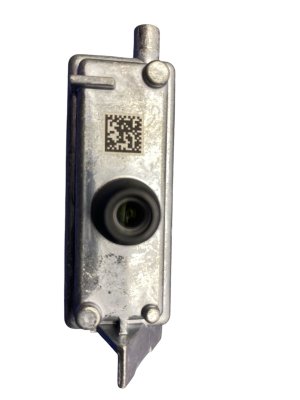
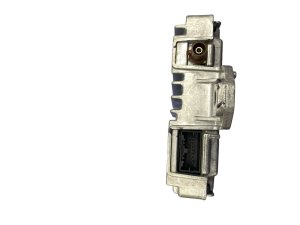
- Image Processing Module A (IPMA)
(OEM #ML3Z-19H406-A, ML3Z-19H406-B)— This part is only needed in the rare case that a software update and wiring check do not resolve the issue, indicating an internal hardware failure. It is the main processing unit for the front camera system. Part number may vary by vehicle build date and features.
Trusted brands: Motorcraft
OEM price range: $800-$1450 - Camera Module - Rear (CMR) / Driver Status Monitor Camera (DSMC)
(OEM #LJ8Z-3G590-G)— This part is only needed if TSB 25-2427 applies, which explicitly calls for replacement due to a specific software level issue causing DTC U3000:49 with status byte '8F'.
Trusted brands: Motorcraft
OEM price range: $300-$500 - IPMA Coaxial Cable
(OEM #LJ8Z-14D202-V / LJ8Z-14D202-W / LJ8Z-14D202-U)— Needed if TSB 23-2137 or 23-2155 diagnostics determine the coaxial cable between the camera and module is faulty. Different part numbers apply based on vehicle features.
Related Codes That Often Appear With This One
- C1001:31 — Often stored with U3000 in the IPMA, indicating a related camera or module fault. TSB 26-2021 and TSB 25-2156 mention these codes appearing together as part of the same software-related issue.
- U3000:49 — This is a specific variant of U3000 indicating an 'Internal Electronic Failure'. It's the most frequently cited suffix in TSBs for the Mach-E's IPMA and CMR, often pointing to either a software bug or a communication issue over the coaxial cable.
- U3000:89 — Another variant of U3000 indicating a 'Component or System Failure'. It is often seen alongside U3000:49 in the IPMA and is also addressed by software updates in TSB 26-2021.
Technical Service Bulletins (TSBs) & Recalls
- TSB 25-2427: Inoperative Blue Cruise and Lane Keeping system with DTC U3000:49 with a status byte of '8F' stored in the camera module-rear (CMR).
- TSB 26-2021: DTCs C1001:31, U3000:89, and/or U3000:49 stored in the image processing module A (IPMA).
- TSB 25-2156: DTCs C1001:31, U3000:89, and/or U3000:49 stored in the image processing module A (IPMA).
- SSM 54065: Inoperative BlueCruise and lane centering with diagnostic trouble code (DTC) U3000:49 stored in the camera module rear (CMR).
- TSB 23-2137: Various Driver Assistance System Warning Messages - DTC U3000:49 Stored In The IPMA Will Not Clear.
- TSB 23-2155: Supersedes TSB 23-2137, adding more DTCs and clarifying the diagnostic procedure for the coaxial cable connection issue.
Platform-Specific Known Issues
- Ford has issued multiple, often superseding, Technical Service Bulletins for the 2021-2025 Mustang Mach-E regarding DTC U3000, indicating an evolving diagnostic process.
- TSB 25-2427 addresses an inoperative BlueCruise system with DTC U3000:49:8F in the Driver Status Monitor Camera (CMR/DSMC), requiring module replacement.
- TSB 26-2021 points to DTCs U3000:89 and U3000:49 in the Image Processing Module A (IPMA) as the cause for a "Front Camera Fault" message, with the fix being a software update via FDRS.
- TSB 23-2155 (which supersedes 23-2137) provides a detailed diagnostic procedure for a persistent U3000:49 in the IPMA, which may be caused by a poor coaxial cable connection between the camera and the module. This is a very common issue discussed by owners.
Mechanic-Grade Diagnostic Values
- Battery State of Charge (SOC) before programming — expected: 50% or higher. Failure: Less than 50% SOC may cause programming to fail.
- Coaxial Cable Bend Radius — expected: Do not bend greater than 90 degrees over 30 mm (1.2 in). Failure: Sharp bends can damage the internal structure of the coaxial cable, causing signal loss.
Hidden / Shadow Codes Worth Checking
- U3000:49 with status byte '8F': Indicates a specific software level issue within the Camera Module - Rear (CMR) that requires module replacement, as per TSB 25-2427. (see via Ford Diagnostic & Repair System (FDRS) or an advanced scan tool capable of reading manufacturer-specific status bytes.)
Scan Tool Commands That Help
- Ford Diagnostic & Repair System (FDRS): Reset the Image Processing Module A (IPMA) Learned Values — This is a specific step called for in multiple TSBs (e.g., TSB 23-2137, TSB 22-2430) to clear a persistent U3000:49 code after other repairs or checks have been made. It can sometimes resolve the fault without parts replacement.
- Ford Diagnostic & Repair System (FDRS): Image Processing Module A (IPMA) Alignment — This calibration is mandatory after replacing the IPMA camera, updating IPMA software, or performing the 'Reset Learned Values' function. The system will not operate correctly without it.
- Ford Diagnostic & Repair System (FDRS): Programmable Module Installation (PMI) — Used when replacing the IPMA. TSB 23-2170 notes that this procedure can fail if other related modules (PSCM, CCM, CMR, IPC) are not at their latest software level first, requiring a specific update order.
Wiring & Ground Locations
- Image Processing Module A (IPMA) — Behind the left rear quarter panel in the cargo area.. This is the main processing module. While the camera is at the windshield, the main computer it talks to is in the rear of the vehicle, making the long coaxial cable run a key point of failure.
- IPMA Camera Connector — At the camera itself, behind the plastic shroud of the rearview mirror mount on the windshield.. This is the most accessible connection point for the coaxial cable and a common location for strain or loose connections, especially after a windshield replacement.
- Connector C9128 — A connector for the IPMA camera located in the headliner.. TSB 23-2137 involves inspecting and potentially replacing the coaxial cable section that runs to this connector in the headliner.
Real Owner Repair Stories
- macheforum.com user 'Ahmed' (Mach-E Select AWD) — Persistent BlueCruise fault with IPMA DTCs.
❌ Tried (didn't work) Rerouting the coaxial cable at the mirror mount.
✅ What actually fixed it The user ran the 'IPMA - Reset the Image Processing Module A (IPMA) Learned Values' application in FDRS, followed immediately by the 'IPMA - Image Processing Module A (IPMA) Alignment' application. This restored BlueCruise functionality. - macheforum.com user 'txaggies07' (Unknown Year Mach-E) — U3000-49 fault.
❌ Tried (didn't work) Replacing the coaxial cables., Replacing the front facing camera.
✅ What actually fixed it Replacing the Image Processing Module (IPMA) itself finally cleared the fault after the cables and camera were replaced without success. - Reddit user r/MachE (Unknown Year Mach-E) — "Front Camera Fault" and "Pre-Collision Assist Not Available" errors appearing over bumps.
❌ Tried (didn't work) A DIY replacement of the A-Pillar to Camera coaxial cable did not immediately fix the issue.
✅ What actually fixed it The user noted that the next step according to the TSB was to reset/recalibrate the IPMA using FDRS, which is a required step after cable replacement. The intermittent nature over bumps was a classic symptom of the faulty coaxial cable as described in TSB 23-2155.
OEM Part Supersession History
ML3Z-19G490-A, ML3Z-19H406-AA→ML3Z-19H406-B— Revision and update for the IPMA Camera/Module.LJ8Z-14D202-V→LJ8Z-14F662-B— Revision for the IPMA coaxial cable assembly.TSB 23-2137→TSB 23-2155— The technical service bulletin for the coaxial cable issue was updated to include additional DTCs and clarify the service procedure and parts list.
Model Year Variations Within This Range
- 2024-2025: Dealerships have mentioned that 2024 models feature upgraded cameras and CPUs for improved BlueCruise performance, though official documentation is sparse. The 2025 Mach-E is the first to launch with BlueCruise 1.5, which enables automatic hands-free lane changes. This version includes upgraded ADAS hardware and more computing power, meaning older models cannot be updated to this version via software alone.
We Have This Part in Stock




The information in this article is provided for general reference and educational purposes only. Vehicle specifications, procedures, and part compatibility can vary by production date, trim level, and region. Always consult your vehicle's factory service manual and verify part numbers before purchasing or performing repairs. Safety-critical components such as airbags, seat belts, and braking systems should be installed by a qualified professional.
- Ford MUSTANG MACH E:
- 🛍️ Shop This Part
- What's Unique About the 2021-2025 Ford MUSTANG MACH E
- Diagnostic Flowchart
- Symptoms You May Notice
- Most Likely Causes
- Rare But Worth Checking
- Diagnosis Steps
- Parts You'll Likely Need
- Related Codes That Often Appear With This One
- Technical Service Bulletins (TSBs) & Recalls
- Platform-Specific Known Issues
- Mechanic-Grade Diagnostic Values
- Hidden / Shadow Codes Worth Checking
- Scan Tool Commands That Help
- Wiring & Ground Locations
- Real Owner Repair Stories
- OEM Part Supersession History
- Model Year Variations Within This Range
- 🎟️ Get 5% Off