

U3000 on 2011-2018 Ford Focus: Control Module Fault Causes and Fixes
On a 2011-2018 Ford Focus, U3000 most often indicates a failure in the Electric Power Steering (EPS) system or the ABS control module. Before suspecting expensive hardware, check for a weak or dying battery, as low voltage is a very common trigger. A complete steering rack replacement or ABS module repair is the next most likely fix.
- U3000 is a generic code; you MUST have the 2-digit suffix and know which module it's in to diagnose it.
- For the 2011-2018 Focus, U3000 almost always points to the electric power steering or the ABS module.
- ALWAYS test the 12V battery properly before replacing any expensive parts. Low voltage is a very common trigger for this code.
- If the power steering fails with a U3000:49 or U3000:53 code, the entire electric steering rack assembly usually needs to be replaced.
- If the ABS and traction control lights are on with a U3000 code, the ABS module is the likely culprit and may need to be repaired or replaced.
What's Unique About the 2011-2018 Ford Focus

The third-generation Ford Focus (2011-2018) is well-documented for having two primary points of failure that trigger a U3000 code. The first is the electric power steering rack, which has a high failure rate and can lead to a sudden loss of steering assist. The second, particularly on 2015 and newer models, is an internal failure of the ATE MK100 ABS module. In both cases, water intrusion and low battery voltage are common contributing factors that owners should be aware of.
Symptoms You May Notice
- Complete loss of power steering, making the wheel very heavy to turn
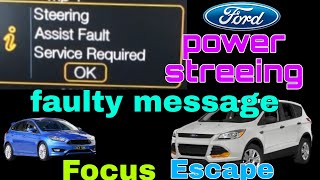
- "Power Steering Assist Failure" or "Steering Fault Service Required" message on the dashboard information screen
- Intermittent loss of power steering that may correct itself after restarting the car
- ABS, brake, and traction control (TCS) warning lights illuminated on the dash
- Hill Start Assist warning light may illuminate
- Steering feels notchy or makes grinding noises, especially when turning
- Replacing the battery without confirming it has failed a load test. While a bad battery is a common cause, it's important to test it properly first.
- Attempting to clear codes without fixing the root cause. If a hard fault like U3000:53 is present, it will return immediately and cannot be cleared with a standard scan tool.
Most Likely Causes

- Failing or Weak Battery 🔴 High Probability The electric power steering system draws a significant amount of current. An aging battery may not provide stable voltage, especially during startup, causing the PSCM to detect a fault and shut down.
How to confirm: Test the battery's state of health and state of charge with a quality battery tester. A simple voltage test is not sufficient. Check for the presence of code U3003 (Battery Voltage) alongside U3000:96, which strongly indicates a voltage-related issue.
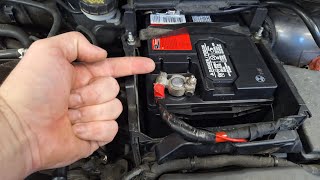
Typical fix: Replace the vehicle's 12V battery. Ensure the battery management system (BMS) is reset 🎬 Watch: How to properly replace the battery and cables. after replacement.
Est. part cost: $150-$250 - Internal Failure of Electric Power Steering Rack/Module 🔴 High Probability The MK3 Focus is known for a high failure rate of the integrated electric power steering rack and control module. Water ingress around the bulkhead boot can seep into the torque sensor housing, causing electronic failure. This is a widely reported issue in owner forums.
How to confirm: Use a scan tool like FORScan to read codes from the PSCM. Look for U3000 with suffixes :49 (Internal Electronic Failure), :53 (Control Module De-activated), or :96 (Component Internal Failure). U3000:49 is often intermittent at first, but can lead to the permanent, non-clearable U3000:53 code.
Typical fix: Replace the entire electric power steering rack assembly. 🎬 Watch: See how to replace the steering gear and clear codes. The control module is integrated and not typically serviced separately. The new rack must be programmed to the vehicle using software like FORScan or Ford's FDRS.
Est. part cost: $800-$1500 - Internal Failure of ABS Control Module 🟡 Medium Probability Models from 2015 onwards often use the ATE MK100 ABS module, which is known to fail internally, triggering a U3000 code. This failure is common enough that specialist services exist for remanufacturing these specific modules.
How to confirm: Scan the ABS module for codes. A U3000 code stored in the ABS module (often with suffix :48 or :49) points to this issue. Symptoms will include ABS and traction control lights.
Typical fix: The ABS module needs to be replaced or sent to a specialist like ACTRONICS for remanufacturing. After replacement, the brake system must be bled and the module may need to be configured to the vehicle's VIN.
Est. part cost: $200-$500 (for remanufacturing or a used unit)
Rare But Worth Checking
- Wiring Harness Damage or Corrosion: Check the wiring and connectors going to the power steering rack and ABS module for any visible damage, corrosion, or loose connections, especially if the vehicle has been in an accident or has high mileage in a harsh climate. Pay close attention to the main power and ground connections for the PSCM.
- Poor Ground Connection: A corroded or loose ground connection for the Power Steering Control Module (PSCM) or the main chassis ground can cause intermittent voltage drops and trigger a U3000 code. The main ground for the TCM/PCM, which can affect other modules, is a known issue on the Focus and cleaning it is a common DIY step. 🎬 See this guide on locating and cleaning critical electrical grounds.
Diagnosis Steps
- Perform a full vehicle scan with a high-quality scanner (like FORScan for Fords) to see which module stored the U3000 code and to get the essential 2-digit suffix.
- If the code is U3000:96 and/or U3003 is also present, your first step is to professionally test the 12V battery's state of health. Do not skip this step.
- If the battery is healthy, inspect the battery terminals and main power/ground connections to the chassis and engine for corrosion and tightness. Specifically check the main ground points under the hood, which are a known weak point.
- If the code is in the PSCM (e.g., U3000:49, U3000:53), inspect the wiring harness and connectors to the electric steering rack for damage or water intrusion. The primary entry point for water is often the bulkhead boot for the steering shaft.
- If the code is in the ABS module, inspect its wiring and connectors. The module is located behind the battery, so you may need to remove the battery and tray to access it.
- If the battery and wiring are good, a U3000:49 or U3000:53 code in the PSCM almost always requires replacement of the entire steering rack assembly.
- If the code is U3000 in the ABS module, the module itself is the likely point of failure and will need to be replaced or remanufactured.
Parts You'll Likely Need

- Electric Power Steering Rack Assembly
(OEM #HV6Z-3504-FH, CV6Z-3504-ZLH, HV6Z-3504-FG (part number varies by wheel size and model year, always verify with VIN))— This is the most common fix for U3000 codes related to the power steering system, as the control module is integrated into the rack and is a known high-failure item on the MK3 Focus.
Trusted brands: Motorcraft, Cardone (remanufactured), BBB Industries (remanufactured)
OEM price range: $1200-$1800
Aftermarket price range: $700-$1200 - ABS Control Module — For U3000 codes stored in the ABS system, internal failure of the ATE MK100 module is the typical cause, especially on 2015+ models.
Trusted brands: Motorcraft, ATE (OEM), Bosch
OEM price range: $600-$900
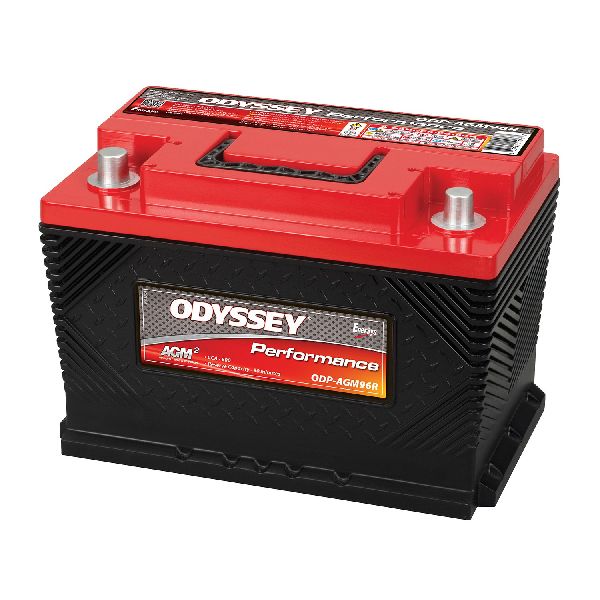
Aftermarket price range: $200-$500 (remanufactured) - AGM Battery — A weak battery is a primary cause of transient U3000 codes. Replacing an old battery is a crucial first step before condemning expensive modules.
Trusted brands: Motorcraft, Interstate, DieHard
OEM price range: $200-$280
Aftermarket price range: $150-$220
Related Codes That Often Appear With This One
- U3003:13 or U3003:16 — This code indicates a battery voltage issue. If seen with U3000:96, it strongly suggests the power steering fault is caused by low voltage from a weak battery or charging system problem.
- C102D — Indicates 'High Friction Inside Power Steering'. This code is often caused by mechanical resistance or water ingress within the steering rack itself, and frequently accompanies a U3000 code.
- U0420 — Indicates 'Invalid Data Received From Power Steering Control Module'. This code is often set in the ABS module when the PSCM has failed and is no longer communicating correctly on the CAN bus.
Technical Service Bulletins (TSBs) & Recalls
- TSB 14-0079 - Some 2012-2014 Focus vehicles may exhibit a loss of power steering assist. This TSB directs technicians to check for DTCs and potentially reprogram the PSCM or replace the steering gear assembly.
- SSM 48625 - For some 2020 Escape/Corsair vehicles, DTC U3000 may be set in the PSCM when a battery charger is used. This indicates the sensitivity of the system to voltage fluctuations and directs clearing the code rather than replacing parts.
- Bulletin #SSM 46048 - A manufacturer service bulletin notes that some vehicles equipped with SYNC 3 may have DTCs U3000:04, B108E:12 and/or U1A00:87 present in the APIM; if no other symptoms are reported, technicians are instructed to clear the codes.
Platform-Specific Known Issues
- There was a Ford safety recall (14S06) for some 2011-2013 models for loss of power steering assist, but it primarily covered the Explorer. While the Focus was not explicitly included in that specific recall notice, the failure pattern is very similar. Owners should still check for any open recalls on their specific VIN.
- Ford also had Customer Satisfaction Program 14M03 for certain 2012-2014 Focus models which involved a software update for the PSCM to prevent this issue. If the vehicle already had codes, the rack was replaced. Many vehicles on the road today may have missed this program or developed the fault later.
Mechanic-Grade Diagnostic Values
- PSCM Voltage Supply (Ignition ON) — expected: > 10 Volts. Failure: Voltage less than 10V points to an open circuit or a blown fuse (e.g., BJB fuse 52, 5A).
- PSCM Ground Circuit Resistance — expected: < 5 Ohms. Failure: Higher resistance indicates a corroded or loose ground connection, which can cause intermittent faults.
- HS-CAN Bus Resistance at PSCM Connector — expected: < 5 Ohms between the connector pins and the corresponding DLC pins.. Failure: High resistance indicates a wiring problem on the CAN bus, which will prevent the module from communicating.
Hidden / Shadow Codes Worth Checking
- U3000:49 (Internal Electronic Failure): This is the most common suffix code for this issue, indicating the PSCM has failed an internal self-test. It is often intermittent at first and may be cleared by an ignition cycle. (see via Ford IDS/FDRS, FORScan, or other professional-grade scan tools that can read manufacturer-specific suffix codes.)
- U3000:53 (Control Module De-activated): This is a hard, non-clearable fault that is typically set after U3000:49 has been triggered multiple times. It indicates the module has been permanently disabled and requires replacement or advanced EEPROM reprogramming to clear. (see via Ford IDS/FDRS, FORScan, or other professional-grade scan tools.)
- U3000:96 (Component Internal Failure): This code is often triggered by low voltage events during engine startup. If seen alongside a U3003 (Battery Voltage) code, the root cause is almost certainly the battery or charging system, not the PSCM itself. (see via Ford IDS/FDRS, FORScan, or other professional-grade scan tools.)
Scan Tool Commands That Help
- FORScan / Ford IDS: PSCM - Programmable Module Installation (PMI) — This function is mandatory after replacing the electric power steering rack. It downloads the vehicle's 'as-built' data and writes it to the new module, configuring it for the specific car options. Failure to perform PMI will result in no power assist.
- FORScan: Load Factory AB (As-Built) and Write — This is the FORScan equivalent of the dealer's PMI procedure. After installing a new or used steering rack, you load the vehicle's original factory configuration data and write it to the replacement PSCM.
- FORScan / Ford IDS: ABS Service Bleed — After replacing the ABS module/HCU, a service bleed procedure must be performed. This command cycles the ABS pump and valves to purge any trapped air from the hydraulic unit, which cannot be removed with a traditional manual bleed.
- Various Professional Scan Tools: Steering Angle Sensor (SAS) Calibration — After performing an alignment or replacing steering/suspension components, the steering angle sensor may need to be recalibrated. This ensures the stability control and power steering systems know the straight-ahead position.
Wiring & Ground Locations
- Main Engine Bay Ground — Underneath the air cleaner box, bolted to the chassis frame rail.. This is a primary ground point for multiple engine bay modules. Corrosion or looseness here can cause a host of intermittent electrical issues, including PSCM and ABS faults.
- Transmission Bell Housing Ground — A ground strap connects from the chassis to a threaded bolt hole on the transmission bell housing.. This ground is critical for the powertrain control module and transmission control module. While not directly for the PSCM, poor communication from the PCM/TCM due to a bad ground can cause network-wide issues.
- PSCM Power Connector — The main 2-pin power connector on the steering rack motor. Pin 1 is the main battery voltage feed (heavy gauge wire), and Pin 2 is the main ground.. This is the high-current supply for the electric motor. Corrosion or damage to these thick wires or the connector itself is a direct cause of power loss to the rack.
- PSCM Data Connector — A smaller multi-pin connector on the steering rack that carries the HS-CAN communication wires (typically white and white/blue).. Damage to these wires will cause a loss of communication between the PSCM and the rest of the vehicle, resulting in a fault and loss of assist.
Real Owner Repair Stories
- Reddit user in r/FordFocus (2011 Ford Focus MK3) — Intermittent 'Power steering malfunction' message that eventually became permanent. Fault code U3000:53 was stored and could not be cleared.
❌ Tried (didn't work) Clearing codes with a standard OBD-II reader., Restarting the car, which only worked initially when the code was U3000:49.
✅ What actually fixed it The entire steering rack was replaced with a used unit from a facelifted MK3 Focus (part number CV6C 3D070). The mechanic had to adapt the wiring connector (3-pin vs 5-pin on the original), but after the swap and alignment, all features including power steering and auto-parking worked correctly. - Ford Focus Club forum user (Ford Focus MK3, 65,000 miles) — Steering Assist Failure message. FORScan showed PSCM DTC U3000:49-48 (Internal Electronic Failure).
❌ Tried (didn't work) Disconnecting the battery to clear the fault.
✅ What actually fixed it The user was advised that this is a known issue requiring steering rack replacement. The freeze-frame data showing 0.2 Nm of torque on the steering shaft sensor is indicative of the internal failure. - NHTSA ODI #11446295 — An owner reported that even after a repair was attempted, the issue was not fixed and the code still read internal steering module failure U3000-96.
- NHTSA ODI #11440368 — A driver notified NHTSA that after power steering went out, a dealership diagnosis confirmed code U3000 and determined the steering gear assembly was bad at 64,352 miles.
- NHTSA ODI #11297519 — An owner reported that the electric power steering failed with error codes U3000:49-48 and U3000:53-C8, with a dealership advising a replacement cost of approximately $2,600.
- NHTSA ODI #11375799 — An ASE certified retired mechanic reported a steering assist fault with no steering and U3000 codes present.
OEM Part Supersession History
CV6Z-3504-ZLH→HV6Z-3504-FH— Part number consolidation and potential design revision by Ford.
Heads up: HV6Z-3504-FH is listed as the replacement for many earlier part numbers, including CV6Z-3504-ZLH. However, physical connector differences may exist between early (pre-facelift) and late (facelift) models, sometimes requiring wiring modification. Always verify compatibility by VIN.Multiple CV6Z- and BV6Z- prefixes→HV6Z-3504-FH— Ford has superseded a large number of older steering rack part numbers with HV6Z-3504-FH.
Heads up: Part numbers are specific to options like wheel size (e.g., 18" wheels). While a rack from a facelifted car might be adaptable to an older car, it's critical to match the specifications or be prepared for modifications.
Model Year Variations Within This Range
- 2011-2014 vs 2015-2018: The ATE MK100 ABS module, which is a common source of U3000 codes, is more prevalent in the facelifted 2015+ models. Additionally, while steering racks are physically similar, there can be wiring connector differences between pre-facelift and facelift cars, as noted in a real-world repair story.
- 2011-2012: Early production models (e.g., 2011-2012) are frequently cited in forums as having the highest rate of steering rack failure due to water ingress, which may have been partially mitigated in later years.
Diagnostic Flowchart
Used vs. New Parts: Buying Guide for This Vehicle
When a used part is the smart pick: For both the electric power steering rack and the ABS module, a used OEM part from a reputable wrecker is a very common and cost-effective repair strategy. Given the high cost of new OEM parts, a low-mileage used unit can save hundreds or even thousands of dollars.
Donor-vehicle mileage cap: roughly under 80000 miles for the part to have meaningful remaining life.
What to inspect on the donor part:
- For Steering Racks: Inspect the rubber bellows boots for any tears or perishing. A torn boot is an automatic disqualification as it allows water and debris in.
- For Steering Racks: Check the electrical connectors for any signs of corrosion, bent pins, or harness damage.
- For ABS Modules: Ensure the donor vehicle was not involved in a major front-end collision. Get the VIN of the donor car if possible to check its history.
- Verify the part number on the used component matches your original part number exactly, unless you have confirmed a specific supersession or compatible alternative.
OEM-only on this vehicle (don't cheap out):
- While remanufactured units are available, a used OEM steering rack or ABS module is often preferred by DIYers over new aftermarket units due to guaranteed compatibility with the vehicle's software and communication protocols.
Aftermarket brands forum-validated for this vehicle:
- A1 Cardone (Remanufactured Steering Racks)
- Specialist remanufacturing services for the ATE MK100 ABS module (e.g., ECU Testing, ControlUnits, Circuit Board Medics) are a reliable option.
Brands owners have reported issues with on this vehicle:
- Unbranded, new 'no-name' steering racks from online marketplaces should be avoided, as they often have software incompatibility issues that prevent successful programming.
Real Owner Stories
Aggregated from forums and TSBs cited above. Mileages and costs reflect what owners reported in those sources.
Ford Focus MK3
Symptoms: Received a permanent, non-clearable U3000:53 code, which is a 'hard' fault.
What fixed it: Required replacement of the entire steering rack. A rack from a newer Kuga 2 or C-Max 2 was retrofitted.
Source hint: Reddit r/FordFocus: A user thread confirms the U3000:53 code is a 'hard' fault that cannot be cleared and requires rack replacement.
2012 Ford Grand C-Max
Symptoms: Displayed a U3000:53 steering rack error message on the dash.
What fixed it: The mechanic diagnosed it as a common issue requiring a new steering rack.
Source hint: Ford Owners Club: A 2023 thread about a Grand C-Max with U3000:53 confirms the mechanic's diagnosis that it's a common issue and requires a new rack.
Ford Focus MK3
Symptoms: Sudden 'Power Steering Assist Fault' message. The fault was intermittent at first and could be temporarily fixed by restarting the car, but it eventually became a permanent failure.
What fixed it: The root cause was determined to be water ingress into the steering rack's electronics or a failing battery.
Source hint: FocusFanatics.com: Multiple threads discuss the sudden failure of power steering with the 'Power Steering Assist Fault' message.
Related OBD-II Codes
Frequently Asked Questions
My 2013 Focus lost power steering. Was there a recall for this specific problem?
My scanner shows U3000:49. What does the ':49' part mean?
The mechanic says I need a whole new steering rack. Can't they just replace the control module?
Why are my ABS and traction control lights on along with the steering fault message?
My car has a U3000 code. Should I replace the battery first?
Does TSB 14-0079 apply to my 2014 Focus?
I found a used steering rack from a Ford Escape. Will it fit my Focus?
Helpful Videos
Used OEM Parts in Stock


New Aftermarket Parts Available

The information in this article is provided for general reference and educational purposes only. Vehicle specifications, procedures, and part compatibility can vary by production date, trim level, and region. Always consult your vehicle's factory service manual and verify part numbers before purchasing or performing repairs. Safety-critical components such as airbags, seat belts, and braking systems should be installed by a qualified professional.
- Ford Focus:
- 🎬 Helpful Videos
- 🛍️ Shop This Part
- What's Unique About the 2011-2018 Ford Focus
- Symptoms You May Notice
- Most Likely Causes
- Rare But Worth Checking
- Diagnosis Steps
- Parts You'll Likely Need
- Related Codes That Often Appear With This One
- Technical Service Bulletins (TSBs) & Recalls
- Platform-Specific Known Issues
- Mechanic-Grade Diagnostic Values
- Hidden / Shadow Codes Worth Checking
- Scan Tool Commands That Help
- Wiring & Ground Locations
- Real Owner Repair Stories
- OEM Part Supersession History
- Model Year Variations Within This Range
- Diagnostic Flowchart
- Used vs. New Parts: Buying Guide for This Vehicle
- Real Owner Stories
- Ford Focus MK3
- 2012 Ford Grand C-Max
- Ford Focus MK3
- Related OBD-II Codes
- Frequently Asked Questions
- 🎟️ Get 5% Off