

U3000 on 2022-2024 Ford F-150 Lightning: Control Module Fault Causes and Fixes
On a 2022-2024 F-150 Lightning, code U3000 most often indicates a fault with the Image Processing Module A (IPMA), per Ford TSB 23-2146. This is typically due to a bad coaxial cable connection between the camera and the module. A weak 12V battery is the second most likely cause, triggering various electronic faults. A dealer fix for the IPMA issue involves inspecting/replacing the cable and performing a software recalibration with FDRS.
- U3000 on your F-150 Lightning, especially with driver-assist warnings, strongly points to an issue with the Image Processing Module (IPMA) per Ford TSB 23-2146.
- Before any expensive repairs, test the 12V battery. A weak 12V battery is a known cause of widespread, random electronic faults on this truck.
- This is not a simple DIY fix. Repair requires checking specific wiring and using dealer-level software (FDRS) to reset and recalibrate the module.
- Do not be surprised if the fix involves replacing a small coaxial cable rather than a large, expensive module.
- If you get a 'Front Camera Fault' message, this U3000 code is the likely culprit.
What's Unique About the 2022-2024 Ford F-150 Lightning
The F-150 Lightning, like all modern vehicles, is a network of computers, but its reliance on advanced driver-assistance systems (ADAS) makes it particularly susceptible to U3000 codes related to camera and sensor modules. The most documented cause for U3000 on this truck is a connection issue with the Image Processing Module A (IPMA), which is mounted near the windshield camera. This is detailed in TSB 23-2146. Additionally, as an EV, the health of the small 12V AGM battery is critical; owners frequently report that a weak 12V battery, not the high-voltage pack, causes a cascade of seemingly unrelated electronic faults and module errors, including U3000. During long software updates (like for the IPMA), the 12V system can be heavily drained, which is why a high-quality power supply maintaining 13.6V is recommended.
Symptoms You May Notice
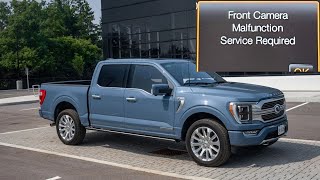
- Front Camera Fault Service Required message on the dash
- Pre-collision assist inoperative
- Adaptive cruise control inoperative
- Lane Keeping System warnings or failure
- BlueCruise becomes unavailable 🎬 See what the front camera malfunction warning looks like on dash
- A cluster of multiple, seemingly unrelated warning lights (often points to 12V battery issue)
- Extremely hard brake pedal feel (reported in some Ford hybrid/EV platforms alongside U3000)
- Replacing the front camera without checking the wiring first. The TSB points to the coaxial cable connection as the more likely culprit than the camera itself.
- Replacing a control module without first checking for a weak 12V battery. A simple battery test can save hundreds or thousands of dollars in unnecessary module replacements.
Most Likely Causes
- Image Processing Module A (IPMA) Connection Issue 🔴 High Probability Ford TSB 23-2146 specifically calls out a potential connection issue between the IPMA camera and the IPMA module on 2021-2023 F-150s. This is the most documented specific cause for a U3000:49 code. The coaxial cable can be fragile and fail if bent too sharply (greater than 90 degrees over 1.2 inches), sometimes during windshield replacement. An owner report (NHTSA ODI #11725446) suggests that in similar Ford architectures, condensation may cause corrosion at these cable connections, triggering codes C1001:31, U3000:89, and U3000:49.
How to confirm: A Ford dealer or a technician with access to Ford's diagnostic software (FDRS) can confirm the code is in the IPMA and follow the diagnostic steps in TSB 23-2146. This involves checking for DTCs U3000:49, C1001:31, or U3000:89 and performing a wiggle test on the coaxial cable connectors C900 (at the A-pillar) and C9128 (at the camera).
Typical fix: The fix involves inspecting, re-securing, or replacing the coaxial cables between the IPMA and its camera. The TSB advises overlaying a new cable rather than routing through the factory path and cutting off the old connectors to prevent reuse. After the physical repair, the IPMA's learned values must be reset and the module must be recalibrated using FDRS. In some cases, the IPMA module itself may need replacement if the code persists.
Est. part cost: $50-$250 for cables, $400-$600 for a new IPMA module. - Weak or Failing 12V Battery 🟡 Medium Probability The F-150 Lightning uses a relatively small 12V AGM battery to power the truck's electronics before the high-voltage system engages. Infrequent driving, short trips, or leaving doors/frunk open can deplete it, causing low-voltage conditions for control modules. Low voltage is a known trigger for U3000 codes across the F-150 platform. Some owners have noted premature 12V battery death was linked to a software bug in the battery management system, which Ford later fixed with an OTA update. NHTSA ODI #11534192 notes a case where a U3000 code was addressed by a dealership performing a battery disconnect and reprogramming multiple modules including the ABS and PCM.
How to confirm: Test the 12V battery's state of charge and health. A reading below 12.4 volts at rest indicates a discharged battery, and a load test should be performed to check its ability to hold a charge. This should be the first step for any widespread electronic issues, as a failing battery can cause a host of unrelated error messages. TSB 23-2170 specifies checking the State of Charge (SOC) PID with FDRS; it must be above 50% before attempting any module programming.
Typical fix: Recharge or replace the 12V AGM battery. After replacement, a Battery Monitoring System (BMS) reset should be performed using a scan tool like FORScan or by a dealer to ensure the system charges the new battery correctly. Many owners recommend carrying a portable lithium-ion jump starter as a precaution.
Est. part cost: $150-$300 for a new AGM battery. - IPMA Software Fault ⚪ Low Probability As documented in Ford SSM 49684 and TSB 23-2040, sometimes a U3000:49 code can get 'stuck' in the IPMA due to a software glitch in its learned values, even if there is no hardware fault. Manufacturer Bulletin #TSB 25-2427 notes that an inoperative Blue Cruise and Lane Keeping system with DTC U3000:49 (specifically with status byte 8F) may be stored in the camera module due to software levels.
How to confirm: If the code persists after checking connections and the battery, it is likely a software issue. This can only be confirmed by a technician attempting the software-based reset procedures outlined in the TSBs.
Typical fix: The fix requires a dealer or qualified shop to use the Ford Diagnosis and Repair System (FDRS) to run the 'IPMA - Reset the Image Processing Module A (IPMA) Learned Values' application, followed immediately by the 'IPMA Alignment' application. In some cases, simply reprogramming the IPMA to the latest software level 🎬 Watch: Troubleshooting software and OTA update issues for BlueCruise is the required fix.
Est. part cost: $0 (Labor cost for reprogramming will apply).
Rare But Worth Checking
- Incorrectly Programmed Instrument Panel Cluster (IPC): This is a known issue on ICE F-150s imported from Canada to the U.S. where incorrect reprogramming to change from kilometers to miles causes a persistent U3000 in the IPC, which can disable Adaptive Cruise Control. While not specific to the Lightning, it's a possibility on imported vehicles.
- Failed Windshield Replacement Calibration: If the U3000 code appeared immediately after a windshield replacement, it's highly likely the calibration failed or was performed incorrectly. Some aftermarket glass has been reported to fail calibration even when installed correctly. The process requires a specific drive cycle on well-marked roads after initiating the procedure with a tool like FDRS.
- Internal Steering Gear Failure: While rare for the Lightning, NHTSA ODI #11330653 describes a U3000:49 code stored in a Ford steering system that required the replacement of the entire steering gear to resolve.
Diagnosis Steps
- Connect an advanced scan tool (like FORScan or FDRS) capable of reading manufacturer-specific DTCs.
- Identify which module has stored the U3000 code and note the two-digit suffix (e.g., :49).
- If multiple modules have codes, first test the 12V battery. Check its voltage (should be >12.4V) and perform a load test. Charge or replace if necessary, and perform a BMS reset.
- If the code is U3000:49 (or C1001:31 / U3000:89) in the Image Processing Module A (IPMA), obtain Ford TSB 23-2146.
- Follow the TSB's procedure: Inspect the coaxial cable connections at the IPMA module and the front camera (located behind the rearview mirror). Perform a 'wiggle test' on the connectors C900 and C9128 to check for looseness.
- If connections are loose, secure them. If the issue is intermittent or connections seem fine, the TSB advises overlaying new coaxial cables.
- After ensuring the physical connection is sound, use FDRS to run the 'IPMA - Reset Learned Values' and 'IPMA - Alignment' procedures.
- If the code still does not clear after following the TSB, the IPMA module itself may have an internal hardware failure and require replacement and programming.
Parts You'll Likely Need
- Image Processing Module A (IPMA) — This module is the source of the code in the most common documented failure scenario (TSB 23-2146). It may require replacement if cable repairs and software resets do not resolve the fault.
Trusted brands: Motorcraft
OEM price range: $400-$600
Aftermarket price range: N/A - IPMA Coaxial Cable
(OEM #ML3Z-10E929-ABA, ML3Z-10E929-ACA, ML3Z-10E929-AAA (examples, check VIN and specific cable section needed per TSB 23-2146))— TSB 23-2146 identifies a poor connection or faulty cable as the primary cause. The diagnostic procedure may require replacing one or both sections of the cable.
Trusted brands: Motorcraft
OEM price range: $50-$150
Aftermarket price range: N/A - 12V AGM Battery
(OEM #BAGM-48H6-760 (example, check VIN))— A weak 12V battery is a common cause of various electronic module faults on the F-150 Lightning and should be ruled out early in the diagnosis.
Trusted brands: Motorcraft, Deka, Odyssey
OEM price range: $200-$300
Aftermarket price range: $150-$250
Related Codes That Often Appear With This One
- C1001:31 — This code for 'No Signal' from the IPMA is often stored alongside U3000:49 and U3000:89 as part of the same IPMA connection issue described in TSB 23-2146.
- U3000:89 — This code for 'No Communication or Incorrect Component Installed' is also frequently seen with U3000:49 in the IPMA, pointing to the same TSB-documented connection or module fault.
Technical Service Bulletins (TSBs) & Recalls
- TSB 23-2146: Main TSB for U3000:49, C1001:31, and U3000:89 in the IPMA, detailing the coaxial cable inspection and replacement procedure.
- TSB 23-2040: Addresses software issues in the IPMA that can cause persistent codes.
- TSB 23-2170: Details procedures for module programming and highlights the importance of battery state of charge before starting.
- Bulletin #TSB 26-2021: Provides service procedures for vehicles exhibiting DTCs C1001:31, U3000:89, and U3000:49 in the IPMA.
- Bulletin #TSB 25-2427: Addresses inoperative Blue Cruise and Lane Keeping systems specifically associated with DTC U3000:49 in the rear camera module.
Platform-Specific Known Issues
- Real-World Repair Story: TSB 23-2146 Fix: An owner on f150lightningforum.com with a 2022 Lightning reported the 'Front Camera Fault' message and associated disabled features. The dealer diagnosed DTC U3000:49 in the IPMA. Following TSB 23-2146, they found a loose connection at the camera. After reconnecting it, they performed the IPMA reset and alignment with FDRS, which resolved the issue without replacing any parts. This highlights the TSB's accuracy in pointing to a connection issue over a component failure.
Mechanic-Grade Diagnostic Values
- 12V Battery State of Charge (SOC) before programming — expected: 50% or higher. Failure: Less than 50% SOC. Programming may fail.
- 12V System Voltage during module programming — expected: 12.6 – 13.6 volts. Failure: Voltage outside this range can cause programming errors.
- Coaxial Cable Bend Radius — expected: Bends should not be greater than 90 degrees over a 30 mm (1.2 in) span.. Failure: Sharper bends can damage the cable internally, causing signal loss.
Hidden / Shadow Codes Worth Checking
- U3000:48: Supervision Software Failure. This indicates a software or internal processing error within the module, rather than a simple hardware or connection fault. (see via Ford-specific scan tools like FDRS or FORScan.)
Scan Tool Commands That Help
- FDRS (Ford Diagnosis and Repair System): IPMA - Reset the Image Processing Module A (IPMA) Learned Values — This is a critical first software step, used after a hardware repair (like fixing a cable) or to clear a 'stuck' code. It erases old calibration data that may be causing the fault.
- FDRS (Ford Diagnosis and Repair System): IPMA - Image Processing Module A (IPMA) Alignment — Must be performed immediately after resetting learned values, replacing the IPMA, or after a windshield replacement. This command initiates a dynamic calibration that requires driving on straight, well-marked roads at over 40 mph.
- FDRS (Ford Diagnosis and Repair System): BCM - Reset Battery Monitor Sensor Learned Values — This must be run after replacing the 12V battery or if the battery was deeply discharged. It ensures the charging system correctly manages the new battery's state of charge.
Wiring & Ground Locations
- C9128 — The coaxial connector directly at the IPMA camera, located behind the rearview mirror assembly.. This is one of the two primary connection points called out in TSB 23-2146. A 'wiggle test' here is a key diagnostic step.
- C900 — The headliner wiring harness electrical connector located in the driver-side A-Pillar.. This is the other end of the coaxial cable connection from the camera. TSB 23-2146 requires checking this connector for looseness.
- G202 / G203 — Common ground points located behind the passenger side kick panel, near the fuse box (BCM).. While not directly cited for U3000, these are major interior ground points for many modules. Poor grounding here due to corrosion or looseness can cause a wide range of difficult-to-diagnose electronic issues.
- C242F — The connector at the IPMA module itself (distinct from the camera).. TSB 23-2146 involves overlaying a new coaxial cable from the A-pillar connector (C900) to this connector at the IPMA.
Real Owner Repair Stories
- MachEforum user (Ford Mach-E (shares IPMA architecture with Lightning)) — BlueCruise became unavailable, IPMA-related DTCs present.
❌ Tried (didn't work) Rerouting the IPMA coaxial cable based on a known factory routing issue.
✅ What actually fixed it Using FDRS, the user ran the 'IPMA - Reset the Image Processing Module A (IPMA) Learned Values' application, immediately followed by the 'IPMA - Image Processing Module A (IPMA) Alignment' application. This software-only fix restored BlueCruise functionality without any parts replacement. - Reddit user r/F150Lightning (2023 F-150 Lightning Lariat) — After a windshield replacement, multiple errors appeared: 'vision module' fault during recalibration, front sensors disabled, collision detection, lane keep, cruise, and auto high beams all inoperative.
❌ Tried (didn't work) Initial windshield replacement (possibly aftermarket)., Disconnecting a FITCAMX dash cam., A second windshield replacement (presumably OEM).
✅ What actually fixed it The issue was unresolved at the time of posting, with Ford dealer technicians escalating the case to a regional representative. This highlights the complexity and difficulty that can arise from failed post-windshield calibrations, even for dealers. - NHTSA ODI #11534192 — An owner reported that after a warning light appeared, the brakes became extremely hard to use. The dealership found code U3000 and resolved it by reprogramming the ABS, PCM, and IPC modules and performing a battery disconnect.
- NHTSA ODI #11330653 — An owner experienced a steering issue that resolved after restarting the car, but a dealer found code U3000:49 stored, which ultimately required the replacement of the entire steering gear.
OEM Part Supersession History
ml3z10e929gaa→ML3Z-10E929-A— Part number update or revision.
Heads up: This specific cable is listed for the 'Driver monitor' system, which is related to the IPMA. Always verify the correct cable part number with a VIN, as multiple coaxial cables exist for different functions (e.g., rear camera vs. front IPMA).
Diagnostic Flowchart
Other Known Issues on This Vehicle
Issues unrelated to this code that are worth knowing about as an owner of this generation:
- High-Voltage Battery Junction Box (HVBJB) Failure 🔴 High — Affects a subset of 2022-2023 models. Can lead to a sudden loss of motive power. Ford has a Customer Satisfaction Program and a recall (23S56) for related issues like improperly tightened bus bar fasteners. (Ref: Recall 23S56)
- Pro Power Onboard Service Required Faults 🟠 Medium — Numerous owners report intermittent 'Pro Power Onboard Service Required' messages, sometimes due to software glitches, sensitive GFCI tripping, or inverter overheating under heavy load. Fixes can range from a simple vehicle restart to inverter replacement.
- Phone As a Key (PaaK) Unreliability 🟡 Low — A very common complaint across forums. The system works intermittently for many owners, requiring them to pull out their phone and open the FordPass app, or resort to the key fob or door keypad. Issues are reported on both Android and iOS.
- High-Voltage Battery Cell Defects 🔴 High — A recall (25S18) was issued for certain 2022-2024 models due to a manufacturing defect in battery cells from supplier SK On that could cause an internal short, posing a fire risk. Ford advised owners to limit charging to 80% until the repair is completed. (Ref: Recall 25S18)
- Premature 12V Battery Failure 🟠 Medium — The 12V AGM battery can drain or fail prematurely, causing a cascade of electronic faults and no-start conditions. This is sometimes exacerbated by software bugs in the battery management system, which Ford has addressed via OTA updates.
Used vs. New Parts: Buying Guide for This Vehicle
When a used part is the smart pick: A used IPMA module from a reputable salvage yard can be a cost-effective option, but only if you have access to Ford's FDRS software or a shop that does. The module is VIN-locked and requires programming (PMI - Programmable Module Installation) and calibration to function in a new vehicle. Used coaxial cables are generally not recommended due to their fragility and low cost when new.
Donor-vehicle mileage cap: roughly under 50000 miles for the part to have meaningful remaining life.
What to inspect on the donor part:
- For an IPMA module, ensure the donor vehicle was not in a major front-end collision.
- Verify there is no physical damage to the module housing or connectors.
- Obtain the VIN of the donor vehicle to help with programming and to check its original equipment and TSB history.
OEM-only on this vehicle (don't cheap out):
- Image Processing Module A (IPMA)
- IPMA Coaxial Cables
- Windshield Glass (SoundScreen acoustic glass with correct sensor brackets)
Brands owners have reported issues with on this vehicle:
- Non-OEM windshield glass is frequently reported by owners and installers to cause calibration failures for the IPMA camera system.
Real Owner Stories
Aggregated from forums and TSBs cited above. Mileages and costs reflect what owners reported in those sources.
2022 Ford F-150 Lightning
Symptoms: Front Camera Fault message on the dash and associated driver assistance features were disabled.
What fixed it: The dealer identified DTC U3000:49 in the IPMA. Following TSB 23-2146, they found a loose connection at the camera, reconnected it, and performed the IPMA reset and alignment with FDRS.
Source hint: f150lightningforum.com thread cited in vehicle_specific_issues
Ford Owner Report (NHTSA ODI #11534192)
Symptoms: Warning light illuminated and the brakes became extremely hard to use.
What fixed it: The dealership received Code U3000 and performed a "battery disconnect" along with reprogramming the ABS, PCM, and IPC modules.
Ford Owner Report (NHTSA ODI #11330653)
Symptoms: Steering issues that intermittently resolved after cycling the ignition.
What fixed it: A dealer found code U3000:49 stored, which required the replacement of the entire steering gear at a cost of over $2,500.
Related OBD-II Codes
Frequently Asked Questions
My 2022 F-150 Lightning is showing a 'Front Camera Fault Service Required' message; does TSB 23-2146 apply to me?
Can a weak 12V battery cause a U3000 code on the F-150 Lightning even if the high-voltage battery is full?
What is the recommended fix for a U3000:49 code if the coaxial cable is found to be the issue?
Is there a specific software procedure required after replacing IPMA components on my 2023 Lightning?
Does the F-150 Lightning share this U3000 IPMA issue with the Mustang Mach-E?
What voltage should I look for when testing my Lightning's 12V battery to rule out U3000 triggers?
Helpful Videos
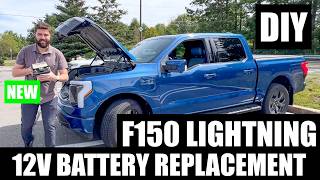
We Have This Part in Stock



The information in this article is provided for general reference and educational purposes only. Vehicle specifications, procedures, and part compatibility can vary by production date, trim level, and region. Always consult your vehicle's factory service manual and verify part numbers before purchasing or performing repairs. Safety-critical components such as airbags, seat belts, and braking systems should be installed by a qualified professional.
- Ford F-150 Lightning:
- 🎬 Helpful Videos
- 🛍️ Shop This Part
- What's Unique About the 2022-2024 Ford F-150 Lightning
- Symptoms You May Notice
- Most Likely Causes
- Rare But Worth Checking
- Diagnosis Steps
- Parts You'll Likely Need
- Related Codes That Often Appear With This One
- Technical Service Bulletins (TSBs) & Recalls
- Platform-Specific Known Issues
- Mechanic-Grade Diagnostic Values
- Hidden / Shadow Codes Worth Checking
- Scan Tool Commands That Help
- Wiring & Ground Locations
- Real Owner Repair Stories
- OEM Part Supersession History
- Diagnostic Flowchart
- Other Known Issues on This Vehicle
- Used vs. New Parts: Buying Guide for This Vehicle
- Real Owner Stories
- 2022 Ford F-150 Lightning
- Ford Owner Report (NHTSA ODI #11534192)
- Ford Owner Report (NHTSA ODI #11330653)
- Related OBD-II Codes
- Frequently Asked Questions
- 🎟️ Get 5% Off