

U3000 on 2023-2025 Ford F-150: Control Module Fault Explained
U3000 is a generic 'Control Module' fault. To fix it, you must first use a high-quality scanner to see WHICH module is setting the code (e.g., airbag, camera, audio) and get the two-digit suffix. The fix depends entirely on this information, ranging from a software update to module replacement.
- U3000 is a generic code. You MUST use a good scanner to find out which module is at fault and what the two-digit suffix is.
- For airbag lights, the cause is very likely the Occupant Classification System Module (OCSM) in the passenger seat, as noted in multiple TSBs.
- For driver-assist or camera warnings, the issue is often software-related and may be fixed by a dealer reprogramming the IPMA or CMR.
- Always test the 12V battery before replacing any modules. A weak battery is a frequent and inexpensive-to-fix cause of this code.
- Do not replace a module without first checking for relevant TSBs, as a known issue may have a simpler, cheaper fix.
What's Unique About the 2023-2025 Ford F-150

On the highly computerized fourteenth-generation F-150, a U3000 code is common and often points to software glitches or specific, known hardware issues that Ford has addressed via Technical Service Bulletins (TSBs). Unlike on older vehicles where such a code might immediately suggest a failed part, on these modern trucks the first step is often checking for software updates or known issues related to a specific module, such as the airbag's OCSM or the driver-assist camera's IPMA. A weak battery is also a very common trigger for spurious U3000 codes across various modules on this platform.
Diagnostic Flowchart

Tap your situation to follow the diagnostic path that matches what you're seeing on this vehicle.
Symptoms You May Notice

- Illuminated airbag warning light.
- Driver-assist features like BlueCruise, lane-keeping, adaptive cruise, or pre-collision assist are inoperative.
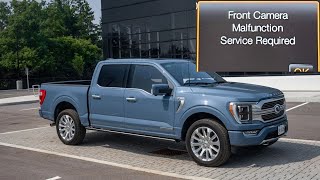
- "Front Camera Fault Service Required" message on the dash. 🎬 See what causes the front camera malfunction warning
- Audio system malfunctions or is inoperative.
- Warning messages related to the On-Board Scale system.
- "Steering Assist Fault" message in the instrument cluster.
- Replacing a module without checking for software updates first. Many U3000 issues on this platform are resolved with a simple reprogram.
- Replacing a module when the actual cause is a weak 12V battery. Multiple TSBs require a battery test as the first diagnostic step.
- Replacing the IPMA module for a U3000:49 without first inspecting the coaxial cable connections per TSB 23-2146.
Most Likely Causes

- Occupant Classification System Module (OCSM) Internal Fault 🔴 High Probability Ford has issued multiple TSBs (23-2280, superseded by 25-2465) for 2021-2023 F-150s regarding internal faults in the OCSM, which is part of the airbag system.
How to confirm: Use a Ford-compatible scan tool to check for DTCs U3000:41 or U3000:54 specifically in the OCSM. The TSB procedure begins with a battery condition test before condemning the module.
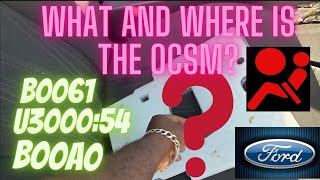
Typical fix: If the battery is healthy, the fix is the replacement of the Occupant Classification System Module (located in the passenger seat cushion) 🎬 Watch: Understanding the OCSM and where to find it with a service kit, followed by a mandatory calibration procedure.
Est. part cost: $90-$200 - Image Processing Module A (IPMA) Software or Connection Issue 🟡 Medium Probability TSBs for the F-150 platform (including 23-2146 and 23-2040) frequently point to software issues or poor coaxial cable connections for the front camera module, causing various U3000 codes, most notably U3000:49.
How to confirm: Check for DTC U3000:49 in the IPMA. Per TSB 23-2146, perform a wiggle test on the coaxial cable connectors at the IPMA (under driver's dash) and the camera (behind rearview mirror). A dealer or advanced user can check for available software updates using Ford's FDRS.
Typical fix: If software updates are available, reprogramming the IPMA is the first step. If connection issues are suspected, TSB 23-2146 provides a procedure for overlaying a new coaxial cable. Some owners have successfully performed an 'IPMA module reboot' or 'Reset Learned Values' using FORScan to clear a persistent code, followed by a calibration drive.
Est. part cost: $0 (if software) - $150 (if cable needs replacement) - Low Battery Voltage 🟡 Medium Probability These trucks have a high parasitic draw and many electronic modules sensitive to voltage drops. An aging battery can cause one or more modules to fail their startup self-test, logging a generic U3000 fault. TSBs for the OCSM and PSCM explicitly state to test the battery first.
How to confirm: Test the 12V battery with a multimeter or electronic battery tester. A healthy battery should read above 12.4 volts with the engine off. Check voltage during cranking; a drop below 9.5V indicates a weak battery. Check for other voltage-related codes (like U3003:16) in other modules.
Typical fix: Replace the 12V AGM battery and perform a Battery Monitoring System (BMS) reset. This can be done with a scan tool or by following a specific procedure (e.g., leaving the truck locked for 8+ hours after install).
Est. part cost: $150-$350 - Audio Control Module (ACM) Self-Test Glitch ⚪ Low Probability Specifically for 2025 models, Ford issued SSM 53319 stating that DTC U3000:42 can be set in the ACM during a self-test without any actual problem.
How to confirm: Check for U3000:42 in the ACM on a 2025 model. If no other codes or audio symptoms are present, it can be ignored.
Typical fix: Clear the code. No parts replacement is necessary.
Est. part cost: $0
Rare But Worth Checking
- Vehicle Dynamics Module (VDM) Post-Replacement Fault: On trucks with the On-Board Scale feature, a U3000:54 code can get stuck in the VDM after it has been replaced if the proper procedure isn't followed. TSB SSM 50952 notes this is a known issue and the module should not be replaced again for this code.
- Incorrectly Programmed Instrument Panel Cluster (IPC): This is common on vehicles imported from Canada. Incorrect reprogramming to change from KPH to MPH can cause a persistent U3000 in the IPC due to a checksum failure. This can disable features like Adaptive Cruise Control. The fix is to have the cluster properly programmed with a U.S. image.
- Body Control Module (BCM) Fault from Aftermarket Parts: Installing aftermarket electronic components, such as headlights or taillights, can cause a short circuit that overloads a Field Effect Transistor (FET) in the BCM. This can set a permanent U3000 code in the BCM, disabling that specific circuit (e.g., a turn signal) and requiring BCM replacement to fix.
Diagnosis Steps
- Connect a high-quality OBD-II scanner capable of reading Ford-specific codes from ALL modules (e.g., FORScan, Ford IDS/FDRS).
- Perform a full network scan to identify which specific module(s) are storing the U3000 code.
- Record the two-digit suffix code (e.g., :41, :49, :54) for each U3000 code found. This is critical.
- Regardless of the module, fully test the 12V battery's health (voltage at rest, under load, and charging). A weak battery is a primary cause of these codes.
- Check for any Technical Service Bulletins (TSBs) that match the vehicle, module, and specific DTC.
- If U3000:41/:54 is in the OCSM, follow TSB 25-2465, which will likely lead to module replacement and calibration after verifying battery health.
- If U3000:49 is in the IPMA/CMR, check for software updates. If none, follow TSB 23-2146 to inspect the camera's coaxial cable connections. Consider using FORScan to attempt an 'IPMA module reboot' or 'Learned Values Reset'.
- If U3000:42 is in the ACM (2025 model), and there are no symptoms, clear the code and disregard it per SSM 53319.
- If no TSBs apply and the battery is good, inspect the wiring harness and connectors for the affected module for any signs of damage, corrosion, or looseness.
- If all other steps fail, the module itself has likely failed and requires replacement, programming, and/or calibration.
Parts You'll Likely Need
- Occupant Classification System Module (OCSM) Service Kit
(OEM #99632A22)— This module, located in the passenger seat, is a common failure point identified in multiple Ford TSBs for U3000:41 and U3000:54 codes, causing an airbag light.
Trusted brands: Motorcraft
OEM price range: $150-$250
Aftermarket price range: $90-$180 - AGM 12V Battery — A weak or failing battery is a frequent root cause for U3000 codes in various modules due to low voltage during startup self-tests.
Trusted brands: Motorcraft
OEM price range: $200-$400
Aftermarket price range: $150-$350 - IPMA Coaxial Cable
(OEM #ML3Z-10E929-ACA)— TSB 23-2146 identifies a poor connection with the coaxial cable between the IPMA module and the front camera as a cause for U3000:49. The fix is to overlay a new cable.
Trusted brands: Ford
OEM price range: $7-$20
Related Codes That Often Appear With This One
- B00A0 — This code for 'Occupant Classification System' is frequently stored alongside U3000:41/U3000:54, as they both point to a fault within the same airbag system module.
- C1001 — This code can be stored in the Image Processing Module A (IPMA) along with U3000:49, often indicating a connection or software issue with the front camera system per TSB 23-2146.
- U3003:16 — This code for 'Battery Voltage - Circuit Voltage Below Threshold' often accompanies other module U3000 codes, reinforcing the diagnosis that a weak battery or charging system issue is the root cause.
Technical Service Bulletins (TSBs) & Recalls
- TSB 25-2465
- TSB 23-2280
- TSB 25-2512
- TSB 24-2251
- TSB 23-2146
- SSM 53319
- SSM 51226
- SSM 50952
- TSB 23-2040
Platform-Specific Known Issues
- An illuminated airbag warning indicator may be caused by DTCs U3000:41 and/or U3000:54 in the Occupant Classification System Module (OCSM). See TSB 25-2465.
- On 2025 models, DTC U3000:42 may be set in the Audio Control Module (ACM) during a self-test with no actual fault present. See SSM 53319.
- Issues with BlueCruise and lane centering can be related to software in the Camera Module - Rear (CMR), where the *absence* of a U3000:49 code is a key diagnostic clue per TSB 24-2251.
- A persistent U3000:49 in the IPMA that won't clear may be caused by a poor coaxial cable connection between the camera and the module, detailed in TSB 23-2146.
Hidden / Shadow Codes Worth Checking
- B00C0:13-8B / B00C1:13-8B: These codes indicate a mismatch between the Occupant Classification System Module (OCSM) and the weight sensors in the seat cushion. They will appear in the OCSM if a module is swapped without also swapping or recalibrating the corresponding seat sensors. (see via A Ford-specific scan tool like FORScan or FDRS is required to read codes from the OCSM.)
- U3000:49 (in BCM): When this code is set in the Body Control Module (BCM), it often indicates a Field Effect Transistor (FET) has permanently shut down a circuit due to repeated short-to-ground events, often caused by faulty aftermarket electronics. Once this code is set to this permanent state, it cannot be cleared with a standard scan tool, and the BCM typically requires replacement. (see via Visible with advanced scan tools like FORScan or dealer-level software. The key indicator is that the code cannot be cleared even after the external fault (like bad wiring) is fixed.)
Scan Tool Commands That Help
- FORScan / FDRS: IPMA - Reset the Image Processing Module A Learned Values — This is a critical first step for a persistent U3000:49 in the IPMA that won't clear with a standard DTC reset. It performs a deeper reset of the module's internal memory and is mandated by multiple TSBs (SSM 49684, TSB 23-2146) before condemning the module.
- FORScan / FDRS: IPMA - Image Processing Module A Alignment — This calibration must be run immediately after replacing the IPMA, after a windshield replacement, or after performing the 'Reset Learned Values' function. It aligns the camera to the vehicle's orientation to ensure driver-assist systems work correctly.
- FORScan / FDRS: OCSM - Occupant Classification System Reset — This function is required after replacing the OCSM service kit (passenger seat sensor mat). It calibrates the new module and sensors to ensure the airbag system can correctly determine passenger weight. Failure to perform this can result in a persistent airbag light.
- FORScan / FDRS: BCM - PATS Parameter Reset — This is mandatory when replacing the Body Control Module (BCM). It involves a 10-minute security wait and requires two valid keys to create a security handshake between the new BCM, the PCM, and the keys. Skipping this step will result in a no-start condition.
- FORScan / FDRS: BMS - Battery Monitoring System Reset — Should be performed any time the 12V battery is replaced. It tells the BCM that a new battery has been installed, resetting the charging strategy to prevent overcharging an old battery profile and ensuring the longevity of the new battery. This can help prevent future voltage-related U-codes.
Wiring & Ground Locations
- IPMA Module — Located deep under the driver's side dashboard, to the far left, near the A-pillar. It is typically held in place by two 8mm or 10mm bolts.. This is the physical location of the Image Processing Module A. Access is required for checking coaxial cable connections (per TSB 23-2146) or for module replacement.
- C900 and C9128 — C9128 is the coaxial connector at the IPMA camera behind the rearview mirror. C900 is the corresponding harness connector located in the A-pillar.. TSB 23-2146 specifically calls for a 'wiggle test' on these connectors as a primary diagnostic step for U3000:49, as a poor connection here is a known cause of the fault.
- OCSM Module — The Occupant Classification System Module is integrated into the passenger seat cushion assembly. Replacement requires removing the passenger seat from the vehicle.. This is the location of the module that sets U3000:41 and U3000:54. Physical access is needed for replacement as outlined in TSB 25-2465.
- Passenger Compartment Fuse Panel — Located on the passenger side of the vehicle, under the glove box, behind a kick panel.. This fuse panel contains fuses for multiple modules, including the OCSM. While a blown fuse is not the most common cause for a U3000 code (which is an internal fault), checking for power supply is a basic diagnostic step. For a 2023 F-150, the 'Advanced driver-assistance systems' are on fuse F40 (10A) and the 'Audio control module' is on fuse F37 (5A) in this panel.
Real Owner Repair Stories
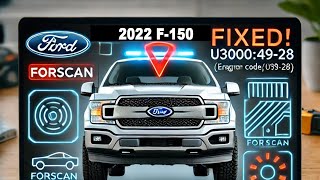
- YouTube user 'R&R' (2022 Ford F-150) — Persistent DTC U3000:49-28 in the IPMA module, which prevented a glass company from replacing the windshield due to policies against working on vehicles with camera error codes.
❌ Tried (didn't work) A standard DTC reset using FORScan would not clear the code.
✅ What actually fixed it The owner used the FORScan software to run the 'IPMA module reboot' service procedure. This successfully cleared the persistent U3000:49 code. A 'Lane Departure Warning System Camera Calibration' drive was required afterward to re-calibrate the system. - Ford F150 Forum user (2009-2014 F-150 (concept applies to 2023+)) — After installing aftermarket headlights, the front turn signals stopped working and BCM codes including U3000 were stored.
❌ Tried (didn't work) Disabling hyperflash in FORScan., Clearing codes.
✅ What actually fixed it The issue was identified as the BCM's internal FET (Field Effect Transistor) protection being permanently tripped due to a short-to-ground condition caused by the aftermarket lights. The only resolution is to replace the BCM and program the new one to the vehicle.
Model Year Variations Within This Range
- 2024-2025: The 2024 model year introduced a significant facelift. The previous base 3.3L V6 engine was dropped, making the 2.7L EcoBoost the new standard. A 12-inch center touchscreen and 12-inch digital instrument cluster became standard on all trims. The exterior features a redesigned grille and headlights. New features like the Pro Access Tailgate and a head-up display became available.
- 2025: A specific false code can appear on 2025 models. TSB SSM 53319 notes that DTC U3000:42 may be set in the Audio Control Module (ACM) during a self-test without any actual fault being present. The official procedure is to clear the code and disregard it if no symptoms are present.
Helpful Videos
We Have This Part in Stock




The information in this article is provided for general reference and educational purposes only. Vehicle specifications, procedures, and part compatibility can vary by production date, trim level, and region. Always consult your vehicle's factory service manual and verify part numbers before purchasing or performing repairs. Safety-critical components such as airbags, seat belts, and braking systems should be installed by a qualified professional.
- Ford F-150:
- 🎬 Helpful Videos
- 🛍️ Shop This Part
- What's Unique About the 2023-2025 Ford F-150
- Diagnostic Flowchart
- Symptoms You May Notice
- Most Likely Causes
- Rare But Worth Checking
- Diagnosis Steps
- Parts You'll Likely Need
- Related Codes That Often Appear With This One
- Technical Service Bulletins (TSBs) & Recalls
- Platform-Specific Known Issues
- Hidden / Shadow Codes Worth Checking
- Scan Tool Commands That Help
- Wiring & Ground Locations
- Real Owner Repair Stories
- Model Year Variations Within This Range
- 🎟️ Get 5% Off