

U3000 on 2015-2022 Ford F-150: Meaning, Causes, and Fixes for Module Faults
U3000 on a Ford F-150 indicates a fault in a specific control module, not a single problem. The most common causes are low battery voltage or a software glitch requiring a dealer update. Check the battery first before assuming a module has failed. Advanced DIYers can use tools like FORScan to read the critical suffix codes and sometimes reset modules, but many fixes require dealer-level software.
- U3000 is a generic code; you MUST know which module it's in and the 2-digit suffix for accurate diagnosis.
- Always test the 12V battery first. A weak battery is the most common and cheapest fix for this code.
- Do not replace any control module without checking for available software updates from Ford.
- This code often affects safety systems. Professional diagnosis is strongly recommended.
- The fix could be as simple as a new battery or as complex as a module replacement costing over $1,500.
What's Unique About the 2015-2022 Ford F-150

On modern, electronically complex trucks like the 13th and 14th generation F-150, the U3000 code is frequently a symptom of another issue rather than a failed part. Ford has issued multiple Technical Service Bulletins (TSBs) showing that low battery voltage during startup can trigger a U3000 code in the power steering module (SSM 50484, updated by SSM 51226), and software glitches can cause it in the cruise control and camera modules (SSM 48049, TSB 23-2146). This means that unlike older vehicles, the first step is often checking the battery and for software updates, not replacing the module itself. Many owners report that simply charging the battery or replacing an aging one resolves the issue, especially for steering-related faults.
Diagnostic Flowchart

Tap your situation to follow the diagnostic path that matches what you're seeing on this vehicle.
Generation note: This guide covers the 13th generation (2015-2020) and 14th generation (2021-2022) Ford F-150. While the general meaning of U3000 is the same, many TSBs are specific to certain year ranges and modules. For example, issues with the Image Processing Module (IPMA) and Vehicle Dynamics Module (VDM) are more documented on the newer 2021-2023 models. The power steering low voltage issue (U3000:96) is also heavily documented in TSBs for 2021-2023 models.
Symptoms You May Notice

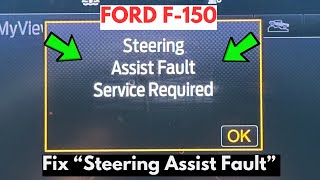
- "Steering Assist Fault" message on the 🎬 Watch: Troubleshooting the Steering Assist Fault on your F-150.dash.
- Loss of power steering, especially on startup or after hitting a bump.
- "Collision Warning Not Available" or "Adaptive Cruise Fault" message.
- Illuminated ABS or Traction Control warning light.
- Illuminated airbag warning light.
- Driver-assist features like lane-keeping or pre-collision assist are inoperative.
- "Front Camera Fault Service Required" message.
- A single 'click' noise when trying to start, with no crank, even with a seemingly good battery.
- Replacing a control module without first checking battery voltage and for available software updates. Many modules are replaced unnecessarily when the root cause was a weak battery or a simple programming fix.
- Ignoring the 2-digit suffix code. Replacing the wrong module because the specific fault location was not identified.
- Clearing the code without fixing the root cause. A U3000 code related to a safety system will almost always return if the underlying problem (weak battery, bad connection, software bug) is not resolved.
Most Likely Causes
- Low Battery Voltage 🔴 High Probability Modern F-150s have a high electrical demand with many modules sensitive to voltage drops. During engine start, voltage can dip below the 8-volt threshold for some modules, causing them to set a fault code. This is explicitly mentioned in Ford TSBs SSM 50484 and SSM 51226 for the Power Steering Control Module (PSCM). Forum users frequently report that a weak or old battery is the root cause for steering faults, which are resolved with a new, fully charged AGM battery and a Battery Management System (BMS) reset.
How to confirm: Test the 12V battery with a multimeter or electronic battery tester. A resting voltage below 12.4V is a sign of a weak charge. Check the voltage during engine cranking; a significant drop below 9.5V indicates a weak battery. Ford TSBs note that a dip below 8V can trigger the fault in the PSCM.
Typical fix: Charge or replace the 12V battery, preferably with a high-quality AGM type. After replacement, it is critical to perform a BMS (Battery Management System) reset so the truck's charging strategy adapts to the new battery. This can be done with a tool like FORScan or by a dealer. The codes in the affected module may then need to be cleared.
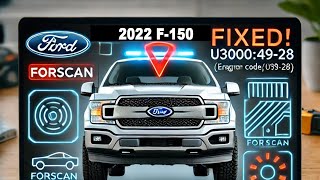
Est. part cost: $150-$400 - Module Software/Firmware Glitch 🔴 High Probability Ford has released several TSBs to fix U3000 codes with a simple software update. For example, TSB SSM 48049 addresses U3000:49 in the Cruise Control Module (CCM). TSB 23-2146 addresses U3000:49 in the Image Processing Module A (IPMA) 🎬 Watch: How to clear U3000:49 codes using FORScan software., which can sometimes be cleared by a module reset using FORScan or FDRS.
How to confirm: Check for open TSBs related to the specific module and suffix code stored in your truck. This requires a dealer, a shop with access to Ford's service information, or searching online TSB databases. A tool like FORScan can also read module firmware versions to see if an update is available.
Typical fix: Reprogramming the affected module using the Ford Diagnostic & Repair System (FDRS). This is typically a dealer or specialty shop repair. In some cases, a module reset or recalibration via FORScan can resolve the issue, as shown by some owners with IPMA faults.
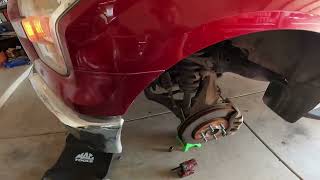
Est. part cost: $0 (if under warranty) - $200 (dealer programming fee) - Internal Module Failure 🟡 Medium Probability This is the default meaning of the code when other causes are ruled out. The module itself has an internal electronic failure, often due to heat, vibration, or age. This can affect any module, but forum discussions show the ABS module and the steering rack (which contains the PSCM) are common failure points 🎬 See this walkthrough for replacing the steering rack and pinion. requiring full replacement, especially after physical impact from an accident.
How to confirm: After confirming good battery voltage, correct software, and intact wiring, the module itself is condemned. This is a process of elimination. For the PSCM, a failure is often indicated if the steering fault persists after a restart and the battery is known to be good.
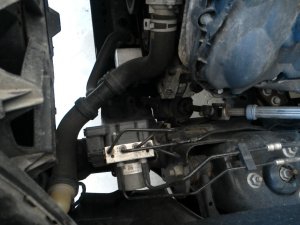
Typical fix: Replace the faulty control module (e.g., PSCM/steering rack, ABS module, CCM) and program the new module to the vehicle. This is an expensive repair. For an ABS module, owners report costs from $1,200 to over $3,000 at a dealer.
Est. part cost: $400-$2000+
Rare But Worth Checking
- Incorrectly Programmed Instrument Panel Cluster (IPC): On F-150s imported from Canada to the U.S., the instrument cluster may have been improperly reprogrammed to show miles instead of kilometers. This can cause a persistent U3000 DTC in the IPC due to a checksum error, which can disable features like Adaptive Cruise Control. The fix requires correctly reprogramming the cluster's EEPROM, not just a simple setting change.
- Wiring Connection Issue at Module: TSB 23-2146 notes that a poor coaxial cable connection between the IPMA camera and the IPMA module can cause a U3000:49. The fix involves inspecting, reconnecting, and securing the connectors. In another case, water intrusion into the steering rack wiring from driving through puddles was blamed for a steering failure.
- Clock Spring Failure: While less common on the F-150, a failing clock spring in the steering column can disrupt communication with steering wheel-mounted controls and the steering angle sensor, potentially leading to a U3000 code in the PSCM or other related modules.
Diagnosis Steps
- Connect a professional-grade scan tool capable of reading Ford-specific codes from all vehicle modules (e.g., FORScan with a compatible adapter, or a high-end shop scanner).
- Perform a full network scan and identify the exact module(s) that has stored the U3000 code.
- Record the 2-digit suffix code (e.g., :49, :96, :48). This is critical for diagnosis.
- Thoroughly test the 12V battery. This includes a voltage check at rest (should be >12.4V), during cranking (should not drop below 9.5V), and checking the charging voltage when running (should be ~13.5-14.7V).
- If the battery is over 3-4 years old or fails a load test, replace it. Perform a BMS reset after replacement.
- If the battery is healthy, search for Technical Service Bulletins (TSBs) that match your vehicle's year, the affected module, and the specific suffix code.
- If a TSB indicates a software update, the vehicle must be taken to a dealer or qualified shop for reprogramming with FDRS.
- If no TSBs apply, inspect the wiring harness and electrical connector at the affected module for any signs of damage, corrosion, or loose pins. For IPMA codes, check the camera coaxial cable connections behind the rearview mirror.
- Using a tool like FORScan, you can attempt to run module self-tests or reset procedures (e.g., 'Reset the IPMA Learned Values') which can sometimes clear software-related faults.
- If all previous steps fail, the module itself is likely faulty and requires replacement and programming.
Parts You'll Likely Need

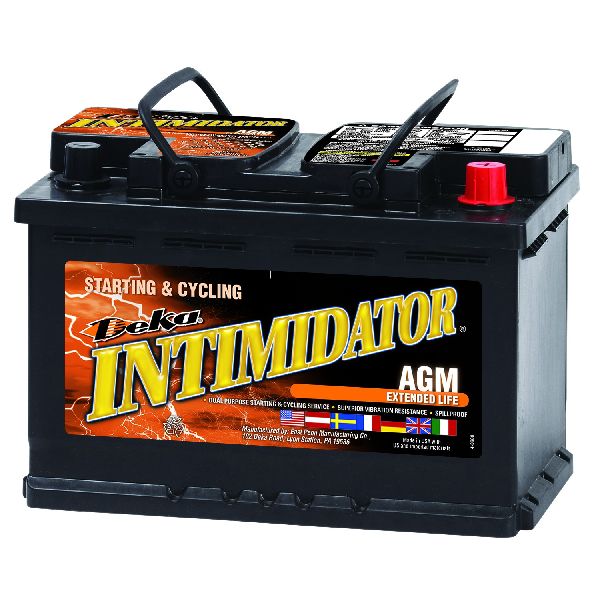
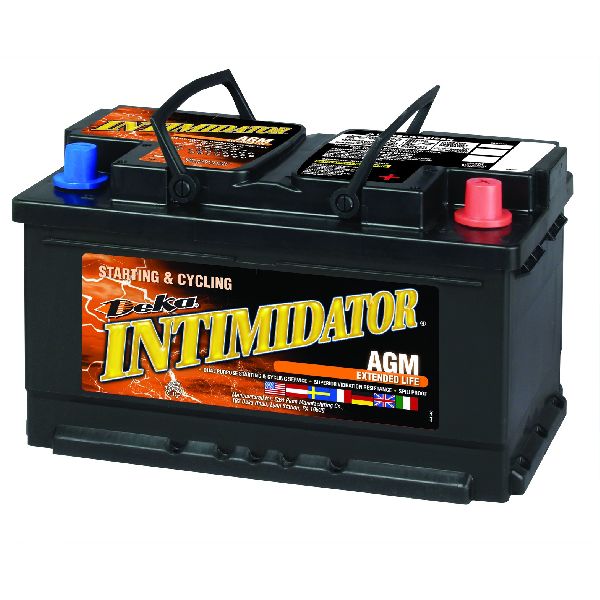
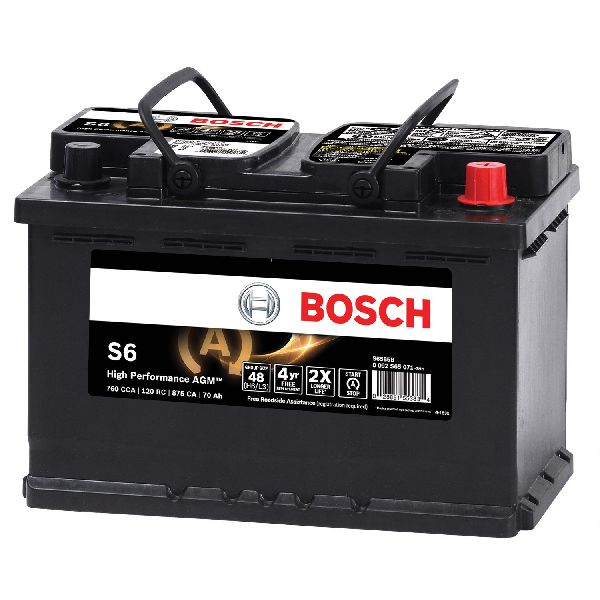
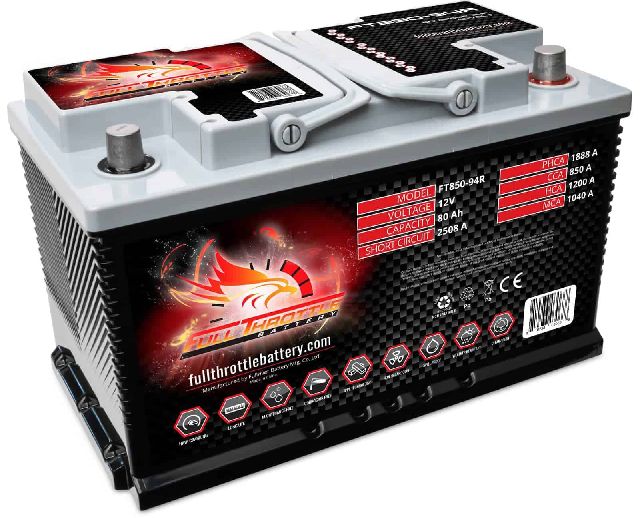
- 12V Vehicle Battery (AGM Recommended)
(OEM #Motorcraft BAGM-48H6-760 or similar)— A weak or failing battery is a primary cause of various U3000 codes, especially in the Power Steering Control Module, as noted in TSBs SSM 50484 and 51226.
Trusted brands: Motorcraft, East Penn, Odyssey
OEM price range: $200-$350
Aftermarket price range: $150-$400 - Image Processing Module A (IPMA)
(OEM #ML3Z-19H406-A (example, part number is VIN specific))— Commonly sets U3000:49 due to software glitches or internal failure, affecting cruise control and lane-keeping. Often requires reprogramming or replacement.
Trusted brands: Motorcraft
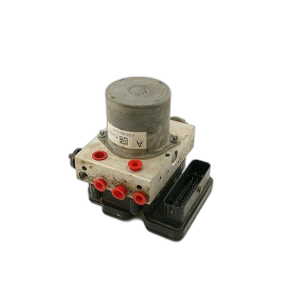
OEM price range: $400-$700 - ABS Control Module — If battery and software issues are ruled out for ABS-related U3000 codes, the module itself has likely failed. This is an expensive repair.
Trusted brands: Motorcraft
OEM price range: $1000-$1500
Aftermarket price range: $500-$1000 (remanufactured) - Steering Gear / Rack (contains PSCM) — The Power Steering Control Module (PSCM) is integrated into the steering rack. If the PSCM has an internal failure (common with U3000:96 after impact or voltage issues), the entire rack assembly must be replaced.
Trusted brands: Motorcraft
OEM price range: $1500-$2500
Aftermarket price range: $800-$1500 (remanufactured)
Related Codes That Often Appear With This One
- U3001 — Often appears with U3000, particularly in the Power Steering Control Module (PSCM). TSB SSM 50484 and SSM 51226 list U3000:96 and U3001:68/89 together as being caused by low battery voltage.
- C1001 — This code can be stored in the Image Processing Module A (IPMA) along with U3000. TSB 23-2146 mentions these codes appearing together due to connection or software issues in the front camera system.
- U3003:16 — This code for 'Battery Voltage - Circuit Voltage Below Threshold' often accompanies other module U3000 codes, reinforcing the diagnosis that a weak battery or charging system issue is the root cause.
Technical Service Bulletins (TSBs) & Recalls

- SSM 51226: Supersedes SSM 50484. Addresses U3000:96 and U3001:89 in the PSCM due to low voltage on 2021-2023 models.
- SSM 50484: Addresses U3000:96 in the PSCM due to low battery voltage on 2021 models.
- SSM 48049: Addresses U3000:49 in the CCM causing adaptive cruise faults on 2015-2017 models, fixed by reprogramming.
- TSB 23-2146: Details diagnosis for U3000:49, U3000:89, and C1001:31 in the IPMA on 2021-2023 models, pointing to wiring connection or module issues.
- SSM 49684: Addresses a non-clearing U3000:49 in the IPMA on 2021 models, fixed by resetting learned values with FDRS.
- SSM 50202: Notes U3000:48 in the ABS module on 2021 models often sets with other chassis DTCs that need to be diagnosed first.
- TSB 22-2069: Predecessor to TSB 23-2146, also addresses various IPMA software-related DTCs including U3000:49.
Platform-Specific Known Issues
- U3000:96 in the Power Steering Control Module (PSCM) on 2021-2023 models is often caused by battery voltage dropping below 8 volts on startup (TSB SSM 51226). A battery replacement and BMS reset is the first step.
- U3000:49 in the Cruise Control Module (CCM) on 2015-2017 models can cause the adaptive cruise and collision warning to become unavailable, and is often fixed by a software update (TSB SSM 48049).
- U3000:48 in the ABS module on 2021 models often sets with other chassis codes, which must be diagnosed first (TSB SSM 50202).
- U3000:49 in the Image Processing Module A (IPMA) on 2021-2023 models can be caused by a software issue or a poor camera connection. TSB 23-2146 provides a detailed diagnostic procedure for checking the coaxial cables.
- U3000:46 in the Instrument Panel Cluster (IPC) can indicate an EEPROM (memory) failure, sometimes triggered by a faulty Over-The-Air (OTA) update. The fix may require replacing the IPC if the code returns after being cleared.
Mechanic-Grade Diagnostic Values
- CAN Bus Network Resistance — expected: ~60 Ohms. Failure: A reading of ~120 Ohms indicates an open circuit or a missing terminating resistor. A reading significantly less than 60 Ohms (e.g., 40 Ohms) indicates an extra terminating resistor or a shorted wire.
- Battery Voltage During Engine Crank — expected: Should stay above 9.5V. Failure: Dipping below 8.0V can trigger U3000:96 in the Power Steering Control Module (PSCM).
- Battery Resting Voltage — expected: 12.4V - 12.7V. Failure: A reading below 12.4V indicates a weak battery that may cause sporadic module faults.
Hidden / Shadow Codes Worth Checking
- U3000:53: This is a permanent 'Control Module: Internal Electronic Failure' code stored in the Power Steering Control Module (PSCM). It often sets after the intermittent U3000:49 code has been triggered multiple times, typically due to water ingress into the steering rack electronics. (see via This code will be present on advanced scan tools (like FORScan or dealer tools). Unlike temporary codes, it cannot be cleared by a standard 'Clear DTCs' command and indicates the module has locked itself in a fault state, requiring EEPROM reprogramming or module replacement.)
Scan Tool Commands That Help
- Ford FDRS / FORScan: PSCM - Reset the Power Steering Control Module — Use this command to clear the U3000:96 and U3001:89/68 codes after a low battery voltage event has been corrected. The codes may not clear with a standard DTC erase function. This is specified in Ford TSBs SSM 51226 and SSM 49530.
- Ford FDRS / FORScan: IPMA - Reset the Image Processing Module A (IPMA) Learned Values — Use this to resolve a persistent U3000:49 in the IPMA, especially after a windshield replacement or when TSB 23-2146 applies. This function performs a deeper reset than a simple code clear.
- Ford FDRS / FORScan: IPMA - Image Processing Module A (IPMA) Alignment — This must be run immediately after the 'Reset Learned Values' command or after replacing the IPMA. It calibrates the camera to the vehicle.
- FORScan: Save and Load PSCM As-Built Data — When replacing the steering rack (PSCM), you must save the As-Built configuration data from the original module before removal. After installing the new module, you load this data into the new PSCM to ensure it is correctly configured for the vehicle's options.
Wiring & Ground Locations
- Body-to-Frame Ground — On the passenger side frame rail, below the front door area. It is a braided cable from the body to the frame.. This ground is highly susceptible to corrosion. A poor connection here can cause a host of intermittent communication and module errors across the vehicle, mimicking module failure. A technician highlighted this as a common overlooked issue on 2017-2020 F-150s.
- G200 — Behind the bottom of the right-hand (passenger side) cowl panel/kick panel.. This is a major interior ground point. Many modules in the cabin, including the BCM, rely on this ground. A loose or corroded connection here can cause widespread network issues.
- IPMA Connector C242F — The main electrical connector at the Image Processing Module A (IPMA) located behind the rearview mirror.. TSB 23-2146 specifically identifies poor connections at this coaxial connector as a cause for U3000:49 in the IPMA.
Real Owner Repair Stories
- YouTube user 'Fix it Angel' (2022 Ford F-150) — Persistent U3000:49 in the IPMA (Image Processing Module) after a windshield replacement. A Ford dealer attempted to fix it but could not clear the code.
❌ Tried (didn't work) Standard DTC reset by a Ford dealer.
✅ What actually fixed it The owner used FORScan to run the 'IPMA module reboot' service procedure. This successfully cleared the U3000:49 code, leaving only a 'Missing Calibration' code. He then performed the 'IPMA lane departure warning system camera calibration' procedure by driving on a well-marked road, which resolved the final code. - F150 Forum user 'No11or' (2021 F-150 King Ranch) — After an accident and suspension repair on the left side, an 'Adaptive steering fault' message with code U3000:96 was present. Power steering functioned, but drive modes were unavailable.
❌ Tried (didn't work) Replacing suspension components., Clearing codes.
✅ What actually fixed it The diagnosis concluded that the steering rack (which contains the PSCM) was internally damaged from the accident's impact, transferred through the tie rod. The different steering angle values from left to right (29° vs 36°) supported this diagnosis. The fix was to replace the entire steering rack assembly.
"I Checked Everything" — The Actual Cause
- In the context of a U-code, the equivalent of a 'smoke test clean' scenario is when the battery tests good and all software is up to date, yet the fault persists. A documented case on a 2022 F-150 with a U3000:49 in the IPMA showed that even a dealer's tools couldn't clear the code. The actual cause was a deep software glitch that required a specific 'Module Reboot' service function via FORScan, which is a more forceful reset than a standard code clear. The fault was not a failed part, but a software state that common diagnostic procedures couldn't resolve.
OEM Part Supersession History
JL3Z-3504-E, JL3Z-3504-L, KL3Z-3504-D→KL3Z-3504-S— Part revision and consolidation for the EPAS (Electronic Power Assisted Steering) rack, which includes the PSCM.
Heads up: This part number series is specific to the 13th generation F-150 and is not compatible with 2011-2014 models, which use a different series rack (e.g., EL3Z-3504-BF).
Model Year Variations Within This Range
- 2017-2020 (Varies by configuration): On some configurations within this range, the Transmission Control Module (TCM) is a separate module located on the passenger side frame rail. On others (typically later models), the TCM function is integrated directly into the Powertrain Control Module (PCM). This is critical for network diagnostics, as a separate TCM has its own power, ground, and network connections that could be a point of failure.
- 2015-2020: The electronic power steering rack part numbers were superseded multiple times. Racks for 2015-2017 models have different part numbers than those for 2018-2020 models, indicating internal revisions. When replacing, the exact part number for the vehicle's VIN and options must be used, followed by programming.
Helpful Videos
Used OEM Parts in Stock




New Aftermarket Parts Available


The information in this article is provided for general reference and educational purposes only. Vehicle specifications, procedures, and part compatibility can vary by production date, trim level, and region. Always consult your vehicle's factory service manual and verify part numbers before purchasing or performing repairs. Safety-critical components such as airbags, seat belts, and braking systems should be installed by a qualified professional.
- Ford F-150:
- 🎬 Helpful Videos
- 🛍️ Shop This Part
- What's Unique About the 2015-2022 Ford F-150
- Diagnostic Flowchart
- Symptoms You May Notice
- Most Likely Causes
- Rare But Worth Checking
- Diagnosis Steps
- Parts You'll Likely Need
- Related Codes That Often Appear With This One
- Technical Service Bulletins (TSBs) & Recalls
- Platform-Specific Known Issues
- Mechanic-Grade Diagnostic Values
- Hidden / Shadow Codes Worth Checking
- Scan Tool Commands That Help
- Wiring & Ground Locations
- Real Owner Repair Stories
- "I Checked Everything" — The Actual Cause
- OEM Part Supersession History
- Model Year Variations Within This Range
- 🎟️ Get 5% Off