

U3000 on 2021-2025 Ford Explorer: Causes and Fixes for Control Module Faults
U3000 on a 2021-2025 Explorer indicates an internal fault in a specific control module, such as for the ABS, power steering, or camera systems. It is often a temporary software glitch caused by a power interruption or programming event. The fix frequently involves a dealer software update or simply clearing the code, rather than expensive part replacement. A weak battery is a primary trigger.
- U3000 is a generic 'Control Module' fault; the specific module (e.g., ABS, PSCM) and the two-digit suffix code are essential for diagnosis.
- On the 2021-2025 Explorer, this code is frequently a temporary software glitch caused by battery disconnection or programming, as confirmed by multiple Ford TSBs.
- Always check for TSBs and attempt to clear the code before assuming a costly control module has failed.
- A professional scan tool is mandatory to correctly diagnose this code and perform any necessary software updates.
- If warning lights for brakes or steering are illuminated, treat the issue as a safety priority and seek professional service promptly.
What's Unique About the 2021-2025 Ford EXPLORER

The sixth-generation Ford Explorer (2020-present) is a highly complex vehicle with numerous interconnected electronic modules. For this platform, the U3000 code appears to be particularly sensitive to software anomalies and power fluctuations. Manufacturer bulletins confirm that the code can be set erroneously in the ABS, power steering, and camera modules during events like battery disconnection or software updates, often without any actual hardware failure. This suggests many U3000 instances on these vehicles are 'ghost codes' that can be resolved without replacing parts, often stemming from a weak or failing battery.
Diagnostic Flowchart

Tap your situation to follow the diagnostic path that matches what you're seeing on this vehicle.
Symptoms You May Notice

- Anti-lock brake system (ABS) warning light illuminated
- Stability/Traction control warning indicator on
- Warning messages in the instrument cluster, such as 'Reverse Brake Assist Unavailable' or 'Service AdvanceTrac'.
- Camera display issues (blue screen, flickering, or total loss of image).
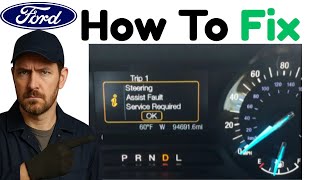
- Power steering warning messages or complete loss of power steering assist. 🎬 Watch: Troubleshooting steering assist faults and common causes.
- Multiple, seemingly unrelated warning lights appearing at once, especially after a jump-start or battery change.
- In many cases, no noticeable symptoms may be present
- Replacing an ABS module, Power Steering Control Module, or Camera Module without first checking for applicable TSBs. The problem is frequently a software issue that requires reprogramming, not a hardware failure.
- Replacing a module without first testing the vehicle's battery and charging system. A weak battery is a known cause of spurious U3000 codes on this platform.
Most Likely Causes

- Software Glitch / Erroneous Code 🔴 High Probability Multiple Technical Service Bulletins (TSBs) from Ford explicitly state that this code can be stored 'falsely' or 'erroneously' in various modules on this platform, including the ABS, PSCM, and IPMB.
How to confirm: Scan the vehicle for TSBs related to the specific module storing the U3000 code. Attempt to clear the code with a scan tool like FORScan and see if it returns without a specific trigger.
Typical fix: If a TSB exists, the fix is often to reprogram the affected module with updated software using a Ford-specific diagnostic tool (FDRS). In other cases, simply clearing the code may resolve the issue.
Est. part cost: $0 - Power Interruption During Module Operation 🔴 High Probability TSB SSM 51374 directly links a U3000:96 code in the ABS module to power interruptions (like disconnecting the battery) while the Electronic Brake Booster is active. Owners on forums report numerous electrical faults, including locked steering wheels, after a battery change.
How to confirm: Determine if the code appeared shortly after a battery replacement, jump-start, or any repair that involved disconnecting the battery. A Reddit user with a 2021 Explorer experienced a locked steering wheel and multiple errors immediately after a self-performed battery change.
Typical fix: Clear the diagnostic trouble code. If the code does not return, no further action is needed. Ensure the battery and charging system are healthy to prevent recurrence. A Battery Management System (BMS) reset may also be required.
Est. part cost: $0 - Recent Module Programming 🟡 Medium Probability TSB SSM 54399 notes that U3000:96 can be stored in the Power Steering Control Module (PSCM) on 2025 models immediately after a programming event.
How to confirm: Check if the code appeared directly after a dealer performed a software update on the PSCM or a related system.
Typical fix: The TSB advises that this code can be ignored and cleared if it appears post-programming.
Est. part cost: $0 - Failing Control Module ⚪ Low Probability While possible, the prevalence of TSBs pointing to software and temporary glitches suggests that outright module failure is a less common cause for this specific code on this vehicle generation. Hardware failure is more likely if the code returns immediately after a software update has been performed.
How to confirm: The code returns immediately after being cleared, a software update has been performed (or is not available), and all wiring/power/ground connections to the module have been verified as good. A U3000:49 (Internal Electronic Failure) is a stronger indicator of a hardware fault.
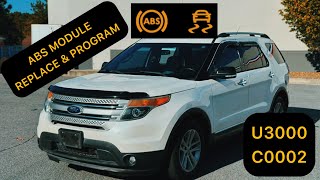
Typical fix: Replace the faulty control module and program the new module to the vehicle. This often requires dealer-level tools. 🎬 See how to replace and program a Ford ABS module.
Est. part cost: $400-$1500
Rare But Worth Checking
- Low Battery Voltage or Failing Battery: Low system voltage during startup can cause various electronic modules to fail their self-tests and set spurious internal fault codes. A Reddit user with a 2022 Explorer reported a cascade of random warning messages ('4-wheel drive fault service', etc.) and a blank touch screen, which were ultimately resolved by replacing the failing battery.
- Poor Connection or Damaged Wiring: A corroded connector or damaged wire at the specific module can interrupt power or data, mimicking an internal module fault. This is less common than software or voltage issues but should be checked before replacing a module.
Diagnosis Steps
- Test the battery and charging system. A weak battery is a very common cause of random electronic faults on this platform.
- Connect a professional-grade scan tool capable of reading Ford-specific codes from all vehicle modules (e.g., Ford FDRS, FORScan).
- Perform a full network scan and identify which specific module(s) have stored the U3000 code.
- Record the critical two-digit suffix code (e.g., :96, :42, :49) for each U3000 instance.
- Check for any related TSBs using the vehicle's year, model, and the specific module/DTC.
- Attempt to clear all codes and perform a key cycle. Rescan the vehicle to see which codes return immediately.
- If the code was triggered by a battery change, a Battery Management System (BMS) reset may be necessary.
- If a TSB indicates a software update is the fix, use a Ford Diagnostic & Repair System (FDRS) to reprogram the module to the latest calibration.
- If no TSB applies and the code persists, inspect the wiring harness and connectors for the affected module for any signs of damage, corrosion, or looseness.
- As a final step, if all previous diagnostics have been exhausted, the module itself is likely faulty and requires replacement and programming.
Parts You'll Likely Need
- Software Update — Based on multiple TSBs, the most common fix is not a physical part but a software reflash performed by a dealer or qualified shop to correct erroneous fault logic.
Trusted brands: Ford
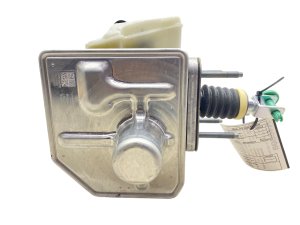
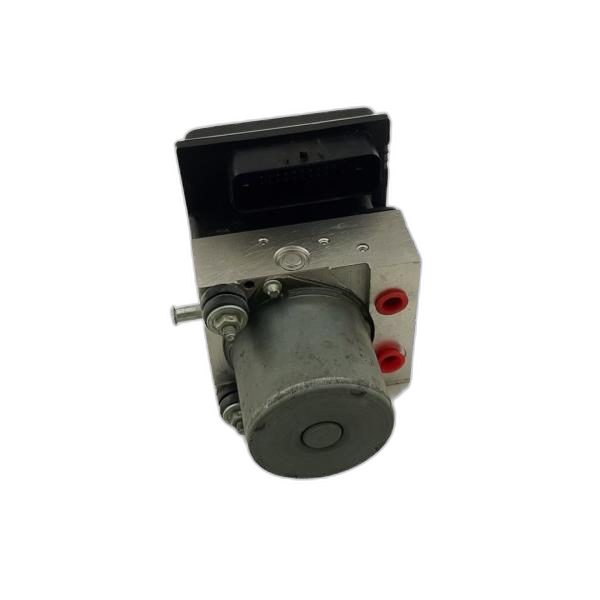
OEM price range: $150-$300 - Anti-lock Brake System (ABS) Module — Mentioned in TSB SSM 51374. While the TSB points to an erroneous code, a persistent U3000 in the ABS module after all software/wiring checks could indicate a true hardware failure.
Trusted brands: Motorcraft
OEM price range: $600-$1200
Aftermarket price range: $400-$800 - Power Steering Control Module (PSCM) — Mentioned in TSB SSM 54399. On many Ford products, the PSCM is integrated into the steering rack assembly. A hard U3000 fault in this module often requires replacing the entire steering rack.
Trusted brands: Motorcraft
OEM price range: $1200-$2000
Aftermarket price range: $800-$1500 - Image Processing Module B (IPMB)
(OEM #Causal Part: 19H405)— TSB SSM 49437 identifies this module as falsely storing U3000:42. A software update is the specified fix. However, if the code persists, the module may need replacement.
Trusted brands: Motorcraft
OEM price range: $400-$600
Related Codes That Often Appear With This One
- C1110:56 — Per TSB SSM 54399, this code may appear with U3000:96 in the Power Steering Control Module (PSCM) after a programming event.
- U0415 — TSB SSM 49437 states this code may be stored with U3000:42 in the Image Processing Module B (IPMB) and may be associated with camera display issues or a 'Reverse Brake Assist Unavailable' message.
Technical Service Bulletins (TSBs) & Recalls
- SSM 54399: Addresses U3000:96 in the PSCM after programming on 2025 models.
- SSM 51374: Addresses erroneous U3000:96 in the ABS module after a power interrupt on 2021 models.
- SSM 49437: Addresses false U3000:42 codes in the IPMB on 2020-2021 models.
Platform-Specific Known Issues
- TSB SSM 51374: Some 2020-2021 models may erroneously store DTC U3000:96 in the ABS module if there is a power interruption to the electronic brake booster (EBB), such as during a battery change. The fix is to clear the DTC with the Ford Diagnosis and Repair System (FDRS).
- TSB SSM 49437: Some 2020-2021 models built on or before 07-Dec-2020 may falsely store DTC U3000:42 in the image processing module (IPMB), which could be related to camera display issues or a 'Reverse Brake Assist Unavailable' message. The fix is to reprogram the IPMB to the latest software level.
- TSB SSM 54399: On some 2025 models, DTC U3000:96 may be stored in the power steering control module (PSCM) after a programming event. The bulletin advises this code can be ignored and cleared.
- Weak Battery Issues: Owners report that a weak or failing battery can cause a cascade of seemingly unrelated error messages and DTCs, including U3000. Replacing the battery and performing a BMS reset often resolves these issues.
Mechanic-Grade Diagnostic Values
- CAN Bus Network Resistance — expected: Approximately 60 Ω. Failure: A reading of 120 Ω indicates an open circuit or a module with a terminating resistor is offline. A reading near 0 Ω indicates a short circuit between the CAN High and CAN Low wires.
- CAN Bus Voltage (Key On, Engine Off) — expected: CAN High (Pin 6 to ground): ~2.6V - 2.7V. CAN Low (Pin 14 to ground): ~2.3V - 2.4V. The sum of both voltages should be ~5V.. Failure: Voltages that are stuck high, low, or at 0V indicate a short to power, ground, or an open circuit.
- ABS Module Power & Ground — expected: Greater than 12 Volts. Failure: Voltage significantly below 12V indicates a power supply issue to the module.
Hidden / Shadow Codes Worth Checking
- Historical (Cleared) DTCs: While not a 'shadow code' in the typical sense, Ford's diagnostic system (PTS) stores a history of recently cleared codes. A U3000 code that was recently cleared but is no longer active can still point to an intermittent wiring or connector fault. (see via This requires a dealer-level scan tool (like Ford's IDS/FDRS) with access to the Professional Technician System (PTS) to view the vehicle's DTC history.)
Scan Tool Commands That Help
- FORScan / FDRS: IPMA Local Interconnect Network new module calibration — Use this specific service function to clear a persistent U3000:49 in the Image Processing Module (IPMA) that will not clear with a standard 'Reset DTC' command, especially after a battery replacement or low voltage event.
- FORScan / FDRS: IPMA lane departure warning system camera calibration — This procedure is required immediately after performing an IPMA module reset or replacement to ensure the camera is properly aligned with the vehicle for features like Lane Keeping Assist to function correctly.
- Ford IDS / FDRS: Programmable Module Installation (PMI) — This is a critical function required when replacing a module like the ABS module. It copies the As-Built configuration data from the original module and writes it to the new one, preventing compatibility issues.
- Ford IDS: SASM module reset routine — This specific reset routine may be required to clear a U3000 code from the Steering Effort Control Module (SECM), as noted in TSBs for similar Ford platforms.
Wiring & Ground Locations
- Gateway Module (GWM) — Located under the driver's side dash, on the back side of the interior fuse box.. The GWM is the central communication hub for the various CAN bus networks. A fault here can cause widespread communication DTCs across multiple modules.
- Connector C135 (ABS Module) — The main electrical connector at the Anti-Lock Brake System (ABS) module in the engine compartment.. If U3000 is in the ABS module, checking for solid power at Pin 25 and solid ground at Pins 13 and 38 is a primary diagnostic step before condemning the module.
- Ground GD121 — This ground point serves the ABS module via pins 13 and 38 of connector C135. It is typically located on the left front fender apron.. A loose or corroded ground at this location can cause intermittent and difficult-to-diagnose faults in the ABS module, including a U3000 code.
Real Owner Repair Stories
- YouTube user 'Fix it Angel', documented on a 2022 F-150 (2022 Ford F-150 (platform with shared electronics)) — Persistent U3000:49 in the IPMA (Image Processing Module). All front camera features were inoperative. A glass company refused to replace the windshield due to the active camera code.
❌ Tried (didn't work) Standard 'Reset DTC' command using FORScan.
✅ What actually fixed it Using the FORScan software, the owner ran the specific service procedure 'IPMA Local Interconnect Network new module calibration'. This successfully cleared the code. This was followed by the 'IPMA lane departure warning system camera calibration' procedure to restore full function. - Ford F150 Forum user (Ford F-150 PowerBoost with front-end accident damage) — Adaptive steering fault message with code U3000:96 in the PSCM (Power Steering Control Module). Driving modes were unavailable. Scan tool data showed steering angle was limited on the side of the impact (29° vs 36°).
❌ Tried (didn't work) Clearing codes.
✅ What actually fixed it The consensus diagnosis was that the electric steering rack assembly was internally damaged from the physical impact of the accident. The fix required replacing the entire steering rack, as the PSCM is an integral, non-serviceable part of the assembly. - Reddit user in r/AskMechanics (2013-2015 Ford Explorer/Edge (slightly older but relevant logic)) — ABS light with code U3000 (Internal Electronic Failure) in the ABS module.
❌ Tried (didn't work) Diagnosing the ABS module itself.
✅ What actually fixed it The root cause was failing wheel bearings. The worn bearings allowed for sporadic signals from the wheel speed sensors, which confused the ABS module and caused it to set an internal failure code. Replacing the wheel bearings resolved the U3000 code.
"I Checked Everything" — The Actual Cause
- A U3000 code in the ABS module can be caused by a failing wheel bearing. A technician may perform extensive electrical checks on the ABS module and its wiring, finding no faults. The actual cause is the erratic and 'noisy' signal coming from the wheel speed sensor as it reads the mechanically failing bearing, which the module interprets as an internal fault.
When the Usual Fixes Don't Work
- While many U3000 codes on this platform are temporary software or power-related 'ghost codes', there are clear instances where it indicates a hard failure requiring expensive part replacement. For example, a U3000:96 in the Power Steering Control Module (PSCM) that persists after clearing codes, especially after a physical impact to the front suspension, often means the entire electric steering rack assembly is damaged and must be replaced. Similarly, a persistent U3000 in the ABS module, when not related to software, can be caused by a mechanically failing wheel bearing sending erratic signals, requiring bearing replacement, not just a module reflash.
OEM Part Supersession History
GL3T-19H423-AF (example)→JL3T-19H423-BD (example)— Part revisions for different model years and vehicle features.
Heads up: For the Image Processing Module (IPMB), the prefix (e.g., 'GL3T' for a 2016 model vs 'JL3T' for a 2019) and suffix letters are critical. Using a module from a different year or feature set, even if it physically fits, may not communicate with the vehicle. The generic base part number is often 19H423 or 19H405.
Model Year Variations Within This Range
- 2022-2025: Around the 2022 model year, the wiring for the 360-degree camera system began changing to a coaxial cable type, which can be more difficult to diagnose and repair than the previous wiring style.
- 2025: TSB SSM 54399 is specific to 2025 Explorer models, noting that DTC U3000:96 may be stored in the Power Steering Control Module (PSCM) after a programming event and can be cleared.
Helpful Videos
We Have This Part in Stock



The information in this article is provided for general reference and educational purposes only. Vehicle specifications, procedures, and part compatibility can vary by production date, trim level, and region. Always consult your vehicle's factory service manual and verify part numbers before purchasing or performing repairs. Safety-critical components such as airbags, seat belts, and braking systems should be installed by a qualified professional.
- Ford EXPLORER:
- 🎬 Helpful Videos
- 🛍️ Shop This Part
- What's Unique About the 2021-2025 Ford EXPLORER
- Diagnostic Flowchart
- Symptoms You May Notice
- Most Likely Causes
- Rare But Worth Checking
- Diagnosis Steps
- Parts You'll Likely Need
- Related Codes That Often Appear With This One
- Technical Service Bulletins (TSBs) & Recalls
- Platform-Specific Known Issues
- Mechanic-Grade Diagnostic Values
- Hidden / Shadow Codes Worth Checking
- Scan Tool Commands That Help
- Wiring & Ground Locations
- Real Owner Repair Stories
- "I Checked Everything" — The Actual Cause
- When the Usual Fixes Don't Work
- OEM Part Supersession History
- Model Year Variations Within This Range
- 🎟️ Get 5% Off