

U3000 on 2013-2020 Ford Explorer: Control Module Fault Causes and Fixes
U3000 on a Ford Explorer indicates a 'Control Module' failure. On 2013-2019 models, this is very often a critical power steering rack failure requiring a costly replacement. On 2020 models, it can be a less severe software glitch in the ABS, camera, or cruise control modules that may only need reprogramming.
- U3000 is a generic 'Control Module' fault; the specific module and suffix code (e.g., U3000:61 in the PSCM) are essential for diagnosis.
- On a 2013-2019 Explorer, this code is a strong indicator of a failing power steering rack, a critical safety issue that requires immediate attention.
- On a 2020 Explorer, U3000 may be a less severe software glitch in the ABS, camera, or cruise control systems that can be fixed with reprogramming or by simply clearing the code.
- Diagnosis requires a high-level scan tool that can communicate with all vehicle modules.
- Due to the potential for complete power steering loss, this code should always be considered serious and professional diagnosis is strongly recommended.
What's Unique About the 2013-2020 Ford EXPLORER

The 2013-2020 Ford Explorer spans two distinct generations, and the meaning of U3000 differs significantly between them. The fifth generation (2013-2019) is known for a dangerous and common failure of the electronic power steering rack, which sets a U3000 code. In contrast, the sixth generation (2020) is more prone to software-related issues where a U3000 code may be set erroneously in various modules and can often be fixed with a simple software update, as noted in multiple Technical Service Bulletins.
Diagnostic Flowchart

Tap your situation to follow the diagnostic path that matches what you're seeing on this vehicle.
Generation note: The 2013-2020 range covers the end of the fifth generation (2011-2019) and the start of the sixth generation (2020-present). The 5th-gen models are highly susceptible to U3000 codes related to catastrophic power steering rack failure. The 6th-gen 2020 model has several TSBs indicating U3000 can be a false or software-related code in the ABS, camera, and cruise control systems.
Symptoms You May Notice

- Complete loss of power steering, making the wheel extremely difficult to turn.
- "Power Steering Assist Fault" or "Service Advance Trac" warning message in the instrument cluster.
- Illuminated Anti-lock Brake System (ABS) and/or Stability/Traction Control warning lights.
- "Collision Warning Not Available" or "Adaptive Cruise Fault" message.
- Camera display issues or "Reverse Brake Assist Unavailable" message.
- Replacing wheel speed sensors when the ABS module has a U3000:49 code. While sensor issues can cause ABS faults, a U3000 code with an internal failure suffix specifically points to a module problem, not a sensor input problem.
- Replacing the ABS module when a failing wheel bearing is the root cause. The erratic signal from a bad bearing can trick the module into flagging itself as failed.
Most Likely Causes

- Power Steering Control Module (PSCM) / Steering Rack Failure 🔴 High Probability This is a widely documented failure on 5th generation (2011-2019) Explorers and their platform mates (Flex, Taurus). The PSCM is integrated into the electronic power steering rack assembly, and internal failure is common, often requiring replacement of the entire unit.
How to confirm: Scan the PSCM for a U3000 code with a suffix like :72. An owner complaint for a 2013 Explorer cited U3000-72. A dealership pinpoint test confirmed a U3000 code in the PSCM led to a steering gear replacement recommendation.
Typical fix: Replace the entire electronic power steering rack and pinion assembly. 🎬 Watch: How to replace a failed power steering gear assembly. The replacement part requires programming to the vehicle. 🎬 See how to program a new steering rack using FORScan. An owner of a 2016 Explorer documented this process, receiving a recommendation to replace the steering gear assembly (P/N FB5Z3504W) after a U3000 code was stored.
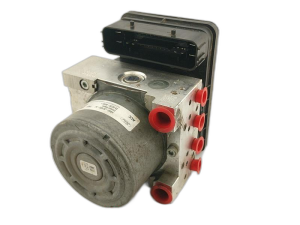
Est. part cost: $800-$1800 - ABS Module Internal Failure or False Code 🟡 Medium Probability On 2020 models, TSB SSM 51374 notes that code U3000:96 can be falsely stored in the ABS module after a power interruption. However, internal failures of the ABS module can also occur on earlier models, often with suffix :49. A company that remanufactures ABS modules notes that this failure is common on the ATE MK100 ABS unit used in many Ford models from 2015 onwards.
How to confirm: Scan the ABS module for a U3000 code. If it's a 2020 model with suffix :96, it may be a false code per TSB 51374. On other models, especially with suffix :49, it may indicate a true module failure that returns immediately after clearing.
Typical fix: For the false code on 2020 models, clear the code and see if it returns. For a confirmed internal failure, the ABS module must be replaced and programmed.
Est. part cost: $300-$700 - Cruise Control Module (CCM) Software Error 🟡 Medium Probability TSB SSM 48049 specifically addresses this on 2017-2019 models. A software glitch can cause the module to set a U3000:49 code, disabling adaptive cruise and collision warning functions.
How to confirm: Scan the CCM and find code U3000:49. Check if adaptive cruise and collision warning are inoperative and if the 'Collision Warning Not Available' message is displayed.
Typical fix: Reprogram the Cruise Control Module (CCM) with the latest software level using a Ford diagnostic tool (IDS or FDRS).
Est. part cost: $0 (if only programming is needed) - Image Processing Module B (IPMB) False Code / Software Error ⚪ Low Probability TSB SSM 49437 states that 2020-2021 models built before early December 2020 can falsely store U3000:42 in the IPMB, which may or may not be related to actual camera performance issues.
How to confirm: Scan the IPMB module and find code U3000:42. Note any camera system malfunctions or a 'Reverse Brake Assist Unavailable' message.
Typical fix: The original TSB suggested the code may be falsely stored and to clear it. It was later updated to recommend reprogramming the IPMB with the latest software to correct the condition.
Est. part cost: $0 (if only programming is needed)
Rare But Worth Checking
- Failing Wheel Bearings: A detailed Reddit thread on r/AskMechanics suggests that on 2013-2015 models, failing wheel bearings can send erratic signals to the wheel speed sensors. This sporadic signal, different from a total sensor failure, can cause the ABS module to 'blue screen' and log a U3000 code as an internal failure. This could be misdiagnosed as a bad ABS module when the root cause is a mechanical wheel bearing. 🎬 Watch: How a bad wheel bearing can trigger ABS lights.
- APIM (SYNC 3) Software Glitch: TSB SSM 46048 notes that on some 2016-2017 vehicles, DTC U3000:04 may be present in the Accessory Protocol Interface Module (APIM) without any customer-reported symptoms. In this specific case, the bulletin advises to simply clear the code.
Diagnosis Steps
- Perform a full vehicle scan with a professional-grade scanner (like Ford's IDS or FORScan) capable of reading manufacturer-specific codes from all modules.
- Identify which specific module has stored the U3000 code (e.g., PSCM, ABS, CCM, IPMB).
- Note the two-digit suffix code (e.g., :49, :61, :96). This is critical for diagnosis. For example, U3000:61 in the PSCM points to a steering gear failure, while U3000:96 in the ABS module of a 2020 model is likely a false code.
- Check for any applicable TSBs or Recalls for your vehicle's year and the specific module/code combination.
- If the code is in the PSCM (Power Steering), suspect a failing steering rack, especially on 2013-2019 models. This is a critical safety issue.
- If the code is in the CCM, ABS, or IPMB on newer models, follow TSB guidance. The fix may be a software update or simply clearing a false code.
- Before replacing any module, inspect its wiring harness, connectors, and especially ground connections for damage, corrosion, or looseness.
- If an ABS module fault (U3000) is suspected on a 5th-gen model, consider the possibility of contributing factors like failing wheel bearings sending erratic signals before replacing the expensive module.
Parts You'll Likely Need
- Electronic Power Steering Rack Assembly
(OEM #FB5Z-3504-W (superseded by FB5Z-3504-BK))— This is the most common and critical failure associated with U3000 on 5th generation Explorers. The control module (PSCM) is integrated into the rack. The part number FB5Z-3504-W was cited in an NHTSA complaint for a 2016 model. This part has been superseded multiple times, with FB5Z-3504-BK being a common replacement.
Trusted brands: Motorcraft
OEM price range: $1300-$2200
Aftermarket price range: $800-$1500 - ABS Control Module
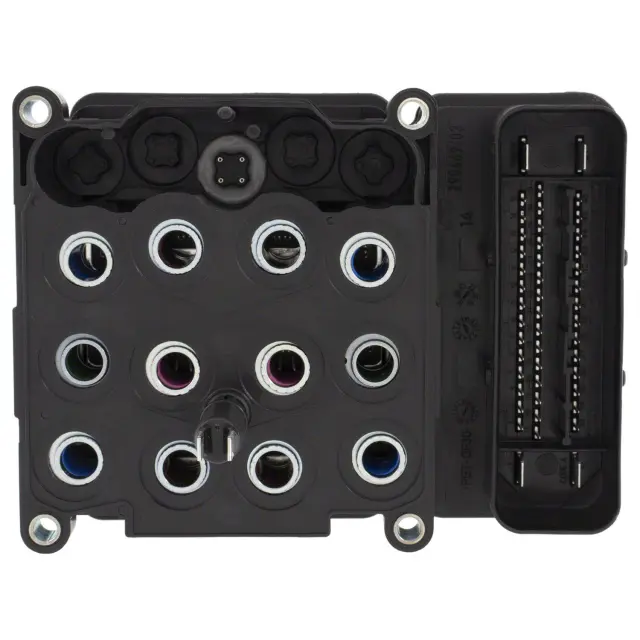
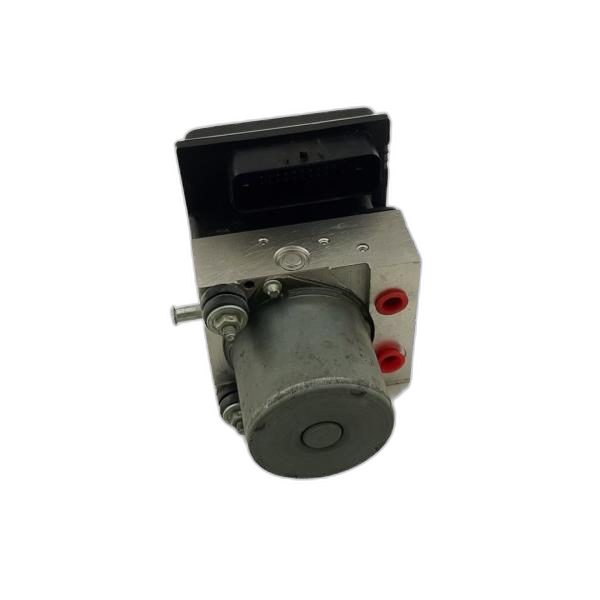
(OEM #DB53-2C219-ED (example for 2013 model))— Can fail internally, setting a U3000:49 code and disabling ABS/traction control. Part numbers are very specific to the vehicle's options (e.g., with/without adaptive cruise). An example part number for a 2013 model is DB53-2C219-ED.
Trusted brands: Motorcraft, Bosch
OEM price range: $500-$800
Aftermarket price range: $300-$600
Related Codes That Often Appear With This One
- P07AE — This code indicates the power steering motor is having to work too hard. It often appears alongside a U3000 code in the PSCM, reinforcing the diagnosis of a failing or binding steering rack.
- U0415 — This code means 'Invalid Data Received From Anti-Lock Brake System Control Module'. It can appear with a U3000 in another module, indicating the ABS module has stopped communicating correctly, which could be the root cause. TSB SSM 49437 also notes it can appear with U3000:42 in the IPMB.
Technical Service Bulletins (TSBs) & Recalls
- SSM 51374: Addresses a false U3000:96 in the ABS module of 2020-2021 Explorer/Aviator models after a power interrupt.
- SSM 48049: Addresses U3000:49 in the Cruise Control Module (CCM) on 2013-2018 models due to a software error.
- SSM 49437: Addresses a false U3000:42 in the Image Processing Module B (IPMB) on 2020-2021 Explorer/Aviator models.
- SSM 46048: Notes that U3000:04 may appear in the APIM (SYNC 3) on 2016-2017 models with no symptoms and can be cleared.
Platform-Specific Known Issues
- A widespread power steering failure on 2011-2019 Ex
Mechanic-Grade Diagnostic Values
- Battery Voltage During Engine Crank — expected: Should stay above 9.5V.. Failure: Dipping below 8.0V can trigger a spurious U3000:96 in the Power Steering Control Module (PSCM).
- CAN Bus Network Resistance — expected: ~60 Ohms between CAN High and CAN Low pins at a module connector (with battery disconnected).. Failure: A reading of ~120 Ohms indicates an open circuit or a missing terminating resistor in the network. A reading significantly below 60 Ohms suggests a short circuit.
Hidden / Shadow Codes Worth Checking
- U3000:49: Internal Electronic Failure. This is a common suffix indicating the module has detected an internal fault within its own circuitry. (see via Ford IDS, FORScan, or other professional-grade scan tools capable of reading manufacturer-specific DTCs.)
- U3000:96: Component Internal Failure. This suffix can be set by various modules, including the ABS module (per TSB SSM 51374) and PSCM, often due to low voltage events during startup. (see via Ford IDS, FORScan, or other professional-grade scan tools.)
- U3000:42: General Memory Failure. TSB SSM 49437 notes this can be falsely stored in the Image Processing Module B (IPMB) on 2020-2021 models. (see via Ford IDS, FORScan, or other professional-grade scan tools.)
- U3000:71 / U3000:72: Actuator Stuck / Actuator Position Not Learned. These suffixes in the PSCM point towards a mechanical or electrical issue within the steering gear assembly itself. (see via Ford IDS, FORScan, or other professional-grade scan tools.)
Scan Tool Commands That Help
- Ford IDS / FORScan: Programmable Module Installation (PMI) — This function is mandatory after replacing a control module, especially the Power Steering Control Module (PSCM). It copies the configuration data (As-Built data) from the old module (if possible) or downloads it from Ford's servers and writes it to the new module. Failure to perform PMI will result in a U3000 code and non-functional component.
- FORScan: PSCM Module Configuration (As-Built format) — Used to manually program the As-Built data into a new power steering rack. Users can load the factory As-Built data file for their VIN and write it to the new module to make it operational. This is a common procedure for DIY replacement.
- Ford IDS / FORScan: Clear All DTCs — After a repair or module programming, all DTCs should be cleared. For TSB-related software glitches (like U3000:96 in the 2020 ABS module), this may be the only step needed to resolve the issue.
- Launch X431 / Autel (and other pro-level scanners): Steering Angle Sensor Calibration/Reset — After replacing the steering rack and performing an alignment, the steering angle sensor must be reset. This ensures the stability control and other related systems know the straight-ahead position of the steering wheel.
Wiring & Ground Locations
- Main Power Steering Fuses — On the positive battery terminal itself. There are several high-amperage fuses integrated into the terminal assembly that supply power to the electric power steering rack.. A loss of power from a blown main fuse will cause a complete failure of the power steering system and may log communication codes. This is a non-obvious location, as many technicians would look in the under-hood fuse box first.
- PSCM Harness Ground — There is a ground bolt for the steering rack's wiring harness located on the subframe, near the steering gear itself.. A loose or corroded ground connection can cause intermittent power steering operation, communication errors, and various U-codes, including U3000. This ground should be checked for integrity before condemning the entire steering rack.
- PSCM Main Connectors — Two main electrical connectors attach to the Power Steering Control Module, which is part of the steering rack assembly. One is a large power connector, and the other is a smaller data connector.. Corrosion or damage to the pins in these connectors can interrupt power or CAN bus communication, leading to a U3000 code and loss of steering assist.
Real Owner Repair Stories
- NHTSA ODI #11301610 / CarComplaints.com (2016 Ford Explorer) — While driving 70 mph, received dash messages "lane keeping syst malfunction" and "steering assist fault," followed by a complete loss of power steering.
❌ Tried (didn't work) Restarting the car temporarily restored steering, but the failure occurred again.
✅ What actually fixed it The Ford dealership performed a pinpoint test for a U3000 code stored in the PSCM. The final repair was the replacement of the entire electric power steering gear assembly (P/N FB5Z3504W) at a cost of $2,300.
OEM Part Supersession History
FB5Z-3504-W→FB5Z-3504-BK— Part revision and update by the manufacturer.
Heads up: FB5Z-3504-BK is the service replacement for a long list of previous part numbers including FB5Z3504B, FB5Z3504F, FB5Z3504K, and FB5Z3504T. This part is specified for models WITH the automated parking system.Multiple (e.g., FB5Z-3504-A, FB5Z-3504-E)→FB5Z-3504-AK— Part revision and update by the manufacturer.
Heads up: This part number is for models WITHOUT the automated parking system. It is critical to use the correct part number based on the vehicle's options.Multiple (e.g., DB5Z-3504-D, DB5Z-3504-G)→DB5Z-3504-Q— Part revision and update by the manufacturer.
Heads up: This series of part numbers is specified for early-production 2013 models built up to 09/04/2012. It is not interchangeable with later parts.
Model Year Variations Within This Range
- 2013 (early production): Models built on or before September 4, 2012, use a different series of steering rack part numbers (e.g., DB5Z-3504-Q) than later 2013 models.
- 2016-2019: The steering rack part numbers differ based on whether the vehicle is equipped with the optional automated parking system. Part number FB5Z-3504-BK is for models with this feature, while FB5Z-3504-AK is for models without it.
- 2020: The U3000 code is more frequently associated with software glitches in modules like the ABS, CCM, and IPMA that can be fixed with reprogramming, as opposed to the catastrophic hardware failure common in earlier years.
Helpful Videos
We Have This Part in Stock




The information in this article is provided for general reference and educational purposes only. Vehicle specifications, procedures, and part compatibility can vary by production date, trim level, and region. Always consult your vehicle's factory service manual and verify part numbers before purchasing or performing repairs. Safety-critical components such as airbags, seat belts, and braking systems should be installed by a qualified professional.
- Ford EXPLORER:
- 🎬 Helpful Videos
- 🛍️ Shop This Part
- What's Unique About the 2013-2020 Ford EXPLORER
- Diagnostic Flowchart
- Symptoms You May Notice
- Most Likely Causes
- Rare But Worth Checking
- Diagnosis Steps
- Parts You'll Likely Need
- Related Codes That Often Appear With This One
- Technical Service Bulletins (TSBs) & Recalls
- Platform-Specific Known Issues
- Mechanic-Grade Diagnostic Values
- Hidden / Shadow Codes Worth Checking
- Scan Tool Commands That Help
- Wiring & Ground Locations
- Real Owner Repair Stories
- OEM Part Supersession History
- Model Year Variations Within This Range
- 🎟️ Get 5% Off