

U3000 on 2015-2022 Ford Edge: Causes and Fixes for Control Module Faults
Code U3000 on a 2015-2022 Ford Edge typically indicates an internal electronic fault in a specific control module, most commonly the ABS, power liftgate, or steering modules. In many cases documented by Ford, the fix is a software update performed by a dealer, not an expensive hardware replacement. Low battery voltage is also a frequent trigger for this code.
- U3000 means a control module has an internal fault; the first step is always to identify *which* module is affected using a proper scan tool.
- On the 2015-2022 Ford Edge, this code is very frequently caused by a software glitch in the ABS, power liftgate, or steering modules.
- Always check for applicable TSBs and test the battery's health before assuming a costly control module needs to be replaced.
- Fixing this code, whether through software or hardware, is not a typical DIY job and requires professional diagnostic equipment.
What's Unique About the 2015-2022 Ford EDGE

For the second-generation Ford Edge and its platform-mate the Lincoln MKX/Nautilus, the U3000 code is frequently linked to software glitches rather than outright hardware failure. Ford has released several Technical Service Bulletins (TSBs) acknowledging that modules controlling the ABS, power liftgate, and power steering can set this code due to software errors. This is a key difference from other vehicles where U3000 might more directly condemn the module itself. Owners often find that a dealer-performed software update is the correct and only necessary fix.
Diagnostic Flowchart

Tap your situation to follow the diagnostic path that matches what you're seeing on this vehicle.
Symptoms You May Notice

- Anti-lock brake system (ABS) warning light illuminated or flashing, often with audible chimes.
- Brake system or traction control warning lights on.
- "Service AdvanceTrac" message on the dashboard.
- Warning lights may appear intermittently, staying on for weeks at a time before disappearing, only to return later.
- Inoperative power liftgate. [Bulletin #SSM 50071]
- Power liftgate unable to unlatch or fails to close and latch properly. [Bulletin #SSM 50394, 21]
- Potential changes in steering effort or feel (if the PSCM or SECM is affected). [Bulletin #SSM 47854]
- Replacing an ABS module or other control unit when it only required a software update as per a TSB.
- Replacing the power liftgate motor or latch assembly when the Rear Gate Trunk Module (RGTM) software was the actual fault. [Bulletin #SSM 50071, 35]
- Condemning the ABS module without first load-testing the battery and checking for stable voltage.
Most Likely Causes

- Control Module Software Glitch 🔴 High Probability Ford has issued multiple TSBs (SSM 52729, 50071, 50394, 49565, 47854, 48049) for the Edge and its platform mates, indicating that software errors in the ABS, Rear Gate Trunk Module (RGTM), Steering Effort Control Module (SECM), and Cruise Control Module (CCM) are known issues that set a U3000 code.
How to confirm: A Ford dealer or a shop with advanced diagnostic tools (like Ford IDS) can check the current software calibration of the affected module against the latest available version listed in the TSBs.
Typical fix: Reprogramming the specific control module to the latest software level. This is a dealer or specialist-only repair.
Est. part cost: $0 - Low Battery Voltage or Failing Battery 🟡 Medium Probability Modern vehicles like the Edge have numerous control modules that are sensitive to voltage drops. During startup, a weak battery can cause modules to perform self-tests incorrectly, leading to spurious internal failure codes. This is a very common trigger for intermittent electronic faults.
How to confirm: Test the battery with a digital multimeter or an electronic battery tester. The voltage should be above 12.4V with the engine off. Perform a load test to check its health. A user on the Ford Edge Forum confirmed a new battery resolved their U3000:49 and U0401-68 codes after other attempts failed.
Typical fix: Charge or replace the battery. After replacement, the Battery Management System (BMS) should be reset using a scan tool to ensure proper charging and longevity.
Est. part cost: $150-$350 - Faulty Control Module ⚪ Low Probability While less common than software issues, the module itself can fail internally. The ATE MK100 ABS module used in many Fords from 2015 onwards is a known point of failure that can cause a U3000 code. TSB SSM 47235 also explicitly calls for SECM replacement for a cluster of codes including U3000.
How to confirm: This is a diagnosis of exclusion. If the battery is healthy, the software is up-to-date, and wiring is intact, the module itself is the likely culprit. A scan tool like FORScan can often directly pinpoint an internal electronic failure within the module.
Typical fix: Replace the faulty module (e.g., ABS module, RGTM) and program the new unit to the vehicle. 🎬 Watch this walkthrough on replacing and programming the ABS module. Alternatively, third-party services can repair the original module for a lower cost than a new OEM part.
Est. part cost: $400-$1200
Rare But Worth Checking
- Wiring or Connector Issue: Although less common, corrosion or damage to the wiring harness or connector for the specific module can mimic an internal failure. It's always worth a visual inspection of the module's connector and nearby ground points before replacing expensive parts.
- Failing Wheel Bearings: A user on Reddit provided a detailed account of how failing front wheel bearings on a similar platform caused a U3000 code in the ABS module. The theory is that a worn bearing allows for excessive movement, creating erratic signals from the wheel speed sensor that the ABS module interprets as an internal fault, causing it to 'blue screen' itself.
Diagnosis Steps
- Connect a high-level diagnostic scan tool (like FORScan or Ford IDS) capable of reading manufacturer-specific codes from all vehicle modules.
- Identify which specific module (e.g., ABS, PSCM, RGTM, BCM) has stored the U3000 code and note the two-digit suffix (e.g., :49).
- Check for any related Technical Service Bulletins (TSBs) based on the module and symptoms. The provided NHTSA records are an excellent starting point.
- Thoroughly test the vehicle's battery and charging system. Ensure voltage is stable (above 12.4V at rest) and perform a load test. A weak battery is a very common cause.
- If a TSB indicates a software fix, arrange for the module to be reprogrammed by a Ford dealer or qualified independent shop.
- For a U3000 in the SECM (Steering Effort Control Module), TSB SSM 47854 specifies performing an 'IDS SASM module reset routine' to clear the code.
- If no TSB applies and the battery is good, visually inspect the wiring and connectors going to the affected module for any signs of damage, corrosion, or looseness. Check the main ground connections.
- If software, battery, and wiring are confirmed to be good, the control module itself is the most likely cause of the failure. It will require replacement and programming, or can be sent to a specialist for repair.
Parts You'll Likely Need
- ABS Control Module
(OEM #DT4Z2C405F (example for 2011-2014, newer models will differ, e.g., K2GZ-2C219-A))— Often the source of U3000 codes related to brake system warnings, either due to software (per TSB SSM 52729) or internal hardware failure of the ATE MK100 unit.
Trusted brands: Motorcraft, ATE (OEM supplier)
OEM price range: $600-$1200
Aftermarket price range: $300-$800 (Remanufactured/Repaired) - Rear Gate Trunk Module (RGTM)
(OEM #F2GT-14B291-AJ (example, verify by VIN))— The cause of U3000 codes when the power liftgate is inoperative, as cited in multiple TSBs (SSM 50071, 50394, 49565). The fix is usually a reprogram, but the module can fail.
Trusted brands: Motorcraft
OEM price range: $250-$500
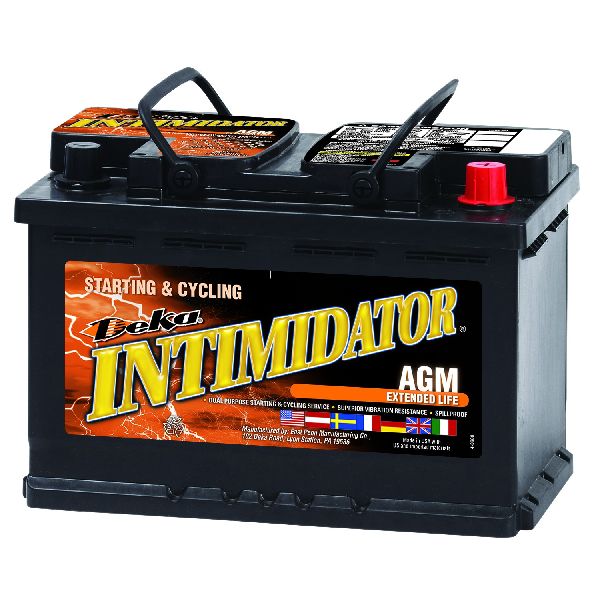
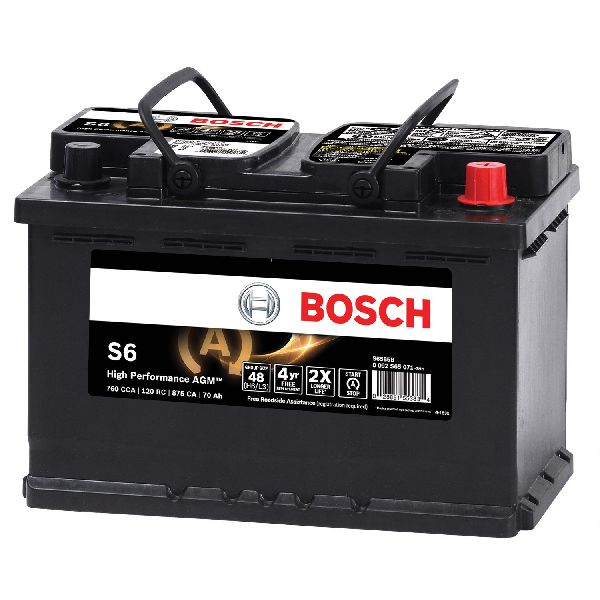
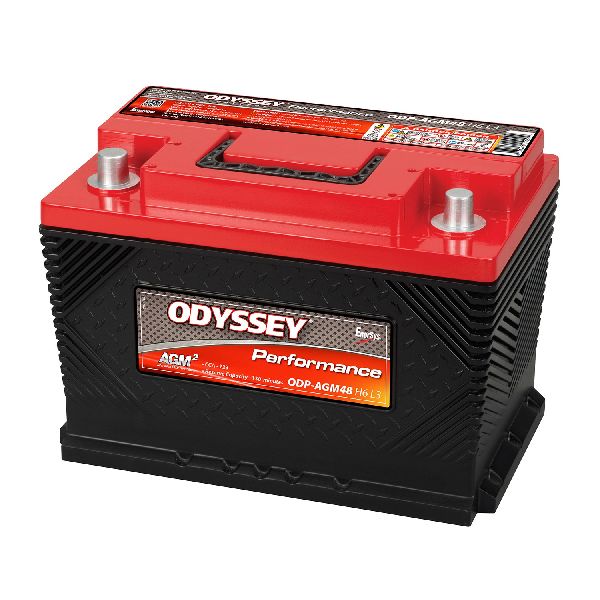
Aftermarket price range: $150-$300 (Used) - Vehicle Battery — Low or unstable voltage is a common cause of spurious electronic module faults across all systems. Always test before replacing modules.
Trusted brands: Motorcraft, Interstate, DieHard
OEM price range: $200-$350
Aftermarket price range: $150-$250
Related Codes That Often Appear With This One
- U0415 — This code, for "Invalid Data Received From Anti-Lock Brake System Control Module," is specifically mentioned alongside U3000 in TSB SSM 52729, indicating a related ABS system fault.
- P193C — This code for "Steering Wheel Angle Signal" is often seen with an ABS-related U3000 code because the ABS module processes the steering angle sensor data for the stability control system.
Technical Service Bulletins (TSBs) & Recalls
- SSM 52729: Addresses U3000:49 in the ABS module due to a software issue.
- SSM 50071: Points to RGTM software for an inoperative power liftgate.
- SSM 50394: Mentions U3000:49 in the RGTM for a liftgate that fails to unlatch, requiring a software check first.
- SSM 49565: Cites RGTM software as the cause for an inoperative power liftgate.
- SSM 47854: Details a specific reset procedure for U3000:49 in the Steering Effort Control Module.
- SSM 48049: Links U3000:49 in the Cruise Control Module to a needed software update.
- SSM 47235: Calls for SECM replacement when U3000 is present with a specific group of other DTCs.
- SSM 46048: Notes that U3000:04 in the APIM can be cleared if no other symptoms are present.
- SSM-45809: References U3000 in the SYNC 3 APIM.
Platform-Specific Known Issues
- ABS Module Software Fault: TSB SSM 52729 notes that U3000:49 in the ABS module can cause flashing warning lights. The prescribed fix is a software update, not module replacement.
- Power Liftgate Software Fault: TSBs SSM 50071, SSM 50394, and SSM 49565 all address an inoperative power liftgate, with or without code U3000:49, caused by a software issue in the Rear Gate Trunk Module (RGTM). The fix is to reprogram the module. Owners often report success after a dealer visit for this specific issue.
- Steering Module DTC: TSB SSM 47854 describes U3000:49 appearing in the Steering Effort Control Module (SECM) on 2016-2019 Edge models. The fix is not replacement, but to perform the 'IDS SASM module reset routine' using a dealer scan tool.
Mechanic-Grade Diagnostic Values
- CAN Bus Voltage (High-Speed CAN) — expected: CAN High: 2.5V recessive, 3.5V dominant. CAN Low: 2.5V recessive, 1.5V dominant.. Failure: Voltages stuck high or low, or no differential between CAN High and CAN Low indicates a bus or module communication failure.
- CAN Bus Termination Resistance — expected: Approximately 60 Ohms between CAN High and CAN Low pins at the DLC with the battery disconnected.. Failure: A reading of 120 Ohms suggests one of the two terminating resistors (often in the BCM or IPC) is not seen by the network. An open or shorted reading indicates a wiring fault.
- Module Power Supply Voltage (ABS Freeze Frame Data) — expected: Should be stable and close to battery voltage, typically 12.5V to 14.5V when running.. Failure: A significant voltage drop recorded at the time of the fault (e.g., below 11.5V) points towards a battery or charging system issue as the root cause.
Hidden / Shadow Codes Worth Checking
- U3000:49-68: The '-68' status byte indicates a 'Previously Set DTC - Not Present at Time of Request'. This means the fault was recorded in the past but was not active during the current scan. This is common for intermittent issues like voltage drops on startup. (see via Advanced scan tools like FORScan or Ford IDS display these two-digit status bytes after the main code.)
- U3000:49-28: The '-28' status byte indicates 'DTC Present at Time of Request - Previously Cleared'. This suggests a persistent fault that returns immediately after being cleared. (see via Advanced scan tools like FORScan or Ford IDS.)
- U3000:4A: This subtype indicates an 'Incorrect Component Installed'. The Restraints Control Module (RCM) sets this if it detects a device that is not part of its stored configuration, which can happen after incorrect part replacement or if the new module wasn't programmed. (see via Advanced scan tools like FORScan or Ford IDS.)
Scan Tool Commands That Help
- FORScan/Ford IDS: ABS Module Self-Test — To command the ABS module to perform an internal check. This can help confirm if the U3000 code is hard-set or intermittent. It often includes cycling the pump and valves, which can be heard.
- FORScan/Ford IDS: RGTM - Power Liftgate Calibration — After replacing or reprogramming the Rear Gate Trunk Module (RGTM), this procedure is required to teach the module the fully open and closed positions of the liftgate.
- FORScan/Ford IDS: SASM - Steering Angle Sensor Module Reset/Calibration — As specified in TSB SSM 47854 for the SECM, this routine can clear a U3000 code. It's also necessary after steering or suspension work to re-center the steering angle sensor, which provides critical input to the ABS and stability control systems.
- FORScan/Ford IDS: PSCM - Load Factory AB — When programming a new Power Steering Control Module (PSCM), this function downloads the vehicle's original 'As-Built' data from Ford's servers and writes it to the new module, ensuring it is configured correctly for the vehicle's specific options.
Wiring & Ground Locations
- Front Bumper Grounds — Located on the frame rails behind the front bumper cover, on both the driver and passenger sides.. These are primary grounding points for the main engine bay wiring harness, which provides grounds for multiple modules including the ABS control module and PCM. Corrosion or looseness here can cause widespread, intermittent electronic issues.
- RGTM Connector Pin 2 — Pin 2 on the main connector for the Rear Gate Trunk Module, located in the trunk area.. A technician documented a case on a 2019 Edge where the female pin terminal inside the connector for Pin 2 had lost tension or broken, causing an intermittent connection to the RGTM. This resulted in an inoperative liftgate and DTCs, mimicking a failed module. The fix was to replace the single pin terminal, not the entire module.
- ABS Module Fuses — In the under-hood fuse box. For 2015+ models, these are typically large J-case fuses. For example, on a 2019 Edge, fuses F32 (40A) and F34 (30A) in the Battery Junction Box supply power to the ABS module valves and pump respectively.. While a blown fuse is a straightforward failure, poor contact or corrosion at these high-amperage fuses can cause intermittent voltage drops to the ABS module under load, potentially triggering a U3000 code before the fuse fully fails.
Real Owner Repair Stories
- Ford Edge Forum user 'tuxnet' (2013 Ford Edge (Gen 1.5, but relevant ATE MK100 ABS module)) — ABS, brake, and traction control lights on. DTCs U3000:49 in ABS, P193C (Steering Angle Signal), and U0418 (Invalid Data from Brake Module).
❌ Tried (didn't work) Dealer diagnosis suggested replacing the ABS module for a high cost.
✅ What actually fixed it The owner purchased a used ABS module (Part DT43-2C405) from eBay. A local mechanic installed and programmed the used part, which cleared all codes and restored normal function. This confirmed the original ABS module had an internal hardware failure. - Ford Edge Forum user 'dseven' (Ford Edge (year not specified, but Gen 1 or 1.5)) — ABS and Service AdvanceTrac lights on. DTCs U3000:49 and U0401-68.
❌ Tried (didn't work) Initial diagnosis pointed towards the ABS module itself.
✅ What actually fixed it Replacing the vehicle's battery resolved all symptoms and codes. The owner noted the old battery was several years old, and the voltage drop during startup was the likely cause of the module setting an internal failure code. - YouTube channel 'MACTFORDEDGE' (2019 Ford Edge) — Intermittent, inoperative power liftgate. DTC B1452:13 (Rear Trunk Latch Ajar) was present, and the RGTM would not pass a self-test.
❌ Tried (didn't work) Following standard pinpoint tests which did not identify the issue.
✅ What actually fixed it A visual inspection of the RGTM connector revealed that the female terminal for pin 2 was damaged and not making a connection. The technician replaced the single pin terminal within the connector, which restored full liftgate functionality. The root cause was a wiring connector problem, not a faulty module.
Model Year Variations Within This Range
- 2019-2022: The 2019 model year introduced a significant mid-cycle refresh for the Ford Edge, including updated exterior styling, a new 8-speed automatic transmission, and substantial changes to the electrical architecture and driver-assist systems. This can lead to differences in module part numbers, software versions, and wiring compared to the 2015-2018 models. For example, the SYNC 3 system and associated modules may have different hardware and software. It is critical to verify part numbers and TSB applicability by VIN, especially around this model year split.
Helpful Videos

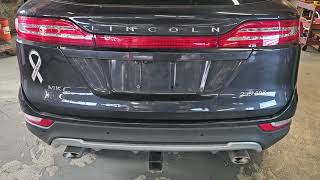
Used OEM Parts in Stock


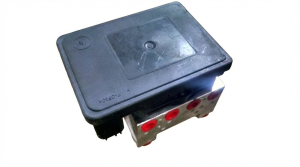

New Aftermarket Parts Available


The information in this article is provided for general reference and educational purposes only. Vehicle specifications, procedures, and part compatibility can vary by production date, trim level, and region. Always consult your vehicle's factory service manual and verify part numbers before purchasing or performing repairs. Safety-critical components such as airbags, seat belts, and braking systems should be installed by a qualified professional.
- Ford EDGE:
- 🎬 Helpful Videos
- 🛍️ Shop This Part
- What's Unique About the 2015-2022 Ford EDGE
- Diagnostic Flowchart
- Symptoms You May Notice
- Most Likely Causes
- Rare But Worth Checking
- Diagnosis Steps
- Parts You'll Likely Need
- Related Codes That Often Appear With This One
- Technical Service Bulletins (TSBs) & Recalls
- Platform-Specific Known Issues
- Mechanic-Grade Diagnostic Values
- Hidden / Shadow Codes Worth Checking
- Scan Tool Commands That Help
- Wiring & Ground Locations
- Real Owner Repair Stories
- Model Year Variations Within This Range
- 🎟️ Get 5% Off