

U3000 on 2011-2014 Ford Edge: ABS Module Failure Causes and Fixes
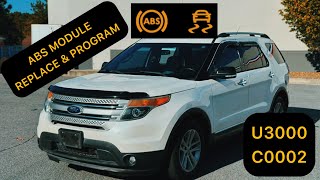
On a 2011-2014 Ford Edge, code U3000 almost always points to an internal failure of the ABS control module. This requires replacing the module and programming the new one. Expect to pay $700-$1200 for a professional repair. Sending the original module for repair is a cheaper alternative.
- Code U3000 on a 2011-2014 Edge is a strong indicator of a failed ABS control module, specifically with a ':49' suffix.
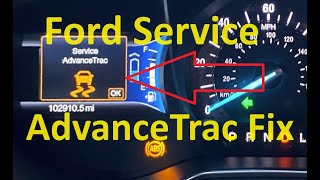
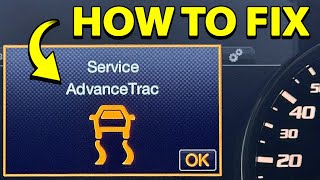
- Symptoms include the ABS, traction control, and 'Service AdvanceTrac' warning lights.
- Before replacing the module, always test the vehicle's battery, as low voltage can sometimes trigger this code.
- Replacement of the ABS module requires professional installation or an advanced DIYer with FORScan, as it must be programmed and the brake system must be properly bled.
- The OEM part number for the ABS module assembly is DT4Z-2C405-F, which replaces older versions.
- Sending the original electronic module out for repair is a popular, cost-effective alternative that avoids the need for reprogramming.
What's Unique About the 2011-2014 Ford Edge

The first-generation Ford Edge, particularly in these post-facelift years, is known for having the U3000 code point directly to a failed ABS control module. While on other vehicles this code can be ambiguous, on the 2011-2014 Edge it's a strong indicator of a hardware failure within the ATE MK100 ABS unit. This failure is so common that it's the immediate suspect when the 'Service AdvanceTrac' light appears alongside ABS and traction control warnings. Unlike later model years where software updates were issued to fix U3000 codes, this generation's issue is almost always the physical module itself.
Symptoms You May Notice

- Illuminated ABS warning light
- Illuminated traction control (skid) light
- "Service AdvanceTrac" message on the dashboard
- Illuminated red brake warning light
- In some cases, the speedometer may stop working if the ABS module is not relaying wheel speed data.
- Replacing wheel speed sensors. While wheel speed sensor codes (like C0001-C0004) often accompany U3000, they are usually a symptom, not the cause. When the ABS module fails, it can no longer properly communicate with the sensors, generating secondary codes. If U3000:49 is the primary, persistent code, the fault is almost certainly in the module itself.
Most Likely Causes

- Internal Failure of the ABS Control Module 🔴 High Probability The ATE MK100 ABS module used in this generation of Edge is known to have a high failure rate of its internal electronic components. The code U3000:49 is a direct indicator of this internal fault, which instantly returns after being cleared.
How to confirm: Use a Ford-specific scan tool (like FORScan) to read codes from the ABS module. If U3000:49 is present and returns immediately after being cleared, the module has failed its internal self-test and is defective. This is often accompanied by a host of communication codes with other modules that rely on the ABS system.
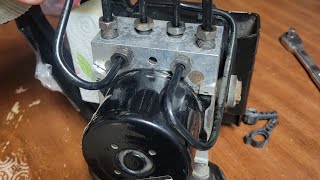
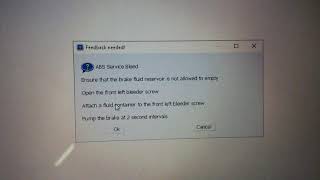
Typical fix: Replace the entire ABS module and pump assembly, or just the electronic module. The new/used module must be programmed to the vehicle. The brake system must then be bled using a scan tool to cycle the ABS pump. 🎬 Watch: How to perform a proper ABS brake bleed Alternatively, the original module can be removed and sent to a specialist for repair, which often doesn't require reprogramming upon reinstallation.
Est. part cost: $400-$900 - Low or Unstable Battery Voltage 🟡 Medium Probability Modern control modules are sensitive to voltage. A weak or failing battery can cause modules to glitch and throw communication or internal fault codes during startup. Before condemning the expensive ABS module, a battery test is a crucial and inexpensive first step.
How to confirm: Test the battery's health with a multimeter or a dedicated battery tester. A healthy battery should read above 12.4V with the engine off and maintain voltage above 10V during cranking. Check battery terminals for corrosion and tightness. A user on fordedgeforum.com confirmed that replacing an aging battery resolved their U3000:49 and U0401-68 codes.
Typical fix: Replace the failing battery and clean the battery terminals. Reset the Battery Monitoring System (BMS) using a scan tool after replacement.
Est. part cost: $150-$250
Rare But Worth Checking
- Failing Wheel Bearing / Wheel Speed Sensor: A Reddit thread for the related Ford Explorer platform suggests that a failing wheel bearing can send erratic, noisy signals from the integrated wheel speed sensor. The theory is that this 'junk' data, which is different from a simple loss of signal, can overwhelm the ABS module, causing it to fault and set a U3000 code. This is less common than outright module failure but is worth considering if you also have symptoms of a bad wheel bearing (grinding or humming noise from a wheel) or if replacing the ABS module does not fix the issue.
Diagnosis Steps

- Connect a professional-grade scan tool or a capable DIY tool like FORScan with an adapter.
- Scan the ABS module for codes. Note if U3000 is present, and specifically if it has the :49 suffix.
- Check for any other codes in the ABS, PCM, or other modules. Document all of them.
- Fully charge and load test the vehicle's battery. A weak battery is a known cause of spurious module codes. Ensure voltage is stable and above 12.4V at rest.
- Clear all codes.
- Cycle the ignition and drive the vehicle a short distance. Re-scan. If U3000:49 returns immediately, this confirms a hard internal fault in the ABS module.
- If the code does not return, the issue might be intermittent or voltage-related. Inspect the wiring harness and the main connector at the ABS module for any visible damage, corrosion, or loose pins.
- If the battery and wiring are confirmed good, but the U3000:49 code persists, the ABS module is the confirmed failure point.
Parts You'll Likely Need
- ABS Control Unit and Pump Assembly
(OEM #DT4Z-2C405-F (supersedes DT4Z-2C405-A))— This is the component that fails internally, causing the U3000 code on this specific vehicle. The part number on the module itself (e.g., DT43-2C405-EB) may differ from the orderable Ford part number (DT4Z-2C405-F).
Trusted brands: Motorcraft (Ford OEM), ATE (OEM supplier), Cardone (Remanufactured)
OEM price range: $700-$1000
Aftermarket price range: $400-$800 (Remanufactured)
Related Codes That Often Appear With This One
- C0001-C0004 — These codes relate to wheel speed sensor circuits with the ':49' suffix indicating an internal electronic failure related to that circuit. They often appear alongside U3000 because when the ABS module's processor fails, it can no longer properly communicate with or interpret data from the wheel speed sensors, logging them as faulted as well.
- P193C — This code relates to 'Steering Angle Signal'. The stability control system (AdvanceTrac) relies on both steering angle and wheel speed data. A failing ABS module, which acts as a central hub for this data, can disrupt the network and cause the PCM to log this code.
Technical Service Bulletins (TSBs) & Recalls
- No specific TSBs have been found that directly address the U3000:49 ABS module hardware failure for the 2011-2014 Ford Edge. TSBs found for U3000 on Edge/MKX platforms typically relate to newer generations (software updates) or different modules like the SYNC system.
Platform-Specific Known Issues
- A persistent U3000:49 code in the ABS module that returns instantly after clearing is a very common failure on the 2011-2014 Ford Edge, almost always condemning the module.
- DIY replacement is challenging due to the module's location behind the battery and under the brake booster, requiring removal of the battery and airbox for access.
- Programming a replacement module can be done by a DIYer using FORScan software. The process involves saving the 'as-built' data from the old module (if it still communicates) or loading factory 'as-built' data for the VIN, writing it to the new module, and then performing the ABS service bleed procedure.
Mechanic-Grade Diagnostic Values
- ABS Module Power Supply Voltage (Live Data) — expected: 13.5V - 14.5V (Engine running). Failure: Voltage below 12.0V or unstable readings can cause the module to set internal fault codes.
- ABS Module Ground Circuit Continuity — expected: Less than 5.0 ohms between the ABS module connector ground pin and a clean chassis ground.. Failure: High resistance (greater than 5.0 ohms) indicates a poor ground connection, which can cause various electronic faults.
Hidden / Shadow Codes Worth Checking
- U3000:49-68: The ':49' indicates an 'Internal Electronic Failure'. The '-68' indicates 'Event Information' and is often seen on previously set DTCs that are now intermittent or historical. When it returns immediately after clearing, it's a hard fault. (see via Ford-specific scan tools like Ford IDS or FORScan are required to see the two-digit suffix codes.)
- U3000:48: Indicates a 'Supervision Software Failure' within the ABS module. While less common than the :49 fault on this platform, it also points to an internal module issue requiring replacement. (see via Ford-specific scan tools like Ford IDS or FORScan.)
Scan Tool Commands That Help
- FORScan / Ford IDS: Programmable Module Installation (PMI) — This function is critical when replacing the ABS module. It reads the configuration data (As-Built data) from the old module and writes it to the new one. This ensures the new module is correctly configured for the vehicle's specific options (like AWD, AdvanceTrac, etc.).
- FORScan / Ford IDS: ABS Service Bleed — After replacing the ABS module and hydraulic unit, air gets trapped in the pump and valve body. This command cycles the internal ABS pump and solenoids to purge the trapped air, which is impossible to do with a manual brake bleed alone.
- FORScan / Ford IDS: Clear All DTCs — After replacing the module and performing the service bleed, a 'Clear All DTCs' command should be run. This clears not only the ABS codes but also the communication codes (U-codes) that were set in other modules (like PCM, IPC) due to the faulty ABS unit.
Wiring & Ground Locations
- ABS Module Fuses — In the under-hood fuse box (Battery Junction Box). Specifically, fuses F5, F43, and F92 have been identified as related to the ABS pump and module.. While a blown fuse is unlikely to cause a U3000:49 internal failure code (which usually indicates a processor fault), checking these fuses is a basic step to ensure the module has proper power before condemning it.
- G103 / G100 — Located on the left side of the engine compartment, on the frame rail/shock tower area.. Wiring diagrams show the ABS module's ground circuit connects to one of the main engine compartment grounds (G103 or G100). A corroded or loose ground at this point can cause intermittent voltage issues and trigger electronic fault codes in the module.
- ABS Module Connector (C135) — Directly on the ABS hydraulic unit, located under the airbox and behind the battery.. This is the main electrical connection for the module. Technicians should inspect it for corrosion, moisture intrusion, or pushed-out pins. A poor connection here can mimic module failure, though it's less common than the module itself failing.
Real Owner Repair Stories
- Ford Edge Forum user (2013 Ford Edge) — ABS and traction control lights on, "Service AdvanceTrac" message.
❌ Tried (didn't work) Initial research suggested a faulty ABS module or wheel speed sensor.
✅ What actually fixed it The owner noted the battery was old and decided to replace it before attempting a more expensive ABS module repair. Replacing the aging battery cleared the U3000:49 and U0401-68 codes, and the issue did not return. This highlights the sensitivity of the modules to stable voltage. - Reddit user r/FordEdge (2013 Ford Edge SEL, 163,989 miles) — Brake light, ABS light, Service AdvanceTrac lights on dash. Codes P193C-00 and U3000-49 present. Lights were intermittent, on for weeks then off for weeks.
❌ Tried (didn't work) A mechanic cleared the steering angle code but recommended replacing the ABS module for $1100., The owner checked the battery voltage (12.49V) which seemed okay., Visually inspected the ABS module connector, which appeared fine.
✅ What actually fixed it The consensus from other mechanics and owners in the thread was that the intermittent nature combined with the specific U3000:49 code was a classic sign of the ABS module's internal electronics beginning to fail. The final, confirmed fix is the replacement of the ABS module.
OEM Part Supersession History
DT4Z-2C405-A→DT4Z-2C405-F— Standard part revision by the manufacturer, likely to improve reliability or address the known failure mode.
Heads up: The electronic control module (ECU) and the hydraulic control unit (HCU) are sometimes sold separately. A user on the Ford Edge Forum noted the ECU as part number DT4Z-2C219-B and the HCU as DT4Z-2C215-A. While replacing only the failed electronic part is possible, it's crucial to ensure compatibility between the old HCU and the new ECU.
Model Year Variations Within This Range
- 2013-2014: Part listings sometimes show a part number change or specific fitment from 09/20/2013 onward, particularly for vehicles with adaptive cruise control. While the base part number remains the same, it's critical to verify the correct part using the vehicle's VIN, as there may be slight variations in the HCU for adaptive cruise models.
Diagnostic Flowchart
Used vs. New Parts: Buying Guide for This Vehicle
When a used part is the smart pick: A used ABS module from a junkyard is a viable cost-saving option, especially for DIYers with access to FORScan for programming. Since the failure is a common electronic defect, a used part is a gamble, but often a successful one if sourced from a lower-mileage donor.
Donor-vehicle mileage cap: roughly under 80000 miles for the part to have meaningful remaining life.
What to inspect on the donor part:
- Verify the part number on the module (e.g., DT43-2C405-EB) matches the original unit exactly.
- Inspect the electrical connector pins for any signs of corrosion or damage.
- Check the aluminum hydraulic block for any signs of cracking or severe corrosion.
- Obtain the VIN of the donor vehicle if possible, as this can help with sourcing the correct 'As-Built' data for programming if the original module is unreadable.
Aftermarket brands forum-validated for this vehicle:
- ATE (Original Equipment Manufacturer)
- Sending the original module to a specialized repair service like XeMODeX or Module Mountain is a highly recommended alternative. They repair the internal faults and it typically does not require reprogramming upon reinstallation.
Brands owners have reported issues with on this vehicle:
- Cardone (Remanufactured): While a major supplier, numerous forum and Reddit threads across many vehicle makes report a high rate of DOA (Dead on Arrival) or premature failure for their remanufactured electronic modules, including ABS units.
- Dorman: Similar to Cardone, Dorman remanufactured electronics have a mixed reputation among professional mechanics and DIYers.
Real Owner Stories
Aggregated from forums and TSBs cited above. Mileages and costs reflect what owners reported in those sources.
2013 Ford Edge SEL — 163989 miles
Symptoms: The owner reported the brake light, ABS light, 'Service AdvanceTrac', and traction control lights were all illuminated on the dashboard.
What fixed it: A mechanic diagnosed the issue and suggested replacing and reprogramming the ABS module. A Ford Senior Master Technician commenting on the owner's post confirmed that if the U3000:49 code returns after clearing, the standard procedure is to replace the ABS module.
Cost: $1100ish
Source hint: Reddit r/FordEdge: Thread '2013 Ford Edge SEL Error Code U3000-49 (Please help!)'
2014 Ford Edge
Symptoms: The owner had a U3000:49-68 code and multiple warning lights on the dashboard.
What fixed it: A used ABS pump assembly (part number DT43-2C405) was purchased from eBay. A mechanic installed and programmed the replacement part, changed the brake fluid, and performed a brake bleed, which cleared all codes and warning lights.
Source hint: Ford Edge Forum (fordedgeforum.com): Thread 'Issue with ABS module - DTC U3000:49-68'
Ford Edge (year not specified)
Symptoms: The owner was experiencing codes U3000:49 and U0401-68.
What fixed it: The owner replaced the vehicle's aging battery. This single action resolved both codes, confirming that low or unstable voltage was the root cause, not a failed ABS module.
Source hint: Ford Edge Forum (fordedgeforum.com): Thread 'U3000-49 and U0401-68 code fix - replace battery'
Related OBD-II Codes
Frequently Asked Questions
What does the ':49' suffix mean in the U3000:49 code on my 2011-2014 Ford Edge?
My Edge has a U3000 code. Should I replace the ABS module immediately?
Can I replace the ABS module myself at home?
If I buy a replacement ABS module, does it need to be programmed?
Is there a Ford TSB or recall for the failing ABS module on the 2011-2014 Edge?
Will an ABS module from a Lincoln MKX or Ford Explorer work in my Edge?
Helpful Videos

We Have This Part in Stock



The information in this article is provided for general reference and educational purposes only. Vehicle specifications, procedures, and part compatibility can vary by production date, trim level, and region. Always consult your vehicle's factory service manual and verify part numbers before purchasing or performing repairs. Safety-critical components such as airbags, seat belts, and braking systems should be installed by a qualified professional.
- Ford Edge:
- 🎬 Helpful Videos
- 🛍️ Shop This Part
- What's Unique About the 2011-2014 Ford Edge
- Symptoms You May Notice
- Most Likely Causes
- Rare But Worth Checking
- Diagnosis Steps
- Parts You'll Likely Need
- Related Codes That Often Appear With This One
- Technical Service Bulletins (TSBs) & Recalls
- Platform-Specific Known Issues
- Mechanic-Grade Diagnostic Values
- Hidden / Shadow Codes Worth Checking
- Scan Tool Commands That Help
- Wiring & Ground Locations
- Real Owner Repair Stories
- OEM Part Supersession History
- Model Year Variations Within This Range
- Diagnostic Flowchart
- Used vs. New Parts: Buying Guide for This Vehicle
- Real Owner Stories
- 2013 Ford Edge SEL — 163989 miles
- 2014 Ford Edge
- Ford Edge (year not specified)
- Related OBD-II Codes
- Frequently Asked Questions
- 🎟️ Get 5% Off