

U3000 Code on 2013-2018 Ford C-Max: Power Steering and Module Failure Guide
On a 2013-2018 Ford C-Max, a U3000 code almost always points to a failure in the Electric Power Steering Control Module (PSCM), often requiring a full steering rack replacement. The most common suffix code is :49 (Internal Electronic Failure), frequently caused by water intrusion. A weak battery (U3000:96) or a faulty ABS module (U3000:49 in ABS) are less common but possible causes. Diagnosis requires an advanced scan tool like FORScan to read the module and the critical two-digit suffix code.
- U3000 on a C-Max is a serious code that requires immediate attention, as it usually affects the power steering.
- You MUST use a scanner that can read Ford-specific suffix codes; U3000 by itself is not enough information.
- The most likely cause is a failed electric power steering rack, often due to water damage, which requires a costly replacement.
- Before replacing the rack, always test the 12V battery thoroughly, as a weak battery can trigger a similar fault code (U3000:96).
- If the power steering works but ABS/TCS lights are on, the ABS module is the likely culprit.
What's Unique About the 2013-2018 Ford C-Max

The Ford C-Max, sharing its Global C platform with the Ford Focus and Escape, is particularly known for U3000 codes originating in the Electric Power Steering Control Module (PSCM). This system is prone to failures from water intrusion into the steering rack assembly, which damages the internal torque sensor and electronics. Low battery voltage can also trigger faults in the high-demand electric steering system. While other modules can set this code, owner experiences and repair data overwhelmingly show the power steering system is the primary source of U3000 faults on this specific vehicle.
Symptoms You May Notice
- Sudden and complete loss of power steering
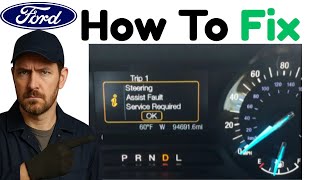
- "Power steering fault service required" or similar message on the dashboard
- Steering feels very heavy and difficult to turn, especially at low speeds
- Intermittent loss of power steering at startup that may resolve after a restart (an early sign of failure)
- ABS and Traction Control (TCS) warning lights illuminated (if the fault is in the ABS module)
- A 'clunking' noise from the steering before or during failure
- Replacing the battery when the steering rack has a hard internal fault (U3000:49 or U3000:53). A new battery will not fix a water-damaged or shorted PSCM.
- Clearing codes without addressing the root cause. A U3000:49 will often return, and a U3000:53 in the PSCM indicates a permanent fault that cannot be cleared without repair/replacement.
- Replacing the steering rack when the only fault is U3000:96 in the PSCM, which points to a battery/voltage issue that should be addressed first.
Most Likely Causes

- Electric Power Steering Rack Failure (Internal Fault) 🔴 High Probability The design is susceptible to water ingress around the bulkhead boot and the pinion shaft's joint housing. This water damages the internal torque sensor and electronics within the sealed steering rack assembly, leading to failure.
How to confirm: Scan the Power Steering Control Module (PSCM) for U3000 with suffix :49 or :53. U3000:49 is an intermittent internal electronic failure, but once it is flagged multiple times, it can set a permanent U3000:53 which cannot be cleared. The presence of C102D for high friction also points to internal damage.
Typical fix: Complete replacement of the electric power steering rack assembly. Remanufactured units are a common repair choice, but some owners opt for used racks from newer, compatible models like the Focus or Kuga. After replacement, a wheel alignment is necessary 🎬 See this walkthrough on how to replace the steering rack. and the module requires programming via a Programmable Module Installation (PMI) procedure.
Est. part cost: $800-$2000 - Low Battery Voltage / Failing Battery 🟡 Medium Probability The electric power steering system draws significant current. A weak 12V AGM battery can cause a voltage drop during high-demand situations (like startup or low-speed turns), triggering a fault in the PSCM.
How to confirm: Scan the PSCM for U3000:96, often accompanied by U3003:13 (Battery Voltage). Perform a comprehensive battery test that checks not just voltage but also its state of health and ability to hold a load. A simple voltage check is insufficient as the issue often appears under load.
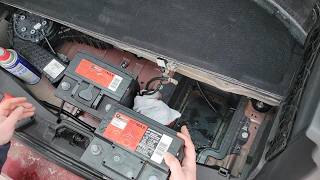
Typical fix: Replace the vehicle's 12V AGM battery. After replacement, the Battery Management System (BMS) must be reset. This can be done with a capable scan tool or via a specific sequence of vehicle inputs (e.g., flashing high beams 5 times and pressing the brake pedal 3 times). 🎬 Watch: How to replace the battery and reset the BMS.
Est. part cost: $150-$300 - ABS Module Internal Failure ⚪ Low Probability On models from 2015 onwards, the ATE MK100 ABS module has been known to experience internal failures that set a U3000 code, often with suffix :49.
How to confirm: Scan the Antilock Braking System (ABS) module specifically for U3000:49. The vehicle will have ABS and traction control warnings, but the power steering will likely function normally. The fault will be isolated to the ABS module in the network scan.
Typical fix: Replace the ABS module or send it to a specialist like ACTRONICS for remanufacturing. Remanufacturing is often a cost-effective solution that doesn't require reprogramming, as the original module is repaired.
Est. part cost: $200-$800
Rare But Worth Checking
- PSCM Software Fault:
- SYNC 3 APIM Module: Manufacturer Bulletin #SSM-45809 notes that U3000 can be present in the Accessory Protocol Interface Module (APIM) on vehicles equipped with SYNC 3.
Diagnosis Steps
- Connect an advanced OBD-II scanner capable of reading Ford-specific codes (like FORScan or a professional-grade tool).
- Scan all vehicle modules for Diagnostic Trouble Codes (DTCs). A full network scan is essential.
- Identify which module has stored the U3000 code (e.g., PSCM, ABS).
- Record the two-digit suffix code (e.g., :49, :53, :96). This is essential for accurate diagnosis.
- If U3000:96 and/or U3003:13 are present in the PSCM, thoroughly test the 12V battery's state of charge and state of health under load. A simple voltage check is insufficient.
- If the battery is weak, replace it, ensuring it is the correct AGM type. The 12V battery is located in the trunk/cargo area. Reset the Battery Management System (BMS) using a scan tool or the manual procedure, then clear codes and re-test.
- If U3000:49 or U3000:53 is stored in the PSCM, inspect the steering rack and surrounding area for signs of water intrusion, particularly around the bulkhead boot and pinion shaft housing.
- If codes point to an internal PSCM failure (U3000:49/:53), the most reliable repair is to replace the entire electric steering rack assembly.
- If U3000:49 is stored in the ABS module, confirm power steering is working correctly. If so, the fault lies with the ABS module, which will need to be repaired or replaced.
- Before replacing the PSCM/rack, check for any applicable software updates (TSBs) or recalls (like 15S18) that might address the specific code. According to TSB Bulletin #SSM 46048, if U3000:04 is present in the APIM with no other symptoms, the code should simply be cleared.
Parts You'll Likely Need

- Electric Power Steering Rack Assembly
(OEM #CV6Z-3504-S (and other variants like -P, -V, -C, -JE, -GE, -G, -CE))— This is the required fix for the most common cause of a U3000:49/53 code on this vehicle: an internal failure of the integrated Power Steering Control Module (PSCM), often due to water damage.
Trusted brands: Motorcraft (OEM), Cardone (remanufactured), BBB Industries (remanufactured), Detroit Axle (remanufactured), Used OEM from newer compatible models (e.g., Focus, Kuga)
OEM price range: $1400-$2300
Aftermarket price range: $800-$1500 - AGM 12V Battery — A weak battery is a common trigger for voltage-related power steering faults (U3000:96). The C-Max requires a specific AGM type battery.
Trusted brands: Motorcraft, Interstate, DieHard, Duralast
OEM price range: $200-$300
Aftermarket price range: $150-$250
Related Codes That Often Appear With This One
- U3003:13 — This code for 'Battery Voltage' is frequently seen alongside U3000:96 when a weak battery is the root cause of the power steering module fault.
- C102D — This code for 'High Friction in Power Steering' can be stored with U3000 when water ingress has caused mechanical binding or bearing damage inside the steering rack in addition to the electronic failure.
- U3000:53 — This code for 'Control Module - Deactivated' is a more severe, permanent version of U3000:49. Once U3000:49 has been triggered multiple times, the module may store U3000:53, which cannot be cleared and necessitates replacement.
Technical Service Bulletins (TSBs) & Recalls
- Recall 15S18 / NHTSA 15V340: Addresses a potential loss of power steering assist due to an internal electrical connection issue in the steering gear. The fix involved a PSCM software update or steering gear replacement.
- TSB Bulletin #SSM 46048: Notes that some vehicles equipped with SYNC 3 may have DTC U3000:04 present in the APIM. If no other symptoms are reported, technicians are advised to clear the code.
- TSB Bulletin #SSM-45809: Identifies that SYNC 3 Accessory Protocol Interface Modules (APIM) may store DTC U3000.
Platform-Specific Known Issues
- Ford issued recall 15S18 (NHTSA 15V340) for some models due to potential loss of power steering assist from an intermittent electrical connection in the steering gear. The remedy was to update the PSCM software and, if certain DTCs were present, replace the steering gear.
- A separate recall for some 2014 models involved steering gears assembled with an incorrect number of ball bearings
Mechanic-Grade Diagnostic Values
- PSCM Main Power Supply Voltage — expected: Battery voltage (approx. 12.6V KOEO, 14V+ engine running). Failure: Low or no voltage at the PSCM main power feed pin.
- PSCM Ground Circuit Integrity — expected: Less than 100 millivolts (0.1V). Failure: Voltage reading higher than 0.1V indicates a poor ground connection.
- PSCM Ignition Signal Voltage — expected: Battery voltage with Key On. Failure: Low or no voltage at the ignition signal pin.
Scan Tool Commands That Help

- Ford IDS/FDRS: Programmable Module Installation (PMI) — This function is required after replacing the steering rack/PSCM assembly. It downloads the configuration data (As-Built data) from Ford's servers and programs it into the new module, linking it to the vehicle's VIN and options.
- Ford IDS/FDRS: PSCM - Reset the Power Steering Control Module — For some software-related faults, a TSB may direct a technician to perform this reset, followed by an ignition cycle and a software update, before condemning the hardware.
- FORScan: PSCM Module Reset — Similar to the IDS/FDRS function, this can be used to attempt a soft reset of the module to clear temporary glitches before further diagnosis. It may also be required after a battery replacement.
- FORScan: Module Configuration (As-Built format) — Advanced users can use FORScan to manually load As-Built data into a new or used PSCM after replacement, which is a more complex alternative to the dealer's automated PMI process.
Wiring & Ground Locations
- Fuse F2 — In the engine compartment fuse box (Battery Junction Box).. This is an 80A high-current fuse that provides the main power for the electric power steering motor itself. A failure of this fuse will cause a complete loss of assist.
- Fuse F22 — In the engine compartment fuse box (Battery Junction Box).. This is a 10A fuse that provides power to the Power Steering Control Module's logic circuits. If this fuse is blown, the module will be completely offline.
- Main Chassis Ground — The primary ground connection point for jump-starting is located to the right of the 12V battery, near the engine compartment fuse box. The PSCM itself has a dedicated ground wire in its harness.. A poor ground connection for the PSCM can cause intermittent faults, low voltage conditions, and trigger a U3000 code. Verifying the integrity of the ground circuit is a key diagnostic step.
- PSCM Connector — The Power Steering Control Module is integrated into the steering rack assembly, located at the center rear of the engine compartment. The main electrical connector is on the rack itself.. This is the primary point for testing power, ground, and communication network signals going to the module. Corrosion or damage at this connector can cause the U3000 fault.
OEM Part Supersession History
CV6Z-3504-V→HV6Z-3504-FH— Part revision and update by the manufacturer.
Heads up: The new part number (HV6Z-3504-FH) replaces the old one and should be compatible.Multiple CV6Z-3504 variants (-N, -R, -XE, etc.)→HV6Z-3504-FG— Consolidation of multiple older part numbers into a newer revision.
Heads up: HV6Z-3504-FG is listed as a replacement for numerous earlier part numbers, indicating it is the current service part for a wide range of vehicles within the platform.
Model Year Variations Within This Range
- 2015+: Models from 2015 onwards may be equipped with the ATE MK100 ABS module, which is known to have its own internal failure that can cause a U3000:49 code stored in the ABS module, not the PSCM.
Diagnostic Flowchart
Used vs. New Parts: Buying Guide for This Vehicle
When a used part is the smart pick: A used steering rack from a junkyard can be a cost-effective option, especially if it comes from a lower-mileage, later-model year donor vehicle (like a compatible Ford Focus or Escape) that is less likely to have suffered from the water intrusion issue. This is a high-risk, high-reward strategy as the part may still fail and programming can be complex.
Donor-vehicle mileage cap: roughly under 80000 miles for the part to have meaningful remaining life.
What to inspect on the donor part:
- Check the donor vehicle's VIN for model year and any reported accidents near the front suspension.
- Inspect the electrical connector on the rack for any signs of corrosion, bent pins, or water damage.
- Look for physical signs of impact or damage to the rack housing.
- If possible, get a warranty from the salvage yard (e.g., 30-90 days) to protect against receiving a dead-on-arrival part.
OEM-only on this vehicle (don't cheap out):
- While the entire steering rack is available from aftermarket sources, many forum users express a strong preference for OEM (Motorcraft) parts, even if remanufactured, due to concerns about the quality control of aftermarket electronic components.
Aftermarket brands forum-validated for this vehicle:
- Motorcraft (OEM Remanufactured) is the most trusted option.
- Detroit Axle is a commonly available aftermarket option.
- BBB Industries is another known remanufacturer for this part.
Brands owners have reported issues with on this vehicle:
- Cardone has a mixed reputation among DIY and professional communities; some users report high out-of-box failure rates for complex electronic parts like steering racks, while others have no issues.
Real Owner Stories
Aggregated from forums and TSBs cited above. Mileages and costs reflect what owners reported in those sources.
2013 Ford C-Max Hybrid 4-cyl — 55000 miles
Symptoms: Power steering failed and a "service power steering soon" warning was displayed. Restarting the car temporarily restored power steering. The stored code was U3000:49.
What fixed it: Dealer could not duplicate the problem and no repairs were performed at the time.
Source hint: CarComplaints.com - 2013 Ford C-Max Hybrid Steering Problems
2013 C-Max
Symptoms: Sudden power steering failure with diagnostic trouble code U3000:49.
What fixed it: Steering rack replacement.
Cost: $1900-$2100
Source hint: CarComplaints.com
Ford Focus (platform-mate)
Symptoms: The issue started with intermittent power steering warnings and eventually progressed to a permanent, hard fault with code U3000:53.
What fixed it: The steering rack was replaced. The owner noted that racks from other C-platform cars like the Kuga or C-Max could be used for the repair.
Source hint: Reddit (r/FordFocus)
2011 C-Max
Symptoms: Power steering failure leading to a repair quote.
What fixed it: A repair shop quoted £1800 for a steering rack replacement, but another user suggested checking the battery first as a potential, cheaper cause of the symptoms.
Source hint: Honest John Forums
NHTSA ODI #11122861
Symptoms: An owner reported that at start-up, the vehicle displays a "Service Power Steering" message and throws a PSCM U3000 code. The steering would occasionally not work.
NHTSA ODI #11472338
Symptoms: An owner reported that after warning lights illuminated, they were barely able to drive the car home. A local mechanic identified error code U3000:49-08.
Related OBD-II Codes
Frequently Asked Questions
I have a U3000 code on my C-Max. Does Ford's recall 15S18 cover the repair?
My mechanic says the U3000 code means I need a new steering rack. Could it just be the battery?
My ABS and traction control lights are on with code U3000, but the steering feels normal. What's wrong?
What's the difference between U3000:49 and U3000:53 in the power steering module?
Can I use a steering rack from a Ford Focus or Escape to fix my C-Max?
After replacing the battery to fix a U3000 code, is there anything else I need to do?
Helpful Videos
We Have This Part in Stock


The information in this article is provided for general reference and educational purposes only. Vehicle specifications, procedures, and part compatibility can vary by production date, trim level, and region. Always consult your vehicle's factory service manual and verify part numbers before purchasing or performing repairs. Safety-critical components such as airbags, seat belts, and braking systems should be installed by a qualified professional.
- Ford C-Max:
- 🎬 Helpful Videos
- 🛍️ Shop This Part
- What's Unique About the 2013-2018 Ford C-Max
- Symptoms You May Notice
- Most Likely Causes
- Rare But Worth Checking
- Diagnosis Steps
- Parts You'll Likely Need
- Related Codes That Often Appear With This One
- Technical Service Bulletins (TSBs) & Recalls
- Platform-Specific Known Issues
- Mechanic-Grade Diagnostic Values
- Scan Tool Commands That Help
- Wiring & Ground Locations
- OEM Part Supersession History
- Model Year Variations Within This Range
- Diagnostic Flowchart
- Used vs. New Parts: Buying Guide for This Vehicle
- Real Owner Stories
- 2013 Ford C-Max Hybrid 4-cyl — 55000 miles
- 2013 C-Max
- Ford Focus (platform-mate)
- 2011 C-Max
- NHTSA ODI #11122861
- NHTSA ODI #11472338
- Related OBD-II Codes
- Frequently Asked Questions
- 🎟️ Get 5% Off