

OBD-II Code U2752: Ethernet Communication Fault
What U2752 means, why it triggers, and how to fix it
- Code U2752 disables critical active safety systems, instantly shutting down automatic emergency braking and adaptive cruise control.
- Always check for Technical Service Bulletins (TSBs) first; a free software update resolves this code on many 2022+ vehicles.
- Do not replace the $1,000+ radar sensor immediately; a bent $50 mounting bracket or a wiring fault is the culprit in most physical failures.
- Expect professional repair costs between $500 and $2,500, driven largely by the mandatory ADAS calibration required after any hardware replacement.
- Stop DIY diagnosis if visual inspections and wiring checks pass; sensor replacement requires a shop with $15,000+ ADAS calibration equipment.
What Does U2752 Mean?

Code U2752 indicates a critical communication link failed between the main safety computer (ADAS module) and a key sensor, typically the front bumper radar. These components communicate over high-speed Automotive Ethernet. When this connection drops for 5 seconds or more, the computer logs the fault and shuts down related safety systems.
Technical definition: The ADAS (Advanced Driver Assistance Systems) control unit is not receiving the expected Ethernet communication signal from a distance sensor (e.g., front radar sensor) for a specified duration, typically 5 seconds or more.
Can I Drive With U2752?
Yes, But With Caution. Yes, but with extreme caution. Driving with this code means your primary automated safety systems are offline. The car will not automatically brake to prevent a collision or help you stay in your lane. This significantly increases the risk of a collision. Take the vehicle to a qualified shop as soon as possible to restore full safety functionality.
Common Causes

- Software Glitch in the ADAS Control Module (Very Common) — The computer module running the safety systems has a software flaw causing it to lose communication with the sensor. Manufacturers like Mitsubishi have issued Technical Service Bulletins (TSBs) where the primary fix is a software update (reflash) to resolve the fault.
- Damaged or Misaligned Radar Sensor Bracket (Common) — Even a minor bump to the front of the car that leaves no visible mark bends the sensor's mounting bracket. A bent bracket misaligns the sensor, causing the system to fail its self-check and log a communication fault. Dealers classify this as 'outside influence' and deny warranty coverage.
- Damaged or Corroded Wiring Harness (Common) — The Ethernet wiring harness connecting the sensor to the control module sits in a vulnerable spot behind the front bumper. Minor impacts, road debris, or corrosion from water and salt easily damage the wires or connectors, severing the connection.
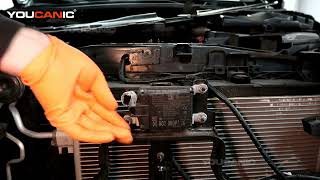
- Failed Front Distance/Radar Sensor (Common) — The radar sensor itself fails due to internal electronic faults, moisture intrusion, or damage from a minor collision. In some cases, thieves steal the sensor, which immediately triggers this code. 🎬 Watch: Step-by-step guide to replacing a front radar sensor.
- Low Battery Voltage or Poor Grounds (Less Common) — Modern vehicles are extremely sensitive to system voltage. A weak battery or a corroded ground connection causes electronic modules to 'wake up' improperly during startup, leading to temporary communication codes like U2752.
- Failed ADAS Control Module (Less Common) — The main computer managing the safety systems fails internally. This occurs due to circuit failure, software corruption, or water damage, requiring a full module replacement and programming.
- Interference from Aftermarket Accessories (Uncommon) — Poorly installed aftermarket parts like LED lighting kits, remote starters, or dashcams introduce electrical noise onto the vehicle's data network. This interference disrupts the sensitive Ethernet signal.
- Blown Fuse or Faulty Relay (Rare) — A blown fuse or a failing relay supplying power to the ADAS module or the radar sensor prevents the system from turning on, resulting in a communication fault.
Symptoms

- Dashboard ADAS Warning Lights Illuminated — The dashboard lights up with warnings like 'AEB Off,' 'ACC Unavailable,' 'Front Radar Blocked,' or a general 'Check ADAS System' message.
- Active Safety Systems Disabled — Adaptive Cruise Control (ACC), Automatic Emergency Braking (AEB), Forward Collision Warning (FCW), and Lane Keep Assist (LKA) instantly shut down. The car will not maintain distance, brake automatically, or steer to keep you in the lane.
- Inaccurate Head-Up Display (HUD) Information — On vehicles with a HUD, you see incorrect speed information or error messages related to the ADAS features.
Diagnostic Flowchart
Tap your situation to follow the diagnostic path that matches what you're seeing on this code.
Common Fixes & Costs
- Reprogramming the ADAS Control Module — Parts: $0, Labor: $150-$300, ~1.5 hr book time (Professional)
- Replacing Damaged Sensor Bracket and Recalibrating
— Parts: $50-$150, Labor: $300-$600 (includes calibration), ~3.0 hr book time
(Professional)
Mitsubishi Outlander (2022-2024): OEM ['8639A329', '28453W000P']
Nissan Rogue (2021-2023): OEM ['28452-6RR0C', '28452-6MR0A'] - Repairing Damaged Ethernet Wiring or Connectors — Parts: $20-$50, Labor: $150-$400, ~2.5 hr book time (Intermediate)
- Replacing the Front Radar/Distance Sensor
— Parts: $500-$1,500, Labor: $350-$800 (includes mandatory calibration), ~2.5 hr book time
(Professional)
Mitsubishi Outlander (2022-2024): OEM ['8638A557', '8638A526']
Nissan Rogue (2021-2024): OEM ['28438-6RR7A', '98890-7DA6A'] (Alt: LEAPTREND 28438-6RR7A)
Honda CR-V (2018-2022): OEM ['36801-TLA-A06', '36801TNYA03'] - Replacing the ADAS Control Module
— Parts: $300-$1,500, Labor: $400-$1,000 (includes mandatory programming and calibration), ~4.0 hr book time
(Professional)
Mitsubishi Outlander (2018-2022): OEM ['8638A211', '8638A494'] - Replacing a Blown Fuse — Parts: $1-$5, Labor: $0-$75, ~0.5 hr book time (Beginner)
DIY vs Professional
- Reprogramming the ADAS Control Module — Beginner:
Tools: OEM-specific diagnostic software, J2534 Pass-Thru device, stable power supply. - Replacing Damaged Sensor Bracket and Recalibrating — Beginner:
Tools: Basic hand tools, trim removal tools, ADAS calibration rig and software. - Repairing Damaged Ethernet Wiring or Connectors — Beginner:
Tools: Soldering iron, heat shrink tubing, multimeter, wire strippers, depinning tools. - Replacing the Front Radar/Distance Sensor — Beginner:
Tools: Trim removal tools, basic hand tools, professional scan tool, ADAS calibration rig. - Replacing the ADAS Control Module — Beginner:
Tools: Professional scan tool, OEM-specific software, ADAS calibration equipment. - Replacing a Blown Fuse — Beginner:
Tools: Fuse puller or needle-nose pliers.
Used vs. New Parts: Buying Guide
When a used part is worth it: Buying a used ADAS radar sensor is almost never recommended and carries significant risk. Consider it only as a last resort for older, out-of-warranty vehicles when the budget is extremely tight and the new OEM part is prohibitively expensive.
Donor-vehicle mileage cap: roughly under 50000 miles for the part to have meaningful remaining life.
Donor quality checklist:
- Verify the donor vehicle was not involved in a front-end collision. Even a minor impact damages the sensor internally.
- Ensure the part number matches exactly. Superseded part numbers are often incompatible.
- Visually inspect the sensor for cracks, signs of moisture intrusion, or damage to the connectors.
- Purchase from a reputable salvage yard offering a functional warranty and a clear return policy.
Decision logic:
- If The vehicle is still under warranty → Use a new OEM part installed by the dealer to ensure coverage.
- If The cause is a software update or wiring repair → A used part is not necessary; perform the correct repair.
- If A new OEM sensor is available and affordable → Always choose the new OEM part for safety, reliability, and warranty.
- If A new OEM sensor is unavailable or costs more than 50% of the vehicle's value → A tested, guaranteed used sensor from a low-mileage, non-collision donor is a viable, high-risk option.
Warranty tradeoff: Used parts typically have a 30-90 day functional warranty at best. New OEM parts installed by a dealer carry a 1-2 year warranty. The primary risk is the used part being subtly damaged and unable to be calibrated, rendering it useless.
Worst-case if a used part fails: $500-$1200 if the used part cannot be calibrated or fails shortly after installation, requiring repeat labor for removal, plus the cost of a new sensor.
What Happens If You Wait — Timeline
- Immediately: Code U2752 is logged. All dependent ADAS functions (AEB, ACC, LKA) are disabled instantly. Multiple warning lights appear on the dashboard. (MPG impact: 0%% · Added cost: $0)
- 0-6 months: The vehicle is driven without active safety features. The driver becomes complacent, increasing the statistical risk of a rear-end collision. IIHS studies show AEB reduces rear-end crashes by 43-50%. (MPG impact: 0%% · Added cost: $0, unless an accident occurs.)
- 6-12 months: An at-fault fender-bender occurs that AEB could have prevented or mitigated. The cost to repair a minor front-end collision on a modern car now averages $2,000-$4,000 due to the sensors involved. (MPG impact: 0%% · Added cost: $2,000 - $5,000 (cost of a minor, preventable accident))
- At time of resale: The vehicle is put up for sale or trade-in with active ADAS warning lights. This significantly reduces its market value, as potential buyers or dealers deduct the high cost of repair. The diminished value is $1,500-$3,500 or more. (MPG impact: 0%% · Added cost: $1,500 - $3,500 (in lost resale value))
Cost of Not Fixing It
- Immediately: All primary active safety features are disabled. The vehicle will not provide collision warnings, automatic emergency braking, lane-keeping assist, or adaptive cruise control. The risk of a collision, particularly a rear-end collision, is significantly increased. (Added cost: Negligible)
- Long-Term: Continued driving without active safety features leads to driver complacency and an over-reliance on systems that are not functioning. This results in a higher likelihood of an at-fault accident, leading to significant repair costs and insurance premium increases. (Added cost: $500 - $20,000+ (depending on accident severity))
- Vehicle Resale: An active U2752 code and illuminated ADAS warning lights make the vehicle nearly impossible to sell to a private party and significantly decrease its trade-in value. A dealer deducts the full, high-end estimate for the repair from their offer. (Added cost: $1,500 - $3,500 (diminished value))
Diagnosis Steps
- Scan All Modules and Check for Related Codes
Use an advanced OBD-II scanner to read all vehicle modules. Record all codes. Look for sibling codes like U2751, U275F, or C1F71, confirming the fault is on the Ethernet circuit. Clear the codes; if U2752 returns immediately, you have a hard fault.
Tools: Advanced OBD-II Scanner (Intermediate) - Check for Technical Service Bulletins (TSBs)
Search for your vehicle's make, model, year, and 'U2752 TSB'. Manufacturers frequently issue software updates that serve as the primary fix. Skipping this step leads to expensive, unnecessary parts replacement.
Tools: Computer with internet access (Beginner) - Visually Inspect Sensor, Bracket, and Wiring
Look closely at the front grille and lower bumper. Check the radar sensor for cracks. Inspect its mounting bracket to see if it is bent or loose. Follow the wiring harness, looking for cuts, corrosion, or loose connectors.
Tools: Flashlight (Beginner) - Check Sensor Power and Ground
With the ignition on, disconnect the sensor connector. Use a multimeter to verify power and ground pins. Expected values: Battery voltage (>12.0V) on the power pin and near-zero resistance (<1.0 Ω) to chassis ground. Missing voltage prevents the sensor from powering on.
Tools: Multimeter, vehicle-specific wiring diagram (Intermediate) - Perform Network Activation Test (Ping)
Using a professional scan tool, perform a network test or activation command on the front radar sensor. If the module does not respond to the 'ping,' it confirms the module is offline due to a power, ground, wiring, or internal sensor fault.
Tools: Professional diagnostic scan tool (Advanced) - Test the Ethernet Harness for Continuity and Shorts
Disconnect the harness from the sensor and the ADAS module. Check for continuity on both data lines (twisted pair). Resistance must be near zero (<1.0 Ω) end-to-end. Check for shorts by measuring resistance between each wire and to ground; the reading must be infinite (OL).
Tools: Multimeter, vehicle-specific wiring diagram, trim removal tools (Advanced) - Check Network Signal with an Oscilloscope (Pro Tip)
For intermittent issues, connect a two-channel oscilloscope to the Ethernet data lines. A healthy network shows a clean, symmetrical square wave. Electrical noise or signal dropouts confirm an interference or wiring degradation issue.
Tools: Automotive oscilloscope, wiring diagram, back-probe pins (Professional)
When This Code Triggers (Freeze-Frame Conditions)
- Vehicle Speed: 35-65 mph (The fault is most often logged during steady-state highway driving when systems like Adaptive Cruise Control are active or attempting to initialize.)
- System Voltage: 13.5-14.5V (Code sets during normal operating voltage. A voltage reading below 12.0V indicates a battery or charging system issue as the root cause.)
- Engine Run Time: > 10 minutes (The fault typically appears after the vehicle has been running long enough for all systems to complete their startup checks and begin communicating.)
- ADAS/ACC System Status: Active or Engaged (The communication fault is often triggered at the moment the driver attempts to engage Adaptive Cruise Control or when the system is actively monitoring the road.)
Related Codes
- U2751 — A direct sibling code to U2752, frequently appearing alongside it. Both codes point to a fault on the same Ethernet circuit, confirming a communication breakdown between the ADAS module and the front radar sensor.
- U275F — Indicates a 'mismatch' or 'incompatibility' and is commonly seen with U2752 in Mitsubishi vehicles under TSB-22-54-001REV. This strongly points to a software issue where the ADAS module and radar sensor run incompatible software versions, requiring a reflash.
- C1F71 — A Chassis code specifying an Ethernet communication error. The Chassis controller (managing ABS) needs data from the front radar; it logs C1F71 when that data is lost, isolating the fault to the front radar network.
- C2599-13 — An Ethernet code found in Mitsubishi diagnostic procedures. The '-13' suffix points to an 'open circuit'. If present with U2752, it heavily suggests the root cause is a broken wire or a disconnected plug in the harness.
Climate & Environmental Factors
- Road Salt and High Humidity: Regions using road salt in winter ('Salt Belt') see a higher incidence of this code. Salt and moisture accelerate corrosion on the wiring harness and connector pins for the front radar sensor. This corrosion degrades the high-speed Ethernet signal, causing communication to fail.
- Extreme Cold: Extreme cold causes plastics to become brittle, leading to cracks in connectors or wire insulation. It also exacerbates issues with a weak battery, which fails to provide sufficient voltage during startup for modules to initialize correctly.
How to Talk to a Mechanic About This Code
Say this: "I have a U2752 code and my ADAS warning lights are on. I would like to schedule a diagnostic appointment. Based on my research, the most common causes are a software issue, a bent sensor bracket, or a wiring fault. Please check for any applicable TSBs and inspect the wiring and bracket before recommending a full sensor replacement."
This signals to the shop that you are an informed customer. It directs them to follow a logical diagnostic path (software -> physical inspection -> component replacement) rather than immediately quoting the most expensive repair. It establishes that you expect a thorough diagnosis, not just a part swap.
Avoid saying:
- 'My cruise control isn't working, can you fix it?' (too vague)
- 'Just replace the front radar sensor.' (Don't diagnose it for them)
- 'Do whatever it takes to turn the lights off.'
Questions to ask before authorizing the repair:
- Did you find a TSB that applies to my vehicle?
- What was the result of the physical inspection of the wiring harness and sensor bracket?
- If the sensor needs to be replaced, is the cost of calibration included in the quote?
- What is the warranty on the parts and labor for this specific repair?
Where to Take It: Dealer vs Independent vs Chain
- Dealer:
Excellent choice, especially if a software update is the likely fix or if the vehicle is under warranty. They are the most reliable option for performing the required ADAS calibration correctly.
Best for: Vehicles under the bumper-to-bumper warranty., Repairs involving a known Technical Service Bulletin (TSB), as they have direct access to manufacturer software updates., Complex electronic issues where factory-specific diagnostic tools are required.
Downsides: Typically higher labor rates and parts costs compared to independent shops., May default to replacing a whole assembly when a smaller component repair is possible. (Typical cost: +40% vs. baseline) - Independent Shop:
Good fit, but ONLY if they prove they own and are experienced with ADAS calibration equipment (e.g., Autel, Hunter, Bosch). Ask specifically if they perform radar sensor calibration for your make and model before booking.
Best for: Out-of-warranty vehicles where cost is a primary concern., Shops that specialize in your vehicle's brand or in ADAS repairs specifically.
Downsides: Not all independent shops have the expensive ADAS calibration equipment required for this repair., Quality and expertise vary widely; ensure the shop is ASE certified and has experience with ADAS. (Typical cost: +0% vs. baseline) - Chain Shop:
AVOID. These shops are not equipped to handle the complexity of ADAS repairs. A misdiagnosis or improper repair compromises vehicle safety.
Best for: Simple, unrelated maintenance like oil changes or tires.
Downsides: Technicians are very unlikely to have the training or specialized equipment for ADAS diagnostics and calibration., High pressure to meet sales targets leads to misdiagnosis and unnecessary parts replacement. (Typical cost: -10% vs. baseline)
When to Walk Away From the Repair
If the total estimated repair cost for the U2752 fault exceeds 40-50% of your car's current private-party market value, consider selling the car as-is or trading it in.
- Car worth $6000, fix is $2500: Borderline. The repair cost is ~42% of the car's value. Get a second opinion to confirm the diagnosis and cost before proceeding.
- Car worth $15000, fix is $1500: Fix it. The repair is only 10% of the vehicle's value and restores critical safety features.
- Car worth $3500, fix is $2200: Walk away. The repair cost is over 60% of the car's value. It is not economically sensible to proceed.
What Scan Tool You Need for This Code

Minimum: A scanner that reads codes from ALL vehicle modules, including the ADAS/Chassis controller, not just the engine computer. It must read manufacturer-specific 'U' and 'C' codes.
A basic $30 OBD-II reader from an auto parts store will not see the U2752 code at all, as it only communicates with the engine control unit. You will be led to believe nothing is wrong, while critical safety systems are offline.
Budget: Not Recommended (~$0) — Scanners in this price range are incapable of reading the ADAS module where this code is stored. Investing in one for this specific problem is a waste of money.
Mid-range: Autel MaxiCOM MK808S / LAUNCH X431 CRP919XBT (~$350) — These tools perform a full system scan and correctly identify U2752 and related codes in the ADAS module. They offer bidirectional control to test components and help diagnose if the issue is wiring, the sensor, or the module, but they CANNOT perform the final calibration.
Professional: Autel MaxiSys MS906 Pro / MS909 / Ultra with ADAS Package (~$1500-5000+) — This is the level of tool required for the complete repair. In addition to full diagnostics, these scanners, when paired with an ADAS calibration frame (like the Autel IA800 or Bosch DAS 3000), perform the mandatory static and dynamic calibration of the new radar sensor.
Rent vs buy: You cannot rent the professional-level tool required for the final calibration. For diagnosis, a mid-range tool is a good investment for a serious DIYer. However, for a one-time U2752 code, it is more cost-effective to pay the 1-hour diagnostic fee at a qualified shop that already owns the necessary equipment.
How to Clear the Code After You Fix It
- Use a professional-grade OBD-II scan tool to clear the U2752 code from the ADAS module.
- Perform any required static or dynamic calibration procedures for the repaired/replaced component.
- Perform a full vehicle network scan to ensure no other communication codes have appeared.
Drive cycle (~20 minutes): After clearing the code, start the engine and let it idle for 2 minutes. Drive at a steady speed between 45-65 mph for at least 10 minutes, attempting to engage the Adaptive Cruise Control. Perform 5-10 minutes of stop-and-go city driving. The warning lights should remain off.
Readiness monitors affected: This is a communication code ('U' code) and does not directly affect the primary emissions readiness monitors (Catalyst, O2, EVAP).
Before emissions retest: drive at least 50 miles to fully set monitors.
Watch out for:
- Using a basic code reader that only clears codes from the Engine Control Unit (ECU) will not clear this code from the ADAS module.
- The code returns immediately if the root cause is not fixed, or if the mandatory calibration is not performed after a part replacement.
Will This Fail Emissions / State Inspection?
No — by itself this code doesn't fail OBD inspection (but it can keep readiness monitors from setting, which causes a separate fail).
- California: A 'U' code like U2752 does not cause a smog check failure. The test focuses on emissions-related codes ('P' codes). However, some technicians refuse to test a vehicle with multiple warning lights on as a safety precaution.
- New York: The NYS inspection includes checking for the proper function of safety equipment. While not an automatic emissions failure, an inspector fails the separate safety inspection if they determine the disabled ADAS systems make the vehicle unsafe.
- Texas: For most non-commercial vehicles, the emissions test is an OBD-II scan. This code does not cause a failure as it is not emissions-related. As of 2025, safety inspections are phased out for non-commercial vehicles.
Most Commonly Affected Vehicles
- Mitsubishi Outlander (2022-2024) — A widely known issue addressed by TSB-22-54-001REV. For vehicles built before VIN JA4J4UA80NZ051046, reprogramming the ADAS module is the required first step. Later models experience this due to flimsy sensor brackets bending without impact, a repair costing ~$900.
- Nissan Rogue (2021-2024) — Prone to this code, often with U2751. A common cause is a bent front radar bracket from a minor, unnoticed parking lot bump, which is not covered by warranty. Missing or stolen sensors are also known causes.
- Honda CR-V, Accord, Pilot (2018-2022) — These models are part of a major NHTSA investigation (EA24002) for phantom braking events related to the Collision Mitigation Braking System (CMBS). Failures in this system present with similar warnings and codes.
- Ford Explorer, F-150, Mondeo (2018-2025) — Ford vehicles generate numerous 'U' codes when a single component fails. A fault in a wheel speed sensor or the ABS module causes a cascade of communication errors, disabling ADAS features with symptoms identical to a U2752 fault.
- Hyundai / Kia Palisade, Telluride, Ioniq 5 (2020-2024) — Equipped with sophisticated 'Highway Driving Assist' systems relying heavily on radar and ethernet communication. Diagnosis follows the standard path: check TSBs, inspect wiring and sensor integrity, then consider module failure.
- Subaru Outback, Ascent, Forester (2019-2023) — Failures within the 'EyeSight' system present with the same symptoms. The cause is often a failed camera or module, both requiring professional calibration upon replacement. Windshield replacement without proper camera recalibration is a common trigger.
- Volvo XC90, XC60, S60 (2019-2024) — A fault in the Central Electronic Module (CEM) or a breakdown in the MOST fiber optic network leads to a flood of communication errors, disabling the IntelliSafe ADAS suite and mimicking a U2752 failure.
Manufacturer-Specific Notes

- Mitsubishi: For the 2022 Outlander, the first step is performing a software update per TSB-22-54-001REV. On 2024 models, the radar bracket bends without visible impact, which is typically not a warranty repair unless covered by the 'Diamond Care Supreme' extended warranty.
- Nissan: On the Rogue, a very common cause is a bent front radar bracket from a minor bump. Dealers classify this as 'foreign influence' and deny warranty coverage. The cost to replace the bracket and recalibrate often exceeds $1,000.
- Honda: Radar sensor issues on 2017-2022 CR-Vs and 2018-2022 Accords triggered a NHTSA Engineering Analysis (EA24002) for unexpected automatic braking. Always verify battery health before complex ADAS diagnostics, as a weak battery causes false errors on startup.
- Ford: A single faulty wheel speed sensor causes a cascade of 'U' codes and disables the entire ADAS suite. If you have multiple communication codes along with an ABS-specific code, diagnose the wheel speed sensor circuit first.
Real Owner Stories
2022 Mitsubishi Outlander at 30K miles
All ADAS warning lights came on suddenly during a highway drive. Adaptive cruise control and lane assist stopped working.
Outcome: The dealer reprogrammed the ADAS control module per Technical Service Bulletin TSB-22-54-001REV. The repair was covered under the factory bumper-to-bumper warranty and took about 90 minutes. All systems returned to normal.
Lesson: For a 2022-2023 Mitsubishi Outlander, always check for TSBs first. A simple, no-cost software update is the most likely fix, preventing unnecessary and expensive hardware replacement.
2021 Nissan Rogue at 45K miles
ACC and AEB warning lights appeared after the owner's partner tapped a parking pylon. There was no visible damage to the bumper.
Outcome: The dealer found the radar sensor's plastic mounting bracket was slightly bent, misaligning the sensor. They replaced the bracket and performed a full ADAS calibration for $950. The repair was not covered by warranty due to 'outside influence'.
Lesson: Even a minor bump with no visible damage bends the fragile sensor bracket. Always have the bracket alignment checked before agreeing to replace the expensive radar sensor itself.
2019 Ford F-150 at 80K miles
Multiple 'U' codes appeared, including U2752, disabling Pre-Collision Assist and Adaptive Cruise. The owner noticed the ABS light would occasionally flicker.
Outcome: The owner took the truck to a professional for a full system scan. The advanced scanner found a history code for a faulty rear wheel speed sensor. Replacing the $60 wheel speed sensor and clearing all codes resolved the U2752 fault and restored all ADAS functions.
Lesson: On vehicles prone to network communication errors like Ford, a 'U' code is a symptom, not the cause. Always perform a full-system scan for other codes (especially in the ABS module) before focusing on the ADAS components.
2023 Mitsubishi Outlander after heavy rain
Owner drove through a severe rainstorm. The next morning, the dash was lit up with ADAS error messages and code U2752 was present.
Outcome: The owner disconnected the main connector at the front radar sensor, dried it thoroughly with compressed air, applied dielectric grease to the seal, and reconnected it firmly. After clearing the codes, the system returned to normal.
Lesson: If the fault appears directly after heavy rain, a car wash, or driving through standing water, the first and easiest check is for moisture intrusion at the sensor's main electrical connector.
How to Prevent This Code From Triggering
- Periodically clean the front radar sensor area (Monthly or after driving in snow/mud) — The radar sensor sits behind the grille emblem or in the lower bumper. Keeping this area free of dirt, snow, or ice ensures the radar has a clear view and prevents 'sensor blocked' errors that escalate to communication faults. Use only a soft cloth and mild soap.
- Apply dielectric grease to the sensor connector (Once, or whenever the bumper is removed) — The front radar connector is exposed to road spray. Applying a thin layer of non-conductive dielectric grease to the connector's rubber seal prevents moisture and road salt from causing corrosion on the sensitive Ethernet pins.
- Perform regular battery health checks (Annually, especially on vehicles over 3 years old) — Modern ADAS modules are highly sensitive to voltage. A weak battery causes modules to initialize improperly during startup, logging false communication codes. Ensuring the battery maintains a healthy state of charge prevents these transient electronic glitches.
- Avoid high-pressure washing directly on the sensor area (Every car wash) — High-pressure water jets force moisture past the seals of the sensor housing or its electrical connectors, leading to corrosion and internal failure over time. It also potentially damages the delicate surface of the sensor.
- Do not install aftermarket metal grilles or bull bars (During vehicle ownership) — The front radar sensor is precisely calibrated to transmit and receive signals through the factory plastic grille. Installing metal accessories in front of the sensor blocks or distorts the radar waves, causing the system to fail its self-check.
Frequently Asked Questions
What are the most common misdiagnosis mistakes for U2752?
The two biggest mistakes are replacing parts without proper diagnosis. The first is replacing the expensive front radar sensor before exhaustively inspecting the wiring harness and sensor bracket for damage. The second is replacing any hardware before checking for Technical Service Bulletins (TSBs), as a simple software update often resolves the issue.
Is a U2752 code covered under warranty?
Coverage depends on the root cause. Software glitches or internal module failures fall under the factory bumper-to-bumper warranty. However, dealers classify damage from minor collisions, road debris, or bent brackets as 'outside influence' and deny warranty claims.
Can I fix U2752 myself?
A DIY fix is only possible for simple causes like a loose connector or a blown fuse. Most fixes—including software updates, sensor replacement, and calibration—require expensive, specialized tools. You must use a professional ADAS technician to ensure the safety systems function correctly.
Why is the repair so expensive?
The high cost stems from the price of the radar sensor ($500-$1,800+), labor to access it, and mandatory ADAS calibration. Calibration requires a dedicated bay, expensive targets, and a high-end scan tool to ensure the safety systems are aimed perfectly. This non-negotiable step adds $300-$800 to the repair bill.
What is ADAS calibration?
Calibration precisely aligns a new sensor or module so it 'sees' the road correctly. Technicians set up specific targets at precise distances and angles, using a scan tool to teach the system where 'straight ahead' is. Skipping this guarantees your automatic braking triggers at the wrong time or not at all.
Will a minor fender-bender or even a parking lot bump cause this code?
Yes, absolutely. The front radar sensor and its bracket mount just behind the bumper cover. Even a low-speed impact that leaves no visible mark bends the bracket, knocking the sensor out of alignment and triggering this code.
Can a bad battery cause code U2752?
Yes, a weak battery causes voltage to drop significantly during engine cranking. This prevents electronic modules from initializing correctly, leading to temporary communication fault codes like U2752. Always test the battery before starting any complex electronic diagnosis.
Key Takeaways
- Code U2752 disables critical active safety systems, instantly shutting down automatic emergency braking and adaptive cruise control.
- Always check for Technical Service Bulletins (TSBs) first; a free software update resolves this code on many 2022+ vehicles.
- Do not replace the $1,000+ radar sensor immediately; a bent $50 mounting bracket or a wiring fault is the culprit in most physical failures.
- Expect professional repair costs between $500 and $2,500, driven largely by the mandatory ADAS calibration required after any hardware replacement.
- Stop DIY diagnosis if visual inspections and wiring checks pass; sensor replacement requires a shop with $15,000+ ADAS calibration equipment.
Helpful Videos


The information in this article is provided for general reference and educational purposes only. Vehicle specifications, procedures, and part compatibility can vary by production date, trim level, and region. Always consult your vehicle's factory service manual and verify part numbers before purchasing or performing repairs. Safety-critical components such as airbags, seat belts, and braking systems should be installed by a qualified professional.
- 🎬 Helpful Videos
- What Does U2752 Mean?
- Can I Drive With U2752?
- Common Causes
- Symptoms
- Diagnostic Flowchart
- Common Fixes & Costs
- DIY vs Professional
- Used vs. New Parts: Buying Guide
- What Happens If You Wait — Timeline
- Cost of Not Fixing It
- Diagnosis Steps
- When This Code Triggers (Freeze-Frame Conditions)
- Related Codes
- Climate & Environmental Factors
- How to Talk to a Mechanic About This Code
- Where to Take It: Dealer vs Independent vs Chain
- When to Walk Away From the Repair
- What Scan Tool You Need for This Code
- How to Clear the Code After You Fix It
- Will This Fail Emissions / State Inspection?
- Most Commonly Affected Vehicles
- Manufacturer-Specific Notes
- Real Owner Stories
- 2022 Mitsubishi Outlander at 30K miles
- 2021 Nissan Rogue at 45K miles
- 2019 Ford F-150 at 80K miles
- 2023 Mitsubishi Outlander after heavy rain
- How to Prevent This Code From Triggering
- Frequently Asked Questions
- What are the most common misdiagnosis mistakes for U2752?
- Is a U2752 code covered under warranty?
- Can I fix U2752 myself?
- Why is the repair so expensive?
- What is ADAS calibration?
- Will a minor fender-bender or even a parking lot bump cause this code?
- Can a bad battery cause code U2752?
- Key Takeaways
- 🎟️ Get 5% Off