

OBD-II Code P2646: 'A' Rocker Arm Actuator System Performance/Stuck Off Bank 1
The definitive guide to U2646 and the standard P2646 code. Learn what they mean, why they trigger, and how to fix them. Note: U2646 is a scanner error; your vehicle has code P2646.
- Your scanner likely misread P2646 as U2646; treat this as a standard P2646 powertrain code.
- Low or dirty engine oil causes over 50% of P2646 codes; check your dipstick before buying any parts.
- Honda K-series engines (2003-2014 Accord, CR-V, Element) trigger this code most frequently due to clogged VTEC solenoid screens.
- Replace the $20 VTEC gasket screen or $50 oil pressure switch before spending $300+ on a complete solenoid assembly.
- Driving with P2646 limits engine speed to 3,000 RPM and risks permanent camshaft damage from oil starvation within weeks.
What Does U2646 Mean?

The engine computer (PCM) detected the variable valve lift system for Bank 1 is stuck in the 'off' position. Systems like VTEC (Honda) or Valvematic (Toyota) use oil pressure to switch to an aggressive camshaft profile at 2,500-4,000 RPM for increased power. The PCM commanded the system to activate but received no oil pressure confirmation signal from the rocker arm pressure sensor.
Technical definition: The official SAE definition for P2646 is: 'A' Rocker Arm Actuator System Performance or Stuck Off Bank 1. 'A' refers to the intake camshaft. 'Bank 1' is the side of the engine containing cylinder #1; on an inline-4 engine, there is only one bank.
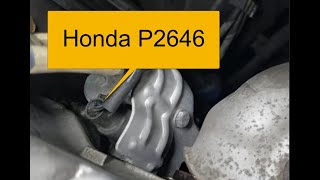
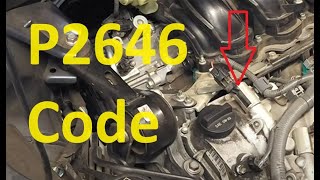
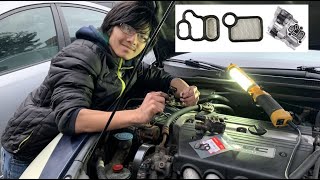
🎬 Watch: A complete guide to fixing the P2646 code.Can I Drive With U2646?
yes_but_not_recommended. You can drive, but your engine enters a 'limp mode' limiting RPMs to 3,000, causing sluggish acceleration that is unsafe for highway merging. Continuing to drive for more than a few days risks starving the valvetrain of oil, causing premature camshaft and rocker arm wear. Address the issue immediately to prevent catastrophic engine failure from severe sludge.
Common Causes

- Low, Dirty, or Incorrect Viscosity Engine Oil (Very Common) — The variable valve lift system is hydraulic and requires precise oil pressure. Low oil level is the primary cause. Old, sludgy oil or using the wrong weight (e.g., 5W-30 instead of 5W-20) prevents the system from building actuation pressure.
- Clogged VTEC/Actuator Solenoid Gasket Screen (Very Common) — The solenoid assembly uses fine mesh filter screens to block debris. These screens frequently clog with engine sludge, restricting oil flow to the actuator and triggering the code.
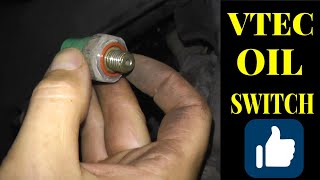
- Faulty Rocker Arm Oil Pressure Switch/Sensor (Common) — This sensor tells the PCM when the system achieves sufficient oil pressure. These switches fail internally, sending a false 'low pressure' signal even when mechanical oil pressure is perfect.
- Faulty VTEC/Rocker Arm Oil Control Solenoid (Common) — This electronically controlled valve directs oil flow to the actuator. It fails electrically (shorted coil) or mechanically (stuck plunger), physically blocking oil from reaching the rocker arm assembly.
- Water Intrusion into Electrical Connectors (Less Common) — On older Honda CR-Vs and Elements, degraded cowl seals allow rainwater to drip directly onto the VTEC solenoid connectors. This causes corrosion and electrical shorts.
- Faulty Aftermarket Oil Filter (Rare) — Low-quality aftermarket oil filters with poor flow rates or incorrect bypass valve specifications restrict overall engine oil pressure, starving the valve lift system.
- Wiring or Connector Issues (Rare) — Frayed wires, loose pins, or severe corrosion on the engine harness interrupt electrical signals between the PCM and the oil pressure switch or control solenoid.
- Failing Powertrain Control Module (PCM) (Very Rare) — The PCM itself fails to send the correct command to the solenoid or misinterprets the pressure switch signal. Rule out all mechanical and wiring faults before replacing the PCM.
Symptoms

- Check Engine Light is on — The PCM illuminates the Malfunction Indicator Lamp (MIL) immediately upon detecting the fault.
- Reduced Engine Power and Limp Mode — The engine feels sluggish, stumbles during acceleration, and enters 'limp mode,' hard-limiting engine speed to 3,000 RPM to prevent valvetrain damage.
- Increased Fuel Consumption — Because the engine cannot utilize its efficient high-RPM valve timing profile, fuel economy drops by 5-15%.
- Engine Ticking or Valve Train Noise — Lack of oil pressure in the valvetrain causes an audible ticking or chattering noise from the top of the engine block.
Diagnostic Flowchart
Tap your situation to follow the diagnostic path that matches what you're seeing on this code.
Common Fixes & Costs
- Change Engine Oil and Filter — Parts: $30-$80, Labor: $50-$125, ~0.5 hr book time
- Clean or Replace VTEC Solenoid Gasket/Screen — Parts: $10-$30, Labor: $80-$160, ~1.2 hr book time
- Replace Rocker Arm Oil Pressure Switch/Sensor — Parts: $25-$80, Labor: $80-$150, ~1 hr book time
- Replace VTEC/Rocker Arm Oil Control Solenoid Assembly — Parts: $120-$350, Labor: $100-$250, ~1.5 hr book time
- Perform Engine Flush — Parts: $20-$40, Labor: $100-$200, ~1 hr book time
DIY vs Professional
- Change Engine Oil and Filter — Beginner:
Tools: Wrench for drain plug, oil filter wrench, drain pan, funnel. - Clean or Replace VTEC Solenoid Gasket/Screen — Beginner:
Tools: 10mm socket or wrench, ratchet, torque wrench. - Replace Rocker Arm Oil Pressure Switch — Beginner:
Tools: Deep socket (often 22mm or 24mm), ratchet, extension. - Replace VTEC Solenoid Assembly — Beginner:
Tools: 10mm socket/wrench, torque wrench, deep socket for pressure switch transfer. - Perform Engine Flush — Beginner:
Tools: Engine flush chemical, new oil and filter, standard oil change tools.
Used vs. New Parts: Buying Guide
When a used part is worth it: Buying a used OEM VTEC Solenoid Assembly from a low-mileage vehicle is a cost-effective alternative to a new aftermarket part, which often has questionable reliability.
Donor-vehicle mileage cap: roughly under 80000 miles for the part to have meaningful remaining life.
Donor quality checklist:
- Verify the donor vehicle was not scrapped due to engine failure or oil sludge issues.
- Choose an OEM part (e.g., Honda/Acura) over an unknown brand; aftermarket solenoids fail quickly.
- Inspect the electrical connectors for green corrosion or water damage.
- Ensure the part number matches exactly, as variations exist within the same engine family.
Decision logic:
- If Vehicle is newer or has low mileage (<100K miles) → Buy a new OEM part to ensure longevity and reliability.
- If Vehicle is older (>150K miles) and the budget is tight → A used OEM solenoid from a documented low-mileage donor is the best choice.
- If The only options are a high-mileage used part or a new aftermarket part → Favor a new aftermarket part from a reputable brand (like Dorman) that offers a warranty.
Warranty tradeoff: Used salvage parts offer a 30-90 day warranty. New aftermarket parts offer 1-year to limited lifetime warranties. New OEM parts carry a 1-year warranty.
Worst-case if a used part fails: $300-$500 if a used part fails shortly after installation, requiring repeat labor and a second replacement part.
What Happens If You Wait — Timeline
- 0-2 weeks: Check Engine Light illuminates. The vehicle runs normally or with a very subtle hesitation when accelerating past 3,000 RPM. (MPG impact: 0-5%% · Added cost: $0)
- 2 weeks - 3 months: Engine performance drops noticeably. The car enters 'limp mode,' limiting RPMs and making acceleration sluggish. Fuel economy drops. (MPG impact: 5-15%% · Added cost: $20-$80 in wasted fuel.)
- 3-6 months: Incorrect oil pressure causes accelerated wear on valvetrain components like camshaft lobes and rocker arms. An audible ticking develops. (MPG impact: 10-20%% · Added cost: $800-$2,000 for valvetrain repairs.)
- 6+ months: Severe oil sludge completely blocks major oil passages. This starves critical engine parts of lubrication, causing catastrophic failure. (MPG impact: 15-25%% · Added cost: $3,000-$7,000+ for a replacement engine.)
Cost of Not Fixing It
- 0-1 month: Noticeable drop in fuel economy (5-15%), poor acceleration, and unsafe hesitation in traffic. (Added cost: $20-$60 per month in extra fuel costs.)
- 1-6 months: Increased wear on valvetrain components (camshaft lobes, rocker arms) due to incorrect oil pressure, leading to ticking noises. (Added cost: $800-$2000 for camshaft or rocker arm replacement.)
- 6+ months: Severe oil sludge blocks critical oil passages, starving the engine of lubrication and causing catastrophic engine failure. (Added cost: $3000-$7000+ for a used or rebuilt engine installation.)
Diagnosis Steps

- Check Engine Oil Level and Condition
Pull the dipstick, wipe it, re-insert, and check the level. Ensure it is at the 'Full' mark. If the oil is black, thick, or gritty, change it immediately. Confirm you are using the manufacturer-specified oil viscosity.
Tools: Rag or paper towel (Beginner) - Scan for Other Codes and Review Freeze Frame Data
Use an OBD-II scanner to confirm P2646 is the only code. Codes like P0521 (Engine Oil Pressure) indicate a catastrophic engine-wide oil pressure failure. Review freeze frame data to identify the RPM and temperature when the code triggered.
Tools: OBD-II Scanner (Beginner) - Inspect and Clean Solenoid Screens
Remove the VTEC solenoid assembly (typically three 10mm bolts). Inspect the fine mesh screen on the gasket for sludge. Clean it thoroughly with brake cleaner and compressed air. Replace the gasket if the rubber is brittle or the screen is torn.
Tools: 10mm socket, ratchet, brake cleaner, replacement gasket (Intermediate) - Inspect Electrical Connectors and Wiring
Visually inspect the wiring for the rocker arm oil control solenoid and the oil pressure switch. Look for green corrosion, water damage, loose pins, or frayed wires.
Tools: Flashlight (Beginner) - Test the Rocker Arm Oil Pressure Switch Continuity
Disconnect the pressure switch connector. With the engine OFF, set a multimeter to Ohms (Ω). Probe the switch terminals. You must see continuity to ground (less than 1 ohm). An open circuit means the switch is dead.
Tools: Multimeter (Intermediate) - Test the VTEC/Rocker Arm Oil Control Solenoid Resistance
Disconnect the solenoid connector. Use a multimeter set to Ohms (Ω) to check resistance across the solenoid pins. Honda K-series engines require 14-30 Ohms. Zero ohms (short) or infinite ohms (open) means the solenoid requires replacement.
Tools: Multimeter (Intermediate) - Test the Rocker Arm Oil Pressure Switch Connector Voltage
Turn the ignition to 'ON' (engine off). Set a multimeter to DC Volts and probe the harness-side connector for the pressure switch. It must show battery voltage (~12V). No voltage indicates a wiring harness or PCM failure.
Tools: Multimeter (Intermediate) - Advanced: Live Data Scan Tool Analysis
Monitor the live data PID for 'VTEC Pressure Switch'. The status must change from 'Off' to 'On' as you rev past 3,000 RPM. Use bidirectional controls to command the solenoid 'On' at idle to verify the switch and wiring respond.
Tools: Advanced OBD-II Scan Tool (Advanced) - Advanced: Direct Mechanical Oil Pressure Test
Remove the oil pressure switch and attach a mechanical oil pressure gauge. Start the engine and command the VTEC system on via a scan tool. Pressure must hit manufacturer specs (e.g., 57 PSI for Honda). Low pressure confirms a mechanical blockage or failing oil pump.
Tools: Oil pressure gauge kit, Advanced OBD-II Scan Tool (Advanced)
When This Code Triggers (Freeze-Frame Conditions)
- Engine Coolant Temp: 180-210°F (82-99°C) (Engine is at full operating temperature.)
- Engine RPM: 2500-4000 RPM (During acceleration when the PCM commands the valve lift system to engage.)
- Engine Load: 20-50% (Under moderate load, not typically during heavy acceleration or at idle.)
- Vehicle Speed: 40-65 mph (65-105 kph) (Occurs at steady highway speeds or during a gradual increase in speed.)
Related Codes
- P2647 — The opposite code: 'A' Rocker Arm Actuator System Stuck On. P2646 means it won't turn on; P2647 means it won't turn off. Diagnosis and failed components are identical.
- P0011 — 'A' Camshaft Position - Timing Over-Advanced. P2646 relates to valve LIFT; P0011 relates to camshaft TIMING. If both trigger, you have a severe engine-wide oil pressure or sludge problem.
- P0521 — Engine Oil Pressure Sensor Performance. P0521 indicates a failure of MAIN engine oil pressure. If present with P2646, the root cause is a failing oil pump or blocked pickup tube.
- P3400 — Cylinder Deactivation System Bank 1. On Honda V6 engines, VCM and VTEC use similar oil pressure spool valves. Low oil pressure triggers both codes simultaneously.
Climate & Environmental Factors
- Cold Weather: Low temperatures increase oil viscosity. Old or incorrect, thicker oil fails to flow quickly into the VTEC system's narrow passages on a cold start, preventing required pressure buildup.
- High Humidity / Heavy Rain: On Honda CR-Vs and Elements, leaking cowl or windshield seals allow rainwater to drip directly onto the VTEC solenoid connectors, causing corrosion and electrical shorts.
- Altitude: Altitude has no impact on P2646. The system relies entirely on internal hydraulic oil pressure, which is unaffected by ambient air pressure.
How to Talk to a Mechanic About This Code
Say this: "I have a P2646 code and hesitation. Please start by checking the oil condition, testing the VTEC oil pressure switch, and inspecting the solenoid screens before quoting a full VTEC assembly replacement."
This proves you understand the common, inexpensive failure points. It forces the technician to follow a logical diagnostic path instead of immediately upselling the most expensive repair.
Avoid saying:
- 'Just fix whatever's wrong'
- 'My check engine light is on, can you look at it?'
- 'Whatever you think is best'
Questions to ask before authorizing the repair:
- Was the oil level low or was the oil condition poor?
- Did you test the oil pressure switch? What were the exact resistance results?
- Did you inspect the VTEC solenoid screens? Were they clogged?
- If replacing the entire assembly, did both the switch and the solenoid fail their individual electrical tests?
- What is the warranty on this specific repair, for both parts and labor?
Where to Take It: Dealer vs Independent vs Chain
- Dealer:
Recommended only for warranty work or specific TSB software fixes. Otherwise, an independent shop is far more cost-effective.
Best for: Vehicles under powertrain warranty., Toyota models requiring a PCM recalibration per a TSB., Complex electrical diagnosis if other shops fail.
Downsides: Highest labor rates., Highly likely to recommend replacing the entire $400 VTEC solenoid assembly rather than a $50 switch. (Typical cost: +50% vs. baseline) - Independent Shop:
Best fit. An experienced independent mechanic fixes P2646 frequently and knows to check the oil, switch, and screens first.
Best for: Out-of-warranty vehicles, especially Hondas., Cost-conscious owners wanting proper diagnosis, not just a part swap.
Downsides: Quality varies. Look for a shop specializing in Japanese makes. (Typical cost: +0% vs. baseline) - Chain Shop:
Acceptable for an oil change. For further diagnosis, use an independent shop to avoid misdiagnosis.
Best for: Performing a simple oil and filter change.
Downsides: Technician skill varies dramatically., Incentivized to upsell an entire solenoid assembly replacement without proper step-by-step diagnosis. (Typical cost: -10% vs. baseline)
When to Walk Away From the Repair
If the estimated repair cost exceeds 40% of the car's private-party value, consider selling or trading in the vehicle.
- Car worth $4500, fix is $500: Fix it. This repair is well below the threshold and restores critical engine function.
- Car worth $3000, fix is $1500: Borderline. This repair is 50% of the car's value. Get a second opinion and evaluate the car's overall health.
- Car worth $2000, fix is $1500: Walk away. The repair cost is 75% of the car's value and is a poor financial decision.
What Scan Tool You Need for This Code
Minimum: A basic code reader confirms the code. However, the first diagnostic step is a visual oil check, not complex data analysis.
A $30 reader confirms P2646 but cannot show live data. You need live data to see if the VTEC oil pressure switch changes state when revving the engine, which differentiates a bad switch from a true pressure problem.
Budget: BlueDriver Bluetooth Pro or FOXWELL NT301 (~$70) — Graphs live data PIDs. You can watch the 'VTEC Pressure Switch' status in real-time to verify it functions.
Mid-range: Innova 5610 or XTOOL D7 (~$350) — Adds bidirectional control. You can command the VTEC solenoid 'On' at idle to hear it click and watch for an oil pressure response.
Professional: Autel MaxiCOM MK808Z or TOPDON Phoenix Series (~$450-900) — Offers full bidirectional controls and dealer-level functions, such as performing the PCM recalibration specified in Toyota TSBs.
Rent vs buy: For a one-time diagnosis, borrow a free OBD2 scanner from AutoZone to confirm the code. If you DIY repairs regularly, buy a budget pick with live data capabilities.
How to Clear the Code After You Fix It
- Use an OBD-II scan tool to clear the diagnostic trouble code.
- Perform a complete drive cycle to allow readiness monitors to run.
- Reconnect the battery (last resort, as this clears all memory and readiness monitors).
Drive cycle (~30 minutes): Start the engine cold and idle for 3 minutes. Drive in mixed city/highway conditions, including steady cruising above 45 mph. Accelerate through the 2,500-4,000 RPM range multiple times to force the VTEC system to engage. The code clears automatically after 3-5 successful warm-up cycles without the fault reoccurring.
Readiness monitors affected: Comprehensive Component Monitor, Catalyst Monitor, Oxygen Sensor Monitor
Before emissions retest: drive at least 100 miles to fully set monitors.
Watch out for:
- Disconnecting the battery clears the code but resets all OBD-II readiness monitors, causing an automatic emissions test failure.
- The code returns immediately upon hitting 3,000 RPM if the root cause (e.g., clogged screen) was not fixed.
Will This Fail Emissions / State Inspection?
Yes — this code typically fails an OBD-II emissions inspection.
- California: An illuminated Check Engine Light from P2646 is an automatic smog check failure. After repair, readiness monitors require driving 50-100 miles before a retest.
- New York: The NYS inspection includes an OBD-II scan. An active P2646 code results in an automatic emissions test failure.
- Texas: In the 17 emissions-testing counties, an active P2646 code fails the inspection. Uncleared readiness monitors also result in failure.
Most Commonly Affected Vehicles

- Honda Accord (2003-2012) — Extremely common on 2.4L K24 engines. TSB 13-021 specifically addresses the failure of the rocker arm oil pressure switch.
- Honda CR-V (2002-2014) — The K24 engine is highly susceptible. Water intrusion from degraded cowl seals is a frequent secondary cause on 2002-2006 models.
- Honda Element (2003-2011) — Shares the K24 engine and the exact same water intrusion vulnerabilities as the CR-V. TSB 13-021 applies.
- Honda Civic (2002-2015) — Common in Si models with K-series engines (2002-2011) and EX/LX models with the 1.8L R18 engine.
- Acura TSX (2004-2014) — Uses the K24 engine, making it equally susceptible to oil pressure-related VTEC screen clogs and switch failures.
- Toyota Corolla, RAV4, C-HR (2014-2020) — Affects 2ZR-FAE Valvematic engines. TSBs T-SB-0011-14 and T-SB-0098-19 address this, often requiring a PCM recalibration rather than parts replacement.
- Chevrolet Malibu (2014-2015) — On the 2.5L LKW Ecotec engine, this code points directly to a failed intake rocker arm control solenoid.
- Subaru Forester, Outback, Legacy (2006-2012) — Relates to the AVLS (Active Valve Lift System). Causes are identical: faulty oil pressure switch, bad control solenoid, or clogged oil passages.
Manufacturer-Specific Notes
- Honda/Acura: Honda issued TSB 13-021 noting the rocker arm oil pressure switch (P/N 37250-PNE-G01) fails frequently and requires replacement. Additionally, water intrusion from failed cowl seals dripping onto the VTEC assembly is a documented cause on CR-Vs and Elements.
- Toyota: On Valvematic engines, P2646 is often a software glitch. TSBs T-SB-0011-14 and T-SB-0098-19 recommend a PCM recalibration. An active test using a scan tool to cycle the valve lift controller sometimes resolves the issue without parts.
- General Motors (GM): On the 2.5L Ecotec engine, the system is called 'Intake Valve Lift Control'. P2646 almost exclusively points to a failed intake rocker arm control solenoid, a known weak point.
- Subaru: Subaru's AVLS operates on only one of the two intake valves per cylinder to create swirl. Diagnosis focuses on the oil control solenoid and its adjacent oil pressure switch (P/N 25240AA060).
Real Owner Stories
2007 Honda Element at 170K miles - The Simple Fix
Car stuttered with loss of power, unable to accelerate past 2,900 RPM. Check engine light illuminated.
What they tried:
- Checked oil and found it dirty. Inspected the VTEC solenoid filter and found it clogged with a cracked gasket.
Outcome: Replaced the solenoid filter/gasket (Honda P/N 15815-RAA-A02) and performed an oil change. The code cleared after 10 miles and power was restored.
Lesson: Check the inexpensive parts first. A clogged screen and a fresh oil change fixes P2646 for under $30 in parts.
2007 Honda Element at 259K miles - The Misdiagnosis
Check engine light, VSA light, and limp mode appeared with code P2646.
What they tried:
- Replaced the VTEC spool valve assembly with an aftermarket part. Code returned 7,000 miles later.
- Replaced it again with a genuine Honda OEM spool valve assembly. The code still returned.
Outcome: An independent specialist found the secondary front engine oil screen was clogged. The owner wasted hundreds on main solenoid assemblies.
Lesson: Throwing expensive parts at the problem wastes money. The issue is often a secondary clogged passage or electrical fault, even if the main solenoid is new.
2004 Honda Element at 193K miles - The Unusual Cause
A persistent P2646 code that shops couldn't fix. The owner noticed the problem worsened after heavy rain.
What they tried:
- Multiple shops replaced the spool valve and pressure switch over 18 months, but the code always returned.
- The owner traced water pooling on the VTEC assembly to leaking windshield washer nozzles on the hood.
Outcome: Sealed the leaking washer nozzles with silicone, replaced the corroded electrical connector pigtail, and installed a new pressure switch. This permanently solved the issue.
Lesson: On Honda Elements and CR-Vs, water intrusion is a known cause. If the code appears after rain, inspect the VTEC solenoid area for moisture and leaking cowl seals.
How to Prevent This Code From Triggering
- Perform regular oil changes with manufacturer-specified oil. (Per owner's manual 'severe service' schedule (typically 5,000 miles).) — The VTEC system is highly sensitive to oil quality. Fresh oil prevents sludge buildup that clogs solenoid screens, the leading cause of P2646.
- Use high-quality or OEM oil filters. (With every oil change.) — OEM filters are designed with specific flow rates and bypass valve pressures. Cheap filters restrict oil flow, starving the VTEC system.
- Avoid frequent short trips and extended idling. (Daily habit.) — Short trips prevent engine oil from reaching full operating temperature, trapping moisture and fuel contaminants that accelerate sludge formation.
- Periodically inspect cowl and hood seals (Honda CR-V/Element). (Twice a year, before rainy seasons.) — Degraded seals allow water to drip directly onto the VTEC solenoid's electrical connectors, causing corrosion and shorts.
Frequently Asked Questions
Is it safe to drive with code P2646?
No. The vehicle enters a limp mode that limits acceleration, making highway merging dangerous. Extended driving risks permanent camshaft damage from oil starvation.
Will a simple oil change fix code P2646?
Yes, frequently. If low or dirty oil triggered the code, an oil and filter change using the correct viscosity restores proper hydraulic pressure.
I got a U2646 code, not P2646. What's the difference?
U2646 is a scanner misread or typo. The actual fault is P2646, a standard powertrain code for the rocker arm actuator system.
What is 'Bank 1'?
Bank 1 is the side of the engine containing cylinder #1. On inline 4-cylinder engines, there is only one bank, always referred to as Bank 1.
Does P2646 always mean a bad VTEC solenoid?
No. Mechanics frequently misdiagnose this. The root cause is usually low oil, a clogged $20 filter screen, or a faulty $50 oil pressure switch.
Can I just clean the VTEC solenoid screen instead of replacing it?
Yes, you can clean an intact screen with brake cleaner and compressed air. However, replacing the inexpensive gasket/screen assembly prevents leaks from brittle rubber.
Can water cause a P2646 code?
Yes, especially on Honda CR-Vs and Elements. Degraded cowl seals allow rainwater to drip onto the VTEC solenoid connectors, causing electrical shorts.
How much does it cost to fix P2646?
Costs range from $80 for a DIY oil change to $600 for a shop to replace the entire solenoid assembly. Always start with checking the oil and cleaning the solenoid screen.
Key Takeaways
- Your scanner likely misread P2646 as U2646; treat this as a standard P2646 powertrain code.
- Low or dirty engine oil causes over 50% of P2646 codes; check your dipstick before buying any parts.
- Honda K-series engines (2003-2014 Accord, CR-V, Element) trigger this code most frequently due to clogged VTEC solenoid screens.
- Replace the $20 VTEC gasket screen or $50 oil pressure switch before spending $300+ on a complete solenoid assembly.
- Driving with P2646 limits engine speed to 3,000 RPM and risks permanent camshaft damage from oil starvation within weeks.
Helpful Videos

The information in this article is provided for general reference and educational purposes only. Vehicle specifications, procedures, and part compatibility can vary by production date, trim level, and region. Always consult your vehicle's factory service manual and verify part numbers before purchasing or performing repairs. Safety-critical components such as airbags, seat belts, and braking systems should be installed by a qualified professional.
- 🎬 Helpful Videos
- What Does U2646 Mean?
- Can I Drive With U2646?
- Common Causes
- Symptoms
- Diagnostic Flowchart
- Common Fixes & Costs
- DIY vs Professional
- Used vs. New Parts: Buying Guide
- What Happens If You Wait — Timeline
- Cost of Not Fixing It
- Diagnosis Steps
- When This Code Triggers (Freeze-Frame Conditions)
- Related Codes
- Climate & Environmental Factors
- How to Talk to a Mechanic About This Code
- Where to Take It: Dealer vs Independent vs Chain
- When to Walk Away From the Repair
- What Scan Tool You Need for This Code
- How to Clear the Code After You Fix It
- Will This Fail Emissions / State Inspection?
- Most Commonly Affected Vehicles
- Manufacturer-Specific Notes
- Real Owner Stories
- 2007 Honda Element at 170K miles - The Simple Fix
- 2007 Honda Element at 259K miles - The Misdiagnosis
- 2004 Honda Element at 193K miles - The Unusual Cause
- How to Prevent This Code From Triggering
- Frequently Asked Questions
- Is it safe to drive with code P2646?
- Will a simple oil change fix code P2646?
- I got a U2646 code, not P2646. What's the difference?
- What is 'Bank 1'?
- Does P2646 always mean a bad VTEC solenoid?
- Can I just clean the VTEC solenoid screen instead of replacing it?
- Can water cause a P2646 code?
- How much does it cost to fix P2646?
- Key Takeaways
- 🎟️ Get 5% Off