

OBD-II Code U2603: Lost Communication With Battery Module
What U2603 means, why it triggers, and how to fix it
- Code U2603, especially alongside codes U2604-U2624, indicates a failed Battery Energy Control Module (BECM) in 2016-2019 Chevrolet Volts.
- Stop driving immediately; vehicles with code U2603 will suddenly lose all propulsion power and shut down in traffic.
- Test the 12-volt battery first, as voltage drops below 12.4V trigger false communication errors across multiple control modules.
- Call a Chevrolet dealer with your VIN to claim a free BECM replacement under GM Special Coverage N232432680, valid for 15 years or 150,000 miles.
What Does U2603 Mean?

U2603 indicates the Battery Energy Control Module (BECM) lost connection to a subordinate module monitoring the high-voltage battery. This critical communication failure disrupts charging, propulsion, and starting.
Technical definition: Battery Energy Control Module Lost Communication with Hybrid/EV Battery Interface Control Module 1
Can I Drive With U2603?
No — Do Not Drive. Do not drive. The vehicle will enter a reduced power mode or shut down completely without warning, even at highway speeds, creating a severe safety risk. The cost of a tow is minimal compared to losing motive power in traffic.
Common Causes

- Internal failure of the Battery Energy Control Module (BECM) (Very Common) — The module develops an internal hardware fault, specifically cracked solder joints on the circuit board, preventing communication. GM acknowledges this widespread defect in 2016-2019 Volts via TSB 18-NA-261.
- Weak or failing 12-volt battery (Common) — The 12-volt battery powers all control modules. Voltage dropping below 12.4V causes a cascade of communication errors, including U2603. Always check this first.
- Wiring, connector, or ground issues (Less Common) — Damaged wires, loose ground points, or corroded connectors between the BECM and battery interface modules interrupt the CAN bus signal.
- Software glitches (Rare) — Outdated software causes communication drops. A dealer re-program resolves this in specific models like the Chrysler Pacifica Hybrid.
- Extreme cold temperatures (Rare) — In vehicles like the Chrysler Pacifica Hybrid, the Battery Pack Control Module fails to 'wake up' in single-digit temperatures, triggering equivalent communication codes.
Symptoms

- Vehicle will not start or shift out of Park — The car powers on accessories but refuses to enter 'Ready' mode, displaying a 'Shift to Park' message and locking the transmission.
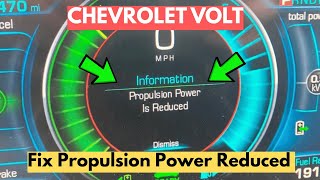
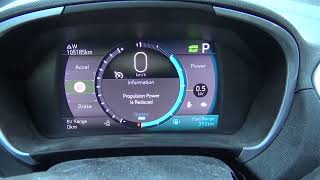
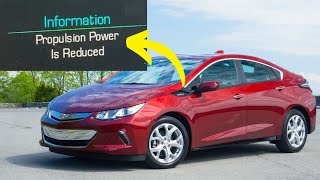
- "Propulsion Power Reduced" message — The vehicle limits power output to protect the high-voltage system, severely restricting acceleration.
- "Unable to Charge" message — The high-voltage battery refuses to charge when plugged in, or charging aborts unexpectedly.
- Vehicle stalls while driving — The car suddenly loses all propulsion power and shuts down in motion.
- Fluctuating EV range — The dashboard displays zero electric range or erratic numbers despite a full charge, often accompanied by a disabled A/C system.
- Check Engine Light is on — The primary indicator that the hybrid powertrain system has logged a critical fault.
- Multiple U26xx codes stored (scan-tool only — no driver-felt sign) — A scan tool reveals a sequential block of codes (U2603 through U2624), confirming widespread communication loss with battery interface modules.
Diagnostic Flowchart

Tap your situation to follow the diagnostic path that matches what you're seeing on this code.
Common Fixes & Costs
- Replace Battery Energy Control Module (BECM) — Parts: $400-$600 ($0 if covered under GM Special Coverage N232432680), Labor: $1200-$2200 ($0 if covered under GM Special Coverage N232432680), ~8.5 hr book time (Professional)
- Replace 12-Volt Battery — Parts: $150-$300, Labor: $50-$100, ~0.5 hr book time (DIY)
- Repair Wiring or Connector — Parts: $20-$100, Labor: $200-$500, ~2.5 hr book time (Intermediate)
- Reprogram BECM — Parts: $0, Labor: $150-$300, ~1.5 hr book time (Professional)
DIY vs Professional
- Replace Battery Energy Control Module (BECM) — Beginner:
Tools: Vehicle lift, high-voltage battery lift table, high-voltage safety equipment, GM VCX Nano, SPS2 subscription. - Replace 12-Volt Battery — Beginner:
Tools: Basic hand tools (socket set, wrench). - Repair Wiring or Connector — Beginner:
Tools: Multimeter, wiring diagrams, wire strippers, soldering iron, heat shrink tubing. - Reprogram BECM — Beginner:
Tools: GM-approved VCI, laptop, active GM SPS2 subscription.
Used vs. New Parts: Buying Guide
When a used part is worth it: A used BECM is never recommended. The failure stems from a known manufacturing defect, guaranteeing a used part will fail similarly. Only consider a mail-in repair service if a new OEM part is unavailable.
Donor-vehicle mileage cap: roughly under 30000 miles for the part to have meaningful remaining life.
Donor quality checklist:
- Verify the part is the latest GM part number (#24296900).
- Avoid parts from vehicles of the same age or higher mileage.
- A mail-in repair service for your existing module is vastly superior to a random used part.
Decision logic:
- If Vehicle is a 2016-2019 GM model with U2603 → Buy a new OEM part. The risk of a used part failing again is too high.
- If Budget is extremely tight and the car's value is low → Use a mail-in repair service over a used part for better reliability.
Warranty tradeoff: Used parts offer a 30-90 day warranty. New OEM parts installed by a dealer carry a 1-2 year warranty. Mail-in repair services often provide a limited lifetime warranty.
Worst-case if a used part fails: $1500-$2500 if a used BECM fails, requiring repeat labor to drop the battery pack again.
What Happens If You Wait — Timeline
- 0-4 weeks: Intermittent Check Engine Light. Code U2603 appears and clears itself. Symptoms like 'Unable to Charge' show up briefly but disappear after restarting. (MPG impact: 0%% · Added cost: $0)
- 1-3 months: The Check Engine Light stays on permanently. The car occasionally refuses to start or shift into gear, requiring multiple restarts. (MPG impact: 0-5%% · Added cost: $100-$300 (Cost of a tow))
- 3-6 months: The vehicle becomes completely unreliable. The car stalls while driving and loses all propulsion power without warning. (MPG impact: N/A (Vehicle is undrivable)% · Added cost: $2500 (Cost of BECM repair))
- 6+ months: Continued operation prevents proper battery cell balancing and temperature control, leading to irreversible degradation of the high-voltage battery. (MPG impact: N/A% · Added cost: $8000-$15000 (Full high-voltage battery replacement))
Cost of Not Fixing It
- Immediate: Vehicle fails to start or becomes stranded without warning. Sudden loss of propulsion while driving is a significant safety risk. (Added cost: $100-$300 for a tow.)
- Days to Weeks: Intermittent no-start and stalling issues become permanent. Total inability to charge the high-voltage battery. (Added cost: Cost of alternative transportation.)
- Weeks to Months: A failing BECM stops balancing the high-voltage battery cells, leading to permanent, irreversible degradation of the main battery pack. (Added cost: $8000-$15000)
Diagnosis Steps
- Read All Diagnostic Trouble Codes (DTCs)
Use an OBD-II scanner to check for U2603 and the critical U2604-U2624 block. Multiple simultaneous U26xx codes confirm a central BECM failure.
Tools: OBD-II Scanner (Beginner) - Perform a Thorough 12-Volt System Check
Test the 12-volt battery after the car rests for several hours. A healthy battery reads 12.6-12.8V. Anything below 12.4V requires replacement. Perform a load test to ensure voltage stays above 9.6V under load.
Tools: Multimeter, Battery Load Tester (Beginner) - Check GM Special Coverage N232432680
If diagnosing a 2016-2019 Chevy Volt, stop testing and contact a dealer with your VIN. GM covers this specific BECM failure for 15 years or 150,000 miles.
Tools: Phone, VIN (Beginner) - Inspect Wiring Harnesses and Ground Points
Visually inspect the high-voltage battery wiring harness and module ground points for corrosion or loose connections. Improper factory routing sometimes causes tension and open circuits.
Tools: Flashlight, Inspection Mirror (Intermediate) - Test CAN Bus Network Integrity
Measure resistance between CAN High and CAN Low (OBD-II pins 6 and 14) with the battery disconnected. A healthy network reads 60 ohms. 120 ohms indicates a broken circuit; 0 ohms indicates a short.
Tools: Multimeter (Advanced) - Professional Diagnosis of the BECM
If the 12V battery and wiring pass, the BECM requires replacement. This requires a dealership or EV specialist to de-energize and drop the high-voltage battery pack.
Tools: Professional Scan Tool, High-Voltage Safety Equipment (Professional)
When This Code Triggers (Freeze-Frame Conditions)
- Vehicle State: Key On or Driving (The fault sets at any time the vehicle is on, either during startup or while driving.)
- 12V System Voltage: 9-16V (The code triggers if the 12V battery voltage is unstable, even if it briefly reads within the normal operating range.)
- Time Since Startup: Variable (Communication loss occurs immediately at startup or intermittently after hours of driving.)
Related Codes
- U2604-U2624 — Functionally identical to U2603. Seeing this block of codes confirms a central BECM fault.
- P1E00 — A generic request from the BECM to turn on the Check Engine Light. It does not indicate a separate fault.
- P0AC4 — Serves the exact same purpose as P1E00. It is a secondary code triggered by the primary U2603 fault.
- U0111 — The generic SAE code for 'Lost Communication With Battery Energy Control Module A' used by Ford and Chrysler.
Climate & Environmental Factors
- Extreme Cold: Causes the BPCM circuit board in Chrysler Pacifica Hybrids to fail to 'wake up' in single-digit temperatures, triggering equivalent communication codes.
- Thermal Cycling and Vibration: Cumulative stress from years of heating, cooling, and road vibration cracks the internal solder joints on the Chevrolet Volt BECM.
How to Talk to a Mechanic About This Code
Say this: "I have a Chevrolet Volt with a Check Engine Light, and my scanner shows codes U2603 through U2624. I believe this indicates the BECM failure covered under TSB 18-NA-261. Can I bring it in to confirm the diagnosis and check if my VIN is covered by Special Coverage N232432680?"
This signals you are an informed owner. It focuses the service advisor on the correct repair path and immediately brings the special coverage into the conversation.
Avoid saying:
- 'My car won't start, can you fix it?'
- 'My check engine light is on, can you look at it?'
- 'I think my battery is dead.'
Questions to ask before authorizing the repair:
- Can you confirm my vehicle's VIN is covered under GM Special Coverage N232432680?
- If it is not covered, can you provide a detailed quote with the part number for the BECM, estimated labor hours, and total cost?
- What is the warranty on the new BECM part and the labor?
- What is the estimated time to get the new BECM and complete the repair?
- Does GM offer a loaner vehicle or rental reimbursement for this special coverage repair?
Where to Take It: Dealer vs Independent vs Chain
- Dealer:
Strongly Recommended. The GM Special Coverage makes the dealer the best choice for a free repair. For out-of-warranty work, they remain the most reliable option due to high-voltage safety and programming requirements.
Best for: Vehicles under the GM Special Coverage (N232432680) or Voltec warranty., Accessing the latest, superseded OEM parts., Properly programming the new module to the vehicle.
Downsides: Highest labor rate if paying out-of-pocket., Service advisors initially unaware of the special coverage require customer persistence., Long wait times for parts or service appointments. (Typical cost: +50% vs. baseline) - Independent Shop:
Use with extreme caution. Only a top-tier independent shop with certified EV technicians and GM programming software should be considered.
Best for: Out-of-warranty vehicles where the owner trusts a shop specializing in EV/Hybrid repair., Lower labor rates for an out-of-pocket repair.
Downsides: Most general auto shops are unequipped to work on high-voltage battery systems., Non-specialists misdiagnose the issue or cannot program the new module., Cannot perform the repair for free under the GM Special Coverage program. (Typical cost: +0% vs. baseline) - Chain Shop:
AVOID. Do not take your vehicle to a chain shop for a U2603 code. They cannot address the underlying BECM failure.
Best for: Replacing the 12-volt battery.
Downsides: Completely unequipped for high-voltage system diagnosis and repair., High risk of misdiagnosis. (Typical cost: -10% vs. baseline)
When to Walk Away From the Repair
If the estimated out-of-warranty repair cost ($2,100-$2,500) exceeds 40-50% of the car's private-party value, weigh the decision carefully.
- Car worth $7500, fix is $2400: Fix it. The repair cost is 32% of the car's value. Fixing this known failure point with a new part provides significant future reliability.
- Car worth $4500, fix is $2400: Walk away. The repair cost is over 53% of the vehicle's value. It is not economical to proceed unless the car is otherwise flawless.
What Scan Tool You Need for This Code
Minimum: A basic OBD-II code reader confirms the presence of the U2603-U2624 code block.
A basic reader cannot perform deeper diagnostics like reading individual battery cell voltages or accessing ABS and Airbag modules.
Budget: BlueDriver Pro or Veepeak OBDCheck BLE (~$30-120) — Connects to a smartphone app to read the specific U26xx codes and access other modules on GM vehicles.
Mid-range: Innova 5610 or ANCEL TD700 (~$120-350) — Provides deeper access to GM-specific systems. The Innova 5610 includes a Hybrid/EV battery test function.
Professional: Autel MaxiCOM MK808 or iCarsoft CR Max (~$500-1200) — Offers bidirectional control, full OEM-level diagnostics, and service functions (BECM programming still requires a dealer subscription).
How to Clear the Code After You Fix It
- Reconnect 12V battery if disconnected
- Use an OBD-II scan tool to clear all diagnostic trouble codes
- Perform a complete GM drive cycle to allow readiness monitors to run
Drive cycle (~30 minutes): Cold start (engine temp below 122°F). Idle for 2.5 minutes with A/C and rear defroster on. Accelerate to 55 mph and hold steady for 3 minutes. Coast down to 20 mph without braking. Accelerate to 55-60 mph and hold steady for 5 minutes. Coast down again. Repeat as necessary.
Readiness monitors affected: Catalyst Monitor, Evaporative System (EVAP) Monitor, Oxygen (O2) Sensor Monitor
Before emissions retest: drive at least 100 miles to fully set monitors.
Watch out for:
- Clearing the codes without performing the repair results in the code returning immediately.
- Disconnecting the 12V battery clears codes but resets all readiness monitors, guaranteeing an emissions test failure.
Will This Fail Emissions / State Inspection?
Yes — this code typically fails an OBD-II emissions inspection.
- California: An illuminated Check Engine Light is an automatic failure. All readiness monitors must be set to 'Ready'.
- New York: A vehicle with an active Check Engine Light automatically fails the emissions inspection.
- Texas: In the 17 counties requiring emissions testing, an active Check Engine Light results in an automatic failure.
Most Commonly Affected Vehicles

- Chevrolet Volt (2016-2019) — Highly prone to BECM failure. GM issued TSB 18-NA-261 and special coverage program N232432680, extending the warranty to 15 years/150,000 miles.
- Cadillac ELR (2016-2016) — Shares the Voltec powertrain with the Volt, making it susceptible to identical BECM issues.
- Chevrolet Malibu Hybrid (2016-2019) — Uses similar hybrid components and logs identical communication failures.
- Chrysler Pacifica Hybrid (2017-2024) — Suffers from Battery Pack Control Module (BPCM) failures, typically reported under equivalent code U0111.
- Ford Escape Hybrid (2010-2012) — Logs equivalent code U0111, almost always caused by a dead 12V battery.
Manufacturer-Specific Notes
- General Motors (Chevrolet): For 2016-2019 Chevy Volts, GM offers special coverage program N232432680, extending the BECM warranty to 15 years or 150,000 miles. Owners must contact a dealer with their VIN to verify coverage.
- General Motors (Chevrolet): Dealers frequently deny special coverage to CARB-compliant (PZEV) Chevy Volts. Owners must escalate these denials to GM corporate to secure coverage.
- Chrysler/Stellantis: On Pacifica Hybrids, the equivalent code U0111 triggers when single-digit ambient temperatures prevent the BPCM circuit board from waking up.
- Ford: Code U0111 is frequently caused by a weak 12V battery. Always test the 12V system before suspecting the high-voltage BECM.
Real Owner Stories
2017 Chevy Volt at 152k miles - Sudden failure on highway
While driving at 70mph, the car flashed 'Shift to Park' and lost all propulsion, stranding the driver.
Outcome: The dealer diagnosed a failed BECM and quoted $2,100 for the repair.
Lesson: A sudden, complete loss of power on the highway is guaranteed with this code. Do not attempt to drive the vehicle once symptoms appear.
2017 Chevy Volt - 12V battery misdiagnosis
The car experienced intermittent 'Unable to Charge' messages and fluctuating EV range.
Outcome: A dealer confirmed a failed BECM. The new 12V battery temporarily masked the failing module by providing perfectly stable voltage.
Lesson: Do not assume a new 12V battery permanently fixes the problem. A range of U26xx codes confirms BECM failure.
2018 Chevy Volt (CARB model) - Warranty coverage denial
The owner's BECM failed in a non-CARB state. The dealer denied coverage under special program N232432680.
Outcome: GM agreed to honor the warranty and fully reimbursed the owner for the out-of-pocket repair.
Lesson: If a dealer denies a claim under the special coverage, escalate your case to GM corporate immediately.
How to Prevent This Code From Triggering
- Proactively replace the 12-volt AGM battery every 3-5 years. (Every 3-5 years) — A weak 12V battery causes unstable voltage, leading to communication errors that mimic severe BECM failure.
- Maintain the battery's state of charge between 20% and 80%. (Daily habit) — Avoiding 100% charges and 0% discharges reduces stress and heat on the battery cells and control modules.
- Ensure the battery cooling system is functional. (During regular service intervals) — Checking coolant levels and ensuring cooling fans operate prevents overheating that damages the BECM.
Frequently Asked Questions
Can I just clear the code and keep driving?
No. The code returns immediately. Ignoring it risks a sudden loss of propulsion in traffic, creating a severe safety hazard.
Is the U2603 repair covered by warranty?
Yes, for many 2016-2019 Chevrolet Volts. GM Special Coverage N232432680 extends the BECM warranty to 15 years or 150,000 miles. Call a dealer with your VIN to verify.
What are common misdiagnoses for U2603?
Replacing the 12V battery often temporarily restores communication, tricking owners into thinking the issue is fixed. Technicians also mistakenly blame the EGR valve or individual battery cells instead of the BECM.
Why is the repair so expensive?
The BECM sits inside the high-voltage battery pack. Replacing it requires a certified technician to de-energize and drop the 400-pound battery from the vehicle, taking 8-10 hours of labor.
Can I replace the BECM myself?
Absolutely not. This repair involves lethal high voltage, requires a specialized lift table, and mandates dealer-only software to program the new module.
Key Takeaways
- Code U2603, especially alongside codes U2604-U2624, indicates a failed Battery Energy Control Module (BECM) in 2016-2019 Chevrolet Volts.
- Stop driving immediately; vehicles with code U2603 will suddenly lose all propulsion power and shut down in traffic.
- Test the 12-volt battery first, as voltage drops below 12.4V trigger false communication errors across multiple control modules.
- Call a Chevrolet dealer with your VIN to claim a free BECM replacement under GM Special Coverage N232432680, valid for 15 years or 150,000 miles.
Helpful Videos



The information in this article is provided for general reference and educational purposes only. Vehicle specifications, procedures, and part compatibility can vary by production date, trim level, and region. Always consult your vehicle's factory service manual and verify part numbers before purchasing or performing repairs. Safety-critical components such as airbags, seat belts, and braking systems should be installed by a qualified professional.
- 🎬 Helpful Videos
- What Does U2603 Mean?
- Can I Drive With U2603?
- Common Causes
- Symptoms
- Diagnostic Flowchart
- Common Fixes & Costs
- DIY vs Professional
- Used vs. New Parts: Buying Guide
- What Happens If You Wait — Timeline
- Cost of Not Fixing It
- Diagnosis Steps
- When This Code Triggers (Freeze-Frame Conditions)
- Related Codes
- Climate & Environmental Factors
- How to Talk to a Mechanic About This Code
- Where to Take It: Dealer vs Independent vs Chain
- When to Walk Away From the Repair
- What Scan Tool You Need for This Code
- How to Clear the Code After You Fix It
- Will This Fail Emissions / State Inspection?
- Most Commonly Affected Vehicles
- Manufacturer-Specific Notes
- Real Owner Stories
- 2017 Chevy Volt at 152k miles - Sudden failure on highway
- 2017 Chevy Volt - 12V battery misdiagnosis
- 2018 Chevy Volt (CARB model) - Warranty coverage denial
- How to Prevent This Code From Triggering
- Frequently Asked Questions
- Can I just clear the code and keep driving?
- Is the U2603 repair covered by warranty?
- What are common misdiagnoses for U2603?
- Why is the repair so expensive?
- Can I replace the BECM myself?
- Key Takeaways
- 🎟️ Get 5% Off