

OBD-II Code U2413: Invalid Data from Control Module
What U2413 means, why it triggers, and how to fix it
- Code U2413 indicates a critical communication failure on the CAN bus network between essential vehicle modules.
- Over 70% of U2413 triggers stem from physical wiring damage, corroded connectors, or a battery dropping below 12.4 volts.
- Remove any aftermarket OBD-II trackers or Bluetooth dongles immediately, as they frequently introduce network interference that causes this code.
- Proper diagnosis requires an advanced scanner capable of reading all modules and a multimeter to verify the CAN bus resistance sits at exactly 60 ohms.
What Does U2413 Mean?

Code U2413 indicates a vehicle control module (like the engine or brake computer) received invalid or nonsensical data from another module. Modern vehicles rely on a network of computers communicating constantly; this code flags a severe breakdown in that data exchange, preventing systems from working together.
Technical definition: U2413 is a manufacturer-specific network communication failure code. In General Motors (GM) vehicles, it specifically denotes 'Invalid Data Received' from a critical module like the Electronic Brake Control Module (EBCM) or Power Steering Control Module (PSCM) over the Controller Area Network (CAN) bus.
Can I Drive With U2413?
Yes, But With Caution. Yes, but only to a safe stopping point. This code signifies a communication failure between critical vehicle computers, which unpredictably disables safety systems like power steering or anti-lock brakes. Driving with this fault risks a sudden loss of vehicle control. Continued driving also causes cascading electronic issues, potentially damaging expensive modules like the PCM or BCM, adding $1,000-$2,000 to the final repair bill.
Common Causes

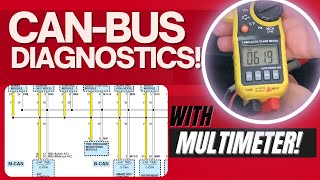
- Damaged, Corroded, or Shorted Wiring (Very Common) — Physical damage to the CAN bus wiring, moisture-induced corrosion in connectors, or wires shorting to ground cause most communication breakdowns. This is highly prevalent in regions using winter road salt. 🎬 Watch: A mechanic explains how to troubleshoot CAN bus faults.
- Low Battery Voltage or Faulty Alternator (Common) — Control modules require a stable 12-volt supply. A weak battery, failing alternator, or corroded terminals drop system voltage, triggering random communication errors across the network.
- Aftermarket OBD-II Device Interference (Common) — Plug-in insurance trackers, fleet telematics, or cheap Bluetooth OBD-II readers frequently disrupt the CAN bus. Poorly designed devices flood the network with errors, triggering U2413.
- Faulty Control Module (Common) — An internal failure in a module (like the ABS or Body Control Module) causes it to broadcast corrupted data or drop offline entirely, crashing its segment of the network.
- Poor Ground Connections (Less Common) — Loose, rusty, or corroded ground straps create electrical noise and data packet loss on the network, garbling the messages sent between modules.
- Software Glitch or Corrupted Data (Less Common) — Outdated or corrupted module software generates invalid data outputs. Manufacturer software updates (re-flashes) often resolve these logic errors.
- Voltage Spike from Improper Jump-Start (Less Common) — Reversed jumper cables or improper jump-starts send massive voltage spikes through the system, instantly destroying sensitive module transceivers.
- Failed Network Termination Resistor (Rare) — The CAN bus requires two 120-ohm terminating resistors to prevent signal reflection. If a module housing a resistor fails, network resistance shifts from the required 60 ohms, halting communication.
Symptoms

- Multiple Warning Lights — The Check Engine, ABS, Traction Control, and Power Steering lights illuminate simultaneously.
- Loss of Safety Systems — Power steering assist fails (causing heavy steering), anti-lock brakes disable, and cruise control disengages.
- Erratic Gauges — The speedometer, tachometer, and temperature gauges drop to zero or sweep erratically as the instrument cluster loses data feeds. 🎬 See the top 7 symptoms of a bad BCM.
- Vehicle Won't Start or Stalls — If the Powertrain Control Module (PCM) loses communication, the engine stalls while driving or refuses to crank.
- Reduced Fuel Economy (also visible on scanner) — Default 'limp mode' parameters force the engine to run rich, noticeably decreasing fuel economy.
Diagnostic Flowchart
Tap your situation to follow the diagnostic path that matches what you're seeing on this code.
Common Fixes & Costs
- Replacing a Dead or Weak Battery — Parts: $150-$350, Labor: $25-$50, ~0.5 hr book time (DIY)
- Repairing Damaged Wiring or Connectors — Parts: $10-$50, Labor: $200-$800, ~2.5 hr book time (Professional)
- Replacing a Faulty ABS Control Module — Parts: $500-$900, Labor: $150-$300, ~1.5 hr book time (Professional)
- Replacing a Faulty Body Control Module (BCM) — Parts: $300-$800, Labor: $200-$450, ~2.0 hr book time (Professional)
- Software Update or Re-flash — Parts: $0, Labor: $100-$250, ~1.0 hr book time (Professional)
DIY vs Professional
- Replacing a Dead or Weak Battery — Beginner: Yes
Tools: Wrench set, terminal cleaner brush. - Repairing Damaged Wiring or Connectors — Beginner: No
Tools: Multimeter, wiring diagrams, wire strippers, crimpers, heat gun, depinning tools. - Replacing a Faulty ABS Control Module — Beginner: No
Tools: Flare nut wrenches, torque wrench, professional scan tool for programming and automated brake bleeding. - Replacing a Faulty Body Control Module (BCM) — Beginner: No
Tools: Socket set, trim removal tools, professional scan tool with programming capabilities.
Used vs. New Parts: Buying Guide
When a used part is worth it: For high-cost electronic modules (BCM, ABS) on older vehicles where a new OEM part exceeds 20% of the car's value.
Donor-vehicle mileage cap: roughly under 80000 miles for the part to have meaningful remaining life.
Donor quality checklist:
- Verify the part number EXACTLY matches your original module; a single digit difference means incompatibility.
- Ensure the donor vehicle has no flood or fire damage.
- Confirm the salvage yard offers at least a 30-day testing warranty.
Decision logic:
- If The part requires VIN programming (most BCMs and ABS modules) → Factor in $150-$300 for dealer programming. Note that some used modules are permanently 'locked' to the donor VIN and cannot be reprogrammed.
- If The vehicle is less than 10 years old → Purchase a new OEM or high-quality remanufactured part to guarantee reliability and warranty coverage.
- If Budget is the absolute priority → A used part is acceptable, but be prepared to pay labor twice if the part fails prematurely.
Warranty tradeoff: Used parts offer 30-90 day part-only warranties. New aftermarket parts offer 1-year warranties. New OEM parts carry 1-2 year warranties that often include labor if dealer-installed.
Worst-case if a used part fails: $400-$1000 if a used module is defective, requiring you to buy a second part and pay for labor and programming again.
What Happens If You Wait — Timeline
- 0-1 month: Intermittent warning lights (ABS, Traction) appear and turn off after a restart. No major drivability symptoms occur. (MPG impact: 0-2%% · Added cost: $0)
- 1-4 months: Warning lights stay on longer. The driver experiences occasional loss of cruise control or momentary heavy steering. Parasitic battery drain may begin. (MPG impact: 2-5%% · Added cost: $150 (Cost of a new battery from repeated draining))
- 4-8 months: Safety systems permanently disable. The vehicle intermittently fails to start. Constant incorrect voltage on the network stresses healthy modules. (MPG impact: 5-10%% · Added cost: $500 - $1000 (Damage to a secondary module from network instability))
- 8+ months: Cascading failure. Electrical noise destroys a primary module (PCM, BCM). The vehicle enters severe limp mode or refuses to start entirely. (MPG impact: 10-20%% · Added cost: $1500 - $3000 (Multiple module replacements and extensive diagnostic labor))
Cost of Not Fixing It
- Immediate: Unpredictable loss of safety systems like ABS, traction control, or power steering, drastically increasing accident risk. (Added cost: Accident-related costs)
- 1-6 months: A faulty module sending bad data or voltage spikes causes cascading failures in connected modules (e.g., a bad BCM damages the PCM). (Added cost: $500 - $2500)
- 6+ months: Persistent battery drain occurs if a module fails to shut down, stranding the driver and destroying the battery. (Added cost: $200 - $500)
Diagnosis Steps

- Scan All Modules for Codes
Use an advanced OBD-II scanner to read codes from all modules (ABS, BCM, PSCM), not just the engine. Note all 'U' codes. The module with the most 'lost communication' codes pointing to it is the primary suspect.
Tools: Advanced OBD-II Scanner (Intermediate) - Check Battery and Charging Voltage
Measure battery voltage with the car off; it must be at least 12.4 volts. Start the engine; voltage must sit between 13.7 and 14.7 volts. Replace the battery or alternator if readings fall outside this range.
Tools: Multimeter (Beginner) - Perform a Visual and 'Wiggle' Test
Inspect wiring harnesses around the ABS module and power steering rack for chafing or green corrosion. With the scanner displaying live data, gently wiggle these harnesses. If data drops out or the code triggers, you found the damaged wire.
Tools: Flashlight, Advanced OBD-II Scanner (Intermediate) - Check Module Fuses
Locate the fuse boxes and test all fuses related to the ABS, Power Steering, and BCM. A blown fuse cuts power to a module, forcing it offline and triggering communication codes.
Tools: Multimeter or Test Light, Fuse Puller (Beginner) - Test CAN Bus Resistance
Disconnect the battery. Measure resistance between Pin 6 (CAN High) and Pin 14 (CAN Low) on the OBD-II port. A healthy network reads exactly 60 ohms. A 120-ohm reading means a terminating module is offline. A 0-ohm reading means the CAN wires are shorted together.
Tools: Multimeter (Advanced) - Check CAN Bus Voltages
Reconnect the battery and turn the ignition ON. Measure voltage at the OBD-II port. CAN High (Pin 6) should rest at 2.5V and pulse up to 3.5V. CAN Low (Pin 14) should rest at 2.5V and pulse down to 1.5V. Deviations indicate a short to power or ground.
Tools: Multimeter (Advanced) - Isolate the Faulty Module
If the resistance or voltage tests fail, unplug modules one by one from the CAN bus and re-test. When the readings return to normal, the last module unplugged (or its immediate wiring) is the source of the fault.
Tools: Multimeter, Wiring Diagram, Trim Removal Tools (Advanced) - Scope the CAN Bus Signal
For intermittent issues, use an oscilloscope on Pins 6 and 14. A healthy signal shows clean, square waves mirroring each other. Distorted signals point to electromagnetic interference or a failing module transceiver.
Tools: Oscilloscope, Differential Probes (Professional)
When This Code Triggers (Freeze-Frame Conditions)
- Vehicle Speed: 35-65 mph (Steady driving. Communication errors become obvious to the system when modules expect a constant stream of data and experience a sudden dropout.)
- Battery Voltage: 11.5-12.2V (During high electrical load. The code sets when voltage drops below the optimal 13.7V, causing modules to malfunction and broadcast invalid data.)
- Time Since Start: 5-20 minutes (After the vehicle warms up and all modules are actively communicating. Heat expansion in wiring or modules often triggers intermittent open circuits.)
Related Codes
- U0121 — Lost Communication With Anti-Lock Brake System (ABS). If paired with U2413, the invalid data originates from the brake system. Inspect the ABS module and its connector.
- U0131 — Lost Communication With Power Steering Control Module (PSCM). Seeing this with U2413 strongly indicates a fault in the power steering communication line.
- U0100 — Lost Communication with ECM/PCM. Paired with U2413, this signals a severe network crash affecting the main engine computer, likely a shorted CAN wire.
- U0073 — Control Module Communication Bus 'A' Off. Indicates a complete failure of the primary high-speed CAN bus, pointing to a shorted wire rather than a single module issue.
Climate & Environmental Factors
- High Humidity and Road Salt: Vehicles in the 'Salt Belt' are highly susceptible. Saltwater accelerates corrosion on wiring, connector pins, and ground points, creating high resistance that disrupts CAN bus communication.
- Extreme Cold: Cold weather shrinks metal, exposing micro-fractures in module solder joints or corroded wires, leading to intermittent open circuits and communication drops.
How to Talk to a Mechanic About This Code
Say this: "I have a U2413 code and multiple warning lights. I'd like to schedule one hour of diagnostic time. Please check for relevant TSBs, then perform a CAN bus resistance and voltage test at the diagnostic port before quoting any module replacements."
This proves you understand U2413 is a network problem. It forces the technician to perform logical, low-cost diagnostic steps first, preventing them from immediately guessing and replacing an expensive computer.
Avoid saying:
- 'Just fix whatever's wrong.'
- 'My check engine light is on, can you look at it?'
- 'The internet said I need a new BCM.'
Questions to ask before authorizing the repair:
- What was the CAN bus resistance reading at the OBD-II port?
- Were you able to communicate with all modules on the scan tool?
- How did you isolate the fault to this specific wire or module?
- Is a software update a possible fix before we replace hardware?
Where to Take It: Dealer vs Independent vs Chain
- Dealer:
Best for: Vehicles under warranty or with a known TSB., Repairs requiring manufacturer-specific software flashing or module programming.
Downsides: Highest labor rates., Often defaults to replacing entire expensive harnesses rather than repairing a single wire. (Typical cost: +50% vs. baseline) - Independent Shop:
The best choice if you find a shop known for complex electrical work. They are much more willing to perform a $300 wire repair instead of a $1,500 harness replacement.
Best for: Out-of-warranty vehicles., Shops specializing in automotive electrical diagnostics (look for ASE L3 certification).
Downsides: May lack the expensive manufacturer-specific tools required to program a new module. (Typical cost: +0% vs. baseline) - Chain Shop:
AVOID. This code requires a diagnostic specialist.
Best for: Routine maintenance like oil changes and tires.
Downsides: Technicians lack the advanced training and oscilloscopes required for CAN bus diagnostics., Extremely high risk of misdiagnosis. (Typical cost: -10% vs. baseline)
When to Walk Away From the Repair
If the estimated repair cost for the U2413 fault exceeds 40% of your car's private-party value, seriously consider selling the vehicle.
- Car worth $4000, fix is $2000: Borderline. The repair is 50% of the car's value. Get a second opinion, as another major repair could total the car financially.
- Car worth $12000, fix is $1500: Fix it. The cost is only 12% of the vehicle's value and is a reasonable investment to restore safety systems.
- Car worth $2500, fix is $1500: Walk away. The repair cost is 60% of the car's value. It is a poor financial decision.
What Scan Tool You Need for This Code

Minimum: A scanner capable of an 'All System' or 'Full Module' scan. Basic engine-only code readers are useless for U-codes.
A $20 reader only pulls engine codes. U2413 is a network code; you must see which modules are online and which are reporting 'lost communication' to begin diagnosis.
Budget: Autel AP200 / BlueDriver Pro (~$60) — Performs full system scans via Bluetooth, showing codes from the ABS, BCM, and PSCM to reveal the scope of the network crash.
Mid-range: Foxwell NT809 / Autel MaxiCOM MK808 (~$350) — Offers full system scans, live data streaming from all modules, and bidirectional controls to test module responses.
Professional: Autel MaxiPRO MP900BT (~$750) — Provides dealer-level diagnostics, visual network topology mapping (invaluable for CAN bus faults), and module programming capabilities.
Rent vs buy: Buy. Free rental scanners from auto parts stores are basic engine readers that cannot diagnose a U2413 code.
How to Clear the Code After You Fix It
- Ensure all wiring repairs are sealed and secured.
- Reconnect the battery if disconnected.
- Use an advanced OBD-II scan tool to clear DTCs from all individual modules, not just the ECM.
- Perform a full drive cycle to reset readiness monitors.
Drive cycle (~30 minutes): Cold start and idle for 3 minutes with A/C on. Drive in stop-and-go traffic for 15 minutes. Drive at a steady 55-60 mph for 15 minutes. Let the vehicle cool completely for 8 hours to run the EVAP monitor.
Readiness monitors affected: Comprehensive Component Monitor (CCM), Misfire Monitor, EVAP System Monitor
Before emissions retest: drive at least 100 miles to fully set monitors.
Watch out for:
- Disconnecting the battery does not reliably clear U-codes on modern vehicles.
- The code returns immediately upon startup if the hardware or wiring fault remains.
- Failing to complete a drive cycle results in an automatic emissions test failure due to 'Not Ready' status.
Will This Fail Emissions / State Inspection?
Yes — this code typically fails an OBD-II emissions inspection.
- California: An illuminated Check Engine Light from U2413 is an automatic failure. All required OBD readiness monitors must be 'Ready' before a retest.
- New York: Any active fault code illuminating the MIL causes an automatic failure. For 2001+ vehicles, only one readiness monitor is allowed to be 'Not Ready'.
- Texas: In the 17 counties requiring emissions testing, an active U2413 fails the vehicle immediately. You must drive 50-100 miles after repair to set monitors.
Most Commonly Affected Vehicles
- Chevrolet Malibu (2019-2022) — Subject to GM TSB 21-NA-220, identifying high resistance on the CAN bus between the EBCM and PSCM as the direct cause for U2413.
- GMC Sierra (2014-2018) — Frequently experiences this code alongside cruise control and instrument cluster dropouts due to wiring harness chafing or BCM faults.
- Chevrolet Silverado (2014-2018) — Shares the Sierra's electrical architecture, making it prone to identical CAN bus communication issues.
- BMW 3-Series (F30) (2012-2019) — Network faults manifest as a loss of power steering assist, triggering U2413 alongside U0131 (Lost Communication with PSCM).
- Ford Transit Connect (2019-2020) — A blown mega fuse for the Power Steering Control Module (PSCM) leads to a total loss of communication and related U-codes.
Manufacturer-Specific Notes
- General Motors (GMC, Chevrolet): GM TSB 21-NA-220 identifies high resistance in the CAN bus wiring (circuits 2500/2501) between the EBCM and PSCM as a primary cause for U2413 on 2019+ models.
- Ford: On modern Fords, communication codes are frequently triggered by an overtightened or blown high-amp mega fuse powering a specific module, rather than a network failure.
- Chrysler/Dodge/Jeep: The Totally Integrated Power Module (TIPM) acts as the central hub. A failing TIPM disrupts power to multiple modules simultaneously, causing a flood of U-codes including U2413.
- BMW: BMWs use multiple bus systems (CAN, LIN, FlexRay). U2413 often originates from a failure in a gateway module (like the ZGW) responsible for translating messages between networks.
Real Owner Stories
2019 Chevy Malibu with 27k miles
During hot weather, the dash lit up with ABS and power steering warnings, and gauges dropped to zero. The car logged U2413, U0073, and U0101.
Outcome: The issue was resolved by following GM TSB 21-NA-220. The fix involved repairing high resistance in the CAN bus wiring between the EBCM and PSCM and applying dielectric grease to the terminals.
Lesson: For intermittent, multi-system electrical faults on newer vehicles, always check for Technical Service Bulletins (TSBs) before authorizing expensive module replacements.
General Motors vehicle with parasitic battery drain
The vehicle's battery repeatedly died overnight. Jump-starting the car triggered a U2413 code.
Outcome: A parasitic draw test revealed a faulty Body Control Module (BCM) was failing to enter 'sleep mode'. It continuously drew power and disrupted the network. Replacing and programming the BCM fixed the drain and the code.
Lesson: Unexplained battery drain is a classic symptom of a failing control module. Perform a parasitic draw test to see if a module is staying awake before assuming the battery is at fault.
How to Prevent This Code From Triggering
- Clean and protect major electrical connectors (Every 3 years) — Applying dielectric grease to the rubber seals of critical connectors (ABS module, BCM) prevents moisture intrusion, stopping the corrosion that causes communication faults.
- Ensure battery terminals are clean and tight (Every oil change) — Corroded battery terminals create voltage drops. Control modules are highly sensitive to unstable voltage and will drop offline, triggering U-codes.
- Avoid cheap OBD-II plug-in devices (Ongoing) — Poorly designed Bluetooth scanners or insurance dongles send improper commands and disrupt normal communication between modules.
- Use heat-shrink connectors for wiring repairs (When repairing wiring) — Using butt connectors with built-in heat-shrink tubing creates a waterproof seal, preventing moisture from wicking into the wire and causing high resistance.
Frequently Asked Questions
Can I fix a U2413 code myself?
Simple fixes like replacing a weak battery or a blown fuse are DIY-friendly. However, diagnosing the network with a multimeter and isolating a faulty wire requires advanced skills. Most repairs for this code require a professional.
How much does it cost to fix a U2413 code?
Costs vary widely based on the root cause. Replacing a battery costs $200-$400, while repairing a wiring harness runs $300-$800. Replacing a major control module like a BCM ranges from $500 to over $1,200 including programming.
Can aftermarket accessories cause a U2413 code?
Yes. Devices plugged into the OBD-II port (insurance trackers, cheap scanners) or improperly wired remote starters frequently introduce network interference that triggers communication codes.
What are common misdiagnosis mistakes for U2413?
A frequent mistake is replacing an expensive control module immediately, only to find the code returns. The actual fault is often a corroded ground wire, a bent connector pin, or a faulty switch. Always perform a thorough wiring and network health diagnosis before condemning a module.
Will clearing the code fix the problem?
No. Clearing the code only turns off the warning lights temporarily. Because U2413 stems from a hardware or network fault, the code returns immediately once the modules attempt to communicate.
Is my car safe to drive with a U2413 code?
No. The code indicates a breakdown between critical safety systems like ABS and power steering. These systems can disable unpredictably while driving, increasing accident risk.
What is a CAN bus?
The Controller Area Network (CAN) bus is your car's internal internet. It is a pair of wires allowing all vehicle computers to share data, like vehicle speed or brake pedal position, in real-time.
Why does my car show multiple 'U' codes at once?
A flood of 'U' codes points to a central network crash rather than multiple individual module failures. This is usually caused by a short in the main CAN bus wiring or a severe power supply drop.
Key Takeaways
- Code U2413 indicates a critical communication failure on the CAN bus network between essential vehicle modules.
- Over 70% of U2413 triggers stem from physical wiring damage, corroded connectors, or a battery dropping below 12.4 volts.
- Remove any aftermarket OBD-II trackers or Bluetooth dongles immediately, as they frequently introduce network interference that causes this code.
- Proper diagnosis requires an advanced scanner capable of reading all modules and a multimeter to verify the CAN bus resistance sits at exactly 60 ohms.
Helpful Videos

![How To Test CAN BUS With A Multimeter [CAN Bus Resistance Check] Mechanic Mindset](https://img.youtube.com/vi/JPE42HSJxAk/mqdefault.jpg)

The information in this article is provided for general reference and educational purposes only. Vehicle specifications, procedures, and part compatibility can vary by production date, trim level, and region. Always consult your vehicle's factory service manual and verify part numbers before purchasing or performing repairs. Safety-critical components such as airbags, seat belts, and braking systems should be installed by a qualified professional.
- 🎬 Helpful Videos
- What Does U2413 Mean?
- Can I Drive With U2413?
- Common Causes
- Symptoms
- Diagnostic Flowchart
- Common Fixes & Costs
- DIY vs Professional
- Used vs. New Parts: Buying Guide
- What Happens If You Wait — Timeline
- Cost of Not Fixing It
- Diagnosis Steps
- When This Code Triggers (Freeze-Frame Conditions)
- Related Codes
- Climate & Environmental Factors
- How to Talk to a Mechanic About This Code
- Where to Take It: Dealer vs Independent vs Chain
- When to Walk Away From the Repair
- What Scan Tool You Need for This Code
- How to Clear the Code After You Fix It
- Will This Fail Emissions / State Inspection?
- Most Commonly Affected Vehicles
- Manufacturer-Specific Notes
- Real Owner Stories
- 2019 Chevy Malibu with 27k miles
- General Motors vehicle with parasitic battery drain
- How to Prevent This Code From Triggering
- Frequently Asked Questions
- Can I fix a U2413 code myself?
- How much does it cost to fix a U2413 code?
- Can aftermarket accessories cause a U2413 code?
- What are common misdiagnosis mistakes for U2413?
- Will clearing the code fix the problem?
- Is my car safe to drive with a U2413 code?
- What is a CAN bus?
- Why does my car show multiple 'U' codes at once?
- Key Takeaways
- 🎟️ Get 5% Off