

OBD-II Code U2300: Central Configuration Error
What U2300 means, why it triggers, and how to fix it
- Code U2300 indicates a software configuration mismatch, meaning the module needs reprogramming rather than physical replacement 90% of the time.
- Never replace a module as the first diagnostic step; expect to pay $150 to $400 for a professional software re-flash to resolve the fault.
- A U2300 code actively disables critical safety systems like airbags and anti-lock brakes, making the vehicle unsafe for emergency maneuvers.
- This fault triggers most frequently immediately after installing a new or used control module, or following a severe battery voltage drop.
What Does U2300 Mean?

U2300 means a control module lacks the correct software configuration for your specific vehicle. The module essentially has amnesia or holds the wrong instruction manual, preventing it from operating its assigned system (like ABS or airbags) and forcing it to disable those features.
Technical definition: The formal OBD-II definition for U2300 is 'Central Configuration Fault'. This manufacturer-specific code indicates a control module's internal software configuration is incorrect, incomplete, does not match the vehicle's factory 'as-built' data, or failed a signal plausibility check. Common suffixes include :55 (Not Configured), appearing on new unprogrammed modules, and :64 (Signal Plausibility Failure), indicating a data mismatch between modules.
Can I Drive With U2300?
Yes, But With Caution. The vehicle will drive, but this code actively disables critical safety systems like airbags or ABS. Limit driving strictly to reaching a repair facility. Continued driving does not cause further mechanical damage, but the safety risk during an emergency is severe.
Common Causes

- Improper or Incomplete Module Programming (Very Common) — This occurs when a control module (airbags, ABS, or body electronics) is replaced, and the new unit is not programmed with the specific 'as-built' data for the vehicle's VIN.
- Installing a Used Control Module (Common) — A used module from a salvage yard retains the configuration of its original donor vehicle. Installing it without wiping and reprogramming it triggers a U2300 code due to the data mismatch.
- Memory Corruption from Voltage Drop (Common) — A severe voltage drop from a dead battery or improper jump-start corrupts a module's volatile memory. When power is restored, the configuration is scrambled or lost.
- Incompatible Software Update or Modification (Less Common) — Flashing a module with software incompatible with older hardware, or improperly attempting to 'code out' factory features, corrupts the central configuration file and triggers the fault.
- Communication (CAN Bus) Error (Less Common) — The module receives its configuration data from a primary module over the CAN bus network. Wiring damage or communication faults prevent this data transfer.
- Faulty 'Master' Control Module (Rare) — On vehicles where a central module (like the Instrument Cluster) acts as the configuration master, an internal fault causes it to broadcast corrupt data, triggering U2300 in perfectly healthy slave modules.
- Incorrect Mechanical Part Installed (Rare) — Installing the wrong mechanical part with an integrated sensor (like an incompatible wheel bearing with an ABS magnetic ring) feeds invalid data to the module, causing a configuration fault.
Symptoms

- Airbag Warning Light On — If the code is stored in the Restraints Control Module (RCM), the airbag light illuminates and the system is disabled.
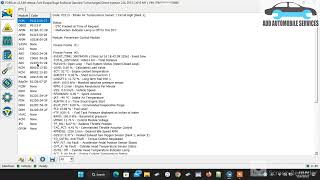
- ABS and Traction Control Lights On 🎬 Watch: Fixing U2300 ABS codes on Ford vehicles using FORScan. — If the fault is in the Anti-lock Brake System (ABS) module, the warning lights for the ABS and stability control systems remain on.
- Vehicle Features Not Working — Depending on the affected module, features like cruise control, air conditioning, park assist, or power windows cease to function.
- Warning Message on Instrument Cluster — A 'Service Airbag System' or 'Check Brake System' message appears on the driver information display.
- No-Start Condition — On Jaguar and Land Rover vehicles, a Body Control Module configuration error prevents the immobilizer from recognizing the key, disabling the starter.
Diagnostic Flowchart

Tap your situation to follow the diagnostic path that matches what you're seeing on this code.
Common Fixes & Costs
- Module Programming/Configuration — Parts: $0, Labor: $150-$400, ~1.5 hr book time (Professional)
- Reloading Central Configuration File (CCF) — Parts: $0, Labor: $200-$500, ~2.0 hr book time (Professional)
- Replace Faulty Control Module
— Parts: $250-$1500, Labor: $150-$400, ~2.5 hr book time
(Professional)
2015 Ford Escape (ABS Module): OEM CV6Z-2C405-E, CV6Z-2C405-H (Alt: Used/Rebuilt units)
2016 Jaguar XF (Body Control Module): OEM C2Z32178, DX23-14B476-AG (Alt: Mail-in repair/reset services) - Airbag Module (RCM) Crash Data Reset — Parts: $0, Labor: $60-$120, ~1.0 hr book time (DIY)
- Repair CAN Bus Wiring — Parts: $10-$50, Labor: $150-$500, ~3.0 hr book time (Professional)
Used vs. New Parts: Buying Guide
When a used part is worth it: For common modules on older vehicles where new OEM parts are cost-prohibitive. A used module is viable ONLY if you have access to a professional shop capable of reprogramming it.
Donor-vehicle mileage cap: roughly under 100000 miles for the part to have meaningful remaining life.
Donor quality checklist:
- Match the part number exactly. Superseded numbers are often incompatible.
- Source from a reputable salvage yard providing the donor vehicle's VIN to assist with programming.
- Avoid modules from flood-damaged vehicles due to hidden internal corrosion.
Decision logic:
- If The fix is a software re-flash of your existing module → Do not buy any part. Reprogram the original.
- If The vehicle is less than 10 years old and the part is under $800 → Buy a new OEM part to ensure compatibility and warranty.
- If The vehicle is over 10 years old and budget is the primary concern → Purchase a used part, but budget $150-$400 for professional programming.
Warranty tradeoff: Used parts carry a 30-90 day warranty on the part only. New OEM parts include a 1-2 year warranty. Mail-in repair services for original modules usually offer a lifetime warranty on the repair.
Worst-case if a used part fails: $300-$600 if a used part is faulty or incompatible and cannot be programmed, requiring repeat labor and another programming attempt.
What Happens If You Wait — Timeline
- Immediate: Code sets, and a primary safety system warning light illuminates. The corresponding system is disabled. (MPG impact: 0%% · Added cost: $0)
- 0-6 months: The vehicle operates without specified safety features. In an emergency, lack of ABS leads to skidding, and lack of airbags results in severe injury. (MPG impact: 0%% · Added cost: $0 (unless an accident occurs))
- At next state inspection: The vehicle automatically fails state safety inspections due to illuminated warning lights. (MPG impact: 0%% · Added cost: $20-$50 (inspection and re-inspection fee))
- Long-term: No additional mechanical damage occurs. The failure is the continuous safety risk to occupants and the inability to legally operate the vehicle. (MPG impact: 0%% · Added cost: Potentially infinite in the event of an accident.)
Cost of Not Fixing It
- Immediate: Critical safety systems like ABS, traction control, and airbags are disabled. The vehicle lacks these protections in an emergency. (Added cost: N/A)
- 0-3 months: Guaranteed failure of state safety inspections due to illuminated ABS or airbag warning lights. (Added cost: $20-$50 (Inspection Fee))
- 3+ months: Continued driving does not cause additional mechanical damage. The primary cost is the extreme safety risk to occupants. (Added cost: Potentially infinite in the event of an accident where safety systems fail to deploy.)
Diagnosis Steps
- Scan with a Manufacturer-Specific Tool
Use a tool like FORScan (Ford/Mazda) or SDD (Jaguar/Land Rover) to read the code and its two-digit suffix (e.g., U2300:55). A basic OBD-II engine scanner cannot read network U-codes.
Tools: Manufacturer-Specific Scan Tool (Intermediate) - Attempt Module Reprogramming
Perform the 'Programmable Module Installation' (PMI) or 'Module Configuration' function using the scan tool to load the correct 'as-built' data. This immediately confirms whether the issue is a software mismatch or a failed module.
Tools: Manufacturer-Specific Scan Tool, Stable Power Supply (Advanced) - Check for Related Trouble Codes
Look for codes like U2101 (Incompatible Configuration), U0415, or U3000 (Internal Failure). These point toward hardware incompatibility or internal module failure rather than simple programming issues.
Tools: Manufacturer-Specific Scan Tool (Intermediate) - Verify Recently Replaced Parts
If a control module was recently replaced, verify the part number exactly matches the vehicle's VIN and options. An incorrect module cannot accept the correct programming.
Tools: Basic Hand Tools (Beginner) - Check Module Power and Grounds
Measure battery voltage at the module's power pins and verify ground resistance is less than 0.1 ohms. A module with unstable power cannot communicate or configure properly.
Tools: Digital Multimeter, Wiring Diagram (Advanced) - Inspect Module Wiring and Connectors
Visually inspect the wiring harness and connectors at the affected module for damage, corrosion, or backed-out pins that interrupt communication.
Tools: Flashlight, Trim Removal Tools (Intermediate) - Test the CAN Bus Network Resistance
With the battery disconnected, measure resistance between the CAN-High and CAN-Low pins. A healthy network reads 60 ohms. Readings of 120 ohms or near 0 ohms indicate wiring breaks or shorts.
Tools: Digital Multimeter, Wiring Diagram (Advanced) - Scope the CAN Bus Network Lines
Probe the CAN-High and CAN-Low wires with a lab scope. Look for clean, mirror-image square wave patterns. Corrupted signals indicate a wiring fault or a failing module crashing the network.
Tools: Lab Scope, Wiring Diagram (Professional)
When This Code Triggers (Freeze-Frame Conditions)
- Vehicle State: Key-On, Engine Off (The code sets within the first 6-10 seconds of the ignition turning on as modules perform network self-checks and verify configurations.)
- Battery Voltage: 11.8V - 12.5V (Occurs in a normal voltage range immediately after a low-voltage event (like a jump-start) has been corrected.)
- Vehicle Speed: 0 mph (The configuration check is a static test performed before the vehicle moves.)
- Module Status: Not Configured / Mismatched VIN (Logged at the exact moment the module realizes its internal configuration conflicts with the vehicle's central configuration.)
Related Codes
- U3000 — U3000 indicates an internal hardware failure within the module. If U2300 and U3000 appear together, the module is physically faulty, cannot accept reprogramming, and requires replacement.
- U2101 — Indicates the module's fundamental identity is wrong for the vehicle (e.g., an F-150 module in a Mustang). U2300 means the module is correct but holds the wrong settings.
- U0415 / U0418 — These are effect codes meaning 'Invalid Data Received from ABS'. They set in other modules because the ABS module is broadcasting faulty information due to its underlying U2300 configuration error.
- B1342 / C1342 — Indicates an ECU Internal Failure. Seen alongside U2300, it confirms the module has suffered a hardware fault and must be replaced.
Climate & Environmental Factors
- Extreme Cold Weather: Extreme cold increases strain on the battery, causing significant voltage drops during engine cranking. This voltage drop corrupts volatile memory in control modules, leading to a loss of configuration and triggering U2300.
How to Talk to a Mechanic About This Code
Say this: "I have a U2300 Central Configuration Fault code, and I believe a module needs to be reprogrammed. I'd like to schedule a diagnostic to confirm if it's a new module needing a PMI, a used module needing a re-flash, or a corrupted configuration file from a battery issue."
This signals you understand the code is a software issue, directing the technician to the correct diagnostic path and preventing quotes for unnecessary module replacements.
Avoid saying:
- 'My airbag/ABS light is on, can you fix it?'
- 'I think I need a new ABS module.'
- 'Just do whatever it takes to fix the light.'
Questions to ask before authorizing the repair:
- Can you confirm if the module is communicating on the network?
- Will you be performing a 'Programmable Module Installation' or loading 'as-built' data?
- If I provide a used module, do you have the capability to wipe and reprogram it for my VIN?
- What is your warranty on programming services if the code returns?
Where to Take It: Dealer vs Independent vs Chain
- Dealer:
Best for: Vehicles under warranty, Complex Jaguar/Land Rover issues involving the CCF, When a brand new OEM module requires programming
Downsides: Highest labor rates, Unwilling to program customer-supplied used parts (Typical cost: +50% vs. baseline) - Independent Shop:
Best fit for most scenarios. An independent specialist with the right software performs the required programming for significantly less than a dealer.
Best for: Out-of-warranty Ford, Lincoln, and Mazda vehicles, Programming used modules, Shops specializing in your vehicle's brand
Downsides: Must verify they possess manufacturer-specific programming tools (Typical cost: +0% vs. baseline) - Chain Shop:
AVOID. This is a software and configuration issue beyond the scope of typical chain shop capabilities.
Best for: Basic maintenance like oil changes and brakes
Downsides: Lack required manufacturer-specific tools for module programming, High likelihood of misdiagnosing the issue and recommending unnecessary parts (Typical cost: -10% vs. baseline)
When to Walk Away From the Repair
If the total estimated repair cost for the U2300 fault and related issues exceeds 50% of the car's private-party value, consider selling the car as-is.
- Car worth $5000, fix is $2800: Walk away. The repair cost is over half the car's value.
- Car worth $15000, fix is $1500: Fix it. The repair cost is well below the threshold and restores a critical safety feature.
- Car worth $3000, fix is $1800: Walk away. The repair is a very high percentage of the vehicle's value.
What Scan Tool You Need for This Code
Minimum: A tool capable of reading manufacturer-specific codes from modules like the ABS and RCM.
A standard OBD-II scanner only reads generic 'P' codes from the powertrain. It cannot communicate with the ABS or body control modules where U-codes are stored.
Budget: FORScan with compatible OBD-II adapter (~$80) — For Ford, Mazda, and Lincoln owners, this reads specific U2300 suffix codes and performs the 'Programmable Module Installation' required to fix the code.
Mid-range: Innova 5610 (~$350) — Offers full system diagnostics to read and clear codes from ABS and SRS modules on most brands, providing bi-directional tests to verify module communication.
Professional: Autel MaxiCOM MK808 / MP808BT (~$500-800) — Provides professional-level diagnostics and advanced bidirectional control, performing module setup functions required to resolve U2300 on a wide variety of makes.
Rent vs buy: You cannot rent a scanner with programming capabilities. Buying a FORScan adapter is a high-value investment for Ford/Mazda owners. For other makes, paying a professional for a one-hour diagnostic service is more cost-effective.
How to Clear the Code After You Fix It
- Perform module programming/configuration with a manufacturer-specific scan tool.
- Use the scan tool to clear the U2300 code from the specific module.
- Cycle the ignition off, then on, and wait 10 seconds before starting the engine.
- Perform required sensor calibrations (e.g., steering angle) if prompted by the scan tool.
Drive cycle (~10 minutes): A specific drive cycle is not required. The fix is confirmed by clearing the code and cycling the ignition. If programming succeeds, the code does not return upon the next key-on event. A short test drive ensures all related functions operate correctly.
Readiness monitors affected: This network code does not directly affect emissions readiness monitors., However, the underlying cause (major power loss) likely reset all monitors to 'Not Ready'.
Before emissions retest: drive at least 50 miles to fully set monitors.
Watch out for:
- Clearing the code with a generic scanner fails; the code returns instantly if the module remains unconfigured.
- Forgetting to perform sensor initializations after programming causes secondary codes to appear.
Will This Fail Emissions / State Inspection?
Yes — this code typically fails an OBD-II emissions inspection.
- California: An illuminated airbag or ABS light is an automatic failure of the safety inspection portion. The U2300 code itself causes a failure of the OBDII system check.
- New York: The NYS vehicle inspection includes a check for illuminated ABS and airbag warning lights. Either results in an inspection failure.
- Texas: During the annual safety inspection, ABS and airbag warning lights must illuminate during the bulb check and then turn off. Remaining on causes an inspection failure.
Most Commonly Affected Vehicles
- Ford Edge / Lincoln MKX (2015-2018) — Commonly sets U2300 in the Restraints Control Module (RCM) after collision repair or module replacement if programming procedures are skipped.
- Ford Transit Connect (2014-2022) — The ABS module triggers U2300 when replaced. Official dealer software sometimes fails to program the module, requiring third-party FORScan software.
- Ford Escape (2013-2016) — Frequently sets U2300 in the ABS module after replacement. Requires the PMI routine via the IDS scan tool or FORScan to match the vehicle's specific configuration.
- Ford F-150 / Super Duty (2011-2020) — Appears in the RCM or BCM after module replacement. A new RCM stores U2300:55 by default until it receives configuration from the BCM.
- Jaguar XF (2016-2017) — Prone to U2300 in the Body Control Module (BCM) after a battery replacement, caused by a checksum mismatch between the BCM and Gateway Module.
- Land Rover Evoque / Discovery Sport (2015-2017) — Sets U2300 in the BCM or Park Aid Module due to incompatible software updates or a damaged telematics module, often causing a no-start condition.
- Mazda CX-5 (2013-2019) — Appears in the ABS/DSC module after replacement, requiring a configuration procedure using Mazda's diagnostic system or FORScan to load 'as-built' data.
- Mazda Mazda3 (2014-2018) — Sets U2300 in modules like Electric Power Steering or climate control due to corrupt configuration data sent from the instrument cluster or BCM.
Manufacturer-Specific Notes
- Ford: A brand new Restraints Control Module (RCM) or ABS module stores U2300:55 (Not Configured) by default. It is not faulty; it simply requires initial programming to the vehicle.
- Mazda: Configuration data passes from the instrument cluster or BCM to other modules. A fault in these 'master' modules causes U2300 to appear in perfectly healthy 'slave' modules.
- Jaguar / Land Rover: Highly sensitive to battery voltage. A simple battery replacement corrupts the Car Configuration File (CCF) in the BCM, triggering U2300 and a no-start condition.
- Jaguar / Land Rover: The Telematics Control Unit (TCU) links to the immobilizer. If damaged or removed, it triggers U2300 and causes a no-start condition as an anti-theft measure.
Real Owner Stories
2015 Ford Transit Connect with a used ABS module
After replacing a failed ABS module with a used part, the ABS lights remained on with a persistent U2300 code.
What they tried:
- Attempted a 'Programmable Module Installation' using a professional Autel scan tool, which completed but did not clear the code.
- Used official Ford diagnostic software (IDS) to load 'as-built' data, which completed successfully but failed to resolve the fault.
- Tried a second used module, yielding the exact same result.
Outcome: The owner used third-party FORScan software with a compatible OBD-II adapter. The module configuration procedure in FORScan successfully programmed the used ABS module, clearing the code.
Lesson: For some Ford models, dealer software fails to program used modules. FORScan is a highly effective alternative for resolving U2300 configuration issues.
2013 Jaguar XF with a no-start after a dead battery
After sitting for a month, the battery died. Jump-starting produced only clicking sounds, and the dash displayed 'Smart Key Not Found'.
What they tried:
- Replaced the battery with a new unit, but the no-start condition remained.
- Checked fuses and relays related to the ignition and starter circuit.
Outcome: The owner realized opening the door with the physical key while dead prevented the security module from registering the unlock command. With the new battery installed, they used the key fob to lock and unlock the car several times. The security system recognized the key, and the car started.
Lesson: On Jaguar/Land Rover vehicles, a dead battery de-synchronizes the security system. Always cycle the locks with the key fob once power is restored before suspecting a major module failure.
2014 Mazda CX-5 after a collision repair
A body shop replaced a crash-damaged ABS module with a used part. The ABS lights remained on with code U2300 stored.
What they tried:
- The body shop attempted to configure the module but was unsuccessful.
- A second mechanic attempted to use FORScan to program the module, which also failed.
Outcome: The issue stemmed from an incorrect 'as-built' data file. A Mazda specialist downloaded the correct configuration file from Mazda's official portal using the VIN. Loading this official file successfully configured the module.
Lesson: Having the right tool is insufficient; you must possess the correct 'as-built' data file. Verify the data file matches the vehicle's VIN and factory options.
How to Prevent This Code From Triggering
- Use a battery tender or maintainer for vehicles stored for more than two weeks (During periods of non-use) — Prevents deep discharging. Significant voltage drops cause module memory corruption, triggering U2300 when power is restored.
- Use a memory saver device when changing the battery (Every battery replacement) — Provides a constant 12V supply via the OBD-II port, keeping volatile memory powered and preventing the loss of configuration data.
- Follow the correct jump-starting procedure (Whenever jump-starting) — Incorrectly connecting jumper cables causes a voltage spike that damages delicate electronics or corrupts software. Always connect the final negative clamp to a chassis ground.
- Test battery health annually, especially on batteries over 3 years old (Annually) — A weak battery causes momentary voltage sag during engine cranking, which scrambles a module's configuration.
Frequently Asked Questions
Can I fix a U2300 code by disconnecting the battery?
No. Disconnecting the battery will not restore lost software data. The module must be actively reprogrammed with the correct configuration files using a diagnostic tool.
Why did code U2300 appear right after I replaced my car battery?
During the battery change, the Body Control Module lost its configuration data when power was cut. This is a known issue on Jaguar and Land Rover vehicles requiring a stable voltage supply.
I used a part from a junkyard and got this code. Can I still use the part?
Yes, but the used module must be reprogrammed. It currently holds the configuration from its original vehicle and requires a professional to install your car's specific 'as-built' data.
My mechanic says the used module I bought is bad because it has a U2300 code. Are they right?
Not necessarily. A used module triggers U2300 because its software is configured for the donor car, not your vehicle. A professional must wipe and reprogram it with your car's specific 'as-built' data. If reprogramming fails, the part is faulty.
What is the difference between U2300:55 and U2300:64?
U2300:55 means 'Not Configured,' typically seen on a brand new module waiting for initial programming. U2300:64 means 'Signal Plausibility Failure,' occurring when a module receives mismatched data from another module.
Do I have to go to a dealership to fix a U2300 code?
No. Many independent shops specializing in your vehicle brand possess the necessary programming equipment. In some cases, aftermarket tools like FORScan are more successful than dealer tools for Ford and Mazda.
What is 'as-built' data?
'As-built' data is the original factory configuration file for your specific Vehicle Identification Number (VIN). It acts as a digital blueprint telling each module exactly what features your car possesses.
Key Takeaways
- Code U2300 indicates a software configuration mismatch, meaning the module needs reprogramming rather than physical replacement 90% of the time.
- Never replace a module as the first diagnostic step; expect to pay $150 to $400 for a professional software re-flash to resolve the fault.
- A U2300 code actively disables critical safety systems like airbags and anti-lock brakes, making the vehicle unsafe for emergency maneuvers.
- This fault triggers most frequently immediately after installing a new or used control module, or following a severe battery voltage drop.
Helpful Videos

The information in this article is provided for general reference and educational purposes only. Vehicle specifications, procedures, and part compatibility can vary by production date, trim level, and region. Always consult your vehicle's factory service manual and verify part numbers before purchasing or performing repairs. Safety-critical components such as airbags, seat belts, and braking systems should be installed by a qualified professional.
- 🎬 Helpful Videos
- What Does U2300 Mean?
- Can I Drive With U2300?
- Common Causes
- Symptoms
- Diagnostic Flowchart
- Common Fixes & Costs
- Used vs. New Parts: Buying Guide
- What Happens If You Wait — Timeline
- Cost of Not Fixing It
- Diagnosis Steps
- When This Code Triggers (Freeze-Frame Conditions)
- Related Codes
- Climate & Environmental Factors
- How to Talk to a Mechanic About This Code
- Where to Take It: Dealer vs Independent vs Chain
- When to Walk Away From the Repair
- What Scan Tool You Need for This Code
- How to Clear the Code After You Fix It
- Will This Fail Emissions / State Inspection?
- Most Commonly Affected Vehicles
- Manufacturer-Specific Notes
- Real Owner Stories
- 2015 Ford Transit Connect with a used ABS module
- 2013 Jaguar XF with a no-start after a dead battery
- 2014 Mazda CX-5 after a collision repair
- How to Prevent This Code From Triggering
- Frequently Asked Questions
- Can I fix a U2300 code by disconnecting the battery?
- Why did code U2300 appear right after I replaced my car battery?
- I used a part from a junkyard and got this code. Can I still use the part?
- My mechanic says the used module I bought is bad because it has a U2300 code. Are they right?
- What is the difference between U2300:55 and U2300:64?
- Do I have to go to a dealership to fix a U2300 code?
- What is 'as-built' data?
- Key Takeaways
- 🎟️ Get 5% Off