

Ultimate Guide to OBD-II Code U2223: Vehicle Communication Network Error
Why U2223 appears, what it means for your vehicle, and the definitive steps to fix it.
- U2223 indicates a total communication failure between vehicle modules, causing immediate loss of safety systems like ABS and airbags.
- Test the battery first; a voltage drop below 10.0V during cranking is the leading cause of network initialization failures.
- Identify the offline module using a bi-directional scan tool capable of a full network health test before replacing any parts.
- Verify power and ground at the offline module's connector; a $10 ground repair often fixes what looks like a $1,000 module failure.
- Search for manufacturer Technical Service Bulletins (TSBs), as specific vehicles like the 2015-2020 Ford F-150 have documented water intrusion points causing this code.
What Does U2223 Mean?
U2223 is a generic network trouble code indicating a breakdown in communication between the vehicle's computers, known as modules. It is the equivalent of your car's internal internet going down. One or more modules have stopped sending or receiving data packets over the Controller Area Network (CAN bus), leading to a cascade of seemingly unrelated electrical failures and warning lights.
Technical definition: Manufacturers universally use U2223 to signal a fault on a vehicle communication bus. It sets when a module fails to send or receive expected messages, indicating it is offline. Diagnosing this code requires an advanced scan tool capable of performing a network-wide poll to identify which specific module or modules are not responding.
Can I Drive With U2223?
No — Do Not Drive. Do not drive. A U2223 code indicates a critical failure in the vehicle's communication network. It causes sudden engine stalling, loss of power steering, and unpredictable gauge behavior. Safety systems like ABS, traction control, and airbags disable immediately and will not function in an emergency. The potential cost of an accident far outweighs the cost of a tow.
Common Causes
- Low Battery Voltage or Bad Ground (Very Common) — Control modules are highly sensitive to voltage. A weak battery (dropping below 10.0V during cranking), failing alternator, or a loose/corroded main engine ground strap is the primary cause of communication faults. Low voltage forces modules to malfunction and drop off the network.
- Damaged CAN Bus Wiring or Connectors (Very Common) — The CAN bus is a two-wire network running throughout the vehicle. Vibration, chafing against the chassis, or rodent activity damages these wires. Connectors in exposed areas like kick panels or under the vehicle corrode from moisture, disrupting the data signal.
- Water Intrusion in Kick Panels or Carpets (Common) — Leaks from a sunroof, windshield seal, or blocked A/C drain allow water to saturate connectors and modules located under carpets or behind kick panels. This moisture causes pin corrosion and short-circuits network wires, triggering constant U-codes.
- Internal Control Module Failure (Common) — Any single control module (e.g., Instrument Panel Cluster, Body Control Module, Transmission Control Module) can fail internally. This failure causes it to stop communicating or broadcast corrupt data that crashes the entire network.
- Faulty Terminating Resistor (Less Common) — The CAN bus network requires a specific 60-Ohm resistance to function, achieved by two 120-Ohm resistors at each end of the network. If a module containing one of these resistors fails, the network resistance jumps to 120 Ohms, and communication ceases.
- Aftermarket Device Interference (Less Common) — Improperly installed aftermarket devices like remote starters, alarms, or audio systems tapped into CAN bus wires introduce electrical noise. Devices plugged directly into the OBD-II port also disrupt communication and trigger U-codes.
- Software Glitches or Data Corruption (Less Common) — A module's software corrupts after a battery replacement or jump-start, causing it to broadcast erroneous data. A dealer-level reflash or software update for the affected module is the only fix.
- Electromagnetic Interference (EMI) (Rare) — Severe electromagnetic interference from failing components like a faulty alternator or ignition coil induces noise onto the CAN bus wiring, corrupting data signals if the wiring is improperly shielded.
Symptoms
- Simultaneous Dashboard Warning Lights — The check engine light illuminates alongside ABS, Airbag, Traction Control, and battery warnings, as all related modules report communication loss.
- Dead or Flickering Instrument Cluster — The speedometer and tachometer drop to zero, flicker, or the entire cluster display goes blank. This happens frequently when the instrument cluster acts as a gateway module.
- Engine Stalls or Fails to Crank — The engine cranks but fails to start, or stalls unexpectedly while driving. This occurs when the Engine Control Module (ECM) loses communication with the fuel pump or security immobilizer.
- Loss of Interior Electrical Functions — Features controlled by the Body Control Module (BCM) stop working. This includes power windows, radio, climate controls, interior lights, and power door locks.
- Transmission Locked in Limp Mode — The transmission defaults to a single gear (usually 2nd or 3rd) and displays a warning light. This 'limp mode' triggers when the Transmission Control Module (TCM) loses communication with the ECM.
Diagnostic Flowchart
Tap your situation to follow the diagnostic path that matches what you're seeing on this code.
Common Fixes & Costs
- Replace Battery
— Parts: $150-$400, Labor: $25-$75, ~0.5 hr book time
(DIY)
Universal: OEM Motorcraft, Mopar, AC Delco (Alt: Interstate, DieHard, Duralast, Optima) - Clean or Repair Main Ground Connections — Parts: $1-$10, Labor: $100-$250, ~1 hr book time (DIY)
- Repair Damaged CAN Bus Wiring — Parts: $10-$30, Labor: $300-$1000+, ~2.5 hr book time (Professional)
- Replace a Failed Control Module (BCM, IPC, GWM)
— Parts: $600-$1800, Labor: $150-$400, ~1.5 hr book time
(Professional)
Ford F-150 (2015-2020): OEM Varies by VIN (e.g., FL3T-15604-xx) (Alt: Dorman (Remanufactured))
Ford Focus (2008-2012): OEM AS4Z-10849-FA, 8S4T-10890-C (Alt: Repair Service (e.g., Circuit Board Medics))
Jeep Grand Cherokee (2011-2018): OEM 68137439AG (Alt: Dorman, Cardone, MAKS TIPM Rebuilders) - Perform Software Update on a Module — Parts: $0, Labor: $150-$300, ~1.2 hr book time (Professional)
Used vs. New Parts: Buying Guide
When a used part is worth it: Buy a used module for vehicles over 10 years old if a new OEM part exceeds the vehicle's value, provided you have a shop capable of programming used VINs.
Donor-vehicle mileage cap: roughly under 100000 miles for the part to have meaningful remaining life.
Donor quality checklist:
- Match the part number EXACTLY. Even a single digit difference means incompatibility.
- Inspect connectors for any signs of corrosion (green or white powder), indicating water damage.
- Get a warranty. Reputable sellers offer at least a 30-90 day warranty.
- Verify the donor vehicle was not scrapped due to a similar electrical or flood-related issue.
Decision logic:
- If The part requires security programming (BCM, IPC, TIPM). → Buy new or a professionally remanufactured unit that comes pre-programmed. A used part is impossible for many independent shops to program.
- If Vehicle is less than 8 years old and the part is available new. → Buy new OEM. The reliability and warranty outweigh the modest savings of a used part.
- If The fix is a 'repair service' for your existing module (e.g., Ford Focus cluster). → This is the best value, as it fixes the known failure point and requires no reprogramming.
Warranty tradeoff: Used parts typically have a 30-90 day part-only warranty. New aftermarket parts offer 1-year to limited lifetime warranties. New OEM parts carry a 1-2 year warranty, often including labor if installed by a dealer.
Worst-case if a used part fails: $300-$800 if a used module is faulty or cannot be programmed. This includes the part cost plus non-refundable labor for installation and programming attempts.
What Happens If You Wait — Timeline
- Immediate: Multiple warning lights illuminate. Symptoms are intermittent at first, such as a flickering gauge or a single non-functional feature. The vehicle starts and drives, but is unreliable. (MPG impact: 0%% · Added cost: $100-$300 (Potential tow if it fails to start))
- Days to Weeks: Intermittent events become frequent. The risk of a no-start or stalling in traffic increases significantly. Critical safety systems like ABS and airbags are confirmed offline during the fault. (MPG impact: 0-5% (If transmission enters limp mode)% · Added cost: $500+ (Risk of accident from stalling, damage to other modules from electrical noise))
- Weeks to Months: The fault becomes permanent. The vehicle is completely disabled or stuck in a severe limp mode. Diagnostic complexity grows as intermittent voltage spikes damage other modules on the network. (MPG impact: 5-20%% · Added cost: $1500-$3000+ (Potential for multiple module replacements, escalating diagnostic labor))
- 6+ Months (Ignored): The vehicle is fundamentally inoperable. What was a $200 wiring repair becomes a multi-thousand dollar problem requiring replacement of a BCM, ECM, or TIPM, plus extensive diagnostic time. (MPG impact: N/A (Vehicle is likely undrivable)% · Added cost: $2000-$5000+)
Cost of Not Fixing It
- Immediate: The vehicle fails to start, leaving you stranded. Critical safety systems (ABS, airbags, traction control) disable immediately, dramatically increasing accident risk. (Added cost: $100-$300 (Towing))
- Short-Term (Days to Weeks): Continued driving with intermittent network failures causes unpredictable stalling in traffic. Electrical surges from a faulty module damage other sensitive electronics on the network. (Added cost: $500-$2500+ (Damage to other modules, accident costs))
- Long-Term (Months): Ignoring the issue leads to diagnostic complexity. A single faulty wire causes cascading failures, making the root cause much harder and more expensive to trace. The vehicle becomes fundamentally unreliable. (Added cost: $1000+ (Escalating diagnostic and repair bills))
Diagnosis Steps
- Test Battery Voltage and Clean Grounds
Ensure the battery is fully charged (12.4-12.6V engine off) and passes a load test. A healthy battery must not drop below 10.0V during cranking. Clean and tighten all battery terminals and main chassis/engine ground straps. A weak power supply is the leading cause of network faults.
Tools: Digital Multimeter, Battery Load Tester, Socket Set, Wire Brush (Beginner) - Run a Full Network Module Scan
Use an advanced OBD-II scanner to perform a 'Network Scan' or 'Module Health Report'. A basic code reader is insufficient. This scan polls every module on the vehicle and generates a list of which modules are communicating and which are 'offline'. This dictates your diagnostic path.
Tools: Advanced Bi-Directional Scan Tool (Beginner) - Inspect Wiring to the Offline Module
Using the network scan results, locate the primary offline module. Trace its wiring harness for obvious damage: chafing against brackets, melting near exhaust components, rodent damage, or green corrosion around connectors. Focus on door sills, kick panels, and underbody harnesses.
Tools: Flashlight, Inspection Mirror, Trim Removal Tools (Intermediate) - Measure CAN Bus Resistance at the OBD-II Port
Disconnect the negative battery terminal. At the OBD-II port, measure resistance between Pin 6 (CAN High) and Pin 14 (CAN Low). A healthy network reads 60 Ohms. A reading of 120 Ohms indicates an open circuit or an offline terminating resistor. A reading near 0 Ohms indicates a short circuit between the two CAN wires.
Tools: Digital Multimeter (Intermediate) - Verify Power and Ground at the Offline Module
Using a vehicle-specific wiring diagram, identify the power and ground pins on the connector for the non-communicating module. With the key on, verify the module receives full battery voltage on its power pins and has less than 0.1V (100mV) on its ground pins. A module cannot communicate without proper power and ground.
Tools: Digital Multimeter, Vehicle-Specific Wiring Diagram (Advanced) - Isolate the Faulty Module by Disconnection
If wiring, power, and grounds test good, the module itself is the culprit. Disconnect the suspect module from the network. If network communication restores to the other modules upon a re-scan, you have found the faulty component.
Tools: Scan Tool, Socket Set, Trim Removal Tools (Advanced) - Monitor CAN Bus Live Data PIDs
Using a professional scan tool, monitor live data PIDs related to network status. Look for 'Bus Status' or specific module communication counters. High error frame counts or a 'Bus Off' status for a specific module points towards a localized issue with that module or its wiring.
Tools: Advanced Bi-Directional Scan Tool (Advanced) - Perform a Harness Wiggle Test
If visual inspection reveals no damage, an intermittent open or short is hidden inside the wiring loom. With the multimeter connected for a resistance or voltage drop test, systematically wiggle, pull, and tap on the wiring harness associated with the offline module. Meter fluctuations pinpoint the internal break.
Tools: Digital Multimeter, Wiring Diagram (Advanced) - Analyze the CAN Waveform with an Oscilloscope
Connect one channel to CAN High (Pin 6) and another to CAN Low (Pin 14). A healthy high-speed CAN signal shows mirror-image square waves. CAN High toggles between ~2.5V and ~3.5V. CAN Low toggles between ~2.5V and ~1.5V. A distorted waveform provides conclusive evidence of a wiring or module fault.
Tools: 2-Channel Automotive Oscilloscope, Back-Probe Pins (Professional)
When This Code Triggers (Freeze-Frame Conditions)
- Module Voltage: 10.5-12.0V (During engine crank or immediately after startup, indicating a voltage drop.)
- Time Since Engine Start: 0-10 seconds (Fault occurs during the initial module self-test and network handshake.)
- Fault Priority: 1-3 (High) (Network communication faults are ranked as critical.)
- Malfunction Frequency Counter: 1+ (Shows how many times the communication loss has occurred during driving cycles.)
Related Codes
- U0001 — High Speed CAN Communication Bus. This indicates the entire network is down, often due to a short-circuit on the main CAN H and CAN L wires. U2223 is more specific, usually set when individual modules drop offline.
- U0073 — Control Module Communications Bus 'A' Off. This explicitly states that a primary control module has detected the entire bus is silent. It points to a failure of a gateway module or a major wiring failure at a central harness point.
- U0100 — Lost Communication With ECM/PCM. This code specifically identifies the Engine Control Module as the offline module. Diagnostic focus shifts entirely to the ECM's power, ground, and network connections.
- U0140 — Lost Communication With Body Control Module. This code points directly to the Body Control Module (BCM). Because the BCM controls interior functions, its failure causes the most noticeable symptoms associated with network faults.
Climate & Environmental Factors
- High Humidity / Heavy Rain: Accelerates corrosion on wiring connectors, splice packs, and module circuit boards. Moisture intrusion from leaking seals or blocked drains causes direct short circuits in the CAN bus wiring.
- Cold Weather: Significantly reduces a battery's chemical efficiency and power output. At 32°F (0°C), a battery loses 20% of its power. This voltage drop during startup is a leading cause of modules failing to initialize.
- Road Salt (Winter Climates): Salt spray is highly corrosive and attacks underbody wiring harnesses, connectors, and ground points. This degradation leads to high resistance or open circuits in the CAN bus.
How to Talk to a Mechanic About This Code
Say this: "I have a U2223 network communication code and multiple warning lights. I've already checked the battery and grounds, which test good. I need a technician strong in electrical diagnostics to perform a full network scan, identify the offline module, and check the CAN bus resistance."
This signals you've done basic homework and directs the shop toward a specific diagnostic path. It shows you understand this isn't a simple part swap and require a skilled electrical diagnostician, preventing them from assigning a junior technician.
Avoid saying:
- 'My car is acting crazy and has a bunch of lights on.'
- 'Just fix the check engine light.'
- 'I think it needs a new computer.'
Questions to ask before authorizing the repair:
- What were the results of the network scan? Which specific module is offline?
- What was the CAN bus resistance reading between pins 6 and 14?
- Did you verify good power and ground at the offline module's connector before condemning the module itself?
- Is the proposed fix a wiring repair or a module replacement? If it's a module, does it require programming?
- What is your warranty on diagnostic labor if the first proposed fix doesn't solve the problem?
Where to Take It: Dealer vs Independent vs Chain
- Dealer:
Recommended if the issue is a known TSB, a software glitch, or requires programming a new module. Their access to proprietary tools and information is essential.
Best for: Vehicles under warranty, Complex, manufacturer-specific network issues (e.g., BMW, Mercedes), Repairs that require module programming or software updates
Downsides: Highest labor rates, Defaults to expensive module replacement over wiring repair (Typical cost: +50% vs. baseline) - Independent Shop:
Best fit, provided you find the right shop. Look for a shop that specializes in diagnostics or electrical work, not a general repair or tire shop. Ask if they have an oscilloscope and experience with U-codes.
Best for: Out-of-warranty vehicles, Diagnosing common electrical faults like wiring damage or bad grounds, Shops with a dedicated, ASE-certified electrical specialist
Downsides: Diagnostic capabilities vary widely; not all independent shops are equipped for complex network diagnosis., Lacks access to manufacturer-specific programming tools. (Typical cost: +0% vs. baseline) - Chain Shop:
AVOID for diagnosis. While they test or replace a battery, they are not the right choice for tracing a complex network or wiring fault. Use them only for the most basic first steps.
Best for: Battery testing and replacement
Downsides: Technicians are not equipped or trained for in-depth network diagnostics., High pressure to sell parts leads to incorrect recommendations (e.g., replacing a module when the wiring is at fault). (Typical cost: -10% vs. baseline)
When to Walk Away From the Repair
If the estimated repair cost exceeds 50% of the car's private-party value, you should seriously consider selling or trading it in.
- Car worth $4000, fix is $2200: Walk away. The repair cost is over half the car's value, and other age-related issues are likely.
- Car worth $12000, fix is $1800: Fix it. The repair cost is well below the 50% threshold and restores a significant amount of value and safety to the vehicle.
- Car worth $2500, fix is $1500: Walk away. At 60% of the vehicle's value, this is a poor investment.
What Scan Tool You Need for This Code
Minimum: A scan tool that performs a full network scan (or all-system scan) and identifies which modules are not communicating. A basic engine code reader is insufficient.
A $20 code reader only talks to the Engine Control Module. It cannot see the Body Control Module, ABS module, or any other part of the network. For a U-code, you MUST see the status of all modules to know where the communication break is.
Budget: BlueDriver Pro (~$100) — While primarily a code reader, it offers enhanced diagnostics on many models, allowing it to read codes from systems like ABS, Airbag, and Transmission. It helps identify which systems are setting 'lost communication' codes.
Mid-range: Foxwell NT510/NT530 Elite or XTOOL D7 (~$150-400) — These tools offer full system diagnostics to perform a network health check. Crucially, they include bi-directional controls, allowing you to command modules to perform self-tests to confirm if they are truly offline.
Professional: Autel MaxiCOM MK808 / MK906BT or TOPDON ArtiDiag Pro (~$500-1200) — Provides full, OE-level diagnostics. These tools display a network topology map, visually showing which modules are offline. They offer advanced bi-directional controls and programming functions needed if a module must be replaced.
Rent vs buy: For a one-time diagnosis, some auto parts stores perform a full system scan for free. Given the complexity of U-codes, buying a mid-range scanner is a good investment for any serious DIYer, as it is useful for many future repairs.
How to Clear the Code After You Fix It
- Reconnect the negative battery terminal.
- Use an OBD-II scan tool to perform a 'Clear All DTCs' command.
- Perform a complete drive cycle to allow all system monitors to run their self-tests.
Drive cycle (~20 minutes): Start the engine from a cold state. Let it idle for 2-3 minutes with electrical loads on (A/C, defroster). Drive for 15 minutes in mixed city/highway conditions, including steady-state cruises and stop-and-go situations. Allow the vehicle to cool down completely.
Readiness monitors affected: Comprehensive Component Monitor, Misfire Monitor
Before emissions retest: drive at least 50 miles to fully set monitors.
Watch out for:
- Clearing the code without fixing the root hardware fault causes the code to return instantly.
- Disconnecting the battery resets all emissions readiness monitors, causing an automatic failure at an emissions test if a drive cycle is not completed.
- A replacement module that has not been properly programmed continues to set communication codes.
Will This Fail Emissions / State Inspection?
Yes — this code typically fails an OBD-II emissions inspection.
- California: A U-code with an illuminated Check Engine Light is an automatic failure. After repair, a full drive cycle must be completed to set all readiness monitors before a re-test is possible.
- New York: NYS vehicle inspection includes an OBD-II scan. An active U2223 code causes the vehicle to fail the emissions portion of the inspection.
- Texas: In the 17 counties requiring emissions testing, an illuminated Check Engine Light from a U-code is an automatic failure. The OBD-II system must pass a scan with no active codes.
Most Commonly Affected Vehicles
- Ford F-150 (2015-2020) — Prone to water intrusion causing corrosion in connector C2280 in the driver-side kick panel. Also check for wiring harness chafing near the transmission (per TSBs SSM 48563, SSM 47097) and issues with a failing Gateway Module (GWM).
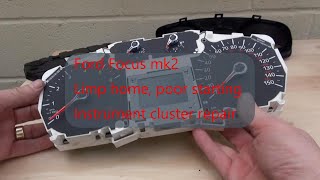
- Ford Focus (2008-2012) — A widely known issue involves cracked solder joints on the circuit board of the instrument panel cluster. This causes the cluster to lose communication, bringing down the network and triggering multiple U-codes.
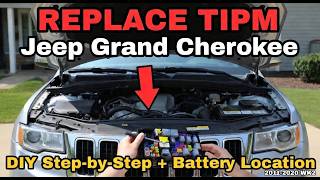
- Jeep Grand Cherokee (2011-2018) — Suffers from failures of the Totally Integrated Power Module (TIPM), which acts as a central hub for many circuits. Also check for wiring harness damage near the ABS module and under the vehicle.
- Chrysler/Dodge Ram 1500, Charger (2015-2021) — Network codes are frequently caused by a failure in a peripheral module. A common example is the Active Grille Shutter (AGS) system failing, which sets a U11E9 communication code and disrupts the rest of the network.
- General Motors Silverado, Sierra, Tahoe (2007-2014) — TSB 08-07-30-021H details network failures caused by poor connections or backed-out terminals in the 16-way transmission harness connector. This is the primary diagnostic starting point for GMLAN communication issues.
- Volkswagen/Audi Passat, Jetta, A4 (2010-2018) — Known for CAN bus faults caused by corroded splice connectors (splice packs). These are wrapped in fabric tape and located in the main wiring harness in the driver's footwell area, highly susceptible to moisture.
- Subaru Legacy, Outback, Forester (2008-2015) — Network issues are commonly caused by incorrectly installed aftermarket head units interfering with the CAN bus. Faulty terminating resistors within the ECU or Body Integrated Unit (BIU) are another known failure point.
- BMW 3-Series, 5-Series, X5 (2006-2020) — BMW networks (K-CAN, PT-CAN) are complex. Diagnosis requires BMW-specific software like ISTA to identify non-responsive modules and provide guided test plans. Faults trigger from anything from a faulty Junction Box Electronics (JBE) module to a bad throttle body.
Manufacturer-Specific Notes
- Ford: The Instrument Panel Cluster (IPC) often serves as a gateway module. An internal failure in the cluster causes a complete network shutdown. Always check for water intrusion in the driver's kick panel connector C2280 on F-150s.
- General Motors (GM): Highly susceptible to network failure from poor connections at the 16-way transmission harness connector (X224). TSB 08-07-30-021H is the essential starting point for diagnosing GMLAN issues.
- Chrysler/Dodge/Jeep: Network codes trigger from failures in peripheral systems. A faulty Active Grille Shutter (AGS) or radio module disrupts the bus and causes widespread communication DTCs.
- Volkswagen/Audi: Look for corroded splice packs. VW/Audi bundles multiple CAN wires into crimped splice connectors wrapped in cloth tape, notorious for failing due to moisture in the driver's side footwell.
- BMW: Effective diagnosis requires BMW's ISTA software. ISTA provides a topology map showing offline modules and generates guided test plans essential for navigating interconnected bus systems.
Real Owner Stories
2010 Ford Focus at 115K miles with intermittent no-start
Car intermittently failed to start, with all dashboard lights flashing and gauges sweeping. Hitting the top of the dashboard temporarily fixed it.
What they tried:
- Replaced the battery, which did not solve the issue.
- Took it to a shop that suspected a faulty ECU.
- Owner researched forums and found the common instrument cluster solder joint failure.
Outcome: Owner removed the instrument cluster, identified cracked solder joints on the main connector, and re-soldered all 32 pins. The total cost was under $20 for a soldering iron and solder. The problem was permanently resolved.
Lesson: For 2008-2012 Ford Focus models, intermittent network failure with erratic gauges is almost always the instrument cluster's solder joints. This DIY repair saves over $800 compared to a dealer replacement.
2015 Ford F-150 at 80K miles with multiple random warnings
After a heavy rainstorm, the truck displayed multiple intermittent warnings for ABS, traction control, and hill descent control.
What they tried:
- Cleared codes, but they returned.
- Visually inspected under-hood wiring and found nothing obvious.
Outcome: Following a TSB, the owner located connector C2280 in the driver-side kick panel. Upon unplugging it, they found significant green corrosion from water intrusion. After cleaning the pins with contact cleaner and applying dielectric grease, all communication restored.
Lesson: On modern Ford trucks, always check the large pass-through connectors in the kick panels for water damage, especially if symptoms appear after rain or a car wash.
2011 Jeep Grand Cherokee at 141K miles with stalling and no-start
Vehicle experienced intermittent no-start conditions and stalled while driving. A 'Service Shifter' message appeared alongside numerous U-codes like U0100 and U0140.
What they tried:
- Replaced the battery and checked fuses.
- A shop suggested it might be a transmission issue.
Outcome: The owner discovered widespread issues with the Totally Integrated Power Module (TIPM). Instead of paying a dealer $1600+, they purchased a remanufactured TIPM from an online specialist for $500. After replacement, all electrical gremlins resolved.
Lesson: On Chrysler/Dodge/Jeep products from this era, a failing TIPM is a very common cause of widespread electrical issues and communication codes. Researching TIPM failure is critical before authorizing other expensive repairs.
2015 Subaru Forester with network failure after new stereo install
Immediately after installing an aftermarket Android head unit, the vehicle sputtered and a host of network communication codes appeared. The car was undrivable.
What they tried:
- Re-checked all wiring connections for the new radio.
- Contacted the seller of the head unit, who was no help.
Outcome: A technician found the aftermarket wiring harness included a plug for the OBD-II port, interfering with the CAN bus network. Unplugging this connector from the aftermarket harness immediately resolved all issues.
Lesson: Be extremely cautious with aftermarket electronics that plug into the OBD-II port. They inject noise and disrupt the network. If network problems begin immediately after an install, disconnect the new device first.
How to Prevent This Code From Triggering
- Apply Dielectric Grease to Connectors (Whenever a connector is unplugged) — Dielectric grease is a non-conductive sealant that blocks moisture and oxygen from reaching metal pins, preventing the formation of corrosion that causes high resistance and network faults.
- Clean Battery Terminals and Ground Straps (Every 1-2 years) — Corrosion on battery terminals or main ground points creates unwanted resistance, leading to voltage drops under load that cause modules to malfunction and drop off the network.
- Protect Wiring from Rodents (As needed, especially if parking outdoors) — Rodents chew on wire insulation. Wrapping key harnesses in capsaicin-infused anti-rodent tape creates a deterrent, preventing physical damage to the CAN bus wires.
- Keep Drains and Seals Clear (Annually (Fall and Spring)) — Clogged sunroof drains, cowl drains, or bad door seals allow water to enter the cabin, where it pools under carpets and in kick panels, directly shorting out modules and connectors.
- Use High-Quality, Heat-Shrink Butt Connectors for Repairs (During any wiring repair) — Using non-sealed crimp connectors allows moisture to enter the repair over time, causing corrosion. Heat-shrink connectors with an adhesive lining create a waterproof seal, ensuring a durable repair.
Frequently Asked Questions
Can I fix a U2223 code by just clearing it?
No. U2223 indicates a persistent hardware or network fault. Clearing the code is futile; it returns immediately upon the next ignition cycle as the modules fail their communication check.
Why did so many warning lights turn on at once?
Each warning light corresponds to a specific control module (ABS, Airbag, Engine). When the network fails, these modules can no longer share information. As a safety default, they each report a fault and illuminate their warning light.
What's the difference between a cheap code reader and a pro scan tool for U2223?
A cheap code reader only reads generic powertrain codes from the engine computer. A professional scan tool performs a full network test, communicates with all vehicle modules, and shows exactly which ones are not responding. This function is essential for diagnosing a U-code.
Can a bad fuse cause a U2223 code?
Yes. Every module is powered by one or more fuses. If a fuse for a critical module like the Instrument Cluster or Gateway blows, that module goes offline, triggering a network communication code.
What is a CAN bus terminating resistor and why is it important?
To prevent signal reflections, the CAN bus network requires a 120-Ohm resistor at each end. These parallel resistors create a 60-Ohm total network resistance. If one fails, resistance jumps to 120 Ohms and communication stops.
Can a bad ground connection really cause all these problems?
Yes. A poor ground is one of the most common causes of network faults. Control modules communicate using low-voltage signals that rely on a stable ground reference. A corroded ground strap introduces voltage fluctuations that corrupt these signals.
Is it expensive to diagnose a U2223 code?
The diagnosis is often more expensive than the repair itself. Shops charge a diagnostic fee of 1.5 to 3 hours of labor ($200-$500) to trace wiring and test modules. The actual fix might be as simple as cleaning a ground or repairing a single wire.
Key Takeaways
- U2223 indicates a total communication failure between vehicle modules, causing immediate loss of safety systems like ABS and airbags.
- Test the battery first; a voltage drop below 10.0V during cranking is the leading cause of network initialization failures.
- Identify the offline module using a bi-directional scan tool capable of a full network health test before replacing any parts.
- Verify power and ground at the offline module's connector; a $10 ground repair often fixes what looks like a $1,000 module failure.
- Search for manufacturer Technical Service Bulletins (TSBs), as specific vehicles like the 2015-2020 Ford F-150 have documented water intrusion points causing this code.
Helpful Videos
![TIPM [Dodge, Chrysler, Jeep] Removal and Solution](https://img.youtube.com/vi/qea1H85HBwU/mqdefault.jpg)

The information in this article is provided for general reference and educational purposes only. Vehicle specifications, procedures, and part compatibility can vary by production date, trim level, and region. Always consult your vehicle's factory service manual and verify part numbers before purchasing or performing repairs. Safety-critical components such as airbags, seat belts, and braking systems should be installed by a qualified professional.
- 🎬 Helpful Videos
- What Does U2223 Mean?
- Can I Drive With U2223?
- Common Causes
- Symptoms
- Diagnostic Flowchart
- Common Fixes & Costs
- Used vs. New Parts: Buying Guide
- What Happens If You Wait — Timeline
- Cost of Not Fixing It
- Diagnosis Steps
- When This Code Triggers (Freeze-Frame Conditions)
- Related Codes
- Climate & Environmental Factors
- How to Talk to a Mechanic About This Code
- Where to Take It: Dealer vs Independent vs Chain
- When to Walk Away From the Repair
- What Scan Tool You Need for This Code
- How to Clear the Code After You Fix It
- Will This Fail Emissions / State Inspection?
- Most Commonly Affected Vehicles
- Manufacturer-Specific Notes
- Real Owner Stories
- 2010 Ford Focus at 115K miles with intermittent no-start
- 2015 Ford F-150 at 80K miles with multiple random warnings
- 2011 Jeep Grand Cherokee at 141K miles with stalling and no-start
- 2015 Subaru Forester with network failure after new stereo install
- How to Prevent This Code From Triggering
- Frequently Asked Questions
- Can I fix a U2223 code by just clearing it?
- Why did so many warning lights turn on at once?
- What's the difference between a cheap code reader and a pro scan tool for U2223?
- Can a bad fuse cause a U2223 code?
- What is a CAN bus terminating resistor and why is it important?
- Can a bad ground connection really cause all these problems?
- Is it expensive to diagnose a U2223 code?
- Key Takeaways
- 🎟️ Get 5% Off