

OBD-II Code U2143: Lost Communication With Steering Angle Sensor
What U2143 means, why it triggers, and how to fix it
- Code U2143 disables critical safety systems like Electronic Stability Control and ABS because the main computer cannot communicate with the Steering Angle Sensor.
- General Motors vehicles from 2006-2012 (including the Malibu, G6, and HHR) are highly prone to this code and often qualify for free repairs under GM Special Coverage Adjustments #15356 or #14119.
- Before spending $300 to $850 replacing the sensor or clock spring, test the CAN bus wiring resistance; a reading of 120 ohms indicates a broken wire or failed module, not a bad sensor.
- Replacing the Steering Angle Sensor requires a professional bi-directional scan tool to perform a mandatory electronic recalibration, adding $100 to $200 in labor to the repair cost.
What Does U2143 Mean?

U2143 means the main computer lost connection to the Steering Angle Sensor (SAS). This sensor reports steering wheel position and turning speed. Without it, stability control, traction control, and ABS cannot function.
Technical definition: U2143 indicates a control module on the CAN bus (typically the Electronic Brake Control Module) expected a message from the SAS but did not receive it within a specified time.
Can I Drive With U2143?
Yes, But With Caution. Yes, but only for a short distance to a repair shop. Electronic Stability Control (ESC) and Anti-lock Brakes (ABS) are disabled, significantly increasing the risk of spinning out in sudden maneuvers. If power steering fails, the wheel becomes very hard to turn at low speeds, making parking unsafe.
Common Causes

- Faulty Steering Angle Sensor (SAS) (Very Common) — Internal electronics or optical components wear out over time, stopping signal transmission entirely.
- Damaged Wiring or Loose Connectors (Common) — Wires leading to the SAS fray or corrode inside the steering column. Loose pins at the EBCM or SAS connector interrupt the signal.
- Faulty Clock Spring Assembly (Common) — The SAS is often integrated into the clock spring. The internal ribbon cable breaks from repeated turning, severing the SAS connection.
- Faulty Control Module (EBCM or PSCM) (Common) — The receiving module (Power Steering Control Module or ABS module) fails and cannot process the SAS signal.
- Improper Post-Repair Calibration (Less Common) — Failing to recalibrate the SAS to 'zero' after a wheel alignment or steering rack replacement causes the module to reject the sensor data and log a fault.
- Low Battery Voltage (Less Common) — A weak battery causes modules to shut down unexpectedly or re-initialize at different times, triggering temporary communication codes.
- CAN Bus Network Failure (Rare) — A short in the wiring or a faulty terminating resistor disrupts all communication, leading to multiple 'U' codes simultaneously.
Symptoms

- ESC and Traction Control Warning Lights On — The primary indicator, as stability systems rely entirely on steering angle data. GM vehicles display 'Service Stabilitrak'.
- Loss of Power Steering / Heavy Steering — Electric power steering (EPS) fails, making the wheel extremely heavy at slow speeds. Displays 'Service Power Steering'.
- ABS Warning Light On — The anti-lock braking system disables itself because it cannot calculate intended vehicle direction.
- Vehicle Pulls to One Side — EPS failure causes the vehicle to veer, requiring constant driver correction.
Diagnostic Flowchart
Tap your situation to follow the diagnostic path that matches what you're seeing on this code.
Common Fixes & Costs
- Replace Steering Angle Sensor (SAS) — Parts: $75-$350, Labor: $150-$500, ~1.5 hr book time (Intermediate)
- Replace Clock Spring Assembly — Parts: $100-$400, Labor: $200-$450, ~1.5 hr book time (Intermediate)
- Recalibrate Steering Angle Sensor — Parts: $0, Labor: $100-$200, ~0.8 hr book time (DIY)
- Repair Damaged Wiring or Connector — Parts: $5-$50, Labor: $150-$400, ~2 hr book time (Intermediate)
- Replace ABS/EBCM Control Module — Parts: $400-$1200, Labor: $200-$500, ~1.8 hr book time (Professional)
Used vs. New Parts: Buying Guide
When a used part is worth it: A used Steering Angle Sensor makes sense for older, high-mileage vehicles where the cost of a new OEM part is prohibitive, provided the donor vehicle has low mileage and no electrical issues.
Donor-vehicle mileage cap: roughly under 80000 miles for the part to have meaningful remaining life.
Donor quality checklist:
- Match the part number exactly.
- Inspect the part for physical damage, especially connectors and wiring pigtails.
- Ask for the donor vehicle's VIN to check for relevant recalls.
- Avoid parts from flood-damaged or rust-belt vehicles.
Decision logic:
- If The part is a clock spring → Favor a new OEM or high-quality aftermarket part, as a used ribbon cable's remaining lifespan is unknown.
- If Vehicle is newer or has low mileage → Buy a new OEM part to ensure longevity and compatibility.
- If Budget is the primary concern → A used part is viable, but purchase from a seller with a return policy.
Warranty tradeoff: Used parts offer a 30-90 day warranty. New aftermarket parts offer 1-year to limited lifetime. New OEM parts carry a 12-month/12,000-mile warranty.
Worst-case if a used part fails: $300-$600
What Happens If You Wait — Timeline
- Immediate: ABS, ESC, and Traction Control warning lights illuminate. Safety systems disable. Power steering assist may be lost. (MPG impact: 0%% · Added cost: $0)
- 1-3 months: If the fault causes a slight steering pull, the driver unconsciously fights it, leading to driver fatigue and uneven tire wear. (MPG impact: 0-1%% · Added cost: $50-$150)
- 3-9 months: Significant uneven tire wear develops, reducing tire lifespan. The vehicle fails state safety inspections. (MPG impact: 1-3%% · Added cost: $300-$800)
- 9+ months: Driving with disabled safety systems poses a major safety risk. The root cause worsens, affecting other CAN bus systems. (MPG impact: 1-3%% · Added cost: $1000-$2500+)
Cost of Not Fixing It
- Immediate: Significantly increased safety risk. ABS, Traction Control, and Stability Control are disabled, increasing the chance of losing control in an emergency maneuver. (Added cost: N/A)
- 1-6 months: If the fault causes steering pull or incorrect alignment, it leads to premature and uneven tire wear. (Added cost: $300-$1000)
- 6+ months: Constant steering correction required by the driver leads to increased wear on steering components like tie rods. (Added cost: $200-$500)
Diagnosis Steps
- Check for Other Trouble Codes
Read codes from ALL modules (ABS, BCM, PSCM). Multiple 'U' codes point to a wider network problem. If U2143 is isolated to the EBCM, the issue is between the SAS and the EBCM.
Tools: Advanced OBD-II Scanner (Beginner) - Check Live Data from the Steering Angle Sensor
View the live data stream for the SAS. As you turn the wheel, the angle reading should change smoothly and return to near-zero (+/- 2.5 degrees) when straight. If the reading is stuck or absent, the sensor or wiring is faulty.
Tools: Advanced OBD-II Scanner (Intermediate) - Inspect Battery and Charging System
Ensure battery voltage is above 12.4V (engine off) and 13.5-14.5V (engine running). A weak battery causes widespread communication codes.
Tools: Multimeter (Beginner) - Visually Inspect Wiring and Connectors
Remove the steering column shrouds. Inspect the SAS connector and wiring for damage, chafing, or loose pins. Wiggle the harness while monitoring live data to check for intermittent breaks.
Tools: Screwdrivers, Trim Removal Tools (Intermediate) - Test Power and Ground at the Sensor Connector
Disconnect the SAS connector. Check for proper power (often a 5V reference) and ground. A good ground reads less than 100mV. Missing voltage or ground indicates a wiring problem, not a faulty sensor.
Tools: Multimeter, Vehicle-Specific Wiring Diagram (Advanced) - Test the CAN Bus Network Resistance
Disconnect the battery. Measure resistance between CAN High (Pin 6) and CAN Low (Pin 14) at the OBD-II port. A healthy network reads ~60 ohms. 120 ohms indicates a broken wire or missing terminating resistor. 0 ohms indicates a short.
Tools: Multimeter (Advanced) - Attempt Steering Angle Sensor Recalibration
A calibration reset restores communication if the module lost the zero-point. Use a scan tool to perform the SAS calibration procedure.
Tools: Advanced OBD-II Scanner (Intermediate) - Test the CAN Bus Network Voltages
Back-probe CAN High and CAN Low at the OBD-II port. Key on, CAN High averages 2.7V and CAN Low averages 2.3V. If both lines are stuck at 2.5V, they are shorted together.
Tools: Multimeter, T-pins (Advanced) - Scope the CAN Bus Signal
Back-probe the CAN wires at the SAS connector. A healthy signal shows a clean, mirrored square wave. A noisy or flat-lined signal confirms a communication breakdown originating from the sensor or network wiring.
Tools: Oscilloscope, Wiring Diagram (Professional)
When This Code Triggers (Freeze-Frame Conditions)
- System Voltage: 9-16V (The code sets only if the system voltage is within the normal operating range.)
- Vehicle Speed: 15-55 mph (The fault is detected during normal driving as the EBCM continuously monitors for the SAS signal.)
- Steering Wheel Position: Varies (The code triggers either while turning or driving straight if the communication link breaks.)
- Ignition Status: ON / RUN (The system must be powered on and expecting communication between modules.)
Related Codes
- U2100 — A general 'Lost Communication' code. If U2100 and U2143 are isolated to the brake control module, the fault is in the wiring between the SAS and the EBCM.
- C0460 — 'Steering Position Sensor Calibration Not Learned'. U2143 means no signal; C0460 means the module receives a signal but hasn't learned its zero position.
- U2142 — 'Lost Communication With Yaw Rate Sensor'. If steering angle data is lost (U2143), the module logs a communication fault for the yaw sensor. Fix U2143 first.
- C0710 — 'Steering Angle Sensor Signal Malfunction'. C0710 means the signal is invalid or erratic. U2143 means the module receives no signal at all.
Climate & Environmental Factors
- Road Salt / High Humidity: Moisture and salt accelerate corrosion on electrical connectors and wiring harnesses, degrading the signal between the SAS and control modules.
- Extreme Cold: Extreme cold makes aging plastic and wire insulation brittle. Vibrations cause micro-cracks in wiring, leading to communication loss.
How to Talk to a Mechanic About This Code
Say this: "I have a U2143 code and my ESC/ABS lights are on. Please check the live data from the steering angle sensor and test the power, ground, and CAN bus wiring at the sensor connector before recommending part replacement."
Signals you know a U-code is a communication issue. Directs the technician to perform electrical diagnosis rather than immediately quoting an expensive sensor replacement.
Avoid saying:
- 'My stability control light is on, can you just fix it?'
- 'I think I need a new steering sensor, how much is that?'
- 'Just do whatever it takes to get the lights off.'
Questions to ask before authorizing the repair:
- What were the live data readings from the steering angle sensor when you turned the wheel?
- Did you find proper voltage and ground at the sensor's connector?
- How did you rule out a wiring problem between the components?
- Does the quoted price include the mandatory electronic recalibration of the new sensor?
- What is the warranty on the part and the labor?
Where to Take It: Dealer vs Independent vs Chain
- Dealer:
Recommended if your GM vehicle qualifies for extended warranty (Special Coverage #15356 or #14119). Otherwise, a costly but reliable option.
Best for: Vehicles under warranty or covered by a GM Special Coverage program., Complex cases involving multiple 'U' codes or requiring module programming., Newer vehicles requiring proprietary software.
Downsides: Highest labor rates., May default to replacing expensive modules rather than diagnosing wiring faults. (Typical cost: +50% vs. baseline) - Independent Shop:
Best fit for most out-of-warranty situations, provided the shop has the right diagnostic tools.
Best for: Out-of-warranty vehicles where cost is a major factor., Shops with electrical or diagnostic expertise., Common models (GM, Ford, Nissan).
Downsides: Shop must have an advanced, bi-directional scan tool capable of SAS calibration., Diagnostic skill varies. (Typical cost: +0% vs. baseline) - Chain Shop:
Use with caution. Acceptable if the cause is a simple recalibration after an alignment. AVOID for initial diagnosis of a U2143 code.
Best for: Simple repairs like a wheel alignment followed by a calibration., Getting a second opinion on a quote.
Downsides: Technicians may lack advanced diagnostic training for network codes., High pressure to upsell; may not be equipped for module replacement. (Typical cost: -10% vs. baseline)
When to Walk Away From the Repair
If the estimated repair cost exceeds 40-50% of the car's private-party value, consider selling or trading it in.
- Car worth $4000, fix is $1700: Walk away. The repair cost is 42.5% of the vehicle's value. Not a sound investment for an older car.
- Car worth $15000, fix is $850: Fix it. The repair is well under the 50% threshold and restores critical safety features.
- Car worth $2500, fix is $1200: Walk away. At nearly 50% of the car's value, this repair is too expensive.
What Scan Tool You Need for This Code
Minimum: A scanner that reads codes from ABS/SRS modules, views live data for the SAS, and performs SAS calibration.
A basic $20 engine code reader cannot communicate with ABS modules or perform the mandatory SAS recalibration required after replacing the sensor.
Budget: Thinkcar Thinkdiag / MUCAR BT200 Pro (~$90) — Smartphone-based dongles offering full system diagnostics and SAS reset functions. They read live data and perform recalibration for DIY repairs.
Mid-range: Foxwell NT510 Elite / Launch CRP123X (~$150) — Handheld tools providing full system diagnostics and lifetime free updates for service functions, including SAS calibration. Robust and subscription-free.
Professional: Autel MaxiCOM MK808S / XTOOL D7 (~$400-550) — Professional tablets offering full bi-directional control, extensive SAS calibration coverage, and advanced functions like module programming.
Rent vs buy: Auto parts stores do NOT rent scanners with SAS calibration functions. For a one-time fix, pay a shop the 1-hour labor fee ($100-$200) to perform the calibration. Buy a scanner only for future advanced DIY repairs.
How to Clear the Code After You Fix It
- Fix the root cause of the fault (e.g., replace sensor, repair wiring).
- Reconnect the battery if it was disconnected.
- Use an OBD-II scan tool to clear the U2143 code from the EBCM/ABS module.
- Perform a Steering Angle Sensor recalibration using the scan tool.
- Perform a test drive to confirm the warning lights do not return.
Drive cycle (~15 minutes): After clearing the code and calibrating, drive straight above 25 mph for 15 seconds. Perform several turns, both left and right. Shut off the vehicle and restart to ensure the code does not reappear.
Readiness monitors affected: None directly
Before emissions retest: drive at least 50 miles to fully set monitors.
Watch out for:
- Forgetting to recalibrate the new sensor causes the code to return immediately.
- Clearing the code without fixing the underlying wiring fault results in the code coming back.
- Assuming a manual lock-to-lock recalibration works on all vehicles; most modern cars require a scan tool.
Will This Fail Emissions / State Inspection?
Yes — this code typically fails an OBD-II emissions inspection.
- California: An illuminated ABS or stability control light does NOT cause a smog check failure if the Check Engine Light is off. It fails a separate brake and lamp inspection required for salvaged vehicles.
- New York: An illuminated ABS light is an automatic failure of the annual safety inspection.
- Texas: Commercial vehicles require a full safety inspection, which this code fails. Non-commercial vehicles in emissions counties fail if the light relates to a system fault.
Most Commonly Affected Vehicles
- Chevrolet Malibu (2007-2012) — Prone to losing power steering assist. GM issued Special Coverage Adjustment 15356 extending the warranty for this issue to 10 years/150,000 miles.
- Chevrolet HHR (2006-2009) — Commonly experiences loss of power steering. Covered under GM Special Coverage 14119 for the life of the vehicle for the power steering motor.
- Chevrolet Cobalt (2008-2010) — Shares the same platform and electric power steering system as other affected GM models.
- Pontiac G6 (2007-2010) — Affected by the same power steering issues as the Chevrolet Malibu and covered under GM Special Coverage Adjustment 15356.
- Saturn AURA / ION (2003-2010) — Included in GM's special coverage programs for power steering motor and sensor failures (14119 and 15356).
- Ford Focus, Fusion (2012-2018) — The SAS is integrated with the clock spring. A scan tool is required for recalibration after replacement or alignment.
- Nissan Rogue, Frontier, Altima (2008-2021) — Requires a steering angle sensor calibration after a clock spring replacement or wheel alignment. The clock spring is a common failure point.
- Saab 9-3 (2003-2012) — Code U2143 points to 'Steering Angle Sensor Missing on Bus'. Diagnosis focuses on checking for electrical faults within the Column Integration Module (CIM).
Manufacturer-Specific Notes
- General Motors (Chevrolet, Pontiac, Saturn): Extremely common on GM vehicles with electric power steering. GM issued Special Coverage Adjustments #15356 and #14119. Owners should contact a dealer with their VIN for a potential free repair.
- Ford: A scan tool is absolutely required to perform the SAS calibration after a replacement or wheel alignment. Manual lock-to-lock procedures are ineffective.
- Saab (GM Platform): Diagnostics for U2143 call for checking the 'Bus Off Counter' and physically wiggling the wiring harness to find intermittent breaks in the P-Bus. The Column Integration Module (CIM) frequently fails.
- Mitsubishi: Service procedures state that if other network-related DTCs are present, they must be diagnosed and fixed first before addressing U2143.
Real Owner Stories
2009 Chevy Malibu, 110K miles
Sudden loss of power steering, 'Service Power Steering' and 'Service ESC' lights on. Code U2143 present.
What they tried:
- Checked wiring for continuity between the Power Steering Control Module (PSCM) and the ABS Module, finding 120 ohms of resistance.
- Swapped in a known-good ABS module from a junkyard, which did not solve the problem.
Outcome: Replaced the Power Steering Control Module (a $50 junkyard part). Performed a steering angle sensor calibration, clearing the codes and restoring function.
Lesson: Don't assume the sensor is bad. On GM models, the PSCM is a common failure point. Testing CAN bus resistance isolates the faulty module.
2012 Saab 9-3, mileage unknown
ESP warning lamp on. Scan revealed multiple 'U' codes in the ESP and Column Integration Module (CIM), including U2143, U2142, and U2105.
What they tried:
- Recognized multiple communication codes pointed to a network problem, not a single sensor failure.
Outcome: Checked the P-Bus wiring by physically wiggling the harness between the CIM and ESP module to find intermittent breaks.
Lesson: When multiple 'U' codes appear together, the problem is the network wiring connecting the modules. Inspect the wiring harness before replacing modules.
2021 Toyota Corolla, low mileage
Traction control light on. Dealership diagnosed a faulty steering angle sensor and quoted $1000. Local mechanic quoted $800.
What they tried:
- Questioned the high cost, noting the part was $370 online.
Outcome: Paid the professional. The cost reflects significant labor to access the sensor and mandatory calibration with a dealer-level scan tool.
Lesson: Labor and required computer calibration often exceed the part cost. Specialized tools and procedures justify professional repair costs.
How to Prevent This Code From Triggering
- Apply Dielectric Grease to Connectors (During any repair exposing electrical connectors) — Applying dielectric grease to the seals of connectors keeps moisture and road salt out, preventing corrosion that leads to signal loss.
- Ensure SAS Recalibration After Alignment (Every time a wheel alignment is performed) — Recalibrating the sensor prevents the system from becoming confused by a new 'straight ahead' position, avoiding error codes.
- Maintain Battery Health (Annual battery test) — A healthy battery prevents random voltage drops that cause communication glitches between modules.
- Address Water Leaks Promptly (As needed) — Fixing windshield or sunroof leaks protects sensitive steering column components from water damage and corrosion.
Frequently Asked Questions
What is a Steering Angle Sensor?
It mounts inside the steering column to measure the exact position and turning speed of the steering wheel. It provides this data to safety systems like Electronic Stability Control (ESC) and ABS.
What are the most common misdiagnosis mistakes for U2143?
Immediately replacing the Steering Angle Sensor without testing the wiring. The fault frequently lies in a corroded connector or a failed control module. Always verify power, ground, and CAN bus integrity first.
Can I replace the Steering Angle Sensor myself?
Yes, but it requires removing the steering wheel and airbag, which poses safety risks. Furthermore, the new sensor mandates an electronic calibration using a professional $500+ scan tool. Most owners should use a professional shop.
Is U2143 a serious problem?
Yes. While the car drives, disabled ABS and stability control drastically reduce safety during emergency braking or on slippery roads. Loss of power steering also makes low-speed handling difficult.
Can a wheel alignment cause the U2143 code?
Yes. If the technician changes the steering wheel's physical 'straight-ahead' position but fails to electronically recalibrate the sensor to match, the system logs a fault.
Is this code covered by a recall?
Not a formal recall, but many GM vehicles have 'Special Coverage' programs acting as extended warranties for this issue. Reference programs #15356 or #14119 at a GM dealer to check for free repair eligibility.
Why did this code appear after I replaced my car battery?
Disconnecting power forces all computers to reboot. If they wake up at different speeds, one module logs a temporary communication loss code. Clear the code; it rarely returns.
What's the difference between a U-code, a P-code, and a C-code?
The first letter indicates the system. 'U' codes (U2143) mean Network Communication failures between modules. 'P' is Powertrain, 'C' is Chassis, and 'B' is Body.
Key Takeaways
- Code U2143 disables critical safety systems like Electronic Stability Control and ABS because the main computer cannot communicate with the Steering Angle Sensor.
- General Motors vehicles from 2006-2012 (including the Malibu, G6, and HHR) are highly prone to this code and often qualify for free repairs under GM Special Coverage Adjustments #15356 or #14119.
- Before spending $300 to $850 replacing the sensor or clock spring, test the CAN bus wiring resistance; a reading of 120 ohms indicates a broken wire or failed module, not a bad sensor.
- Replacing the Steering Angle Sensor requires a professional bi-directional scan tool to perform a mandatory electronic recalibration, adding $100 to $200 in labor to the repair cost.
Helpful Videos
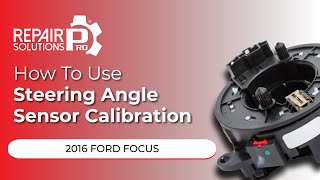

The information in this article is provided for general reference and educational purposes only. Vehicle specifications, procedures, and part compatibility can vary by production date, trim level, and region. Always consult your vehicle's factory service manual and verify part numbers before purchasing or performing repairs. Safety-critical components such as airbags, seat belts, and braking systems should be installed by a qualified professional.
- 🎬 Helpful Videos
- What Does U2143 Mean?
- Can I Drive With U2143?
- Common Causes
- Symptoms
- Diagnostic Flowchart
- Common Fixes & Costs
- Used vs. New Parts: Buying Guide
- What Happens If You Wait — Timeline
- Cost of Not Fixing It
- Diagnosis Steps
- When This Code Triggers (Freeze-Frame Conditions)
- Related Codes
- Climate & Environmental Factors
- How to Talk to a Mechanic About This Code
- Where to Take It: Dealer vs Independent vs Chain
- When to Walk Away From the Repair
- What Scan Tool You Need for This Code
- How to Clear the Code After You Fix It
- Will This Fail Emissions / State Inspection?
- Most Commonly Affected Vehicles
- Manufacturer-Specific Notes
- Real Owner Stories
- 2009 Chevy Malibu, 110K miles
- 2012 Saab 9-3, mileage unknown
- 2021 Toyota Corolla, low mileage
- How to Prevent This Code From Triggering
- Frequently Asked Questions
- What is a Steering Angle Sensor?
- What are the most common misdiagnosis mistakes for U2143?
- Can I replace the Steering Angle Sensor myself?
- Is U2143 a serious problem?
- Can a wheel alignment cause the U2143 code?
- Is this code covered by a recall?
- Why did this code appear after I replaced my car battery?
- What's the difference between a U-code, a P-code, and a C-code?
- Key Takeaways
- 🎟️ Get 5% Off