

U2107 on 2021-2022 Ford Mustang Mach-E: ADAS Communication Fault Causes and Fixes
Code U2107 on a 2021-2022 Mustang Mach-E almost always points to a software glitch in the Image Processing Module (IPMA), which controls driver-assist features. The most common fix is a software update performed by a Ford dealer, as outlined in TSB 23-2040. If the issue persists, especially over bumps, the cause is likely a faulty coaxial cable connection to the camera.
- U2107 on a 2021-2022 Mach-E is a communication code specifically related to the driver-assist camera system (IPMA).
- Expect to see multiple warning messages on your dash and for features like adaptive cruise and pre-collision assist to be disabled.
- The problem is most likely a software bug. Do not replace any parts before having a Ford dealer check for and apply the software update from TSB 23-2040.
- If the software update doesn't work, the next step is to inspect the coaxial cable connected to the camera module.
- This is not a DIY repair. A trip to the dealership is almost always required to resolve this code correctly.
What's Unique About the 2021-2022 Ford MUSTANG MACH E
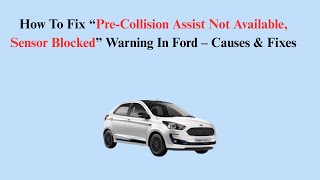
The Ford Mustang Mach-E is heavily reliant on its suite of camera-based Advanced Driver-Assistance Systems (ADAS), such as Pre-Collision Assist and Lane-Keeping. 🎬 Watch: Troubleshooting the Pre-Collision Assist Not Available warning. Unlike older vehicles where a communication code like this would immediately suggest a wiring problem, Ford has specifically identified a software bug as the primary cause on this platform for vehicles built on or before May 4, 2022. This is documented in multiple Technical Service Bulletins (TSBs), making a dealer-level software reprogram the most common and official first step for a fix. A faulty coaxial cable is the second most likely culprit.
Diagnostic Flowchart
Tap your situation to follow the diagnostic path that matches what you're seeing on this vehicle.
Symptoms You May Notice
- "Front Camera Fault Service Required" message on the dashboard.
- "Pre-Collision Assist Not Available" warning message.
- "Lane-Keeping System Fault Service Required" message.
- Adaptive cruise control is inoperative.
- Auto high beams do not function.
- Reverse Brake Assist becomes unavailable.
- Blind Spot System Fault message.
- Traffic sign recognition inoperative.
- Replacing the front camera assembly without first performing the IPMA software update. The TSBs clearly indicate a software fix should be the first step.
- Replacing the IPMA module before thoroughly testing the coaxial cable connecting it to the camera, especially if the fault is intermittent.
Most Likely Causes
- Image Processing Module A (IPMA) Software Issue 🔴 High Probability This is a known issue acknowledged by Ford in Technical Service Bulletins TSB 23-2040 and TSB 22-2295 for vehicles built on or before May 4, 2022. The factory software on certain build dates was susceptible to this fault.
How to confirm: A Ford dealer can check the vehicle's software calibration level against the latest version specified in the TSBs. The presence of U2107:68 alongside codes like U3000:49, U3000:89, and C1001:54 is a strong indicator.
Typical fix: Reprogram the IPMA to the latest software version using the Ford Diagnosis and Repair System (FDRS). This is a dealer-performed procedure that often includes coordinated updates to other modules like the PSCM and CCM.
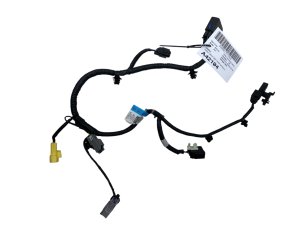
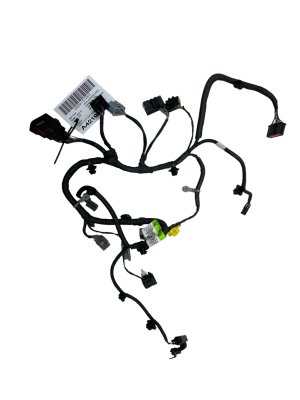
Est. part cost: $0 - Damaged or Disconnected Coaxial Cable 🟡 Medium Probability The coaxial cable connects the IPMA (located near the rearview mirror) to the front camera. It can be susceptible to damage, pinching, or loose connections, especially if the windshield has been replaced or other headliner work has been done. TSB 23-2137 was issued specifically to address this connection issue.
How to confirm: If the fault appears intermittently, especially when driving over bumps, it strongly suggests a wiring issue. A technician will perform a 'wiggle test' on the cable connectors (C900 and C9128) and visually inspect the cable routing behind the A-pillar trim and headliner. If no damage is visible, they may test the cable for continuity.
Typical fix: Repair or replace the faulty section of the coaxial cable. TSB 23-2137 provides a procedure for overlaying a new cable. In some cases, this can be a DIY repair for advanced users, but may require a tool like FORScan to reset the IPMA afterwards.
Est. part cost: $50-$150
Rare But Worth Checking
- Faulty Image Processing Module A (IPMA) Hardware: While rare, if the software has been updated (per TSB 23-2040) and the wiring has been confirmed to be intact (per TSB 23-2137), the IPMA module itself may have an internal hardware failure. This is typically the last component to be replaced due to its cost. One owner on MachEforum.com reported the TSB software update did not fix their issue, requiring further diagnosis.
Diagnosis Steps
- Connect a professional scan tool (ideally Ford's FDRS) and read DTCs from all modules.
- Note the presence of U2107:68 and any accompanying codes like U3000:49, U3000:89, C1001:54, or C1001:78.
- Check the vehicle's build date. If it is on or before May 4, 2022, and service history does not show TSB 23-2040 being performed, this is the primary suspect.
- If the TSB has not been applied, the primary step is to have a Ford dealer reprogram the IPMA to the latest software calibration.
- After reprogramming, clear all DTCs and perform an IPMA self-test and road test.
- If the code returns or was present on a vehicle built after May 2022, investigate the coaxial cable. Note if the fault occurs over bumps.
- Perform a thorough visual inspection of the coaxial cable and its connectors (C900, C9128) for the IPMA, which is located behind the rearview mirror.
- As per TSB 23-2137, perform a 'wiggle test' on the coaxial cable connectors to check for looseness.
- If visual inspection and wiggle tests are inconclusive, test the cable for continuity or overlay a new cable as per the TSB procedure.
- If the software is up-to-date and the wiring tests good, the IPMA module itself is the likely point of failure and may require replacement. Note that per TSB 23-2170, other vehicle modules may need to be updated before a new IPMA can be successfully installed and programmed.
Parts You'll Likely Need
- IPMA Reprogramming Service — This is the official fix from Ford, documented in TSB 23-2040, for the most common cause of this code on affected build dates. It corrects a known software bug.
Trusted brands: Ford Dealer Service
OEM price range: $200-$400
Aftermarket price range: N/A - ADAS Coaxial Cable
(OEM #LJ8Z-14D202-V (Camera to A-Pillar), LJ8Z-14D202-W or LJ8Z-14D202-U (A-Pillar to IPMA))— If a software update does not resolve the issue, or if the fault is intermittent over bumps, a physical fault in the communication wiring is the next logical cause, as detailed in TSB 23-2137.
Trusted brands: Motorcraft
OEM price range: $75-$150
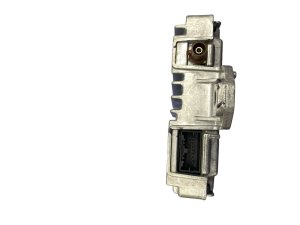
Aftermarket price range: $50-$100 - Image Processing Module A (IPMA)
(OEM #LJ8Z-19H405-K)— In the rare case that both software and wiring are good, the module itself may have failed and would require replacement.
Trusted brands: Motorcraft
OEM price range: $500-$700
Aftermarket price range: N/A
Related Codes That Often Appear With This One
- U3000:49 — This code, for an internal electronic failure, is frequently cited in the same TSBs as U2107, pointing to the same IPMA software issue.
- U3000:89 — This code indicates an internal data transfer failure within the module and is also listed in the TSBs as being resolved by the IPMA reprogram.
- C1001:54 — This chassis code is related to the IPMA and is another symptom of the software glitch described in TSB 23-2040.
- C1001:78 — Also related to the IPMA, this code points to an alignment or adjustment incorrectness, which can be triggered by the software fault.
Technical Service Bulletins (TSBs) & Recalls
- TSB 23-2040: Supersedes the previous TSB and confirms that a software issue in the IPMA can cause U2107:68 and other codes, with the fix being to reprogram the module.
- TSB 22-2295: The original bulletin identifying the IPMA software issue as the cause for various driver assistance system faults and associated DTCs.
- TSB 23-2137: Provides a detailed service procedure for diagnosing and repairing a faulty coaxial cable connection between the IPMA camera and the module, a common secondary cause.
- SSM 52246: A Special Service Message identifying the same IPMA software issue causing U2107:68 on the related 2023 Ford Escape platform.
Platform-Specific Known Issues
- Ford has issued Technical Service Bulletin TSB 23-2040, which supersedes TSB 22-2295, for 2021-2022 Mustang Mach-E models (built on or before May 4, 2022). It acknowledges that various driver assistance warnings and DTC U2107:68 can be caused by a software issue in the IPMA. The official repair is to reprogram the module.
- Ford later issued TSB 23-2137 for 2021-2023 models, which specifically addresses a connection issue between the IPMA camera and the module. It provides procedures for inspecting, testing, and replacing the coaxial cables if the software update does not resolve the fault.
Mechanic-Grade Diagnostic Values
- 12V Battery State of Charge (SOC) before programming — expected: 50% or higher. Failure: Less than 50% SOC may cause module programming (PMI) to fail.
- Coaxial Cable Continuity Test — expected: Continuity (near 0 ohms) along the length of the center conductor, and continuity along the length of the outer shield.. Failure: An open circuit (infinite resistance) on either the conductor or shield indicates a break in the cable. A short circuit (continuity between the center conductor and outer shield) indicates internal damage.
Hidden / Shadow Codes Worth Checking
- U2107:68 / U3000:89: These codes may only appear after a technician performs an on-demand IPMA self-test with a scan tool. If they do not set during normal driving, they should not be diagnosed. (see via Ford Diagnosis and Repair System (FDRS) or other professional scan tool capable of performing a module self-test.)
Scan Tool Commands That Help
- Ford FDRS: IPMA - Reset the Image Processing Module A (IPMA) Learned Values — This function is used after a wiring repair (per TSB 23-2137) or to attempt to clear a persistent U3000:49 code before replacing the module. It must be followed by an alignment.
- Ford FDRS: IPMA - Image Processing Module A (IPMA) Alignment — This must be run immediately after resetting the IPMA learned values or replacing the IPMA camera to ensure the system functions correctly.
- Ford FDRS: Programmable Module Installation (PMI) — This is required when a new IPMA is installed. Per TSB 23-2170, for a successful PMI on 2021 models, other modules (PSCM, CCM, CMR, IPC) must be updated to their latest software levels first. Pro-tip: To force a fresh software install, select 'No' when asked if the original module is installed.
- Ford FDRS: IPMA - Image Processing Module A (IPMA) Configuration — If a scripted software update fails during the configuration phase, this tool can be run from the toolbox tab to pull configuration data from the cloud and properly finish the setup.
Wiring & Ground Locations
- C9128 — The coaxial cable connector located directly at the IPMA camera, behind the plastic cover of the rearview mirror assembly on the windshield.. This is a primary point of failure and inspection. TSBs instruct technicians to perform a 'wiggle test' here to check for looseness, especially after a windshield replacement.
- C900 — The headliner wiring harness electrical connector, located in the A-pillar.. This is the junction point between the camera's pigtail and the main harness running to the IPMA module. It's the second connection point to check for looseness per TSB 23-2146.
- IPMA Coaxial Cable Routing — Runs from the camera (C9128), across the headliner, down the driver's side A-pillar, and back to the IPMA module in the trunk area.. TSB 23-2137 gives explicit warnings not to bend this fragile cable more than 90 degrees over 30mm (1.2 in) and to use film tape instead of zip ties near the side curtain airbag to avoid damage or interference.
Real Owner Repair Stories
- Reddit user u/Ford-Guy-123 on r/MachE (2024 Mustang Mach-E) — Daily, persistent 'Pre-collision Assist Not Available' and 'Front Camera Fault' messages, especially when going over bumps.
❌ Tried (didn't work) Considering taking the car to the dealer for days.
✅ What actually fixed it The camera was physically loose in its mounting bracket on the windshield. The owner removed the camera, added four layers of duct tape to the metal retaining clip to increase its tension, and reinstalled the camera. This made the camera snug and completely resolved the faults. - MachEforum user 'eStang' (2021 Mustang Mach-E, 60k miles) — Front camera faults that became more consistent over a year, eventually happening multiple times per day over any significant bump.
❌ Tried (didn't work) Living with the issue as it started intermittently.
✅ What actually fixed it The user had the windshield replaced due to a rock chip, which also required replacing the 12V battery that died during the service. After the service, the camera faults completely disappeared. The owner and other users theorize that the windshield technician inadvertently fixed a loose coaxial cable connection at the camera when moving it from the old windshield to the new one. - Reddit user u/tjpoe on r/MachE (2022 Mustang Mach-E Select) — Persistent camera fault messages that disabled cruise control and other ADAS features.
❌ Tried (didn't work) The dealer first tried to simply reattach the coaxial cable, but the problem returned.
✅ What actually fixed it The dealer had to replace the entire coaxial cable. The user noted the repair cost was nearly $4,000 out of warranty due to a 'pinched cable', though Ford covered most of it after negotiation.
"I Checked Everything" — The Actual Cause
- A common diagnostic path is to apply the software TSB, then inspect/replace the coaxial cable. However, some owners have found that after these steps, the true cause was the front camera assembly being physically loose in its mounting bracket on the windshield. The vibration from driving over bumps would cause the coaxial connector to momentarily lose contact, triggering the fault. The standard TSBs do not address checking the physical security of the camera mount itself.
When the Usual Fixes Don't Work
- While the official Ford TSBs provide a clear diagnostic path of 'software first, then wiring,' multiple owner reports indicate these steps can fail. In one case, a dealer replaced the camera and then the IPMA module, but the fault persisted until a regional engineer traced the wiring harness extensively. In another well-documented case, the final fix was not electrical at all, but mechanical: the camera itself was loose in its windshield mount, and securing it with tape to add tension solved the problem permanently, bypassing the need for expensive cable or module replacement. This suggests that if faults are triggered by bumps, a physical inspection of the camera's stability should be performed alongside the electrical 'wiggle tests' on the connectors.
OEM Part Supersession History
LJ8Z-19H405-B, LJ8Z-19H405-G, LJ8Z-19H405-H→LJ8Z-19H405-K— Part revision and update by the manufacturer.
Heads up: TSB 23-2170 notes that for 2021 models, replacing the IPMA may require software updates to several other vehicle modules (PSCM, CCM, etc.) before the new IPMA can be successfully programmed and installed.
Model Year Variations Within This Range
- 2021: Vehicles from the 2021 model year may have interdependent software levels. TSB 23-2170 specifically calls out that when replacing the IPMA on a 2021 model, the PSCM, CCM, CMR, and IPC may all need to be updated first to prevent the IPMA installation (PMI) from failing.
- 2021-2022 (built on or before May 4, 2022): These vehicles are the primary subjects of TSB 23-2040, which identifies a software bug as the most likely cause of U2107. Vehicles built after this date are less likely to be fixed by the software update alone.
Helpful Videos
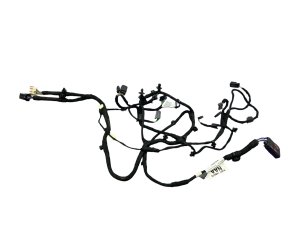
We Have This Part in Stock



The information in this article is provided for general reference and educational purposes only. Vehicle specifications, procedures, and part compatibility can vary by production date, trim level, and region. Always consult your vehicle's factory service manual and verify part numbers before purchasing or performing repairs. Safety-critical components such as airbags, seat belts, and braking systems should be installed by a qualified professional.
- Ford MUSTANG MACH E:
- 🎬 Helpful Videos
- 🛍️ Shop This Part
- What's Unique About the 2021-2022 Ford MUSTANG MACH E
- Diagnostic Flowchart
- Symptoms You May Notice
- Most Likely Causes
- Rare But Worth Checking
- Diagnosis Steps
- Parts You'll Likely Need
- Related Codes That Often Appear With This One
- Technical Service Bulletins (TSBs) & Recalls
- Platform-Specific Known Issues
- Mechanic-Grade Diagnostic Values
- Hidden / Shadow Codes Worth Checking
- Scan Tool Commands That Help
- Wiring & Ground Locations
- Real Owner Repair Stories
- "I Checked Everything" — The Actual Cause
- When the Usual Fixes Don't Work
- OEM Part Supersession History
- Model Year Variations Within This Range
- 🎟️ Get 5% Off