

OBD-II Code U2107: Lost Communication With Body Control Module
What U2107 means, why it triggers, and how to fix it
- Code U2107 indicates the Body Control Module (BCM) dropped off the CAN bus network, instantly disabling lights, locks, windows, and wipers.
- Always test the battery first; voltage drops below 12.4V cause modules to crash and trigger false communication codes before the BCM actually fails.
- Never replace the BCM without verifying it receives full battery voltage and a clean ground (under 0.1V drop) at the main connector.
- Driving with an active U2107 code risks sudden loss of headlights at night or triggers the immobilizer, causing a permanent no-start condition.
- Check for Technical Service Bulletins (TSBs) before starting repairs; many modern Ford and GM vehicles resolve this code with a 1-hour dealer software update.
What Does U2107 Mean?

The U2107 code means your car's Powertrain Control Module (PCM) lost its connection to the Body Control Module (BCM). The BCM is the central command for non-engine functions, controlling your lights, power locks, windows, wipers, and security system. When this communication link fails, these features malfunction or stop working entirely.
Technical definition: U2107 translates to "Lost Communication With Body Control Module (BCM)". This indicates that the Powertrain Control Module (PCM) or another key module is not receiving expected signals from the BCM over the vehicle's Controller Area Network (CAN) bus. The fault logs when a supervised periodic message from the BCM is missing for a specific time-out period, typically 250-500 milliseconds.
Can I Drive With U2107?
Yes, But With Caution. You can drive the vehicle, but do not do so for extended periods. You will experience unpredictable loss of essential functions like headlights, wipers, or turn signals, creating a significant safety hazard. In many vehicles, the BCM ties into the anti-theft system; a communication failure triggers a permanent no-start condition, leaving you stranded.
Common Causes

- Low or Unstable Battery Voltage (Very Common) — A weak or improperly connected battery causes bizarre electronic issues. If system voltage drops below 12.4V, computer modules lack the power to initialize or communicate correctly, triggering temporary communication codes like U2107.
- Blown Fuse or Poor Power/Ground to BCM (Very Common) — The BCM requires a stable power supply and a solid ground connection. A blown fuse, a corroded battery terminal, or a loose chassis ground wire cuts power to the module, forcing it offline.
- Faulty Wiring or Connectors (Common) — Damaged, corroded, or disconnected wires break the communication line. The CAN bus wiring harness chafes against chassis components, or pins within connectors become loose and lose contact.
- Water Intrusion and Connector Corrosion (Common) — Water leaking from bad windshield seals or clogged sunroof drains seeps into the BCM or its connectors under the dashboard. This moisture causes pin corrosion, impeding data and power flow.
- Aftermarket Accessory Interference (Common) — Improperly installed remote starters, alarms, or stereos introduce electrical noise onto the CAN bus. This interference corrupts data packets, making the BCM appear offline.
- Faulty Module on the Same Network (Less Common) — All car computers share the CAN bus network. If another module (like the ABS or radio) fails, it broadcasts corrupt data or shorts the network, preventing BCM communication.
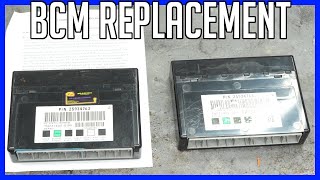
- Faulty Body Control Module (BCM) (Less Common) — The BCM itself fails internally. Electronic components burn out from voltage spikes, or internal solder joints crack, leading to a complete communication breakdown. 🎬 See this walkthrough on how to replace a BCM.
- Incorrectly Programmed or Unmatched Module (Rare) — If the BCM or a related module was recently replaced with a used part, it requires programming to your car's specific VIN. A mismatch causes other modules to reject its communications.
Symptoms

- No-Start Condition — The BCM is a key part of the immobilizer system. If offline, it cannot validate the key, preventing the engine from cranking or starting.
- Loss of Body Accessories (Lights, Locks, Wipers) — Headlights, turn signals, power locks, windows, and wipers work erratically or not at all, as they are directly controlled by the BCM.
- Instrument Cluster Behaving Erratically — Gauges drop to zero, warning lights flash, or the entire cluster goes blank intermittently as it loses data from the BCM.
- Car Alarm or Security System Issues — The vehicle's anti-theft system malfunctions, arming incorrectly or going off unexpectedly.
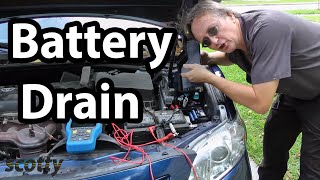
- Parasitic Battery Drain — A faulty BCM fails to shut down accessories when the car turns off, creating a slow drain that kills the battery overnight. 🎬 Watch: How to perform a parasitic draw test.
- Check Engine Light is on — The Powertrain Control Module (PCM) logs the communication fault and illuminates the dashboard warning light.
Diagnostic Flowchart
Tap your situation to follow the diagnostic path that matches what you're seeing on this code.
Common Fixes & Costs
- Replacing a Blown Fuse — Parts: $1-$5, Labor: $0-$65, ~0.1 hr book time (DIY)
- Cleaning or Repairing a Ground Connection — Parts: $5-$15, Labor: $75-$150, ~0.8 hr book time (DIY)
- Repairing Damaged Wiring or Connectors — Parts: $10-$50, Labor: $150-$500, ~1.5 hr book time (Intermediate)
- Reprogramming a Control Module (Software Update) — Parts: $0, Labor: $150-$400, ~1.0 hr book time (Professional)
- Replacing and Programming a Body Control Module (BCM) — Parts: $200-$600, Labor: $150-$300, ~1.5 hr book time (Professional)
Used vs. New Parts: Buying Guide
When a used part is worth it: A used BCM is cost-effective for older vehicles where new parts are discontinued. It ONLY makes sense if you use a mail-in 'cloning' service to transfer your original data.
Donor-vehicle mileage cap: roughly under 100000 miles for the part to have meaningful remaining life.
Donor quality checklist:
- Verify the part number on the used BCM is an exact match.
- Ensure the donor vehicle was not scrapped due to flood or fire damage.
- Purchase from a seller offering at least a 30-90 day warranty.
Decision logic:
- If The BCM requires programming to the vehicle's VIN → A new OEM part is simpler. A used part MUST be sent to a cloning service to transfer the vehicle's data.
- If The vehicle is older and the budget is tight → A used, cloned BCM is viable, but carries a higher risk of premature failure.
- If The original BCM failed due to a known manufacturing defect → Buy a new part to ensure you get the updated, reliable version.
Warranty tradeoff: Used parts have a 30-90 day warranty. New aftermarket parts offer 1-year to limited lifetime warranties. Labor is never covered on a failed used part.
Worst-case if a used part fails: $300-$600 if a used BCM fails after the warranty period, requiring repeat labor and cloning fees.
What Happens If You Wait — Timeline
- Immediate: Check Engine Light illuminates. Unpredictable loss of body functions (lights, wipers, locks) occurs. The immobilizer may trigger a no-start condition. (MPG impact: 0%% · Added cost: $0 (but high safety and inconvenience risk))
- 0-3 Months: A faulty BCM develops a parasitic drain, causing the battery to die repeatedly. Constant deep-cycling permanently damages the battery. (MPG impact: 0%% · Added cost: $150-$350 for a prematurely failed battery.)
- 3-6 Months: The root cause creates continuous electrical noise and voltage instability on the CAN bus network, stressing unrelated control modules. (MPG impact: 0-5%% · Added cost: $300-$900 as constant stress causes software glitches in other modules.)
- 6+ Months: Cascading failure. Prolonged electrical stress corrupts or permanently damages expensive modules on the network, like the PCM or ABS. (MPG impact: 5-10%% · Added cost: $1000-$2500+ to replace multiple control units.)
Cost of Not Fixing It
- Immediate: Unpredictable loss of essential safety features like headlights or wipers increases accident risk. The vehicle may also fail to start. (Added cost: $0 (but high safety risk))
- 0-3 Months: A faulty BCM causes a parasitic battery drain, repeatedly leaving you with a dead battery. This permanently damages the battery. (Added cost: $150-$350 for a new battery)
- 3+ Months: Ignoring the fault leads to cascading electrical problems. Voltage irregularities stress and damage other expensive control modules on the network. (Added cost: $500-$2000+ for additional module replacement)
Diagnosis Steps
- Check the Battery and Charging System
Ensure the battery is fully charged (at least 12.4 volts with the engine off) and terminals are clean. Start the engine and verify the alternator charges at 13.5-14.5 volts. Low voltage is the primary cause of module communication errors.
Tools: Multimeter, Battery Terminal Cleaner (Beginner) - Inspect All BCM-Related Fuses
Using the owner's manual, locate all fuse boxes. Visually inspect every fuse labeled for the Body Control Module, BCM, or Body. Replace any blown fuses, as a single failure takes the module offline.
Tools: Owner's Manual, Fuse Puller or Pliers (Beginner) - Perform a Visual Inspection
Locate the BCM (often under the dashboard). Inspect its wiring harness and connectors for chafed wires, rodent damage, or signs of water intrusion and green corrosion.
Tools: Flashlight (Intermediate) - Check for Power and Ground at the BCM
Using a wiring diagram, identify the power and ground pins on the BCM connector. With the key on, use a multimeter to confirm the BCM receives full battery voltage. Check for voltage drop on the ground circuit; a reading under 0.1 volts indicates a solid ground.
Tools: Multimeter, Vehicle-Specific Wiring Diagram (Intermediate) - Perform a CAN Bus Resistance Test
Disconnect the negative battery terminal. At the OBD-II port, measure resistance between Pin 6 (CAN High) and Pin 14 (CAN Low). A healthy network reads 60 Ohms. 120 Ohms indicates an open circuit; near 0 Ohms indicates a short.
Tools: Multimeter (Advanced) - Analyze Scan Tool Live Data PIDs
Using an advanced scan tool, monitor live data PIDs like 'BCM Voltage Status' and 'BCM Communication Status'. Run a full network scan to see which modules are online. Frozen or absent BCM data points to a module, power, or network fault.
Tools: Bi-Directional OBD-II Scan Tool (Advanced) - Perform a Wiring Harness Wiggle Test
While monitoring CAN bus resistance or scan tool live data, gently wiggle the wiring harnesses going to the BCM. If the 60 Ohm reading fluctuates wildly, you have located a poor connection or partially broken wire.
Tools: Multimeter or Advanced Scan Tool (Advanced) - Isolate the Faulty Module
If bus resistance is below 40 ohms or multiple U-codes exist, disconnect modules one by one (radio, ABS, cluster). The module that restores the network to a stable 60 Ohm reading when unplugged is the source of the interference.
Tools: Scan Tool, Basic Hand Tools, Wiring Diagram (Advanced) - Analyze the CAN Bus Waveform
Connect a dual-channel oscilloscope to CAN High (Pin 6) and CAN Low (Pin 14). A healthy bus shows a mirror-image square wave pattern. A flat line or a short to ground/power pinpoints the exact electrical fault on the data lines.
Tools: Dual-Channel Oscilloscope, OBD-II Breakout Box (Professional)
When This Code Triggers (Freeze-Frame Conditions)
- Vehicle Speed: 0 mph (at startup) or 35-65 mph (during cruise) (The code sets immediately at key-on if the BCM is completely offline, or during steady driving if the communication loss is intermittent.)
- System Voltage: 11.5-14.5V (A voltage reading near the low end of this range points towards a battery or charging system issue as the root cause.)
- Engine RPM: 0, 800 (idle), or 1500-2500 (cruise) (Helps determine if the fault occurred before starting, at idle, or while driving. Intermittent faults often appear during cruise when vibrations affect loose wires.)
- Ignition Cycles Since Fault: 0 or 1 (Indicates how recently the fault occurred. A value of 0 means the fault is active in the current drive cycle.)
Related Codes
- U0140 — U0140 is the standardized SAE code for 'Lost Communication With Body Control Module'. U2107 is the manufacturer-specific version of the exact same fault.
- U2100 — Indicates a general 'CAN Bus Communication Failure'. If present with U2107, it confirms a network-wide problem (like a shorted wire) rather than an isolated BCM failure.
- U2105 — Means 'Lost Communication with Engine Control Module (ECM)'. Seeing U2105 and U2107 together strongly points to a main CAN bus wiring fault or a single rogue module crashing the network.
- B1001 — Stands for 'Option Configuration Error'. If a replacement BCM is not programmed with the correct VIN, it logs a B1001 and triggers a U2107 because other modules refuse to communicate with it.
Climate & Environmental Factors
- High Humidity / Water Intrusion: Moisture enters the BCM or its connectors from bad windshield seals or clogged sunroof drains. This causes rapid pin corrosion and circuit board damage, directly severing communication.
- Extreme Cold: Cold temperatures cause wires to become brittle and connections to contract. This exposes intermittent opens in partially broken wires, triggering the code until the cabin warms up.
- Road Salt: In winter regions, road salt accelerates corrosion on chassis grounds. A critical ground point for the BCM becomes resistive, causing the module to drop offline.
How to Talk to a Mechanic About This Code
Say this: "I have a U2107 code indicating a loss of communication with the Body Control Module. Please start by checking the battery, fuses, and the main power and ground connections to the BCM before assuming the module is bad. I'd also like you to check the CAN bus network for shorts or interference."
This signals that you understand a 'U' code is a network problem, not necessarily a failed part. It directs the shop to perform a logical, cost-effective diagnosis rather than immediately quoting an expensive BCM replacement.
Avoid saying:
- 'My check engine light is on, can you just fix it?'
- 'I think I need a new BCM, can you give me a price?'
- 'Just do whatever you think is best.'
Questions to ask before authorizing the repair:
- Did you find stable power and a clean ground at the BCM connector?
- What was the resistance reading on the CAN bus? Was it 60 ohms?
- If recommending a BCM replacement, how did you rule out a wiring issue or another module crashing the network?
- Does the quoted price for a new BCM include programming to my vehicle's VIN?
Where to Take It: Dealer vs Independent vs Chain
- Dealer:
Recommended. The dealer has guaranteed access to the correct wiring diagrams, software, and programming tools required for a definitive repair.
Best for: Vehicles under warranty., Complex cases requiring software updates or module programming., When manufacturer-specific TSBs are involved.
Downsides: Highest labor rates., May default to expensive module replacement without exhausting diagnostic steps. (Typical cost: +50% vs. baseline) - Independent Shop:
Good fit, provided the shop specializes in electrical diagnostics and has CAN bus analysis tools for your specific brand.
Best for: Out-of-warranty vehicles where the cause is likely a wiring or ground fault.
Downsides: Not all independent shops have the expensive scan tools needed for advanced network diagnosis and module programming. (Typical cost: +0% vs. baseline) - Chain Shop:
AVOID. This code requires a level of diagnostic expertise not found at general chain repair shops.
Best for: Checking the battery and replacing it if necessary.
Downsides: Technicians lack specialized training for complex network diagnostics., High pressure to sell parts leads to misdiagnosis. (Typical cost: -10% vs. baseline)
When to Walk Away From the Repair
If the estimated repair cost exceeds 50% of the car's private-party value, carefully consider if the investment is worthwhile.
- Car worth $4000, fix is $2200: Walk away. A repair cost this high on a lower-value car means you are better off selling it as-is.
- Car worth $15000, fix is $900: Fix it. The repair cost is well below the 50% threshold and restores critical vehicle functions.
- Car worth $5000, fix is $450: Fix it. This likely represents a wiring or ground repair that is a sensible investment to keep the car safe.
What Scan Tool You Need for This Code

Minimum: A tool that performs a full network scan to see which modules are online and reads manufacturer-specific 'U' codes.
A basic $20 code reader only shows the U2107 code from the engine computer's perspective. It cannot tell you if the BCM is powered on or access the live data needed to diagnose the network.
Budget: BlueDriver Pro (~$100) — Reads enhanced codes (ABS, Airbag, BCM) and performs a full system scan. It views live data from the BCM to see if the module is alive.
Mid-range: Foxwell NT510 Elite (~$180) — Offers bi-directional control, allowing you to command functions (like turning on lights) directly from the scanner to test if the BCM receives commands.
Professional: Autel MaxiCOM MK808S (~$450) — Provides OE-level diagnostics, full auto-scan of network topology, active tests, and special functions like key programming essential for BCM replacement.
Rent vs buy: Buying is recommended. Parts store rental scanners are basic code readers useless for network diagnostics. An advanced tool is a necessary investment for DIY electrical work.
How to Clear the Code After You Fix It
- Fix the underlying electrical or module issue.
- Reconnect the battery if it was disconnected for the repair.
- Use an OBD-II scan tool to clear the diagnostic trouble codes (DTCs).
- Perform a complete drive cycle to allow the vehicle's readiness monitors to run.
Drive cycle (~20 minutes): A generic drive cycle involves a cold start (engine coolant below 122°F), a 2-3 minute idle with electrical loads on, followed by 10-15 minutes of mixed driving including steady highway speeds and stop-and-go city driving.
Readiness monitors affected: This is a network code, not an emissions code, so it does not directly fail a specific readiness monitor., However, an active U-code with the Check Engine Light on causes an automatic failure of an OBD-II emissions test.
Before emissions retest: drive at least 50 miles to fully set monitors.
Watch out for:
- Clearing the code without fixing the root cause results in the code returning immediately.
- Disconnecting the battery resets all emissions readiness monitors to 'Not Ready', causing an emissions test failure.
- Failing to perform a full drive cycle after a repair leaves monitors incomplete for state inspections.
Will This Fail Emissions / State Inspection?
Yes — this code typically fails an OBD-II emissions inspection.
- California: An illuminated Check Engine Light results in an automatic smog check failure. A complete drive cycle must be performed after repairs.
- New York: Any active trouble code that turns on the check engine light, including U2107, is an automatic failure during the OBD-II scan.
- Texas: An illuminated Check Engine Light is an automatic failure. The vehicle cannot be tested until OBD readiness monitors complete their checks.
Manufacturer-Specific Notes
- General Motors (GM): U2107 is extremely common on GM platforms, frequently caused by bad chassis grounds or interference from failing OnStar VCIM modules draining the battery.
- Ford: Ford uses U2107 with a two-digit failure type code (e.g., U2107:68). Recent TSBs for the F-150 and Mach-E show it is often caused by a software glitch in the Image Processing Module A (IPMA) requiring a dealer update.
- Saturn: On some Saturn models, U2107 is defined as an 'ESC Signal Error', pointing to a problem with the stability control system rather than the BCM.
- Chevrolet: On specific older Chevrolet models, U2107 indicates a 'Cooling Fan 2 Control Circuit Malfunction', highlighting the need to verify the exact code definition for your year and model.
- Isuzu: For certain Isuzu models, U2107 is defined as 'Valve Pause System (VPS) Stuck Off Bank 2', an engine variable valve timing fault completely unrelated to the BCM.
Real Owner Stories
2006 Corvette C6 with 'Service Active Handling' light
After replacing a faulty Electronic Brake Control Module (EBCM) with a used one, the car displayed a 'Service Active Handling' warning and a U2107 code.
What they tried:
- Checked all grounds, tested the battery, and replaced the alternator.
- Verified wiring and connectors between the EBCM and BCM showed no damage.
Outcome: A technician with a dealer-level scan tool reflashed the used EBCM, programming it to the car's VIN. This resolved the communication conflict and cleared the U2107 code.
Lesson: Swapping modules is not plug-and-play. Modules must be electronically programmed to the vehicle's VIN to communicate correctly on the CAN bus.
2007 Chevy Cobalt with a no-crank, no-start condition
The car would not crank, the security light was on, and multiple communication codes were present, including U2107 and U2105.
What they tried:
- Checked all fuses for the BCM and ECM.
- Verified the battery was fully charged at 12.5V.
- Attempted the Passkey relearn procedure, which failed.
Outcome: The root cause was a corroded ground wire terminal for the run/crank relay connecting to the transmission housing. Cleaning the contact point and repairing the wire restored communication and allowed the car to start.
Lesson: A cluster of communication codes and a no-start condition points to a fundamental power or ground issue, not multiple failed modules.
2007 Chevy Cobalt would crank but not start after dead battery
After recharging a dead battery, the car cranked but only coughed and sputtered. No new codes were present initially.
What they tried:
- Checked for fuel pressure and spark.
- Tried using a spare key to rule out security issues.
- Disconnected the battery for 30 minutes to reset the computers.
Outcome: A mechanic discovered the long-term fuel trim settings were corrupted by the low voltage event. Performing a 'fuel trim reset' with an advanced scan tool immediately fixed the issue.
Lesson: A dead battery causes unpredictable software glitches. If your car runs poorly after a battery issue, a computer reset via a professional scan tool is often required.
How to Prevent This Code From Triggering
- Keep the Interior Dry (Annually) — Water destroys electronics. Clear sunroof drains and inspect door seals to prevent water from reaching the BCM.
- Maintain a Healthy Battery and Grounds (Every Oil Change) — Low voltage corrupts module software. Clean battery terminals and ensure chassis ground connections are tight and rust-free.
- Use Proper Jump-Starting Procedures (As needed) — Incorrect jumper cable connections cause massive voltage spikes that instantly destroy the BCM. Always use designated ground points.
- Professional Installation of Accessories (When adding accessories) — Improperly tapping into vehicle wiring introduces noise onto the CAN bus. Professionals integrate accessories without disrupting the network.
Frequently Asked Questions
What is the most common misdiagnosis for a U2107 code?
The most common mistake is immediately replacing the Body Control Module (BCM). A 'U' code signifies a communication loss, frequently caused by wiring, a blown fuse, a bad ground, or network interference. Always perform a full electrical diagnosis before condemning the BCM.
Can a bad battery cause a U2107 code?
Yes. A weak battery provides unstable voltage (dropping below 10V during cranking), preventing the BCM from booting up or communicating correctly. Always check the battery first.
How much does it cost to fix a U2107 code?
Costs range from $5 for a simple fuse replacement to $150-$500 for wiring repairs. If the BCM fails, a new module plus mandatory dealer programming costs $350-$900. Software updates typically cost $150-$400.
Why do I have multiple U-codes at the same time?
Seeing multiple communication codes (like U2107, U2105, U2100) points to a network-wide problem rather than multiple failed modules. The cause is usually a fault on the main CAN bus wiring or a single rogue module disrupting the entire network.
Is the Body Control Module the same as the ECU?
No. The Engine Control Unit (ECU) manages the engine and transmission. The Body Control Module (BCM) manages non-engine functions like lights, windows, locks, and security.
Can I replace the BCM myself?
While you can physically swap the module, a new BCM must be programmed to your car's specific VIN and factory options. This requires specialized dealer-level scan tools and software. Unless you use a mail-in cloning service, this is a job for a professional.
Will clearing the code fix the problem?
No. Clearing the code only erases the fault record temporarily; the underlying electrical problem remains. The code returns as soon as the system runs its self-check.
What does the :68 mean in a Ford U2107:68 code?
The ':68' is a Failure Type Code (FTC) indicating an 'Event Information' fault where a module receives invalid data. In recent Ford TSBs, it points to a software issue in the Image Processing Module A (IPMA) requiring a reprogram.
Key Takeaways
- Code U2107 indicates the Body Control Module (BCM) dropped off the CAN bus network, instantly disabling lights, locks, windows, and wipers.
- Always test the battery first; voltage drops below 12.4V cause modules to crash and trigger false communication codes before the BCM actually fails.
- Never replace the BCM without verifying it receives full battery voltage and a clean ground (under 0.1V drop) at the main connector.
- Driving with an active U2107 code risks sudden loss of headlights at night or triggers the immobilizer, causing a permanent no-start condition.
- Check for Technical Service Bulletins (TSBs) before starting repairs; many modern Ford and GM vehicles resolve this code with a 1-hour dealer software update.
Helpful Videos
![How To Test CAN BUS With A Multimeter [CAN Bus Resistance Check] Mechanic Mindset](https://img.youtube.com/vi/JPE42HSJxAk/mqdefault.jpg)

The information in this article is provided for general reference and educational purposes only. Vehicle specifications, procedures, and part compatibility can vary by production date, trim level, and region. Always consult your vehicle's factory service manual and verify part numbers before purchasing or performing repairs. Safety-critical components such as airbags, seat belts, and braking systems should be installed by a qualified professional.
- 🎬 Helpful Videos
- What Does U2107 Mean?
- Can I Drive With U2107?
- Common Causes
- Symptoms
- Diagnostic Flowchart
- Common Fixes & Costs
- Used vs. New Parts: Buying Guide
- What Happens If You Wait — Timeline
- Cost of Not Fixing It
- Diagnosis Steps
- When This Code Triggers (Freeze-Frame Conditions)
- Related Codes
- Climate & Environmental Factors
- How to Talk to a Mechanic About This Code
- Where to Take It: Dealer vs Independent vs Chain
- When to Walk Away From the Repair
- What Scan Tool You Need for This Code
- How to Clear the Code After You Fix It
- Will This Fail Emissions / State Inspection?
- Manufacturer-Specific Notes
- Real Owner Stories
- 2006 Corvette C6 with 'Service Active Handling' light
- 2007 Chevy Cobalt with a no-crank, no-start condition
- 2007 Chevy Cobalt would crank but not start after dead battery
- How to Prevent This Code From Triggering
- Frequently Asked Questions
- What is the most common misdiagnosis for a U2107 code?
- Can a bad battery cause a U2107 code?
- How much does it cost to fix a U2107 code?
- Why do I have multiple U-codes at the same time?
- Is the Body Control Module the same as the ECU?
- Can I replace the BCM myself?
- Will clearing the code fix the problem?
- What does the :68 mean in a Ford U2107:68 code?
- Key Takeaways
- 🎟️ Get 5% Off