

U2106 on 2006-2011 Cadillac STS: Lost Communication with TCM Causes and Fixes
On a 2006-2011 Cadillac STS, code U2106 is almost always caused by a poor electrical connection at the main transmission harness connector, known as X1. This connector is located on the transmission itself. Inspecting, cleaning, and securing this connector, as detailed in GM Technical Service Bulletin PIC4740E, usually resolves the issue without replacing any parts. This problem can cause severe symptoms like a no-start condition, hard shifting, and multiple warning lights.
- U2106 means the Transmission Control Module (TCM) is offline.
- Before suspecting expensive parts, ALWAYS inspect the transmission's main electrical connector (X1) for loose pins or corrosion, as per GM TSB #PIC4740E.
- Symptoms are often severe, including hard shifting and a no-start condition.
- A simple fix of cleaning and securing the connector resolves the problem in a majority of cases.
- If the connector is fine, check fuses and power/ground wires to the TCM before considering module replacement.
What's Unique About the 2006-2011 Cadillac STS

The 2006-2011 Cadillac STS, along with other vehicles on the GM Sigma platform, is specifically called out in General Motors Technical Service Bulletin #PIC4740E for this exact issue. The problem is so common that GM documented the primary cause as poorly seated or corroded pins within the main transmission harness connector, known as X1. Unlike a generic communication code that could have dozens of causes, on the STS, the diagnostic process should always start with this specific, well-known connector issue before considering more complex or expensive repairs.
Diagnostic Flowchart

Tap your situation to follow the diagnostic path that matches what you're seeing on this vehicle.
Symptoms You May Notice
- Check Engine Light (SES light) is on
- Transmission shifts hard or erratically
- Vehicle will not crank or start
- Multiple warning lights on the dashboard (ABS, Traction Control, etc.)
- Message on dash indicating 'Reduced Power'
- Scan tool cannot communicate with the TCM or ECM
- Transmission stuck in a single gear (limp mode)
- Door locks cycle while driving
- Instrument cluster goes blank when trying to start
- Replacing the Transmission Control Module (TCM) without first inspecting the X1 connector. The TSB clearly indicates the connector is the most likely culprit, and a new TCM will not fix a bad connection.
- Replacing the Engine Control Module (ECM). The ECM is usually just reporting the communication problem, it is not the source of it.
- Replacing the starter when a 'no crank' symptom is present. The no-crank is often a result of the ECM not receiving a valid signal from the TCM, preventing it from engaging the starter relay. 🎬 Watch: This video shows an easy fix for a no-start condition.
Most Likely Causes

- Poor Connection at Transmission Harness Connector (X1) 🔴 High Probability This is a known issue documented in GM Technical Service Bulletin #PIC4740E. The connector is located on the transmission housing and is subject to vibration and environmental exposure, causing pins to back out or corrode.
How to confirm: Disconnect the X1 connector at the transmission. Visually inspect for corrosion or backed-out pins. The TSB specifically advises to gently tug on each individual wire to ensure it is fully seated and locked in the connector, as a side load can give a false positive lock.
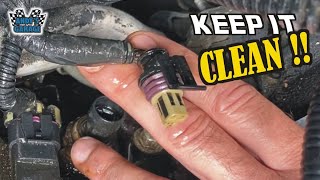
Typical fix: Reseat any loose pins. Clean the connector terminals with electrical contact cleaner and apply a thin layer of dielectric grease before reconnecting securely. 🎬 Watch: A quick tutorial on how to properly clean electrical connectors. If the connector housing or terminals are damaged, a new connector pigtail must be spliced in.
Est. part cost: $5-$30 - Loss of Power or Ground to the TCM 🟡 Medium Probability Fuse blocks in Cadillacs of this era can be susceptible to corrosion, especially in the underhood fuse box. A poor engine block ground is also a known issue on related platforms.
How to confirm: Check the fuses labeled 'TCM IPC' and 'ECM/TCM' in the fuse boxes located under the rear seat and in the engine compartment. 🎬 See this guide to locate and check your STS fuse boxes. Using a multimeter and a wiring diagram, check for battery voltage and a solid ground connection at the TCM's electrical connector. A voltage drop test on the main engine block ground strap is also recommended.
Typical fix: Replace blown fuses. Clean corroded fuse block terminals or ground points. Repair or replace any broken power or ground wires.
Est. part cost: $1-$25 - Damaged Wiring Harness ⚪ Low Probability On related platforms like the CTS and ATS, TSB PIC4740F notes that the harness can chafe on a securing bracket near the transmission bell housing. While not the primary cause on the STS, it's a possibility.
How to confirm: Visually inspect the wiring harness between the ECM and TCM for any signs of chafing, melting, or physical damage. Pay close attention to where the harness may rub against the engine block, chassis components, or securing brackets.
Typical fix: Repair the damaged section of wire. Protect the harness with loom or re-route it to prevent future damage.
Est. part cost: $10-$50
Rare But Worth Checking
- Failed Transmission Control Module (TCM): This should only be considered after all wiring, connector, and power/ground issues have been definitively ruled out. A faulty TCM is possible but far less common than the connection issues. A scan tool that can communicate with other modules but not the TCM, after verifying the TCM has good power and ground, points towards a failed module. The TCM is integrated into the valve body (it's a TEHCM - Transmission Electro-Hydraulic Control Module) on 6-speed models, making replacement more involved.
Diagnosis Steps
- Read all stored fault codes from all modules, not just the ECM. Note any other 'U' codes, as they can help pinpoint the scope of the communication failure.
- Prioritize diagnosis based on TSB #PIC4740E: Safely raise the vehicle and locate the main transmission harness connector (X1) on the transmission housing.
- Disconnect the X1 connector. Inspect both male and female ends for green or white corrosion, bent pins, or pins that have pushed back into the connector housing.
- Perform a 'tug test' as described in the TSB: Gently pull on each individual wire going into the back of the connector to ensure it is securely crimped and locked in place. A loose pin may feel secure under a side load but will pull out with a straight tug.
- If any issues are found, clean the terminals with contact cleaner and reseat the pins. Apply dielectric grease to the connector seal and pins before securely reconnecting.
- If the connector is in perfect condition, check for power to the TCM. Locate the underhood and rear seat fuse panels. Check the 'TCM IPC' and 'ECM/TCM' fuses.
- If fuses are good, use a multimeter to verify battery voltage and a solid ground connection at the TCM connector itself (requires a vehicle-specific wiring diagram). Perform a loaded circuit test with a test light to ensure the power and ground wires can carry a load.
- Check the High-Speed GMLAN network integrity. With the battery disconnected, measure the resistance between Pin 6 and Pin 14 of the Data Link Connector (DLC). A healthy network should read approximately 60 ohms. A reading of 120 ohms indicates an open in the circuit or a missing termination resistor (often the TCM itself is disconnected). A reading near 0 ohms indicates a short between the CAN high and CAN low wires.
- Inspect the CAN bus wiring harness for any visible damage, chafing, or melting between the TCM, ECM, and other modules, paying special attention to any harness brackets.
- If all wiring, connectors, and power/grounds are confirmed good, the final step is to suspect a faulty TCM.
Parts You'll Likely Need

- Electrical Contact Cleaner & Dielectric Grease — This is the most common fix. Cleaning corrosion and protecting the connection at the X1 connector often resolves the communication loss.
Trusted brands: CRC, Permatex
OEM price range: $15-$25
Aftermarket price range: $10-$20 - Transmission Harness Connector Pigtail
(OEM #ACDelco PT2769 (Verify by VIN))— If the X1 connector housing is cracked or the terminals are too damaged to be cleaned or reseated, the connector end will need to be cut off and a new pigtail spliced in.
Trusted brands: ACDelco, Dorman
OEM price range: $50-$75
Aftermarket price range: $25-$50
Related Codes That Often Appear With This One
- P0700 — This code means the TCM has detected a fault and has requested the Check Engine Light to be turned on. It's a general flag that points to a problem within the transmission system and is explicitly listed in TSB PIC4740E.
- U0100 — Lost Communication with ECM. This can appear alongside U2106 if the network disruption is severe enough to affect communication with multiple modules.
- U0121 — Lost Communication with ABS Control Module. Like U0100, this indicates a wider network problem, often stemming from the same root cause like a bad connector or wiring.
- U0073 — Controller Area Network (CAN) Bus Communication. This is a general code indicating a fault on the main communication bus, which is consistent with the TCM not communicating.
Technical Service Bulletins (TSBs) & Recalls
- PIC4740E: Addresses symptoms like no crank, multiple warning lights, hard shifting, and erratic door locks. It directly attributes them to unseated or corroded pins in the transmission X1 connector.
Platform-Specific Known Issues
- TSB PIC4740E: The Primary Culprit: A known issue, documented in TSB #PIC4740E, points to unseated pins in the transmission X1 connector as the primary cause for a host of communication DTCs, including U2106, on the 2006-2011 STS. The TSB covers symptoms from no-crank and hard shifting to erratic door locks.
- Real-World Repair Story: A user on CadillacForums.com with a 2005 STS experiencing a no-start and multiple 'U' codes, including U2106, ultimately traced the problem to the large transmission connector. After disconnecting, cleaning the pins with a contact cleaner, applying dielectric grease, and reconnecting, the car started and all communication codes were resolved. This owner experience directly validates the fix recommended in the GM service bulletin.
Mechanic-Grade Diagnostic Values
- High-Speed GMLAN Bus Resistance — expected: 60 Ohms (± 5 Ohms). Failure: A reading of ~120 Ohms indicates an open circuit or one of the two terminating resistors is offline (e.g., TCM disconnected). A reading near 0 Ohms indicates the CAN High and CAN Low wires are shorted together. A reading below 55 Ohms could indicate a faulty module pulling the bus down.
- TCM Power Supply Voltage — expected: ~12 Volts (Battery Voltage). Failure: Low or no voltage indicates a problem with the fuse, relay, or wiring supplying power to the TCM. It's critical to load the circuit with a test light; a multimeter might show 12V on a corroded wire that can't supply current.
- TCM Ground Connection — expected: Near 0 Ohms resistance to chassis ground, or < 0.1V on a voltage drop test.. Failure: High resistance indicates a poor ground connection. A voltage drop test from the TCM ground pin to the negative battery terminal with the circuit energized should show minimal voltage; more than a few tenths of a volt indicates a bad ground.
Scan Tool Commands That Help
- Tech 2 / GDS2: Module Isolation Diagnostic Technique — When the entire High-Speed CAN bus is down and you cannot communicate with any modules, you can physically disconnect modules one by one to see if communication is restored. A more advanced method mentioned in GM bulletins involves disconnecting the C3 (X3) connector from the instrument panel junction block. This splits the network, leaving only the ECM, TCM, and BCM online. If communication returns with those modules, the fault lies in the disconnected half of the network.
Wiring & Ground Locations
- G101 — On the lower front of the engine block.. This is a primary ground point for both the Engine Control Module (ECM) and the Transmission Control Module (TCM). A poor connection here can cause a wide range of communication and operational issues, including U2106.
- G103 — On the cowl in the left rear of the engine compartment, above the brake booster.. This ground serves the Body Control Module (BCM), Instrument Panel Cluster (IPC), and the Data Link Connector (DLC). A fault here can prevent a scan tool from communicating or cause other modules to report communication loss codes.
- X1 Connector — The main 16-pin electrical connector on the transmission housing itself. On 6L80 transmissions, this is a large, round, twist-lock connector.. This is the single point of connection for all power, ground, and communication lines to the TCM. It is the most common failure point for code U2106, as documented in TSB PIC4740E.
- Underhood Fuse Block — In the engine compartment, typically on the driver's side.. This fuse block contains critical fuses and relays for the ECM and TCM, such as the 'Run/Crank' relays. Corrosion within this fuse block is a known cause of no-start and communication issues.
Real Owner Repair Stories
- YouTube user 'Marcus Dickinson' (2006 Cadillac STS) — No crank, no start. When the start button was pressed, the dashboard would go off and then display 'accessory power'.
❌ Tried (didn't work) Changing the battery.
✅ What actually fixed it The problem was corrosion inside the underhood fuse box, specifically in the sockets for the four main relays related to 'run and crank'. The fix was to remove the four relays, protect the surrounding area, and spray electrical contact cleaner down into the female terminals in the fuse box multiple times to dissolve the green corrosion. After letting it dry and reinstalling the relays, the car started and functioned correctly. - ScannerDanner Forum User (2009 Cadillac CTS 3.6L (Related Platform)) — No crank, no start, no communication with ECM and TCM after a used transmission was installed.
❌ Tried (didn't work) Standard checks of the harness.
✅ What actually fixed it The used transmission had a faulty internal TCM (TEHCM) that was corrupting the entire CAN bus. When the bad TCM was connected, CAN bus resistance readings were erratic. When the transmission was disconnected, the network resistance returned to a normal 120 ohms (as expected with one terminating resistor offline) and communication with the ECM was restored. The final confirmation was temporarily connecting the old transmission's TEHCM, which allowed the engine to start, proving the 'new' TEHCM was the culprit.
Model Year Variations Within This Range
- 2006-2007 (approx.): Early STS models often used the 5-speed Hydra-Matic 5L40-E/5L50-E transmission. On these models, the TCM is a separate module, not integrated into the valve body.
- 2007-2011 (approx.): Later STS models, especially V8 and performance variants, used the 6-speed Hydra-Matic 6L80 transmission. On these models, the TCM is integrated with the valve body and solenoids into a single unit called a TEHCM (Transmission Electro-Hydraulic Control Module). This makes replacement a more involved repair requiring removal of the transmission pan and valve body.
Helpful Videos

We Have This Part in Stock


The information in this article is provided for general reference and educational purposes only. Vehicle specifications, procedures, and part compatibility can vary by production date, trim level, and region. Always consult your vehicle's factory service manual and verify part numbers before purchasing or performing repairs. Safety-critical components such as airbags, seat belts, and braking systems should be installed by a qualified professional.
- Cadillac STS:
- 🎬 Helpful Videos
- 🛍️ Shop This Part
- What's Unique About the 2006-2011 Cadillac STS
- Diagnostic Flowchart
- Symptoms You May Notice
- Most Likely Causes
- Rare But Worth Checking
- Diagnosis Steps
- Parts You'll Likely Need
- Related Codes That Often Appear With This One
- Technical Service Bulletins (TSBs) & Recalls
- Platform-Specific Known Issues
- Mechanic-Grade Diagnostic Values
- Scan Tool Commands That Help
- Wiring & Ground Locations
- Real Owner Repair Stories
- Model Year Variations Within This Range
- 🎟️ Get 5% Off