

U2101 on 2007-2018 Jeep Wrangler: Control Module Configuration Incompatible Explained
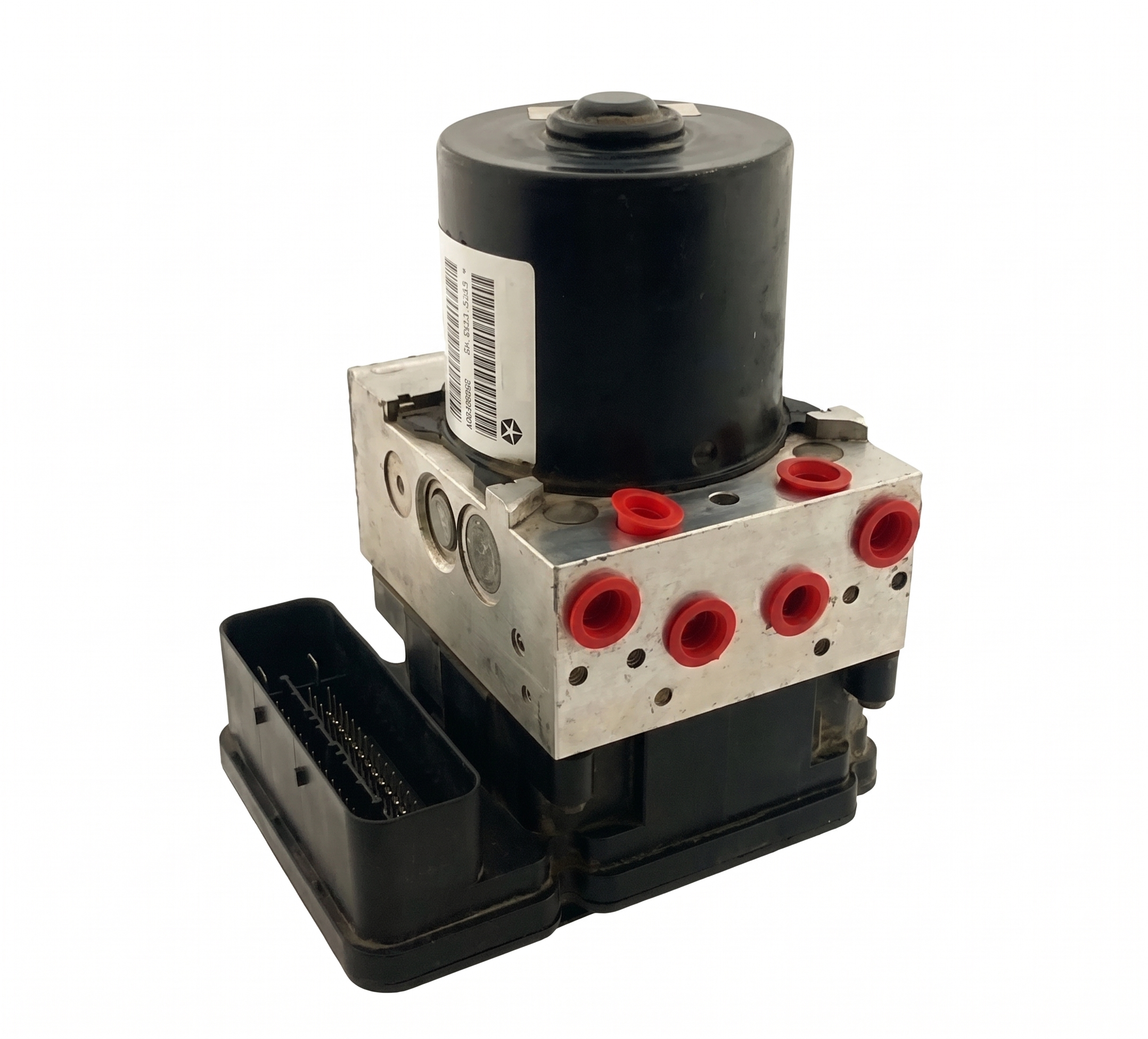
Code U2101 on a Jeep Wrangler means a major electronic part, like the ABS module or TIPM, was replaced but not programmed to your Jeep's VIN. Do not replace the part again; the fix is to have the module professionally programmed, which costs approximately $150-$300 at a dealer or equipped shop. DIY options using tools like JScan are also possible for some modules.
- U2101 is a programming error, not a broken part. It means a module's software doesn't match your Jeep.
- The most common cause is replacing an electronic module (like the ABS controller or TIPM) and not programming it to your vehicle's VIN.
- Do NOT replace the part that has the U2101 code; it needs to be programmed.
- This is not a DIY fix unless you have an advanced, bidirectional scan tool (like JScan, AlfaOBD, or Launch) and are comfortable with module programming.
- The fix is to have a dealer or qualified shop perform the 'Module Configuration' procedure, which typically costs between $150 and $300.
What's Unique About the 2007-2018 Jeep Wrangler
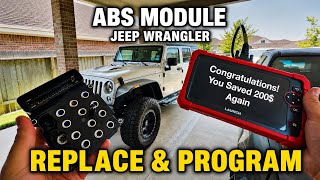
On the Jeep Wrangler JK, this code is a common consequence of repairs. The platform's modular nature and the high frequency of modifications (from off-road upgrades to stereo swaps) increase the chances of this code appearing. Furthermore, the Totally Integrated Power Module (TIPM), a known failure point on these Jeeps, will trigger a U2101 if it's replaced without proper programming. While the dealer's wiTECH tool is the official solution, the savvy Wrangler community has also found success using advanced aftermarket scan tools like JScan or AlfaOBD to program certain modules, particularly the ABS controller, which often involves a specific drive-cycle procedure 🎬 Watch: How to replace and program the ABS control module to complete initialization.
Generation note: The 2007-2018 model years cover the entire 'JK' generation of the Jeep Wrangler. While the underlying cause of U2101 is the same across all years, be aware that part numbers for modules like the ABS controller and TIPM can differ between the early models (2007-2011 with the 3.8L engine) and later models (2012-2018 with the 3.6L engine). The diagnostic and programming procedure remains consistent.
Symptoms You May Notice
- ABS light is on
- Traction Control / ESP light is on
- Check Engine Light is on
- Vehicle may not start (cranks but won't fire)
- Functions related to the specific module may not work (e.g., power locks, wipers, radio)
- Multiple other 'U' codes for 'Lost Communication' may be present
- Brake warning light is on
- Vehicle may go into 'limp mode'
- Replacing the module that is reporting the U2101 code. The module itself is rarely the problem; the data inside it is. Replacing it with another unprogrammed module will not fix the issue and will waste money.
Most Likely Causes
- Replaced Module Not Programmed 🔴 High Probability Many modules on the JK Wrangler, such as the ABS controller and TIPM, are not 'plug-and-play'. They store vehicle-specific configuration data (like VIN, axle ratio, tire size) and must be programmed upon installation.
How to confirm: Use a high-level scan tool to identify which module is logging the U2101 code. Cross-reference this with the vehicle's recent repair history to see if that module was recently replaced. The presence of the code immediately after a part swap is definitive.
Typical fix: Perform a 'Programmable Module Installation' (PMI), 'ABS Initialization', or 'Restore Vehicle Configuration' procedure using a compatible scan tool to write the vehicle's VIN and configuration data to the new module.
Est. part cost: $0 - Incorrect Used Module Installed 🟡 Medium Probability To save money, owners may install used modules from salvage vehicles. If the used module is from a vehicle with different options (e.g., a Rubicon module in a Sport model with a different axle ratio or sway bar system), it can create a configuration mismatch that triggers U2101 even after a VIN write.
How to confirm: Check the part number and origin of the installed module. Even if programming is attempted, it may fail if the hardware is fundamentally incompatible with the vehicle's as-built data. The scan tool may report a failure during the configuration process.
Typical fix: The module must be reprogrammed with the correct 'as-built' data for the new vehicle. In some cases, the used module cannot be re-written and must be replaced with a correct new or refurbished unit. Some owners have had success sending their original module to a repair service like Module Master.
Est. part cost: $100-$800 - Faulty Totally Integrated Power Module (TIPM) ⚪ Low Probability The TIPM is a well-documented weak point on the 2007-2018 Wrangler, responsible for many electrical gremlins. While its failure usually causes other codes related to specific outputs (fuel pump, wipers), an internal fault in the TIPM's processing or communication circuits could potentially manifest as a configuration error or prevent other modules from being configured correctly.
How to confirm: This is a diagnosis of exclusion. If no modules have been replaced and programming procedures fail to resolve the code, and other strange electrical issues are present (fuel pump, wipers, locks acting erratically), the TIPM itself may be the root cause.
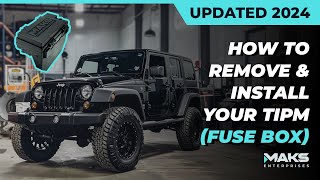
Typical fix: Replace the TIPM with a new, remanufactured, or repaired unit and ensure it is properly programmed to the vehicle. Companies like Circuit Board Medics offer exchange services. 🎬 See this full tutorial on TIPM removal and installation
Est. part cost: $400-$900
Rare But Worth Checking
- CAN Bus Wiring or STAR Connector Fault: While U2101 is almost always a programming issue, a damaged wire or corroded STAR connector (a junction point for the communication network, located behind the glove box) can corrupt messages between modules. This can lead to communication errors that could be misinterpreted as a configuration problem. This is more likely if the vehicle has had extensive aftermarket wiring, modifications, or water damage from leaks.
Diagnosis Steps
- Connect a bidirectional scan tool capable of reading manufacturer-specific codes from all modules (e.g., wiTECH, JScan, AlfaOBD, Launch X431).
- Perform a full vehicle scan and identify which specific module is setting the U2101 code (e.g., ABS, TIPM, etc.).
- Question the owner or review service records. Has this module, or any other major electronic component, been replaced recently? This is the most critical question.
- If a module has been replaced, the diagnosis is almost certainly a lack of programming.
- Using the scan tool, navigate to the special functions or 'Adaptation' menu for the identified module.
- Initiate the 'Module Replacement', 'VIN Write', or 'Restore Vehicle Configuration' procedure. For ABS modules, this is often called 'ABS Initialization'.
- Follow the on-screen prompts precisely. This may include a mandatory driving test where you must drive straight, make a 90-degree turn, and stop, all within a specific speed range (e.g., 3-15 mph).
- If programming fails or the code returns, verify the installed module is the correct part number for the vehicle's VIN and options. A module from a junk yard must be from an identically-optioned vehicle.
- If no modules have been replaced, inspect the wiring and STAR connectors for the CAN bus, checking for corrosion or damage, especially behind the glove box and near the TIPM.
- As a last resort, if programming fails with a known good module, suspect a fault in a primary controller like the PCM or TIPM.
Parts You'll Likely Need
- ABS Control Module (2007-2011, 3.8L)
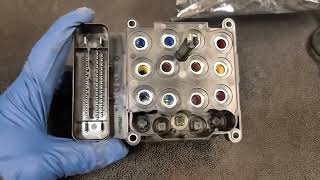
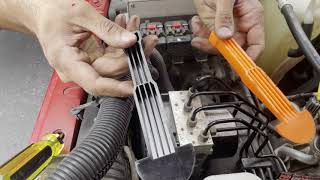
(OEM #68030936AB)— This is a common module to fail or be replaced on early JKs. 🎬 Watch: Step-by-step guide to replacing the ABS module It absolutely requires programming after installation. Part number varies by year and options.
Trusted brands: Mopar
OEM price range: $350-$500
Aftermarket price range: $200-$400 - ABS Control Module (2012-2018, 3.6L)
(OEM #68145835AE (for 12-14), 68259556AD (for 14-18))— Common module to fail or be replaced on later JKs. It requires VIN programming after installation. Part numbers are very specific to the year range.
Trusted brands: Mopar
OEM price range: $400-$600
Aftermarket price range: $250-$450 - Totally Integrated Power Module (TIPM)
(OEM #04692236AH (example for 2008), 04692289 (example for 2009), 68303924 (example for 2017-18))— A very common failure point on the JK Wrangler. If replaced, it must be configured to the vehicle to avoid a U2101 code. Part numbers are year-specific.
Trusted brands: Mopar, Cardone, Dorman, Circuit Board Medics
OEM price range: $500-$900
Aftermarket price range: $400-$700
Related Codes That Often Appear With This One
- U2100 — U2100 means 'Control Module Configuration Not Programmed' (i.e., it's blank). U2101 means it has the wrong programming. They often appear together when a new, unprogrammed module is installed.
- U0121 — This is 'Lost Communication With Anti-Lock Brake System Module'. When the ABS module has an incompatible configuration (U2101), other modules on the network can't talk to it, so they post this 'lost communication' code. Fixing the U2101 by programming the ABS module is the required first step.
- C2200 — This code for 'Anti-Lock Brake Module Internal' is often seen when the ABS module is the source of the problem and requires replacement and programming. It indicates the module has failed its own internal self-test.
- U0101 — This code for 'Lost Communication with TCM' can sometimes appear alongside other network issues if the TIPM or a major wiring fault is the root cause, disrupting the entire CAN bus.
Technical Service Bulletins (TSBs) & Recalls
- TSB 08-019-08: While this TSB is for various electrical issues and radio updates on Chrysler vehicles of the era, its procedures for checking harness connectors are often referenced in forum discussions about communication codes like U-codes. It does not directly address U2101 but is relevant to the diagnostic process for network faults.
Platform-Specific Known Issues
- source — Multiple owners have successfully avoided a dealer visit by using the JScan mobile app and a compatible OBD2 bluetooth adapter to perform the 'ABS Initialization' procedure. The process involves following on-screen prompts which include a specific, low-speed driving sequence with a 90-degree turn to calibrate the sensors.
- source — A user on JK-Forum.com detailed their struggle after installing a used ABS module. Even though the part number was correct, the module came from a vehicle with different options, causing the programming to fail repeatedly. The ultimate fix was to source a brand new module and have it programmed.
- source — A Reddit thread in r/Jeep discusses an owner's experience where replacing a faulty battery led to TIPM-related symptoms (door locks, washer fluid failure). The discussion highlights the options: a costly dealer replacement, sending the original TIPM for repair (which avoids programming), or buying a pre-programmed remanufactured unit from a specialty vendor.
Documented NHTSA Reports
While U2101 is often a programming issue on Jeeps, cross-manufacturer records provide insight into how this code behaves. For instance, NHTSA ODI #11581420 describes a vehicle that produced a strange warning chime without dashboard lights, while logging U2101 alongside other communication codes like U0121 and U0140. Additionally, NHTSA ODI #10694215 notes a case where U2101 was present alongside steering position issues, leading to a recommendation for hardware replacement when programming alone was insufficient.
Mechanic-Grade Diagnostic Values
- CAN Bus Network Resistance — expected: Approximately 60 Ohms (with a tolerance of +/- 1-2 Ohms). Failure: A reading of ~120 Ohms indicates an open circuit or a missing terminating resistor in one of the main modules (like the BCM or ECM). A reading near 0 Ohms indicates a short between the CAN High and CAN Low wires.
- CAN High (CAN-C) Voltage — expected: Approximately 2.7 Volts (Key On, Engine Off). Failure: Significant deviation from 2.7V, or a reading of 0V or 5V, indicates a fault. If both CAN High and Low read 2.5V, the wires may be shorted together.
- CAN Low (CAN-C) Voltage — expected: Approximately 2.3 Volts (Key On, Engine Off). Failure: Significant deviation from 2.3V, or a reading of 0V or 5V, indicates a fault. The sum of CAN High and CAN Low voltages should always be approximately 5V.
Scan Tool Commands That Help
- wiTECH (Dealer Tool): Restore Vehicle Configuration — This is the primary function used after replacing a major module like the TIPM. It realigns the new module with the vehicle's factory-set options and VIN, resolving configuration mismatches.
- wiTECH (Dealer Tool): Check PCM VIN — Used to manually write the VIN to a new or blank Powertrain Control Module (PCM). This is a necessary step before the vehicle will start and run correctly.
- JScan / AlfaOBD: ABS Initialization — This is a specific, multi-step procedure required after replacing the ABS module. It involves writing the VIN and then performing a guided drive cycle to calibrate the steering angle and G-sensors.
- AlfaOBD: Write VIN (under Engine function) — This function is sometimes used to write the VIN to the main vehicle configuration, which should then be recognized by other modules like the ABS controller. However, user reports indicate this is not always successful and may require the dealer's wiTECH tool.
Wiring & Ground Locations
- STAR Connector (CAN Bus Junction) — Located behind the glove box, mounted to a plastic rail. The glove box must be dropped or removed for access.. This is the central hub where all CAN bus wiring from various modules connects. Corrosion (often from water leaks) or broken solder joints inside this connector can interrupt communication between modules, potentially causing U-codes, including being misinterpreted as a configuration error.
- G201 / G203 — Located in the passenger footwell, under the kick panel.. These are primary chassis ground points for various interior modules. A loose or corroded ground here can cause intermittent communication issues on the CAN bus, leading to unpredictable electrical problems and network codes.
- G100 / G101 — Located in the engine bay, typically on the passenger side fender or near the battery.. These are main engine bay and module grounds. A bad ground here can affect the TIPM, PCM, and ABS module, which are all critical nodes on the communication network.
Real Owner Repair Stories
- Reddit user, r/JeepWrangler (2013 Jeep Wrangler Unlimited Sahara (JKU)) — Check Engine and Traction Control lights on. Active codes C121E and C2206 after replacing the ABS module.
❌ Tried (didn't work) Attempting 'ABS Initialization' using JScan, which failed due to the C121E code., Using the 'Write VIN' routine within the Engine function of AlfaOBD. The software reported 'Completed Successfully', but the VIN was not actually written to the used ABS module.
✅ What actually fixed it The user concluded that after the DIY programming attempts failed, the only remaining solution was to take the vehicle to a dealership to have them use the cloud-based wiTECH 2.0 software to force the VIN and configuration onto the module. - JK-Forum.com user (Jeep Wrangler JK (year not specified)) — ABS and ESP lights on, code U2101 present after replacing the ABS module with Mopar part 68030936AB.
❌ Tried (didn't work) Initial attempts at the 'ABS Initialization' drive cycle with JScan failed to complete., The user was unsure if they were performing the procedure correctly.
✅ What actually fixed it The issue was resolved by carefully following the JScan 'ABS Initialization' procedure. This involved a specific drive cycle (90-degree turn, stop, drive 50 feet) and ensuring the vehicle was in Park with the engine running when hitting 'complete' in the app. A stable battery voltage was also noted as critical for the process to succeed.
OEM Part Supersession History
Various, e.g., P68303924AB→RL303924AB (example)— Part is a factory remanufactured unit.
Heads up: When a Mopar part number begins with 'RL', it signifies it is a remanufactured part provided by Chrysler. Functionally, it is the same as the new part it replaces, but it's important to verify the base number (the numbers following the letters) matches the required part for your vehicle.
Model Year Variations Within This Range
- 2007-2011 vs 2012-2018: The primary difference affecting this code is the engine and associated electronics. Early models use the 3.8L V6, while later models use the 3.6L Pentastar V6. This change resulted in different part numbers for the ABS module and TIPM. While the cause and fix for U2101 are the same (programming), you must use the correct part number for your specific year range and engine.
Diagnostic Flowchart
Other Known Issues on This Vehicle
Issues unrelated to this code that are worth knowing about as an owner of this generation:
- Death Wobble 🔴 High — Common issue across all JK years, often triggered by hitting a bump at highway speeds (40-55 mph). Caused by worn suspension/steering components like the track bar, ball joints, or steering damper.
- TIPM (Totally Integrated Power Module) Failure 🔴 High — Extremely common, especially in 2007-2013 models. Symptoms include fuel pump not engaging (crank no-start), horn blaring, wipers activating randomly, and door locks malfunctioning.
- Cracked/Leaking Radiator 🟠 Medium — The plastic end tanks on the stock radiator are prone to cracking and leaking coolant, typically after 60,000-100,000 miles.
- Water Leaks into Cabin 🟠 Medium — Very common issue where water leaks past the A-pillar seals, door seals, or freedom top panels, soaking the floorboards. (Ref: TSB 23-021-13 addresses hinge sealing but leaks are a wider issue.)
- 3.8L Engine Oil Consumption 🟠 Medium — Prevalent in the 2007-2011 models with the 3.8L V6. Some engines may consume a significant amount of oil between changes due to piston ring design.
- Cracked Exhaust Manifold 🟡 Low — The factory exhaust manifolds, particularly on the 3.8L engine, can develop cracks causing an exhaust leak and a ticking noise, especially when cold.
- Clockspring Failure 🟠 Medium — A faulty clockspring in the steering column is common, leading to the airbag light illuminating and loss of function for steering wheel controls (horn, cruise control). (Ref: There have been recalls and warranty extensions for this issue.)
Used vs. New Parts: Buying Guide for This Vehicle
When a used part is the smart pick: A used ABS module or TIPM can be a cost-effective option, BUT ONLY if you have access to advanced DIY scan tools (JScan, AlfaOBD) and are prepared for potential programming failures, or have a local independent shop that is willing to attempt programming a used part. Some dealers may refuse to program customer-supplied used modules.
Donor-vehicle mileage cap: roughly under 80000 miles for the part to have meaningful remaining life.
What to inspect on the donor part:
- Verify the part number EXACTLY matches the original or a known compatible superseded number for your VIN.
- For TIPMs, inspect the fuse sockets for any signs of melting or heat damage.
- Check for any signs of water intrusion or corrosion on the connectors and housing.
- If possible, get the VIN of the donor vehicle to verify its options (e.g., Rubicon vs. Sport) match yours, as this can affect the internal configuration.
Aftermarket brands forum-validated for this vehicle:
- Circuit Board Medics (for remanufactured/repaired TIPMs)
- MAKS Enterprises / TIPM Rebuilders (for remanufactured TIPMs)
Brands owners have reported issues with on this vehicle:
- Dorman (for TIPMs): Owner reviews are mixed; some report success while others experience premature failure or issues right out of the box. It can be a gamble.
- Cardone (for TIPMs): Similar to Dorman, quality can be inconsistent. Some users report issues with remanufactured units.
Real Owner Stories
Aggregated from forums and TSBs cited above. Mileages and costs reflect what owners reported in those sources.
2007-2018 Jeep Wrangler JK
Symptoms: Installed a used ABS module with the correct part number, but the module was from a vehicle with different options. Programming failed repeatedly.
What fixed it: Sourced a brand new module and had it programmed correctly.
Cost: $100-$800
Source hint: JK-Forum.com thread titled 'Which programmers capable of flashing JK any ABS module'
2015 Jeep Wrangler JKU
Symptoms: Hot oil warning and U0101 code present.
What fixed it: Diagnosis of communication and network faults; context suggests checking STAR connectors or module configuration.
Source hint: wranglerjkforum.net thread '2015 jku hot oil and u0101 code'
2007-2018 Jeep Wrangler JK
Symptoms: Faulty battery led to TIPM-related symptoms including door lock and washer fluid failure.
What fixed it: Options discussed included dealer replacement, sending the original TIPM for repair to avoid programming, or buying a pre-programmed remanufactured unit.
Cost: $400-$900
Source hint: Reddit r/Jeep thread 'Anyone replaced their TIPM?'
Related OBD-II Codes
Frequently Asked Questions
Can I use the JScan app to fix the U2101 code on my JK Wrangler after replacing the ABS module?
Does TSB 08-019-08 directly address the U2101 configuration error?
Will a used ABS module from a salvage yard work in my Wrangler Sport if it came from a Rubicon?
If I send my original TIPM to a service like Circuit Board Medics, will I still get a U2101 code?
Why did my Jeep go into 'limp mode' and show a Traction Control light after I swapped a module?
Helpful Videos
We Have This Part in Stock



The information in this article is provided for general reference and educational purposes only. Vehicle specifications, procedures, and part compatibility can vary by production date, trim level, and region. Always consult your vehicle's factory service manual and verify part numbers before purchasing or performing repairs. Safety-critical components such as airbags, seat belts, and braking systems should be installed by a qualified professional.
- Jeep Wrangler:
- 🎬 Helpful Videos
- 🛍️ Shop This Part
- What's Unique About the 2007-2018 Jeep Wrangler
- Symptoms You May Notice
- Most Likely Causes
- Rare But Worth Checking
- Diagnosis Steps
- Parts You'll Likely Need
- Related Codes That Often Appear With This One
- Technical Service Bulletins (TSBs) & Recalls
- Platform-Specific Known Issues
- Documented NHTSA Reports
- Mechanic-Grade Diagnostic Values
- Scan Tool Commands That Help
- Wiring & Ground Locations
- Real Owner Repair Stories
- OEM Part Supersession History
- Model Year Variations Within This Range
- Diagnostic Flowchart
- Other Known Issues on This Vehicle
- Used vs. New Parts: Buying Guide for This Vehicle
- Real Owner Stories
- 2007-2018 Jeep Wrangler JK
- 2015 Jeep Wrangler JKU
- 2007-2018 Jeep Wrangler JK
- Related OBD-II Codes
- Frequently Asked Questions
- 🎟️ Get 5% Off