

U2101 on 2008-2015 Jaguar XF: Incompatible Control Module Causes and Fixes
Code U2101 on a Jaguar XF means a control module has incompatible software, often the Body Control Module (BCM). This is most frequently caused by a weak or dying battery corrupting the module's data during voltage drops. The first and most crucial step is to fully charge and load-test the battery. If a new battery doesn't resolve the issue, the vehicle will require a Jaguar-specific diagnostic tool (like JLR SDD) to identify and reprogram the faulty module.
- U2101 is a network code, not a simple sensor failure. It means modules can't agree on their configuration.
- Before any expensive repairs, fully charge and load-test your vehicle's battery. A weak battery is the #1 cause of this code on a Jaguar XF.
- A professional-grade, Jaguar-specific scan tool is required for proper diagnosis and repair. Standard OBD-II readers are not sufficient.
- If you replace any control module, it MUST be electronically programmed to the car to prevent this code.
- Check the trunk for water leaks, as this is a known issue that can destroy the rear Body Control Module.
What's Unique About the 2008-2015 Jaguar XF

The first-generation Jaguar XF (X250) has a complex electrical architecture with two separate Body Control Modules: a front module known as the Central Junction Box (CJB) in the driver's footwell, and a rear module known as the Rear Junction Box (RJB) or BCMB in the trunk. This platform is notoriously sensitive to battery voltage. A slightly weak battery, voltage drops during starting, or even improper battery replacement without a support unit can easily corrupt the software configuration in one of these modules, triggering the U2101 code and a cascade of seemingly unrelated electrical faults.
Symptoms You May Notice

- "Smart Key Not Found" or "Key Not Recognised" message on the dashb 🎬 Watch: Troubleshooting the Smart Key Not Found error message.oard.
- Vehicle cranks but does not start, or fails to crank entirely.
- Central locking system is inoperative with the key fob.
- Multiple, random fault messages appearing simultaneously (e.g., "Gearbox Fault," "Parking Brake Fault," "Dynamic Mode Fault").
- Erratic or non-functional electrical accessories, including power windows, radio, climate control, and wipers.
- Transmission may become stuck in a single gear (limp mode) or display a gearbox fault.
- Complete loss of power to interior electronics and displays.
- Headlights or interior lights flickering or staying on when the car is off.
- Replacing the key fob batteries. While a dead fob battery can cause starting issues, it will not cause a U2101 network code.
- Replacing individual components like the radio or window motors. These parts are often victims of the communication failure, not the cause. The root issue is the control module or network problem.
Most Likely Causes

- Weak or Failing Vehicle Battery 🔴 High Probability The XF's electronic modules are highly sensitive to low voltage. During engine cranking, a weak battery's voltage can drop below the stable threshold, corrupting the configuration data in one or more modules and causing a mismatch. This is the most common trigger for U2101.
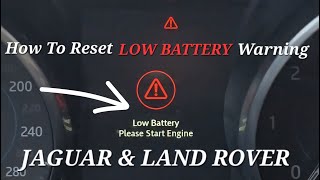
How to confirm: Use a multimeter to check the battery voltage at rest; it should be above 12.5 volts. Perform a load test on the battery, as a battery can show good voltage but fail under load. Many auto parts stores offer free battery testing. Watch for a "Low Battery, Please Start Engine" warning on the dash.
Typical fix: Replace the vehicle's main AGM battery. It is critical to use a Battery Support Unit (BSU) or memory saver during replacement to maintain constant voltage to the car's systems. After replacement, perform a Battery Monitoring System (BMS) reset 🎬 See how to perform a BMS reset using JLR SDD. using a tool like JLR SDD or some advanced scanners, or perform a hard reset. A stable power supply is also critical when attempting to reprogram modules with SDD.
Est. part cost: $200-$350 - Corrupted Body Control Module (BCM) Software 🟡 Medium Probability A voltage spike or dip (often from a weak battery or jump-starting) can corrupt the software within the front (CJB) or rear (RJB) BCM, causing it to lose its proper configuration and VIN data.
How to confirm: This requires a Jaguar-specific diagnostic tool (like JLR SDD) to communicate with the BCMs. The tool can read the module's status and see if the VIN is missing or corrupted (often shows as '????????????'). The presence of U2101 along with codes like U3000-49 (Control Module Internal Electronic Failure) or U0140 points to a BCM issue.
Typical fix: A Jaguar dealer or independent specialist must use diagnostic software to re-flash or reprogram the affected BCM, loading the correct configuration file (CCF) for the vehicle. This is often called "Configure New Modules" in JLR SDD. Some specialist services offer mail-in repairs for corrupted BCMs.
Est. part cost: $0 (if reprogramming is successful), $150-$300 for mail-in service - Failed or Replaced Module Without Programming 🟡 Medium Probability If a control module (BCM, RFA, TCM, etc.) is replaced with a new or used part, it will not have the vehicle's specific VIN and configuration data. The car's network will see this mismatch and set a U2101 code.
How to confirm: Ask if any modules have been recently replaced. A diagnostic scan with JLR SDD will show a VIN mismatch or incorrect configuration in the new module.
Typical fix: The newly installed module must be programmed to the vehicle using JLR SDD or a similar advanced tool. This process writes the car's VIN and options (known as the Car Configuration File or CCF) to the new module.
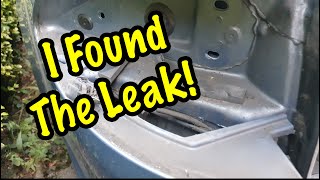
Est. part cost: $0 (if the module is good) - Water Ingress and Wiring Corrosion ⚪ Low Probability The rear BCM (Rear Junction Box) and several important connectors are located in the trunk/boot area. Leaky trunk seals, failed rear air vents behind the bumper, 🎬 Watch: How to find and fix common trunk water leaks. or bad tail light seals can allow water to accumulate in the spare tire well, submerging wiring and causing corrosion on connectors or the RJB itself.
How to confirm: Remove the trunk floor and spare tire. Inspect the entire area for signs of moisture, standing water, or green/white corrosion on electrical connectors and the casing of the rear BCM. Check for dampness in the driver's footwell near the front BCM as well, which can be caused by a failed windscreen seal.
Typical fix: Dry the area completely. Clean any corroded connectors with an electrical contact cleaner. If a connector or section of wiring is badly damaged, it will need to be repaired or replaced. If the BCM itself has water damage, it will likely need to be replaced and programmed. The source of the leak (e.g., slam vents or windscreen seal) must be repaired to prevent recurrence.
Est. part cost: $50-$1200+
Rare But Worth Checking
- Alternator Failure:
- Wicking from Washer Pump Wiring (JTB00377NAS1):
Diagnosis Steps
- Check and Charge Battery: Your first and most important step is to verify the battery's health. Check the voltage (should be 12.6V+ at rest) and perform a load test. Charge the battery fully. A weak battery is the #1 cause.
- Perform a Hard Reset: Disconnect the negative battery terminal. To ensure all modules fully discharge, wait 10-15 minutes, and some technicians recommend touching the disconnected negative lead to the (still connected) positive lead for 10 seconds. Reconnect the negative terminal. This can clear temporary glitches but may not fix a persistent configuration fault. You will need to reset your window and sunroof auto-up functions afterwards.
- Scan with a Professional Tool: Connect a Jaguar-specific scan tool (like JLR SDD or Autologic). A generic scanner is not sufficient. Perform a full network scan of all vehicle modules and save the codes.
- Identify the Source Module: Analyze the scan results. Look for the module that is logging the U2101 code. Often, this will be the BCM (CJB), but it could be another module. The scan tool may also show a corrupted VIN for the faulty module.
- Check CAN Bus Resistance: With the battery disconnected, use a multimeter to measure the resistance between Pin 6 (CAN-H) and Pin 14 (CAN-L) on the OBD-II port. A healthy network should read approximately 60 Ohms. A reading of 120 Ohms suggests one of the two terminating resistors (or the wiring to it) is faulty.
- Inspect for Physical Damage: Visually inspect the suspect module and its connectors for corrosion, especially the Rear Junction Box (RJB) in the trunk and the Central Junction Box (CJB) in the driver's footwell. Check for signs of water ingress in both locations.
- Reprogram the Module: If the battery is good and there is no physical damage, the final step is to attempt to reprogram the faulty module using JLR SDD. Use the "Configure new module" function for the specific module (e.g., Central Junction Box). This requires a stable vehicle power supply of over 12.5V throughout the process.
Parts You'll Likely Need

- AGM Vehicle Battery — This is the most common cause. The XF requires a strong AGM (Absorbent Glass Mat) battery to keep its sensitive electronics stable.
Trusted brands: Bosch, Interstate, Varta
OEM price range: $300-$400
Aftermarket price range: $200-$300 - Front Body Control Module / Central Junction Box (CJB)
(OEM #DX23-14B476-AG (and others, must match original))— This module in the driver's footwell is prone to software corruption from voltage issues or water ingress from the washer fluid line. If it cannot be reprogrammed, it must be replaced. Part numbers are specific and must be matched. Other examples include DX23-14B476-AE, -AF, -AH, -BD, -BE, etc.
Trusted brands: Jaguar (OEM)
OEM price range: $800-$1500
Aftermarket price range: $150-$400 (Used, requires programming) - Rear Body Control Module / Rear Junction Box (RJB/BCMB)
(OEM #9X23-14B476-BC, CX23-14D628-AE (and others))— This module in the trunk is a frequent point of failure due to water damage from leaks. If it cannot be reprogrammed or is physically damaged, it must be replaced. Part numbers vary by year and features.
Trusted brands: Jaguar (OEM)
OEM price range: $600-$1200
Aftermarket price range: $100-$300 (Used, requires programming) - Trunk Air Vent Assembly
(OEM #C2D18113)— A common source of water leaks into the trunk is the failure of the seals on the two rear air vents located behind the bumper cover. Replacing these is a key preventative measure.
Trusted brands: Jaguar (OEM, sometimes marked Volvo)
OEM price range: $15-$30 each
Related Codes That Often Appear With This One
- U0140 — This code means 'Lost Communication with Body Control Module.' It frequently appears with U2101 when the BCM is the source of the configuration error, causing it to stop communicating properly on the network.
- U3000-49 — This code indicates an 'Internal Electronic Failure' within a control module. If you see this in the BCM along with U2101, it's a strong sign the BCM itself has failed and may need replacement rather than just a reprogram.
- B102B-67 — This code relates to the passive key. It often appears when the BCM has lost its configuration and can no longer recognize the programmed smart keys, leading to the 'Smart Key Not Found' message.
- U3002-81 — This code for 'Vehicle Identification Number' often accompanies U2101 when a module's VIN has been corrupted, showing up as '???????????????' on a scan tool.
Technical Service Bulletins (TSBs) & Recalls
- JTB00377NAS1: This Technical Service Bulletin addresses an issue where windscreen washer fluid can wick through the wiring harness from the pump to the Central Junction Box (CJB), causing corrosion and various electrical faults. The fix involves a new harness section.
Documented NHTSA Reports
- NHTSA ODI #11581420: While reported on a different manufacturer (Ford), this record describes a vehicle displaying U2101 alongside U0140 and U0121, where the car produced a strange warning chime without dashboard lights, eventually requiring out-of-pocket repairs.
- NHTSA ODI #10694215: In another cross-manufacturer reference (Ford), an owner reported U2101 appearing with code C1B00, which was diagnosed as a need for an electronic steering rack replacement after the steering wheel failed to return to the center position.
Platform-Specific Known Issues

- Owner Experience: U2101, U0140, and No-Start Condition: A user on jaguarforums.com with a 2012 XF reported a trio of codes: U2101 (Control module configuration not compatible), U0140 (Lost communication with body control module), and a fault with the luggage compartment antenna. The car would crank but not start. The owner identified the Rear Junction Box in the trunk as the likely culprit and sourced a used replacement, acknowledging that it would need programming to solve the issue. This case highlights the typical cluster of codes and symptoms when the rear BCM fails or becomes corrupted.
- Water Ingress from Rear Vents: Multiple owners on jaguarforums.com have documented water accumulating in the spare tire well, shorting out the Rear Junction Box. A primary cause identified is the failure of the seals on the two black plastic air vents located behind the rear bumper. One owner noted the replacement part (C2D18113) even came with a Volvo logo, highlighting parts sharing. Sealing or replacing these vents is a common preventative fix.
Mechanic-Grade Diagnostic Values
- CAN Bus Network Resistance — expected: Approximately 60 Ω. Failure: A reading of 120 Ω indicates an open circuit or a fault in one of the two terminating modules/resistors. A very low or 0 Ω reading indicates a short between the CAN High and CAN Low wires.
- CAN Bus Voltage (Key On, Engine Off) — expected: CAN High (Pin 6 to ground): ~2.6V. CAN Low (Pin 14 to ground): ~2.4V.. Failure: Voltages that are the same (e.g., both 2.5V) can indicate a short between the two lines. Both at 0V can indicate a short to ground.
Scan Tool Commands That Help

- JLR SDD (Symptom Driven Diagnostics): Configure New Modules - Central Junction Box (Body Control Module) — This function is used after installing a new or used (virginized) CJB/BCM to write the vehicle's VIN and Car Configuration File (CCF) to the module. It is the primary software fix for a corrupted or replaced BCM.
- JLR SDD (Symptom Driven Diagnostics): Read All Stored DTCs — Used during the initial diagnosis to get a complete list of faults from all modules on the network, which helps identify which module is logging the U2101 code and what other communication errors are present.
- JLR SDD (Symptom Driven Diagnostics): Data Logger — To monitor live data from various modules. While not a direct fix for U2101, it can help identify erratic behavior from a specific module by watching its reported values (e.g., sensor inputs, switch statuses) in real-time.
Wiring & Ground Locations

- Central Junction Box (CJB) / Front BCM — Located in the driver's side footwell (on both LHD and RHD vehicles), behind a kick panel.. This is the primary BCM and a common source of the U2101 code due to software corruption or water damage from washer fluid wicking or a leaking windscreen.
- Rear Junction Box (RJB) / Rear BCM — Located in the right side of the luggage compartment (trunk), behind the trim panel.. This is the secondary BCM. It is highly susceptible to water damage from leaking trunk seals or rear slam vents, which can cause network faults.
- G2D115 — A ground point located behind the instrument cluster.. A poor ground here can affect the instrument cluster and its communication on the CAN bus, potentially contributing to network fault codes.
- A-Pillar Ground Stud — Main ground point on the A-pillar inside the cabin.. Improperly secured or corroded grounds at this major stud can cause a wide range of CAN bus communication errors, including U2101. One owner found the fix was cleaning this ground and ensuring the wires were secured in the correct order on the stud.
- Bulkhead Power Stud — Located in a box behind the front right wheel arch liner, where the alternator cable passes through the bulkhead.. This area can fill with road grime and salt, causing the main power feed to arc to ground. This creates significant electrical instability that can corrupt modules and trigger network faults.
Real Owner Repair Stories
- JaguarForums user 'Closb' (Jaguar S-Type (shares similar CAN bus architecture principles)) — Multiple CAN bus short codes (U1900), communication failure with the TCM on JLR SDD.
❌ Tried (didn't work) Replacing the J-gate shifter assembly, Inspecting TCM, ECM, and Instrument Cluster for physical damage
✅ What actually fixed it The root cause was a bad ground contact at the main A-pillar ground stud. The ground wires had been secured in the wrong order on the stud. Cleaning the ground point and re-securing the wires in the correct order resolved the CAN bus faults. - JaguarForums user (2013 Jaguar XF) — "Smart Key Not Found" message, car would not start after disconnecting the battery to work on the A/C system.
❌ Tried (didn't work) Hard reset by disconnecting battery, Checking all related fuses and relays
✅ What actually fixed it The dealer determined the BCM needed replacement, but no new parts were available in North America. The issue highlights that a simple battery disconnect can "brick" the module, and the solution often requires either finding a specialist who can reprogram a used module or waiting for a new part from Jaguar.
OEM Part Supersession History
CX23-14B476-AD, AE, AF, AH, AJ→CX23-14B476-AG (and others)— Part revision and update by the manufacturer.
Heads up: Part numbers starting with 'CX23' are for pre-facelift (up to 2012/13) saloon models. Part numbers starting with 'DX23' are for facelift (2013-2015) models. A module for a saloon will not be fully compatible with a Sportbrake (estate) model, resulting in loss of functions like the rear wash/wipe.DX23-14B476-AD, AE, AF, AH, AJ→DX23-14B476-AG, BG, BJ, etc.— Part revision and update by the manufacturer for facelift models.
Heads up: These are for the later X250 models. Always match the part number as closely as possible, and be aware that programming is always required.
Model Year Variations Within This Range
- 2008 (Early Build): Early build XF vehicles had a different relay layout in the Engine Junction Box compared to later builds. For example, the HEGO relay was in socket R3 on early cars and moved to R8 on later cars, with the R3 socket being deleted. While not directly causing U2101, this shows that wiring and component locations are not consistent across the entire generation.
- 2012-2015 (Facelift): The Central Junction Box (BCM) part numbers changed for the facelift models, typically starting with 'DX23' instead of 'CX23'. The washer fluid wicking issue covered by TSB JTB00377NAS1 specifically applies to VINs from S20753 onwards, which falls within the facelift period.
Diagnostic Flowchart
Used vs. New Parts: Buying Guide for This Vehicle
When a used part is the smart pick: A used Body Control Module (CJB or RJB) is a viable and cost-effective option, but ONLY if you have a clear path for programming. It makes sense if your original module is physically damaged (e.g., by water) and its data cannot be recovered, or if you are working with a specialist who can 'virginize' the used module (wipe its VIN) before programming it to your car with JLR SDD.
Donor-vehicle mileage cap: roughly under 150000 miles for the part to have meaningful remaining life.
What to inspect on the donor part:
- Verify the part number EXACTLY, paying attention to prefixes like 'CX23' vs 'DX23' and ensuring it's for the correct body style (saloon vs. Sportbrake).
- Inspect the connectors on the used module for any signs of green or white corrosion, bent pins, or heat damage.
- Ask the seller if the module came from a running and driving vehicle with no major electrical faults.
- Avoid modules from flood-damaged vehicles at all costs.
OEM-only on this vehicle (don't cheap out):
- Body Control Module (BCM/CJB/RJB): While a used OEM part is an option, aftermarket 'new' BCMs are not available. The choice is between new OEM (from a dealer), used OEM (from a dismantler), or a mail-in repair service for your original OEM unit.
Aftermarket brands forum-validated for this vehicle:
- For this specific fault, the solution is typically reprogramming or replacing the OEM module. There are no 'aftermarket' BCMs. However, several reputable mail-in repair services exist, such as MotorTronics and others found on eBay, that specialize in repairing the original module's corrupted software.
Brands owners have reported issues with on this vehicle:
- N/A - No aftermarket modules are produced for this application.
Real Owner Stories
Aggregated from forums and TSBs cited above. Mileages and costs reflect what owners reported in those sources.
2012 Jaguar XF
Symptoms: The vehicle would crank but not start, and displayed codes U2101 (Control module configuration not compatible) and U0140 (Lost communication with body control module), along with a fault for the luggage compartment antenna.
What fixed it: The owner identified the Rear Junction Box in the trunk as the likely culprit and sourced a used replacement, noting that it would require programming to fully resolve the issue.
Source hint: Owner Experience: U2101, U0140, and No-Start Condition from jaguarforums.com
Jaguar XF
Symptoms: Water was found accumulating in the spare tire well, which was shorting out the Rear Junction Box (RJB).
What fixed it: The root cause was identified as failed seals on the two black plastic air vents located behind the rear bumper. Sealing or replacing these vents (part C2D18113) is the recommended fix to prevent recurrence.
Source hint: Water Ingress from Rear Vents from jaguarforums.com
Related OBD-II Codes
Frequently Asked Questions
My XF is showing a 'Smart Key Not Found' message along with many other random faults. Is the key fob the problem?
I need to replace the battery in my Jaguar XF. Is it a simple swap?
I found water in the spare tire well of my trunk. Could this cause the U2101 code?
My mechanic installed a used Body Control Module (BCM) but the car still won't start and shows U2101. What's wrong?
What is a 'hard reset' and will it fix the electrical issues in my XF?
My generic OBD-II scanner can't diagnose the U2101 code properly. What tool is needed?
Helpful Videos


We Have This Part in Stock



The information in this article is provided for general reference and educational purposes only. Vehicle specifications, procedures, and part compatibility can vary by production date, trim level, and region. Always consult your vehicle's factory service manual and verify part numbers before purchasing or performing repairs. Safety-critical components such as airbags, seat belts, and braking systems should be installed by a qualified professional.
- Jaguar XF:
- 🎬 Helpful Videos
- 🛍️ Shop This Part
- What's Unique About the 2008-2015 Jaguar XF
- Symptoms You May Notice
- Most Likely Causes
- Rare But Worth Checking
- Diagnosis Steps
- Parts You'll Likely Need
- Related Codes That Often Appear With This One
- Technical Service Bulletins (TSBs) & Recalls
- Documented NHTSA Reports
- Platform-Specific Known Issues
- Mechanic-Grade Diagnostic Values
- Scan Tool Commands That Help
- Wiring & Ground Locations
- Real Owner Repair Stories
- OEM Part Supersession History
- Model Year Variations Within This Range
- Diagnostic Flowchart
- Used vs. New Parts: Buying Guide for This Vehicle
- Real Owner Stories
- 2012 Jaguar XF
- Jaguar XF
- Related OBD-II Codes
- Frequently Asked Questions
- 🎟️ Get 5% Off