

U2101 on 2011-2018 Ford Focus: Control Module Configuration Incompatible Fixes
Code U2101 on a 2011-2018 Ford Focus means a control module was replaced but not programmed to your car's VIN. The most common fix is not another part, but programming the module using dealer tools or advanced software like FORScan. This is not a DIY fix for most owners.
- U2101 means a module's configuration is wrong for your car, almost always because it was replaced and not programmed.
- Do not replace the part again. The solution is to program the existing part.
- This is not a DIY-friendly repair unless you are experienced with advanced tools like FORScan and understand 'As-Built' data.
- The most common modules to cause this on a Focus are the Airbag Module (RCM), Body Control Module (BCM), Instrument Cluster (IPC), and audio/display modules (ACM/FCDIM).
- A professional shop with Ford-specific diagnostic equipment can perform the required 'Programmable Module Installation' (PMI) to fix the code.
What's Unique About the 2011-2018 Ford Focus

On the third-generation Ford Focus, many electronic modules are interconnected through the CAN bus network. Unlike older vehicles where parts could often be swapped directly, these modules must be electronically 'introduced' to the car. This code is particularly common on the Focus after collision repairs or even simple upgrades, like swapping a basic radio for a navigation unit, because many modules store vehicle-specific configuration data. The various trim levels (S, SE, SEL, Titanium) use different module configurations, making it easy to create a mismatch when using parts from a donor car.
Symptoms You May Notice

- Airbag warning light is on.
- Features controlled by the specific module do not work (e.g., Bluetooth, SYNC voice commands, or navigation).
- A 'Parking Aid Malfunction' message may appear on the dash.
- In some cases, the vehicle may not start (no-crank condition), especially if the IPC or PCM is the source.
- Advanced Driver-Assistance Systems (ADAS) may be disabled.
- Radio or SYNC display shows only the Ford logo or is completely blank.
- Steering wheel controls for audio or voice commands are unresponsive.
- Replacing the module again. The problem is rarely a defective replacement part; it's almost always a lack of programming. Replacing it again without programming will result in the same U2101 code.
- Blaming the SYNC system fuse. While pulling the fuse for the audio module (ACM) can sometimes reset a frozen radio, it will not fix a U2101 configuration error. The underlying mismatch still exists and the code will return.
Most Likely Causes

- Replaced Module Not Programmed 🔴 High Probability This is extremely common after repairs, especially on salvage or rebuilt vehicles where modules from donor cars are used. Modules like the RCM (Airbag), BCM (Body Control), IPC (Instrument Cluster), and ACM/FCDIM (Audio/Display) all require VIN-specific programming. Collision repair often involves replacing the RCM, 🎬 Watch: How to replace the airbag computer RCM module which will set this code until programmed.
How to confirm: Scan all vehicle modules with a high-level scan tool like FORScan. The tool will show which module is logging the U2101 code. Confirm if this module was recently replaced or if the vehicle was in an accident.
Typical fix: The module must be programmed using a 'Programmable Module Installation' (PMI) procedure. This writes the car's original 'As-Built' data to the replacement module using Ford's IDS or FORScan.
Est. part cost: $0 - Incorrect Module Installed 🟡 Medium Probability A module from a different trim level or model year may have been installed. For example, installing a radio display (FCDIM) from a Titanium model with navigation into an SE without it will cause this code. The part number might be physically similar but have incompatible internal software.
How to confirm: Verify the part number of the installed module against the original part number for the vehicle's specific VIN and trim level. Ford's parts catalog or a dealer can confirm compatibility. A user on FordOwnersClub noted that even a one-letter difference in a part number (AM5T-18B955-CG vs AM5T-18B955-CL) caused the U2101 code.
Typical fix: Replace the module with the correct part number for the vehicle, followed by programming.
Est. part cost: $50-$800 - Incorrect Manual Configuration Change ⚪ Low Probability Advanced users with tools like FORScan can manually change configuration parameters ('As-Built' data). An incorrect change (e.g., enabling a feature the car doesn't have hardware for) can create a mismatch and set this code.
How to confirm: Review the 'As-Built' data of the module setting the code and compare it to the vehicle's original factory 'As-Built' data, which can be downloaded from Ford's service site using the VIN.
Typical fix: Restore the module's configuration back to its original 'As-Built' data using FORScan or a similar tool.
Est. part cost: $0
Rare But Worth Checking
- Faulty Battery or Charging System: One owner reported codes U2100 and U2101 along with an over-voltage condition (15+ volts), suggesting that extreme voltage fluctuations can sometimes corrupt module communication or configuration. A weak or failing battery can cause various unpredictable electronic issues, including module configuration errors during startup. It's a foundational check before expensive diagnostics.
- CAN Bus Wiring Fault: While less common than programming issues for this specific code, a short or open in the CAN bus wiring can interrupt communication and potentially lead to a U2101 code being logged by a module that loses its configuration source. This is more likely after an accident, rodent damage, or improper installation of aftermarket electronics.
Diagnosis Steps

- Connect a professional-level scan tool (like FORScan with an adapter or a Ford IDS) capable of reading all vehicle modules.
- Perform a full network scan to identify which specific module is reporting the U2101 code (e.g., RCM, BCM, IPC, ACM). Note the specific subtype if available (e.g., U2101:00 or U2101:55).
- Question the vehicle owner or review service history to determine if that specific module was recently replaced or serviced, particularly after an accident.
- If a module was replaced, the next step is programming. Obtain the vehicle's original 'As-Built' data from the Ford service portal (motorcraftservice.com) using its VIN.
- Using the scan tool, perform the 'Programmable Module Installation' (PMI) function for the specific module. This will load the 'As-Built' data onto the part.
- If programming fails or the code returns, verify the part number of the installed module is correct for the vehicle's VIN and trim level. Check for compatibility issues between model years or trim packages (e.g., a navigation screen in a non-navigation car).
- If no modules were replaced, check for signs of incorrect manual configuration changes in the module's data using FORScan. Restore to the factory 'As-Built' data if necessary.
- As a final, less common check, test the vehicle's battery and charging system to ensure stable voltage (typically 12.6V static, 13.5-14.5V charging) is being supplied to all modules.
Parts You'll Likely Need
- Module Programming Service — This is not a physical part, but the labor service to program the incompatible module. This is the most common resolution for code U2101.
OEM price range: $120-$250
Aftermarket price range: $100-$200 - Body Control Module (BCM)
(OEM #CM5Z-14F642-B (example for 2015 Focus, may be superseded))— If the original BCM has failed internally or the incorrect part was installed, it will need to be replaced and then programmed.
Trusted brands: Motorcraft
OEM price range: $300-$500
Aftermarket price range: $150-$350 - Airbag Control Module (RCM)
(OEM #YS4Z-14B056-BB (example part, many variations exist))— Commonly replaced after an accident. A used or new RCM must be programmed to the vehicle to clear the U2101 code and ensure the airbag system is functional. Services exist to reset crash data from the original module, but replacement often triggers this code.
Trusted brands: Motorcraft
OEM price range: $200-$400
Aftermarket price range: $100-$250 - Instrument Panel Cluster (IPC) — The IPC is a common failure point and replacement requires programming. It is tied to the PATS anti-theft system, and an unprogrammed IPC can cause a no-start condition along with U2101.
Trusted brands: Motorcraft
OEM price range: $400-$700
Aftermarket price range: $200-$450
Related Codes That Often Appear With This One
- U0100 — This code means 'Lost Communication with ECM/PCM'. A configuration mismatch (U2101) in a critical module can prevent it from communicating properly with the Powertrain Control Module.
- U0101 — This code means 'Lost Communication with TCM'. On Focus models with the problematic DPS6 automatic transmission, a U2101 in another module can sometimes occur alongside TCM communication faults. A faulty TCM can disrupt the entire CAN network.
- U0184 — This code means 'Lost Communication With Radio'. It will often appear with U2101 when the Audio Control Module (ACM) or Front Controls/Display Interface Module (FCDIM) has been replaced without programming.
- U2101:55 — This is a specific subtype of the code meaning 'Not Configured'. It explicitly confirms a new, unprogrammed module has been installed and its As-Built data is empty.
Technical Service Bulletins (TSBs) & Recalls
- TSB 16-0129: While not for U2101 directly, this TSB addresses replacing and reprogramming the Transmission Control Module (TCM) for other communication codes (U0100, U0101) on the DPS6 transmission, highlighting the platform's sensitivity to module programming.
- TSB 20-2255: Addresses various SYNC 3 performance issues fixed by software updates. While not directly for U2101, an incorrect SYNC software level compared to other modules could potentially create configuration conflicts.
Platform-Specific Known Issues
- Radio/SYNC Upgrades: A common source of U2101 is when owners try to upgrade from the basic radio to a Sony system or a SYNC 3 navigation unit. A user on FordOwnersClub.com detailed their struggle after swapping a non-nav screen for a navigation-capable one, which immediately set the U2101 code in the FCDIM because the car's central configuration didn't match the new hardware.
- Post-Collision Repairs: This code is very frequent in rebuilt or salvage title Focuses. After an accident that deploys airbags, the Restraint Control Module (RCM) must be replaced or reset. Installing a used RCM from another vehicle without performing a PMI procedure is a guaranteed way to trigger U2101.
- Instrument Cluster Failure and No-Start: The instrument panel cluster on the Focus is known to fail. When it does, replacing it with a new or used unit without programming it to the car's PATS (Passive Anti-Theft System) will result in a U2101 code and a no-start condition.
Mechanic-Grade Diagnostic Values
- CAN Bus Network Resistance — expected: Approximately 60 Ohms between CAN_H and CAN_L pins (e.g., pins 6 and 14 at the OBD-II port) with the battery disconnected.. Failure: A reading of 120 Ohms indicates one of the two terminating resistors is missing or disconnected. A reading near 0 Ohms indicates a short between the CAN lines. A reading of 40-45 Ohms may indicate a third, improper resistor on the network or a faulty module.
- HS-CAN Bus Voltage — expected: With the key on, engine off, CAN_H (Pin 6) should be around 2.5-3.5V and CAN_L (Pin 14) should be around 1.5-2.5V. The two voltages should mirror each other and total approximately 5V.. Failure: A voltage stuck high (near 5V) or low (near 0V) on either line indicates a short to power or ground. No voltage indicates an open circuit.
- MS-CAN Bus Voltage — expected: With the key on, engine off, CAN_H (Pin 3) and CAN_L (Pin 11) will show fluctuating voltages, typically lower than the HS-CAN bus, as the bus is active.. Failure: Similar to HS-CAN, voltages stuck high or low indicate a wiring fault.
Hidden / Shadow Codes Worth Checking
- U2101:00-2F: This subtype indicates an 'Invalid Configuration' where initial setup is incomplete, often after a module update introduces new parameters not present in the car's original As-Built data. It may not affect functionality but will prevent the code from clearing until the new parameters are manually set (often to zero). (see via Ford IDS, FORScan, or other professional-grade scan tools.)
- U2101:55-2F: This subtype means 'Not Configured' and is explicitly set when a brand new, unprogrammed module is installed. It indicates the module's As-Built data is empty and requires a PMI procedure. (see via Ford IDS, FORScan, or other professional-grade scan tools.)
- U2101:00-0A: A generic 'Control Module Configuration Incompatible' code with a basic fault counter. It indicates a communication breakdown but requires further diagnosis to pinpoint the specific module causing the conflict. (see via Ford IDS or other professional-grade scan tools.)
Scan Tool Commands That Help
- Ford IDS: Programmable Module Installation (PMI) — This is the primary function used after installing a new or used module. It guides the technician through downloading the vehicle's As-Built data from Ford's servers and writing it to the replacement module.
- Ford IDS: As-Built (Manual Entry) — Used when an automatic PMI fails or is not available for a specific module. The technician manually enters the hexadecimal codes from the As-Built data sheet for the vehicle's VIN.
- Ford IDS: Special Function Code 53061 or 53091 — This is a hidden command entered in the 'System Utilities' or 'Miscellaneous' menu. It forces the IDS to initiate an 'As-Built' programming session for a module (like the PCM) when it's not normally listed as an option, which can be a necessary workaround.
- FORScan: Module Configuration (As-Built format) — This function allows a user with an extended license to directly read, modify, and write the As-Built data for each module. It's used to load a known-good configuration from a file or manually correct individual parameters that are causing the U2101 code.
Wiring & Ground Locations
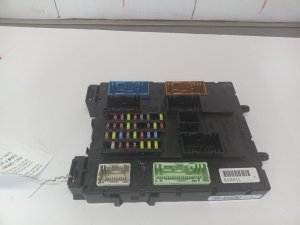
- Body Control Module (BCM) — Located behind the glove box. The glove box must be removed for access.. The BCM is a central hub for multiple CAN bus networks. A replacement BCM is a very common cause of U2101 if not programmed. Its connectors (e.g., C2280B, C2280C, etc.) are critical points for network testing.
- OBD-II Port (DLC) — Under the driver's side dashboard, to the left of the steering column.. This is the primary diagnostic access point. HS-CAN is on Pins 6 (CAN-H) and 14 (CAN-L). MS-CAN is on Pins 3 (CAN-H) and 11 (CAN-L). Resistance and voltage tests are performed here to check the overall health of the main networks.
- CAN Bus Terminating Resistors — The two 120-Ohm terminating resistors for the HS-CAN bus are typically located inside the PCM (Powertrain Control Module) and the IPC (Instrument Panel Cluster).. These resistors are essential for network stability. A failure inside one of these modules can disrupt the entire network. A 60-Ohm resistance reading across the CAN lines confirms both resistors are present and the main bus wiring is intact.
Real Owner Repair Stories
- FordOwnersClub.com forum user (2011 Ford Focus Titanium X (pre-facelift)) — No Bluetooth or Voice Control functionality after replacing a broken display screen (FCDIM).
❌ Tried (didn't work) Replacing the original broken screen with a SYNC v1.1 screen and head unit, which proved to have incompatible wiring., Installing a visually identical FCDIM with a slightly different part number suffix (AM5T-18B955-CL instead of the original -CG).
✅ What actually fixed it The U2101 code indicated the replacement FCDIM (part number AM5T-18B955-CL) was not configured for the car's specific options. The solution required using a tool like FORScan or taking it to a dealer to load the car's original As-Built data into the replacement screen module to make it compatible with the existing Bluetooth/Voicecontrol module. - CyanLabs Official Community forum user (Ford Focus Mk3 Facelift (FL)) — DTC U2101 appeared and could not be deleted after upgrading the original Audio Control Module (ACM) to a version that included DAB (Digital Audio Broadcasting).
❌ Tried (didn't work) Programming the new ACM with the configuration from the original, non-DAB module., Attempting to reload the original configuration of the new DAB module using UCDS (another diagnostic tool).
✅ What actually fixed it The issue was identified as an invalid configuration (U2101:00-2F) because the car's central configuration did not account for the new DAB feature. The fix involves using FORScan to edit the As-Built data of the APIM and/or ACM to correctly enable the settings for DAB, resolving the mismatch between what the hardware supports and what the car is configured to expect.
OEM Part Supersession History
AM5T-18B955-CG (FCDIM)→AM5T-18B955-CL (FCDIM)— Revision update for the Front Controls/Display Interface Module.
Heads up: While the parts are physically interchangeable, installing the '-CL' version in a car originally equipped with a '-CG' will set code U2101 until the module is reprogrammed with the vehicle's As-Built data. The suffix letters often denote different software configurations or minor hardware changes that the vehicle's network must be configured for.BM5T-18C815-XM (ACM)→F1BT-18C815-LR (ACM)— Part evolution, often adding features like DAB radio.
Heads up: Swapping a non-DAB ACM for a DAB-equipped one (like F1BT series) will cause a U2101 until the vehicle's central configuration is updated via FORScan or IDS to reflect the presence of the new hardware feature. The car flags a mismatch because it sees a module with capabilities it wasn't programmed to have.
Model Year Variations Within This Range
- 2011-2014 (Pre-facelift): These models typically came with the basic SYNC or SYNC with MyFord Touch (often called SYNC 2) systems. The Audio Control Module (ACM) and Front Display Interface Module (FCDIM) are common sources of U2101 when swapped without programming.
- 2015-2018 (Facelift): The 2015 model year introduced a major interior refresh with the SYNC 2 system becoming more common, and later years offered an upgrade path to the much-improved SYNC 3 system. Upgrading from SYNC 2 to SYNC 3 is a popular modification that will always cause U2101 and other communication codes if the APIM (SYNC module) is not correctly programmed with the vehicle's As-Built data using FORScan.
Diagnostic Flowchart
Used vs. New Parts: Buying Guide for This Vehicle
When a used part is the smart pick: A used electronic module (BCM, ACM, IPC, RCM) is a very cost-effective choice for this repair, but ONLY if you have access to programming tools like Ford IDS or FORScan with an extended license, or have a shop that agrees to program a customer-supplied part. The part itself is rarely the failure point; the programming is the key.
Donor-vehicle mileage cap: roughly under 150000 miles for the part to have meaningful remaining life.
What to inspect on the donor part:
- Match the part number EXACTLY, including the prefix (e.g., 'CM5T-'). The suffix letters are less critical as programming can often resolve differences, but an exact match increases the chance of plug-and-play success.
- For audio modules (ACM/FCDIM), ensure the donor car had the same sound system (e.g., standard vs. Sony premium audio) and features (e.g., navigation vs. non-navigation).
- For airbag modules (RCM), ensure the part does not have 'crash data' stored. Many sellers on eBay offer 'cleared' or 'reset' modules.
- Buy from a reputable salvage yard that offers a short warranty or return period in case the module is faulty (e.g., has internal hardware damage beyond a configuration issue).
OEM-only on this vehicle (don't cheap out):
- While used OEM is the best value, there are no 'aftermarket' versions of core control modules like the BCM, RCM, or IPC. You must use a Ford (Motorcraft) part, either new or used.
Brands owners have reported issues with on this vehicle:
- Be extremely cautious of cheap, no-name Android head units from sites like AliExpress. While they may replace the radio function, they often fail to integrate properly with the Ford CAN bus network, leading to persistent U-codes, loss of steering wheel controls, and other unpredictable issues.
Real Owner Stories
Aggregated from forums and TSBs cited above. Mileages and costs reflect what owners reported in those sources.
2014 Ford Focus
Symptoms: After replacing a broken radio display screen (FCDIM), the Bluetooth and voice commands stopped working and fault code U2101 appeared.
What fixed it: The replacement module needed to be configured with the car's specific 'As-Built' data using a tool like FORScan, as the same part number is used across different Ford models with different features.
Source hint: FordOwnersClub - 'No bluetooth or VC - Fault code u2101'
2016 Ford Focus
Symptoms: A U2101 code was set in the Audio Control Module (ACM) after upgrading the original radio to one with DAB (Digital Audio Broadcasting) that the car did not originally have.
What fixed it: The issue was identified as a mismatch between the 'As-Built' configuration in the APIM (SYNC module) and the newly installed ACM. The fix requires correcting the configuration data to match.
Source hint: CyanLabs Community - 'ACM U2101 DTC - AsBuilt'
2013 Ford Focus
Symptoms: After a collision that deployed the airbags, the vehicle was repaired but the airbag warning light remained on with a U2101 code.
What fixed it: The Restraint Control Module (RCM) had been replaced with a used unit but was not programmed. The fix was to perform the 'Programmable Module Installation' (PMI) procedure to program the replacement RCM to the vehicle.
Source hint: Post-Collision Repairs
2012 Ford Focus
Symptoms: The vehicle would not crank or start, and a U2101 code was present immediately after the instrument panel cluster was replaced due to a failure.
What fixed it: The replacement instrument cluster had to be programmed to the car's Passive Anti-Theft System (PATS) to allow the vehicle to start and clear the code.
Source hint: Instrument Cluster Failure and No-Start
Related OBD-II Codes
Frequently Asked Questions
I just bought a rebuilt 2014 Focus and the airbag light is on with code U2101. What's the most likely cause?
My 2012 Focus won't start and is showing code U2101. Could these be related?
I tried to upgrade the radio in my Focus SE to a navigation screen from a Titanium model and now I have a U2101 code. Why?
Can I fix a U2101 code myself after replacing a module like the radio?
What is 'As-Built' data and why is it important for fixing U2101 on my Focus?
I used FORScan to enable a feature on my Focus and now I have a U2101 code. How do I fix it?
Helpful Videos
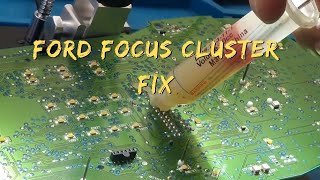
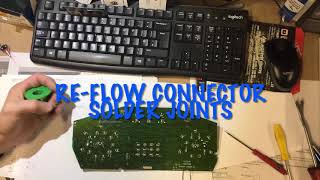
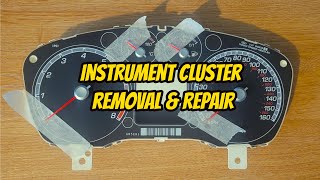
We Have This Part in Stock
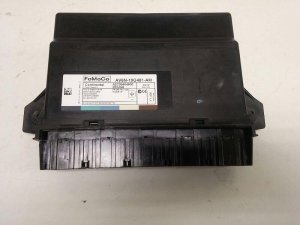



The information in this article is provided for general reference and educational purposes only. Vehicle specifications, procedures, and part compatibility can vary by production date, trim level, and region. Always consult your vehicle's factory service manual and verify part numbers before purchasing or performing repairs. Safety-critical components such as airbags, seat belts, and braking systems should be installed by a qualified professional.
- Ford Focus:
- 🎬 Helpful Videos
- 🛍️ Shop This Part
- What's Unique About the 2011-2018 Ford Focus
- Symptoms You May Notice
- Most Likely Causes
- Rare But Worth Checking
- Diagnosis Steps
- Parts You'll Likely Need
- Related Codes That Often Appear With This One
- Technical Service Bulletins (TSBs) & Recalls
- Platform-Specific Known Issues
- Mechanic-Grade Diagnostic Values
- Hidden / Shadow Codes Worth Checking
- Scan Tool Commands That Help
- Wiring & Ground Locations
- Real Owner Repair Stories
- OEM Part Supersession History
- Model Year Variations Within This Range
- Diagnostic Flowchart
- Used vs. New Parts: Buying Guide for This Vehicle
- Real Owner Stories
- 2014 Ford Focus
- 2016 Ford Focus
- 2013 Ford Focus
- 2012 Ford Focus
- Related OBD-II Codes
- Frequently Asked Questions
- 🎟️ Get 5% Off