

U2101 on 2009-2014 Ford F-150: Control Module Configuration Incompatible Causes and Fixes
Code U2101 on a 2009-2014 F-150 means a control module (like the ABS, airbag, or body control module) has been replaced but not programmed to the truck. The fix is not replacing more parts, but reprogramming the module with Ford-specific software (IDS/FDRS) or an advanced tool like FORScan. This almost always requires a trip to a dealer or a specialized shop, as standard OBD-II readers cannot perform this function.
- U2101 means a module's software is wrong for your truck; it's a programming error.
- This code almost always appears after a module has been replaced (e.g., ABS, BCM, Airbag).
- Do NOT replace the part again. The fix is to have the module professionally reprogrammed using Ford-specific tools.
- This is not a DIY-friendly repair. A basic OBD-II scanner cannot perform the necessary programming.
- Check the vehicle's repair history, as a recent module replacement is the number one cause.
What's Unique About the 2009-2014 Ford F-150

On the 12th generation F-150 (2009-2014), this code is a common consequence of repairs, especially after collisions or in salvage rebuilds where modules are swapped. Unlike a simple sensor failure, U2101 points directly to a digital mismatch. Ford issued a Special Service Message (SSM 47843) covering these trucks, confirming that U2101 requires a specific 'Programmable Module Installation' (PMI) procedure. This means a basic code reader can't fix it; the truck must be connected to a Ford diagnostic tool (IDS/FDRS) to download the correct 'As-Built' data for that specific VIN. Advanced DIYers have successfully used FORScan with an extended license to perform this programming, but it can be complex, especially with brand-new modules that may lack firmware. Manufacturer service bulletin SSM 49690 warns that installing a new module prior to starting a scan tool session may result in incomplete module configuration and trigger DTCs U2100 or U2101.
Symptoms You May Notice

- Warning lights on the dashboard, such as the ABS, Airbag, or 'Service AdvanceTrac' light.
- Features controlled by the affected module do not work (e.g., power windows, radio/sync features, steering wheel controls, cruise control).
- Poor throttle response or a feeling similar to a misfire, though this is less common.
- Inability to clear the trouble code with a standard scanner.
- A no-start or crank-no-start condition if the incompatible module is the Instrument Panel Cluster (IPC), which is tied into the PATS anti-theft system. 🎬 See how to program keys after replacing the instrument cluster.
- Loss of Bluetooth or Voice Control (VC) if the FCDIM (Front Controls/Display Interface Module) is the source.
- An illuminated stability-traction control indicator, which TSB 24-2167 notes can occur alongside U2101:00 in the ABS module following software updates.
- Replacing the module a second time. The issue is almost always the programming, not a defective replacement part.
- Replacing sensors or wiring related to the non-functional system. For example, replacing wheel speed sensors when U2101 is present in the ABS module will not fix the configuration error.
- Assuming a used module is bad because a dealer says it can't be programmed. Some forum users have successfully programmed used modules with FORScan, though dealers often insist on using new parts.
Most Likely Causes

- Unprogrammed Replacement Module 🔴 High Probability Modern vehicles use VIN-specific 'As-Built' data. Swapping modules between trucks, even identical ones, will cause this code unless the module is reprogrammed. This is very common in post-collision and salvage title repairs.
How to confirm: Check the vehicle's repair history. If a module (ABS, BCM, RCM, IPC, etc.) was recently replaced, this is the most likely cause. A professional scan tool can identify which module is reporting the configuration error.
Typical fix: Perform a 'Programmable Module Installation' (PMI) using Ford's IDS/FDRS software or FORScan to write the vehicle's 'As-Built' data to the module. This usually involves connecting to Ford's servers to download the original configuration for the VIN.
Est. part cost: $0 - Incorrect Module Installed 🟡 Medium Probability Many modules look physically identical but have different internal hardware or software for different trim levels or options (e.g., a module from a Lariat installed in an XL, or a steering wheel with unsupported button packs). Manufacturer bulletin SSM 54052 notes that U2101 can be stored in the Steering Column Control Module (SCCM) due to software incompatibility with hardware changes.
How to confirm: Verify the part number of the installed module against the OEM part number specified for the vehicle's VIN. A Ford dealer or parts specialist can confirm this. The programming process may also fail with an error if the hardware is incompatible.
Typical fix: Replace the incorrect module with the correct part number for the vehicle, then perform the PMI programming procedure.
Est. part cost: $100-$800 - Corrupted Module Software ⚪ Low Probability Though rare, voltage spikes from a dying battery, improper jump-starting, or a failed software flash can potentially corrupt a module's configuration data. TSB 24-2167 indicates that software updates to the PCM can sometimes trigger U2101 in the ABS module.
How to confirm: If no modules have been replaced, a technician would attempt to re-flash the suspect module's existing software as a first step. This isolates the issue to software if the re-flash is successful.
Typical fix: Reprogram the module using the PMI or 'As-Built' function on a Ford diagnostic tool. If reprogramming fails, the module itself may be faulty and need to be replaced, then programmed.
Est. part cost: $0-$800
Rare But Worth Checking
- Restraints Control Module (RCM) Failure:
Diagnosis Steps
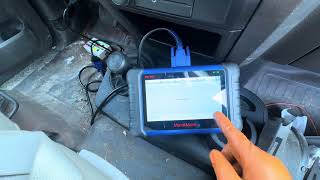
- Connect a professional scan tool (like Ford IDS/FDRS or FORScan) capable of reading manufacturer-specific codes from all modules.
- Identify which specific module is setting the U2101 code (e.g., ABS, RCM, BCM, IPC). The scan tool should specify the source module.
- Review the vehicle's recent repair history. Ask if any electronic modules have been replaced, especially after a collision.
- If a module was replaced, the primary diagnosis is a failed or skipped programming step.
- Using the scan tool, initiate the 'Programmable Module Installation' (PMI) or 'Module Configuration' routine for the affected module.
- The tool will attempt to connect to Ford's servers to download the original 'As-Built' data for that VIN and write it to the module. A stable internet connection and battery tender are crucial.
- If programming fails, verify the installed module has the correct part number for the vehicle's VIN and options. An incorrect part for the trim level can prevent successful programming.
- If the part number is correct but programming fails, the replacement module itself may be faulty or incompatible (common with used modules that are 'locked' to a previous VIN). In this case, a new module from Ford may be required. Some new modules from Ford ship without firmware and require a beta version of FORScan or IDS to flash.
- Once programming is successful, clear all DTCs. The U2101 code should not return. Perform any necessary relearn procedures, like a steering angle sensor calibration for an ABS module or an ABS service bleed.
- Test drive the vehicle to confirm all related systems are functioning correctly.
Parts You'll Likely Need
- Module Programming Service — This is a software/labor fix. The most common requirement is not a part, but the service to program the incompatible module using specialized tools.
OEM price range: $150-$400
Aftermarket price range: $100-$250 - Anti-Lock Brake System (ABS) Module
(OEM #BL3Z-2C219-H (example for 2011 F-150, verify by VIN))— The ABS module is a frequently replaced component that will set U2101 if not programmed. One forum user with an F-150 had this exact issue. New modules from Ford may ship without firmware, complicating programming.
Trusted brands: Motorcraft, Bosch
OEM price range: $400-$700
Aftermarket price range: $200-$500 - Restraints Control Module (RCM)
(OEM #DL34-14B321-AA (example for 13-14 F-150, verify by VIN))— The RCM controls the airbag system and is often replaced after a collision, requiring programming. It can also fail internally, causing this code.
Trusted brands: Motorcraft
OEM price range: $300-$600
Aftermarket price range: $50-$300 (rebuilt/reset service) - Instrument Panel Cluster (IPC) — The IPC is a key module in the CAN network and is tied to the PATS anti-theft system. A replacement IPC that is not programmed will cause a U2101 and likely a no-start condition.
Trusted brands: Motorcraft
OEM price range: $500-$900
Aftermarket price range: $150-$400 (rebuilt/repair service)
Related Codes That Often Appear With This One
- U2100 — U2100 (Initial Configuration Not Complete) and U2101 often appear together, as both point to a module that has not been properly set up for the vehicle.
- U01xx-U05xx — Various 'Lost Communication' codes (e.g., U0140 - Lost Communication with BCM) may be present because the primary U2101 configuration error is preventing modules from talking to each other correctly. NHTSA ODI #11581420 describes a Ford vehicle exhibiting codes U0121, U0140, and U2101 simultaneously.
- U2101:55 — This specific subtype means 'Not Configured' and explicitly points to a module that has not had its As-Built data written to it yet, common for brand new service parts.
Technical Service Bulletins (TSBs) & Recalls
- SSM 47843: Pertains to 2010-2019 Ford vehicles, stating that DTCs U2100 and/or U2101 indicate a module has not been properly configured and requires the 'Programmable Module Installation' (PMI) procedure using a Ford diagnostic tool.
- SSM 49690: Notes that installing a new module prior to starting a scan tool session may result in incomplete module configuration with DTCs U2100, U2101 and/or U2200.
- TSB 24-2167: Reports that vehicles may exhibit an illuminated stability-traction control indicator with DTCs U2017:57 and U2101:00 in the ABS module, sometimes occurring after a coordinated module software update.
- SSM 54052: Describes a condition where the SCCM will not complete PMI and may store DTCs U2100 and/or U2101 due to software compatibility concerns with hardware changes.
Platform-Specific Known Issues
- Used ABS Module Reprogramming: Multiple forum threads discuss the dealer's claim that used ABS modules cannot be reprogrammed. However, owners have successfully used FORScan to write their vehicle's VIN and As-Built data to a used module, resolving the U2101 code and restoring function. This suggests it is possible, but may require tools and knowledge beyond what a dealership is willing to use on non-OEM parts.
- Instrument Cluster Swap and No-Start: A common scenario described in forums involves replacing a faulty instrument cluster (e.g., for a dead odometer) with a used one, only to find the truck will not start. This is because the cluster is part of the PATS security system. The fix requires reprogramming the cluster to the vehicle's ECU and keys, a service a Ford dealer can perform for a fee.
Mechanic-Grade Diagnostic Values
- CAN Bus Network Resistance — expected: Approximately 60 Ohms between CAN_H and CAN_L pins with the battery disconnected.. Failure: A reading of 120 Ohms indicates one of the two terminating resistors (or the wiring to it) has failed. A reading of OL (Open Line) suggests both are disconnected or there's a major break in the bus wiring. A reading near 0 Ohms indicates a short between the CAN_H and CAN_L wires.
- OBD-II Port Pin Resistance (HS-CAN) — expected: Approximately 60 Ohms between Pin 6 (CAN-H) and Pin 14 (CAN-L) with the battery disconnected.. Failure: A reading of 120 Ohms suggests a module containing a terminating resistor (like the IPC) is disconnected or has failed.
- OBD-II Port Pin Resistance (MS-CAN) — expected: Approximately 60 Ohms between Pin 3 (MS-CAN+) and Pin 11 (MS-CAN-) with the battery disconnected.. Failure: Readings outside the 60-120 Ohm range can indicate a wiring or ground issue on the Medium Speed CAN bus, which connects modules like the BCM and audio systems.
Hidden / Shadow Codes Worth Checking
- U2101:00: This is a generic 'Control Module Configuration Incompatible' code with no subtype information. It indicates a module's configuration is incorrect but doesn't specify the exact reason. (see via Ford IDS, FORScan, or other professional-grade scan tools.)
- U2101:55: This subtype explicitly means 'Not Configured'. It is commonly set by a brand new service module before its 'As-Built' data has been written to it. (see via Ford IDS, FORScan, or other professional-grade scan tools.)
Scan Tool Commands That Help

- Ford IDS/FDRS or FORScan: Programmable Module Installation (PMI) — This is the primary function used when replacing a module. It reads the configuration from the old module (if possible) and writes it to the new one, including VIN and vehicle-specific options.
- Ford IDS/FDRS or FORScan: Module Configuration (As-Built) — Used when the original module is missing or unreadable. This function allows a technician to manually enter or download the vehicle's original 'As-Built' data from Ford's servers and write it to the new module.
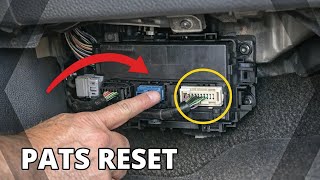
- Ford IDS/FDRS or FORScan: PATS (Passive Anti-Theft System) Parameter Reset — This is a critical, mandatory step after replacing and programming the BCM or IPC. It performs a security handshake between the new module, the PCM, and the keys. It involves a 10-minute security wait and requires two valid keys.
- Ford IDS/FDRS or FORScan: ABS Service Bleed — After replacing and programming an ABS module, this procedure must be run to cycle the internal valves and solenoids to purge any trapped air from the hydraulic control unit (HCU).
Wiring & Ground Locations
- OBD-II Port (DLC) — Under the driver's side dashboard, to the left of the steering column.. This is the primary access point for diagnostics. Testing resistance between Pins 6 (HS-CAN+) and 14 (HS-CAN-) and Pins 3 (MS-CAN+) and 11 (MS-CAN-) is the first step in checking network integrity.
- BCM Ground — In the passenger side kick panel area, typically a black wire bolted to the chassis near the Body Control Module (BCM).. A poor ground at the BCM can cause a host of communication errors, including U-codes, and symptoms like non-functioning locks or interior lights. Reseating connectors and checking this ground is a common diagnostic step.
- G401 (on later models) — On the frame rail under the driver's door. While explicitly cited for 2015+ models, similar frame grounds exist on the 2009-2014 generation and are highly susceptible to corrosion.. Corroded frame grounds are a notorious cause of intermittent network communication failures and no-start conditions on F-150s. This can mimic a module failure.
Real Owner Repair Stories
- YouTube channel 'Best Car Fixes' (2011 Ford F-150 XLT) — Left rear turn signal not working.
❌ Tried (didn't work) Initial diagnosis pointed to a bad Body Control Module (BCM).
✅ What actually fixed it A used BCM with the same part number was installed. The fix required using a diagnostic tool to perform a 'parameter reset' for the immobilizer system. This initiated a 10-minute security wait, after which the keys were relearned and the BCM became fully functional, resolving the signal light issue. - YouTube channel 'ADVANCED LEVEL AUTO' (2009 Ford F-150 4.6L 4x4) — ABS and brake warning lights on after ABS module replacement.
❌ Tried (didn't work) Installing a new ABS module without programming it, which resulted in a B2477 'Module Configuration Fault'.
✅ What actually fixed it Using a professional scan tool (Think Tool Pro), the technician performed a Programmable Module Installation (PMI). The procedure involved temporarily connecting the OLD module to the truck's harness to read and save its configuration data, then reconnecting the NEW module and writing the saved data to it. This successfully configured the new module and cleared the fault codes. - NHTSA ODI #10694215 — An owner reported that while turning the steering wheel, the steering would lock in position. A dealer inspection found codes C1B00 and U2101, leading to a recommendation to replace the electronic steering rack.
- NHTSA ODI #11581420 — An owner reported multiple communication and configuration codes, including U2101, alongside a strange beeping noise that sounded like a warning chime despite no dashboard lights appearing.
Model Year Variations Within This Range
- 2009-2010 vs 2011-2014: A major powertrain overhaul occurred for the 2011 model year. The previous 4.6L and 5.4L V8 engines were replaced with a new lineup: a 3.7L V6 base, a 5.0L V8, a 3.5L EcoBoost V6, and a 6.2L V8. While the U2101 code's meaning remains the same, the specific modules (PCM, etc.) and their software are completely different between these two eras within the same generation, making parts non-interchangeable.
Diagnostic Flowchart
Used vs. New Parts: Buying Guide for This Vehicle
When a used part is the smart pick: A used control module (BCM, ABS, IPC, etc.) can be a cost-effective option IF you or your mechanic have access to advanced diagnostic tools like FORScan (with an extended license) or Ford's IDS. The key is the ability to perform a Programmable Module Installation (PMI) and, if necessary, a PATS parameter reset. Without these tools, a used module is just as useless as the failed one.
Donor-vehicle mileage cap: roughly under 150000 miles for the part to have meaningful remaining life.
What to inspect on the donor part:
- Verify the part number EXACTLY matches the one required for your truck's VIN and trim level. Modules for different options are not interchangeable.
- Source the part from a donor vehicle with a clear history, avoiding flood or fire-damaged vehicles, as the electronics may have hidden damage.
- If buying online, choose sellers who guarantee the part is functional and show clear pictures of the part number sticker.
- Ask the seller if the donor vehicle's VIN is available. This can sometimes help in retrieving the original 'As-Built' data if needed.
OEM-only on this vehicle (don't cheap out):
- While used OEM modules can work, buying a NEW OEM module is the most straightforward path if you are having a dealership perform the repair. Dealers are often reluctant or claim they are unable to program used modules. If a used module fails to program even with FORScan, a new OEM part is the next logical step.
Aftermarket brands forum-validated for this vehicle:
- For control modules, 'aftermarket' typically means a remanufactured or repaired original unit. Brands are less important than the reputation of the rebuilder. Programming is still required.
Brands owners have reported issues with on this vehicle:
- Avoid no-name, cheap electronic modules from online marketplaces. The internal hardware and software quality can be highly suspect and may not be programmable or reliable.
Real Owner Stories
Aggregated from forums and TSBs cited above. Mileages and costs reflect what owners reported in those sources.
2013 F150 Ecoboost
Symptoms: The truck feels like it's misfiring at times and has poor throttle response, even at idle. There was no Check Engine Light, but a scan showed code u2101:00-0a.
What fixed it: The issue was confirmed to be an incomplete Programmable Module Installation (PMI) process, which needed to be performed correctly to resolve the code and symptoms.
Source hint: ford-trucks.com: 'DTC u2101:00-0a'
Ford F-150
Symptoms: After rebuilding a salvage truck, a persistent U2101 code was present in the ABS module, and the dealer refused to program the used module.
What fixed it: The solution required either successfully programming the used module with a tool like FORScan or replacing it with a new module from Ford and then performing the programming procedure.
Source hint: f150forum.com: 'U2101:55-8A ABS Code'
Ford F-150
Symptoms: After installing a salvaged instrument cluster, the truck would crank but not start.
What fixed it: The fix required taking the vehicle to a Ford dealer to have the replacement instrument cluster reprogrammed to the truck's ECU and PATS security keys.
Source hint: f150forum.com: 'Installed Salvaged Instrument Cluster, now truck won't start'
Ford F-150
Symptoms: A U2101 code appeared after installing a brand new ABS module purchased from Ford.
What fixed it: The new module shipped without any firmware. The beta version of FORScan was required to first load the necessary firmware onto the module before the vehicle's As-Built data could be written to it.
Source hint: f150forum.com: 'Can you program your own ABS module?'
Related OBD-II Codes
Frequently Asked Questions
I swapped the instrument cluster from a junkyard F-150 and now my truck won't start. Is this related to code U2101?
My Ford dealer told me a used ABS module can't be reprogrammed for my truck. Is this true?
I just bought a salvage-title F-150 and the 'Service AdvanceTrac' light is on with a U2101 code. What's the most likely cause?
Is there a Ford TSB for code U2101 on my 2011 F-150?
Can I fix a U2101 code myself at home?
Why did my F-150 get a U2101 code after I installed a steering wheel from a Lariat trim model?
Helpful Videos
Used OEM Parts in Stock


New Aftermarket Parts Available


The information in this article is provided for general reference and educational purposes only. Vehicle specifications, procedures, and part compatibility can vary by production date, trim level, and region. Always consult your vehicle's factory service manual and verify part numbers before purchasing or performing repairs. Safety-critical components such as airbags, seat belts, and braking systems should be installed by a qualified professional.
- Ford F-150:
- 🎬 Helpful Videos
- 🛍️ Shop This Part
- What's Unique About the 2009-2014 Ford F-150
- Symptoms You May Notice
- Most Likely Causes
- Rare But Worth Checking
- Diagnosis Steps
- Parts You'll Likely Need
- Related Codes That Often Appear With This One
- Technical Service Bulletins (TSBs) & Recalls
- Platform-Specific Known Issues
- Mechanic-Grade Diagnostic Values
- Hidden / Shadow Codes Worth Checking
- Scan Tool Commands That Help
- Wiring & Ground Locations
- Real Owner Repair Stories
- Model Year Variations Within This Range
- Diagnostic Flowchart
- Used vs. New Parts: Buying Guide for This Vehicle
- Real Owner Stories
- 2013 F150 Ecoboost
- Ford F-150
- Ford F-150
- Ford F-150
- Related OBD-II Codes
- Frequently Asked Questions
- 🎟️ Get 5% Off