

OBD-II Code U2101: Control Module Configuration Incompatible
What U2101 means, why it triggers, and how to fix it
- Code U2101 indicates a software configuration mismatch, meaning 90% of the time the module requires programming, not physical replacement.
- Replacing any control module without performing a VIN-specific 'As-Built' data write guarantees a U2101 code.
- Basic $20 code readers cannot clear U2101; you must use a bidirectional tool like FORScan or Ford IDS to write the correct configuration data.
- If the unconfigured module controls the immobilizer (like a Ford Fiesta instrument cluster), U2101 causes an immediate no-start condition.
- Fix U2101 before addressing any accompanying U0100-U0500 'Lost Communication' codes, as the configuration error directly causes the network dropouts.
What Does U2101 Mean?

OBD-II code U2101 indicates an electronic control module contains incorrect software or configuration settings for your specific vehicle. The computers in your car cannot communicate correctly because a new or used module was installed without being programmed to your VIN. This mismatch prevents network communication, instantly disabling the functions controlled by that module.
Technical definition: The SAE/ISO definition for U2101 is 'Control Module Configuration Incompatible'. This network communication code indicates a module's software data does not match the vehicle's expected configuration, halting inter-module communication. On GM vehicles, it means the CAN bus module list is programmed incorrectly. 🎬 See this walkthrough on programming a GM Body Control Module. On Fords, it indicates a module lacks the 'As-Built' data specific to the vehicle's VIN.
Can I Drive With U2101?
Yes, But With Caution. Driving is possible but highly dangerous. Critical safety systems like ABS, airbags, and traction control are disabled. This significantly increases the risk of losing vehicle control and extends braking distances. While the code itself does not cause progressive mechanical damage, the disabled safety features make driving hazardous. If the code triggers the immobilizer, the vehicle will not start.
Common Causes

- Unprogrammed Replacement Module Installed (Very Common) — A new or used module (like an Instrument Panel Cluster, Airbag Module, or Body Control Module) was installed but not programmed with the vehicle-specific 'As-Built' data. The module does not recognize the host vehicle.
- Incorrect Part Number Installed (Common) — A module from a different vehicle model, year, or trim level was installed. Even if it plugs in, its internal hardware is incompatible with the options your car has, triggering the code.
- Failed Software Update (Less Common) — An over-the-air (OTA) or dealership software update failed midway through, leaving a module in an unconfigured or corrupted state.
- Seat Belt Component Replacement (Less Common) — Replacing a seat belt pre-tensioner or retractor without performing the necessary system calibration triggers a U2101 in the airbag or restraint control module.
- Damaged CAN Bus Wiring or Connectors (Less Common) — Damage to the vehicle's communication network wiring or a loose connector at the module corrupts communication and triggers this configuration code.
- Failed Control Module (Rare) — The module itself suffers an internal hardware failure, causing its configuration data to become corrupted. This requires full replacement.
Symptoms

- Warning Lights on Dash — The airbag light, ABS light, traction control light, or other system-specific warning lights illuminate and stay on.
- Vehicle Will Not Start — If the incompatible module is part of the anti-theft system (like the instrument cluster on a Ford Fiesta), the car refuses to start.
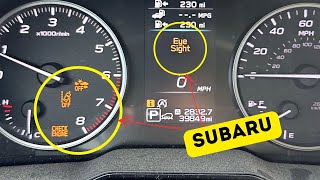
- System Features Not Working — Functions controlled by the module, such as the radio, power windows, Bluetooth, cruise control, or advanced driver-assistance systems (ADAS), cease to operate. 🎬 Watch: Troubleshooting Subaru Eyesight and ADAS warning lights.
- Poor Drivability — Particularly on Ford EcoBoost models, an incompatible module configuration leads to a rough idle or poor throttle response.
- Code Cannot Be Cleared (also visible on scanner) — Using a basic OBD-II scanner to clear the code fails; the code returns immediately because the underlying configuration conflict remains.
Diagnostic Flowchart

Tap your situation to follow the diagnostic path that matches what you're seeing on this code.
Common Fixes & Costs
- Module Programming Service — Parts: $0, Labor: $150-$300, ~1.5 hr book time (Professional)
- Replace and Program Control Module (e.g., BCM, IPC)
— Parts: $300-$1200, Labor: $150-$300, ~2 hr book time
(Professional)
Ford Fiesta (Instrument Cluster): OEM DUBZ-10849-U, BE8Z-10849-KB (Part numbers vary significantly by year and trim. Always verify with VIN). (Alt: Dorman (offers some replacements), various remanufacturing services.) - Replace and Program ABS Module
— Parts: $450-$1200, Labor: $150-$300, ~2.5 hr book time
(Professional)
Ford F-150: OEM KL3Z-2C215-C, JL3Z-2C219-B, 7L3Z-2C219-A (Part numbers vary significantly by year and options like adaptive cruise. Always verify with VIN). (Alt: Bosch (often the OEM supplier), Cardone (remanufactured), Dorman.) - ECU/Module Cloning Service — Parts: $50-$200 (for used donor module), Labor: $200-$400 (for cloning service), ~1.5 hr book time (Professional)
- Replace and Program Powertrain Control Module (PCM/ECU)
— Parts: $600-$1500, Labor: $150-$300, ~1.5 hr book time
(Professional)
Ford Explorer: OEM FL3Z-12A650-CANP, CB5A-12A650-FE (Part numbers and hardware codes must match. Always verify with VIN). (Alt: Cardone (remanufactured), Flagship One (programmed), DENSO (often the OEM supplier).)
Used vs. New Parts: Buying Guide
When a used part is worth it: A used control module is a good budget option if you have access to professional programming tools (like FORScan or IDS) or plan to use a mail-in cloning service. It is ideal for older, high-mileage vehicles where a new OEM part is not cost-effective.
Donor-vehicle mileage cap: roughly under 120000 miles for the part to have meaningful remaining life.
Donor quality checklist:
- Match the part number EXACTLY. Superseded or similar numbers fail to program.
- Buy from a reputable seller offering at least a 30-90 day warranty.
- Inquire if the module has been tested or comes from a vehicle with known history.
- Avoid parts with physical damage, corrosion, or signs of water intrusion.
Decision logic:
- If Original module still communicates AND budget is tight → Buy a compatible used module and use a mail-in cloning service for a plug-and-play solution.
- If You have access to and experience with advanced scan tools (e.g., FORScan) → A used module is a viable DIY option, but requires careful programming.
- If The vehicle is newer or the part is for a critical safety system (e.g., Airbag Module) → Favor a new OEM part or a remanufactured unit with a long-term warranty for peace of mind.
Warranty tradeoff: Used parts often have a 30-90 day part-only warranty. Remanufactured units typically offer a 1-year or lifetime warranty. New OEM parts carry the manufacturer's warranty, which is longer if installed by a dealer.
Worst-case if a used part fails: $300-$600 if a used part is dead on arrival or fails after the warranty period, requiring repeat labor for R&R and programming.
What Happens If You Wait — Timeline
- Immediate: Code U2101 sets, and warning lights for affected systems (ABS, Airbag, Traction Control) illuminate. The features controlled by the module are disabled. The vehicle fails state safety inspections. (MPG impact: 0%% · Added cost: $50-$150 in failed inspection fees and re-tests.)
- 0-1 month: If the module is part of the immobilizer system (e.g., Ford IPC), a no-start condition occurs, leaving you stranded. Driving with disabled ABS/Traction Control significantly increases stopping distances. (MPG impact: 0%% · Added cost: $100-$250 for towing if the vehicle fails to start.)
- 1-6 months: Continued operation with disabled safety systems leads to 'risk normalization,' where the driver becomes accustomed to the hazardous condition. Underlying network instability causes intermittent electronic gremlins. (MPG impact: 0%% · Added cost: $0 (unless a secondary electronic issue develops).)
- Accident: The disabled safety system fails to perform in an accident. The ABS does not prevent wheel lock-up, or the airbags do not deploy. A preventable incident becomes severe. (MPG impact: 0%% · Added cost: $1,000+ representing insurance deductibles, increased premiums, potential vehicle total loss, or the cost of injury.)
Cost of Not Fixing It
- Immediate: Critical safety systems like ABS, traction control, and airbags are disabled, significantly increasing the risk of an accident or injury. (Added cost: Potential for bodily harm or total vehicle loss in an accident.)
- 0-3 months: Vehicle fails to start if the incompatible module is part of the immobilizer system. Results in an automatic failure of any state safety or emissions inspection. (Added cost: $100-$200 for towing if the vehicle won't start. Cost of failed inspection and re-test fees.)
- 3+ months: Continued operation with disabled safety systems normalizes hazardous driving conditions. Unstable network communication causes other intermittent electronic issues. (Added cost: N/A)
Diagnosis Steps
- Check Vehicle Repair History
Determine if any electronic modules were recently replaced, especially in rebuilt or salvage vehicles. This code appears almost exclusively following a repair where a module was swapped.
Tools: Service records (Beginner) - Perform a Full Vehicle Scan
Use an advanced, bi-directional scan tool to pull codes from all modules. Note the specific module logging the U2101 code and any accompanying subtype (e.g., U2101:55 for 'Not Configured').
Tools: Advanced OBD-II Scanner (e.g., Autel, FORScan, Ford IDS) (Beginner) - Verify Module Part Number
Physically inspect the module that set the code. Verify its part number is correct for your vehicle's specific year, model, and VIN. An incorrect part never accepts the correct programming.
Tools: Basic hand tools, trim removal tools (Intermediate) - Attempt Module Programming/Configuration
Using a manufacturer-specific tool, perform the 'Programmable Module Installation' (PMI) or 'As-Built' configuration procedure. This writes the correct, VIN-specific data to the module.
Tools: Manufacturer-specific diagnostic tool, stable power supply (Professional) - Inspect Wiring and Connectors
Visually inspect the wiring harness and connectors going to the affected module. Look for damage, corrosion, or loose pins disrupting communication.
Tools: Flashlight, mirror (Intermediate) - Pro Tip: Check CAN Bus Resistance
Disconnect the vehicle's battery. At the OBD-II port, use a multimeter to measure the resistance between Pin 6 (CAN High) and Pin 14 (CAN Low). A healthy network reads approximately 60 Ohms.
Tools: Digital Multimeter (Advanced) - Pro Tip: Analyze CAN Bus Signal with Oscilloscope
With the battery reconnected and ignition on, connect an oscilloscope to Pin 6 and Pin 14. A healthy CAN bus signal shows two mirror-image square waves. Distorted waves point to network interference or a short.
Tools: Automotive Oscilloscope (Advanced) - Replace the Control Module
If the module refuses programming, it is the wrong part, a locked used part, or internally failed. Replace the module with a new, correct part and perform the programming procedure again.
Tools: Hand tools, new control module, diagnostic tool (Professional)
When This Code Triggers (Freeze-Frame Conditions)
- Module That Set Code: ABS, BCM, IPC, PCM, etc. (The scan tool identifies exactly which module is reporting the incompatibility.)
- Ignition Status: Key On, Engine Off (KOEO) or Key On, Engine Running (KOER) (The code sets immediately upon startup when modules perform a network check.)
- System Voltage: 11.5V - 14.5V (Code sets when system voltage is sufficient for normal module operation.)
- Odometer: Any (The mileage at which the code was set, almost always immediately following a part replacement.)
Related Codes
- U2100 — This code for 'Control Module Configuration Not Programmed' is a close relative. U2100 means the module is 'blank' or unconfigured, while U2101 means it has a configuration, but it's the 'wrong' one for the vehicle. They appear together after an improper module installation.
- U0100-U0500 — These are 'Lost Communication' codes. U2101 indicates a configuration mismatch, which causes other modules to log 'Lost Communication' codes because they cannot talk to the improperly configured module. Diagnosing the U2101 code first is mandatory.
- U3000 — This code for 'Control Module' indicates a general internal failure. U3000 suggests the module itself is faulty, whereas U2101 points to a software/configuration problem. If attempts to reprogram the module fail and U3000 is present, the module requires replacement.
- B1380 — This is a Body Control code, often for 'Steering Wheel Right Switch Pack'. On Ford vehicles, this code frequently accompanies a U2101 in the Steering Column Control Module (SCCM). It indicates the wrong steering wheel is installed or the SCCM is configured for features the vehicle lacks.
Climate & Environmental Factors
- Humidity and Moisture: High humidity, water intrusion from rain, and road salt accelerate corrosion on wiring harnesses, connector pins, and within control modules. This corrosion increases resistance or causes short circuits on the CAN bus, leading to communication failures that accompany a U2101 code after a module is damaged and replaced.
- Extreme Temperatures: Extreme heat or cold cycles stress electronic components and solder joints on the circuit boards inside control modules. This thermal stress leads to intermittent or complete internal module failure, which requires replacement and subsequent programming, the most common trigger for code U2101.
How to Talk to a Mechanic About This Code
Say this: "I have a U2101 'Control Module Configuration Incompatible' code, likely in the [mention specific module, e.g., ABS, Instrument Cluster] module after a recent part replacement. I need a quote for a 'Programmable Module Installation' or 'As-Built' data configuration for my specific VIN. Do you have the manufacturer-specific tools, like Ford IDS or GM SPS, to perform this programming?"
This language immediately tells the shop you understand it's a software/programming issue, not a broken part. It directs them to the specific, high-skill labor operation required, preventing them from charging you for a lengthy, unnecessary re-diagnosis or trying to sell you another module.
Avoid saying:
- 'My ABS light is on, can you check it out?'
- 'My car is acting weird after I had it fixed.'
- 'Just fix the code.'
Questions to ask before authorizing the repair:
- Do you have the specific OEM software (like Ford IDS/FDRS, GM SPS, Chrysler wiTECH) and an active subscription for my vehicle's brand?
- Will you be using a stable, high-amperage power supply during the programming to prevent bricking the module?
- What is your procedure if the programming fails? Is the quoted price for the attempt or for a successful configuration?
- If programming a used module, what is your success rate and what are the next steps if it cannot be programmed?
Where to Take It: Dealer vs Independent vs Chain
- Dealer:
Safest, most reliable option. The dealer is guaranteed to have the correct tools and latest software. This is the recommended choice if you want the highest probability of a first-time fix, especially for critical safety modules.
Best for: Vehicles under warranty, Very new vehicles (less than 3 years old), Complex programming issues or when a new module is required, When manufacturer-specific software campaigns or recalls might be involved.
Downsides: Highest labor rates, typically 1.5-2x an independent shop., May refuse to program used parts, forcing the purchase of a new, expensive module. (Typical cost: +50% vs. baseline) - Independent Shop:
Good fit, but requires research. Ask them directly: 'Can you perform a PMI on a Ford ABS module?' or 'Do you have a GM SPS subscription?'. A well-equipped independent specialist is just as capable as a dealer for this code and is often more affordable.
Best for: Out-of-warranty vehicles where cost is a major factor., Commonly affected vehicles (like Ford, GM) where the shop has extensive experience., When you can find a specialist who advertises module programming capabilities.
Downsides: Capability varies dramatically; you MUST vet the shop. Many indies do not have the expensive, brand-specific programming tools., May not have access to the very latest software updates. (Typical cost: +0% vs. baseline) - Chain Shop:
AVOID. These shops are not equipped for module configuration and are highly likely to misdiagnose the problem, costing you time and money.
Best for: Simple services like oil changes, tires, and brake pads.
Downsides: Almost never have the required manufacturer-specific programming tools., Technicians are not trained for complex network diagnostics., High risk of misdiagnosis, leading to unnecessary part replacement. (Typical cost: -10% vs. baseline)
When to Walk Away From the Repair
If the total estimated repair cost for the U2101 code (including a new module if needed) exceeds 40-50% of your car's private-party value, it's time to seriously consider selling or trading it in.
- Car worth $3500, fix is $1800: Walk away. The repair cost is over 50% of the car's value. The risk of other age-related repairs is high.
- Car worth $15000, fix is $350: Fix it. The repair is a simple reprogramming and costs far less than the vehicle's value.
- Car worth $8000, fix is $2200: Borderline. The cost is significant but below the 40% threshold. Get a second opinion, explore used/cloned module options to reduce cost before deciding.
What Scan Tool You Need for This Code

Minimum: A tool with manufacturer-specific module programming and configuration capabilities. A basic code reader is useless for fixing U2101.
A $20 code reader only confirms the U2101 code exists. It cannot perform the necessary programming or configuration to fix the incompatibility. You will waste money guessing at parts without the ability to program the module.
Budget: FORScan with OBDLink EX Adapter (~$70) — For Ford, Mazda, and Lincoln vehicles, this is the most powerful DIY tool. It performs 'Programmable Module Installation' (PMI) and writes 'As-Built' data to configure new or used modules, which is the exact fix required for U2101 in most cases.
Mid-range: Autel MaxiCOM MK808 / MK808S (~$350) — Offers wide vehicle coverage and many service functions, including some module programming and IMMO/key programming. However, its ability to perform the specific 'configuration' needed for U2101 is hit-or-miss depending on the vehicle and module.
Professional: XTOOL D8S / Launch X431 Series (~$700-1200) — These professional-grade scanners offer extensive bidirectional controls and robust ECU coding/programming functions for a wide range of manufacturers. They perform online coding and handle module replacements and configurations that cheaper tools cannot.
Rent vs buy: You cannot rent a programming-capable scanner from auto parts stores. Their loaner tools are basic code readers. For a one-time U2101 fix, paying a professional shop for one hour of labor is more economical than buying a pro-level tool. Buy FORScan/OBDLink EX if you own a Ford/Mazda and plan to do more advanced DIY work in the future.
How to Clear the Code After You Fix It
- Perform module programming (PMI or As-Built configuration) using a manufacturer-specific scan tool.
- Follow all on-screen instructions, including key cycles, precisely.
- After successful programming, the tool clears the U2101 and related communication codes automatically.
- Perform any necessary relearn or calibration procedures for the specific module (e.g., steering angle sensor calibration for an ABS module).
Drive cycle (~15 minutes): A specific drive cycle is not required to clear this code; successful programming is the fix. However, a 15-minute test drive including varied speeds confirms all systems controlled by the module function correctly.
Readiness monitors affected: Not applicable
Before emissions retest: drive at least 50 miles to fully set monitors.
Watch out for:
- Attempting to clear the code with a basic scanner without programming the module first; the code returns instantly.
- Failing to use a stable power supply during programming, which permanently bricks the module.
- Not clearing secondary 'Lost Communication' codes from other modules after resolving the primary U2101 code.
Will This Fail Emissions / State Inspection?
Yes — this code typically fails an OBD-II emissions inspection.
- California: An active U-code, especially one illuminating a warning light or indicating a fault with a primary control module, causes an automatic failure of the OBD-II portion of the Smog Check.
- New York: The NYS DMV inspection includes an OBD-II scan. A U2101 code disabling required safety systems like ABS results in a test failure.
- Texas: In counties requiring emissions testing, any code commanding the Malfunction Indicator Lamp (MIL) on causes a failure. If U2101 triggers the MIL or another dash warning light, the vehicle fails inspection.
Most Commonly Affected Vehicles
- Ford Fiesta (2011-2019) — Very common when the Instrument Panel Cluster (IPC) is replaced without programming, causing a no-start condition as the IPC is part of the PATS immobilizer system.
- Ford F-150 (2010-2019) — Frequently appears in the ABS module (DTC U2101:55-8A) or the Steering Column Control Module (SCCM), especially on rebuilt vehicles where modules were swapped without proper PMI/As-Built configuration.
- Ford Explorer (2011-2019) — Triggered by the Steering Column Control Module (SCCM) if an incorrect steering wheel with different button packs is installed or after PCM replacement.
- Ford Edge (2011-2014) — Known to occur in the ABS module, requiring reconfiguration or replacement. The official service manual provides a specific pinpoint test for this code in the ABS module.
- Ford F-650/F-750 (2012-2016) — A Ford Technical Service Bulletin states that U2101 in the APIM (SYNC module) is normal on these trucks and should be ignored as it does not affect system operation.
- Chevrolet/GM General (2010-2024) — Common on various models when a module's sub-network configuration isn't programmed or has fewer than two modes programmed. It indicates a general programming failure on the GMLAN network, often after BCM or radio replacement.
- Subaru Forester, Outback, Crosstrek (2017-2024) — While not always setting U2101, these vehicles exhibit mass communication failure codes (U0100, U0122, etc.) when the EyeSight system deactivates due to an underlying engine or sensor issue.
- Toyota General (2010-2024) — Occurs when an incorrect ECU is installed (e.g., from a hybrid model into a non-hybrid). The ECU looks for modules that don't exist, triggering communication faults. The fix requires cloning the original ECU data to the replacement.
- Mazda 3, 6, CX-5 (2012-2024) — Similar to Ford, Mazda vehicles set a U2101 code after replacement of the ABS module, PCM, or Instrument Cluster if the module is not correctly configured to the vehicle's specifications.
Manufacturer-Specific Notes
- Ford: This code is extremely common on Fords after a module is replaced. The fix requires a dealer-level tool (IDS/FDRS) or advanced software (FORScan) to run the 'Programmable Module Installation' (PMI) or write 'As-Built' data. Dealers incorrectly state that a used module cannot be programmed, though specialists often can.
- General Motors (GM): On GM vehicles, this issue is common after replacing a Body Control Module (BCM) or radio head unit. Programming requires a subscription to GM's Service Programming System (SPS). The code indicates a failure to program the CAN bus configuration list correctly.
- Chrysler/Dodge/Jeep/Ram: Module replacement requires online programming via the dealership's wiTECH scan tool. The code is common after airbag module or radio replacement on rebuilt vehicles, where VIN mismatches are frequent.
- Mazda: Mazda uses a system similar to Ford's As-Built data. Module replacement, particularly for the ABS or PCM, requires reprogramming with Mazda-specific software to configure the module correctly and avoid a U2101 code.
Real Owner Stories
2014 Ford Fiesta at 160k miles with a no-start condition.
Owner replaced the instrument panel cluster (IPC) to fix a separate issue. Immediately after, the car would not start and displayed code U2101.
Outcome: The fix required using FORScan with an extended license to perform a 'Programmable Module Installation' (PMI) procedure. This copied the vehicle's As-Built data to the new instrument cluster, synchronizing it with the other modules and resolving the no-start condition.
Lesson: On many Ford vehicles, the instrument cluster is a critical part of the immobilizer system. It is not a 'plug-and-play' part. Replacing it requires a programming procedure to prevent a no-start situation.
2016 Ford F-150 with ABS and Traction Control lights on after rebuild.
A salvage title truck was rebuilt after a lightning strike damaged the BCM and other modules on the CAN bus. After replacing multiple modules, a persistent U2101:55-8A code remained in the ABS module, keeping the safety system warning lights on.
Outcome: Replacing the used module with a new OEM ABS module and having the dealership program it using their IDS tool finally cleared the code and restored ABS/Traction Control function. Total cost was over $1,000 including the part and dealer labor.
Lesson: While advanced DIY tools like FORScan are powerful, some modules, especially on newer or severely damaged vehicles, are locked or require a new part for the dealer's programming tools to work. A 'Not Configured' subtype (:55) is a definitive sign a programming step is needed.
2011 Ford Focus with non-working Bluetooth and U2101 code.
Owner upgraded the small, non-touch radio display (FCDIM) to a supposedly compatible, larger screen from another Ford model. After installation, the Bluetooth and voice control features stopped working, and a U2101 code appeared in the FCDIM.
Outcome: The solution was to use FORScan to connect to the module and load the correct 'As-Built' data for the owner's specific VIN. This reconfigured the screen to work with the existing modules in the car, restoring Bluetooth and clearing the U2101 code.
Lesson: Even if a replacement module physically fits and has a compatible part number, its internal software configuration must match your car's specific options. The U2101 code is the car's way of saying 'this part has the wrong settings'.
How to Prevent This Code From Triggering
- Use a stable, high-amperage power supply during programming. (Every time a module is programmed.) — Voltage drops during programming permanently corrupt ('brick') a module. A dedicated power supply providing 50-100 amps at a stable 13.5V is required to prevent failure.
- Verify the exact part number before installing a replacement module. (Every time a module is replaced.) — Slight variations in part numbers mean the module is for a different model or trim level, making it impossible to program correctly. This prevents the most common cause of U2101.
- Seal and protect module connectors. (When a module is disconnected/reconnected or annually.) — Applying dielectric grease to connector pins creates a moisture barrier. Water intrusion causes module failure, necessitating a replacement that triggers U2101.
- Avoid improper jump-starting procedures. (As needed.) — Incorrectly connecting jumper cables causes a massive voltage spike, instantly damaging the sensitive microprocessors inside multiple control modules.
Frequently Asked Questions
Can I fix U2101 by just clearing the code?
No. The code indicates a fundamental configuration mismatch that a simple code reader cannot fix. It reappears instantly until the module is properly programmed.
Why did this code appear right after I replaced a part?
The new or used part has not been electronically introduced to your car. Modern control modules require programming with software specific to your car's VIN and options.
Do I have to go to the dealer to fix this?
Not necessarily, but the repair requires specialized tools. A well-equipped independent shop with manufacturer-specific diagnostic software or a module cloning service can perform the fix. Stop DIY attempts if you lack a bidirectional scanner and stable power supply.
Is it expensive to fix code U2101?
Reprogramming an existing module costs between $150 and $300 for labor. If the module requires replacement and programming, total costs range from $500 to over $2,000.
What is 'As-Built' data?
As-Built data is the original factory configuration file for a specific vehicle, based on its VIN. It tells each module what features the car has, such as automatic climate control or specific headlights. This data must be loaded onto a new module so it functions correctly.
Can FORScan fix a U2101 code?
Yes. FORScan with an extended license performs module programming and writes As-Built data on Ford, Lincoln, and Mazda vehicles.
What is a common misdiagnosis for U2101?
A common mistake is assuming the newly installed module is defective and replacing it again. The problem is almost always the programming, not the physical part.
I installed a new radio and now have a U2101 code. Can I ignore it?
No. The incompatible configuration causes underlying network instability and disables other seemingly unrelated features.
Key Takeaways
- Code U2101 indicates a software configuration mismatch, meaning 90% of the time the module requires programming, not physical replacement.
- Replacing any control module without performing a VIN-specific 'As-Built' data write guarantees a U2101 code.
- Basic $20 code readers cannot clear U2101; you must use a bidirectional tool like FORScan or Ford IDS to write the correct configuration data.
- If the unconfigured module controls the immobilizer (like a Ford Fiesta instrument cluster), U2101 causes an immediate no-start condition.
- Fix U2101 before addressing any accompanying U0100-U0500 'Lost Communication' codes, as the configuration error directly causes the network dropouts.
Helpful Videos

The information in this article is provided for general reference and educational purposes only. Vehicle specifications, procedures, and part compatibility can vary by production date, trim level, and region. Always consult your vehicle's factory service manual and verify part numbers before purchasing or performing repairs. Safety-critical components such as airbags, seat belts, and braking systems should be installed by a qualified professional.
- 🎬 Helpful Videos
- What Does U2101 Mean?
- Can I Drive With U2101?
- Common Causes
- Symptoms
- Diagnostic Flowchart
- Common Fixes & Costs
- Used vs. New Parts: Buying Guide
- What Happens If You Wait — Timeline
- Cost of Not Fixing It
- Diagnosis Steps
- When This Code Triggers (Freeze-Frame Conditions)
- Related Codes
- Climate & Environmental Factors
- How to Talk to a Mechanic About This Code
- Where to Take It: Dealer vs Independent vs Chain
- When to Walk Away From the Repair
- What Scan Tool You Need for This Code
- How to Clear the Code After You Fix It
- Will This Fail Emissions / State Inspection?
- Most Commonly Affected Vehicles
- Manufacturer-Specific Notes
- Real Owner Stories
- 2014 Ford Fiesta at 160k miles with a no-start condition.
- 2016 Ford F-150 with ABS and Traction Control lights on after rebuild.
- 2011 Ford Focus with non-working Bluetooth and U2101 code.
- How to Prevent This Code From Triggering
- Frequently Asked Questions
- Can I fix U2101 by just clearing the code?
- Why did this code appear right after I replaced a part?
- Do I have to go to the dealer to fix this?
- Is it expensive to fix code U2101?
- What is 'As-Built' data?
- Can FORScan fix a U2101 code?
- What is a common misdiagnosis for U2101?
- I installed a new radio and now have a U2101 code. Can I ignore it?
- Key Takeaways
- 🎟️ Get 5% Off