

U2100 on 2015-2019 Lincoln MKC: TCU Communication & App Connectivity Fixes
Code U2100 on a 2015-2019 Lincoln MKC almost always indicates a software issue or configuration error in the Telematics Control Unit (TCU), which affects Lincoln Way app features. The most common fix is a dealer-performed software update or module reprogramming (PMI), not an expensive part replacement. For earlier models, an upgrade from an obsolete 3G TCU to a 4G unit may be required.
- U2100 on a 2015-2019 Lincoln MKC points directly to a problem with the Telematics Control Unit (TCU).
- Symptoms are limited to non-essential features, primarily the Lincoln Way app; the vehicle remains safe to drive.
- The most probable and cost-effective solution is a software update (PMI) at a dealership, as specified in multiple service bulletins.
- For 2015-2017 models, the issue is very likely an obsolete 3G modem which must be physically upgraded to a 4G unit to restore functionality.
- Do not replace the TCU module unless a software reflash has been attempted and has failed, or if it's a confirmed obsolete 3G unit.
- A simple DIY step is to try resetting the module by pulling its fuse for several minutes before seeking professional service.
What's Unique About the 2015-2019 Lincoln MKC
The 2015-2019 Lincoln MKC was part of a generation of Ford and Lincoln vehicles that heavily integrated app-based remote features. As documented in multiple Technical Service Bulletins (TSBs), the software for the Telematics Control Unit (TCU) was prone to glitches that were frequently addressed with factory software updates. [SSM 50346, SSM 47159] This makes the U2100 code on an MKC more likely to be a software problem that can be fixed by reprogramming, rather than a sign of a failed hardware component. Additionally, many earlier models were equipped with 3G modems that became obsolete after the 3G network shutdown in 2022, necessitating a hardware upgrade to a 4G unit to restore functionality.
Diagnostic Flowchart
Tap your situation to follow the diagnostic path that matches what you're seeing on this vehicle.
Symptoms You May Notice
- Lincoln Way or MyLincoln Mobile app features are inoperative (remote start, lock/unlock, vehicle location). [SSM 50346, 1]
- Inability to authorize the vehicle in the mobile app. [SSM 50346]
- Incorrect fuel level, oil life, or tire pressure warnings displayed in the app. [SSM 47159]
- No modem Electronic Serial Number (ESN) is displayed in the vehicle's settings. [SSM 50346, 1]
- SOS System Inoperative warning message on the dashboard.
- "System shut down to save battery" message appearing on the infotainment screen.
- The app may get stuck on an activation screen or show an error message.
- Blaming the Lincoln Way app on the smartphone without checking for vehicle DTCs.
- Replacing the vehicle's main 12V battery without diagnosing the charging system or checking for parasitic drains caused by a faulty module.
- Replacing the TCU module before attempting a software update (PMI), leading to unnecessary expense.
- Replacing a 3G TCU with another 3G unit instead of upgrading to a required 4G module.
Most Likely Causes
- Outdated or Corrupt TCU Software 🔴 High Probability As evidenced by multiple TSBs and SSMs (SSM 47159, SSM 50346), Ford/Lincoln frequently released software updates to fix bugs related to TCU communication and app functionality. An update can sometimes fail, corrupting the module's configuration and triggering the U2100 code.
How to confirm: A Lincoln dealer or a qualified independent shop must connect to the vehicle with Ford's diagnostic software (IDS/FDRS) to check the current software calibration level against the latest available version.
Typical fix: Reprogram the TCU to the latest calibration. This is often referred to as a 'reflash' or a Programmable Module Installation (PMI). TSBs confirm this is the standard procedure. [SSM 47159, SSM 50346, 11]
Est. part cost: $0 - Obsolete 3G Telematics Control Unit 🔴 High Probability Many 2015-2017 MKC models were equipped with 3G TCUs. With the shutdown of 3G cellular networks in 2022, these modules can no longer connect to Lincoln's servers, rendering app features useless. Ford issued Customer Satisfaction Program 21B09 for some vehicles, but it expired in July 2023.
How to confirm: Check the TCU part number. Part numbers starting with 'G' (like GP5T-...) are typically 3G. Newer 4G modules often start with 'H', 'J', 'K', or 'L'. A dealer can also confirm this via VIN.
Typical fix: Replace the 3G TCU with a 4G-compatible unit and a new 4G antenna. The new module must be programmed to the vehicle using a PMI procedure. TSB 22-2230 provides specific instructions 🎬 Watch: Step-by-step walkthrough of a 3G to 4G modem upgrade. for dealers on handling authorization issues after this upgrade.
Est. part cost: $75-$450 - Failed Telematics Control Unit (TCU) ⚪ Low Probability While less common than software issues, the electronic components within the TCU can fail over time. This is often the last resort after software-based fixes have failed.
How to confirm: This is typically diagnosed after a software reprogram (PMI) fails to resolve the code. If the module cannot be communicated with or does not accept the new software, it is likely faulty.
Typical fix: Replace the Telematics Control Unit. The new module must be programmed to the vehicle using a PMI procedure.
Est. part cost: $65-$400
Rare But Worth Checking
- Poor Connection or Damaged Wiring: Although not commonly cited in TSBs for this specific code, it's worth a visual inspection. The TCU is located in the rear cargo area in the spare tire compartment on 2018-2019 models, or under the center console for 2017 models, where items or moisture could potentially damage connectors or wiring.
- Parasitic Battery Drain: Some 2015-2017 MKC models were known for parasitic battery drain issues, sometimes caused by a faulty TCU that fails to enter 'sleep' mode. A failing battery or unstable voltage can sometimes cause communication modules to set configuration codes during startup. If you also experience a dead battery after the car sits for a few days, investigate this as a potential related issue.
Diagnosis Steps
- Verify the symptoms. Check if remote features on the Lincoln Way app are working and note any specific error messages.
- Scan all vehicle modules for DTCs using a capable scanner. Note if U2100 is present alone or with U2101 and/or B156D.
- As a simple first step, try a module reset. Locate the fuse for the TCU (often labeled in the owner's manual), remove it for 5-10 minutes, and then reinstall it. This can sometimes resolve temporary glitches.
- If the code persists, the next step is professional diagnosis. The vehicle needs to be connected to the Ford Diagnostic and Repair System (FDRS) or equivalent.
- A technician should check for relevant TSBs (SSM 50346, SSM 47159, TSB 22-2230) and compare the TCU's current software to the latest version.
- If an update is available or the configuration is corrupt, perform the TCU reprogramming (Programmable Module Installation - PMI). The technician must follow the TSB instructions exactly, as sometimes a simple update is not enough and a full PMI is required even if the software is current.
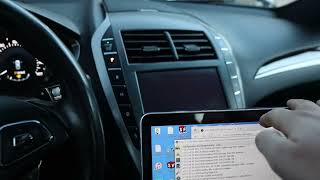
- For advanced DIYers using FORScan, a forced rewrite of the As-Built data to the TCU module, followed by a module reset, may clear a persistent U2100 code after an update.
- Clear the codes and re-test the system. If the code returns immediately or the module fails to program, inspect the TCU connectors and wiring for damage.
- If the software update fails and wiring is intact, confirm if the vehicle has a 3G or 4G modem. If it's a 3G unit, it must be replaced with a 4G module and antenna to restore function.
- If the vehicle already has a 4G module, the software update fails, and wiring is intact, the TCU module itself is the likely culprit and should be replaced and programmed.
Parts You'll Likely Need
- Telematics Control Unit (TCU)
(OEM #EJ7Z-14G229-F (3G, superseded), HJ5T-14G229-AG (4G))— This module is the source of the fault. It is replaced if a software update fails or if an older 3G unit is obsolete. Part numbers starting with 'H' or 'J' are typically 4G. Used units are available but require dealer programming.
Trusted brands: Motorcraft
OEM price range: $250-$450
Aftermarket price range: $65-$150 (Used 4G) - 4G Cellular Antenna
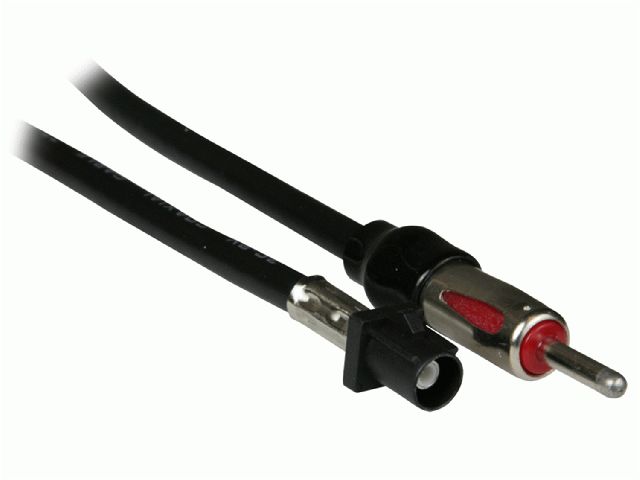
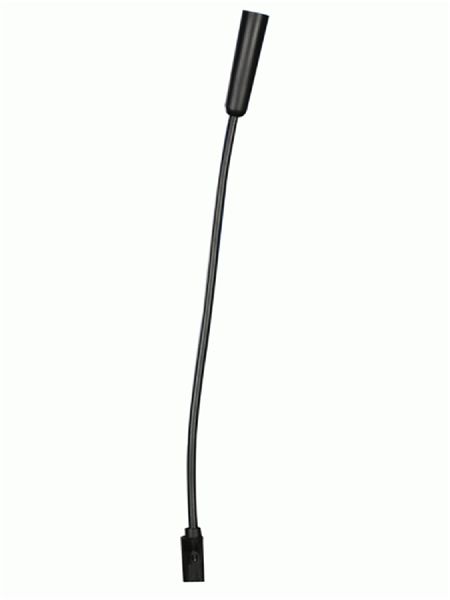
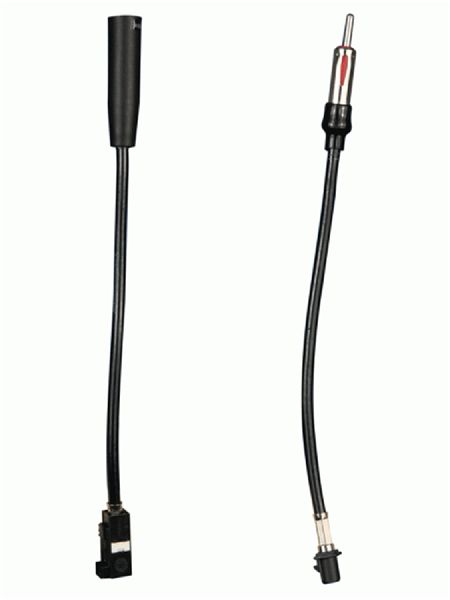
(OEM #NL1Z-19A390-A)— When upgrading from a 3G TCU to a 4G TCU, a new FAKRA-connector cellular antenna is required as the old 3G antenna is often integrated and incompatible.
Trusted brands: Bingfu, Generic FAKRA antennas
OEM price range: $20-$40
Aftermarket price range: $10-$25
Related Codes That Often Appear With This One
- U2101 — This code for 'Control Module Configuration Incompatible' is frequently stored alongside U2100, as they both relate to TCU programming and setup issues. [SSM 47159]
- B156D — This code is also mentioned in TSBs with U2100 and relates to the TCU, specifically pointing to a potential issue with the modem or its authorization status. [SSM 50346]
Technical Service Bulletins (TSBs) & Recalls
- SSM 50346: Addresses inoperative remote features and DTCs U2100/B156D, recommending a PMI procedure.
- SSM 47159: Links U2100/U2101 with incorrect app data and parasitic battery drain, fixed by a TCU software update.
- SB-45317: Early bulletin for 2015-2016 models regarding MyLincoln Mobile app connectivity issues with codes U2100/U2101.
Platform-Specific Known Issues
- Multiple TSBs (SSM 50346, SSM 47159, SB-45317) were issued by Ford for this exact problem, indicating that software glitches in the TCU were a common issue requiring dealer reprogramming.
- For the 2018-2019 MKC, TSB SSM 50346 notes that even a TCU replacement might not fix the issue without performing a specific reprogramming procedure called a PMI.
- 3G Modem Obsolescence: A critical issue for 2015-2017 models is the cellular 3G network shutdown. If the vehicle has its original 3G modem, no amount of software flashing will restore connectivity. An upgrade to a 4G module is mandatory. TSB 22-2230 addresses issues that can occur after this specific upgrade.
- Parasitic Drain: TSB SSM 47159 directly links an intermittent battery draw to the TCU on 2016 MKC models, which can be corrected by a software update. Owners have also reported significant battery drain issues on 2015-2017 models that were sometimes traced back to a faulty TCU.
Mechanic-Grade Diagnostic Values
- CAN Bus Voltage (Key On, Engine Off) — expected: CAN_H: ~2.5-3.5V, CAN_L: ~1.5-2.5V. Voltage on both lines should mirror each other around the 2.5V center point.. Failure: CAN_H shorted to ground (<1V), CAN_L shorted to power (>4V), or both lines showing identical voltage indicates a bus fault.
- CAN Bus Termination Resistance (Battery Disconnected) — expected: ~60 Ohms between CAN_H and CAN_L pins at the diagnostic connector.. Failure: A reading of ~120 Ohms indicates one of the two terminating resistors (often in the PCM or Instrument Cluster) is offline. A reading of 0 Ohms indicates a short between the two lines.
Scan Tool Commands That Help
- Ford IDS/FDRS: Programmable Module Installation (PMI) — This is the primary dealer-level procedure used after replacing the TCU. It downloads the vehicle's As-Built data from Ford's servers and writes it to the new module, configuring it for the specific vehicle.
- Ford IDS/FDRS: Module Reprogramming — Used to update the existing TCU's software (firmware/calibration) to a newer version as specified by a TSB to fix known bugs.
- FORScan: TCU Module Reset — This service function forces a reboot of the Telematics Control Unit. It can be used after making As-Built changes or as a more thorough reset than pulling a fuse to resolve temporary glitches.
- FORScan: TCU As-Built Configuration — For advanced DIYers performing a 4G upgrade. After installing a used 4G TCU, the As-Built data from a similar model year vehicle must be written to the module. A common change involves modifying the first line (e.g., 754-01-01) to clear the previous vehicle's VIN and allow activation.
Wiring & Ground Locations
- TCU Module Location (2018-2019 MKC) — In the rear cargo area, under the floor cover in the spare tire compartment, mounted in the front corner toward the rear seats.. This location is susceptible to moisture or physical damage from items in the cargo area, which could compromise the module or its connectors.
- TCU Module Location (2015-2017 MKC) — Under the center console, accessible from the passenger side footwell area.. Less prone to cargo damage than later models, but still requires significant trim removal to access for inspection or replacement.
- Gateway Module (OBD-II Connector) — The Gateway Module (GWM) is integrated with the OBD-II diagnostic connector under the driver's side dashboard.. The TCU communicates with other vehicle systems through the GWM. While rarely the cause, a fault at the GWM or its connections could disrupt TCU communication. A wiring diagram shows the TCU receives power via a Gray/Red wire at this connector.
Real Owner Repair Stories
- CyanLabs Forum User (2017 Lincoln MKC) — 3G modem became obsolete, Lincoln Way app stopped working.
❌ Tried (didn't work) Installing an 'L' series TCU (e.g., LB5T-14G087-SG) did not work because it requires the newer HS4 CAN bus network, which the 2017 MKC does not have.
✅ What actually fixed it The user replaced the incompatible 'L' series TCU with a 'J' series TCU. This 'J' series module was compatible with the vehicle's existing HS3/ICAN network and successfully restored 4G functionality. - Lincoln Nautilus Forum User 'deagan145' (2017 Lincoln MKC) — Loss of remote features after 3G network shutdown.
❌ Tried (didn't work) Initial attempts to program the new module without the correct As-Built data modifications failed.
✅ What actually fixed it Upgraded the original 3G TCU to a 4G unit (Part No. KT1T-14G087-FK from a 2019 Edge). Using FORScan, the user changed the last character of the first line of As-Built data (754-01-01) to '3' and wrote it to the module. This procedure, along with a new 4G antenna, successfully restored all Lincoln Way app functions for a total cost of around $200 CAD.
OEM Part Supersession History
GP5T-14G087-DF (3G)→HJ5T-14G087-UF, JL3T-14G229-AJ, KT1T-14G087-FK (4G 'H', 'J', 'K' Series)— Upgrade from obsolete 3G cellular technology to 4G LTE.
Heads up: Newer 'L' series TCUs (e.g., LB5T-*, LS7T-*) are NOT compatible with the 2015-2019 MKC. They require the HS4 CAN bus network, whereas the MKC uses the older HS3/ICAN network. Using an 'L' series module will result in a no-communication state.
Model Year Variations Within This Range
- 2015-2017: These years were typically equipped with 3G TCUs from the factory. The U2100 code is often a secondary symptom of the modem being unable to connect to the now-defunct 3G network. The only fix is a hardware upgrade to a 4G module.
- 2018-2019: These years were equipped with 4G TCUs. The U2100 code is almost always due to a software glitch or failed configuration that can be resolved by a dealer-level software update (PMI), as outlined in TSB SSM 50346. The TCU is also relocated to the rear cargo area.
Helpful Videos

Used OEM Parts in Stock

New Aftermarket Parts Available


The information in this article is provided for general reference and educational purposes only. Vehicle specifications, procedures, and part compatibility can vary by production date, trim level, and region. Always consult your vehicle's factory service manual and verify part numbers before purchasing or performing repairs. Safety-critical components such as airbags, seat belts, and braking systems should be installed by a qualified professional.
- Lincoln MKC:
- 🎬 Helpful Videos
- 🛍️ Shop This Part
- What's Unique About the 2015-2019 Lincoln MKC
- Diagnostic Flowchart
- Symptoms You May Notice
- Most Likely Causes
- Rare But Worth Checking
- Diagnosis Steps
- Parts You'll Likely Need
- Related Codes That Often Appear With This One
- Technical Service Bulletins (TSBs) & Recalls
- Platform-Specific Known Issues
- Mechanic-Grade Diagnostic Values
- Scan Tool Commands That Help
- Wiring & Ground Locations
- Real Owner Repair Stories
- OEM Part Supersession History
- Model Year Variations Within This Range
- 🎟️ Get 5% Off