

OBD-II Code U2013: Module Communication Failure
What U2013 means, why it triggers, and how to fix it
- Code U2013 indicates a communication breakdown on the Controller Area Network (CAN) bus, meaning at least one of your vehicle's computers has gone offline.
- Always test the battery first; system voltage dropping below 12.0 volts is the leading cause of spurious U-codes.
- Do not replace expensive control modules without first verifying the CAN bus resistance at the OBD-II port measures a healthy 60 ohms.
- If the code appears immediately after installing an aftermarket radio or alarm, disconnect the device to see if it resolves the network conflict.
What Does U2013 Mean?

Code U2013 means an electronic control module (computer) in your car stopped communicating with the network. Modern vehicles use a Controller Area Network (CAN) bus to share data between systems. This code triggers when that data highway breaks down, isolating one or more modules.
Technical definition: SAE/ISO generic network communication fault indicating a module on the Controller Area Network (CAN) bus or J1850 protocol stopped transmitting or responding, causing a loss of communication between electronic control units (ECUs).
Can I Drive With U2013?
No — Do Not Drive. Do not continue driving. A communication failure between the car's computers causes important systems like the engine, ABS, or stability control to shut down without warning. Sudden CAN bus communication loss while driving triggers engine stalling, limp-home mode, or deactivation of safety systems, creating a severe hazard.
Common Causes

- Low or Unstable Battery Voltage (Very Common) — Modules malfunction when system voltage drops below 12.0 volts. A weak battery, failing alternator, or bad cables causes voltage drops that sever module communication.
- Wiring and Connector Issues (Very Common) — Damaged, corroded, or disconnected CAN bus wires are the most frequent physical cause. This includes chafed insulation, water damage, or backed-out connector pins.
- Poor Ground Connections (Common) — A loose or corroded main ground strap creates high resistance, disrupting the electrical foundation required for network communication.
- Failing Control Module (Common) — An internal hardware failure in any single computer module (PCM, BCM, ABS) stops its communication and sometimes shorts the entire bus.
- Aftermarket Device Interference (Less Common) — Poorly installed remote starters, alarms, or radios introduce electrical noise or improper terminating resistance that crashes the network.
- Module Software Glitch (Less Common) — Corrupted software or known factory bugs cause modules to freeze. Manufacturers release Technical Service Bulletins (TSBs) to address these with a reflash.
- Faulty Terminating Resistor (Rare) — The CAN bus relies on two 120-ohm resistors to prevent signal reflection. If one fails, network resistance drops or spikes, halting all data transfer.
Symptoms

- Multiple Warning Lights on Dash — The Check Engine, ABS, and traction control lights illuminate simultaneously.
- Vehicle Will Not Start — The engine cranks but fails to start, or does not crank at all, because the PCM cannot communicate with the immobilizer.
- Engine and Transmission Performance Issues — The engine runs rough, lacks power, or the transmission locks into a single gear (limp mode).
- Loss of Features or Erratic Operation — The radio, A/C, power windows, or digital displays stop working. Ford mileage displays often show dashes instead of numbers. 🎬 Watch: Troubleshooting Ford lost communication and U-codes
- Irregular Engine Idling — The engine stutters or runs unevenly at idle as it receives inconsistent data from other modules.
Diagnostic Flowchart

Tap your situation to follow the diagnostic path that matches what you're seeing on this code.
Common Fixes & Costs
- Replacing a Weak or Dead Battery — Parts: $150 - $350, Labor: $50 - $100, ~0.8 hr book time (DIY)
- Repairing Damaged Wiring or Connectors — Parts: $10 - $100, Labor: $150 - $800, ~2.5 hr book time (Professional)
- Cleaning or Replacing a Main Ground Strap — Parts: $20 - $75, Labor: $100 - $200, ~1.2 hr book time (Intermediate)
- Replacing a Failed Control Module (PCM, BCM, etc.) — Parts: $500 - $1500, Labor: $150 - $400, ~2.5 hr book time (Professional)
- Module Software Update/Reflash — Parts: $0, Labor: $100 - $250, ~1 hr book time (Professional)
Used vs. New Parts: Buying Guide
When a used part is worth it: Buying a used control module (PCM, BCM) is only recommended for professional shops with specialized cloning tools or when acquiring a complete matched set (PCM, BCM, keys) from a single donor vehicle.
Donor-vehicle mileage cap: roughly under 60000 miles for the part to have meaningful remaining life.
Donor quality checklist:
- Part number must be an exact match.
- Verify the donor vehicle did not have electrical or flood damage.
- Ensure you get the matching key fobs and immobilizer components.
Decision logic:
- If The part is a Body Control Module (BCM) or Powertrain Control Module (PCM). → Buy new or a professionally remanufactured unit that comes pre-programmed to your VIN.
- If You attempt to install a used module from another VIN. → The vehicle will not start. The mismatch triggers the anti-theft system and corrupts other modules on the network.
- If The budget is extremely tight and you accept the risk. → Consult a specialized electronics shop to 'clone' your original module's data to the used donor part before installation.
Warranty tradeoff: Used junkyard parts carry a 30-day warranty that excludes labor. Remanufactured and new OEM parts carry a 1-year or longer warranty.
Worst-case if a used part fails: $800-$2000 if a used module fails or corrupts other modules, requiring a dealer tow and multiple replacements.
What Happens If You Wait — Timeline
- 0-1 month: Intermittent Check Engine Light and warning lamps. No consistent drivability symptoms, but non-critical features (radio, compass) occasionally glitch. (MPG impact: 0%% · Added cost: $0)
- 1-3 months: The fault becomes more frequent, occurring after hitting bumps or during wet weather. You experience occasional harsh shifting or a no-start condition. (MPG impact: 0-2%% · Added cost: $150-$300 for a potential tow and initial diagnostic fee.)
- 3-6 months: A critical module (ABS or Transmission controller) drops offline consistently. The vehicle enters 'limp-home' mode frequently. (MPG impact: 5-15%% · Added cost: $800-$1800 if a single critical module is damaged by the unstable network and requires replacement.)
- 6+ months: Cascading failure. Persistent electrical noise and voltage instability corrupt or physically damage multiple, previously healthy control modules. (MPG impact: 10-25%+% · Added cost: $2000-$4000+ to diagnose and replace multiple damaged modules.)
Cost of Not Fixing It
- 0-1 month: Intermittent failure of non-critical systems (radio, A/C) and unpredictable warning lights. (Added cost: $0)
- 1-6 months: Increased risk of sudden breakdown. A critical system (engine, ABS) fails to communicate while driving, leaving the vehicle stranded. (Added cost: $150-$500 for towing and escalating diagnostic time.)
- 6+ months: Cascading electronic failure. Unstable voltage corrupts software or damages sensitive electronics in previously healthy modules. (Added cost: $1000-$3000+ to replace and program multiple damaged control modules.)
Diagnosis Steps
- Read All Trouble Codes
Use a scanner capable of reading all modules. A U2013 code is usually accompanied by specific 'U' codes (like U0100) that pinpoint exactly which module is offline.
Tools: Advanced OBD-II Scanner (Beginner) - Check Battery and Charging System
Measure battery voltage. It must be above 12.4V (engine off) and 13.7-14.7V (engine running). Low voltage is the leading cause of false communication codes.
Tools: Multimeter (Beginner) - Perform a Visual Inspection
Inspect battery terminals, main ground straps, and wiring harnesses for corrosion, chafing, or water intrusion.
Tools: Flashlight, Basic Hand Tools (Beginner) - Test the CAN Bus Network Resistance
With the battery disconnected, measure resistance between OBD-II pins 6 and 14. A healthy network reads 60 ohms. 120 ohms indicates a missing terminating resistor; 0 ohms indicates a short.
Tools: Multimeter, Vehicle Wiring Diagram (Advanced) - Isolate the Faulty Module
If other codes point to a specific module, unplug it and re-check network resistance. If the 60-ohm reading returns, that module is shorting the bus.
Tools: Basic hand tools, Vehicle Wiring Diagram (Advanced) - Check Power and Ground at the Module
Confirm the suspected module receives proper voltage and has a solid ground. A module cannot communicate without power.
Tools: Multimeter, Vehicle Wiring Diagram (Advanced) - Perform a Parasitic Draw Test
If the battery is consistently low, perform a parasitic draw test. A draw over 50 milliamps after all modules 'sleep' indicates a module failing to power down.
Tools: Multimeter with Amp Clamp (Intermediate) - Verify CAN Bus Voltage Levels
With the key on, CAN High (Pin 6) should average 2.6V and CAN Low (Pin 14) should average 2.4V. Deviations indicate a short to power or ground.
Tools: Multimeter, Automotive Oscilloscope (Advanced)
When This Code Triggers (Freeze-Frame Conditions)
- Engine Coolant Temp: 180-205°F (Fully warmed up, under load)
- RPM: 750-3000 (Occurs at idle, during acceleration, or at steady cruise)
- System Voltage: 11.5-13.5V (Sets during low voltage events (startup) or normal operation if an intermittent fault occurs)
- Vehicle Speed: 0-65 mph (Triggers under specific vibration or thermal conditions correlating with certain speeds)
Related Codes
- U0100 — Means 'Lost Communication With ECM/PCM'. If seen with U2013, the network failure is related to the main engine computer. Start by checking the PCM's power, ground, and network connections.
- U0140 — Means 'Lost Communication With Body Control Module (BCM)'. The BCM acts as a gateway between network buses. A failure here takes down multiple unrelated systems (windows, radio, lights).
- U0155 — Means 'Lost Communication With Instrument Panel Cluster (IPC)'. The IPC is often a terminating module for the CAN bus. Focus on the instrument cluster's connections.
- U0415 — Means 'Invalid Data Received From Anti-Lock Brake System (ABS)'. If the ABS light is on alongside U2013, the problem originates with the ABS module or its wiring.
Climate & Environmental Factors
- High Humidity / Rain: Water intrusion is a major cause of communication failures. Moisture seeps into module connectors and fuse boxes, causing corrosion and short circuits.
- Cold Weather: Extreme cold lowers a battery's effective cranking amps. Modules sensitive to voltage drops fail to initialize during startup in cold temperatures, causing intermittent U-codes.
- Road Salt (Winter Climates): Salt spray acts as an electrolyte that dramatically accelerates the corrosion of wires, ground straps, and connector pins, leading to high resistance in the CAN bus harness.
How to Talk to a Mechanic About This Code
Say this: "I have a U2013 communication code, possibly with other 'U' codes, and I need a diagnostic appointment with a technician who is strong in electrical and CAN bus diagnosis. I'd like to authorize one hour of diagnostic time to identify the faulty module or wiring section."
This signals you understand it's a complex electrical issue, not a simple part swap. It directs them to their best diagnostician and sets a clear budget for the initial investigation.
Avoid saying:
- 'My check engine light is on and my radio is acting weird.'
- 'Just fix whatever is wrong.'
- 'My friend said it's probably the computer, can you replace it?'
Questions to ask before authorizing the repair:
- Which specific module was dropping off the network, and what other 'U' codes did you find?
- What were the results of the CAN bus resistance and voltage tests?
- Did you confirm the module has proper power and ground before condemning it?
- Is the recommended repair for a wiring harness/connector or a full module replacement?
Where to Take It: Dealer vs Independent vs Chain
- Dealer:
A strong, safe choice, especially if initial diagnosis points to a software reflash or a quirky, model-specific problem.
Best for: Vehicles under warranty., Complex, brand-specific electrical issues or known TSBs., When a module replacement and manufacturer-level programming is confirmed to be necessary.
Downsides: Highest labor rates., Defaults to expensive module replacement instead of wiring repair. (Typical cost: +50% vs. baseline) - Independent Shop:
The best fit, IF you vet the shop. Ask if they have an electrical specialist and advanced diagnostic tools like an oscilloscope.
Best for: Out-of-warranty vehicles where cost is a factor., Shops that explicitly advertise and specialize in electrical and diagnostic work.
Downsides: Skill varies greatly; a general mechanic lacks the specific tools or experience for deep network diagnosis. (Typical cost: +0% vs. baseline) - Chain Shop:
AVOID. This type of fault is far outside the scope of their business model.
Best for: Simple, unrelated maintenance like oil changes or tires.
Downsides: Technicians are not equipped or trained for complex network diagnostics., High risk of misdiagnosis and being sold unnecessary parts. (Typical cost: -10% vs. baseline)
When to Walk Away From the Repair
If the estimated repair cost for the U2013 fault exceeds 40-50% of the car's private-party value, it's time to seriously consider selling or trading it in.
- Car worth $5000, fix is $2500: Borderline. The repair is 50% of the car's value. Get a second opinion before authorizing, as another major failure could be next.
- Car worth $15000, fix is $2000: Fix it. The cost is well below the threshold and restores critical functionality.
- Car worth $3000, fix is $2200: Walk away. The repair cost is over 70% of the vehicle's value. It is not a sound financial decision.
What Scan Tool You Need for This Code
Minimum: A scanner that can perform an 'all-system' or 'full-module' scan. It MUST be able to read codes from the ABS, BCM, SRS, and other modules, not just the engine.
A basic $20 code reader only checks for generic engine codes (P-codes). It cannot see the crucial 'U' codes from other modules, which are the primary clues needed to diagnose a U2013 fault.
Budget: TopDon TopScan / BlueDriver Pro (~$70-100) — These Bluetooth dongles pair with your smartphone and run a full-system scan, identifying which modules are not communicating.
Mid-range: Autel MK808S / Foxwell NT510 Elite (~$250-380) — Provides full system diagnostics and bidirectional controls. This allows you to actively test components and see live data from all modules.
Professional: Autel MaxiCOM MK900 / Launch X431 Series (~$500-1200) — Offers full bidirectional control, ECU coding/programming functions, and faster live data graphing. These are professional-grade tools for advanced DIYers who need to program replacement modules.
Rent vs buy: AutoZone's free 'Fix Finder' service performs a full system scan and gives you a printout of all codes from all modules. If the problem is intermittent, buying a midrange scanner is a worthwhile investment.
How to Clear the Code After You Fix It
- Ensure battery is fully charged and reconnected.
- Use an advanced OBD-II scan tool to clear Diagnostic Trouble Codes (DTCs) from ALL modules.
- Perform a complete drive cycle to allow readiness monitors to run.
Drive cycle (~30 minutes): Start with a cold engine (coolant temp below 122°F). Idle for 3 minutes. Drive a mix of city and highway speeds, holding a steady 55 mph for at least 5 minutes. Allow the vehicle to cool completely (sit for 8 hours) and repeat.
Readiness monitors affected: Catalyst (CAT) monitor, Evaporative (EVAP) System monitor, Oxygen (O2) Sensor monitor
Before emissions retest: drive at least 100 miles to fully set monitors.
Watch out for:
- Disconnecting the battery clears codes but resets all readiness monitors to 'Not Ready', guaranteeing an emissions test failure.
- Failing to fix the underlying electrical fault causes the U2013 code to return immediately upon the next key cycle.
- Ignoring specific EVAP monitor conditions, such as requiring the fuel tank to be exactly between 15% and 85% full to run.
Will This Fail Emissions / State Inspection?
Yes — this code typically fails an OBD-II emissions inspection.
- California: An active U-code illuminating the Check Engine Light is an automatic failure. All OBD readiness monitors must be 'Ready' before a retest.
- New York: An illuminated Check Engine Light for any 'U' code results in an immediate inspection failure.
- Texas: An illuminated Check Engine Light is an automatic fail. Inspectors reject vehicles with recently cleared codes until readiness monitors are set.
Most Commonly Affected Vehicles
- Ford F-150 / Expedition (2004-2013) — Often presents as 'Compass Module is not Responding'. Caused by a poor connection at the ABS control module or intermittent ignition switch connections.
- Ford Explorer (2011-2015) — Prone to general CAN bus communication errors. Water intrusion into the body control module (BCM) located in the passenger-side footwell is a known issue.
- Jeep Compass / Grand Cherokee (2007-2017) — Commonly cited for communication errors between the ECM and other modules. Radio software glitches also cause network issues.
- Chevrolet Malibu / Silverado (2010-2015) — Suffers from faulty body control modules or wiring harness problems that lead to network codes like U2013.
- Nissan Sentra / Various (2005-2013) — Issues are frequently triggered by aftermarket accessories drawing improper voltage.
- Subaru Outback (2010-2014) — Experiences complex electrical faults tied to excessive oil consumption and subsequent sensor degradation.
- BMW 3-Series (E90) / 5-Series (E60) (2005-2013) — Complex network systems in these vehicles are highly sensitive to voltage drops and module failures.
- Volkswagen / Audi Golf, Passat, A4, A6 (2005-2015) — Frequently experiences CAN bus faults related to wiring or module issues.
Manufacturer-Specific Notes
- Ford: U2013 often has a specific definition of 'Compass Module is not Responding'. The compass module (in the rearview mirror or dash) fails or has damaged wiring, logging this code.
- Lincoln: A U2013-63 code points to a 'Supercharger Boost Solenoid Control Circuit' issue, caused by a poor connection at the PCM or a damaged harness.
- Jeep: A wiring harness rubs near the transmission or shifter assembly, causing an intermittent short that brings down the communication network when the vehicle is put into gear.
- Mazda: U2013 has a specific definition of 'TPMS Sensor 4 Internal Fault', indicating an internal failure of a tire pressure monitoring system sensor rather than a network-wide issue.
Real Owner Stories
2005 Ford Expedition EB 5.4L
Check engine light came on with beeping after a professional interior cleaning. Code reader showed U2013, 'Compass module is not responding'.
What they tried:
- Owner suspected moisture from the cleaning got into the wiring.
- Checked the connection at the compass module located on the rearview mirror.
Outcome: The connector to the compass module had come loose from the interior detailing work. Re-seating the connector resolved the issue.
Lesson: If a U-code appears immediately after a repair or service (like a car wash or detailing), first check the connectors of modules in the area that was serviced.
2013 Ford Fiesta
After the battery was recharged, multiple stability control warnings appeared and the ABS module logged a U3000:41 code.
What they tried:
- Confirmed battery voltage was sufficient.
- Performed a 'hard reset' by disconnecting both battery terminals and touching them together to drain all capacitors.
Outcome: A full power-down reset successfully cleared the 'logic lock' in the computer, and the fault codes did not return.
Lesson: After a battery replacement or jump-start, modules can get 'scrambled'. Perform a hard reset by touching the disconnected battery cables together to drain residual power.
2012 Ford F-150 5.0L
Vehicle exhibited a buck/jerk during low-speed maneuvers shortly after starting when the engine was warm.
What they tried:
- Initial diagnosis pointed towards a network issue due to the intermittent nature of the problem.
Outcome: Ford issued Technical Service Bulletin (TSB) 13-1-10 for this exact issue. The fix was a software update (reflash) of the PCM to the latest calibration.
Lesson: For intermittent, specific symptoms, always search for manufacturer TSBs. The fix is often a known software issue requiring a dealer reflash.
How to Prevent This Code From Triggering
- Periodically clean battery terminals and chassis ground points (Every 12 months or during oil change) — Corrosion on terminals and grounds increases electrical resistance, causing voltage drops that disrupt sensitive module communications.
- Apply dielectric grease to critical electrical connectors (When servicing a component or if connectors are exposed to elements) — Dielectric grease is a non-conductive sealant that blocks moisture and oxygen from reaching metal pins, preventing corrosion.
- Have battery load-tested after 3 years (Annually after the 3-year mark) — A battery can hold a surface charge but fail under load, causing system voltage to plummet during startup and triggering spurious communication codes.
- Avoid improper jump-starting procedures (As needed) — Incorrectly connecting jumper cables creates voltage spikes that permanently damage modules on the network.
- Regularly wash the vehicle's undercarriage, especially in winter (Monthly in climates using road salt) — Road salt is highly corrosive to wiring harnesses and ground straps. Rinsing it off minimizes the buildup that accelerates electrical failures.
Frequently Asked Questions
Can I fix a U2013 code myself?
You can perform basic checks like testing the battery and inspecting for loose wires. However, properly diagnosing the network requires advanced scan tools and wiring diagrams. Most U2013 repairs are best left to a professional.
How much does it cost to diagnose a U2013 code?
A professional diagnosis typically costs between $100 and $200. This covers 1-2 hours of labor using an advanced scan tool to ping all vehicle modules and pinpoint the network failure.
Will clearing the code make it go away?
No, clearing the code only turns off the warning lights temporarily. Because U2013 indicates a physical hardware or wiring problem, the code returns as soon as the modules fail to communicate again.
What happens if I ignore the U2013 code?
Ignoring U2013 leads to sudden breakdowns and further electrical damage. Critical systems like the ABS or transmission can shut down while driving. Unstable network voltage can also permanently damage other expensive control modules.
How long does it take to repair a U2013 code?
Repair time depends entirely on the root cause. A simple battery replacement or ground wire cleaning takes under an hour. Tracing a broken wire or replacing and programming a new control module takes a full day.
Can an aftermarket accessory cause a U2013 code?
Yes. Poorly installed remote starters, alarms, or radios introduce electrical noise or drain voltage. If you recently installed an electronic device, disconnect it completely to see if the network stabilizes.
What is a CAN bus?
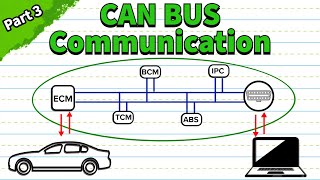
The Controller Area Network (CAN) bus is the primary communication highway in modern cars. It uses two wires to allow all the vehicle's computers to exchange data instantly.
Key Takeaways
- Code U2013 indicates a communication breakdown on the Controller Area Network (CAN) bus, meaning at least one of your vehicle's computers has gone offline.
- Always test the battery first; system voltage dropping below 12.0 volts is the leading cause of spurious U-codes.
- Do not replace expensive control modules without first verifying the CAN bus resistance at the OBD-II port measures a healthy 60 ohms.
- If the code appears immediately after installing an aftermarket radio or alarm, disconnect the device to see if it resolves the network conflict.
Helpful Videos
![How To Test CAN BUS With A Multimeter [CAN Bus Resistance Check] Mechanic Mindset](https://img.youtube.com/vi/JPE42HSJxAk/mqdefault.jpg)

![Ford Lost Communication Problems [The U-Codes]](https://img.youtube.com/vi/h04Cyo78bBU/mqdefault.jpg)

The information in this article is provided for general reference and educational purposes only. Vehicle specifications, procedures, and part compatibility can vary by production date, trim level, and region. Always consult your vehicle's factory service manual and verify part numbers before purchasing or performing repairs. Safety-critical components such as airbags, seat belts, and braking systems should be installed by a qualified professional.
- 🎬 Helpful Videos
- What Does U2013 Mean?
- Can I Drive With U2013?
- Common Causes
- Symptoms
- Diagnostic Flowchart
- Common Fixes & Costs
- Used vs. New Parts: Buying Guide
- What Happens If You Wait — Timeline
- Cost of Not Fixing It
- Diagnosis Steps
- When This Code Triggers (Freeze-Frame Conditions)
- Related Codes
- Climate & Environmental Factors
- How to Talk to a Mechanic About This Code
- Where to Take It: Dealer vs Independent vs Chain
- When to Walk Away From the Repair
- What Scan Tool You Need for This Code
- How to Clear the Code After You Fix It
- Will This Fail Emissions / State Inspection?
- Most Commonly Affected Vehicles
- Manufacturer-Specific Notes
- Real Owner Stories
- 2005 Ford Expedition EB 5.4L
- 2013 Ford Fiesta
- 2012 Ford F-150 5.0L
- How to Prevent This Code From Triggering
- Frequently Asked Questions
- Can I fix a U2013 code myself?
- How much does it cost to diagnose a U2013 code?
- Will clearing the code make it go away?
- What happens if I ignore the U2013 code?
- How long does it take to repair a U2013 code?
- Can an aftermarket accessory cause a U2013 code?
- What is a CAN bus?
- Key Takeaways
- 🎟️ Get 5% Off