

OBD-II Code U2011: Module Transmitted Invalid Data
The Ultimate Guide to Diagnosing and Fixing U2011 Network Faults
- Test your battery under a load before replacing any parts; a voltage drop below 9.6V during engine crank is the leading cause of U2011 module glitches.
- On 2011-2014 Ford vehicles, U2011 paired with a 'Power Steering Assist Fault' message guarantees a failed EPAS rack requiring a $2,000+ replacement.
- Measure the CAN bus resistance between OBD-II pins 6 and 14 with the battery disconnected; a reading of 120 ohms indicates a broken wire or missing terminating resistor.
- Disconnect any aftermarket remote starters, alarms, or stereos immediately; improper splicing into the CAN bus introduces electrical noise that triggers U2011.
What Does U2011 Mean?

U2011 means a control module received nonsensical or corrupt data from another module on the CAN bus network. The receiving module flags the communication as faulty and sets this code. This indicates a network communication breakdown, not necessarily a mechanical failure.
Technical definition: The SAE/OBD-II definition is "Module Transmitted Invalid Data (Non-SCP)". A control module detected invalid data on a Controller Area Network (CAN) bus. The module receiving the bad data sets the code, not the module sending it.
Can I Drive With U2011?
Yes, But With Caution. You can drive, but with significant caution. Depending on the failing module, you risk a sudden, complete loss of critical safety functions like power steering or anti-lock brakes with zero warning. A sudden loss of power steering makes the vehicle extremely difficult to maneuver at low speeds, drastically increasing crash risk. Drive only to a repair facility.
Common Causes

- Low Battery Voltage or Charging System Defects (Very Common) — Control modules require stable voltage. A weak battery, failing alternator, or poor ground connection causes modules to send corrupt data or reboot unexpectedly, triggering network codes.
- Damaged, Corroded, or Loose Wiring and Connectors (Very Common) — Chafing, rodent damage, or pins backing out of CAN bus connectors disrupt communication. This is a primary cause of U2011.
- Water Intrusion into Modules or Connectors (Common) — Moisture seeping into a control module (like an undercarriage ABS module) or a network connector causes short circuits and data corruption. Clogged sunroof drains or damaged weather seals are frequent culprits.
- Failing Control Module (Common) — A specific module, such as the Power Steering Control Module (PSCM) or ABS module, fails internally and broadcasts gibberish onto the network.
- Faulty Sensor Providing Implausible Data (Less Common) — A failing sensor, like a wheel speed or steering angle sensor, sends incorrect information to its control module. The module then broadcasts this invalid data to the network.
- Interference from Aftermarket Electronics (Less Common) — Poorly installed aftermarket devices (remote starters, alarms, LED headlights) introduce electrical noise (EMI) onto the CAN bus, corrupting data signals.
- Faulty Terminating Resistor (Less Common) — The CAN bus network relies on two 120-ohm terminating resistors. If one fails, network resistance changes from 60 ohms to 120 ohms, destabilizing communication.
- Software Glitches or Programming Errors (Rare) — Module software becomes corrupted, or a newly replaced module lacks proper VIN and option programming.
Symptoms

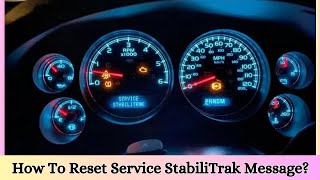
- Warning Lights on the Dashboard — The Check Engine Light illuminates, often accompanied by ABS, traction control ('Service Stabilitrak'), or power steering warning lamps.
- Loss of a Specific Feature — Power steering stops working, the speedometer reads zero, the electronic parking brake fails to engage, or the transmission enters limp mode.
- Reduced Engine Power — The Powertrain Control Module (PCM) forces the vehicle into a 'Limp-Home' mode to prevent damage during a critical network fault.
- Gauges Behaving Erratically — Instrument cluster needles drop to zero, freeze, or sweep randomly as the cluster loses communication.
- No Noticeable Symptoms (scan-tool only — no driver-felt sign) — The communication error is intermittent. The vehicle drives normally, but the code stores in history.
Diagnostic Flowchart

Tap your situation to follow the diagnostic path that matches what you're seeing on this code.
Common Fixes & Costs
- Repairing Damaged Wiring or Connectors — Parts: $10-$75, Labor: $150-$500, ~1.5 hr book time (Intermediate)
- Replacing the Electric Power Steering Rack Assembly (Ford) — Parts: $900-$1,800, Labor: $400-$800, ~4.5 hr book time (Professional)
- Replacing Steering Wheel Position Sensor (GM) — Parts: $50-$150, Labor: $150-$300, ~2.0 hr book time (Intermediate)
- Replacing a Faulty ABS Module — Parts: $400-$1,200, Labor: $200-$400, ~2.5 hr book time (Professional)
- Replacing a Faulty Instrument Cluster — Parts: $200-$700, Labor: $100-$250, ~1.0 hr book time (Intermediate)
- Replacing a Faulty Hyundai EPS Control Unit — Parts: $0, Labor: $0, ~1.5 hr book time (Professional)
Used vs. New Parts: Buying Guide
When a used part is worth it: For expensive electronic modules like an ABS controller, a used part from a reputable salvage yard offers significant savings on older, high-mileage vehicles.
Donor-vehicle mileage cap: roughly under 100000 miles for the part to have meaningful remaining life.
Donor quality checklist:
- Verify the part number exactly matches your original part; variations for different trim levels are not compatible.
- Purchase from a seller offering a 30-90 day warranty.
- Visually inspect the part for corrosion or damage to connector pins.
- Be aware that ABS modules from donor cars may require dealer reprogramming to match your VIN.
Decision logic:
- If The vehicle is under 8 years old AND the cost of a new part is less than $800 → Buy a new or remanufactured part for the longer warranty and greater reliability.
- If The vehicle is over 10 years old AND the repair cost with a new part exceeds 50% of the vehicle's value → A warrantied used part is a reasonable economic decision.
- If The part is a known high-failure item (like a Ford EPAS rack) → Favor a new or high-quality remanufactured part; used parts carry a high risk of premature failure.
Warranty tradeoff: Used parts typically come with a 30-90 day warranty. Remanufactured parts offer 1-year to limited lifetime warranties. Labor costs for replacing a failed used part are rarely covered.
Worst-case if a used part fails: $500-$1000 if a used electronic module fails after installation, requiring repeated labor costs.
What Happens If You Wait — Timeline
- 0-1 month: Code is intermittent. Warning lights flash on startup but disappear. No noticeable performance issues. (MPG impact: 0%% · Added cost: $0)
- 1-3 months: The fault becomes consistent. Warning lights stay on. Specific functions (power steering, ABS) disable permanently. The vehicle may enter limp mode. (MPG impact: 0-5%% · Added cost: $100-$300 in towing fees if the vehicle becomes unsafe to drive.)
- 3-6 months: The faulty module fails to enter 'sleep' mode, causing a severe parasitic battery drain. The battery dies frequently. (MPG impact: 0-5%% · Added cost: $150-$300 for a ruined battery.)
- 6+ months: Complete network failure. Constant electrical noise damages other sensitive electronics. The vehicle will not start. (MPG impact: N/A% · Added cost: $500-$1500+ in cascading module and alternator failures.)
Cost of Not Fixing It
- Immediate: Sudden loss of power steering or ABS functionality creates a significant safety hazard, increasing the risk of accidents at low speeds or during hard braking. (Added cost: Potential accident costs, towing fees ($100-$300).)
- 1-3 months: Ignoring an ABS fault causes related systems like traction and stability control to disable permanently. (Added cost: $0, but safety is severely compromised.)
- 3+ months: A faulty module causes a persistent parasitic battery drain, leading to repeated dead batteries and premature battery failure. (Added cost: $150-$300 for a new battery, plus the escalating cost of the original repair.)
Diagnosis Steps
- Read All Fault Codes from All Modules
Use an advanced scanner to read codes from every module (ABS, PSCM, BCM). U2011 is a secondary code; look for U0131, U3000, or C-codes that pinpoint the root cause. Document freeze frame data.
Tools: Advanced Bi-Directional OBD-II Scanner (Beginner) - Check Battery and Charging System Thoroughly
Measure battery voltage engine-off (>12.4V) and engine-on (13.7V-14.7V). Perform a load test. A battery with good static voltage can fail under load, causing module glitches.
Tools: Multimeter, Battery Load Tester (Beginner) - Isolate the Faulty Module
With the battery disconnected, unplug the suspect module (e.g., the ABS module). Reconnect the battery, clear codes, and see if U2011 returns in other modules. If it doesn't, the unplugged module is the source.
Tools: OBD-II Scanner, Basic Hand Tools (Intermediate) - Perform a Detailed Visual Inspection
Inspect the wiring harness and connectors for the suspect module. Look for chafing, corrosion, moisture, or loose ground straps. Scrutinize aftermarket wiring for improper CAN bus splices.
Tools: Flashlight, Inspection Mirror (Intermediate) - Research Technical Service Bulletins (TSBs)
Check for TSBs related to U2011 for your specific VIN. Manufacturers frequently release bulletins for known wiring problems or software updates that save hours of diagnostic time.
Tools: Online TSB Database Access (Intermediate) - Check Network Resistance
With the battery disconnected, measure resistance between CAN High (Pin 6) and CAN Low (Pin 14) at the OBD-II port. A healthy network reads ~60 ohms. 120 ohms indicates an open circuit; 0 ohms indicates a short.
Tools: Multimeter, Vehicle-Specific Wiring Diagram (Advanced) - Perform a Parasitic Draw Test
Connect a multimeter in series with the negative battery cable. Wait 45 minutes for the vehicle to sleep. A draw over 50-85 milliamps indicates a module staying awake. Pull fuses to isolate the circuit.
Tools: Multimeter with 10A capability (Advanced) - Check Steering Angle Sensor Live Data (GM Vehicles)
If diagnosing a 'Service Stabilitrak' message, monitor the Steering Wheel Position Sensor live data. Voltage should be ~2.5V centered and change smoothly. Erratic readings point to a bad sensor or connector.
Tools: Advanced Bi-Directional OBD-II Scanner (Advanced) - Use an Oscilloscope for Network Analysis
Connect to CAN High and Low at the OBD-II port. Look for two clean, mirroring square waves. Distorted waveforms or voltages shorted to ground (0V) or power (12V) confirm physical network damage.
Tools: Dual-Channel Automotive Oscilloscope, DLC Breakout Box (Professional)
When This Code Triggers (Freeze-Frame Conditions)
- Vehicle Speed: 0-15 mph (During initial startup or low-speed maneuvers like parking, when modules initialize and communicate.)
- Battery Voltage: <12.0V (During engine crank, causing voltage drops that corrupt module communications.)
- Steering Angle: Varies (While turning the steering wheel, indicating a fault in the Power Steering Control Module or Steering Angle Sensor.)
- RPM: 0 or >800 (Logged with Key On, Engine Off (KOEO) or during normal driving if a module fails intermittently.)
Related Codes
- U0131 — Means 'Lost Communication With Power Steering Control Module.' U0131 means the PSCM is completely offline, while U2011 means it is online but sending corrupt data. Seeing them together strongly implicates the PSCM.
- U3000 — A generic 'Control Module Internal Failure' code. When U3000 is present in a specific module alongside U2011 in others, it confirms the module with U3000 has failed and is the source of the invalid data.
- U0420 — Means 'Invalid Data Received From Power Steering Control Module.' A module sets U0420 when it receives the bad data the PSCM is sending out, confirming the PSCM as the source.
- C-series codes (e.g., C0121) — Chassis codes point to the root cause. A C-code for a faulty wheel speed sensor causes the ABS module to broadcast invalid speed data, triggering U2011 in other modules.
Climate & Environmental Factors
- Humidity and High Precipitation: Moisture seeps into low-mounted modules (ABS, EPB) and connectors, causing corrosion and short circuits that corrupt network data.
- Cold Weather and Road Salt: Road salt accelerates corrosion on wiring harnesses and ground points. Salt spray creates a conductive path that shorts CAN bus lines. Extreme cold lowers battery output, causing module glitches during startup.
How to Talk to a Mechanic About This Code
Say this: "I have a U2011 communication code and a power steering warning light. I'd like to book one hour of diagnostic time for a technician to perform a full network scan, check for related TSBs, and test the CAN bus, rather than immediately replacing parts."
This directs the shop to perform a logical diagnostic process, reducing the chance they will guess and replace an expensive module without proof.
Avoid saying:
- 'My power steering is out, how much for a new rack?'
- 'My check engine light is on, can you just fix it?'
- 'Just do whatever you think is necessary.'
Questions to ask before authorizing the repair:
- Which module is the source of the invalid data, and what other codes confirm this?
- Did you test the CAN network resistance and check for a parasitic draw?
- Have you checked the power and ground connections to the suspect module?
- Does this replacement module require programming, and is that cost included?
- What is the warranty on the proposed parts and labor?
Where to Take It: Dealer vs Independent vs Chain
- Dealer:
Safe bet if module programming is needed or a recall applies. Be prepared for a high estimate.
Best for: Vehicles under warranty, or with a known recall/TSB (e.g., Ford EPAS, Hyundai EPS)., Repairs requiring manufacturer-specific software for programming new modules.
Downsides: Highest labor rates and part costs., May default to replacing an entire assembly rather than diagnosing a wiring fault. (Typical cost: +50% vs. baseline) - Independent Shop:
Recommended ONLY if it's a high-quality shop with a strong reputation for CAN bus diagnostics.
Best for: Out-of-warranty vehicles at a shop specializing in electrical diagnostics., Simpler root causes like wiring repairs or known sensor failures.
Downsides: A general mechanic lacks the advanced scanners for network issues., May not have the tools to program a new module. (Typical cost: +0% vs. baseline) - Chain Shop:
AVOID for diagnosing a U2011 code. The problem is too complex.
Best for: Battery testing and replacement.
Downsides: Technicians lack the training and tools for complex network diagnostics., High risk of misdiagnosis and unnecessary part replacements. (Typical cost: -10% vs. baseline)
When to Walk Away From the Repair
If the estimated repair cost exceeds 50% of your car's private-party value, seriously consider selling or trading in the vehicle as-is.
- Car worth $5000, fix is $2800: Walk away. The repair cost is over 50% of the car's value.
- Car worth $15000, fix is $750: Fix it. The repair cost is a small fraction of the vehicle's value and restores critical safety functions.
- Car worth $3500, fix is $1800: Walk away. The repair cost is more than half the car's value.
What Scan Tool You Need for This Code

Minimum: A scanner that performs a full system scan to read manufacturer-specific codes (B-codes, C-codes, U-codes) from ALL vehicle modules.
A basic $20 code reader only checks the engine computer (PCM) and misses U2011 codes stored in the power steering or ABS modules.
Budget: BlueDriver Pro (~$100) — Performs a full system scan on most major brands, showing which modules are logging faults. Provides live data to check sensor outputs.
Mid-range: Autel MaxiCOM MK808 / Foxwell NT1009 (~$300-400) — Bi-directional tools that read all codes and command modules to perform tests. Crucial for diagnosing if a module receives commands and performing calibrations.
Professional: Autel MaxiCOM MK900BT / Launch X431 Series (~$500-1200) — Provides full bi-directional control, module coding and programming (required when replacing modules), and access to wiring diagrams.
Rent vs buy: Free 'loaner' scanners from auto parts stores are basic code readers and CANNOT diagnose a U2011 code. You must buy a capable scanner or pay for professional diagnosis.
How to Clear the Code After You Fix It
- Reconnect battery if disconnected for repair
- Use an OBD-II scan tool to clear all fault codes from all modules
- Perform the specific drive cycle required for your vehicle to set readiness monitors
Drive cycle (~30 minutes): A general drive cycle includes: a cold start, idle for 2-3 minutes, 15 minutes of mixed city/highway driving with smooth acceleration and deceleration, and allowing the vehicle to cool down completely.
Readiness monitors affected: Comprehensive Component Monitor, Misfire Monitor, All non-continuous monitors are reset
Before emissions retest: drive at least 50 miles to fully set monitors.
Watch out for:
- Disconnecting the battery clears codes but resets all readiness monitors to 'Not Ready', causing an automatic emissions test failure.
- Clearing the code without performing a proper drive cycle results in a failed emissions test.
- The U2011 code returns immediately if the underlying electrical or module fault is not repaired.
Will This Fail Emissions / State Inspection?
Yes — this code typically fails an OBD-II emissions inspection.
- California: An illuminated Check Engine Light is an automatic failure. A full drive cycle must be completed to set readiness monitors before a re-test.
- New York: A vehicle with an active Check Engine Light automatically fails the emissions portion of the NYS inspection.
- Texas: An illuminated Check Engine Light results in an automatic test failure. Clearing the code right before the test causes a failure due to 'Not Ready' monitors.
Most Commonly Affected Vehicles
- Ford Explorer (2011-2013) — Highly prone to internal failure of the electronic power steering (EPAS) rack. Recall 14S06 applies to specific VINs. Often requires complete steering gear replacement.
- Ford F-150 (2011-2014) — The EPAS rack is a notorious failure point, causing sudden loss of power steering and setting U2011:49. Repair costs exceed $2,000.
- Ford Fusion (2010-2012) — Prone to failures in the Power Steering Control Module (PSCM) integrated into the steering rack. Often sets U2011 alongside U3000:96.
- Chevrolet / GMC Silverado / Sierra / Tahoe / Suburban (2007-2013) — Associated with a faulty steering wheel position sensor or its wiring, causing 'Service Stabilitrak' messages. TSB PI0639D addresses repairing the connector.
- Hyundai Sonata (2011-2011) — Subject to recall #143 (NHTSA #16V190000) for a faulty Electronic Power Steering (EPS) circuit board causing power steering loss.
- Jaguar XF / XJ (2010-2015) — Points to Electronic Parking Brake (EPB) module faults due to water intrusion in the trunk or low battery voltage.
- Mazda 3 / 6 / CX-7 (2007-2012) — Frequently points to a communication issue with the ABS/DSC module due to water intrusion and connector corrosion.
Manufacturer-Specific Notes
- Ford: U2011 is the default code for an Electronic Power Assisted Steering (EPAS) failure. The fault is internal to the steering rack, requiring replacement and programming. Check for recall 14S06.
- General Motors (GM): A 'Service Stabilitrak' message with U2011 points to the Steering Wheel Position Sensor connector. TSB PI0639D details a fix using a shim and dielectric grease, avoiding expensive module replacement.
- Hyundai: On the 2011 Sonata, loss of power steering with communication codes is guaranteed to be the failed EPS control unit covered by recall 143.
- Jaguar: U2011 points to the Electronic Parking Brake (EPB) system. The EPB often requires recalibration after a simple battery replacement to resolve issues.
Real Owner Stories
2011 Ford Explorer with 150K+ miles
Owner experienced intermittent, complete loss of power steering after startup. The 'Power Steering Assist Fault' warning appeared.
Outcome: The EPAS rack suffered a well-known internal failure. The owner paid $2,400 for an independent shop to install and program a remanufactured rack. Recall 14S06 did not apply to their specific VIN.
Lesson: On a Ford with U2011 and power steering loss, the EPAS rack is the prime suspect. Always check NHTSA for open recalls before paying out of pocket.
2011 Chevy Silverado, 90K miles
'Service Stabilitrak' and 'Service Traction Control' messages appeared intermittently, sometimes triggering 'Reduced Engine Power' mode.
Outcome: A technician traced the fault to a poor connection at the steering angle sensor. Applying dielectric grease and shimming the connector per GM TSB PI0639D permanently fixed the issue for under $100.
Lesson: On GM trucks with Stabilitrak warnings and U-codes, investigate the steering angle sensor connector (TSB PI0639D) before replacing expensive modules.
2011 Mazda 3 with 100K miles
ABS, traction control, and brake warning lights illuminated simultaneously without any noticeable change in braking performance.
Outcome: The owner removed the ABS module and sent it to an online rebuilding service for $250. Reinstalling the rebuilt original module required no dealer programming.
Lesson: Rebuilding an original ABS module is significantly cheaper than buying new and avoids expensive dealer programming fees.
General Case: Aftermarket Accessory Installation
U2011 and random communication codes appeared two days after installing an aftermarket remote starter.
Outcome: The installer improperly tapped into CAN bus wires for power. Removing the remote starter and repairing the spliced wires cleared all codes.
Lesson: If U-codes appear after installing electronics, disconnect the new device immediately. Improper CAN bus splicing is a guaranteed failure point.
How to Prevent This Code From Triggering
- Perform regular battery load testing (Annually) — A weak battery causes voltage drops during cranking, which is the leading cause of module communication glitches.
- Clean and tighten battery terminals (Every 6 months) — Corrosion creates high resistance, starving sensitive control modules of the stable voltage they require.
- Keep vehicle drains clear (Annually) — Clogged sunroof and cowl drains force water into the cabin, soaking critical electronics like the Body Control Module (BCM).
- Protect underbody connectors in harsh climates (Annually (before winter)) — Applying dielectric grease to exposed connectors prevents road salt and moisture from shorting CAN bus lines.
Frequently Asked Questions
Can a bad battery cause a U2011 code?
Yes. A weak battery providing low voltage during startup causes modules to malfunction and transmit corrupt data. Always perform a load test, as a battery showing 12V static can still fail under load.
What is the most common misdiagnosis for a U2011 code?
The most expensive mistake is replacing a $2,000 control module when the actual problem is a corroded ground wire or a weak battery. Thoroughly test the foundational electrical system before condemning parts.
Is it safe to clear the U2011 code?
You can clear it to see if it was an intermittent glitch, but a hard fault will return immediately. Clearing the code erases valuable freeze-frame data needed for diagnosis, so document it first. Never clear codes by disconnecting the battery.
Why did my power steering stop working with this code?
On many vehicles (especially Ford and Hyundai), U2011 is triggered by a fault in the Power Steering Control Module (PSCM). When this module detects an internal error, it disables power assist as a fail-safe to prevent unpredictable steering.
How much does it cost to fix a U2011 code?
Costs range from $150 for a new battery or wiring repair to over $2,500 for a new Ford EPAS steering rack. Diagnostic fees typically add $100-$250.
Can my aftermarket remote starter or headlights cause this code?
Yes. Improperly installed remote starters, alarms, or stereos introduce electrical noise onto the CAN bus, corrupting data signals. Disconnect any aftermarket devices as your first diagnostic step.
What is the difference between a U2011 and a U0131 code?
U0131 means the Power Steering Control Module is completely offline and unresponsive. U2011 means the module is online but broadcasting corrupt or invalid data.
Key Takeaways
- Test your battery under a load before replacing any parts; a voltage drop below 9.6V during engine crank is the leading cause of U2011 module glitches.
- On 2011-2014 Ford vehicles, U2011 paired with a 'Power Steering Assist Fault' message guarantees a failed EPAS rack requiring a $2,000+ replacement.
- Measure the CAN bus resistance between OBD-II pins 6 and 14 with the battery disconnected; a reading of 120 ohms indicates a broken wire or missing terminating resistor.
- Disconnect any aftermarket remote starters, alarms, or stereos immediately; improper splicing into the CAN bus introduces electrical noise that triggers U2011.
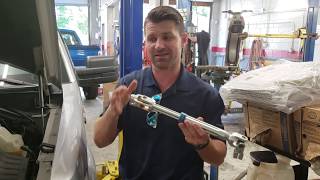
Helpful Videos

The information in this article is provided for general reference and educational purposes only. Vehicle specifications, procedures, and part compatibility can vary by production date, trim level, and region. Always consult your vehicle's factory service manual and verify part numbers before purchasing or performing repairs. Safety-critical components such as airbags, seat belts, and braking systems should be installed by a qualified professional.
- 🎬 Helpful Videos
- What Does U2011 Mean?
- Can I Drive With U2011?
- Common Causes
- Symptoms
- Diagnostic Flowchart
- Common Fixes & Costs
- Used vs. New Parts: Buying Guide
- What Happens If You Wait — Timeline
- Cost of Not Fixing It
- Diagnosis Steps
- When This Code Triggers (Freeze-Frame Conditions)
- Related Codes
- Climate & Environmental Factors
- How to Talk to a Mechanic About This Code
- Where to Take It: Dealer vs Independent vs Chain
- When to Walk Away From the Repair
- What Scan Tool You Need for This Code
- How to Clear the Code After You Fix It
- Will This Fail Emissions / State Inspection?
- Most Commonly Affected Vehicles
- Manufacturer-Specific Notes
- Real Owner Stories
- 2011 Ford Explorer with 150K+ miles
- 2011 Chevy Silverado, 90K miles
- 2011 Mazda 3 with 100K miles
- General Case: Aftermarket Accessory Installation
- How to Prevent This Code From Triggering
- Frequently Asked Questions
- Can a bad battery cause a U2011 code?
- What is the most common misdiagnosis for a U2011 code?
- Is it safe to clear the U2011 code?
- Why did my power steering stop working with this code?
- How much does it cost to fix a U2011 code?
- Can my aftermarket remote starter or headlights cause this code?
- What is the difference between a U2011 and a U0131 code?
- Key Takeaways
- 🎟️ Get 5% Off