

OBD-II Code U1983: SCP Network Communication Error
An Expert Guide to What U1983 Means, Why It Triggers, and How to Fix It for Good
- Code U1983 indicates a severed communication line on the SCP (J1850) network, preventing critical modules like the ABS and instrument cluster from sharing data.
- On 2005-2011 Ford and Mazda vehicles, a faulty instrument cluster with cracked solder joints causes 90% of U1983 codes and triggers a no-start condition.
- Perform a free 'tap test' by firmly striking the dashboard above the gauges; if the dead gauges flicker back to life, you must repair or replace the instrument cluster.
- Save $800 to $2,000 by using a $150-$250 mail-in repair service for your original instrument cluster or ABS module instead of buying a new replacement part.
What Does U1983 Mean?
U1983 means your vehicle's main computers cannot communicate over the SCP (J1850) network. This acts like a severed phone line between critical modules—most commonly the instrument cluster and the anti-lock brake system (ABS)—preventing them from sharing essential data.
Technical definition: SCP (J1850) Invalid or Missing Data for Bus. This indicates a communication failure on the Standard Corporate Protocol (J1850) network, where expected messages from one or more modules are missing or invalid.
Can I Drive With U1983?
Yes, But With Caution. Yes, but driving is highly discouraged. Critical safety systems like the Anti-lock Braking System (ABS) and traction control are disabled, increasing skid risks and stopping distances. Your speedometer will likely fail, making it difficult to gauge speed and illegal to drive in many jurisdictions.
Common Causes
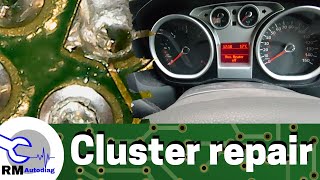
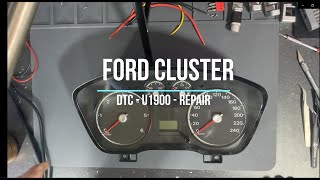
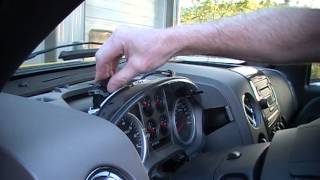
- Failing Instrument Cluster (Very Common) — This is the most frequent cause on Ford, Mazda, and Mercury models. Tiny solder joints on the cluster's internal circuit board crack from vibration and thermal stress, severing the 🎬 Watch: How to strip and repair cluster solder joints. communication lines and triggering a no-start condition.
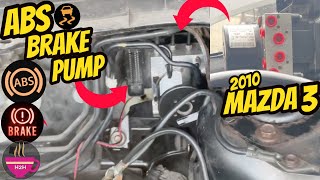
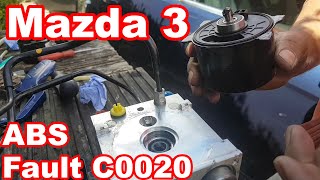
- Failing ABS Module (Common) — The ABS module is a primary node on this network. Internal failure (cracked solder joints on its circuit board) or a loss of power/ground causes it to stop communicating, triggering this code on Jaguar and Mazda models. 🎬 Watch: How to diagnose and repair a faulty ABS module.
- Damaged or Corroded Wiring (Common) — Network wires chafe against metal brackets, or moisture from leaking windshields corrodes the delicate pins at the instrument cluster or ABS module connectors. This creates shorts or open circuits on the communication lines.
- Power and Ground Issues (Less Common) — Modules require stable voltage and a clean chassis ground to communicate. A weak battery, failing alternator, or corroded main ground strap introduces electrical noise and voltage drops, forcing modules offline.
- Improperly Installed Aftermarket Electronics (Less Common) — Aftermarket radios or remote start systems incorrectly spliced into the SCP/J1850 data wires for power or ground disrupt the entire network and trigger a U1983 code.
- Faulty Gateway or Powertrain Control Module (PCM) (Rare) — The main engine computer (PCM) or a dedicated gateway module fails internally, causing a total breakdown in network communication. This is a last-resort diagnosis.
Symptoms
- Erratic or Dead Gauges — The speedometer, tachometer, and temperature gauges suddenly drop to zero, flicker, or stop working entirely.
- No-Start Condition with Flashing Immobilizer Light — On Ford/Mazda vehicles, the instrument cluster houses the immobilizer. When it fails, it cannot verify the key, preventing the engine from starting and causing the theft light to flash rapidly.
- ABS and Brake Warning Lights On — The ABS and brake warning lights illuminate because the anti-lock braking system is offline.
- Odometer Displays Dashes — Instead of showing mileage, the digital odometer displays a series of dashes (-------) due to lost data.
- Radio and Climate Control Act Up — On Fords and Mercurys, the radio and climate control communicate on the SCP network. A network failure causes them to shut off or reset simultaneously with the gauges.
- Harsh Shifting or Flashing O/D Light — The transmission shifts harshly because it is not receiving vehicle speed data from the network.
- Check Engine Light On — The main computer detects the communication problem and illuminates the Check Engine Light.
Diagnostic Flowchart
Tap your situation to follow the diagnostic path that matches what you're seeing on this code.
Common Fixes & Costs
- Repair Instrument Cluster (Mail-in Service) — Parts: $100-$250, Labor: $0-$150, ~1.0 hr book time (Intermediate)
- Repair ABS Module (Mail-in Service) — Parts: $150-$300, Labor: $150-$300, ~2.0 hr book time (Intermediate)
- Replace Instrument Cluster — Parts: $400-$900, Labor: $150-$300, ~1.5 hr book time (Professional)
- Replace ABS Module — Parts: $800-$2500, Labor: $200-$400, ~2.5 hr book time (Professional)
- Repair Wiring Harness — Parts: $20-$50, Labor: $200-$600, ~3.0 hr book time (Professional)
DIY vs Professional
- Repair Instrument Cluster (Mail-in Service) — Beginner: Yes
Tools: Basic hand tools (screwdriver set, trim removal tools, socket set). - Repair ABS Module (Mail-in Service) — Beginner: No
Tools: Socket set, flare nut wrenches, brake fluid, brake bleeding equipment. - Repair Wiring Harness — Beginner: No
Tools: Multimeter, wiring diagrams, soldering iron, heat shrink tubing, wire strippers.
Used vs. New Parts: Buying Guide
When a used part is worth it: A professionally repaired or remanufactured unit is vastly superior to a used junkyard part. Because the failure mode is age-related (cracked solder joints), a used part of the same age will likely fail soon.
Donor-vehicle mileage cap: roughly under 60000 miles for the part to have meaningful remaining life.
Donor quality checklist:
- Match the part number exactly; different trim levels have incompatible modules.
- Ensure the part was tested on the donor vehicle before removal.
- Demand a warranty of at least 90 days.
- Reject parts with any signs of water damage or corrosion.
Decision logic:
- If A reputable mail-in repair service is available for your specific part → Choose repair over used or new. It is the most cost-effective option and retains your vehicle's original programming.
- If The part is an instrument cluster for a Ford/Mazda with PATS immobilizer → Strongly favor repairing your original unit to avoid expensive dealer key reprogramming.
- If A new part requires programming and costs over $1000 → A tested, warrantied remanufactured unit is the best alternative if repair is impossible.
Warranty tradeoff: Used junkyard parts offer 30-90 day warranties. Remanufactured or repaired parts often include one-year or lifetime warranties. New OEM parts have 1-2 year warranties but cost triple.
Worst-case if a used part fails: 450
What Happens If You Wait — Timeline
- 0-3 months: Intermittent failure. Gauges flicker or drop out once every few weeks, often on hot days or after hitting a bump. The U1983 code is stored as a history code. (MPG impact: 0%% · Added cost: $0)
- 3-6 months: Frequent failure. Gauges fail on most drives. ABS and brake warning lights are consistently on. On Ford/Mazda, intermittent no-start conditions begin. (MPG impact: 0%% · Added cost: $150)
- 6-12 months: Hard failure. The instrument cluster is completely dead or the ABS module is permanently offline. The vehicle is frequently stranded with a no-start condition. (MPG impact: 0%% · Added cost: $300)
- 12+ months: Collateral damage. A faulty ABS module causes the hydraulic pump to run continuously, burning out the pump motor. Repeated starting attempts strain the starter. (MPG impact: 0%% · Added cost: $800)
Cost of Not Fixing It
- Immediate: Loss of ABS and traction control creates a severe safety risk in slippery conditions. A no-start condition leaves you stranded. (Added cost: $0)
- 0-3 months: Driving with an inoperative speedometer leads to speeding tickets. The vehicle fails state safety inspections. (Added cost: $150-$500)
- 3+ months: A faulty ABS module causes the hydraulic pump to run continuously, burning out the pump motor. Intermittent no-starts become permanent. (Added cost: $400-$800)
Diagnosis Steps
- Perform a 'Tap Test'
With the key ON, firmly strike the top of the dashboard directly above the instrument cluster. If the dead gauges flicker, warning lights change, or the vehicle suddenly starts, you have confirmed cracked solder joints inside the cluster.
Tools: Your hand (Beginner) - Check Battery and Charging System
Measure battery voltage with the engine off (must be at least 12.4V) and with the engine running (must be 13.5-14.5V). Low or unstable voltage forces modules offline and triggers communication errors.
Tools: Multimeter (Beginner) - Run an Instrument Cluster Self-Test
On Ford vehicles, press and hold the odometer trip reset button, turn the key to the 'ON' position, and continue holding. The gauges will sweep and display diagnostic codes (like 'D900') on the odometer, confirming cluster communication status.
Tools: None (Intermediate) - Inspect Wiring and Connectors
Visually inspect the wiring harnesses at the instrument cluster and ABS module. Look for green corrosion on the pins, water stains, or wires chafing against metal brackets. Ensure main chassis ground points are clean and tight.
Tools: Flashlight (Intermediate) - Test Network Wiring with a Multimeter
Disconnect the battery. Measure resistance between OBD-II pins 2 (SCP+) and 10 (SCP-). A healthy network reads 60 ohms. A reading of 0 ohms indicates a short; OL indicates an open circuit. Reconnect the battery, turn the key ON, and measure DC voltage on pins 2 and 10; both should fluctuate between 2.0V and 3.0V.
Tools: Multimeter, OBD-II pinout diagram (Advanced) - Isolate Modules
Unplug modules one by one (e.g., the ABS module, then the radio) and rescan the vehicle. If unplugging the ABS module restores network communication and clears the U1983 code from other modules, the ABS module is the faulty node pulling the network down.
Tools: Scan tool, wiring diagram (Advanced) - Test ABS Wheel Speed Sensor Circuits
A shorted wheel speed sensor brings down the entire ABS module. Disconnect each sensor and measure resistance (typically 800-2000 ohms). Set the multimeter to AC Volts and spin the wheel; it must generate a small AC voltage. An open circuit (OL) or 0 ohms indicates a faulty sensor.
Tools: Multimeter, Jack and Jack Stands (Advanced) - Analyze Network Waveform with an Oscilloscope
Connect a two-channel oscilloscope to OBD-II pins 2 and 10. A healthy J1850 SCP network shows a mirrored, switching 0-5V square wave. Flatlines at 2.5V indicate a short together; flatlines at 0V indicate a short to ground. Take the vehicle to an automotive electrician if you reach this step without finding the fault.
Tools: Oscilloscope, OBD-II breakout box (Professional)
When This Code Triggers (Freeze-Frame Conditions)
- Engine Coolant Temp: 180-200°F (The fault often occurs after the vehicle is fully warmed up, allowing thermal expansion to separate cracked solder joints.)
- RPM: 0 or 1500-2500 (Triggers during startup (no-start) or at steady cruise when road vibrations are constant.)
- Battery Voltage: 11.5-12.5V (Sets when voltage drops during engine cranking or due to a failing alternator.)
- Vehicle Speed: 0 mph or 35-55 mph (Sets when stationary (cluster fails on startup) or during steady driving as modules constantly broadcast speed data.)
Related Codes
- U1900 — A general CAN Bus Communication Fault. It appears with U1983 because the instrument cluster acts as the gateway between networks. If both are present, the instrument cluster is the primary suspect.
- U0155 — Lost Communication With Instrument Panel Cluster (IPC) Module. This directly points to the instrument cluster being offline. If you have U1983 and U0155 together, the cluster has failed internally.
- P1260 — Theft Detected, Vehicle Immobilized. Stored in the PCM on Ford products when the instrument cluster fails. The PCM assumes a theft attempt because it cannot communicate with the cluster to validate the key.
- U2023 — Fault Received From External Node. A generic code set when one module hears another broadcasting an error. You must scan all modules to find the root cause.
Climate & Environmental Factors
- Thermal Cycling (Hot/Cold): Repeated expansion and contraction of circuit boards from engine heat and ambient temperature changes causes physical stress on solder joints, leading to microscopic cracks and open circuits.
- Humidity and Moisture: Direct water intrusion from leaking windshields or sunroof drains causes rapid corrosion on module connector pins, shorting out network lines.
How to Talk to a Mechanic About This Code
Say this: "I have a U1983 communication code and my symptoms are [describe symptoms, e.g., 'intermittent no-start with a flashing theft light and dead gauges']. Based on my research for a [Make/Model], this is often the instrument cluster, ABS module, or a wiring issue. I need a diagnostic appointment to confirm the specific point of failure."
This proves you are informed and guides the technician toward a logical, symptom-based approach. It signals that you will not authorize expensive module replacements without proof.
Avoid saying:
- 'My check engine light is on, can you just fix it?'
- 'I think it's the computer, just replace it.'
- 'Do whatever you think is best.'
Questions to ask before authorizing the repair:
- What specific tests did you perform to isolate the faulty part or wire?
- Can you show me the damaged wiring or explain how you confirmed the module failed?
- If it's a GM vehicle, are you aware of TSB 20-NA-123 regarding this code?
- What is the cost difference between a new part, a used part, and repairing my original unit?
- What is the warranty on the proposed repair, including parts and labor?
Where to Take It: Dealer vs Independent vs Chain
- Dealer:
Recommended only for warranty work or specific TSBs. Be highly cautious of quotes for full module replacement.
Best for: Vehicles under warranty., Known TSBs requiring specific procedures (like the GM 'sleep cycle')., Complex key and immobilizer programming if a module replacement is unavoidable.
Downsides: Highest labor rates., Will always recommend a new, expensive OEM part over a cost-effective repair of the original module. (Typical cost: +50% vs. baseline) - Independent Shop:
Best fit. Choose a shop with ASE-certified technicians and reviews mentioning electrical diagnostics. They are more likely to facilitate mail-in repairs.
Best for: Out-of-warranty vehicles where cost is a major concern., Diagnosing complex electrical and network issues.
Downsides: Skill varies greatly. General mechanics struggle with network codes., May lack manufacturer-specific tools to program new modules. (Typical cost: +0% vs. baseline) - Chain Shop:
AVOID. Complex electrical faults are outside the scope of chain shops.
Best for: Simple jobs like battery replacement or oil changes.
Downsides: Technicians lack specialized training and equipment for complex network diagnostics., High potential for misdiagnosis, leading to unnecessary battery or alternator replacements. (Typical cost: -10% vs. baseline)
When to Walk Away From the Repair
If the estimated repair cost exceeds 40-50% of the car's private-party value, seriously consider selling the car as-is.
- Car worth $2500, fix is $1800: Walk away. A $1,800 repair on a $2,500 car is a poor investment. The car's value will not increase by the amount spent.
- Car worth $4000, fix is $250: Fix it. A $250 mail-in cluster repair is a small investment to restore a $4,000 car to full functionality and safety.
- Car worth $3000, fix is $1500: Borderline. This repair is 50% of the car's value. Get a second opinion and confirm no cheaper alternatives (like a mail-in repair) exist before proceeding.
What Scan Tool You Need for This Code
Minimum: A scanner that reads manufacturer-specific codes from ALL vehicle modules, including the Instrument Panel Cluster (IPC) and Anti-lock Brake System (ABS).
A basic $20 code reader only scans the Powertrain Control Module (PCM) for 'P' codes. It completely misses 'U' codes like U1983 stored in the ABS or instrument cluster.
Budget: BlueDriver Pro (~$119) — Connects to a smartphone app and reads/clears enhanced codes (ABS, Airbag, IPC) for major brands, allowing you to see codes from all modules to pinpoint the source.
Mid-range: Foxwell NT510 Elite (~$189) — A powerful handheld scanner offering all-system diagnostics and bidirectional controls. Essential for reading manufacturer-specific codes from modules that budget scanners cannot access.
Professional: Autel MaxiCOM MK808S (~$499) — Provides full OE-level diagnostics, live data graphing, and bidirectional controls. Allows you to command modules to perform actions, isolating whether the fault is in the module or the wiring.
Rent vs buy: Auto parts store loaner tools are basic code readers and will NOT read ABS or IPC codes. Investing in a capable scanner like the BlueDriver is mandatory for diagnosing U-codes.
How to Clear the Code After You Fix It
- Reconnect battery.
- Use an OBD-II scan tool to clear all codes from all modules (PCM, ABS, IPC).
- Turn the key off, close all doors, and allow the vehicle to 'sleep' for at least 15 minutes to reset all modules.
Drive cycle (~20 minutes): Start the engine and idle for 3 minutes. Drive in mixed city/highway conditions, including steady-speed cruises and stop-and-go traffic, allowing all modules to verify communication.
Readiness monitors affected: Clearing U-codes clears P-codes, which resets all emissions readiness monitors.
Before emissions retest: drive at least 50 miles to fully set monitors.
Watch out for:
- Only clearing the code from the PCM and ignoring the ABS or IPC modules.
- Failing to let the vehicle complete a full sleep cycle after clearing codes, which prevents security handshakes from re-establishing.
- The code returning immediately because the underlying cracked solder joint was not repaired.
Will This Fail Emissions / State Inspection?
Yes — this code typically fails an OBD-II emissions inspection.
- California: An illuminated Check Engine Light results in an automatic smog check failure. All readiness monitors must be set to 'Ready' after repairs.
- New York: A vehicle fails the NYVIP3 inspection if the Check Engine Light is on. Clearing codes right before the inspection causes a failure due to unset readiness monitors.
- Texas: In emissions-testing counties, an illuminated Check Engine Light is an automatic failure. The OBD-II system is scanned, and U1983 causes rejection.
Most Commonly Affected Vehicles
- Ford Focus (2005-2011) — Extremely common for the instrument cluster to fail due to cracked solder joints, causing a no-start condition with a flashing PATS light and codes U1900, U0155, and P1260.
- Ford Escape (2005-2007) — Shares the same instrument cluster design flaw as the Focus, leading to frequent U1983 codes and no-start symptoms.
- Mazda Tribute (2005-2007) — As a mechanical twin to the Ford Escape, it suffers from the identical instrument cluster failure.
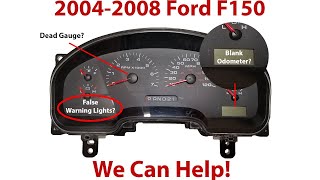
- Ford F-150 (2004-2008) — Prone to instrument cluster failures and wiring issues. A common chafe point for the harness is near the parking brake mechanism.
- Mazda 3 (2004-2009) — The code is often caused by an internal failure of the ABS module or corrosion in its main electrical connector, frequently setting code C1288.
- Jaguar S-Type, X-Type (2000-2008) — Frequently caused by an internal failure of the ABS module (cracked solder joints on the pump motor) or connector corrosion.
- Ford Freestyle / Five Hundred (2005-2007) — Well-known for instrument cluster failure, causing intermittent power loss to all gauges and communication codes.
- Chevrolet / GMC Corvette, Tahoe, Yukon (2020-2023) — TSB 20-NA-123 notes U1983 sets after a programming event if codes are not cleared and the vehicle is not allowed to 'sleep'.
Manufacturer-Specific Notes
- Ford / Mazda / Mercury: The cause is overwhelmingly a faulty instrument cluster due to cracked solder joints. A 'tap test' on the dash is a highly reliable indicator. A no-start with a flashing theft light is the classic symptom.
- Jaguar: This code is heavily associated with a failing ABS module or corrosion in the ABS connector. The primary failure is cracked solder joints for the internal pump motor, often setting a C1095 code.
- General Motors: On 2020+ models, TSB 20-NA-123 indicates U1983 sets after a programming event or battery swap. The fix is to clear the codes and let the vehicle sit undisturbed with the key off for 15 minutes.
- Hyundai: On some Hyundai models, U1983 has a manufacturer-specific meaning: 'BTS (Belt-Tension Sensor) Defect'. This relates to the airbag system, not the primary communication network.
Real Owner Stories
2007 Ford Focus with 100K miles experiencing intermittent no-start and erratic gauges.
The car randomly failed to start, with the theft light flashing and all gauges dead. Tapping the dashboard temporarily restored function. The odometer showed dashes.
What they tried:
- Replaced the battery and starter, which tested fine but did not solve the issue.
- A mechanic suggested replacing the transmission control module.
- The owner researched the symptoms and identified the instrument cluster as the culprit.
Outcome: The owner removed the instrument cluster and used a $150 mail-in repair service to re-solder the main connector. After reinstalling the repaired cluster, the car started reliably, all gauges worked, and the fault never returned.
Lesson: On a Ford Focus or Escape, a no-start with a flashing theft light and erratic gauges guarantees a failed instrument cluster. A 'tap test' is a definitive, zero-cost diagnostic step.
2008 Mazda 3 with 171K miles had ABS, traction control, and brake lights on.
The dashboard was lit up with brake warnings. The owner wanted to avoid high repair costs on an older vehicle.
What they tried:
- Replaced the master cylinder and multiple wheel bearings based on poor advice, costing $1,500.
- A shop attempted to bleed the ABS pump but failed, suspecting a bad module.
Outcome: The dealership quoted $1,800 for a new OEM ABS pump. The owner instead used a $200 mail-in repair service for the original ABS module, addressing the internal electronic failure without the high cost of a new part or programming.
Lesson: Never replace expensive mechanical components without a definitive electrical diagnosis. Always investigate mail-in repair services for ABS modules to save over a thousand dollars.
2021 GMC Yukon with U1983 code after a service visit.
The Check Engine Light illuminated shortly after the vehicle was at the dealership for unrelated programming. There were no drivability symptoms.
What they tried:
- The owner feared a major module failure due to the severe-sounding code description.
Outcome: This is a known 'ghost' code on modern GM vehicles covered by TSB 20-NA-123. The fix requires zero parts. A technician cleared the codes from all modules and let the vehicle sit undisturbed for 15 minutes to complete a 'sleep cycle' and re-establish security handshakes.
Lesson: If U1983 appears on a late-model GM vehicle immediately after a battery change or shop visit, do not authorize module replacements. Insist the technician perform the TSB 20-NA-123 'clear and sleep' procedure.
2004 Ford F-150 with intermittent gauge failure and communication codes.
While driving, the gauges suddenly dropped out and the truck hesitated. The issue was traced to a wiring harness chafing near the parking brake mechanism.
What they tried:
- Initial checks of the instrument cluster found no faults.
- Visual inspection revealed the SCP communication wires had rubbed through their insulation against a metal bracket near the parking brake pedal.
Outcome: The damaged wires were soldered, protected with heat-shrink tubing, and rerouted with a tie strap. This resolved the U1983 code permanently.
Lesson: If module replacement doesn't solve a communication issue, inspect known wiring chafe points, such as near the parking brake mechanism on F-150s.
How to Prevent This Code From Triggering
- Maintain a Healthy Battery and Connections (Annually) — Low voltage causes modules to drop offline. Clean battery terminals and chassis ground points with a wire brush to ensure stable voltage.
- Prevent Water Intrusion (As needed) — Moisture causes rapid corrosion on module connectors. Promptly repair leaking windshield seals or sunroof drains to keep electronics dry.
- Apply Dielectric Grease to Connectors (When servicing) — Applying dielectric grease to the seal of unplugged connectors blocks moisture and prevents pin corrosion over the long term.
- Inspect and Secure Wiring Harnesses (During oil changes) — Vibration chafes wire insulation against sharp edges. Ensure harnesses under the dash are secured with zip ties and not rubbing against metal.
- Ensure Proper Installation of Aftermarket Electronics (During installation) — Never tap into data bus wires for power or ground. Ensure any aftermarket device uses its own dedicated power circuits.
Frequently Asked Questions
Can a bad battery cause a U1983 code?
Yes, absolutely. Communication networks require stable voltage to function. A weak battery or corroded terminals cause modules to drop offline and trigger a U1983 code.
Is it safe to drive with the U1983 code?
Driving is highly discouraged. Your anti-lock brakes (ABS) and traction control are disabled, increasing skid risks in emergencies. A dead speedometer also creates a safety hazard and risks traffic fines.
Why do my gauges go crazy and the odometer show dashes?
The instrument cluster is the most common failure point for this code. When its internal solder joints break, it loses data for the gauges and odometer. The dashes are a default display indicating lost mileage data.
What does a car communication network error mean?
It means the dedicated computers (modules) controlling your engine, brakes, and dashboard cannot share information. This severed connection causes systems to shut down or behave unpredictably.
I just changed my battery and now I have a U1983 code. Why?
The voltage drop during a battery swap causes a temporary glitch in module communication, storing a history code. Alternatively, if the new battery connections are loose, the unstable voltage causes the error to persist.
Can I fix the U1983 code myself?
Yes, DIYers can easily remove the instrument cluster or ABS module and send it to a specialized mail-in repair service. This saves hundreds of dollars compared to buying new parts. Diagnosing complex wiring issues, however, requires a professional with an oscilloscope.
How much does it cost to fix code U1983?
A mail-in instrument cluster or ABS module repair costs between $100 and $300. In contrast, a full replacement of an ABS module at a shop costs from $1,200 to over $2,500 depending on the vehicle. Repairing a damaged wiring harness typically costs $200 to $600 in labor.
Key Takeaways
- Code U1983 indicates a severed communication line on the SCP (J1850) network, preventing critical modules like the ABS and instrument cluster from sharing data.
- On 2005-2011 Ford and Mazda vehicles, a faulty instrument cluster with cracked solder joints causes 90% of U1983 codes and triggers a no-start condition.
- Perform a free 'tap test' by firmly striking the dashboard above the gauges; if the dead gauges flicker back to life, you must repair or replace the instrument cluster.
- Save $800 to $2,000 by using a $150-$250 mail-in repair service for your original instrument cluster or ABS module instead of buying a new replacement part.
Helpful Videos



The information in this article is provided for general reference and educational purposes only. Vehicle specifications, procedures, and part compatibility can vary by production date, trim level, and region. Always consult your vehicle's factory service manual and verify part numbers before purchasing or performing repairs. Safety-critical components such as airbags, seat belts, and braking systems should be installed by a qualified professional.
- 🎬 Helpful Videos
- What Does U1983 Mean?
- Can I Drive With U1983?
- Common Causes
- Symptoms
- Diagnostic Flowchart
- Common Fixes & Costs
- DIY vs Professional
- Used vs. New Parts: Buying Guide
- What Happens If You Wait — Timeline
- Cost of Not Fixing It
- Diagnosis Steps
- When This Code Triggers (Freeze-Frame Conditions)
- Related Codes
- Climate & Environmental Factors
- How to Talk to a Mechanic About This Code
- Where to Take It: Dealer vs Independent vs Chain
- When to Walk Away From the Repair
- What Scan Tool You Need for This Code
- How to Clear the Code After You Fix It
- Will This Fail Emissions / State Inspection?
- Most Commonly Affected Vehicles
- Manufacturer-Specific Notes
- Real Owner Stories
- 2007 Ford Focus with 100K miles experiencing intermittent no-start and erratic gauges.
- 2008 Mazda 3 with 171K miles had ABS, traction control, and brake lights on.
- 2021 GMC Yukon with U1983 code after a service visit.
- 2004 Ford F-150 with intermittent gauge failure and communication codes.
- How to Prevent This Code From Triggering
- Frequently Asked Questions
- Can a bad battery cause a U1983 code?
- Is it safe to drive with the U1983 code?
- Why do my gauges go crazy and the odometer show dashes?
- What does a car communication network error mean?
- I just changed my battery and now I have a U1983 code. Why?
- Can I fix the U1983 code myself?
- How much does it cost to fix code U1983?
- Key Takeaways
- 🎟️ Get 5% Off