

OBD-II Code U1850: Implausible Data from Engine/Powertrain Control Module
What U1850 means, why it triggers, and how to fix it
- Code U1850 indicates the Powertrain Control Module (PCM) is broadcasting corrupted or illogical data to the vehicle's network.
- Always test the battery first; voltage drops below 9.6V during cranking cause modules to malfunction and trigger network codes.
- For 2019-2021 Ram 1500 and 2018-2020 Jeep Wrangler models, a dealer software update costing $150-$250 often resolves this code.
- Do not replace the $800-$1,450 PCM without first verifying the CAN bus resistance reads exactly 60 ohms at the OBD-II port.
- On 2007-2015 FCA vehicles, a failing Totally Integrated Power Module (TIPM) is a primary culprit for U1850 alongside random stalling.
What Does U1850 Mean?

Code U1850 means the main engine or powertrain control module (PCM) is broadcasting corrupted or illogical data to the vehicle's network. The PCM is actively communicating, but the information it sends contradicts expected parameters, causing other modules to reject the data and trigger warning lights.
Technical definition: U1850 is a manufacturer-specific network communication code, predominantly used by Fiat-Chrysler Automobiles (FCA). It stands for 'Implausible Data Received From PCM on D-PT (Diagnostic-Powertrain) CAN Bus', indicating a module on the powertrain network received unexpected or illogical data from the PCM.
Can I Drive With U1850?
Yes, But With Caution. Driving is possible but hazardous. The vehicle enters 'limp mode' unpredictably, drastically reducing power and risking an accident in traffic. Complete communication loss causes the engine to stall while driving. Continued operation with an underlying rich/lean condition destroys the catalytic converter, an $800-$2500 repair.
Common Causes

- Low Battery Voltage or Weak Ground (Very Common) — Control modules require stable voltage and solid grounds. A dying battery dropping below 9.6V during cranking, a failing alternator, or a corroded ground wire causes modules to act erratically and broadcast corrupted data.
- Control Module Software Glitch (Very Common) — Module software bugs cause nonsensical data broadcasts. Manufacturers release software updates to patch these flaws. This is a documented issue on 2019-2021 Ram and Jeep models requiring a Hybrid Control Processor (HCP) or PCM flash.
- CAN Bus Wiring or Connector Problems (Common) — The twisted-pair wires forming the CAN bus become damaged, corroded, or shorted. This physical damage corrupts data signals traveling between modules, representing the most frequent physical cause of network faults.
- Faulty Totally Integrated Power Module (TIPM) (Common) — On 2007-2015 FCA vehicles, the TIPM acts as the central electrical hub. Internal TIPM failure causes bizarre electrical issues, no-start conditions, stalling, and network codes like U1850.
- Failing Powertrain Control Module (PCM) 🎬 Watch: Why you shouldn't replace the TIPM immediately. (Less Common) — The PCM fails internally, sending corrupted data before complete failure. This is typically confirmed if code P060C (Internal Control Module Main Processor Performance) is simultaneously active.
- Improperly Calibrated Component (Less Common) — After replacing major components like an electronic throttle body, the part requires electronic calibration. Skipping this procedure forces the PCM to receive and broadcast implausible data.
- Aftermarket Device Interference (Rare) — Improperly installed remote starters, alarms, or tuners introduce electrical noise onto the CAN bus. These devices disrupt module communication and trigger U-codes.
- Failing Mild-Hybrid Component (e.g., MGU) (Rare) — On Ram eTorque mild-hybrid systems, a failing Motor Generator Unit (MGU) creates electrical noise that disrupts the powertrain network, triggering U1850 in the Hybrid Control Processor.
- Faulty Terminating Resistor (Rare) — The CAN bus relies on two 120-ohm terminating resistors to prevent signal reflection. If a module housing a resistor fails, network communication destabilizes.
Symptoms

- Check Engine Light is On — The primary indicator that the vehicle's computer has detected a network fault.
- Loss of Power or Limp Mode — The vehicle suddenly loses acceleration, and pressing the gas pedal does nothing. This safety feature prevents further damage when a serious fault is detected.
- Erratic Idle or Stalling — The engine's RPM jumps uncontrollably at idle, or the engine stalls unexpectedly while driving at low speeds.
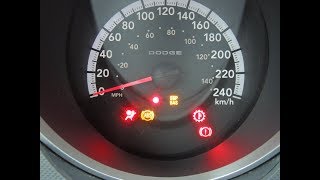
- Multiple Warning Lights — The Electronic Stability Control (ESC), traction control, or ABS lights illuminate simultaneously because these modules are receiving unreliable data from the engine computer.
- Vehicle Will Not Start or Has a Long Crank Time — Severe communication breakdowns prevent the engine from starting, or cause extended cranking before ignition.
Diagnostic Flowchart
Tap your situation to follow the diagnostic path that matches what you're seeing on this code.
Common Fixes & Costs
- Replacing a Faulty Battery
— Parts: $150-$400, Labor: $50-$100, ~0.7 hr book time
(DIY)
2019-2021 Ram 1500: OEM BBAH7800AA (H7 AGM) (Alt: Interstate MTX-49/H8, Duralast Platinum H7-AGM)
2018-2020 Jeep Wrangler (JL): OEM BBAH7000AA (H7 AGM Main), BBAUX140AA (T4 AGM Aux) (Alt: Odyssey ODP-AGM49 H8 L5 (Main), Deka ETX14 (Aux)) - Updating Control Module Software — Parts: $0, Labor: $150-$250, ~1.0 hr book time (Professional)
- Repairing Damaged CAN Bus Wiring or Grounds — Parts: $10-$50, Labor: $200-$800, ~3.0 hr book time (Professional)
- Replacing the Totally Integrated Power Module (TIPM)
— Parts: $500-$1,200, Labor: $100-$200, ~1.2 hr book time
(Intermediate)
2011-2015 Jeep Grand Cherokee: OEM 68244852AA (Alt: Dorman 599-905 (Remanufactured), MAKS TIPM Rebuilders) - Replacing the Powertrain Control Module (PCM)
— Parts: $700-$1,200, Labor: $150-$250, ~1.5 hr book time
(Professional)
2019-2021 Ram 1500 5.7L: OEM 68434915AC (Alt: DiabloSport PCM-DR57ET21)
2018-2020 Jeep Wrangler (JL) 3.6L: OEM 68434927AB (Alt: Cardone (Remanufactured), FS1 (Remanufactured))
DIY vs Professional
- Replacing a Faulty Battery — Beginner:
Tools: ['Socket set (10mm, 12mm, 13mm)', 'Wrench', 'Terminal cleaning tool'] - Replacing the Totally Integrated Power Module (TIPM) — Beginner:
Tools: ['Socket set (10mm, 13mm)', 'Flathead screwdriver', 'Pliers'] - Repairing Damaged CAN Bus Wiring — Beginner:
Tools: ['Wire strippers', 'Soldering iron or high-quality crimpers', 'Heat shrink tubing', 'Multimeter', 'Vehicle-specific wiring diagrams'] - Replacing the Powertrain Control Module (PCM) — Beginner:
Tools: ['Socket set (8mm, 10mm)', 'Panel removal tools', 'OEM-level scan tool for programming']
Used vs. New Parts: Buying Guide
When a used part is worth it: For older vehicles (pre-2008) where modules are less likely to be VIN-locked and programming is simpler. It is a high-risk choice where the owner accepts the possibility of a short lifespan.
Donor-vehicle mileage cap: roughly under 80000 miles for the part to have meaningful remaining life.
Donor quality checklist:
- Match the part number exactly; do not rely on visual similarity.
- Avoid parts from vehicles with flood, fire, or major electrical damage.
- Purchase from a reputable salvage yard offering at least a 30-day warranty.
Decision logic:
- If The part is a modern PCM/TIPM that requires VIN programming → Buy a new or remanufactured unit from a vendor who pre-programs it to your VIN.
- If The vehicle is over 15 years old and the budget is extremely tight → A used part is a viable risk, but understand it lacks a long-term guarantee.
- If The part is a known high-failure item like a TIPM → Favor a remanufactured unit from a specialist that corrects original design flaws and offers a lifetime warranty.
Warranty tradeoff: Used parts offer a 30-90 day warranty. Remanufactured parts come with a 1-year to lifetime warranty.
Worst-case if a used part fails: $500-$1500 if a used module fails after installation, including sunk part costs and repeat diagnostic fees.
What Happens If You Wait — Timeline
- 0-1 month: Check Engine Light illuminates. Vehicle operates normally or exhibits minor glitches like a brief stumble at idle. Safety systems (ABS, ESC) disable. (MPG impact: 0-2%% · Added cost: $0)
- 1-3 months: Symptoms become severe. The vehicle unexpectedly enters 'limp mode,' causing sudden power loss. Intermittent stalling in traffic poses a significant safety risk. (MPG impact: 2-5%% · Added cost: $0-$100 in wasted fuel and diagnostic fees.)
- 3-6 months: A weak battery or failing alternator causes no-start conditions. If the PCM misreports fuel control data, the catalytic converter overheats. (MPG impact: 5-15%% · Added cost: $800-$2500 if the catalytic converter is destroyed.)
- 6+ months: The faulty component (PCM, TIPM, or main wiring harness) fails completely. The vehicle is inoperable and requires a tow. (MPG impact: N/A (vehicle inoperable)% · Added cost: $900-$2000+ for towing and module replacement.)
Cost of Not Fixing It
- 0-1 month: Immediate safety risk due to sudden stalling or entering 'limp mode' in traffic. Disruption of safety systems like ABS and Traction Control. (Added cost: Negligible, but safety risk is high.)
- 1-6 months: If U1850 masks an underlying engine management issue causing a rich or lean fuel mixture, it overheats and destroys the catalytic converter. (Added cost: $1200-$2800)
- 6+ months: The vehicle becomes completely inoperable. The root cause, such as a failing PCM or TIPM, fails entirely, requiring a tow and expensive module replacement. (Added cost: $900-$2000+)
Diagnosis Steps

- Read All Trouble Codes from All Modules
Use an advanced OBD-II scanner capable of reading all vehicle modules (PCM, BCM, ABS, etc.). Note all 'U' (network), 'P' (powertrain), and 'B' (body) codes. The combination of codes is the single most important clue. For example, U1850 with P060C strongly suggests PCM failure.
Tools: Advanced OBD-II Scanner (Beginner) - Check Battery Voltage and Ground Connections
Use a multimeter to ensure the battery has at least 12.4 volts with the engine off and maintains above 9.6 volts during cranking. A drop below 9.6V indicates a weak battery. Verify the main battery terminals and the primary engine-to-chassis ground strap are clean and tight.
Tools: Multimeter, wire brush, basic hand tools (Beginner) - Check for Technical Service Bulletins (TSBs)
Search online for your vehicle's make, model, year, and code U1850. Manufacturers issue TSBs for known software bugs, which often require a dealer update that saves hundreds in diagnostic time.
Tools: Internet access, Vehicle Identification Number (VIN) (Intermediate) - Visually Inspect the Wiring Harness
Look for obvious damage to wiring harnesses around the engine, transmission, and under the dashboard. Check for chewed wires, melted conduit, or green/white corrosion on connectors. Pay special attention to twisted pairs of wires (CAN bus lines).
Tools: Flashlight, inspection mirror (Intermediate) - Test the CAN Bus Resistance 🎬 Watch: A step-by-step guide to testing CAN bus resistance.
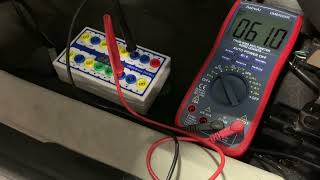
Disconnect the negative battery terminal. At the OBD-II port, use a multimeter to measure resistance between Pin 6 (CAN High) and Pin 14 (CAN Low). A healthy network reads exactly 60 ohms. A reading of 120 ohms means a terminating resistor is missing. A reading near 0 ohms means the wires are shorted together.
Tools: Multimeter (Advanced) - Check CAN Bus Live Voltage
With the battery reconnected and ignition ON (engine off), measure DC voltage. Place the black probe on chassis ground (Pin 4 or 5) and the red probe on Pin 6 (CAN High), then Pin 14 (CAN Low). A healthy bus shows ~2.6V on CAN High and ~2.4V on CAN Low. If both lines are stuck at 0V, 2.5V, or 5V, it indicates a wiring short or module failure.
Tools: Multimeter (Advanced) - [PRO TIP] Perform a Ground Voltage Drop Test
Measure the voltage drop between the negative battery terminal and the engine block while cranking. A reading under 0.1V is ideal. Anything over 0.5V confirms a bad ground requiring immediate repair.
Tools: Multimeter (Advanced) - Check for a Faulty TIPM (FCA Vehicles)
For 2007-2015 Jeep, Dodge, or Chrysler vehicles exhibiting unrelated electrical issues alongside U1850, the TIPM is a prime suspect. Check for symptoms like the fuel pump running continuously or random horn activation.
Tools: Multimeter, test light (Intermediate) - [PRO TIP] Isolate the Faulty Module with the 'Split-Half' Method
If Step 5 fails, use a wiring diagram to locate a central module. Disconnect it to split the network. Re-measure resistance at the OBD-II port. If it reads 120 ohms, the fault is on the connected leg. Continue disconnecting modules to isolate the bad component.
Tools: Multimeter, vehicle-specific wiring diagram, panel removal tools (Advanced)
When This Code Triggers (Freeze-Frame Conditions)
- Engine Coolant Temp: 180-200°F (The fault often appears when the engine is fully warmed up and all systems are actively communicating.)
- RPM: 1500-2500 (The code is frequently logged during steady-state driving, such as cruising on the highway, when modules have sufficient time to flag inconsistent data streams.)
- Engine Load: 30-60% (A moderate and steady engine load is a common condition, as opposed to sudden acceleration or deceleration where data fluctuates rapidly.)
- Vehicle Speed: 35-55 mph (The error is captured at constant city or highway speeds, where the PCM broadcasts a steady stream of data that other modules evaluate for plausibility.)
Related Codes
- U0401 — The generic SAE code for 'Implausible Data Received From ECM/PCM'. U1850 is FCA's manufacturer-specific version of this exact fault.
- U0100 — U1850 means the PCM sends bad data, while U0100 means the PCM stopped communicating entirely. U0100 points to a total power/ground failure at the PCM.
- U0121 — 'Lost Communication With ABS Module'. A secondary code caused by U1850. The ABS module shuts down because it receives bad data from the PCM.
- P060C — 'Internal Control Module Main Processor Performance'. The PCM's self-diagnosis of internal failure. If present with U1850, the PCM is the root cause.
Climate & Environmental Factors
- Cold Weather: Cold temperatures reduce battery chemical efficiency, causing voltage drops during startup. Metal contracts in the cold, worsening intermittent connections in wiring harnesses and triggering network codes.
- High Humidity / Salt Belt Regions: Salt-laden moisture accelerates corrosion on battery terminals, chassis grounds, and CAN bus connectors. Corrosion increases resistance, causing voltage drops and signal degradation.
How to Talk to a Mechanic About This Code
Say this: "I have a U1850 network communication code and the vehicle is experiencing [stalling/limp mode]. I'd like to schedule a diagnostic appointment. Please start by checking for any relevant TSBs, performing a battery and ground system test, and checking the CAN bus resistance before quoting for any module replacements."
This signals you understand U1850 is a complex network issue. It directs the technician to follow a logical diagnostic path, starting with the least expensive causes, preventing immediate quotes for expensive PCM replacements.
Avoid saying:
- 'Just fix whatever's wrong'
- 'My check engine light is on, can you look at it?'
- 'Whatever you recommend'
Questions to ask before authorizing the repair:
- Did you find any Technical Service Bulletins (TSBs) for this issue?
- What were the results of the CAN bus resistance and voltage tests?
- If recommending a module replacement, what specific tests condemned the original module?
- Does the new module require programming and is that cost included in the quote?
Where to Take It: Dealer vs Independent vs Chain
- Dealer:
Recommended if a known software update is the cause or if the vehicle is under warranty. Their access to proprietary tools is the fastest solution for complex network issues.
Best for: Vehicles still under warranty, Complex software updates (flashes) required by TSBs, Manufacturer-specific known issues (e.g., FCA TIPM, Ram eTorque)
Downsides: Higher labor rates, often 1.5-2x more than independent shops., Quicker to replace entire modules rather than repair wiring. (Typical cost: +50% vs. baseline) - Independent Shop:
A good fit only if the shop is well-vetted and has a strong reputation for electrical and CAN bus diagnostics.
Best for: Out-of-warranty vehicles where cost is a factor., Shops specializing in electrical diagnostics.
Downsides: Quality varies widely; general repair shops lack necessary diagnostic tools., May not have access to the latest manufacturer software. (Typical cost: +0% vs. baseline) - Chain Shop:
AVOID for diagnosing a U1850 code. This is a complex electrical fault outside the scope of chain repair shops.
Best for: Simple, routine maintenance like oil changes, tires, and batteries.
Downsides: Technician skill varies dramatically., Not equipped for in-depth network diagnostics., Business model incentivizes upselling unnecessary services. (Typical cost: -10% vs. baseline)
When to Walk Away From the Repair
If the estimated repair cost exceeds 40-50% of the car's private-party value, seriously consider selling or trading it in. For older, high-mileage cars, this threshold drops to 30-40%.
- Car worth $4000, fix is $2000: Borderline. The repair cost is 50% of the car's value. Get a second opinion before authorizing the repair.
- Car worth $12000, fix is $1800: Fix it. The repair is 15% of the vehicle's value and well below the threshold.
- Car worth $2500, fix is $1500: Walk away. The repair cost is 60% of the car's value. It is not financially sensible to proceed.
What Scan Tool You Need for This Code
Minimum: A scanner that reads manufacturer-specific codes from ALL vehicle modules (ABS, BCM, TIPM, etc.), not just generic engine codes.
A basic $20 code reader will not see a 'U' code. U1850 is often stored in modules other than the main engine computer, requiring full-system access to understand the fault.
Budget: BlueDriver Pro / JScan (~$100 (BlueDriver) or 25 + dongle (JScan)) — App-based scanners that read enhanced codes from all modules. JScan is exceptionally powerful for FCA vehicles and performs vehicle-specific adaptations.
Mid-range: Foxwell NT510 Elite / Autel MaxiCOM MK808 (~$150-400) — Handheld scanners offering full-system diagnostics, live data graphing, and bidirectional controls to command components to function.
Professional: Autel MaxiCOM MK906BT / Launch X431 Series (~$600-1300) — Provides full bidirectional control, module coding, and programming capabilities required to perform software updates and program new modules.
How to Clear the Code After You Fix It
- Use an OBD-II scan tool to erase the fault codes.
- Perform a complete OBD-II drive cycle to allow readiness monitors to run.
- Re-scan the system to confirm the U1850 code does not return.
Drive cycle (~30 minutes): A generic drive cycle includes a cold start, idling for 2-3 minutes, 10-15 minutes of mixed city/highway driving including steady-speed cruising, and several decelerations without using the brake.
Readiness monitors affected: Catalyst monitor, O2 sensor monitor, EVAP system monitor
Before emissions retest: drive at least 100 miles to fully set monitors.
Watch out for:
- Disconnecting the battery clears the code but resets all readiness monitors to 'Not Ready', guaranteeing an emissions test failure.
- Taking the vehicle for an emissions test immediately after clearing the code results in failure because monitors have not completed self-checks.
Will This Fail Emissions / State Inspection?
Yes — this code typically fails an OBD-II emissions inspection.
- California: An illuminated Check Engine Light is an automatic failure. All required readiness monitors must be 'Ready' to pass the OBD-II scan.
- New York: Fails inspection if the Check Engine Light is on. For 2001+ vehicles, fails if more than one readiness monitor is 'Not Ready'.
- Texas: In emissions-testing counties, an illuminated Check Engine Light results in automatic failure. Too many 'Not Ready' monitors also cause failure.
Most Commonly Affected Vehicles

- Ram 1500 (DT) (2019-2021) — Particularly eTorque mild-hybrid models. Often caused by a software bug requiring an HCP flash per TSB 08-037-21, or a failing Motor Generator Unit (MGU) per TSB 21-019-21.
- Jeep Wrangler (JL) (2018-2020) — Known causes include improper electronic throttle body calibration after major engine work and intermittent electrical faults.
- Jeep Grand Cherokee (2011-2015) — A failing Totally Integrated Power Module (TIPM) is a highly common root cause for network codes and random stalling/no-start issues in this generation.
- Dodge Charger (2011-2014) — TSB #18-067-15 REV A points to a required PCM software update as a common fix for stalling and network faults.
- Chevrolet Silverado (2007-2017) — While U1850 is FCA-specific, these trucks log similar network faults (U0100) caused by a poor ground connection (G218) under the driver's dash.
- Nissan Rogue (2017-2018) — Logs similar network communication codes (U1000) related to ADAS radar modules, presenting identical diagnostic challenges.
Manufacturer-Specific Notes
- FCA (Jeep, Ram, Dodge, Chrysler): Frequently caused by software bugs requiring a dealer update. TSB 08-037-21 for 2021 Ram 1500 eTorque models requires an HCP software flash to fix U1850.
- FCA (Jeep, Dodge, Chrysler) 2007-2015: A faulty Totally Integrated Power Module (TIPM) is a highly common cause of network codes and bizarre electrical problems in this era.
- General Motors (Chevrolet, GMC): Similar 'U' codes trace back to a poor ground connection at location G218 behind the driver's side kick panel, or corrosion in the main transmission harness.
- Nissan: Uses code U1000 for CAN communication malfunctions. The 'CAN Diag Support Monitor' function on factory scan tools is necessary to pinpoint the faulty module.
Real Owner Stories
2019 Jeep Wrangler (JL) stalls, multiple lights
Vehicle started with a jumping idle, Check Engine Light, ESC light, and traction control light. When trying to drive, the vehicle lost all power and would not accelerate.
What they tried:
- Owner restarted the vehicle, but the issue persisted.
- Vehicle was taken to the dealership multiple times.
Outcome: The root cause was improper calibration of the electronic gas pedal following an engine replacement. The dealership fixed the calibration.
Lesson: If a network code appears after a major component replacement, suspect an improper calibration procedure. The new part must be electronically introduced to the vehicle's computer.
2015 Jeep Wrangler stalls intermittently with no codes
Vehicle randomly stalled in traffic but restarted fine. No check engine light was present. The issue was highly intermittent.
What they tried:
- Mechanic could not replicate the issue.
- Owner researched forums pointing to the crank sensor.
Outcome: The owner replaced the crankshaft position sensor, resolving the stalling. A failing crank sensor sends faulty signals when hot without triggering a specific code.
Lesson: The absence of a check engine light doesn't rule out sensor failure. For intermittent stalling, investigate common culprits like the crankshaft position sensor.
2019 Ram 1500 with eTorque has long crank and multiple codes
Check engine light illuminated, fans ran at full speed, and the truck had a long crank time. Codes U1850 and U0401 were active.
What they tried:
- Scanned with JScan, revealing U1850 in the Hybrid Control Processor.
- Owner noted a whining noise from the eTorque Motor Generator Unit (MGU).
Outcome: The failing MGU caused the electrical issues and network codes, aligning with FCA Technical Service Bulletins.
Lesson: On mild-hybrid vehicles, a whining MGU disrupts the powertrain network. Check for TSBs related to hybrid components if you experience U1850.
How to Prevent This Code From Triggering
- Perform regular battery and terminal cleaning (Every 6-12 months) — Corrosion increases resistance and causes unstable voltage, a primary cause of network codes. Cleaning terminals ensures a stable power supply for all modules.
- Apply dielectric grease to critical connectors (When servicing or exposing connectors) — Dielectric grease prevents moisture intrusion and corrosion, which corrupts CAN bus signals.
- Avoid frequent short trips (Daily habit) — Short trips prevent the alternator from fully recharging the battery. A chronically undercharged battery causes low-voltage issues and network faults.
- Use high-quality, plug-and-play aftermarket electronics (During any modification) — Poorly designed aftermarket devices requiring wire splicing introduce electrical noise onto the CAN bus. Opt for reputable brands with vehicle-specific T-harnesses.
- Periodically check for software updates (Every 1-2 years) — Manufacturers release software updates to fix bugs causing network codes like U1850. Dealership inquiries identify available updates.
Frequently Asked Questions
What is the most common mistake when diagnosing U1850?
Replacing the $1,000 PCM without ruling out simpler causes. The fault usually lies in wiring, grounds, software bugs, or the TIPM. Always perform a full electrical network check before condemning a module.
Why does my U1850 code only appear intermittently or on a cold start?
Cold temperatures exacerbate poor electrical connections and reduce battery voltage. As the vehicle warms up, thermal expansion temporarily improves connections, hiding the fault until the next cold soak.
Can a bad battery cause a U1850 code?
Yes. Modules malfunction and send corrupted data when voltage drops below 9.6 volts during cranking. Testing the battery and alternator is the first diagnostic step.
Why can't I find a U1850 code listed for my Ford/Toyota/Honda?
U1850 is a manufacturer-specific code primarily used by Fiat-Chrysler (FCA). Other manufacturers use the generic SAE equivalent, U0401, to describe the exact same 'Implausible Data' fault.
What is the difference between a 'U' code and a 'P' code?
'P' codes indicate powertrain mechanical or sensor faults. 'U' codes indicate network communication failures between the vehicle's computers. A 'U' code often triggers multiple false 'P' codes.
Why did my traction control light come on with the U1850 code?
The traction control system relies on accurate engine data from the PCM. When the PCM broadcasts implausible data (U1850), the traction module disables itself for safety and illuminates the warning light.
How much does it cost for a dealer to update my car's software?
Dealership software updates typically cost between $150 and $250 out of warranty. This covers one to two hours of labor for diagnosis and flashing the module.
What is a TIPM and could it cause this code?
The Totally Integrated Power Module (TIPM) is the main electrical hub in 2007-2015 FCA vehicles. They frequently fail, causing widespread electrical chaos, stalling, and network codes like U1850.
Key Takeaways
- Code U1850 indicates the Powertrain Control Module (PCM) is broadcasting corrupted or illogical data to the vehicle's network.
- Always test the battery first; voltage drops below 9.6V during cranking cause modules to malfunction and trigger network codes.
- For 2019-2021 Ram 1500 and 2018-2020 Jeep Wrangler models, a dealer software update costing $150-$250 often resolves this code.
- Do not replace the $800-$1,450 PCM without first verifying the CAN bus resistance reads exactly 60 ohms at the OBD-II port.
- On 2007-2015 FCA vehicles, a failing Totally Integrated Power Module (TIPM) is a primary culprit for U1850 alongside random stalling.
Helpful Videos

The information in this article is provided for general reference and educational purposes only. Vehicle specifications, procedures, and part compatibility can vary by production date, trim level, and region. Always consult your vehicle's factory service manual and verify part numbers before purchasing or performing repairs. Safety-critical components such as airbags, seat belts, and braking systems should be installed by a qualified professional.
- 🎬 Helpful Videos
- What Does U1850 Mean?
- Can I Drive With U1850?
- Common Causes
- Symptoms
- Diagnostic Flowchart
- Common Fixes & Costs
- DIY vs Professional
- Used vs. New Parts: Buying Guide
- What Happens If You Wait — Timeline
- Cost of Not Fixing It
- Diagnosis Steps
- When This Code Triggers (Freeze-Frame Conditions)
- Related Codes
- Climate & Environmental Factors
- How to Talk to a Mechanic About This Code
- Where to Take It: Dealer vs Independent vs Chain
- When to Walk Away From the Repair
- What Scan Tool You Need for This Code
- How to Clear the Code After You Fix It
- Will This Fail Emissions / State Inspection?
- Most Commonly Affected Vehicles
- Manufacturer-Specific Notes
- Real Owner Stories
- 2019 Jeep Wrangler (JL) stalls, multiple lights
- 2015 Jeep Wrangler stalls intermittently with no codes
- 2019 Ram 1500 with eTorque has long crank and multiple codes
- How to Prevent This Code From Triggering
- Frequently Asked Questions
- What is the most common mistake when diagnosing U1850?
- Why does my U1850 code only appear intermittently or on a cold start?
- Can a bad battery cause a U1850 code?
- Why can't I find a U1850 code listed for my Ford/Toyota/Honda?
- What is the difference between a 'U' code and a 'P' code?
- Why did my traction control light come on with the U1850 code?
- How much does it cost for a dealer to update my car's software?
- What is a TIPM and could it cause this code?
- Key Takeaways
- 🎟️ Get 5% Off