

OBD-II Code U1610: Lost Communication With A Vehicle Module
What U1610 means, why it triggers, and how to fix it
- U1610 is a generic network code indicating a communication breakdown, requiring a full-system OBD-II scan to identify the specific failing module.
- Test your battery first; voltage must remain above 10.0V during engine cranking to prevent modules from dropping offline and triggering U-codes.
- Inspect the CAN bus wiring and grounds before replacing any $500+ control modules, as chafed wires or water intrusion cause over 50% of these faults.
- Stop driving if the ABS or Stability Control lights illuminate alongside U1610, as your vehicle's primary active safety systems are completely disabled.
What Does U1610 Mean?

U1610 is a network communication code indicating one of your car's computers (modules) is failing to communicate with the others. Modern vehicles have dozens of modules controlling everything from the engine to the radio. This code flags a breakdown in their Controller Area Network (CAN) conversation, but requires further scanning to pinpoint the exact module at fault.
Technical definition: There is no universal SAE/ISO definition for U1610; its meaning is specific to the vehicle manufacturer and the module storing the code. On General Motors vehicles, it means 'Lost Communication with Brake System Control Module'. On Fiat and Chrysler vehicles, it relates to a 'Key Not Recognized' immobilizer error. U-codes universally point to faults in the vehicle's Controller Area Network (CAN) communication bus.
Can I Drive With U1610?
Yes, But With Caution. You can drive, but exercise extreme caution. If the ABS or stability control lights are on, your primary active safety systems are disabled, significantly increasing the risk of losing control and extending stopping distances. If the vehicle fails to start, the instrument cluster behaves erratically, or you smell burning plastic, do not drive; a short circuit poses a fire risk or will leave you stranded.
Common Causes

- Low or Weak Battery Voltage (Very Common) — A weak or dying battery fails to provide stable voltage. This causes electronic modules to act erratically and drop offline, triggering a flood of communication codes like U1610. Cold weather significantly exacerbates this issue.
- Damaged Wiring, Connectors, or Ground Straps (Common) — The CAN bus network wires suffer damage from vibrations, moisture, or chafing. A single broken wire, corroded connector pin, or a rusted main ground strap disrupts the stable voltage required for modules to communicate, bringing down the entire network.
- Aftermarket OBD-II Port Devices (Common) — Plug-in devices like insurance data trackers, fleet telematics units, or cheap diagnostic dongles interfere with normal CAN bus communication. These devices hold the network 'awake,' leading to a dead battery and random U-codes.
- Water Intrusion (Common) — Water leaking into the cabin from clogged sunroof drains, a poorly sealed windscreen, or damaged weather stripping drips onto critical electronics like the CAN Gateway module or Body Control Module, causing immediate corrosion and short circuits.
- Faulty Control Module (Less Common) — A specific computer module, like the ABS module or Body Control Module, fails internally. When it stops sending or receiving signals, the remaining healthy modules report a loss of communication.
- Software Glitch (Less Common) — The problem is sometimes a software bug within a module rather than a physical failure. Manufacturers release software updates (TSBs) to fix these communication issues, such as a known timing issue in the Park Assist Module on 2022-2024 GM trucks.
- Blown Fuse for a Control Module (Rare) — Each module is protected by a fuse. If a fuse blows, the module loses power entirely and cannot communicate with the rest of the vehicle, setting a U1610 code in the active modules.
Symptoms

- Check Engine Light is On — This is often the first and sometimes only sign that a network communication error occurred.
- ABS, Traction, or Stability Control Lights On — If the code relates to the brake control module, these critical safety system warning lights illuminate on the dashboard.
- Vehicle Won't Start or Stalls — On Fiat-Chrysler and Nissan products, this code links directly to the anti-theft (immobilizer) system, cutting fuel or spark and preventing the engine from starting.
- Multiple Unrelated Systems Not Working — Features like the radio, power windows, door locks, or automatic wipers behave strangely or fail completely at the exact same time.
- Gauges Behaving Erratically or 'No Bus' Message — The speedometer and tachometer drop to zero, sweep back and forth, or a 'No Bus' message appears on the odometer display. 🎬 Watch: How to fix the 'No Bus' error on Chrysler and Dodge vehicles.
- Parasitic Battery Drain (also visible on scanner) — A module failing to communicate correctly stays awake when the car is off, causing a slow drain that kills the battery overnight. A normal drain is under 50 milliamps (mA), but a faulty module draws significantly more.
Diagnostic Flowchart
Tap your situation to follow the diagnostic path that matches what you're seeing on this code.
Common Fixes & Costs
- Replace Car Battery — Parts: $150-$350, Labor: $50-$100, ~0.5 hr book time (DIY)
- Repair Damaged Wiring or Connector — Parts: $10-$50, Labor: $150-$600+, ~2.5 hr book time (Professional)
- Professional Diagnosis — Parts: $0, Labor: $120-$250, ~1.5 hr book time (Professional)
- Module Cloning Service (for BCM/BIU/ECU) — Parts: $100-$300, Labor: $100-$250, ~1 hr book time (Professional)
- Replace and Program ABS Control Module
— Parts: $500-$2000+, Labor: $150-$300, ~1.5 hr book time
(Professional)
2022-2024 GM Sierra/Silverado: OEM 85107552 (Alt: Dorman (Remanufactured))
2012 Dodge Ram 1500: OEM 68142314AC (Alt: Dorman 499-796)
2014-2018 Subaru Forester/Outback: OEM Varies by trim (Alt: Cardone (Remanufactured)) - Replace and Program Body Control Module (BCM/BIU)
— Parts: $400-$900, Labor: $150-$300, ~2 hr book time
(Professional)
2022-2024 GM Yukon/Tahoe/Suburban: OEM 13547771 (Alt: Dorman)
2008-2010 Dodge Charger: OEM Varies by trim (Alt: Dorman)
2014-2018 Subaru Outback/Forester (BIU): OEM 82201AL01A (Alt: Cloning preferred)
Used vs. New Parts: Buying Guide
When a used part is worth it: For high-cost modules like a BCM or ABS unit on an older vehicle, a used part is a highly cost-effective solution. Because these are solid-state electronic parts, a used module from a low-mileage donor vehicle is generally very reliable.
Donor-vehicle mileage cap: roughly under 100000 miles for the part to have meaningful remaining life.
Donor quality checklist:
- Match the part number EXACTLY. Superseded or similar-looking parts from different trim levels will fail to communicate.
- Purchase from a reputable recycler offering a 30-90 day warranty.
- Avoid parts from flood-damaged or fire-damaged vehicles.
Decision logic:
- If The original module can be repaired or 'cloned' → Choose this option. It avoids expensive dealer VIN programming issues entirely.
- If Vehicle is older (>10 years) and the new part costs over $800 → Purchase a used part from a reputable source to save money.
- If The part requires complex security programming (e.g., immobilizer) → Favor a new part installed by a cloning service, as a used part is often impossible to program without specialized tools.
Warranty tradeoff: Used parts typically have a 30-90 day warranty. New OEM parts installed by a dealer carry a 1-2 year warranty. Aftermarket new parts offer a 1-year to limited lifetime warranty.
Worst-case if a used part fails: $300-$600 if a used part is dead on arrival, representing repeat labor costs and diagnostic fees.
What Happens If You Wait — Timeline
- 0-1 month: Intermittent Check Engine Light, possibly with ABS/Traction lights that turn off after restarting the vehicle. The fault is a temporary low voltage event or a minor connection issue. (MPG impact: 0%% · Added cost: $0)
- 1-4 months: Warning lights are now on constantly. If the ABS module is offline, you lose anti-lock braking and stability control. A persistent parasitic drain weakens the battery, causing slow cranking. (MPG impact: 0-2%% · Added cost: $200-$400 (for a new battery if the parasitic drain causes permanent sulfation).)
- 4-12 months: The underlying electrical issue worsens. Unpredictable stalling, a no-start condition, or bizarre behavior from multiple electronic systems becomes frequent. The vehicle is unsafe to drive. (MPG impact: 2-5%% · Added cost: $500-$1500 (A simple wiring repair is no longer possible if a module is damaged by unstable voltage. A tow bill is likely.))
- 12+ months: Cascading failure. The initial faulty module or wiring short causes voltage spikes that damage previously healthy control modules. You now must replace multiple expensive modules. (MPG impact: 5-10%% · Added cost: $1500-$4000+ (Cost of replacing and programming multiple modules, plus extensive diagnostic time).)
Cost of Not Fixing It
- Immediate: Loss of critical safety features like ABS and Stability Control, significantly increasing the risk of an accident in emergency maneuvers or poor weather. (Added cost: Varies (potential accident cost))
- 0-3 months: A persistent parasitic drain repeatedly kills the battery, causing sulfation and permanent damage, requiring premature battery replacement. (Added cost: $200-$400)
- 3+ months: Ignoring a communication issue masks other developing problems. Continued driving leads to unpredictable stalling, a no-start condition leaving you stranded, or cascading electrical failures as other modules are affected by network instability. (Added cost: $500-$2500+)
Diagnosis Steps

- Scan for All Codes
Use an advanced OBD-II scanner to read codes from all vehicle modules (ABS, BCM, SRS), not just the engine. Note which module stores the U1610 code and what other codes are present. A code like U0121 (Lost Communication with ABS Module) points you directly to the failing system.
Tools: Advanced OBD-II Scanner (Intermediate) - Check the Battery and Grounds
A weak battery is the #1 cause of random communication codes. Use a multimeter to check battery voltage with the car off; it must be at least 12.4 volts. Have a helper start the car while you watch the voltage. If it drops below 10 volts while cranking, replace the battery. Inspect the main battery terminals and chassis ground straps for tightness and corrosion.
Tools: Multimeter, Basic Hand Tools (Beginner) - Perform a Visual Inspection
Unplug any aftermarket devices from the OBD-II port. Check visible wiring harnesses in the engine bay and under the dash for rubbing, melting, or rodent damage. Look for moisture or water stains inside the cabin near the fuse box or gateway module.
Tools: Flashlight (Beginner) - Check Fuses
Using your owner's manual, locate the fuse boxes in the engine bay and cabin. Find the fuses related to the various control modules (ABS, BCM, ECM, Gateway) and visually inspect them for blown filaments.
Tools: Owner's Manual, Fuse Puller (Beginner) - Test the CAN Bus Network Resistance (Advanced)
With the battery disconnected, set a multimeter to Ohms and measure the resistance between Pin 6 (CAN High) and Pin 14 (CAN Low) at the OBD-II port. A healthy high-speed network reads exactly 60 Ohms. A reading of 120 Ohms indicates an open circuit or missing terminating resistor. A reading near 0 Ohms indicates the CAN High and CAN Low wires are shorted together.
Tools: Multimeter, OBD-II Pinout Diagram (Advanced) - Test CAN Bus Voltages (Advanced)
With the battery connected and ignition on, check the voltages on the CAN lines against a good chassis ground. CAN High (Pin 6) should be around 2.6-2.7 volts and CAN Low (Pin 14) should be around 2.3-2.4 volts. If one line is at 0V or 5V, it indicates a short to ground or power.
Tools: Multimeter, OBD-II Pinout Diagram (Advanced) - Test for Parasitic Draw (Advanced)
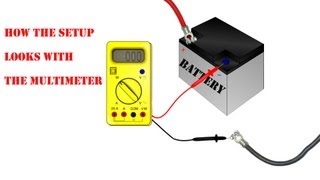
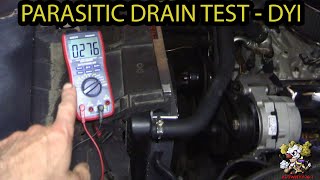
If the battery dies overnight, test for a parasitic draw. With the vehicle off and doors closed for 30 minutes, connect a multimeter in series with the negative battery cable on the 10A DC setting. A reading over 100mA (0.10A) indicates a problem. Pull fuses one by one until the reading drops below 50mA to identify the faulty circuit.
Tools: Multimeter with Amp setting (Advanced) - Isolate Modules via Splice Pack/Star Connector (Advanced)
Many vehicles use central splice packs where CAN bus wires from multiple modules meet. Locating this connector allows you to disconnect individual branches of the network. After unplugging one branch, re-check your 60-ohm resistance on the main bus. If resistance returns to normal, the fault is on the branch you just disconnected.
Tools: Service Manual, Basic Hand Tools, Multimeter (Advanced) - Analyze the CAN Signal with an Oscilloscope (Professional)
Connect scope probes to CAN High and CAN Low. A healthy high-speed CAN signal shows a clean, mirror-image square wave pattern toggling between 2.5V and 3.5V (CAN High) and 2.5V and 1.5V (CAN Low). Deformed signals, noise, or a flat line pinpoint the exact nature of the electrical fault.
Tools: Oscilloscope, Back-probe Pins (Professional)
When This Code Triggers (Freeze-Frame Conditions)
- Battery Voltage: 9.5 - 11.5V (During engine crank or immediately after, indicating a severe voltage drop)
- Ambient Temperature: < 40°F (Cold weather, which weakens battery performance and makes wiring brittle)
- Time Since Start: 0-10 seconds (Fault occurs during the initial system check at startup)
- Module Status: No Communication (Identifies exactly which module failed to report on the network)
Related Codes
- U0121 — This specific communication error points directly to a 'Lost Communication With Anti-Lock Braking System (ABS) Module'. If you see U1610 and U0121 together, diagnose U0121 first, as the ABS system is the confirmed source.
- U0418 — This code means 'Invalid Data Received From Brake System Control Module'. The brake module is sending corrupt information. With U0418 the module is talking nonsense, whereas with U1610, the module is not talking at all.
- U0001 — This generic code for 'High Speed CAN Communication Bus' indicates a problem with the main communication network wiring itself (like a dead short) rather than an issue with a single module.
- U0100 — This code means 'Lost Communication with ECM/PCM'. It points to a communication breakdown with the main engine computer. This critical fault results in an immediate no-start or severe drivability issue.
Climate & Environmental Factors
- Cold Weather: Low temperatures reduce battery efficiency and cranking power, causing low-voltage conditions that trigger communication faults. Cold also makes plastic wire insulation brittle, increasing the risk of physical damage from vibration.
- High Humidity and Road Salt: Moisture combined with road salt creates a highly corrosive electrolyte solution. This attacks wiring and connector pins, causing high resistance or short circuits that disrupt CAN bus communication in rust-belt regions.
How to Talk to a Mechanic About This Code
Say this: "I have a U1610 communication code and I'd like to schedule a diagnostic appointment. I've already checked the battery and it's healthy. I suspect a wiring, ground, or module issue. I'd like to authorize one hour of diagnostic time to start."
This signals you've done basic homework and are not a target for an unnecessary battery sale. It focuses the technician on complex causes like wiring or module failures, setting a clear budget for the initial diagnosis.
Avoid saying:
- 'My check engine light is on, can you fix it?'
- 'The car is doing something weird.'
- 'Just do whatever it takes to fix it.'
Questions to ask before authorizing the repair:
- Which module is logging the U1610 code?
- What other modules are not communicating?
- Did you check the CAN bus resistance and voltages at the OBD-II port?
- Have you inspected the wiring harness for physical damage or water intrusion?
- If a module needs to be replaced, is a used or cloned module a possibility to save on cost?
Where to Take It: Dealer vs Independent vs Chain
- Dealer:
Recommended for under-warranty vehicles or if a major module replacement with programming is confirmed.
Best for: Vehicles under warranty., Very new vehicles (2022+) where Technical Service Bulletins (TSBs) are common., Complex module programming and security-related issues requiring proprietary software.
Downsides: Highest labor rates., Dealers prefer replacing entire expensive modules rather than performing detailed wiring repairs. (Typical cost: +50% vs. baseline) - Independent Shop:
Best fit for most out-of-warranty scenarios, provided you find a shop with strong electrical diagnostic skills. They are more willing to perform detailed wiring repairs.
Best for: Out-of-warranty vehicles where cost is a major factor., Shops specializing in electrical diagnostics or a specific vehicle make.
Downsides: Diagnostic skill varies widely. Look for ASE certifications and reviews mentioning electrical work. (Typical cost: +0% vs. baseline) - Chain Shop:
AVOID for diagnosing a U1610 code. Their business model is not suited for in-depth electrical troubleshooting.
Best for: Battery testing and replacement., Simple, unrelated maintenance like oil changes or tires.
Downsides: Technicians are not equipped or trained for complex network diagnostics., High risk of misdiagnosis, leading to unnecessary replacement of parts. (Typical cost: -10% vs. baseline)
When to Walk Away From the Repair
If the estimated repair cost exceeds 40-50% of the car's private-party value, seriously consider selling or trading in the vehicle.
- Car worth $4000, fix is $2000: Borderline. Get a second opinion before authorizing, as the repair is 50% of the car's value.
- Car worth $12000, fix is $1800: Fix it. The repair cost is well below the threshold and makes economic sense.
- Car worth $2500, fix is $1500: Walk away. The repair cost is 60% of the car's value; it is not a sound investment.
What Scan Tool You Need for This Code

Minimum: A scanner that reads codes from ALL vehicle modules (ABS, BCM, SRS), not just the engine. It must identify which module is reporting the communication fault.
A basic $20 code reader only shows generic engine codes and misses critical U-codes stored in other modules. You won't know if the ABS module or Body Control Module is the source, making diagnosis impossible.
Budget: BlueDriver Pro (~$100) — Connects to your smartphone and reads codes from all major modules (Engine, ABS, Airbag, Transmission), providing crucial direction for where the communication fault lies.
Mid-range: Foxwell NT510 Elite (~$180) — A powerful handheld tool offering manufacturer-specific diagnostics, live data from all modules, and bidirectional controls to verify if a module is responding.
Professional: Autel MaxiCOM MK808S / ThinkCar ThinkScan 689BT (~$360-500) — These tablet-based scanners offer full bidirectional control and advanced functions like ECU coding. They provide a topology map to visualize the entire vehicle network, making it easy to pinpoint a communication breakdown.
Rent vs buy: For a one-time U1610 diagnosis, renting is not an option as auto parts stores only loan basic code readers. Buying a budget or midrange tool is a mandatory investment for this code.
How to Clear the Code After You Fix It
- Reconnect the battery if it was disconnected for repair.
- Use a professional OBD-II scan tool to clear codes from ALL modules.
- Start the vehicle and let it idle for 2-3 minutes to allow systems to stabilize.
Drive cycle (~20 minutes): A specific drive cycle is not required for U-codes. After clearing the code, perform a mix of city and highway driving for 20 minutes. Allow the vehicle to go through different states (idle, acceleration, cruise) to ensure all modules communicate correctly under load.
Readiness monitors affected: Comprehensive Component Monitor, Misfire Monitor
Before emissions retest: drive at least 50 miles to fully set monitors.
Watch out for:
- Disconnecting the battery does not clear the code from all modules in modern vehicles.
- The code returns immediately if the root cause (bad wiring, faulty module) remains unfixed.
- Clearing codes resets emissions readiness monitors, requiring a full drive cycle before passing a smog test.
Will This Fail Emissions / State Inspection?
Yes — this code typically fails an OBD-II emissions inspection.
- California: An illuminated Check Engine Light is an automatic failure. After repair, you must complete a specific drive cycle to set all readiness monitors before passing the smog check.
- New York: The NYS DMV inspection includes an OBD-II scan. An active U1610 code with the Check Engine Light on results in an automatic failure.
- Texas: In the 17 counties requiring emissions testing, an illuminated Check Engine Light is an automatic failure. In safety-only counties, the underlying issue fails the vehicle if it affects braking components.
Most Commonly Affected Vehicles
- GMC / Chevrolet Sierra, Silverado, Tahoe, Suburban, Yukon (2022-2024) — A known software timing issue causes U1610 and other communication codes to set in the Park Assist Module. If there are no symptoms, GM advises ignoring the codes. Always check for loose fuses and battery connections first.
- Dodge / Chrysler / Jeep Various Models (Nitro, Ram, Charger, etc.) (2005-2015) — CAN bus wiring harnesses frequently rub against A/C lines or engine brackets, causing shorts and a 'No Bus' message. Several recalls address wiring harness chafing and poor ground connections causing these symptoms.
- Subaru Forester, Outback, WRX, Legacy (2014-2024) — Failure of the Body Integrated Unit (BIU) causes widespread electrical problems, parasitic battery drain, and communication codes. A cost-effective repair is having the data from the original BIU 'cloned' to a functional used unit.
- Volkswagen Golf, Jetta, Passat, Tiguan (2006-2015) — The CAN Gateway module, located under the dashboard, is highly susceptible to failure from water intrusion caused by clogged sunroof drains or a poorly sealed windscreen. This prevents communication with most modules.
- Nissan Altima, Rogue, Frontier, X-Trail (2002-2012) — A no-start condition with the security light on is caused by immobilizer (NATS) issues. This presents as codes P1610 and P1612, accompanied by the CAN communication code U1000 or U1610, indicating a network fault.
- Ford Various Models (Focus, Mach-E, Ranger) (2015-2024) — Intermittent communication errors stem from a faulty gateway module or Body Control Module (BCM). Software updates for the BCM correct erroneous fault detection on newer models.
- Fiat Ducato (2002-2011) — A U1600 or U1610 code is directly associated with the immobilizer system failing to recognize the key. This stems from a drained battery, a bad key, or a faulty immobilizer module.
- Mazda Mazda3, Mazda6, CX-5 (2010-2024) — Failure of the Body Control Module (BCM) causes a variety of communication codes, including U-codes, along with erratic behavior of lights, wipers, and other body functions.
Manufacturer-Specific Notes
- General Motors: A service bulletin for 2022-2024 trucks states that if U1610 is stored in the Park Assist Module without symptoms, ignore the code. It is a known software timing issue requiring no repairs.
- Chrysler / Dodge / Jeep: Before replacing an expensive module, inspect the main wiring harnesses. The 'twisted pair' of CAN bus wires frequently rub through their insulation, causing shorts. Learning the location of the 'star connector' (splice pack) is a mandatory diagnostic step.
- Subaru: The Body Control Module is called the Body Integrated Unit (BIU). A new BIU requires expensive dealer programming. A cheaper, highly effective solution is buying a used BIU with the exact part number and using a 'cloning' service to copy the immobilizer data over.
- Volkswagen: The CAN Gateway module fails frequently due to water damage. Check for dampness in the driver's side footwell. The water source is almost always clogged sunroof drains overflowing into the cabin.
Real Owner Stories
2012 Chrysler Town & Country with ABS/Traction lights
Vehicle suddenly displayed ABS, traction control, and brake lights, and the speedometer stopped working. This is a classic sign of a CAN bus communication failure related to the braking system.
What they tried:
- The owner suspected a simple sensor fix, but the combination of multiple warning lights pointed to a network issue rather than a single failed component.
Outcome: The ABS module acts as a gateway for vehicle speed information. When it stops communicating, the speedometer and other systems go offline. The fix required replacing a broken wire leading to the ABS module connector, restoring full network communication.
Lesson: When multiple safety system lights appear at once and the speedometer fails, the problem is a communication issue with the ABS module. Check wiring to the ABS module before replacing sensors.
2024 GMC Sierra 1500 with U1610 & U0418 at 300 miles
A brand new truck threw U1610 and U0418 codes with only 300 miles on the odometer. The check engine light was on, causing significant concern.
What they tried:
- The owner checked fuses and battery connections, which all appeared secure. The dealer could not provide an immediate appointment.
Outcome: After a day, the warning lights and codes disappeared on their own. GM has a known TSB for newer trucks where communication codes set erroneously during certain startup conditions and require no repair if symptoms are absent.
Lesson: On very new vehicles, intermittent communication codes without actual performance symptoms are often software-related. Check for TSBs related to phantom U-codes before panicking.
Dodge Ram with 'No Bus' message and stalling
The instrument cluster intermittently showed 'No Bus', gauges dropped to zero, and the engine stalled. This indicates a major breakdown on the primary CAN bus.
What they tried:
- Technicians initially suspected a faulty Powertrain Control Module (PCM), a common but expensive guess.
Outcome: The actual problem was the main wiring harness rubbing against a metal bracket near the engine, wearing through the insulation of the CAN wires and causing a short. The fix was repairing the damaged wire and re-routing the harness.
Lesson: With 'No Bus' errors on a Chrysler/Dodge vehicle, perform a thorough visual inspection of the wiring harness for chafing before replacing any modules.
Subaru Outback with parasitic battery drain and random electrical faults
The battery died overnight, and various electrical systems (power windows, radio) acted erratically. The car stored multiple communication codes, including U1610.
What they tried:
- A parasitic draw test showed a significant drain over 100mA. Pulling fuses pointed directly to the Body Integrated Unit (BIU).
Outcome: The BIU failed internally. A new BIU from the dealer cost over $1000 with programming. The owner purchased a used BIU for $150 and paid a cloning service $200 to copy the immobilizer data over. The cloned module was a plug-and-play fix.
Lesson: On modern Subarus, a failing BIU is a primary suspect for widespread electrical chaos and parasitic drain. Module cloning is a highly effective, cost-saving alternative to dealer programming.
How to Prevent This Code From Triggering
- Clean Battery Terminals and Check Connections Annually (Once per year) — Corrosion on battery terminals creates resistance, leading to voltage drops that trigger communication faults. Cleaning them with a wire brush ensures a solid connection.
- Apply Dielectric Grease to Exposed Connectors (When performing other under-hood maintenance) — Applying non-conductive dielectric grease to the seals of critical connectors creates a barrier that prevents moisture and road salt from causing corrosion on the pins.
- Secure and Inspect Wiring Harnesses (During every oil change) — Many CAN bus faults are caused by harnesses rubbing against vibrating engine parts. Visually inspect harness routing and ensure all zip ties are secure, preventing chafing.
- Use a Battery Tender for Stored Vehicles (If the vehicle is parked for more than 2-3 weeks) — A battery tender prevents the battery from discharging due to normal parasitic draw during storage. This prevents low-voltage conditions that set U-codes on startup.
- Keep Sunroof Drains Clear (Twice per year (spring and fall)) — Clogged sunroof drains are a primary cause of water intrusion into the cabin, destroying expensive electronics like the BCM or Gateway module. Clearing them with compressed air prevents this.
Frequently Asked Questions
Can a bad battery really cause this U1610 code?
Yes, absolutely. Low or unstable voltage, especially in cold weather, creates unpredictable behavior in electronic modules. Their first reaction is to stop communicating, which triggers network codes.
What are the most common mistakes when diagnosing U1610?
The biggest mistake is immediately replacing an expensive control module without proper diagnosis. Common pitfalls include overlooking aftermarket OBD-II devices, ignoring basic power/ground checks, and using a cheap code reader that cannot pinpoint the failing module.
My scanner shows a P1610, not U1610. Is that the same thing?
No, they are different codes, but often related. On makes like Nissan, P1610 is a manufacturer-specific immobilizer fault. This immobilizer failure is frequently caused by a CAN bus communication breakdown (U1610) between the key, immobilizer module, and engine computer.
Is U1610 expensive to fix?
Repair costs range from $200 for a new battery to over $1,500 for a new Body Control Module. Simple wiring repairs typically cost $150-$300 in labor. Always pay for a $150 professional diagnosis before authorizing expensive module replacements.
My mechanic wants to charge me $150 just to diagnose the light. Is that normal?
Yes, a diagnostic fee of $120-$250 is standard for network problems. Technicians use expensive oscilloscopes and scan tools to test CAN bus resistance and voltages. This pinpoints the exact short or failed module, saving you money on unnecessary parts.
Can I just clear the code and see if it comes back?
You can, and if the glitch was a temporary voltage spike, it will not return. However, if the code comes back quickly, a persistent hardware or software problem requires proper diagnosis.
What is a CAN bus?
Think of the CAN bus (Controller Area Network) as your car's internal internet. It is a pair of twisted wires that all the different computers (modules) use to send data to each other, allowing the engine, brakes, transmission, and body features to work together.
What is a Gateway Module?
A Gateway Module acts as a central router for all the different communication networks in a modern car. It translates messages between the high-speed network (engine/brakes) and the low-speed networks (body/convenience). When it fails, it causes a catastrophic loss of communication across the entire vehicle.
Can water damage cause a U1610 code?
Yes, water damage is a very common cause. Leaks from sunroof drains or bad window seals allow water into the cabin, where it drips onto sensitive electronics like the BCM or Gateway Module. This causes corrosion and short circuits that bring down the network.
Key Takeaways
- U1610 is a generic network code indicating a communication breakdown, requiring a full-system OBD-II scan to identify the specific failing module.
- Test your battery first; voltage must remain above 10.0V during engine cranking to prevent modules from dropping offline and triggering U-codes.
- Inspect the CAN bus wiring and grounds before replacing any $500+ control modules, as chafed wires or water intrusion cause over 50% of these faults.
- Stop driving if the ABS or Stability Control lights illuminate alongside U1610, as your vehicle's primary active safety systems are completely disabled.
Helpful Videos
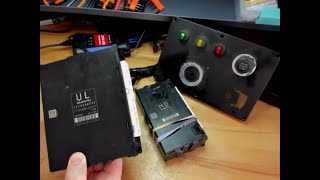
![How To Test CAN BUS With A Multimeter [CAN Bus Resistance Check] Mechanic Mindset](https://img.youtube.com/vi/JPE42HSJxAk/mqdefault.jpg)



The information in this article is provided for general reference and educational purposes only. Vehicle specifications, procedures, and part compatibility can vary by production date, trim level, and region. Always consult your vehicle's factory service manual and verify part numbers before purchasing or performing repairs. Safety-critical components such as airbags, seat belts, and braking systems should be installed by a qualified professional.
- 🎬 Helpful Videos
- What Does U1610 Mean?
- Can I Drive With U1610?
- Common Causes
- Symptoms
- Diagnostic Flowchart
- Common Fixes & Costs
- Used vs. New Parts: Buying Guide
- What Happens If You Wait — Timeline
- Cost of Not Fixing It
- Diagnosis Steps
- When This Code Triggers (Freeze-Frame Conditions)
- Related Codes
- Climate & Environmental Factors
- How to Talk to a Mechanic About This Code
- Where to Take It: Dealer vs Independent vs Chain
- When to Walk Away From the Repair
- What Scan Tool You Need for This Code
- How to Clear the Code After You Fix It
- Will This Fail Emissions / State Inspection?
- Most Commonly Affected Vehicles
- Manufacturer-Specific Notes
- Real Owner Stories
- 2012 Chrysler Town & Country with ABS/Traction lights
- 2024 GMC Sierra 1500 with U1610 & U0418 at 300 miles
- Dodge Ram with 'No Bus' message and stalling
- Subaru Outback with parasitic battery drain and random electrical faults
- How to Prevent This Code From Triggering
- Frequently Asked Questions
- Can a bad battery really cause this U1610 code?
- What are the most common mistakes when diagnosing U1610?
- My scanner shows a P1610, not U1610. Is that the same thing?
- Is U1610 expensive to fix?
- My mechanic wants to charge me $150 just to diagnose the light. Is that normal?
- Can I just clear the code and see if it comes back?
- What is a CAN bus?
- What is a Gateway Module?
- Can water damage cause a U1610 code?
- Key Takeaways
- 🎟️ Get 5% Off