

OBD-II Code U1561: Lost Communication with Brake System Control Module
What U1561 means, why it triggers, and how to fix it
- Code U1561 disables your ABS and stability control, increasing stopping distances and causing wheels to lock during hard braking.
- Scan all modules first; U1561 is usually a secondary symptom of low battery voltage (under 12.4V) or a blown high-amperage fuse.
- Clean the EBCM ground wire and test the battery before replacing parts, as bad grounds cause over 50% of these faults on GM trucks.
- Reset the Electronic Parking Brake (EPB) service mode with a scan tool if this code appears immediately after a battery replacement or brake job.
What Does U1561 Mean?

U1561 means the Electronic Brake Control Module (EBCM) is not communicating with the vehicle's network. This rarely means the EBCM itself is bad; it usually points to an electrical problem like a blown fuse, bad ground, or wiring issue that has taken the module offline.
Technical definition: U1561 signifies 'Lost Communication With Brake System Control Module', indicating the module is not sending or receiving data over the Controller Area Network (CAN) bus. It is functionally identical to code U0121.
Can I Drive With U1561?
Yes, But With Caution. Yes, but only for short distances to a repair shop. Your anti-lock brakes (ABS) and traction/stability control systems are disabled. This significantly increases stopping distances and eliminates the safety net for skids. The base hydraulic brakes still function, but wheels will lock up under hard braking, causing a loss of steering control.
Common Causes

- Damaged wiring or poor connection (Very Common) — The EBCM wiring harness is exposed to the elements, making it vulnerable to road debris, rodents, and corrosion. A loose or corroded connector pin interrupts communication. On GM trucks, a rusted EBCM ground wire on the frame rail is the most common failure point.
- Low or unstable battery voltage (Common) — Modern vehicles require precise battery voltage. A weak battery, faulty alternator, or corroded terminals causes widespread communication ('U') codes as modules drop off the network.
- Blown fuse for the ABS/Brake Control Module (Common) — The ABS module has a dedicated high-amperage fuse. If this blows due to a short circuit or overload (e.g., a seized brake vacuum pump), the module loses power and stops communicating.
- Degraded brake pedal stopper/bushing (Common) — On Hyundai and Kia models, a small plastic stopper on the brake pedal arm becomes brittle and disintegrates. This prevents the brake light switch from operating correctly, feeding conflicting data to the system and triggering communication codes.
- Incorrectly exiting brake service mode (Less Common) — Vehicles with Electronic Parking Brakes (EPB) require a scan tool to activate 'brake service mode' for pad replacement. If not exited correctly, or if battery voltage drops during the process, the module locks into a fault state.
- Faulty Electronic Brake Control Module (EBCM) or ABS Module (Less Common) — Internal electronic failure of the control module is rare. Exhaustively rule out all power, ground, and network wiring issues first, as this part is expensive and requires dealer-level programming.
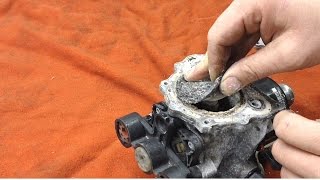
- Faulty brake vacuum pump or sensor (Rare) — On turbocharged (EcoBoost) or hybrid vehicles, a failing electric brake vacuum pump seizes, blows a fuse, and cuts power to the brake system, leading to U1561. 🎬 See this walkthrough on replacing a failed electric vacuum pump.
- Faulty Electronic Parking Brake (EPB) Module (Rare) — The separate Electronic Parking Brake module fails internally on specific models, notably the Hyundai Santa Fe. The internal motor burns out, locking the rear wheels and triggering main brake system faults.
- Shorted Wheel Speed Sensor (Rare) — A bad wheel speed sensor typically sets a 'C' code. However, a sensor with an internal short circuit disrupts the entire module's operation, leading to a communication loss code (noted in GM TSB PIT4056H).
Symptoms
- ABS warning light is on — The ABS light illuminates immediately because the system is disabled.
- Traction/Stability Control (ESC) warning light is on — The traction control (TCS) or stability control (ESC/ESP) lights illuminate because these systems rely on the EBCM.
- "Service Brake System" or "Service StabiliTrak" message on dash — The instrument cluster displays a text warning alerting the driver to a critical fault in the brake or stability systems.
- No anti-lock braking function — Wheels lock up and skid during a hard stop. The typical pulsing in the brake pedal is absent, and steering control is lost if the front wheels lock.
- Electronic Parking Brake (EPB) fault message or inoperable — The parking brake refuses to engage or disengage, accompanied by a dashboard warning, often originating from an EPB service mode error.
Diagnostic Flowchart
Tap your situation to follow the diagnostic path that matches what you're seeing on this code.
Common Fixes & Costs
- Replacing a blown fuse — Parts: $1-$10, Labor: $0-$50, ~0.2 hr book time (DIY)
- Cleaning EBCM ground connection — Parts: $5-$15, Labor: $75-$175, ~1 hr book time (DIY)
- Repairing damaged wiring or connector — Parts: $10-$50, Labor: $150-$450, ~2 hr book time (Intermediate)
- Replacing Brake Pedal Stopper Pad — Parts: $5-$15, Labor: $25-$75, ~0.5 hr book time (DIY)
- Replacing Electric Brake Vacuum Pump — Parts: $150-$400, Labor: $100-$250, ~1.5 hr book time (Intermediate)
- Replacing the ABS Module/EBCM — Parts: $600-$2200, Labor: $150-$300, ~1.5 hr book time (Professional)
- Replacing the Brake Booster — Parts: $150-$1350, Labor: $250-$520, ~2.5 hr book time (Professional)
Used vs. New Parts: Buying Guide
When a used part is worth it: A remanufactured ABS module is the best choice for vehicles over 100,000 miles when a new OEM part exceeds $1,000. Remanufactured units are tested and carry better warranties than junkyard pulls.
Donor-vehicle mileage cap: roughly under 100000 miles for the part to have meaningful remaining life.
Donor quality checklist:
- Match the part number exactly; even from the same model year, there are multiple incompatible versions.
- Verify the donor vehicle's history to avoid flood-damaged parts.
- Ask about the warranty policy. A 90-day or longer warranty is required.
Decision logic:
- If The original module can be repaired/rebuilt by a specialist service → Choose this option. It is the most cost-effective and avoids the need for VIN programming.
- If Vehicle is newer and under warranty, or a new part is affordable → Buy new from the dealer for guaranteed compatibility.
- If Vehicle is old, a new part is over $1000, and repair is not an option → A remanufactured module is a reasonable choice, but budget for programming costs.
Warranty tradeoff: Junkyard parts have a 30-90 day warranty or are sold 'as-is'. Remanufactured parts carry a 1-year to lifetime warranty. New OEM parts have a 1-2 year warranty.
Worst-case if a used part fails: $300-$600 if a used/reman part fails after the warranty period, requiring repeat labor costs plus the price of another replacement part.
What Happens If You Wait — Timeline
- Immediate (First 0-2 weeks): ABS and Stability Control warning lights illuminate. The systems are fully disabled. The base hydraulic brakes function, but wheels lock during a hard stop. (MPG impact: 0%% · Added cost: $0 (but immediate, unquantifiable safety risk))
- 2 weeks - 3 months: The warning lights remain on, masking new trouble codes. The underlying electrical issue (e.g., corrosion on a ground wire) worsens, causing more resistance. (MPG impact: 0%% · Added cost: $50-$150 (Cost of a failed state safety inspection and re-test fees).)
- 3-6 months: The worsening electrical connection causes intermittent voltage drops that affect other modules on the same CAN bus. You notice flickering lights or a glitchy radio. (MPG impact: 0-2%% · Added cost: $200-$500 (Diagnostic time increases significantly as the problem is no longer isolated to the brake system).)
- 6+ months: Catastrophic failure of the connection. A short circuit in the EBCM damages the Body Control Module (BCM) or Powertrain Control Module (PCM). A constant power draw drains the battery overnight. (MPG impact: 0-5% (due to charging system strain)% · Added cost: $800-$3000+ (Cost of replacing multiple control modules, extensive wiring repair, and a new battery).)
Cost of Not Fixing It
- Immediate: ABS and stability control are disabled, causing longer stopping distances and loss of steering control during emergency braking or on slippery surfaces. (Added cost: Potential for collision damage, insurance claims, and injury.)
- 1-6 months: Increased tire wear from wheel lock-up during hard braking. The vehicle will fail state safety inspections. Continued driving masks new, more severe problems. (Added cost: $50-$300 (premature tire replacement, inspection re-test fees).)
- 6+ months: The underlying electrical issue worsens, affecting other control modules on the same circuit. A shorted module drains the battery overnight. (Added cost: $200-$2000+ (cost to diagnose and replace other damaged modules or a new battery).)
Diagnosis Steps

- Perform a Full System Scan
Use a full-system OBD-II scanner. U1561 is usually a secondary code. Diagnose any P, B, C, or other U codes first, specifically checking the ECM, TCM, and EPB modules, as they often reveal the root cause.
Tools: Advanced OBD-II Scanner (Beginner) - Inspect Battery and Charging System
Verify battery terminals are clean and tight. Test battery voltage with the engine off (12.4-12.6V) and running (13.7-14.7V). Low or fluctuating voltage causes widespread communication errors. Readings below 10.5V force modules to shut down.
Tools: Multimeter, Wrench Set (Beginner) - Check Fuses
Locate all fuses related to the ABS module, EBCM, and brake vacuum pump. Test them for continuity with a multimeter. A blown fuse indicates an underlying short circuit or seized pump that requires immediate repair.
Tools: Owner's Manual, Multimeter or Fuse Tester (Beginner) - Inspect EBCM Wiring and Connector
Inspect the entire EBCM wiring harness for melting, rodent damage, or corrosion. Pay special attention to the ground wire on GM trucks (located on the frame rail under the driver's door). Disconnect the battery, unplug the connector, and check for bent or corroded pins.
Tools: Flashlight, Socket/Wrench Set (Intermediate) - Check for Power and Ground at the EBCM Connector (Pro Tip)
Identify the power and ground pins on the EBCM connector using a wiring diagram. With the key on, verify the module receives 12.6V on all power pins. Check for resistance between each ground pin and a known good chassis ground (must be under 0.5 ohms).
Tools: Multimeter, Vehicle-Specific Wiring Diagram (Advanced) - Test the CAN Bus Network Resistance (Pro Tip)
With the battery disconnected, measure resistance between CAN High and CAN Low pins at the DLC (pins 6 and 14). A healthy network reads 60 ohms. A 120-ohm reading indicates a missing terminating resistor. An open circuit (OL) indicates a wiring fault.
Tools: Multimeter, Vehicle-Specific Wiring Diagram (Advanced) - Test CAN Bus Voltage (Pro Tip)
Back-probe CAN High and CAN Low lines at the EBCM connector with the key on. CAN High should read 2.7V and CAN Low 2.2V. If both lines read 2.5V, they are shorted together. If one reads 0V or 5V, it is shorted to ground or power.
Tools: Multimeter or Oscilloscope, Wiring Diagram (Advanced) - Scan Tool Live Data Analysis
Monitor live data PIDs for the brake system. All four wheel speed sensors must read 0 mph when stopped and increase consistently with vehicle speed. Erratic readings point to a faulty sensor or harness.
Tools: Advanced OBD-II Scanner with Live Data (Advanced) - Isolate the Faulty Module
Unplug modules one by one to see if network resistance corrects itself. If unplugging the EBCM changes resistance from 120 ohms to 60 ohms, the EBCM has an internal failure and requires replacement.
Tools: Multimeter, Scan Tool (Professional)
When This Code Triggers (Freeze-Frame Conditions)
- Vehicle Speed: 25-65 mph (During normal driving, not necessarily during a braking event.)
- Engine RPM: 1200-2500 RPM (Steady cruise or light acceleration.)
- Control Module Voltage: 13.5-14.5V (Normal operating voltage; the code sets if voltage drops suddenly or is consistently low.)
- Time Since Engine Start: > 2 minutes (Occurs after the vehicle runs long enough for all modules to initialize and begin communicating.)
Related Codes
- U0121 — This is the direct equivalent to U1561. Both are generic codes for 'Lost Communication With Anti-Lock Brake System (ABS) Control Module.' For diagnostic purposes, they are identical.
- C0561 — This GM-specific code means 'System Disabled Information Stored'. It sets when the EBCM shuts down for safety because it receives invalid data from another module. U1561 means the EBCM is offline; C0561 means it is online but disabled.
- C101100 — This Volkswagen/Audi specific code translates to 'Brake Pad Change Mode Active'. It appears with U1561 after a battery change, indicating the EPB module is stuck in a fault state.
- U3003-16 — This code indicates 'Battery Voltage - Below Threshold'. Seeing this alongside U1561 strongly suggests the battery or charging system is the primary fault.
Climate & Environmental Factors
- Cold Weather: Extremely cold temperatures temporarily cause the ABS light to illuminate. Wiring insulation becomes brittle, and trapped moisture in connectors freezes, interrupting electrical signals.
- High Humidity / Road Salt (Rust Belt): Corrosion is a primary driver of U1561 faults in regions with heavy road salt use. The EBCM ground connection on the vehicle's frame rusts, impeding electrical signals.
- Snow and Ice Buildup: Snow and ice pack into the wheel wells and physically obstruct the wheel speed sensors or damage their wiring, causing inconsistent data that disables the ABS module.
How to Talk to a Mechanic About This Code
Say this: "I have a U1561 code and an ABS light on. I'd like to book a diagnostic appointment. Please start by checking the power, ground, and wiring to the ABS module before quoting a module replacement, as I understand these are common failure points."
This signals to the shop that you are an informed customer. It directs them to diagnose the least expensive problems first (wiring, fuses, grounds) instead of immediately jumping to an expensive ABS module replacement.
Avoid saying:
- 'Just fix whatever's wrong'
- 'My ABS light is on, can you look at it?' (too vague, invites upselling)
- 'Whatever you recommend'
Questions to ask before authorizing the repair:
- Did you test for full battery voltage and good ground at the EBCM connector itself?
- What were the results of the CAN bus resistance and voltage tests?
- Can you show me the specific test results that condemn the module as the point of failure?
- Have you checked for any Technical Service Bulletins (TSBs) related to this code on my vehicle?
Where to Take It: Dealer vs Independent vs Chain
- Dealer:
Best if the fix requires module programming or addresses a known dealer-specific software issue.
Best for: Vehicles under warranty, Complex, manufacturer-specific issues (e.g., VW EPB logic faults), If the module requires replacement and programming
Downsides: Highest labor rates, More likely to recommend expensive module replacement without exhausting all diagnostic steps. (Typical cost: +50% vs. baseline) - Independent Shop:
Best fit. A reputable independent shop with good diagnostic technicians is the ideal choice for thoroughly checking the wiring, grounds, and network before condemning an expensive module.
Best for: Out-of-warranty vehicles, Diagnosing and repairing common electrical faults (bad grounds, wiring), Cost-conscious owners
Downsides: Diagnostic skill varies greatly; ensure the shop has strong electrical/network diagnostic capabilities., May not have the latest tools for module programming on all brands. (Typical cost: +0% vs. baseline) - Chain Shop:
AVOID for diagnosis. They may be able to replace a part once it is correctly diagnosed elsewhere, but do not rely on them to find the root cause of a U1561 code.
Best for: Not recommended for initial diagnosis of this code.
Downsides: Technicians often lack advanced training in network diagnostics., High pressure to sell parts leads to misdiagnosis (e.g., quoting an ABS module when the problem is a simple ground wire)., Unlikely to have the tools for advanced CAN bus testing or module programming. (Typical cost: -10% vs. baseline)
When to Walk Away From the Repair
If the estimated repair cost for the worst-case scenario (e.g., ABS module replacement) exceeds 50% of the car's private-party value, pause and get a second opinion before authorizing the repair.
- Car worth $5000, fix is $2500: Walk away. The repair cost is too high relative to the vehicle's value. Consider selling it 'as-is' with full disclosure or trading it in.
- Car worth $15000, fix is $2000: Fix it. The repair cost is well within a reasonable threshold to maintain a valuable and safe vehicle.
- Car worth $8000, fix is $200: Fix it immediately. A low-cost fix for a critical safety system is always a worthwhile investment.
What Scan Tool You Need for This Code
Minimum: A scanner that can read and clear codes from the ABS/Brake Control Module. A basic engine-only code reader will NOT see this code.
A $20 engine code reader only communicates with the Powertrain Control Module (PCM). The U1561 code is stored in the ABS module, which requires a more capable scanner to access. Using a basic reader shows 'no codes found,' leading to confusion.
Budget: BlueDriver Pro (~$100) — Connects to a smartphone via Bluetooth and reads/clears ABS codes, views live data from wheel speed sensors, and provides repair reports based on a database of fixes.
Mid-range: Foxwell NT510 Elite (~$170) — A powerful handheld tool offering full-system diagnostics, including reading ABS codes and viewing live data. It has bidirectional controls to perform active tests and special functions like ABS bleeding and EPB service mode resets.
Professional: Autel MaxiCOM MK808S / Autel MaxiCheck Pro (~$380-500) — These tablet-style scanners offer full bidirectional control, extensive service functions like ABS bleeding, sensor calibrations, and EPB resets. They provide dealer-level diagnostics for a wide range of vehicles.
Rent vs buy: Most auto parts stores' free loaner tools are basic code readers that cannot access ABS codes. If you plan to do your own diagnostics, buying at least a budget-level ABS-capable scanner is necessary.
How to Clear the Code After You Fix It
- Ensure all repairs are complete and the battery is reconnected.
- Use an OBD-II scan tool to clear the U1561 code from the ABS module.
- Perform a drive cycle to allow the system's readiness monitors to run and confirm the fix.
Drive cycle (~20 minutes): Idle the engine for 3 minutes. Drive in mixed city/highway conditions for 20 minutes, including steady 45 mph cruises and stop-and-go traffic, allowing the vehicle to reach operating temperature and run self-diagnostics. Turn the vehicle off, wait 5 minutes, and re-scan.
Readiness monitors affected: This is a communication code and does not directly affect emissions readiness monitors. However, the underlying cause (like a voltage issue) prevents other monitors from setting.
Before emissions retest: drive at least 50 miles to fully set monitors.
Watch out for:
- Disconnecting the battery will not reliably clear this code from the ABS module; a scan tool is required.
- If the root cause (e.g., a corroded ground wire) is not fixed, the code returns immediately after being cleared.
- On VW and Audi vehicles, a specific scan tool procedure is required to reset the brake module logic after a battery replacement.
Will This Fail Emissions / State Inspection?
Yes — this code typically fails an OBD-II emissions inspection.
- California: An illuminated ABS warning light is grounds for a safety inspection failure. A vehicle cannot pass the overall inspection with this light on.
- New York: An illuminated ABS warning light causes the vehicle to fail the annual safety inspection. The vehicle receives a rejection sticker and must be repaired.
- Texas: An illuminated ABS warning light will NOT cause a vehicle to fail the Texas safety inspection. The check is strictly for the base service brakes' performance.
Most Commonly Affected Vehicles

- General Motors Trucks and SUVs (Silverado, Tahoe, Suburban, etc.) (2007-2014) — The EBCM is mounted on the driver's side frame rail, making it highly vulnerable. The most common cause of U1561 is a corroded EBCM ground (G303) on the frame rail. TSB #08-07-30-021H addresses this.
- Volkswagen Tiguan, Golf, Atlas (2018-2022) — Prone to setting brake communication faults after a battery replacement or if a scan tool incorrectly puts the Electronic Parking Brake (EPB) into service mode. Fix by cycling the 'brake pad change mode' with a scan tool.
- Hyundai Santa Fe (2012-2019) — The Electronic Parking Brake (EPB) module internal motor burns out, locking the rear wheels and causing communication codes. There is no manual override.
- Hyundai / Kia Sonata, Elantra, Optima, etc. (2009-2014) — A deteriorated plastic brake pedal stopper pad causes brake light and ESC warnings, leading to communication faults. Hyundai issued recalls (e.g., Campaign 136) for this issue.
- Ford F-150 (EcoBoost) (2011-2014) — A hard brake pedal is caused by a failed electric brake vacuum pump. The pump seizes, blowing the 40-amp fuse (Fuse 64) and triggering communication codes. Ford initiated Customer Satisfaction Program 15N05 for this.
- Lincoln MKX (2011-2014) — The power brake booster diaphragm tears, causing a hissing sound and hard pedal feel. This mechanical vacuum issue triggers brake system warnings and codes.
- Nissan e-NV200 (2010-2017) — A worn gearshift cable bushing prevents the vehicle from recognizing it is in Park. This triggers communication codes like U1561 and prevents the vehicle from starting.
- Chevrolet Corvette (C5) (1997-2004) — Famous for EBCM issues. Poor grounding is a major culprit, with the EBCM ground point being a frequent source of problems leading to 'Service ABS' messages.
Manufacturer-Specific Notes
- General Motors (Chevy/GMC): The number one cause is a poor ground connection for the EBCM. The ground (G303) is located on the outer frame rail under the driver's side door and is highly prone to corrosion. Cleaning this connection to bare metal resolves the issue. TSB #08-07-30-021H applies.
- Ford: On EcoBoost models, a hard brake pedal and associated codes are caused by a failed supplemental electric brake vacuum pump. Always check its dedicated 40-amp fuse (F64) in the under-hood fuse box first.
- Volkswagen / Audi: After replacing a battery or performing brake service, the Electronic Parking Brake (EPB) module gets stuck in 'service mode'. Use a scan tool to cycle the 'brake pad change mode' off and on to reset the module's logic.
- Hyundai / Kia: An illuminated ESC light and communication codes trace back to a deteriorated plastic stopper pad on the brake pedal assembly. It is a sub-$10 part that causes confusing electronic faults.
- Nissan: On the e-NV200 electric van, a U1561 code is part of a cluster of errors caused by a worn shifter cable bushing, which prevents the car from starting. The fix is an inexpensive bushing.
Real Owner Stories
2015 Hyundai Elantra at 110K miles - The Easy Fix
Owner's brake lights stayed on, draining the battery. The ESC warning light illuminated intermittently, and a U1561 code was stored.
Outcome: The issue was a disintegrated brake pedal stopper pad. This tiny plastic piece presses the brake light switch; when it breaks, the switch is no longer activated, confusing the brake module. Replaced with a Dorman 74015 part for under $10. The fix took 5 minutes with no tools.
Lesson: On Hyundai/Kia vehicles, if you have brake light issues and ESC/ABS warnings, check the floor under the brake pedal for broken plastic bits first. It is an extremely common, cheap fix.
2014 Chevy Silverado at 130K miles - The Misdiagnosis
Truck displayed 'Service StabiliTrak' and an ABS light, along with code U1561. The issue was intermittent, appearing more often in wet weather.
Outcome: The root cause was a corroded ground wire on the frame rail, directly below the driver's side door. The owner disconnected the battery, unbolted the ground strap, cleaned the contact point to bare metal with a wire brush, and re-secured it with dielectric grease. Total cost was $5. The code disappeared permanently.
Lesson: For any GM truck or SUV with communication codes like U1561, the first step must be to inspect and clean the EBCM ground on the frame. It is frequently misdiagnosed as a bad module.
2013 Ford F-150 EcoBoost at 95K miles - The Unusual Cause
Driver experienced a sudden hard brake pedal. The ABS and 'Brake' warning lights illuminated, with code U1561 stored.
Outcome: The 40-amp fuse (Fuse #64) for the vacuum pump was blown. Replacing the fuse caused it to blow again immediately, indicating a short. The electric vacuum pump had seized. Replacing the pump (Dorman 904-814) and the fuse resolved the issue. The U1561 code cleared because power was restored to the brake system circuit.
Lesson: On vehicles with supplemental electric pumps, a communication code is a secondary result of a mechanical component failure. A blown high-amperage fuse is a clear sign that a component has seized or shorted.
How to Prevent This Code From Triggering
- Clean and Protect Key Ground Connections (Every 30,000 miles or 3 years, especially in the Rust Belt.) — Corrosion on the main EBCM-to-frame ground is the #1 cause of communication failure. Unbolting the connection, cleaning to bare metal, and applying dielectric grease prevents resistance buildup.
- Perform a Battery Health Test Annually (Once per year, especially for batteries over 3 years old.) — A weak battery with low voltage under load causes random 'U' (communication) codes. A professional load test identifies a failing battery before it causes module dropouts.
- Apply Dielectric Grease to Exposed Connectors (Whenever servicing the area.) — Filling exposed connectors with dielectric grease prevents moisture and road salt from wicking into the pins and causing corrosion.
- Use a Battery Maintainer During EPB Service (During any brake job on a car with an Electronic Parking Brake.) — Putting a vehicle into 'brake service mode' requires stable voltage. If battery voltage drops during the procedure, the module gets stuck in a fault state.
Frequently Asked Questions
Can I fix a U1561 code myself?
You can perform initial checks like inspecting fuses, the battery, and visible wiring. Diagnosing CAN bus network issues requires specialized tools, so take the vehicle to a shop equipped with an oscilloscope and dealer-level scan tool for complex network testing.
Is it safe to drive with a U1561 code?
It is not recommended. Your anti-lock brakes and stability control are disabled, significantly increasing stopping distances. Wheels will lock up under hard braking, causing a complete loss of steering control.
What's the difference between U1561 and U0121?
Functionally, there is no difference. Both are generic OBD-II codes meaning 'Lost Communication with Brake System Control Module'. Different manufacturers use one code over the other, but the diagnostic process is identical.
I just replaced my battery and now my dash is lit up with brake warnings. What happened?
This is common on modern vehicles, especially Volkswagen and Audi. The sudden loss of power causes the Electronic Parking Brake module to enter a fault state. Clear this software glitch by using a scan tool to reset the brake module's service mode.
Can a bad wheel speed sensor cause a U1561 code?
Rare, but possible. A faulty wheel speed sensor usually sets a 'C' code (like C0035). However, an internal short circuit can disrupt the entire ABS module's function, leading to a U1561 communication loss code.
What is 'brake service mode' and how can it cause a U1561?
Brake service mode retracts the electronic caliper piston on cars with an Electronic Parking Brake (EPB) so new pads can be installed. If this process is done incorrectly, the brake control module becomes unresponsive. This triggers a U1561 communication code until properly reset with a scan tool.
The shop wants to replace my ABS module for $1500. Is that right?
Module failure is possible but less common than wiring issues. Before paying $1,500+, ensure the shop definitively ruled out blown fuses, bad battery voltage, and poor power/ground wiring. Ask them to show you the failed CAN test results that condemn the module.
Key Takeaways
- Code U1561 disables your ABS and stability control, increasing stopping distances and causing wheels to lock during hard braking.
- Scan all modules first; U1561 is usually a secondary symptom of low battery voltage (under 12.4V) or a blown high-amperage fuse.
- Clean the EBCM ground wire and test the battery before replacing parts, as bad grounds cause over 50% of these faults on GM trucks.
- Reset the Electronic Parking Brake (EPB) service mode with a scan tool if this code appears immediately after a battery replacement or brake job.
Helpful Videos


The information in this article is provided for general reference and educational purposes only. Vehicle specifications, procedures, and part compatibility can vary by production date, trim level, and region. Always consult your vehicle's factory service manual and verify part numbers before purchasing or performing repairs. Safety-critical components such as airbags, seat belts, and braking systems should be installed by a qualified professional.
- 🎬 Helpful Videos
- What Does U1561 Mean?
- Can I Drive With U1561?
- Common Causes
- Symptoms
- Diagnostic Flowchart
- Common Fixes & Costs
- Used vs. New Parts: Buying Guide
- What Happens If You Wait — Timeline
- Cost of Not Fixing It
- Diagnosis Steps
- When This Code Triggers (Freeze-Frame Conditions)
- Related Codes
- Climate & Environmental Factors
- How to Talk to a Mechanic About This Code
- Where to Take It: Dealer vs Independent vs Chain
- When to Walk Away From the Repair
- What Scan Tool You Need for This Code
- How to Clear the Code After You Fix It
- Will This Fail Emissions / State Inspection?
- Most Commonly Affected Vehicles
- Manufacturer-Specific Notes
- Real Owner Stories
- 2015 Hyundai Elantra at 110K miles - The Easy Fix
- 2014 Chevy Silverado at 130K miles - The Misdiagnosis
- 2013 Ford F-150 EcoBoost at 95K miles - The Unusual Cause
- How to Prevent This Code From Triggering
- Frequently Asked Questions
- Can I fix a U1561 code myself?
- Is it safe to drive with a U1561 code?
- What's the difference between U1561 and U0121?
- I just replaced my battery and now my dash is lit up with brake warnings. What happened?
- Can a bad wheel speed sensor cause a U1561 code?
- What is 'brake service mode' and how can it cause a U1561?
- The shop wants to replace my ABS module for $1500. Is that right?
- Key Takeaways
- 🎟️ Get 5% Off